Choosing a Non-Lead Round for a 30-06 Rifle
Navigating the world of hunting in California can feel like you're constantly adapting to new rules and regulations, and one of the biggest shifts has been the statewide transition to non-lead ammunition. If you're a proud owner of a trusty .30-06 rifle, a caliber beloved by generations of hunters, you might be scratching your head, wondering how to choose the best non-lead rounds for your upcoming hunts. This guide is here to walk you through the specifics, helping you understand the options and confidently select the right non-lead ammunition for your venerable .30-06.
The California Non-Lead Mandate and Your .30-06 Rifle
For many of us, the .30-06 Springfield is more than just a cartridge; it's a legacy. It's the rifle your grandfather might have carried, the one that brought countless deer and elk to the dinner table, a true American classic. Its versatility and power have made it a go-to for big game across the continent. So, when California implemented its full statewide non-lead ammunition requirement, effective July 1, 2019, it definitely shook things up for hunters who had relied on their tried-and-true lead-core loads for decades.
This isn't a suggestion; it's the law. The move to non-lead was primarily driven by concerns over wildlife scavenging lead bullet fragments, particularly affecting endangered species like the California Condor. While the intentions are noble and important for conservation, it meant every hunter, regardless of their preferred caliber or hunting area, had to make the switch. For a caliber like the .30-06, with a long history of excellent performance with lead-core bullets, this change presented a real challenge. You want to ensure that your new, compliant ammunition performs just as effectively, humanely, and reliably as your old favorites. It's not just about finding any non-lead bullet; it's about finding the right one that maintains the legendary performance of your .30-06.
The good news is that ammunition manufacturers have responded robustly to this demand, offering a wide array of non-lead options. The days of scarcity and limited choices are largely behind us, though popular loads can still fly off the shelves right before season. What this means for you, the .30-06 hunter, is that there are excellent non-lead bullets out there designed to take down anything from a coastal blacktail to a hefty Roosevelt elk. The key is understanding their characteristics and how they differ from the lead-core bullets you might be accustomed to.
Understanding Non-Lead Projectiles for the .30-06
When we talk about non-lead projectiles for rifles, we're primarily discussing monolithic copper bullets or those made from copper alloys. These are fundamentally different from traditional lead-core bullets, and understanding those differences is crucial for selecting the best option for your .30-06.
The Rise of Monolithic Copper
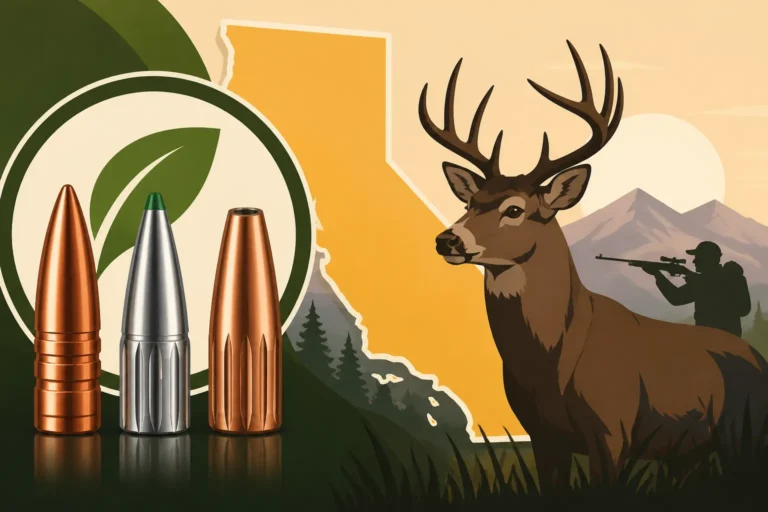
The vast majority of non-lead rifle bullets you'll find on the market today are constructed from solid copper or a copper alloy. Unlike a lead-core bullet with a copper jacket, these bullets are homogenous. This construction leads to some distinct performance characteristics. First and foremost, monolithic copper bullets are known for their exceptional weight retention. Where a traditional lead-core bullet might shed 30-50% of its weight upon impact due to fragmentation, a copper bullet often retains 95% or more of its original weight. This means that almost all of the bullet's mass continues to penetrate, delivering more energy deeper into the animal.
When a monolithic copper bullet impacts, it typically mushrooms into a sharp, four-petal shape, creating a wide wound channel. This controlled expansion, combined with high weight retention, allows for deep penetration and often a clean pass-through, increasing the likelihood of a quick, humane harvest. Think about chasing a big buck through thick chaparral in the Coastal Range, where you might only get one shot. You want a bullet that performs reliably every single time. However, because copper is less dense than lead, a monolithic copper bullet of the same weight as a lead-core bullet will be physically longer. This length can sometimes affect barrel harmonics and twist rate stability, though for standard .30-06 bullet weights, it's generally not a major concern.
Other Non-Lead Options and Considerations
While monolithic copper dominates the non-lead market, you might encounter other non-lead options, though they are less common for rifles. Some manufacturers use copper-gilding metal alloys, which are still essentially lead-free but might have slightly different expansion properties. The core principle remains the same: eliminating lead while maintaining terminal performance.
The other significant consideration is bullet weight. For a .30-06, common lead-core bullet weights range from 150-180 grains, with some lighter or heavier options. With non-lead, you might find that for a given caliber, the most popular copper bullet weights are often on the lighter side compared to their lead-core counterparts (e.g., 165-grain copper replacing a 180-grain lead). This is because to achieve similar sectional density and ballistic coefficients with less dense copper, manufacturers often need to make them lighter or longer. A lighter bullet can mean a flatter trajectory, but it might also reduce retained energy at very long ranges or penetration on very large game. For a solid all-around choice for deer and potentially black bear in California, a 150-grain to 165-grain copper bullet is often an excellent starting point for your .30-06.
It's also worth noting that some companies like Federal Premium and Barnes Bullets have been at the forefront of non-lead technology for years, developing bullets like the Barnes TSX, TTSX, and LRX, or Federal's Trophy Copper. These brands have a proven track record of performance in the field, which can give you extra confidence when making your selection.
| Bullet Type | Construction | Weight Retention | Expansion | Penetration | Barrel Fouling | General Cost Shape |
|---|---|---|---|---|---|---|
| Traditional Lead-Core | Lead core, copper jacket | Moderate (50-70%) | Rapid, often fragmenting | Moderate to Deep | Variable | Lower |
| Monolithic Copper | Solid copper | Excellent (95%+) | Controlled, petal-like | Very Deep | Minimal | Higher |
| Copper Alloy | Copper/zinc blend | Excellent (90%+) | Controlled | Very Deep | Minimal | Higher |
Ballistics and Performance Considerations for Your .30-06
Switching to non-lead isn't just about complying with regulations; it's about re-learning how your rifle performs with a different projectile. The .30-06 is a powerful and accurate cartridge, but non-lead bullets will likely impact your rifle's point of aim and trajectory, requiring careful re-zeroing and understanding of terminal ballistics.
The Importance of Re-Zeroing
This cannot be stressed enough: when you switch to any new ammunition, especially from lead-core to non-lead, you must re-zero your rifle. Even if the bullet weight is similar, the different construction, length, and internal ballistics of a monolithic copper bullet will almost certainly change your point of impact. What was a perfect 200-yard zero with your old lead loads might be several inches off with your new copper ones. Imagine finally spotting that elusive buck while Glassing a Canyon for a Bedded Buck and missing because you didn't account for the new ammo. That's a heartache no hunter wants.
Take your rifle to the range, starting at 50 yards to ensure you're on paper, then move out to 100 or 200 yards to fine-tune your zero. Shoot multiple groups to confirm consistency. It's often a good idea to zero at a distance that best suits the majority of your likely shots, whether that's 100 yards for timber hunting or 200 yards for more open country. Remember, consistency is key, and confidence in your rifle and ammunition is paramount for ethical hunting.
Terminal Performance and Wound Channels
Monolithic copper bullets shine in their terminal performance, often delivering impressive results on game. As mentioned, their high weight retention means they penetrate deeper than many lead-core bullets. This deep penetration is particularly advantageous for larger game, or when you encounter tough angles on a deer or bear. The expanded copper petals create a sharp, cutting edge that slices through tissue, leading to excellent energy transfer and hemorrhaging.
You might notice that the wound channel looks different with non-lead. Instead of the massive, often destructive cavitation caused by fragmenting lead-core bullets, copper bullets tend to create a cleaner, narrower, but very deep wound. This can sometimes lead to less "blood shot" meat, which is a bonus for processing your harvest. While the wound may appear smaller externally, the internal damage is typically very effective, often resulting in swift, humane kills, especially if you hit vitals. For California hunters pursuing species like Columbia Blacktail and Mule Deer in California or even Black Bear Hunting California's Spot-and-Stalk Season, having a bullet that performs reliably and penetrates deeply is a significant advantage.
When you're out in the field, perhaps tracking a deer in fresh Sierra snow, knowing your bullet performed exactly as intended brings a great sense of peace. Many hunters report excellent results with non-lead copper bullets on a variety of game, praising their ability to consistently punch through and anchor animals.
Choosing the Right Non-Lead for Your California Hunt
With so many excellent non-lead options now available for the .30-06, how do you narrow it down to the "right" one for your specific hunting scenario in California? It comes down to understanding your game, your typical hunting environment, and your personal preferences.
Matching Bullet Weight to Game and Terrain
For California deer, whether you're chasing a blacktail in thick coastal oak woodlands or a mule deer in the more open, high-country X-zones, a 150-grain to 165-grain non-lead copper bullet is usually an outstanding choice. These weights provide a good balance of velocity, trajectory, and terminal performance for deer-sized game. Lighter bullets might offer a flatter trajectory, which can be beneficial in open desert country or sprawling sagebrush flats. Heavier bullets, say 180-grain copper, might be slightly overkill for blacktail but could be a more robust choice if you're also planning to hunt larger animals like elk (if you're lucky enough to draw a tag!) or a larger black bear.
Think about your primary hunting grounds. If you spend most of your time still-hunting dense timber, where shots are typically closer, a 165-grain copper round will offer plenty of punch and controlled expansion. If you're often glassing vast distances in the Eastern Sierra and expecting longer shots, a slightly lighter, flatter-shooting option might be preferable. Tools like GoHunt can help you scout potential areas and understand the typical shot distances, which in turn informs your bullet weight decision.
Research and Practice
The best way to choose your non-lead round is to do your homework and then hit the range. Start by researching manufacturers known for their quality non-lead rifle ammunition, such as Barnes, Hornady (with their CX line), Federal, and Nosler. Look for bullets specifically designed for big game, ensuring they are certified as non-lead for California regulations. The California Department of Fish and Wildlife (CDFW) often provides lists of approved non-lead projectiles, which can be found by looking up Which Non-Lead Bullets California Approves.
Once you've selected a few potential brands and bullet weights, purchase a box or two of each. Take them to the range and test them thoroughly in your specific .30-06 rifle. Pay close attention to accuracy, point of impact, and recoil. Every rifle is an individual, and what shoots well in one .30-06 might not be as accurate in another. The goal is to find the load that consistently groups well in your rifle. This practice session is also crucial for Sighting In Before Switching to Non-Lead and becoming proficient with your new ammunition.
Beyond just accuracy, understanding the ballistics of your chosen round is vital. Many ammunition manufacturers provide ballistic data on their websites. You can also use ballistic calculators (often integrated into hunting apps like those GoHunt provides) to understand how your bullet performs at various ranges, accounting for factors like elevation and temperature. This knowledge will make you a more confident and ethical hunter. Remember that finding non-lead ammo can sometimes be a challenge due to demand, so plan ahead and buy your preferred rounds well before opening day. Understanding Non-Lead Ammo Availability and Cost beforehand can save you a lot of stress.
In the end, while California's non-lead mandate might have felt like a hurdle for your beloved .30-06, it has also spurred innovation, leading to highly effective, ethically performing ammunition. Embrace the change, do your research, and practice diligently, and your .30-06 will continue to be a reliable and potent tool for your California hunting adventures for years to come.
Disclaimer
This article is for general informational purposes only and does not constitute professional advice. Laws, prices and regulations vary by location and change over time. Consult a qualified professional for guidance on your specific situation.