Best Arrow Rest for a Hunting Setup
There's nothing quite as frustrating as spending countless hours honing your archery skills, scouting prime hunting spots, and patiently waiting for the perfect shot opportunity, only to have your arrow flight go awry at the moment of truth. Many times, the culprit isn't your release, your form, or even your broadhead, but rather a subtle inconsistency with your arrow rest. This guide is here to help you navigate the often-overlooked world of arrow rests, ensuring your hunting setup is dialed in for maximum accuracy and reliability when it matters most in the challenging California landscape.
The Pivotal Role of Your Arrow Rest in Archery Hunting Success
Think of your arrow rest as the silent partner in your archery setup. It's the last point of contact your arrow has with your bow before it launches towards your target. Its job is far more critical than simply holding the arrow; it’s about guiding that arrow with absolute consistency, shot after shot. For a hunting setup, this consistency translates directly into ethical kills and confident shooting in varied, often less-than-ideal, field conditions.
What an Arrow Rest Actually Does
At its core, an arrow rest supports the arrow on the bow's riser as you draw and aim, holding it in alignment with your string and sight pins. But the magic happens at the shot. A good hunting rest minimizes interference with the arrow's fletching as it leaves the bow, ensuring a clean, consistent launch. This clean launch is paramount for accurate arrow flight. Any unwanted contact, even a slight brush, can cause the arrow to yaw, porpoise, or kick sideways, throwing off your trajectory and dramatically impacting your point of impact downrange. This becomes especially noticeable when you're shooting at different distances or in crosswinds.
For a hunter, this means the difference between a clean pass-through and a gut shot, or even a complete miss. Imagine that trophy blacktail buck stepping out at 30 yards in a thick oak flat, and a poorly performing rest causes your arrow to veer slightly. The consequences are heartbreaking. A well-tuned arrow rest helps ensure that the arrow leaves the bow exactly the same way every time, allowing your carefully chosen broadheads to fly true. It's the foundation of repeatable accuracy, which is non-negotiable in the hunting woods.
Why Precision Matters for Ethical Hunting
In hunting, precision isn't just about hitting the bullseye; it's about ethical responsibility. We owe it to the animals we pursue to make the cleanest, most humane shot possible. A hunting arrow rest that provides impeccable arrow flight contributes directly to this. When you can consistently place your arrow exactly where you intend, you increase the likelihood of a quick, clean harvest, minimizing suffering and maximizing your chances of recovery. This is particularly important when you're targeting vital organs, which are often small targets that require extreme accuracy.
Consider a scenario where you're Hunting a Ridge-Top Saddle at First Light in the Sierra foothills, and a wary buck offers a quartering-away shot. You need to be able to thread that arrow precisely into the vitals, avoiding bone or other obstructions. An arrow rest that introduces any variability into your shot process makes this exponentially harder. Hunters spend so much time thinking about Broadhead Choices for California Blacktail or their bow’s draw weight, but the arrow rest is just as critical in ensuring that broadhead gets to its intended destination reliably. Investing in a high-quality, properly tuned arrow rest is an investment in your hunting ethics and success.
Deciphering the Different Types of Hunting Arrow Rests
When you walk into an archery shop or browse online, you'll quickly discover a variety of arrow rest designs. While they all aim to do the same basic job, their methods and features differ significantly, making certain types more suitable for specific hunting styles and environments.
Containment Rests: Simplicity and Security
Containment rests are popular among many hunters due to their straightforward design and their ability to completely encircle the arrow, providing maximum security. The most famous example is the Whisker Biscuit.
- How They Work: These rests typically feature a circular brush or a series of bristles that hold the arrow securely in place, even if you tilt your bow or move quickly. As you release the string, the arrow passes directly through the bristles.
- Pros for Hunters:
- Full Containment: This is their biggest advantage. If you're hunting in dense brush, climbing treestands, or stalking through rugged terrain where an arrow might otherwise fall off the rest (like when Hunting Coastal Range Oak Woodlands), a containment rest keeps your arrow locked and loaded. This peace of mind is invaluable.
- Simplicity and Durability: With fewer moving parts, they tend to be robust and less prone to mechanical failure in harsh conditions. They're also generally less sensitive to dust, dirt, or moisture.
- Affordability: Often, containment rests are more budget-friendly than their drop-away counterparts, making them a good entry-level option or for those who prioritize simplicity.
- Cons for Hunters:
- Fletching Contact: The primary drawback is that the arrow's fletching must pass through the rest's bristles. While designed to minimize this, any contact creates friction and can slightly impede arrow speed and potentially introduce minor inconsistencies in flight, especially with larger fletchings or helical fletches.
- Wear and Tear: The bristles or brushes will wear over time, requiring periodic replacement to maintain performance.
- Noise: While generally quiet, some models can produce a slight "whizzing" sound as the fletching passes through, which could be a concern for extremely wary game at close range.
Many California hunters who prefer walking through thick cover or appreciate a "set it and forget it" mentality will gravitate towards containment rests. They offer unparalleled arrow retention, which can be a huge benefit when you're focused on the stalk.
Drop-Away Rests: Maximum Accuracy and Speed
Drop-away rests are the darling of many serious bowhunters and target archers alike, lauded for their ability to deliver exceptional accuracy and speed by eliminating fletching contact.
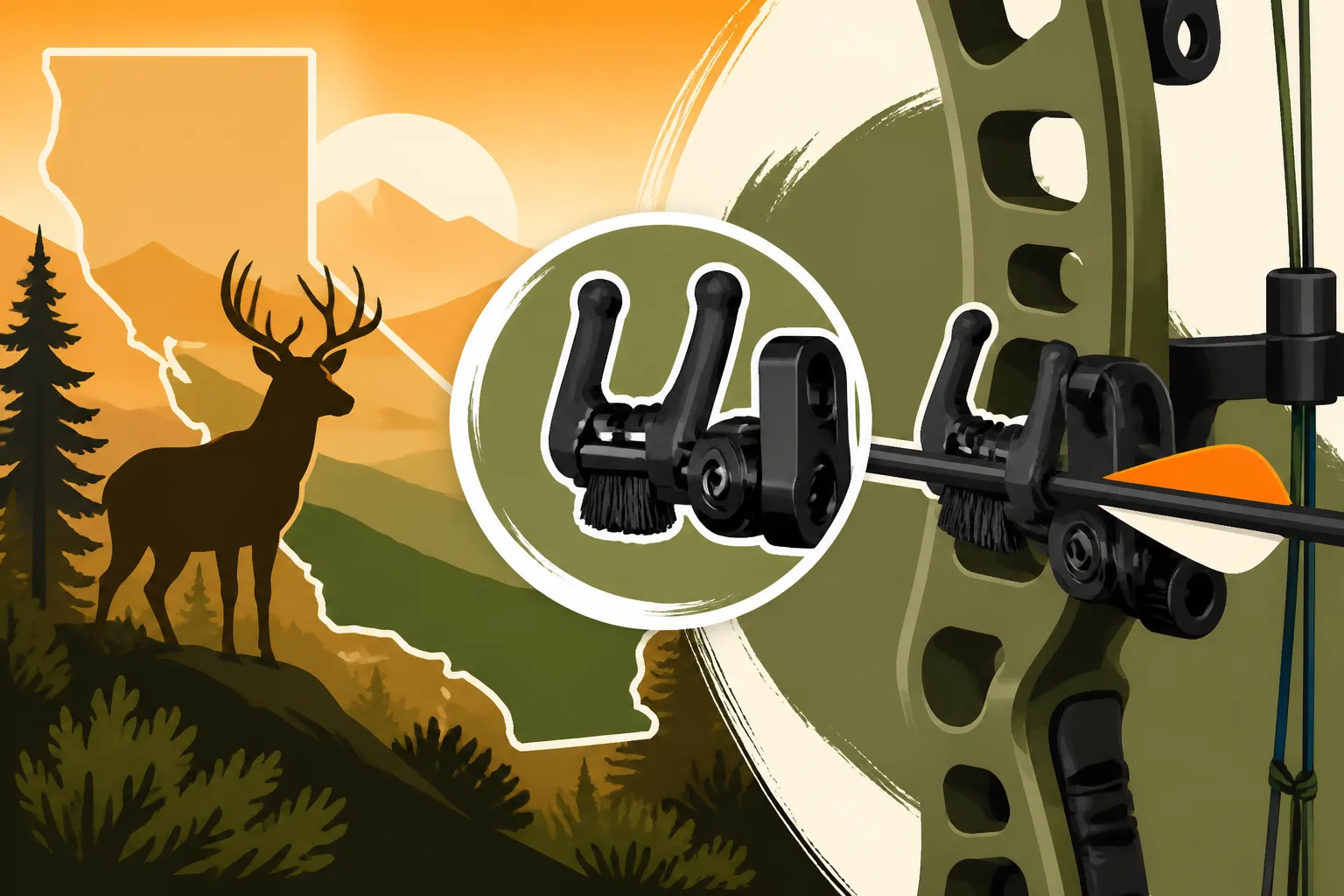
- How They Work: These rests feature an arm or launcher that supports the arrow at full draw. Upon release, a cable connected to the bow's downward-moving limb or cable system pulls the launcher arm swiftly out of the way before the fletching passes, allowing for completely unimpeded arrow flight.
- Pros for Hunters:
- Zero Fletching Contact: This is the Holy Grail of arrow flight. With no fletching contact, you get the truest, most consistent arrow flight possible, maximizing both accuracy and kinetic energy delivery. This is especially crucial for hunters aiming for deep penetration with Arrow Weight for Elk-Sized Game.
- Increased Speed: Without the drag from fletching contact, arrows tend to fly slightly faster, contributing to a flatter trajectory and potentially more energy on impact.
- Quiet Operation: Most quality drop-away rests are designed to be extremely quiet, with padding or dampening materials to prevent any metallic sounds during the draw or shot. This is critical for not spooking game.
- Versatility: They work exceptionally well with all types of fletching and broadheads, offering a wide range of tuning possibilities.
- Cons for Hunters:
- More Moving Parts: The complexity means more potential points of failure, though modern designs are incredibly robust. This requires more attention to maintenance and ensuring the cables are properly routed and secured.
- Potential for Obstruction: In very dense vegetation, a twig or leaf could theoretically interfere with the launcher arm's drop, though this is rare with well-designed models.
- Cost: Generally, quality drop-away rests are more expensive than containment rests.
- Setup Complexity: They can be a bit more finicky to set up and tune initially, but once dialed in, they are incredibly reliable.
For archers who demand the absolute peak of accuracy and are meticulous about their gear, a drop-away rest is often the preferred choice. Brands like GoHunt frequently review and compare different drop-away models, highlighting their features and performance characteristics.
Blade Rests: The Target Archery Niche
While less common for hunting, especially in rugged backcountry, blade rests deserve a brief mention.
- How They Work: These rests typically use a thin, flexible metal or carbon blade to support the arrow. They offer extremely minimal contact for precision, often seen in competitive target archery.
- Pros: Minimal contact, very precise.
- Cons for Hunters: The biggest issue for hunters is lack of containment. The arrow can easily fall off the blade if the bow is tilted or moved quickly, making them impractical for stalking, climbing, or any dynamic hunting scenario. They are also quite fragile compared to other hunting rests.
Given the dynamic nature of California hunting, from Bowhunting California's Zone A Season in thick brush to Hunting California's High-Country X-Zones, blade rests are almost universally passed over by serious hunters in favor of the more robust and secure containment or drop-away options.
Here's a quick comparison of the two main hunting rest types:
| Feature | Containment Rest (e.g., Whisker Biscuit) | Drop-Away Rest (e.g., QAD, Hamskea) |
|---|---|---|
| Arrow Containment | Excellent (full capture) | Good (holds at full draw, drops) |
| Fletching Contact | Yes (minimal, but present) | No (zero contact at launch) |
| Accuracy Potential | Very Good | Excellent (maximized) |
| Arrow Speed | Good (slight drag) | Excellent (maximized) |
| Noise | Low (some fletching whisper) | Very Low (silent drop) |
| Durability in Field | High (fewer moving parts) | High (modern designs are robust) |
| Setup & Tuning | Simple | Moderate to Complex |
| Maintenance | Bristle replacement | Cable/spring inspection |
| Cost | Lower to Moderate | Moderate to Higher |
Key Considerations for Selecting Your Ideal Hunting Rest
Choosing the best arrow rest isn't about finding the "most expensive" or "most popular" model; it's about finding the right rest for your hunting style, your bow, and the conditions you'll face. There are several critical factors to weigh before making your decision.
Durability and Reliability in the Field
California hunting often means rugged terrain, unpredictable weather, and long days far from a pro shop. Your gear needs to withstand abuse, and your arrow rest is no exception. A flimsy rest that bends, breaks, or malfunctions after a bump against a rock or a branch is worse than useless – it can ruin a hunt and compromise an ethical shot.
- Construction Materials: Look for rests made from robust materials like aircraft-grade aluminum, stainless steel, or high-density polymers. Avoid rests with excessive plastic components, especially in critical areas.
- Minimal Moving Parts (Containment): If you opt for a containment rest, its inherent simplicity lends itself to durability. Less to break means more reliability.
- Sealed Bearings and Robust Mechanisms (Drop-Away): For drop-away rests, examine the moving parts. Are the pivot points well-engineered? Are there sealed bearings that resist dust and moisture? Many high-end drop-aways are designed to endure years of abuse. You can often find detailed reviews on platforms like GoHunt discussing the long-term durability of various models after seasons of hard use.
- Ease of Field Repair: While not always possible, consider if any minor issues could be addressed with basic tools you carry in your pack. A snapped spring or a bent arm can quickly put you out of the game. When you're Hunting California's Sierra Nevada Backcountry for days, knowing your gear can take a beating is paramount.
Noise and Speed Performance
When hunting, silence is golden, and speed can be your friend. Your arrow rest plays a role in both.
- Noise: A quiet draw and shot are absolutely essential. A metallic "clink" or a loud "thwack" from a poorly designed or worn rest can send a deer bounding away before your arrow even gets close.
- Dampening: Look for rests with rubber over-molding, felt, or other dampening materials on contact points or internal mechanisms. For drop-aways, ensure the launcher arm drops silently without bouncing or vibrating.
- Proper Tuning: A noisy rest can sometimes be a sign of poor tuning. Ensure your arrow is not contacting the rest during the power stroke.
- Speed: While accuracy trumps speed, a little extra speed can flatten trajectory, making range estimation slightly less critical and giving the animal less time to react.
- Minimal Contact: Drop-away rests excel here because they eliminate fletching contact entirely, which can add a few feet per second to your arrow's velocity compared to some containment rests.
- Lightweight Components: While not a primary factor, a lighter launcher arm or smaller containment brushes can also contribute to marginal speed gains by reducing friction.
Every little bit counts when you're taking a shot at a wary mule deer across a wide canyon. A fast, quiet, true-flying arrow is the goal.
Ease of Setup and Tuning
Unless you plan to have a pro shop set up your rest every time you make an adjustment or change arrows, the ease of setup and tuning is a significant factor. Even if you get professional help, understanding the process helps you troubleshoot in the field.
- Micro-Adjustments: Look for rests with micro-adjustable windage (left/right) and elevation (up/down) settings. These allow for precise adjustments without having to loosen and slide the entire rest, which can be frustrating and less accurate.
- Clear Markings: Rests with clear reference marks or lines make it easier to replicate settings if you ever remove the rest or need to make significant changes.
- Simple Activation (Drop-Aways): For drop-away rests, consider how easily the activation cord or limb attachment can be installed and adjusted. Some systems are more user-friendly than others.
- Instructional Support: A rest with good, clear instructions or online video tutorials can save you a lot of headaches. Tuning a Bow for Broadhead Flight is a complex process, and a user-friendly rest simplifies one crucial component of that task.
Being able to confidently adjust your rest after changing arrow components or even just checking zero before a hunt can make a huge difference in your success.
Compatibility with Your Bow and Arrows
Not all rests work well with all bows or arrow setups. This is a crucial, often overlooked, consideration.
- Bow Riser Clearance: Ensure the rest, especially a drop-away with a large cage, clears your bow's riser and cables at full draw and during the shot cycle. Some bows have unique riser designs that might interfere with certain rests.
- Arrow Diameter and Fletching:
- Containment Rests: If using a Whisker Biscuit, ensure the bristles are appropriate for your arrow's diameter. Too tight, and it creates excessive drag; too loose, and it doesn't offer proper support. Consider your fletching size; larger or helical fletchings might experience more contact.
- Drop-Away Rests: Generally, drop-aways are more forgiving with various arrow diameters and fletching sizes, as the fletching never touches the launcher arm. However, ensure the launcher arm itself provides stable support for your arrow shaft diameter.
- Cable/Limb Driven Systems: For drop-away rests, determine if your bow is better suited for a cable-driven or limb-driven system. Most modern bows can accommodate both, but personal preference and ease of installation might steer you one way.
- Weight Distribution: While minor, a heavier rest can slightly alter the balance of your bow. Most modern rests are engineered to be lightweight, but it's something to be aware of if you're particularly sensitive to bow balance.
Always check the manufacturer's recommendations for compatibility and read reviews to see if other hunters with your bow model have had success with a particular rest.
Budget Versus Value
Arrow rests, like most archery gear, span a wide price range. It's tempting to go for the cheapest option, but remember the "ethical hunting" aspect. This is one piece of equipment where sacrificing quality for cost can have serious repercussions.
- Investment in Accuracy: View a quality arrow rest as an investment in consistent accuracy and reliability, which directly impacts your success and ethical approach to hunting.
- Features vs. Cost: Determine which features are absolutely essential for your hunting style. If you primarily hunt from a treestand in open woods, the absolute "bomb-proof" containment of a Whisker Biscuit might be less critical than the pure accuracy of a high-end drop-away. Conversely, if you're frequently navigating dense cover while hunting California's Central Valley flooded rice for waterfowl (and maybe small game in upland areas), containment might be king.
- Long-Term Value: A well-made rest will last for many seasons, often longer than the bow itself, making the initial cost easier to justify over time. Compare the value proposition—what features and durability are you getting for the price?
Ultimately, find the best rest you can afford that meets your specific hunting needs and gives you confidence in your shot. Checking reviews and ratings on reputable hunting gear sites can also help you gauge the perceived value and performance of different rests within your budget.
Maintenance and Tuning for Optimal Performance
Even the best arrow rest in the world won't perform optimally if it's not properly maintained and meticulously tuned. This is especially true for hunting setups, where a small oversight can lead to a missed opportunity or a wounded animal.
Initial Setup and Paper Tuning
Once you've chosen your arrow rest, the first step is proper installation and initial setup. While some archers prefer to have a pro shop handle this, understanding the basics empowers you to make minor adjustments and troubleshoot.
- Center Shot Adjustment: This is paramount. The arrow should sit perfectly in line with the bowstring, both horizontally (windage) and vertically (elevation). Most rests have adjustment screws for this. Start with the arrow centered in the riser, and then refine with paper tuning.
- Nocking Point: Ensure your arrow's nocking point on the string is set correctly to achieve level arrow flight.
- Paper Tuning: This is the gold standard for refining your rest's position. Shooting through a sheet of paper at a close distance (e.g., 6-10 feet) reveals how your arrow is exiting the bow.
- Tears: A perfect bullet hole means your rest is dialed. Tears in the paper indicate the fletching or nock end of the arrow is moving incorrectly. A high tear means your nocking point is too low, or your rest is too high; a low tear means the opposite. A left tear for a right-handed shooter means the rest is too far right, or your grip is too torqued; a right tear means the opposite.
- Micro-Adjustments: Make tiny adjustments to your rest's windage and elevation, and to your nocking point, until you achieve a clean bullet hole. This process can be tedious but is absolutely critical for consistent accuracy.
- Broadhead Tuning: After paper tuning, always broadhead tune your setup. Your hunting broadheads should fly to the same point of impact as your field points. If they don't, it usually indicates a slight issue with your rest's tuning or arrow spine compatibility that needs to be addressed. This is a critical step before heading out on a hunt like Hunting the Zone C Rifle Season in October with a bow, where accuracy is paramount.
Regular Inspection and Cleaning
Your arrow rest is exposed to the elements, dust, dirt, and friction. Regular inspection and cleaning are vital to prevent issues.
- Check for Wear:
- Containment Rests: Regularly inspect the bristles or brushes for wear, especially if you shoot a lot. Worn bristles can lead to inconsistent contact and degraded performance. Most manufacturers sell replacement biscuit inserts.
- Drop-Away Rests: Check the launcher arm for any bending or unusual wear. Inspect the activation cord (if applicable) for fraying or damage. Ensure springs and pivot points are functioning smoothly.
- Cleanliness: Dust, dirt, and debris can accumulate in the rest's mechanisms, especially in a dusty California environment. Use a soft brush or compressed air to clean out any grit. Avoid harsh solvents that could damage materials.
- Lubrication: Some drop-away rests may benefit from a tiny drop of lightweight lubricant on pivot points, as recommended by the manufacturer. Be careful not to over-lubricate, as this can attract more dirt.
- Tighten Screws: Vibration from shooting and carrying your bow in the field can loosen screws. Periodically check all screws on your rest and tighten them down. Use thread locker if recommended by the manufacturer.
- Inspect Cable/Limb Attachment (Drop-Aways): Ensure the attachment point for your drop-away rest's activation cable is secure and not causing any wear on your bow's cables or limbs.
A little preventative maintenance goes a long way in ensuring your rest performs flawlessly when you need it most. Imagine climbing a steep grade during Hunting California's Los Padres National Forest and having your rest fail due to a loose screw you overlooked. It's a preventable disaster.
Troubleshooting Common Rest Problems
Even with the best care, problems can arise. Knowing how to troubleshoot can save your hunt.
- Inconsistent Arrow Flight:
- Check for Contact: The most common culprit. Examine your fletching for scuff marks. Use foot powder or lipstick on your fletching and shoot to see where it transfers onto the rest. Adjust rest position or nocking point.
- Loose Components: Check all screws on the rest and your bow.
- Worn Parts: Inspect bristles, launcher arm, or activation cords for wear or damage.
- Cam Timing (Drop-Aways): Ensure your bow's cams are in time, as this can affect drop-away rest activation.
- Noisy Rest:
- Fletching Contact: Again, check for contact and adjust.
- Loose Parts: Tighten anything that rattles.
- Lack of Dampening: Add felt or moleskin to any contact points that might be making noise.
- Arrow Falling Off Rest:
- Containment Rests: Bristles might be worn, or you might be using too small an arrow for the rest.
- Drop-Away Rests: Check the timing and tension of the activation cord. The launcher arm might be dropping prematurely or not staying up at full draw. Adjust the spring tension if your rest allows.
Being proactive with your rest maintenance and knowing these troubleshooting tips means you're always ready, no matter what California's diverse hunting grounds throw your way.
Disclaimer
This article is for general informational purposes only and does not constitute professional advice. Laws, prices and regulations vary by location and change over time. Consult a qualified professional for guidance on your specific situation.