Best Truck Bed Setup for Hauling Deer
There's nothing quite like the feeling of having a successful hunt here in California, whether you've finally connected with that elusive blacktail buck deep in the Sierra Nevada or tagged a wild pig on a sprawling Central Coast ranch. But let's be honest, the moment the animal is down, a whole new set of challenges begins, especially when it comes to getting that hard-earned game from the field into your truck bed safely, cleanly, and legally for the journey home. This guide is all about tackling that exact problem, showing you how to set up your truck bed to handle your deer harvest efficiently, minimize mess, protect your meat, and ensure a smooth trip back to the processor or your home.
The Basics: Keeping Your Harvest Clean and Contained
You've spent hours, days, sometimes weeks, preparing for your hunt. You've scouted, practiced, and put in the hard work. The last thing you want is for your precious game meat to get contaminated or lose quality during transport. California weather can be unforgiving, from scorching August days in the D-zones to chilly late-season hunts in the mountains, so protecting your harvest from dirt, debris, and excessive heat is paramount. Your truck bed setup plays a huge role in this.
Protecting Your Truck Bed and the Meat
Think about it: a deer, even after field dressing, still carries residual blood, dirt, hair, and sometimes even ticks or other small critters from the field. Without proper preparation, all of that ends up directly on your truck bed liner, creating a potential biohazard and a monumental cleaning task later. More importantly, it can compromise the quality of your meat. That perfectly field-dressed buck you worked so hard for deserves better than to roll around in the dust and grime.
One of the simplest yet most effective ways to protect both your truck and your meat is with a heavy-duty bed liner system. Many trucks come with a spray-in liner, which is great for durability but can still be tough to get absolutely spotless after a bloody haul. Investing in a thick, one-piece rubber mat or even a custom-fit plastic drop-in liner can make a world of difference. These create a barrier that's easier to hose off and disinfect. When you're dealing with the heat of a Hunting a D-Zone That Opens in August hunt, every step to keep the meat clean and cool matters.
For an even more robust solution, consider large, durable tarps. Not just any tarp, mind you. You want something heavy-gauge, waterproof, and large enough to completely encapsulate the deer. Lay one tarp down, load the deer on top, and then use another tarp (or fold the first one over) to create a protective cocoon. This minimizes direct contact with the bed, contains blood, and helps shield the carcass from road grime and sunlight. Some hunters even go a step further, using a dedicated, washable game bag specifically designed for transport, placed on top of a tarp.
Containing Fluids and Debris
Let's face it: even a thoroughly field-dressed deer can still leak fluids, especially during a long, bumpy ride home from a remote public land area. This is where containment becomes critical. You don't want blood dripping down your tailgate, onto the highway, or seeping into every crevice of your truck bed, inviting bacteria and attracting flies. Beyond the mess, you also want to be mindful of any potential concerns regarding California's Two CWD Testing Zones, even if you're not in one, by keeping fluids contained.
Large plastic tubs, often used for storage, can be repurposed for game transport. These can be particularly effective for smaller deer or quartered game. Place your tarp-wrapped deer inside a large tub, and then secure the tub. This provides a secondary layer of containment for any liquids. Some hunters even use heavy-duty plastic sheeting, secured with duct tape, to create a makeshift "pool" in their truck bed that can hold any errant fluids. This approach is cheap, effective, and disposable.
Consider the journey home. If you're coming from the high country and have a few hours of driving ahead of you, those contained fluids become even more important. A simple solution for short distances, especially with a pickup that has a drain plug in the bed, is to place absorbent material like old towels or puppy pads under your game, within your tarp system, to soak up any liquid before it can create a mess. The goal is to isolate the mess, so cleanup is quick and easy, and your meat stays pristine.
Secure Transport: Safety and Legality on California Roads
Once your deer is field-dressed and protected from contamination, the next crucial step is ensuring it's securely transported. A bouncing, sliding deer carcass in the back of your truck isn't just a nuisance; it's a safety hazard and could even lead to legal trouble. California law requires that all loads be properly secured to prevent shifting, falling, or otherwise creating a danger on the road.
Securing the Carcass: Tie-Downs and Netting
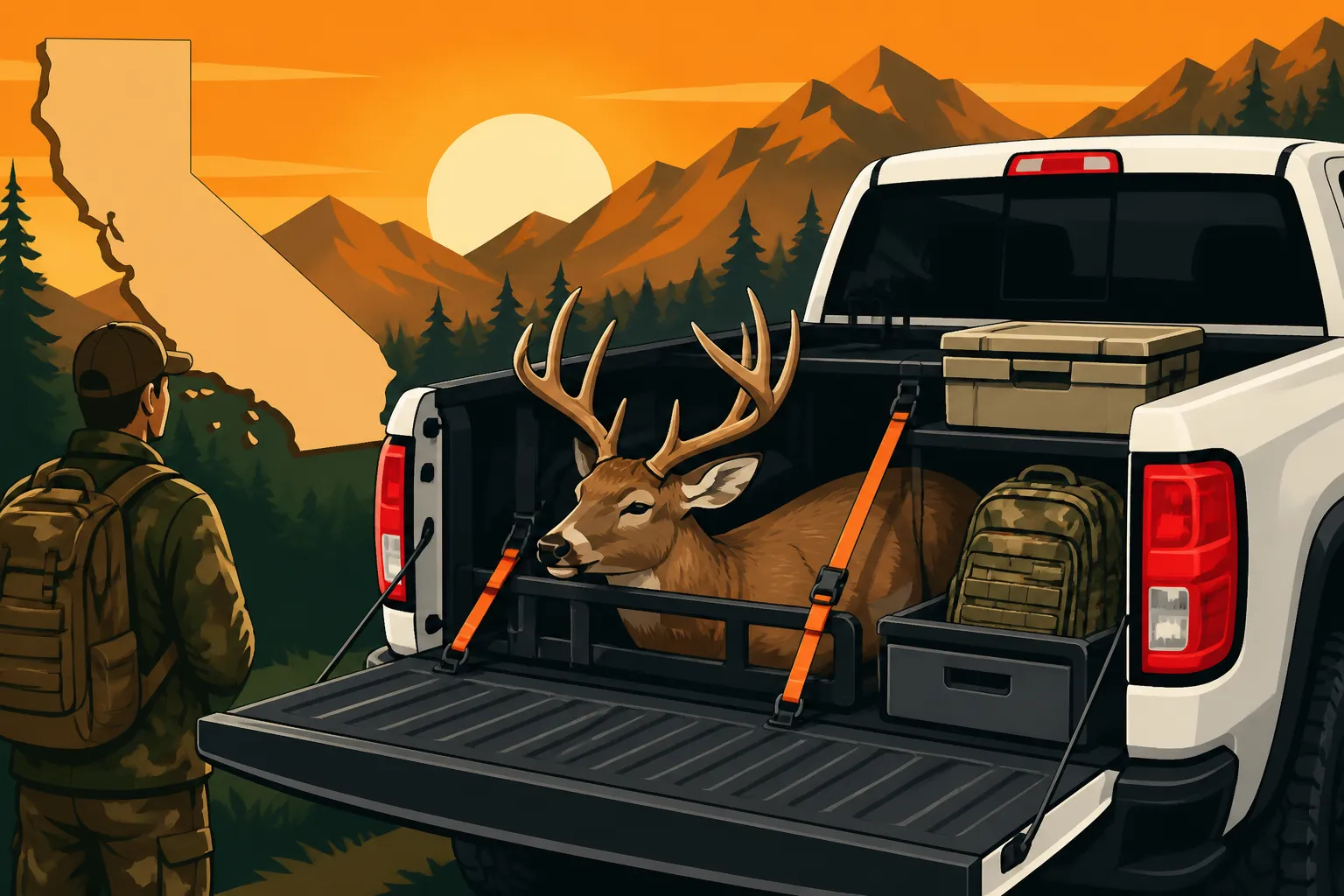
Imagine taking a sharp turn on a winding Sierra road, and your prize buck slides into the side of your truck bed, potentially damaging your vehicle or even dislodging other gear. That's a scenario no one wants. Investing in a quality set of tie-downs is non-negotiable. Ratchet straps are often preferred for their ability to apply significant tension, ensuring a tight, unyielding hold. Use at least two, preferably three or four, straps crisscrossing over the deer and hooking into your truck's bed anchors.
Make sure the straps are run over your protective tarps or game bags, not directly against the deer's hide, to prevent damage to the meat or tearing of the skin you might want to save. For added security, a heavy-duty cargo net can be placed over the entire load. This not only keeps the main carcass from shifting but also helps contain any loose items, like your rifle case or processing kit, that might be sharing the bed. Remember, preventing movement is key to keeping both your harvest and yourself safe on the road. When you're Dragging a Deer Out of a Steep Canyon, you're already exhausted, don't let transport add more stress.
Privacy and Public Perception
While you might be beaming with pride over your successful hunt, not everyone on the road shares the same perspective. Many people are uncomfortable seeing a deceased animal openly displayed, and it's always good practice to be mindful of public perception. Transporting your deer respectfully is not only about courtesy but can also prevent unwanted attention or even complaints.
The simplest solution here is a well-placed, opaque tarp. After you've secured your deer with straps, throw another heavy-duty tarp over the entire load, ensuring it covers the carcass completely. Tuck the edges in or secure them with bungee cords so they don't flap in the wind. This creates a neat, contained package that blends into your truck bed, showing respect for both the animal and those who might be sensitive to the sight. It's a small effort that goes a long way in maintaining a positive image for hunters.
This also protects your meat from direct sunlight, which is critical for cooling. Especially during early season hunts in areas covered by California's Multi-Zone Deer Season System, where temperatures can still be quite warm, shielding the carcass from solar radiation is just as important as airflow for proper cooling.
Airflow for Meat Preservation
One of the biggest mistakes hunters make, especially in warmer climates like much of California, is suffocating the carcass during transport. While containing fluids and covering for privacy are important, you absolutely need to allow for airflow to cool the meat down rapidly. Heat is the enemy of good game meat, and the faster you can get the core temperature down, the better the quality will be. This is particularly true if you are hunting during the early archery seasons in zones like A or C.
If you've completely wrapped your deer in plastic sheeting and then thrown a heavy tarp over it, you've created an insulated oven. Instead, think about strategic layering. After field dressing and cleaning, get your deer into quality game bags. These breathable bags protect the meat from flies, dirt, and debris while still allowing air to circulate. Then, place the bagged deer on a raised platform or even a couple of 2x4s in the truck bed, if possible, to allow air to flow underneath.
Instead of a tightly wrapped plastic tarp, consider a canvas tarp or a permeable cover that offers shade and privacy but still breathes. If you're driving long distances, especially in warm weather, stopping periodically to check the temperature of the carcass and adjust your setup for better airflow can be a game-changer. Keeping the meat cool is paramount, and a proper setup, including good airflow, is as important as Field Dressing a Deer in Hot Weather itself.
Essential Tools and Accessories for Deer Recovery
Hauling a deer is rarely a one-person job, especially when dealing with mature animals or difficult terrain. Even with a buddy, getting a heavy buck into the bed of a pickup truck can be a back-breaking endeavor. Having the right tools and accessories on hand can make all the difference, turning a potential struggle into a manageable task.
Lifting and Loading Aids
Picture this: you've just dropped a beautiful blacktail buck in a steep, brushy canyon. You've field dressed it, and now you have to get it up a bank and into your truck. This is where lifting and loading aids become your best friend. A good set of portable ramps, usually rated for ATVs, can be invaluable. If you can back your truck close enough to a rise or embankment, you can often use the ramps to slide or roll the deer into the bed with less effort.
For solo hunters, or those who frequently hunt rugged areas, a hitch-mounted game hoist can be a true lifesaver. These devices attach to your receiver hitch and use a hand crank or electric winch to lift the deer directly into your truck bed. They save your back and ensure a controlled, safe loading process. Another option, often more affordable, is a simple come-along or a small hand winch paired with a sturdy strap. You can often attach one end to the front of your truck bed and the other to the deer, using leverage to pull it in. When you're in a situation where you're Dragging a Deer Out of a Steep Canyon, having a plan for the final lift into the truck is crucial.
Knowing the terrain you'll be hunting can help you decide what equipment to bring. Mapping tools and scouting apps can be incredibly helpful here. For instance, using a platform like GoHunt to analyze topographical maps before your hunt can help identify potential challenges or easier access points, influencing whether you pack a hoist or just rely on a strong sled. GoHunt's detailed maps can show you vehicle access, steepness of terrain, and even private land boundaries, which is invaluable when planning your retrieval strategy.
Cleaning and Post-Transport
The hunt doesn't truly end until your gear is clean, your truck is spotless, and your meat is safely put away. Immediate cleanup of your truck bed is vital to prevent odors, staining, and bacterial growth. Don't put it off! The longer blood and fluids sit, the harder they are to remove.
Keep a dedicated cleanup kit in your truck. This should include a stiff-bristled brush, a spray bottle filled with a water-and-bleach or water-and-vinegar solution (vinegar is great for neutralizing odors), paper towels or rags, and a pair of heavy-duty rubber gloves. As soon as you unload the deer, strip away any tarps or plastic sheeting, and immediately hose down the truck bed. Use your cleaning solution and brush to scrub away any remaining blood or grime. Pay special attention to corners, seams, and drain holes. Letting the bed air dry in the sun can also help with sanitization.
A simple bucket or a portable washdown system can be a lifesaver, especially if you're not heading straight home to a pressure washer. Even a large jug of water can help rinse away the worst of the mess at the trailhead. Remember, preventing cross-contamination is part of being a responsible hunter, especially with concerns about wildlife diseases.
Organization and Preparedness
A smooth deer recovery isn't just about the big equipment; it's also about having all the small, seemingly insignificant items organized and ready. A dedicated "recovery kit" stashed in a durable tote or waterproof bag can save you immense frustration when you're tired and triumphant.
This kit should include things like extra processing gloves (latex or nitrile), a sharp knife for any final touch-ups, heavy-duty game bags (even if you're gutting whole, these protect the meat), a small first-aid kit, a headlamp (because things always take longer than you think, especially if you're retrieving late in the day), and plenty of wet wipes. Don't forget your current hunting license, deer tag, and a pen, as you'll need to immediately tag your deer upon harvest and might need to fill out information for California Deer Reporting Requirements or use an app for Reporting a Deer Through California's App.
A dedicated cooler, separate from your food and drink cooler, is also a smart addition. Fill it with ice to help cool down quartered meat, or simply to store your game bags and small parts of the deer, like the heart and liver, after field dressing. Having ice ready to go, especially for those warmer Zone A or D hunts, can significantly impact meat quality. Check out guides like Best Cooler for Packing Out Meat in Hot Weather for options. Similarly, a good set of Game Bags for Field Care in August Heat is crucial for protecting the meat and allowing it to breathe. Planning ahead, even for these small details, can truly elevate your hunting experience. Scouting tools like GoHunt can even help you plan your recovery route from the stand back to your truck.
| Feature / Item | Description | Pros | Cons | Best Use Case |
|---|---|---|---|---|
| Heavy-Duty Rubber Mat | Thick, custom-fit rubber mat for the truck bed. | Excellent protection, easy to clean, non-slip surface, durable. | Can be heavy, may still allow some blood underneath if not sealed well, initial cost. | Frequent hauls, protecting existing spray-in liners. |
| Large Plastic Tubs | Oversized storage containers. | Great for containment, reusable, relatively inexpensive, good for quartered game. | Can be bulky, awkward for whole deer, takes up a lot of bed space. | Smaller deer, quartered meat, secondary containment. |
| Heavy-Gauge Tarps | Waterproof, durable polyethylene or canvas tarps. | Versatile, affordable, excellent fluid containment, protects from sun/debris. | Can be messy to fold/store, prone to flapping if not secured well, less aesthetic. | All types of game, primary protection layer. |
| Hitch-Mounted Hoist | Attaches to receiver hitch, uses winch to lift. | Saves back, easy solo loading, controlled lift, versatile for other tasks. | Requires receiver hitch, takes time to set up, can be expensive, adds weight. | Solo hunters, large deer/elk, steep terrain. |
| Ratchet Straps | Heavy-duty straps with a ratcheting mechanism for tension. | Superior load security, prevents shifting, reliable. | Can over-tighten and damage loads, webbing can get dirty, requires multiple anchor points. | Securing any large load, preventing movement. |
| Cargo Net | Elastic or webbing net for covering truck bed contents. | Quick to deploy, holds down various items, good for irregular shapes, allows airflow. | Less security for very heavy items, may not contain all small debris, not ideal for full privacy. | Mixed loads, additional security for tarped deer. |
| Game Bags | Breathable, protective bags for meat. | Keeps meat clean, allows airflow for cooling, protects from flies, reusable/washable options. | Doesn't contain fluids, still requires a tarp underneath, can tear on sharp bones. | All game, essential for meat quality, especially in heat. |
Remember, a well-thought-out truck bed setup for hauling your deer is a sign of a prepared, ethical hunter. It shows respect for the animal, ensures the quality of your hard-earned meat, and makes the entire process from field to freezer as smooth as possible. Happy hunting, and may your truck bed always be ready for the bounty of California!
Disclaimer
This article is for general informational purposes only and does not constitute professional advice. Laws, prices and regulations vary by location and change over time. Consult a qualified professional for guidance on your specific situation.