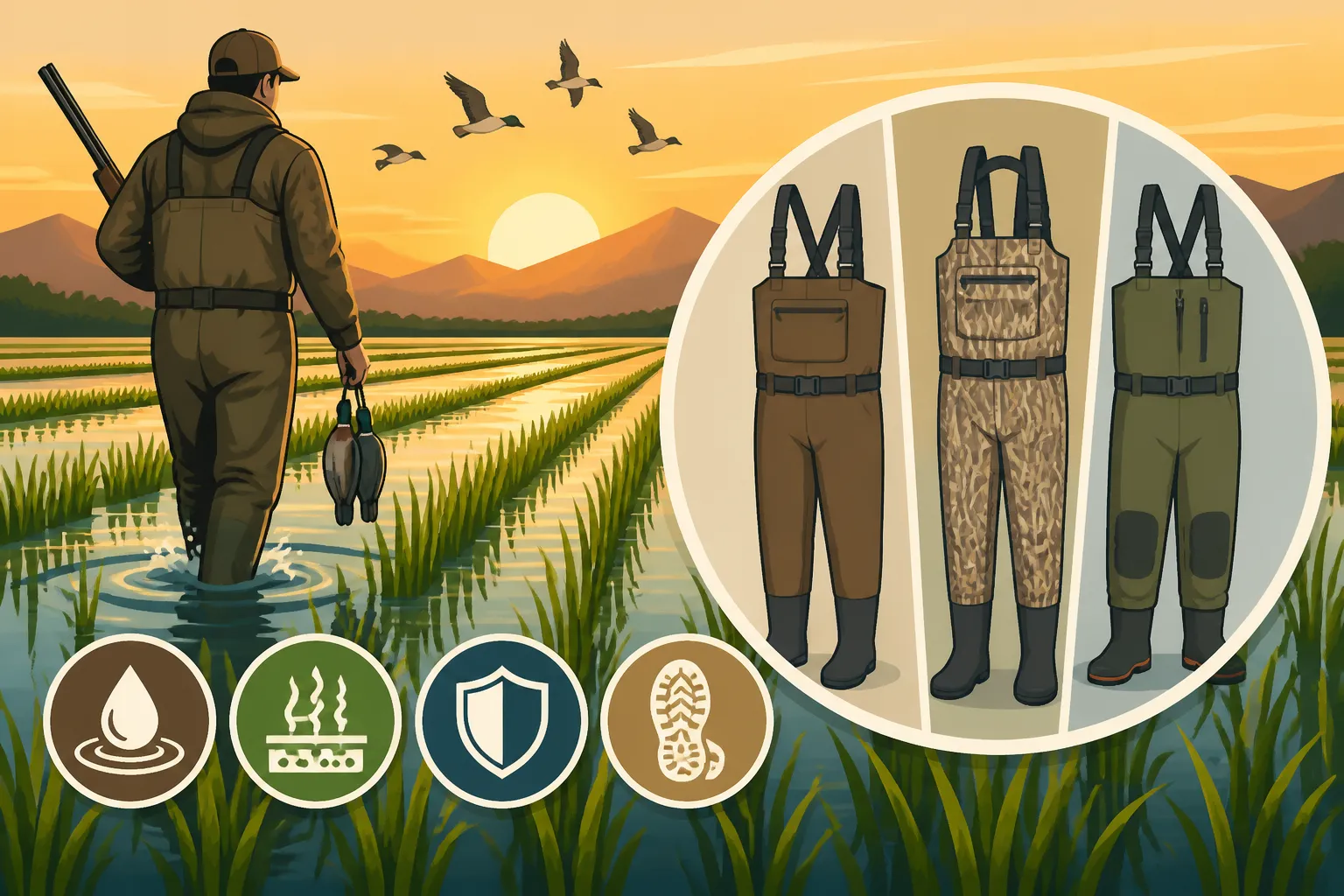
Choosing Waders for Flooded Rice Fields
Few things can ruin a promising duck hunt faster than cold, wet feet, or the constant anxiety of a leaky wader in California's flooded rice fields. We’ve all been there: shivering in a blind, water seeping in, thinking about anything but the birds. This guide is all about helping you cut through the confusion and find the perfect waders to keep you warm, dry, and focused on the hunt, no matter how cold and muddy those Central Valley mornings get.
The Unique Challenges of Hunting California's Flooded Rice Fields
Hunting waterfowl in California's vast Central Valley rice fields is a truly iconic experience, but it comes with its own unique set of demands on your gear, especially your waders. It's not just about wading into water; it's about navigating a challenging, often unforgiving environment where failure in your footwear means a miserable day.
Cold Water and Variable Depths
Imagine stepping into the inky blackness before dawn, the air crisp and biting, and the water a shocking cold that numbs your ankles instantly if your protection isn't up to snuff. California's Central Valley winters can be surprisingly brutal, and the water temperatures in those flooded fields often hover just above freezing. You're not just dealing with cold, though. The depths in a rice field can be incredibly deceptive. One minute you're slogging through ankle-deep mud, the next you're sinking into a pothole that's suddenly waist-deep. A wader that's too short or not properly sealed can turn an unexpected dip into a hypothermia risk, sending you back to the truck early, defeated and soaked. It's not uncommon to push through deep sections to set that perfect decoy spread, or to retrieve a downed bird that drifts into the deepest part of the field. Your waders need to be able to handle these sudden changes without compromise.
Mud, Stubble, and Obstacles
Beneath that seemingly uniform surface of water lies a gauntlet of hazards. The rich, silty soil of the Central Valley creates a notoriously sticky, thick mud that clings to everything and tries to suck your boots right off. Every step is an effort, a constant battle against the drag. And then there's the rice stubble – sharp, stiff, and brittle remnants of the previous harvest, lying just beneath the surface, waiting to puncture weak spots in your waders. I've seen more than one hunt cut short by a tiny, insidious pinhole leak caused by a rogue piece of stubble. Beyond the natural terrain, you also contend with irrigation pipes, fallen debris, old fence lines, and even abandoned farm equipment. These hidden obstacles can snag, tear, or wear through less robust wader materials surprisingly quickly. For those long treks across vast fields to a layout blind, or setting out a sprawling spread of decoys, durability isn't just a nice-to-have; it's absolutely essential. You need confidence that your gear won't betray you miles from the truck. This is where solid reconnaissance, perhaps using satellite imagery on a platform like GoHunt, can sometimes give you a heads-up on potential obstacles or deeper sections, but ultimately, your waders are your frontline defense.
Long Hours and Physical Exertion
A typical waterfowl hunt in California isn't a passive affair. You're usually up before the sun, hauling heavy bags of decoys, setting up blinds, and then often retrieving birds that can fall far and wide. This means hours on your feet, sometimes wading against currents, often through resistance, and always contending with the cold. Think about the energy expended just walking a few hundred yards through knee-deep mud with decoys slung over your shoulder. You’re doing physical labor, and your waders need to accommodate that. Overheating can be as much of a problem as being too cold if you're working hard, especially on those unusually mild December mornings. The constant movement also puts stress on seams and materials, requiring a design that allows for a full range of motion without binding or tearing. If your waders are stiff, heavy, or poorly fitting, they'll turn a physically demanding but enjoyable day into an exhausting chore, leaving you drained before the best flight times even begin. Comfort and mobility are paramount when you're dedicating a whole day to Decoying Mallards on Flooded Rice Ground or retrieving birds.
Deciphering Wader Types for Your Hunt
When it comes to waders, it's not a one-size-fits-all situation. The type you choose largely depends on the specific conditions you'll encounter and your personal hunting style. Let's break down the main categories so you can make an informed decision for those challenging California fields.
Chest Waders: The Workhorse of the Rice Fields
For most waterfowl hunters in California's flooded rice fields, chest waders are the undisputed champions. Their primary advantage is, as the name suggests, their height. They come up to your chest, offering maximum protection against deep water, unexpected potholes, and even splashing from a retrieve or a fast-landing bird. This extra coverage is absolutely critical when you're slogging through unpredictable depths or setting a Best Duck Decoy Spread for Flooded Rice far from shore. They provide a vital layer of insulation that extends well past your waist, helping to keep your core warmer in frigid conditions.
I've learned the hard way that a little extra height can prevent a lot of misery. A misplaced step, a hidden ditch, or simply bending over to grab a decoy can instantly send water over the top of hip-length waders. With chest waders, you have a much greater margin for error, which translates directly to more confidence and comfort in the field. They might feel a bit bulkier or warmer on mild days, but for the majority of the season, especially in the heart of winter in the Central Valley, their superior protection and warmth are indispensable. They are the go-to for situations like Layout Blind Hunting a Flooded Field where you'll be exposed to the elements for extended periods.
Hip Waders and Pant Waders: Niche but Useful
While chest waders dominate, there are specific, more limited scenarios where hip waders or pant waders might come into play. Hip waders, which only come up to your waist, are lighter and offer greater freedom of movement. They can be a viable option for very shallow water scenarios, like hunting along creek banks or areas you know are consistently ankle-to-knee deep. They're also sometimes preferred for early-season hunts when the weather is warmer and the water isn't as cold, or for quick "run and gun" setups where minimal gear is preferred.
Pant waders are a slightly more advanced version, often resembling waterproof pants, usually breathable, and typically worn with a wading belt. They offer a good balance of protection and mobility for situations where you anticipate mostly shallow water but still want to be completely dry. However, the risks with both hip and pant waders in a variable environment like a flooded rice field are significant. A small misjudgment of depth or an unexpected slip can leave you instantly soaked, which is not just uncomfortable but genuinely dangerous in cold weather. They offer minimal insulation compared to chest waders and should only be considered if you are absolutely certain of the water conditions and depth you'll be encountering. For serious Central Valley waterfowl hunting, they're generally not the primary choice.
Bootfoot vs. Stockingfoot
This is another critical distinction that impacts comfort, warmth, and versatility.
-
Bootfoot Waders: These have boots permanently attached to the wader. They are incredibly convenient; you just step in, pull them up, and go. The integrated boots are typically insulated, providing additional warmth to your feet, which is a huge plus in cold water. They're usually designed for mud and muck, offering good traction. The downside can be that the integrated boots might not offer the same precise fit as dedicated wading boots, and if the boot wears out, the whole wader is compromised. However, for sheer convenience and often superior warmth, many rice field hunters swear by bootfoot waders.
-
Stockingfoot Waders: These waders end in a neoprene "sock" (hence "stockingfoot") and require you to wear separate wading boots over them. This setup offers incredible flexibility. You can choose wading boots that perfectly fit your feet, providing superior ankle support and comfort, especially if you're doing a lot of walking across uneven ground. You can also vary your boot insulation depending on the weather, allowing for better temperature regulation. If a boot wears out, you only replace the boot, not the whole wader. The trade-off is the added cost and effort of buying and carrying separate boots, and the potential for mud to get between the wader sock and boot. For those who prioritize a custom fit, long hikes, or greater versatility, stockingfoot waders paired with robust wading boots are an excellent choice. This is often the preferred setup if you're planning to spend significant time Scouting California Public Land Before Season where you might cover varied terrain before hitting the water.
| Feature | Bootfoot Waders | Stockingfoot Waders |
|---|---|---|
| Convenience | High (all-in-one) | Moderate (separate boots required) |
| Fit | Integrated boot fit varies; sometimes bulky | Customizable boot fit for comfort and support |
| Warmth | Often well-insulated integrated boots | Depends on wading boot choice and layering |
| Mobility | Can be heavier, less flexible in the boot | More flexible, lighter feel with right boots |
| Durability | If boot fails, wader compromised | Boots and waders can be replaced independently |
| Traction | Integrated boots usually have aggressive lugs | Depends entirely on chosen wading boots |
| Best Use | Cold, muddy conditions; quick entry/exit | Long walks, varied terrain, customized comfort |
You might also consider checking out Best Chest Waders Versus Hip Waders for a more direct comparison there.
Essential Features for Optimal Performance and Durability
Once you’ve decided on the type of wader (likely chest waders for rice fields), it’s time to dive into the nitty-gritty features that separate a good wader from a truly great one. These details are what make the difference between a comfortable, successful hunt and a cold, frustrating ordeal.
Material Matters: Neoprene vs. Breathable
The material of your waders is perhaps the most critical choice after deciding on the type. The two main contenders are neoprene and breathable fabrics.
-
Neoprene Waders: These are thick, insulating, and renowned for their warmth. Neoprene works by trapping a thin layer of water against your skin, which is then warmed by your body heat, much like a wetsuit. This makes them exceptionally effective in truly frigid water, common in the dead of winter in the Central Valley. They offer good puncture resistance due to their thickness. However, their major drawback is breathability – or lack thereof. If you're hiking a long distance to your blind, or if the day warms up unexpectedly, you can quickly overheat and sweat profusely. That sweat then cools against your skin, ironically making you cold. Neoprene waders are also heavier and bulkier, which can make long walks more tiring. If your hunting involves minimal walking and mostly sitting in freezing water, neoprene might still be your best friend.
-
Breathable Waders: These are made from advanced fabrics like Gore-Tex or proprietary membranes that allow perspiration to escape while preventing water from entering. This makes them incredibly versatile and comfortable, especially for active hunters who walk significant distances. You can layer underneath them according to the weather, allowing for precise temperature control. While they don't offer the inherent insulation of neoprene, you can easily compensate with proper layering – think fleece pants or wool base layers. Breathable waders are typically lighter and more flexible, making them ideal for covering ground. They may be more susceptible to punctures than thick neoprene, but advancements in materials have made them surprisingly tough. When you are moving a lot to scout or set up for Decoying Ducks in California's Central Valley Flooded Rice, breathable waders usually offer superior comfort.
Many seasoned hunters, myself included, have started leaning towards breathable waders for their versatility, pairing them with warm base layers for cold days and lighter layers for milder ones. This flexibility, especially when planning a varied hunting schedule, is a huge advantage.
Boot Construction and Traction
For bootfoot waders, the quality of the integrated boot is paramount. In the sticky, treacherous mud of a rice field, you need a boot that offers:
- Aggressive Traction: Look for deep, widely spaced lugs on the sole that can shed mud and provide grip on slick, submerged surfaces. Smooth-soled boots are an absolute no-go; you'll be slipping and sliding all day.
- Insulation: Adequate insulation (often measured in grams of Thinsulate or similar materials) is crucial to keep your toes from freezing. Remember, cold feet can ruin a hunt faster than anything.
- Ankle Support: While not as critical as a hiking boot, some level of ankle support helps prevent twists and strains when navigating uneven terrain under the water.
- Comfortable Fit: A snug but not tight fit is essential. Too loose, and your foot will slide around, causing blisters; too tight, and you'll restrict circulation, leading to cold feet.
For stockingfoot waders, your choice of wading boot is even more critical. Prioritize boots with excellent ankle support, aggressive rubber soles (felt soles are generally banned or ill-suited for many hunting areas due to invasive species concerns and poor mud traction), and robust construction that can withstand constant abuse. When researching new gear, I often check out what other hunters are saying on forums or platforms like GoHunt to see real-world reviews of boot performance in muddy conditions.
Thoughtful Design Elements
Beyond the main materials and boot type, several smaller design features can significantly enhance your hunting experience:
- Pockets: Hand-warmer pockets are a godsend on frigid mornings, providing a place to quickly warm numb fingers. Water-resistant chest pockets are invaluable for storing calls, shells, licenses, or even your phone, keeping them dry and easily accessible.
- Reinforced Knees and Seat: These high-wear areas are prone to abrasion and punctures from kneeling in the blind or sitting on rough surfaces. Extra layers of material here (often Cordura or similar tough fabrics) drastically extend the life of your waders.
- Adjustable Suspenders and Belt: Comfortable, adjustable suspenders prevent shoulder fatigue and ensure a proper fit. A wading belt is non-negotiable for safety; it prevents water from rushing into your waders if you fall, allowing you to recover. It also helps secure the waders for a better fit and can carry small accessories.
- Attached Gravel Guards (Stockingfoot): These are essential for stockingfoot waders to keep sand, mud, and gravel out of your wading boots, protecting both your feet and the neoprene socks of the waders.
- Integrated Repair Kit: Many quality waders come with a small field repair kit. Even the toughest waders can suffer a minor puncture, and being able to patch it on the spot can save your hunt. Learning how to perform a quick repair is a skill every waterfowler should have.
Keeping Your Waders Field-Ready Season After Season
Investing in a good pair of waders is just the first step. To ensure they serve you well for many seasons to come, proper care and maintenance are absolutely critical. Neglecting your waders can drastically shorten their lifespan, leading to frustrating leaks and premature replacement.
Proper Cleaning and Drying
This is perhaps the most overlooked aspect of wader care, and it’s arguably the most important. After every single hunt, especially in the muddy conditions of California's rice fields, your waders need attention.
- Rinse Thoroughly: As soon as possible, use a hose to thoroughly rinse off all mud, dirt, and grime from the exterior. Pay close attention to the boots, seams, and any folds where mud can hide. If you have stockingfoot waders, make sure to clean your wading boots as well. Residual mud can harbor bacteria, degrade fabric, and rub against the material, creating weak spots.
- Gentle Cleaning: If more than a rinse is needed, use a mild, non-detergent soap (like a diluted dish soap or a specialized wader cleaner) and a soft brush or sponge. Avoid harsh chemicals or stiff brushes, which can damage the waterproof membrane or fabric coatings.
- Thorough Drying: This is paramount to prevent mildew, mold, and funky odors. First, hang your waders inside out for at least 24 hours in a well-ventilated area away from direct sunlight or heat sources. This allows the interior, where sweat and moisture accumulate, to dry completely. Once the inside is dry, turn them right side out and hang them to dry the exterior. Never store damp waders; the smell alone will be enough to make you regret it, and more importantly, mold and mildew will break down the materials and glues. A fan can significantly speed up the drying process.
Storage and Repair
Once your waders are perfectly clean and dry, how you store them and address any issues determines their longevity.
- Proper Storage: Hang your waders from the boots or suspenders in a cool, dry, dark place. Avoid folding them tightly or stuffing them into a bag, as this can create permanent creases that compromise the waterproof membrane. Hanging allows the material to relax and air to circulate. Storing them in a garage or shed is fine, as long as it’s not prone to extreme temperature fluctuations or excessive humidity.
- Field Repairs: Even with the best care, minor punctures or snags can happen. Always carry a small field repair kit with you – patches and glue designed for wader material. Practicing a quick patch job at home can save a hunt if you get a leak. For more significant damage, many wader manufacturers offer professional repair services, or you can find reputable gear repair shops. Don't let a small tear become a catastrophic failure; address it promptly. Before the season starts, I always fill my waders with a few inches of water and visually inspect for tiny leaks, especially around the seams. This pre-season check saves a lot of heartache.
When to Upgrade Your Waders
No piece of gear lasts forever, and waders are no exception. There comes a point where repairs are no longer sufficient, or the waders simply can't provide the level of protection and comfort you need.
- Frequent Leaks: If you're constantly finding new leaks or old patches are failing, it's a clear sign your waders are nearing the end of their life. The material itself might be compromised or the seams are delaminating.
- Loss of Breathability: For breathable waders, if you find yourself sweating excessively even in cold weather, the membrane might be clogged or worn out, losing its ability to transport moisture.
- Degradation of Material: Cracking neoprene, stiff fabric, or worn-out boots are all indicators that the material is breaking down.
- Discomfort or Lack of Insulation: If your waders no longer keep you warm or comfortable, even with proper layering, they're not doing their job.
Upgrading your waders is an investment in your comfort, safety, and ultimately, your enjoyment of the hunt. Don't wait until you're shivering in a flooded field to realize it's time for new gear. Researching new models and reading reviews, perhaps on a platform like GoHunt, can help you find the next generation of reliable waders that will keep you in the field and focused on California Waterfowl on the Pacific Flyway.
Disclaimer
This article is for general informational purposes only and does not constitute professional advice. Laws, prices and regulations vary by location and change over time. Consult a qualified professional for guidance on your specific situation.