Best Layout Blind for a Refuge-Adjacent Field
Hunting the edges of a bustling wildlife refuge or state-managed wildlife area in California can be incredibly rewarding, but it also presents a unique set of challenges. These birds, especially ducks and geese, are often incredibly wary, having seen every trick in the book inside the refuge boundaries. Picking the best layout blind for these refuge-adjacent fields is crucial for disappearing into the landscape and turning those cautious flights into successful decoying opportunities. This guide will walk you through what makes a layout blind excel in these high-pressure environments.
Understanding the Unique Challenges of Refuge-Adjacent Fields
Hunting directly outside of a managed refuge or wildlife area isn't like hunting a random farm pond in the middle of nowhere. The birds here are often "refuge educated," meaning they've spent their days enjoying sanctuary and have a keen sense of what looks out of place. This means your concealment needs to be absolutely top-tier.
The Pressure Cooker Environment
Imagine hundreds, if not thousands, of ducks and geese spending their nights and early mornings feeling safe within refuge boundaries. They fly out to feed in adjacent agricultural fields during the day, and then return. This creates predictable flight patterns, yes, but also a massive amount of pressure. These birds see blinds, they see hunters, and they learn quickly. They're scanning from high altitudes, looking for anything that screams "danger" on the ground. A blind that might work fine on a lightly hunted private pond will stick out like a sore thumb to birds that have dodged hunters all season. You're competing with dozens of other hunters, often on publicly accessible land, so standing out for the wrong reasons is a surefire way to go home empty-handed. It's a game of inches when it comes to concealment against such sharp eyes.
Maximizing Concealment in Open Fields
Refuge-adjacent fields are, by their very nature, often wide open. We're talking cut stubble fields, vast expanses of rice, or recently harvested corn. There's minimal natural cover – no big oak trees to tuck under, no dense willow thickets to hide a permanent blind. This means your layout blind must become part of the field itself. A high-profile blind, even one with good camouflage, will cast a shadow, create an unnatural bump, or just look "wrong" from above. The goal is to blend seamlessly, becoming another subtle contour in the terrain. This isn't just about color, it's about shape, shadow, and breaking up your outline completely against a flat, exposed background.
Portability and Quick Setup are Key
The best feeding fields near a refuge can change daily, depending on crop rotations, recent rains, or even just what the birds decided looked good that morning. You might be scouting Reading a Wetland for a Morning Flight one day and realize the X has moved a mile away. This demands a layout blind that can be packed in, set up, and taken down quickly. You might also need to adjust your setup on the fly as bird patterns change throughout the day, or as the sun shifts, exposing a previously hidden shadow. A heavy, cumbersome blind that takes forever to assemble can mean missing the morning flight or being too tired to relocate when the birds decide they prefer a different corner of the field. Efficient movement is a silent hunter's best friend.
Key Features to Look for in a Layout Blind for Adjacent Fields
When you're trying to fool thousands of wary birds that have seen it all, your layout blind isn't just a place to sit; it's a critical piece of your concealment strategy. Every detail matters.
Low Profile and Effective Camouflage
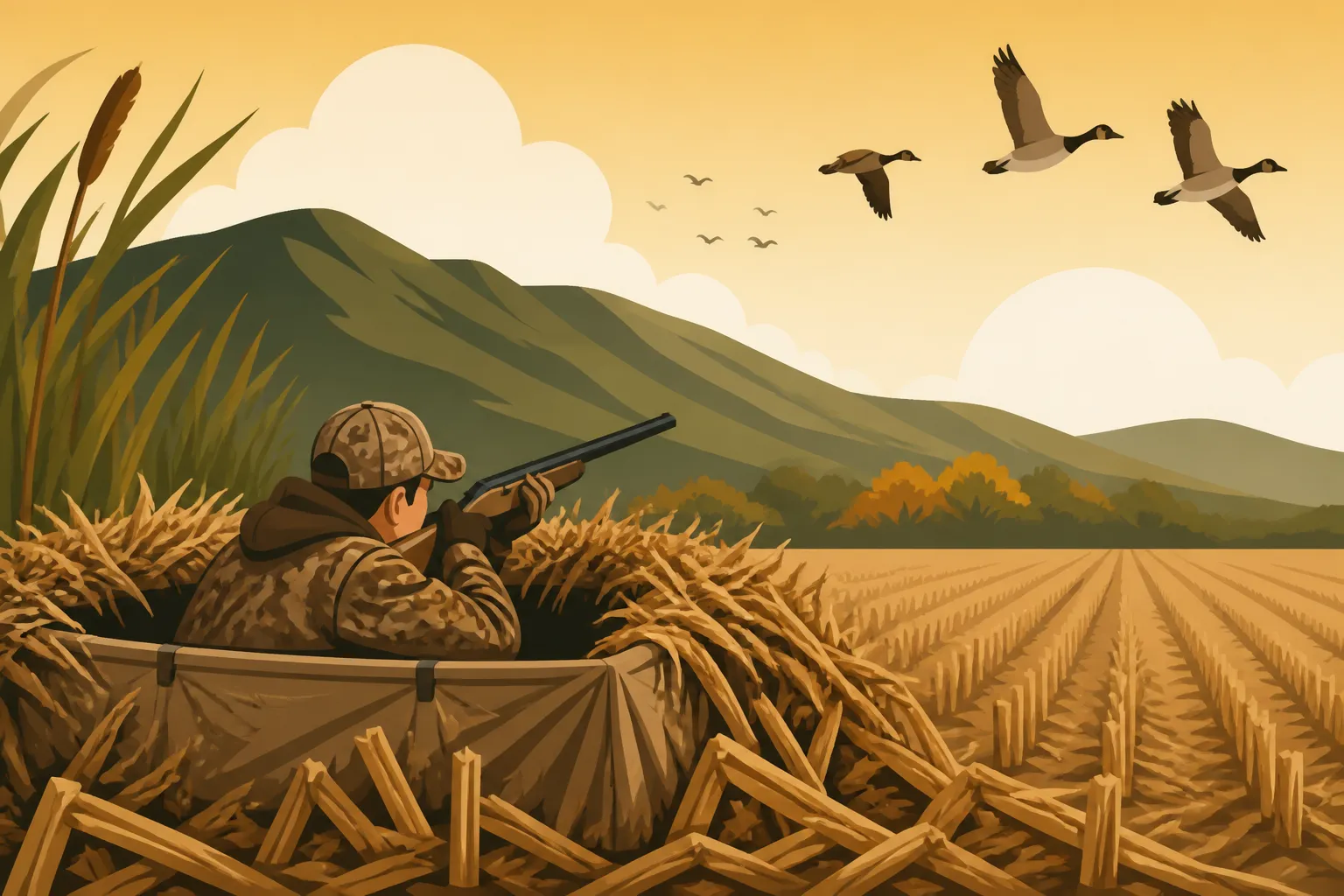
This is non-negotiable for refuge-adjacent hunting. The lower your profile, the less you disrupt the natural contours of the field. Look for blinds that are designed to hug the ground, minimizing any unnatural bumps or shadows. A blind that sits too high will be immediately flagged by circling ducks or geese. Beyond the overall height, the camouflage pattern itself is vital. You want patterns that match the local vegetation you'll be hunting in – whether it's dry stubble, green cover, or dark soil. Many blinds feature built-in stubble straps, which are small loops or pockets designed to hold natural vegetation you gather from the field. These aren't just a nice-to-have; they're essential. They allow you to add local grasses, cornstalks, or rice stubble directly to your blind, breaking up its manufactured outline and making it truly disappear. Think of it as painting a natural masterpiece directly onto your hide. For example, if you're hunting a cut rice field in the Sacramento Valley, you'll want to gather rice stubble to tuck into those straps. The more you can make your blind look like just another piece of the field, the better your chances of fooling those sharp eyes.
Durability and Weather Resistance
Hunting often means early mornings, rough fields, and unpredictable weather. Your layout blind needs to be able to take a beating and keep you dry and comfortable. Look for blinds constructed with heavy-duty fabrics, robust frames, and strong stitching. You'll be dragging it across fields, loading it into trucks, and setting it up on rough ground. Cheap materials will tear, frames will bend, and zippers will fail. Consider the typical weather conditions in California during waterfowl season. You might start a hunt in thick fog, endure a sudden rain shower, and then have the sun pop out. Your blind needs to shed water, protect you from the wind, and still be breathable enough to prevent condensation. Water-resistant or waterproof coatings are a big plus. Look for blinds with reinforced bottoms, as this part takes the most abuse from wet ground and abrasive stubble. A blind that can't withstand repeated use in harsh conditions isn't just a waste of money; it's a ruined hunt.
Comfort and Functionality for Long Sits
While concealment is paramount, you're going to be spending hours in this blind, often before dawn and well into the morning or afternoon. Comfort might seem secondary, but an uncomfortable hunter shifts, fidgets, and might even stand up early, ruining the hunt. Look for blinds with adequate padding in the seat and backrest. A good headrest can also make a huge difference, allowing you to stay low and comfortable while you're waiting. Functionality includes easy entry and exit, smooth-opening flag ports for calling birds, and strategically placed viewing windows or mesh panels that allow you to scan the sky without moving your head too much. Some blinds even offer small interior pockets for your calls, extra shells, or a water bottle, keeping essentials within easy reach. The best blinds offer a good balance: keeping you hidden, but also allowing you to stay alert and ready to react when the moment of truth arrives. You'll find that companies like GoHunt offer detailed reviews and user feedback on blind designs, which can be invaluable when making your choice.
| Feature | Importance for Refuge-Adjacent Fields | Description |
|---|---|---|
| Low Profile | Critical | Minimizes visible footprint, makes you disappear into flat ground, avoids casting unnatural shadows. |
| Stubble Straps | Essential | Allows integration of local vegetation (rice, corn, grass) to perfectly match surroundings, breaking up the blind's outline. |
| Durable Fabric | High | Withstands dragging, setup/takedown, and rough field conditions. Resists tears and abrasions. |
| Weather Resistance | High | Keeps hunter dry from dew, rain, and wet ground. Protects from wind. |
| Comfort Padding | High | Allows for long, motionless sits without discomfort, reducing fidgeting and early exits. |
| Ease of Entry/Exit | High | Quick, quiet access and departure, crucial for setting up before light and retrieving birds. |
| Viewing Port | High | Allows wide field of vision for spotting birds without lifting head or exposing face, essential for monitoring wary birds. |
| Flagging Port | Moderate | Dedicated opening for using a duck or goose flag without exposing arm or body. |
| Lightweight/Portable | High | Facilitates quick relocation if birds change patterns or if you need to hike into a distant spot. |
Top Considerations for Blending Your Blind into the Landscape
Having the right layout blind is only half the battle. The other half is knowing how to make it disappear completely into the environment. This is where true field craft comes into play.
Stubble Straps and Natural Vegetation
This cannot be stressed enough: use the stubble straps. Don't just throw a few pieces of grass on top; really work to make your blind look like a natural part of the field. Before you even set up your decoys, take time to gather natural vegetation from the immediate area. If you're in a cut corn field, grab corn stalks. If it's a rice field, use rice stubble. If it's a fallow field with dry weeds, use those. The key is to match what's exactly around your blind. Tuck this vegetation into every stubble strap, making sure to break up the hard lines and shape of the blind. Overlap pieces, mix in different types of stubble if available, and try to replicate the density and randomness of the surrounding field. Looking at the blind from different angles, especially from a low vantage point as a duck or goose would see it, can help you identify any areas that need more work. It’s also wise to check the blind from a distance – sometimes what looks good up close screams "hunter" from 300 yards away. This meticulous brushing-in makes all the difference when those wary birds are circling.
Strategic Placement for Optimal Shots and Concealment
Where you place your blind within the field is just as important as how well you brush it in. Consider the wind direction – ducks and geese almost always land into the wind. You want your blind positioned so that incoming birds are landing in front of you, giving you an ethical shot opportunity. Also, think about the sun's position. Early morning or late afternoon sun can cast long, revealing shadows. Position your blind so that the sun is either behind you, silhouetting the birds, or coming from an angle that minimizes your blind's shadow. Look for natural depressions, small rises, or even irrigation ditches that can offer a slight advantage in lowering your profile. Don't just pick a spot in the middle of the field because it's convenient. Scout the field thoroughly, walk it, and observe the natural contours. Even a six-inch rise can make a difference in breaking up your outline. Remember to align your blind with the expected flight path of the birds. Decoy Placement for Pressured California Birds often means setting up your blind slightly downwind of your main decoy spread, allowing birds to cup in over the decoys before reaching your shooting zone.
Managing Your Footprint and Gear
It's not just the blind that needs to disappear; it's everything associated with your presence. When you're dealing with refuge-educated birds, every little detail counts. Park your vehicle far from the field and approach quietly in the dark. Avoid making new trails or disturbing the surrounding vegetation more than absolutely necessary. Once your blind is set up and brushed in, all your extra gear needs to vanish too. Your blind bag, thermos, extra calls, and anything else you brought should be tucked inside the blind or meticulously hidden under additional stubble around the blind. Don't leave bright-colored items, shiny surfaces, or anything that doesn't belong in a field lying around. Even the glint of a cell phone screen can spook birds. When birds are circling high, they're looking for patterns, anomalies, and anything out of place. Your goal is to be utterly invisible. Consider using an app like GoHunt to study aerial maps of your chosen field, looking for existing cover, access points, and ways to minimize your approach and footprint. Minimizing your presence on the ground contributes just as much to overall concealment as the blind itself.
Setting Up for Success: Practical Tips for Refuge-Adjacent Hunting
Even with the perfect layout blind and masterful brushing, success in refuge-adjacent fields comes down to consistent effort and attention to detail.
Scouting and Patterning Birds
This is arguably the most critical step for success in these high-pressure areas. You simply cannot show up on opening day hoping for the best. Days, even weeks, before the season, you need to be out there observing. Watch where birds fly out from the refuge, which fields they prefer to feed in, and at what times. Are they hitting a specific corner of a Hunting a Standing Alfalfa Field? Are they favoring a particular windbreak? Pay attention to how they approach and depart the fields. Are they following a creek bottom? Flying over a specific tree line? Use binoculars and spotting scopes to identify these patterns. This intelligence will tell you exactly where to set up your layout blind for the best shot opportunities. Remember, these birds are conditioned, and their patterns can be surprisingly consistent until something changes. Checking Scouting California Public Land Before Season will give you a leg up on understanding how to approach this effectively. Tools like GoHunt with their detailed satellite imagery can help you identify potential feeding areas and access points from home, narrowing down your on-the-ground scouting efforts.
Decoy Spreads and Calling Strategies
Your layout blind works in conjunction with your decoy spread and calling to create a convincing scene. For refuge-adjacent fields, realism is key. These birds have seen every cheap decoy spread and every blown call. Your spread should mimic what natural birds would do: a mix of feeders, uprights, and sentries. Consider adding motion decoys, but use them judiciously – sometimes less is more, especially with wary birds. Decoying Mallards on Flooded Rice Ground often requires subtle movement rather than aggressive flapping. Position your decoys upwind of your layout blind, creating a landing zone directly in front of you. When it comes to calling, practice makes perfect. Use calls that accurately mimic the sounds of the species you're hunting. Start with soft, inviting calls, and only increase volume or aggression if birds are ignoring you or flying past. A few well-placed quacks or contented clucks can be far more effective than an aggressive highball that screams "amateur." Watch the birds' reactions to your calling and adjust accordingly.
Post-Hunt Breakdown and Maintenance
Your hunt doesn't end when the shooting stops. Proper breakdown and maintenance of your layout blind will ensure its longevity and readiness for your next outing. First, make sure you collect all your spent shells, trash, and any other items you brought into the field. Leave no trace. Carefully remove all the natural vegetation from your stubble straps – leaving it in can cause mold and mildew. Wipe down the blind's interior and exterior to remove mud, moisture, and any bird droppings. Allow the blind to air dry completely before folding it for storage. Storing a wet blind is a sure way to develop mildew, which not only smells terrible but also degrades the fabric. Check for any rips, tears, or broken frame components. Make small repairs immediately, rather than waiting for them to become bigger problems. Lubricate zippers if they're sticking. By taking good care of your layout blind, it will serve you faithfully season after season, helping you disappear into those challenging refuge-adjacent fields. For example, after a day Hunting a Refuge-Adjacent Field at Dawn, a quick hose-down and air dry will prevent that dreaded mildew smell.
Disclaimer
This article is for general informational purposes only and does not constitute professional advice. Laws, prices and regulations vary by location and change over time. Consult a qualified professional for guidance on your specific situation.