Best Game Cart for Steep California Terrain
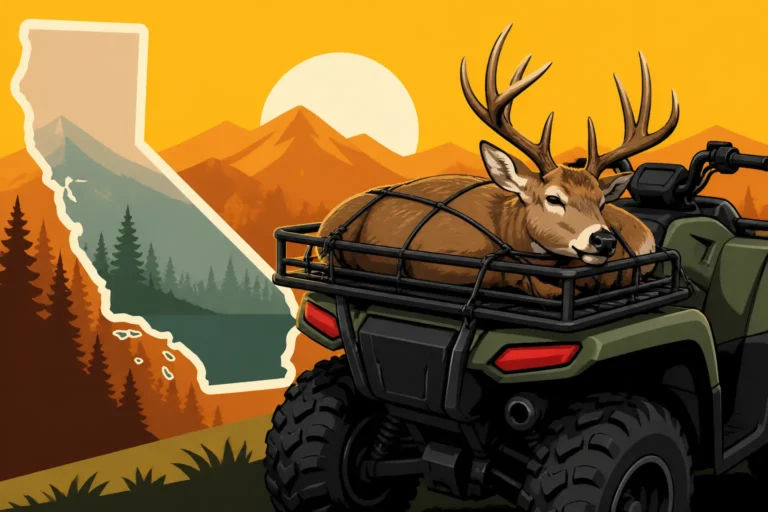
Dragging a deer, or worse, a whole bear or elk, out of California's steep, unforgiving canyons can feel like an impossible task, especially when you're alone and miles from the nearest trail. The sheer exhaustion and muscle strain can turn a successful hunt into a grueling test of endurance. This guide will walk you through choosing the best game cart specifically designed to conquer the challenging, rugged terrain found across much of California's prime hunting country, making your pack-out much more manageable.
The Reality of Retrieving Game in California's Rugged Terrain
California's hunting grounds are incredibly diverse, from the thick chaparral of the coastal ranges to the sprawling, timbered peaks of the Sierra Nevada. What they often share, however, is a common trait: they're rarely flat. A successful hunt in a high-country X-zone or deep in a D-zone often means a long, steep, and treacherous pack-out. Trying to drag a heavy animal through brush, over downed logs, or up a loose shale slope can quickly sap your strength, injure you, and even damage the meat.
Why Traditional Dragging Often Fails in California's Mountains
Imagine this scenario: you've just taken a beautiful blacktail buck deep in a Sierra foothill meadow, a good two miles from your truck. You’re pumped, adrenaline is high. But then you start the drag. The ground is a mix of loose rock, thorny manzanita, and fallen oak branches. Every few yards, the deer's antlers snag, or its hide catches on a sharp rock. You slip, you grunt, you sweat, and that initial euphoria slowly gives way to aching shoulders and burning lungs. By the time you reach the truck, the deer might be scarred, and you’re absolutely spent, questioning if the effort was worth it. This isn't just unpleasant; it’s inefficient and risks ruining precious venison. Dragging a Deer Out of a Steep Canyon or trying to Recovering a Deer From a Steep Canyon without the right tools can be a nightmare.
For larger game like bears or elk, especially if you're not planning to quarter it on the spot, dragging simply isn't an option. An adult black bear can easily weigh hundreds of pounds, and a bull elk much more. The sheer bulk and weight make it impossible for one or even two people to move efficiently through dense timber or over broken terrain. Hunters often have to resort to multiple trips with quartered meat, which, while effective, is still incredibly time-consuming and energy-intensive.
The Impact of Terrain on Your Body and Your Meat
Steep terrain amplifies every challenge. Gravity is no longer your friend; it's a relentless foe. Going downhill with a heavy load is precarious, demanding constant vigilance to avoid falls and maintain control. Going uphill, it feels like you're pulling a truck. This extreme physical exertion not only exhausts you but can lead to overheating, dehydration, and increased risk of injury, especially in the warm early season Hot-Weather Sitting Strategy in August. The constant bumping and jostling of a dragged animal can also affect meat quality, potentially bruising it or accelerating spoilage if the animal isn't cooled quickly. A game cart, specifically designed to navigate these challenges, acts as a force multiplier, distributing weight and allowing you to move heavy loads with significantly less effort and greater safety.
Essential Features for a Game Cart Built for the Backcountry
When you're facing miles of rugged climbs and descents, a flimsy game cart just won't cut it. You need a piece of gear that's as tough and determined as you are. For steep California terrain, certain features move from "nice to have" to "absolutely essential."
Large, All-Terrain Wheels
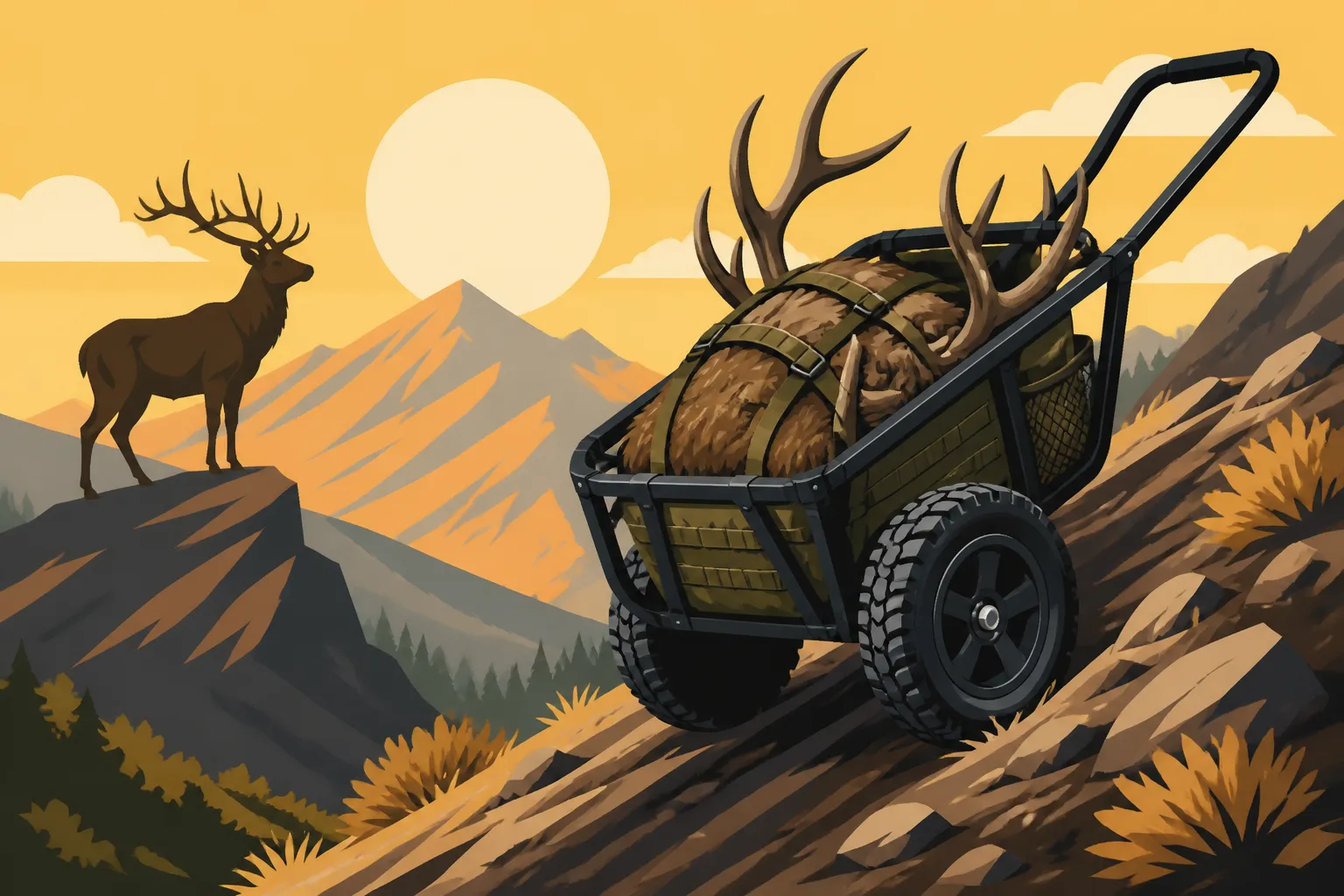
This is arguably the most critical feature. Forget those small, hard plastic wheels you see on cheap utility carts. For true backcountry performance, you need wheels that can handle rocks, roots, mud, and loose dirt without bogging down or breaking. Look for large-diameter wheels, generally 20 inches or more, with pneumatic (air-filled) tires. These larger wheels roll over obstacles more easily than smaller ones, and the air-filled tires provide crucial cushioning and grip.
Consider the tread pattern too. A knobby, aggressive tread, similar to a mountain bike tire, will give you better traction on loose dirt and slippery surfaces compared to a smoother, road-oriented tire. The width of the tire also plays a role; wider tires distribute weight better, preventing the cart from sinking into soft ground, which is common in areas after a rain or in muddy creek bottoms. It's often worth investing in high-quality wheels, as they're the primary point of contact with the ground and often the first thing to fail on an inferior cart.
Robust Frame Construction and Weight Capacity
A game cart for steep country needs a frame that won't buckle under pressure. Aluminum frames are popular for their balance of strength and light weight, which is important when you're hauling the cart itself up a mountain. However, look for heavy-gauge aluminum tubing, preferably welded, not just bolted, at critical stress points. Steel frames offer ultimate strength but come with a significant weight penalty, which can be a real issue when you're already fighting gravity.
Pay close attention to the rated weight capacity. While a cart might claim to hold 500 pounds, think about what you actually plan to haul. A quartered elk can easily push the limits, and if you plan to move a whole deer, you need a cart capable of handling a significant static load. The design of the frame should also allow for the animal to be securely strapped in place, preventing it from shifting unexpectedly on steep inclines or declines. A shifting load is a dangerous load, especially on a sidehill.
Integrated Brakes or Reliable Braking Mechanisms
When you're descending a 30-degree slope with 150 pounds of deer meat, control is paramount. Many basic game carts lack any formal braking system, relying solely on your physical strength to hold them back. This is where a quality cart truly shines. Look for carts that incorporate a hand-operated brake system, often engaging directly with the wheels. This allows you to modulate your speed and prevent the cart from running away from you on steep sections.
If an integrated brake isn't present, consider how you might improvise. Some hunters use a length of rope wrapped around the axle or frame and then around a tree or rock as a makeshift brake. While not ideal, it's better than nothing. However, for maximum safety and ease of use in truly steep terrain, a dedicated braking system is highly recommended. It saves your back, your shoulders, and most importantly, keeps you and your hard-earned game safe.
Types of Game Carts and Their Performance on Rugged Trails
Not all game carts are created equal, and what works beautifully on a flat farm road will likely leave you frustrated and exhausted on a steep, rocky mountain trail. Understanding the different types and their pros and cons for California's diverse and challenging terrain is key to making the right choice.
Two-Wheel Carts: Stability for Heavy Loads
The classic two-wheel game cart is what most people picture. It typically features a rectangular frame with an axle running across it, supporting two large wheels on either side. The load is placed on the frame, and the hunter lifts the handles, essentially creating a lever to balance the weight over the axle.
Pros for Steep California Terrain:
- Weight Capacity: Two-wheel carts generally offer higher weight capacities, making them suitable for whole deer, quartered elk, or multiple hogs. The load is distributed more broadly.
- Stability: With two points of contact with the ground, they are inherently more stable on relatively even, albeit steep, surfaces. This is good for maintaining control on direct uphill or downhill pushes.
- Versatility: Many models can be folded for transport, and some even double as haulers for other gear like firewood or treestands.
Cons for Steep California Terrain:
- Width: The main drawback in thick California brush or narrow game trails is their width. Navigating between tightly growing oak trees or through dense chaparral can be a struggle, leading to frequent hang-ups.
- Side-hilling: On steep sidehills, a two-wheel cart can be awkward and unstable, requiring significant effort to prevent it from tipping over. This makes traversing contours difficult.
- Obstacle Clearance: While large wheels help, the central frame can still get hung up on large rocks or downed timber if the ground clearance isn't sufficient.
A two-wheel cart might be a solid choice if your hunt involves traversing fire roads, wider trails, or relatively open country with steep but direct climbs, such as in parts of the Modoc Plateau or certain open D-zones. However, for dense, brushy areas or truly technical single-track trails, its width can be a significant hindrance.
Single-Wheel Carts (Game Unicycles): Nimbleness for Tight Spots
Less common, but incredibly effective in specific situations, is the single-wheel game cart, sometimes affectionately called a "game unicycle." These carts have a single, large wheel, with a frame that extends forward and back, designed to carry the load more in line with the hunter's body.
Pros for Steep California Terrain:
- Maneuverability: The biggest advantage is their narrow profile. A single-wheel cart can follow you down a game trail, through tight timber, or along a narrow brush tunnel much more easily than a two-wheel model. This is invaluable in the tangled undergrowth of the coastal range or the denser parts of the Sierra Nevada.
- Side-hilling: Because you are essentially balancing it like a wheelbarrow, a single-wheel cart can be more adaptable on steep sidehills. You can lean into the slope, allowing the wheel to track along the contour without the tipping sensation of a two-wheeler.
- Obstacle Negotiation: A single point of contact can sometimes be easier to "thread" through tight spots or over obstacles where a wider cart would get stuck.
Cons for Steep California Terrain:
- Balance: The primary challenge is balancing the load. It requires more core strength and coordination, especially with heavy or awkwardly shaped animals. A moment of inattention can lead to a tip-over.
- Load Capacity: While some models are robust, their practical load capacity might be slightly less than a large two-wheel cart, or at least feel less stable with an equivalent heavy load.
- Fatigue: The constant act of balancing can be fatiguing over long distances, potentially transferring strain to your arms and shoulders in a different way than a two-wheel cart.
If your hunting takes you into thick, overgrown areas where every foot of width matters, or you find yourself constantly traversing steep contours and narrow paths, a single-wheel cart could be a game-changer. It demands a bit more skill and effort to operate, but its ability to navigate challenging terrain can be unmatched.
Ultimately, your choice depends on the specific terrain you typically hunt. Many hunters, especially those exploring diverse areas, find themselves wishing they had both options at different times. Hunting Coastal Range Oak Woodlands might favor a different cart than Still-Hunting California's Sierra Nevada Timber.
| Feature / Cart Type | Two-Wheel Cart | Single-Wheel Cart (Game Unicycle) |
|---|---|---|
| Primary Advantage | High weight capacity, inherent stability | Superior maneuverability in tight spaces |
| Ideal Terrain | Wider trails, fire roads, direct steep climbs | Narrow game trails, dense brush, steep sidehills |
| Width on Trail | Wider, can snag on brush/trees | Narrow, tracks easily in line with hunter |
| Side-Hilling | Can be unstable, prone to tipping | More adaptable with proper balancing technique |
| Balance Requirement | Minimal, load is over axle | Requires active balancing by hunter |
| Physical Exertion | Pulling/pushing strength | Core strength, balancing, arm/shoulder stamina |
| Load Capacity (Typical) | Very high (300-500+ lbs) | High (200-400 lbs) but more challenging to balance at max |
| Best For | Whole deer, multiple quartered animals, less technical terrain | Single deer, quartered elk, very technical and brushy areas |
Mastering Your Game Cart: Techniques for Steep Climbs and Descents
Having the right game cart is only half the battle; knowing how to use it effectively on steep, uneven terrain is just as crucial. Proper technique can make the difference between a successful, albeit tough, retrieve and a frustrating, potentially dangerous, experience.
Uphill Strategies: Leverage and Pace
Climbing a steep incline with a loaded game cart is a true test of grit. Your primary goal is to use leverage and maintain a steady, sustainable pace.
- Zigzagging (Switchbacks): Just like hikers and pack animals use switchbacks on mountain trails, you should too. Instead of attempting a direct assault up the steepest part of a slope, move diagonally across it. This reduces the effective grade, making the climb less strenuous. Even if there's no visible trail, you can often "cut" your own temporary switchbacks through the terrain. Use mapping apps like GoHunt to scout potential routes that might allow for a gentler ascent before you even start your retrieve.
- Lean In and Drive with Your Legs: Keep your body weight leaning into the cart, using your legs to power the push or pull. Avoid trying to lift the cart with your arms and back; this is a recipe for injury. If you're pushing, keep the handles low and close to your body for maximum leverage. If pulling (which can be easier in some situations, especially on rocky ground where you can see obstacles), a sturdy harness designed for pulling can distribute the weight to your hips and shoulders more evenly than just gripping the handles.
- Rest Frequently: Don't try to be a hero and push through without breaks. Take short, frequent rests. Drop the cart, catch your breath, and let your muscles recover. This strategy is far more effective than trying to power through and crashing halfway up the hill. Use these breaks to adjust the load, check your straps, and reassess your route.
Downhill Control: Braking and Body Positioning
Descending with a heavy, loaded game cart can be even more dangerous than going uphill if not handled properly. Gravity is working against you, and loss of control can lead to serious injury or damage to your game.
- Utilize Brakes (If Available): If your cart has an integrated braking system, use it! Feather the brakes to control your speed, especially on loose or rocky ground. Never let the cart get ahead of you; it should always be under your full control.
- Body Position: For two-wheel carts, it's often best to walk behind the cart, guiding it down the slope. Keep the handles relatively high to help prevent the front from digging in, and use your body weight as an anchor. For single-wheel carts, you might find it easier to walk beside it, using your arm to balance and control the descent. On very steep sections, you might even consider turning the cart around and pulling it down backward, using your body as a counterweight.
- Navigate Obstacles Cautiously: Don't try to roll directly over large logs or boulders on a steep descent. The cart can easily lurch, tip, or throw you off balance. Instead, carefully navigate around them or, if necessary, lift and reposition the cart one wheel at a time over the obstacle. Take your time, assess the best line, and proceed slowly.
- Secure the Load: Before any descent, double-check that your animal is securely strapped to the cart. Even minor shifts can throw off the balance and make the cart unmanageable. Consider using extra ratchet straps to really cinch everything down.
Navigating Specific California Obstacles
California's terrain throws unique challenges at you. In areas like the Hunting a California BLM Desert Wash for Deer, you might encounter loose sand, gravel, and steep-sided arroyos. Here, wide tires are your friend, and patience is key, often requiring short, powerful bursts followed by rests. In the Hunting Northern California's Coast Range, you're dealing with dense brush, downed timber, and often slick, wet leaves. A narrower cart excels here, and careful foot placement is critical to avoid slips. No matter where you are, always scout your extract route with a tool like GoHunt beforehand to identify the steepest grades, potential bottlenecks, and the best natural contours to follow.
Pre-Hunt Planning and Maintenance for Cart Durability
A game cart is an investment, both financially and in the effort it saves you. Just like your rifle or bow, it performs best when properly prepared and maintained. This is especially true when tackling the harsh conditions of California's backcountry.
Scouting Your Extraction Route with GoHunt
Before you even step foot in the woods with your cart, take time to study the terrain. This is where modern tools really shine. Apps like GoHunt are invaluable for understanding topography. You can look at satellite imagery and topographical maps to identify potential extraction routes.
- Identify Natural Breaks: Look for old logging roads, fire breaks, dry creek beds (ensure they're not too rocky), or ridge lines that offer a more gradual slope or clearer path. Trying to cut a new path through dense wilderness with a loaded cart is incredibly difficult.
- Assess Grade and Obstacles: Use the contour lines on your mapping app to determine the steepness of slopes. A section that looks manageable on a map might be a wall in person. Identify choke points like rock gardens, thickets of brush, or areas with extensive downed timber. Knowing these ahead of time allows you to plan detours or strategize how you'll get through them.
- Plan Bailout Points: What if your primary route becomes impassable? Having a secondary option or knowing where you can safely leave your cart and return for it later (if quartering out meat) is a smart backup plan. Scouting California Public Land Before Season isn't just for finding game, it's for finding your way out with it.
Pre-Season Inspection and Tune-Up
Don't wait until opening morning to pull your cart out of the garage. A thorough pre-season inspection can prevent breakdowns in the field.
- Tires and Air Pressure: Check your pneumatic tires for cracks, dry rot, or punctures. Inflate them to the manufacturer's recommended pressure. Under-inflated tires increase rolling resistance and are more prone to flats; over-inflated tires can reduce grip and cushioning. Always carry a small patch kit and a portable pump if your wheels are pneumatic.
- Frame and Fasteners: Inspect the entire frame for bends, cracks, or signs of metal fatigue. Check all bolts, screws, and pins for tightness. If anything feels loose, tighten it. If any parts are heavily rusted or corroded, consider replacing them. A single loose bolt can cause a catastrophic failure miles from your vehicle.
- Straps and Brakes: Examine your tie-down straps for fraying, cuts, or worn buckles. Replace them if there's any doubt about their integrity. For carts with brakes, test them thoroughly. Ensure the cables are taut, the pads engage firmly, and they don't stick. Lubricate any moving brake components as needed.
- Lubrication: Apply a suitable lubricant to axle bearings (if applicable), wheel hubs, and any folding mechanisms. This reduces friction, makes the cart easier to roll, and extends the life of these components.
Post-Hunt Cleaning and Storage
Your game cart will inevitably get dirty, muddy, and bloody. Proper cleaning and storage are vital for its longevity.
- Clean Immediately: As soon as possible after your hunt, clean the cart thoroughly. Remove any dirt, mud, blood, and vegetation. A hose and a stiff brush usually do the trick. Pay special attention to the wheel wells, axle, and any folding joints where grime can accumulate. Blood can be corrosive and should be washed off promptly.
- Dry Completely: After cleaning, ensure the cart dries completely before storing it. Moisture can lead to rust on steel components and corrosion on aluminum, as well as mildew on any fabric parts. Store it in a dry place, ideally out of direct sunlight, to prevent material degradation.
- Organized Storage: Store your cart in a way that prevents it from getting damaged or misplacing parts. Many carts fold down, making them easier to store in a garage or shed. Keeping it ready for the next adventure means less scramble when you're preparing for another season. Regularly maintaining your cart, like you would your Rifles and Calibers for California Big Game, ensures it's always ready to perform when you need it most, whether you're bringing out a deer from a Hunting a Ridge-Top Saddle at First Light or a hog from Hunting Pigs on Central Coast Oak Ranges.
Disclaimer
This article is for general informational purposes only and does not constitute professional advice. Laws, prices and regulations vary by location and change over time. Consult a qualified professional for guidance on your specific situation.