Best Rifle Caliber for Roosevelt Elk
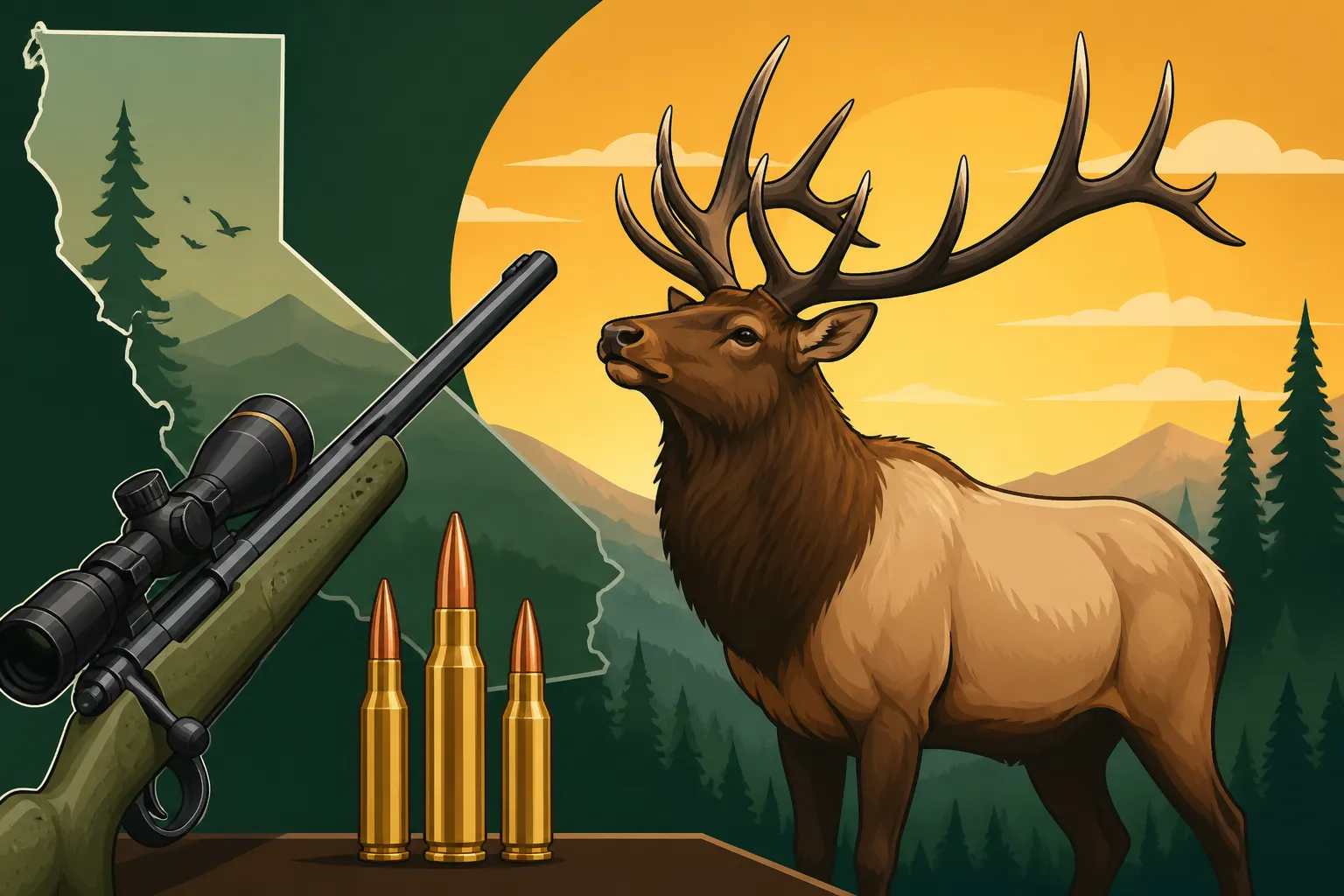
Choosing the right rifle caliber for a Roosevelt elk hunt in California can feel like a daunting task, especially when you consider their immense size, the dense coastal forests they inhabit, and the critical need for an ethical, clean harvest. It’s not just about raw power; it’s about balancing bullet performance, accuracy, and recoil manageability with California’s specific non-lead ammunition requirements. This guide is here to cut through the confusion and help you confidently select a caliber that gives you the best chance for success when pursuing these magnificent animals.
Understanding Roosevelt Elk and Their Habitat
Roosevelt elk are truly magnificent creatures, and unlike their more open-country Rocky Mountain cousins, they thrive in the dense, often steep, and unforgiving timber of California’s North Coast. Imagine deep redwood canyons, thick brush, and perpetually damp conditions. These aren't your typical long-range prairie hunts; you're often getting a fleeting glimpse through a narrow window in the foliage, or a quick shot as a bull skirts a ridge. This unique environment directly influences the kind of rifle and caliber you’ll want to carry.
These elk are big. Really big. A mature Roosevelt bull can easily weigh over 1,000 pounds, making them one of the largest subspecies of elk in North America. They're built like tanks, with thick hides, heavy muscle, and dense bone structure. This isn't a deer hunt where a marginal hit might still put the animal down relatively quickly. A Roosevelt elk demands a bullet that can punch through all that mass, shatter bone if necessary, and deliver a devastating amount of energy to the vitals to ensure a quick, ethical kill. Losing an elk in the tangled mess of coastal timber is a heart-wrenching experience that every hunter wants to avoid. Their ability to absorb a hit and disappear into the undergrowth is legendary, which makes caliber and bullet choice even more critical. You can learn more about their presence in Roosevelt Elk Population in Redwood Country.
Their habitat means shots are often taken at closer ranges, typically under 200 yards, sometimes much closer. You might be still-hunting slowly through the fog-shrouded redwoods, or waiting patiently on a bench overlooking a natural clear-cut, only to have a bull step out at 75 yards. While extreme long-range ballistics aren't usually the primary concern, the bullet still needs to retain ample energy and momentum at these "medium" distances to penetrate deeply. You'll want a rifle that feels balanced and can be maneuvered quickly in tight quarters, but still offers the punch needed for a heavy animal. Considering these factors is key to Hunting Roosevelt Elk in Redwood Country successfully.
Key Considerations for Elk Caliber Selection
When you're trying to decide on the best caliber for Roosevelt elk, it's easy to get bogged down in endless debates about foot-pounds of energy or ballistic coefficients. But for practical hunting, especially for an animal as robust as a Roosevelt elk in California, you really need to boil it down to a few critical factors that ensure both ethical hunting and compliance with regulations.
Energy, Penetration, and Momentum
First and foremost, you need enough oomph. Elk are tough. Their bone structure, particularly the shoulder, is incredibly dense, and their musculature is thick. A bullet needs to not just hit them, but hit them with enough force to penetrate deep into the vitals, even if it encounters bone on the way. This is where the concepts of energy and momentum become critical. A bullet with high kinetic energy can create a larger wound channel, while one with good momentum will push through resistance more effectively. You want a bullet that can reliably reach the heart and lungs, or break a major bone for a central nervous system shutdown, even on an imperfect angle or through a heavy shoulder. Skimping on power here significantly increases the risk of a wounded animal that vanishes into the thick cover, creating an agonizing tracking job or, worse, a lost animal.
Accuracy and Shootability
Power means nothing if you can’t hit your target. This might sound obvious, but it’s often overlooked in the pursuit of the "biggest and baddest" caliber. A highly accurate shot to the vitals with a moderately powerful round is far more effective than a glancing hit with a magnum. Consider the recoil of a given cartridge. If the recoil is so severe that you flinch, develop a bad habit, or simply can't recover quickly enough to confirm your shot or take a follow-up, you're actually less effective. Choose a caliber that you can shoot accurately and consistently, both at the range and under the adrenaline-fueled conditions of a hunt. Spend time practicing from field positions – standing, kneeling, sitting – not just from a bench. Your ability to deliver a precise shot when it counts is paramount.
California's Non-Lead Ammunition Requirement
This is a non-negotiable factor for hunting in California. All ammunition used for hunting must be non-lead. This changes the game significantly for caliber choice and, more importantly, bullet selection. Traditional lead-core bullets behave differently than modern monolithic copper or other non-lead alternatives. Non-lead bullets, especially solid copper designs, are known for excellent weight retention and deep penetration, which is a huge advantage for elk. However, they can sometimes require higher impact velocities to expand reliably, and they might have different ballistic characteristics than lead-core bullets you’re used to. It's absolutely crucial to not only choose a non-lead bullet but to also test it extensively with your chosen rifle to ensure accuracy and understand its performance. You need to verify that your chosen non-lead load will expand reliably at the anticipated ranges for Roosevelt elk. For a deeper dive into the specifics, check out California's Non-Lead Ammunition Requirement and Best Non-Lead Bullets for Elk-Sized Game.
Recommended Rifle Calibers for Roosevelt Elk
When it comes to putting down a massive Roosevelt elk cleanly, you need a cartridge that truly delivers. While there are many excellent calibers out there, some stand out as particularly well-suited for these heavy-bodied animals and the challenging environments they call home in California. Remember, the goal isn't just to kill an elk, but to do so as quickly and ethically as possible.
.30-06 Springfield: The All-Around Classic
The venerable .30-06 Springfield has been a workhorse for North American hunters for over a century, and for good reason. It's a fantastic choice for Roosevelt elk. It strikes an excellent balance between power, manageable recoil, and ammunition availability, especially in non-lead options. When loaded with heavier, well-constructed 180-grain or 200-grain non-lead bullets, the .30-06 generates more than enough energy and penetration for elk.
You’ll find a wide variety of non-lead offerings for the .30-06, making it relatively easy to find a load your rifle likes. It's a very forgiving cartridge, capable of excellent accuracy, and most hunters can shoot it comfortably. While it might not have the flat trajectory of a magnum for those occasional longer shots (which are less common in Roosevelt elk country anyway), its terminal performance on heavy game within typical hunting ranges is undeniable. If you’re looking for a dependable, proven performer that won’t beat you up, the .30-06 is an outstanding choice.
.300 Winchester Magnum: Power and Reach
Stepping up in power, the .300 Winchester Magnum is a popular choice for elk hunters, and for good reason. It offers a significant boost in energy and flatter trajectory compared to the .30-06, making it capable of handling longer shots with more authority. For Roosevelt elk, this added power translates to even greater penetration, particularly beneficial if you encounter bone or need to drive a bullet through thick muscle.
The .300 WM excels with heavy 180-grain to 200-grain non-lead bullets, delivering high velocity and potent energy. However, this increased power comes with increased recoil. It’s a caliber that some hunters find challenging to shoot accurately, especially in extended practice sessions or when rushed in the field. If you opt for a .300 WM, ensure you spend ample time at the range, practicing with your chosen non-lead hunting loads. A good recoil pad, a heavier rifle, or a muzzle brake can help manage the kick, but ultimately, it comes down to practice. If you can shoot it well, the .300 Win Mag provides an excellent margin of error on large game.
7mm Remington Magnum: Balanced Performance
The 7mm Remington Magnum offers a compelling blend of flat trajectory, excellent energy, and often more manageable recoil than the .300 Winchester Magnum. It’s a favorite among many elk hunters for its balance of attributes. With well-constructed 160-grain to 175-grain non-lead bullets, the 7mm Rem Mag delivers exceptional penetration and energy transfer.
Its high velocity results in a flatter trajectory, which can be an advantage if you misjudge distance slightly or if a shot opportunity presents itself across a clearing. The recoil, while stout, is often perceived as less punishing than the .300 WM, allowing for better shooter confidence and quicker follow-up shots if needed. For hunters seeking a potent elk cartridge that offers a bit more comfort than the larger .30-cal magnums, the 7mm Rem Mag is a superb and highly effective option for Roosevelt elk.
.338 Winchester Magnum: The Heavy Hitter
When maximum knockdown power and deep penetration are your absolute priorities, the .338 Winchester Magnum steps into the spotlight. This is a serious elk cartridge, designed specifically for large, tough animals. With 200-grain to 250-grain non-lead bullets, the .338 WM drives home an immense amount of energy and provides bone-crushing power that can anchor even the biggest Roosevelt bulls.
The .338 WM is an excellent choice for hunting in heavy timber where shots might be close and a quick, definitive stop is paramount. Its heavy bullets retain energy exceptionally well, ensuring deep penetration even through the densest parts of an elk. The downside, as you might expect, is significant recoil. This is a caliber that truly demands a solid rifle, a good recoil pad, and a shooter who is accustomed to its kick. For those who can handle it, however, the .338 Win Mag offers unparalleled confidence when facing an animal as formidable as a Roosevelt elk.
Here's a quick comparison of these popular options:
| Caliber | Pros | Cons | Non-Lead Performance Notes |
|---|---|---|---|
| .30-06 Springfield | Classic, versatile, manageable recoil, good non-lead options, widely available. | Not a "flat shooter" at extreme range, less raw power than magnums. | Excellent with 180-200gr monolithic copper, good penetration and weight retention for elk. |
| .300 Winchester Magnum | Powerful, flat trajectory, excellent for longer shots, high energy. | Significant recoil, can be harder to shoot accurately, more expensive ammo. | Performs very well with 180-200gr non-lead, high velocity aids expansion at distance. |
| 7mm Remington Magnum | Balanced power and recoil, flat trajectory, good energy for elk. | Recoil still stout for some, less bullet weight than .300s/.338s. | Great with 160-175gr non-lead, good balance of expansion and penetration. |
| .338 Winchester Magnum | Max penetration, huge energy, excellent for heavy bone/muscle. | Heavy recoil, often requires muzzle brake, less common ammo. | Outstanding with 200-250gr non-lead, designed for deep, definitive penetration on big game. |
For additional insights into different rifle choices, consider articles like Rifles and Calibers for California Big Game and Choosing a Caliber for California Elk.
Ammunition Choice and Practical Hunting Tips
Selecting the right caliber is only half the battle; the specific ammunition you choose and how you prepare for your hunt are equally critical, especially when you're pursuing a formidable animal like a Roosevelt elk in California's challenging terrain.
The Non-Lead Imperative and Bullet Construction
As we've discussed, California's non-lead ammunition requirement means you'll be using bullets made primarily of copper or other non-toxic materials. This isn't just a regulatory hurdle; it's a performance consideration. Monolithic copper bullets, like those from Barnes TSX, Hornady GMX, or Nosler E-Tip, are designed for high weight retention and deep penetration, often exceeding lead-core bullets in these aspects, particularly when hitting bone. They typically expand in a mushroom shape, maintaining most of their original weight and driving deep through an animal.
It’s crucial to match your bullet weight and design to your chosen caliber and the game you’re pursuing. For Roosevelt elk, heavier-for-caliber non-lead bullets are generally preferred. For example, in a .30-06, a 180-grain or 200-grain copper bullet will provide more momentum and penetration than a lighter 150-grain option. You'll need to spend time at the range to ensure your chosen non-lead load shoots accurately in your rifle and understand its ballistic performance. Different non-lead bullets can perform quite differently, so don't assume one brand's 180-grain non-lead will shoot exactly like another's. Non-Lead Ammo Availability and Cost can fluctuate, so plan ahead.
Practice, Practice, Practice
I can't stress this enough. Even with the "best" caliber and bullet, if you can't place your shot precisely under pressure, it's all for naught. Practice shooting from various field positions: kneeling, sitting, standing, and even leaning against a tree or using your pack as a rest. Roosevelt elk often present fleeting opportunities in dense cover, so quick, confident, and accurate shooting is essential.
Practice shooting quickly, too. While precision is paramount, sometimes you only have a few seconds before an elk moves back into the shadows. Work on acquiring your target, settling your crosshairs, and breaking a clean shot without flinching. Knowing your rifle and ammunition intimately builds confidence, and confidence reduces buck fever when a trophy bull steps out.
Shot Placement and Elk Anatomy
Understanding Roosevelt elk anatomy is vital. Their vitals are situated similarly to other deer species, but they are larger and encased in more muscle and bone. Aim for the classic "boiler room" – the heart and lung area, just behind the shoulder and a third of the way up the body. A double-lung shot is often the most forgiving, causing massive hemorrhage and quickly incapacitating the animal. Avoid shoulder shots unless you are confident in your bullet's ability to punch through heavy bone and still reach the vitals. A high shoulder shot can drop an elk in its tracks, but it requires precise placement and a powerful cartridge.
If an elk is quartering away, a shot aimed for the opposite shoulder will angle through the vitals, maximizing internal damage. Always avoid shooting an elk directly in the rear or in the neck unless you are exceptionally close and have no other option. Your goal is always a quick, humane harvest, and knowing where to place your bullet is paramount.
Scouting and Preparation
Beyond your rifle and ammo, physical and mental preparation are critical. Hunting Roosevelt elk often involves steep climbs, navigating thick brush, and enduring variable weather conditions. You’ll be packing in gear and, hopefully, packing out heavy meat. This is where tools like GoHunt can be invaluable. Use their mapping features to scout potential elk bedding areas, travel corridors, and feeding grounds from your computer before you ever step foot in the woods. GoHunt can also provide insights into draw odds and unit success rates, helping you plan for future hunts, especially for draw-only tags.
Knowing your hunting unit intimately is a huge advantage. Look for fresh tracks, rub lines, and scat. Pay attention to wind direction and thermals, as elk have an incredible sense of smell. Consider what gear you'll carry into the backcountry, too. A good pack designed for hauling meat, a reliable GPS, and quality optics are just as important as your rifle. For instance, Packs and Gear for a Backcountry Elk Hunt can make all the difference. Remember, the California Elk Application Deadline comes once a year, and understanding California Elk Tag Draw Odds by Species can help you plan your applications wisely. A well-prepared hunter is an ethical and successful hunter.
Disclaimer
This article is for general informational purposes only and does not constitute professional advice. Laws, prices and regulations vary by location and change over time. Consult a qualified professional for guidance on your specific situation.