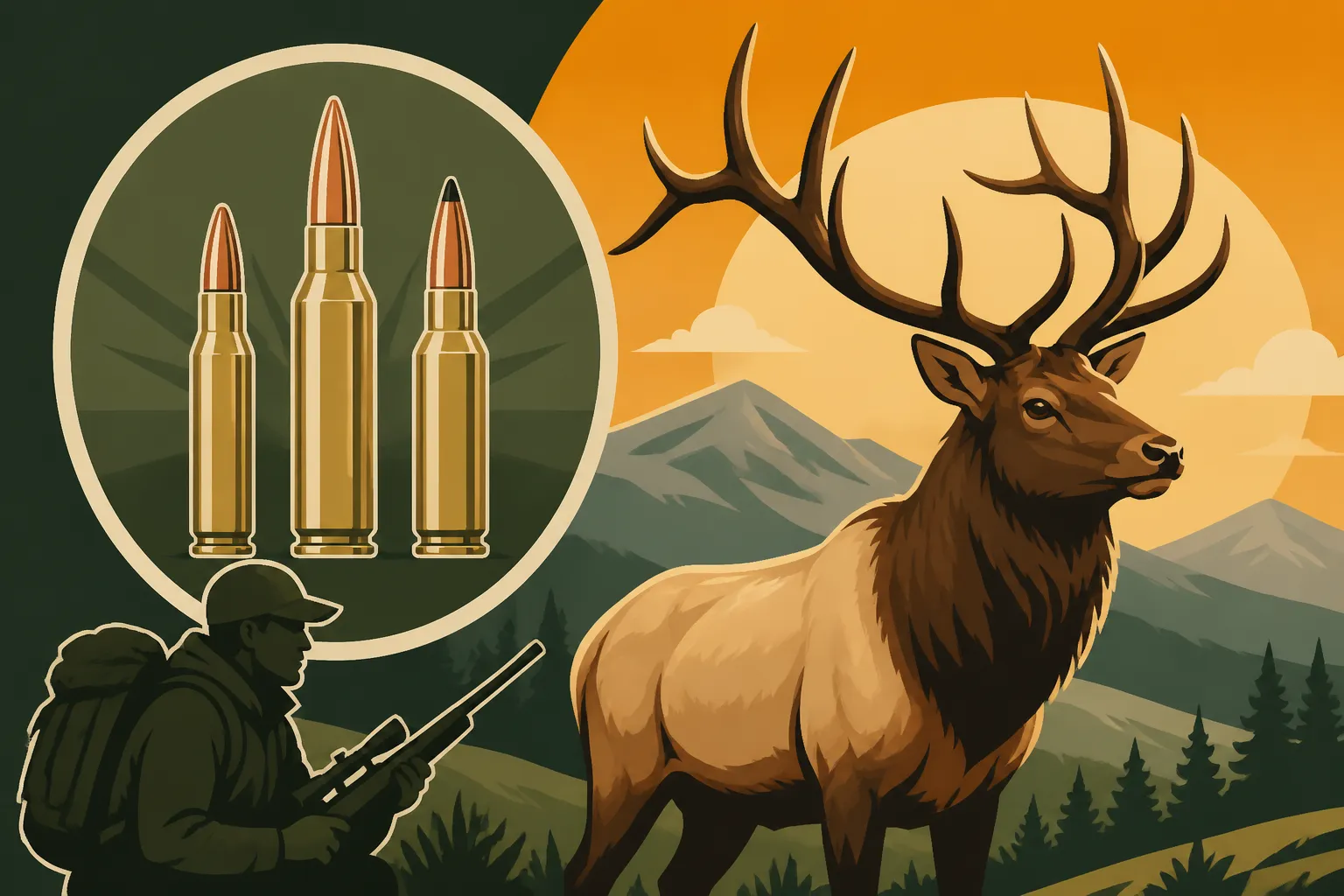
Choosing a Caliber for California Elk
Elk hunting in California is a dream for many, but securing one of those elusive tags is just the first step. Once you've beaten the odds, standing face-to-face with a massive bull requires confidence, and a huge part of that confidence comes from knowing you're carrying the right tool for the job. Choosing a caliber for California elk isn't just about raw power; it's about balancing stopping power, shot placement, and your ability to shoot it accurately under pressure, all while adhering to the state's unique ammunition requirements. This guide will walk you through the nuances of selecting the ideal rifle caliber to ensure you're well-prepared for your California elk adventure, whether you're chasing Tule, Roosevelt, or Rocky Mountain elk.
Understanding California's Elk Hunting Scenarios
California isn't just deer country; it's home to three distinct subspecies of elk, each offering a unique hunting challenge that directly impacts your caliber choice. From the open plains to the dense timber, understanding where and how you'll hunt is paramount.
The Diverse Habitats of California Elk
The sheer diversity of California's landscape means elk hunting can vary wildly from one unit to the next. You might be glassing wide-open rangelands one year and busting brush in thick timber the next, depending on the tag you've drawn. This environmental variation plays a significant role in the shots you might encounter and, consequently, the bullet performance you'll need.
For instance, Tule Elk in California's Central Valley and other open grasslands often present longer shooting opportunities. These smaller but still very robust elk demand a caliber that can deliver energy effectively at extended ranges, with a flatter trajectory being a definite advantage. You might be prone in a dried-up stubble field, trying to dial in a shot at 300 yards across an expanse that offers little cover. This isn't the kind of hunt where you want a rainbow trajectory.
Conversely, hunting Roosevelt Elk in Northwest California means navigating incredibly dense redwood and coastal timber. Shots here are often up close and personal, perhaps 50 to 150 yards, but the elk themselves are massive, with thick hides and heavy bone structure. Penetration through dense muscle and potential bone becomes a critical factor. You need a bullet that won't fragment prematurely on impact but will drive deep into the vitals. The rugged terrain and thick vegetation make tracking a wounded animal incredibly difficult, so putting it down quickly and cleanly is paramount.
Then there are the Rocky Mountain Elk in Northeast California, often found in high-country environments and expansive, broken timber. Here, you might encounter a mix of long-range glassing opportunities across canyons, combined with close-quarters encounters in scattered aspen groves. These elk are also quite large, similar in stature to their Roosevelt cousins. The altitude and varying terrain mean you need a versatile caliber that performs well at different ranges and can handle unexpected angles. The elements can be brutal, and having a reliable, hard-hitting round gives you an edge. When you finally get that hard-won tag after years of applying, often using resources like GoHunt to research draw odds and unit breakdowns, you want to make the most of it.
Shot Distances and Animal Size
The size of California's elk, combined with the varied distances at which shots can occur, profoundly influences the ideal caliber choice. A small caliber might be adequate for a broadside shot at a Tule elk at 100 yards, but it could prove insufficient for a quartering-away Roosevelt bull at 250 yards in the thick timber.
California Tule elk, while being the smallest of the North American elk subspecies, are by no means small animals. An adult bull can still weigh 500-700 pounds, making them considerably larger than even a big mule deer. They are powerful creatures, and placing a shot effectively requires a bullet that can penetrate several feet of tissue to reach the vitals. Your typical shot in their open or agricultural habitat might stretch from 200 to 400 yards, demanding a flatter-shooting cartridge that retains energy well over distance.
Roosevelt and Rocky Mountain elk, on the other hand, are truly immense, with mature bulls often topping 800-1,000 pounds. Their bone structure is incredibly robust, and their muscle mass is dense. A bullet needs to be able to punch through all of that. In the dense coastal forests where Roosevelt elk roam, shots can be incredibly close, sometimes under 100 yards, but the sheer bulk of the animal and the necessity of a quick, clean kill make strong penetration crucial. For Rocky Mountain elk in the more open, mountainous regions, shots can be long, testing both the rifle's ballistic capabilities and the hunter's skill. You might be presented with a 350-yard shot across a ravine or a 75-yard shot through thick lodgepole pines. In all these scenarios, your chosen caliber needs to deliver sufficient kinetic energy and bullet integrity to ensure a humane harvest.
Essential Ballistics for Elk Calibers
Beyond just knowing the name of a cartridge, understanding the core ballistic principles is crucial for selecting a caliber that will perform reliably on elk. We're talking about the science of making that bullet do its job when it hits.
Kinetic Energy and Momentum
When a bullet strikes an animal, it transfers energy, causing trauma and disrupting vital functions. This is where kinetic energy comes into play. For an animal as large and tenacious as an elk, a significant amount of kinetic energy is required to ensure a swift, humane kill. While there's no magic number, most experienced elk hunters agree that a minimum of 1,500 foot-pounds (ft-lbs) of energy at impact is a good baseline, with more being better, especially at longer ranges or for less-than-perfect shot angles. This energy creates hydrostatic shock, disrupting blood vessels and nerve tissue, effectively shutting down the animal's systems.
However, kinetic energy alone isn't the whole story. Momentum, often overlooked, is equally vital, particularly for penetration. Momentum is a measure of how much "push" a bullet has, and it directly influences its ability to drive through thick hide, muscle, and heavy bone without deflecting or breaking apart. A heavier bullet, even if traveling at a slightly slower velocity, can often carry more momentum than a lighter, faster bullet. For an animal with the robust skeletal structure of an elk, a bullet with good momentum is critical for reaching the vitals, especially on quartering shots or when a shoulder bone might be encountered. You want that bullet to continue on its intended path, not to mushroom too quickly on the surface or deflect off the rib cage.
Bullet Construction and Sectional Density
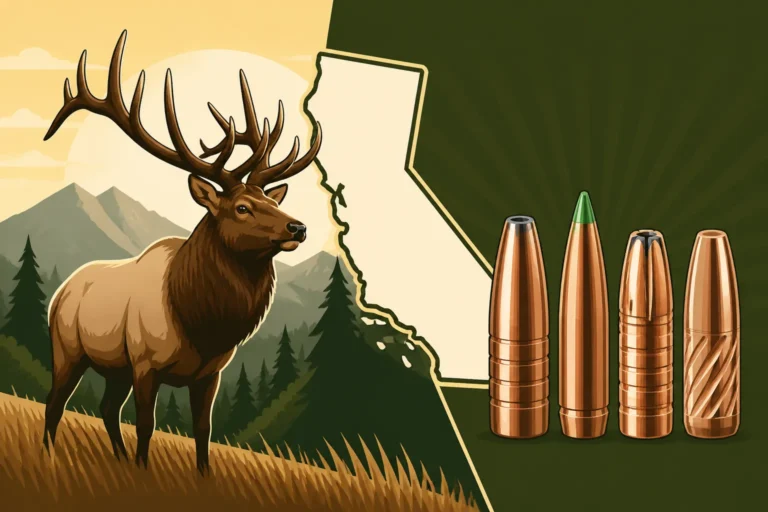
California's Non-Lead Ammunition Requirement completely changes the game when it comes to bullet selection. You can no longer rely on traditional lead-core bullets that have been the standard for generations. This mandate means you're almost exclusively looking at monolithic copper or copper-alloy bullets, or sometimes bonded lead-free options. These bullets behave differently. They typically retain nearly 100% of their weight, which means they hold together exceptionally well and penetrate deeply. However, they also tend to be longer for a given weight compared to lead-core bullets, and they might require a faster twist rate in a rifle barrel to stabilize properly.
Sectional density (SD) is a key ballistic term here, representing a bullet's weight relative to its diameter. A higher sectional density means a bullet is sleeker and can penetrate more deeply. Imagine pushing a long, thin needle versus a short, fat thimble through a piece of fabric—the needle goes deeper. For elk, especially the larger Roosevelt and Rocky Mountain subspecies, a bullet with a good sectional density, combined with robust non-lead construction, is absolutely vital. You want a bullet that doesn't just make a big hole at the surface but continues to drive through to the vitals, regardless of what it encounters on the way. Bullet manufacturers have invested heavily in developing Best Non-Lead Bullets for Elk-Sized Game that perform reliably, but it's crucial to research and test how your chosen non-lead bullet performs in your rifle. This includes checking expansion at various velocities and ensuring adequate penetration for elk.
Popular Calibers for California Elk: A Deep Dive
With the ballistic principles in mind and California's unique non-lead regulations, let's explore some of the most popular and effective calibers for elk hunting across the Golden State. Each has its strengths and specific niches where it truly shines.
The Reliable All-Arounders: .30-06 Springfield and .270 Winchester
The .30-06 Springfield is often called the "King of American sporting cartridges" for good reason, and it remains an outstanding choice for California elk. It's incredibly versatile, capable of handling bullet weights from 150 grains up to 200 grains. With modern non-lead bullet technology, like monolithic copper projectiles in the 165-180 grain range, the .30-06 delivers more than enough kinetic energy and penetration for any of California's elk subspecies. It offers a flatter trajectory than many heavier magnums at common hunting distances and generates manageable recoil for most shooters. If you're hunting Roosevelt elk in the thick coastal timber, a 180-grain non-lead bullet from a .30-06 will punch through brush and bone effectively. For a Tule elk hunt in more open country, a 165-grain projectile will offer a flatter trajectory, extending your ethical range. It's a fantastic choice for a hunter who wants one rifle to do it all, from deer to elk, without stepping into magnum recoil levels.
The .270 Winchester, another classic, might raise a few eyebrows for elk, but it is undeniably capable, especially for the smaller Tule elk and skilled shooters. With modern 130-150 grain non-lead bullets, the .270 offers an incredibly flat trajectory, making it a stellar choice for the longer shots often presented in open country. It generates less recoil than a .30-06, allowing for faster follow-up shots and easier accuracy for many hunters. While some purists might argue it's on the lighter side for the larger Rocky Mountain or Roosevelt elk, a well-placed shot with a premium non-lead bullet will absolutely get the job done. This caliber is often chosen by hunters who prioritize accuracy and less recoil, and who are confident in their ability to place a shot precisely. If you're chasing Tule elk in a wide-open valley or along a ranch fence line, the .270 Winchester, with its flat shooting characteristics, gives you a significant advantage. Just be sure to pick a bullet designed for deep penetration and expansion on larger game.
Stepping Up the Power: 7mm Rem Mag and .300 Winchester Magnum
When hunting situations demand more reach or more authority, many hunters turn to magnum cartridges. The 7mm Remington Magnum is a prime example, offering a fantastic balance of flat trajectory, significant energy, and manageable recoil compared to larger magnums. It's incredibly popular for elk across the West, and for good reason. Using 150-175 grain non-lead bullets, the 7mm Rem Mag can deliver exceptional downrange energy, making it an excellent choice for hunting Rocky Mountain Elk in Northeast California where shots can easily stretch beyond 300 yards. The bullets typically have a high ballistic coefficient, resisting wind drift and maintaining velocity better over distance. If you anticipate longer shots or want a bit more assurance for less-than-ideal angles, the 7mm Rem Mag is a superb option that won't punish your shoulder excessively during practice or in the field.
The .300 Winchester Magnum is often considered the quintessential elk caliber for those who want serious stopping power. It delivers a substantial increase in kinetic energy over the .30-06, making it exceptionally effective on the largest elk subspecies, even at extended ranges. With non-lead bullets in the 180-200 grain range, the .300 Win Mag will punch deep, break bone, and provide ample shock to anchor an elk quickly. While the recoil is noticeably stiffer than the .30-06 or 7mm Rem Mag, for a hunter who can handle it, the confidence it provides is invaluable. This caliber is particularly well-suited for situations where you might encounter an enormous Roosevelt bull in dense cover and need maximum penetration, or a long-range shot on a Rocky Mountain bull in exposed terrain. Many hunters also feel more comfortable with the .300 Win Mag when Hunting California's Sierra Nevada Backcountry where tough angles and potentially longer shots are common.
Heavy Hitters for the Toughest Situations: .338 Winchester Magnum
For those who prioritize absolute stopping power and deep penetration above all else, the .338 Winchester Magnum stands out. This is a formidable cartridge, designed specifically for large, dangerous game, and it brings a level of authority that few other calibers can match. With 200-225 grain non-lead bullets, the .338 Win Mag delivers immense kinetic energy and, critically, outstanding momentum. This makes it an ideal choice for the largest elk subspecies, especially in situations where breaking heavy bone might be necessary or when you're facing quartering-to or quartering-away shots where maximum penetration is essential to reach the vitals.
The trade-off, however, is significant recoil. The .338 Win Mag produces substantial recoil that can be a challenge for some shooters. It's not a caliber to choose lightly; you need to be physically and mentally prepared to handle it, both on the range and in the field. A hunter who practices regularly with this cartridge and can shoot it accurately under pressure will find it incredibly effective. It's often favored by hunters who pursue truly massive bulls in dense, unforgiving terrain where a quick, decisive kill is paramount, and tracking a wounded animal would be an absolute nightmare. If you're packing into the backcountry for a trophy bull and want the ultimate in punch, and you can handle the recoil, the .338 Win Mag is certainly a top contender.
Here’s a quick comparison of these popular elk calibers:
| Caliber | Common Non-Lead Bullet Weights | Typical Muzzle Velocity (FPS) | Kinetic Energy at 200 yds (ft-lbs) | Pros | Cons |
|---|---|---|---|---|---|
| .270 Winchester | 130-150 gr | 2900-3100 | 1900-2200 | Flat trajectory, mild recoil | Might be light for large elk/tough angles |
| .30-06 Springfield | 165-180 gr | 2700-2900 | 2100-2400 | Versatile, good power, manageable recoil | Not as flat-shooting as magnums |
| 7mm Rem Mag | 150-175 gr | 2900-3100 | 2400-2700 | Flat trajectory, excellent energy | More recoil than .30-06 |
| .300 Winchester Magnum | 180-200 gr | 2900-3200 | 2700-3200 | Max power, deep penetration, long range | Significant recoil |
| .338 Winchester Magnum | 200-225 gr | 2700-2900 | 3000-3500 | Extreme power, bone-breaking penetration | Heavy recoil, heavier rifle needed often |
(Note: Ballistic figures are approximate and vary based on specific bullet design, load, barrel length, and environmental conditions.)
Recoil Management and Shooter Proficiency
Choosing a powerful cartridge for elk is one thing; being able to shoot it accurately under hunting conditions is another entirely. This often comes down to how well you manage recoil.
The Impact of Recoil on Accuracy
Recoil is the rearward "kick" of the rifle when fired, and it can be a significant factor in a hunter's ability to shoot accurately. Excessive recoil can lead to flinching, anticipating the shot, or developing poor shooting habits. When you flinch, you unconsciously tense up or close your eyes just before the shot breaks, often dipping the muzzle or pulling the shot offline. This becomes a serious problem when you're aiming for a vital area on a large, expensive-to-hunt animal like an elk. The momentary discomfort of recoil can lead to a lifetime of regret if it results in a missed shot or, worse, a wounded animal.
Modern rifles often come with effective recoil pads, which can absorb a good deal of the energy. Muzzle brakes are another option, redirecting gas to reduce felt recoil significantly, often by 30-50%. However, muzzle brakes also dramatically increase muzzle blast and noise, requiring serious hearing protection both at the range and in the field. For some hunters, especially those with shoulder issues or those who are simply sensitive to recoil, selecting a cartridge with less kick, or investing in a rifle with a good recoil reduction system, is a far wiser choice than forcing themselves to shoot a magnum they can't control.
Prioritizing Practice Over Raw Power
Here's the truth: a smaller caliber that you can shoot consistently and accurately is always, always better than a powerful magnum that causes you to flinch or shoot erratically. Elk hunting success hinges on precise shot placement into the relatively small vital zone of the animal. A bullet that hits a few inches off target, regardless of how much energy it carries, can lead to a prolonged track and potentially a lost animal.
Therefore, regular and dedicated practice is non-negotiable. Spend time at the range with your chosen rifle and ammunition, not just sighting in, but practicing from various positions (prone, kneeling, sitting) that simulate hunting scenarios. This includes shooting at different distances and under time pressure, if possible. Becoming intimately familiar with your rifle's feel, its trigger break, and the ballistic drop of your specific non-lead ammunition out to your maximum ethical range builds confidence. Remember, that one shot at an elk might be the culmination of years of drawing applications—perhaps helped by checking California Elk Tag Draw Odds by Species on platforms like GoHunt—and countless hours of scouting. You don't want to blow it because you chose a caliber you weren't comfortable with. Investing in proper shooting instruction can also dramatically improve your proficiency and confidence, regardless of your chosen caliber.
California's Non-Lead Ammunition Requirement
California stands apart from most other states due to its unique and comprehensive lead-free ammunition mandate. This isn't just a suggestion; it's the law for all hunting statewide.
Understanding the Statewide Mandate
As of July 1, 2019, California requires the use of non-lead ammunition for the take of all wildlife anywhere in the state. This means that if you're hunting elk in California, every single bullet in your magazine must be free of lead. This law was implemented primarily to protect scavenging wildlife, particularly the endangered California condor, which can be poisoned by ingesting lead fragments left in gut piles or unrecovered game.
This statewide mandate has profound implications for hunters. It means you cannot simply use your old favorite lead-core hunting loads, even if they've performed well for you in other states. You must source and use certified non-lead ammunition. For many hunters, this has meant re-evaluating their go-to calibers and bullet choices, as the ballistic properties and terminal performance of non-lead bullets can differ significantly from traditional lead-core rounds. It also means potentially higher costs for ammunition and, in some cases, less availability, though this has improved greatly over the years. Understanding this law is not just about compliance; it's about being an ethical and responsible hunter in California. You can delve deeper into this topic by reviewing Choosing Non-Lead Rifle Ammunition in California or checking out Which Non-Lead Bullets California Approves for specific product information.
Selecting Effective Non-Lead Bullets for Elk
The key to successful elk hunting with non-lead ammunition lies in selecting bullets specifically designed for large game and understanding how they perform. Most non-lead hunting bullets are constructed from solid copper or a copper alloy, known as monolithic bullets, or sometimes bonded lead-free options. These bullets are engineered to retain nearly all of their original weight upon impact, which is a major advantage for penetration on tough animals like elk.
Unlike many traditional lead-core bullets that shed weight through fragmentation, monolithic non-lead bullets expand in a controlled manner, typically peeling back petals to create a sharp, cutting edge while maintaining a high percentage of their mass. This combination of controlled expansion and high weight retention ensures a deep, straight wound channel, vital for reaching the vitals of a large elk, even through heavy bone.
When selecting your non-lead bullet, consider:
- Bullet Weight: While lighter-for-caliber non-lead bullets can be very effective due to their high weight retention, heavier options within your chosen caliber will generally offer better sectional density and momentum for maximum penetration.
- Manufacturer Reputation: Brands like Barnes (TSX, TTSX, LRX), Hornady (GMX, CX), Federal (Trophy Copper), Nosler (E-Tip), and Winchester (Copper Impact) are well-regarded for their non-lead hunting projectiles. Researching specific bullet lines and their performance on game is crucial.
- Expansion vs. Penetration: Ensure your chosen bullet is designed to expand reliably at the velocities your rifle generates at typical elk hunting ranges. Too little expansion means a pencil-through-the-animal wound; too much expansion and not enough penetration means a superficial wound. A good non-lead bullet finds that sweet spot.
Because non-lead bullets are often longer than their lead-core counterparts for the same weight, it's essential to confirm your rifle's barrel twist rate is appropriate for stabilizing your chosen bullet. Test different brands and bullet weights at the range to see what groups best in your rifle and how it performs at various distances.
Beyond the Caliber: Achieving Elk Hunting Success
While choosing the right caliber is a critical component, it's only one piece of the complex puzzle that is successful elk hunting. The best rifle in the world can't compensate for a lack of preparation or poor execution in the field.
The Importance of Shot Placement
Let's be blunt: no caliber, no matter how powerful or expensive, can make up for a poorly placed shot. A well-placed shot from a .270 Winchester will always be more effective than a gut shot from a .338 Winchester Magnum. Elk are incredibly tough animals, and their vitals (heart and lungs) are relatively small targets nestled behind thick ribs and heavy muscle. Understanding elk anatomy and visualizing that vital zone is paramount.
Practice aiming for the vitals, not just "center mass." Know where the shoulder bone is, how it protects the lungs, and how to angle your shot to avoid it on a quartering animal. An ethical shot is one that leads to a quick, humane death, and that comes down to putting the bullet precisely where it needs to go. This means being patient, waiting for the right shot opportunity, and knowing your own limitations and those of your rifle and ammunition. Sometimes, the best shot is no shot at all if the conditions aren't perfect or the animal isn't presenting a clear, ethical target.
Scouting, Strategy, and Practice
Elk hunting in California, particularly for coveted draw-only tags, is a marathon, not a sprint. The groundwork you lay before you even step foot in the woods with your rifle is often more important than the specific rifle you carry. This starts with extensive scouting. Utilizing tools like GoHunt can be invaluable for researching units, understanding draw odds, and using mapping overlays to identify potential elk habitat, water sources, and travel corridors on public land. Whether you're chasing Applying for a California Tule Elk Tag in the Big Game Drawing, Applying for a Roosevelt Elk Tag in the Northwest, or Applying for a Rocky Mountain Elk Tag Near Oregon, the process begins long before the season opener.
Physical conditioning is also non-negotiable, especially if you're hunting in mountainous regions like the Sierra Nevada or the steep coastal ranges. Elk live in tough country, and you'll often be covering miles of challenging terrain, sometimes at high altitude, while carrying a heavy pack. Your ability to hike silently, recover quickly, and hold steady for a shot after a strenuous climb will directly impact your success. Packs and Gear for a Backcountry Elk Hunt is a great resource to help ensure you're equipped for the physical demands.
Finally, consistent practice with your rifle, especially with the non-lead ammunition you'll be using, cannot be stressed enough. Don't just sight in once and call it good. Shoot regularly, practice from various field positions, and push your ethical shooting range incrementally. Understanding factors like wind and thermals, especially in varied terrain, comes with experience and preparation. Consider what you'll do after the shot: how to field dress, quarter, and pack out an animal. Scouting California Public Land Before Season is not just about finding elk, but understanding the logistics of the hunt itself. By combining a well-chosen, accurately shot caliber with thorough preparation and ethical hunting practices, you dramatically increase your chances of bringing home that hard-earned California elk.
Disclaimer
This article is for general informational purposes only and does not constitute professional advice. Laws, prices and regulations vary by location and change over time. Consult a qualified professional for guidance on your specific situation.