Cellular Trail Cameras for Remote BLM Country
Hunting remote Bureau of Land Management (BLM) country in California presents a unique set of challenges, from vast, untamed landscapes to elusive game that lives under significant pressure. The sheer effort of scouting these immense public lands, often driving hours only to hike more miles, can feel overwhelming and frankly, sometimes disheartening. This guide is all about how cellular trail cameras have emerged as an absolute game-changer for hunters facing these very frustrations, offering a way to "be" in multiple places at once, gathering crucial real-time intelligence without constantly having to put boots on the ground.
The Unique Challenges of Remote BLM Hunting in California
California's BLM lands are a treasure trove for public land hunters, but accessing and effectively scouting them is no small feat. It’s not like walking onto a private farm field back east; these are wild, rugged, and often unforgiving landscapes that demand a different approach. The difficulties you face out there often boil down to scale, the nature of the game, and the practicalities of modern life.
Vastness and Inaccessibility
One of the biggest hurdles for any hunter venturing onto California's BLM is simply the sheer amount of ground. We're talking millions of acres, much of it roadless or accessible only via rough, unimproved tracks that can quickly turn into impassable messes with a bit of rain. Imagine trying to cover hundreds or thousands of acres on foot, repeatedly, just to identify potential game movement patterns. It’s a monumental task. You might spend an entire weekend exploring just one canyon system or a single ridge, only to find no fresh sign, or discover the animals are using a completely different area. The scale makes traditional, frequent scouting trips incredibly time-consuming and expensive in terms of fuel and wear and tear on your vehicle.
When you're looking at a topo map, those vast stretches of green or beige on a map seem full of possibility, but actually traversing them with a pack, looking for rubs, scrapes, or fresh tracks, quickly reminds you just how big "big" really is. Finding that perfect secluded pocket or a hidden water source that only sees animal traffic can feel like searching for a needle in a haystack if you're relying solely on your own two feet and limited weekend time.
Pressure and Elusive Game
Public land animals, especially those living in accessible areas, are not the same as their private land counterparts. They're often smarter, more nocturnal, and incredibly sensitive to human presence. The minute you start driving roads, hiking trails, or even walking game trails, you're leaving behind a scent cone, making noise, and altering the environment. This constant human intrusion pushes deer, pigs, and even bears deeper into cover, making them primarily move at night or during twilight hours when they feel safest.
Hunting areas that open in August or September, like parts of Zone A or D-zones, mean dealing with heat, dry conditions, and often very skittish game that has already encountered hikers, campers, and other hunters. By the time season rolls around, many animals are already highly educated, hunkering down and moving only when the coast is clear. Getting reliable intel on daylight movement becomes paramount, and that's precisely where traditional scouting often falls short – we can't be everywhere, all the time, without leaving a trace.
Time and Resource Constraints
Let's be realistic: most of us aren't professional hunters with unlimited time or budgets. We have jobs, families, and other responsibilities that limit our ability to spend weeks on end in the backcountry. Fuel costs for those long drives to remote BLM tracts can quickly add up, and every scouting trip is a commitment of precious vacation days or weekend hours. This scarcity of time and resources is a major source of frustration for hunters who genuinely want to put in the effort but are constantly battling the clock and the gas pump.
You might have a honey hole you found on Scouting California Public Land Before Season, but how do you know if it's still active, or if deer are using it during legal shooting hours, without driving back out there? This is where the cost-benefit analysis of traditional scouting really hits home. You weigh a four-hour drive and a full day's hike against the slim chance of seeing anything new, and often, life simply gets in the way.
How Cellular Trail Cameras Revolutionize Remote Scouting
Enter the cellular trail camera. For California public land hunters, especially those of us venturing into vast BLM tracts, these devices are nothing short of revolutionary. They bridge the gap between our desire to know what's happening and the limitations of our time and physical presence. Think of them as your silent, ever-vigilant scouts out in the wild, working 24/7.
Real-Time Intelligence, Less Travel
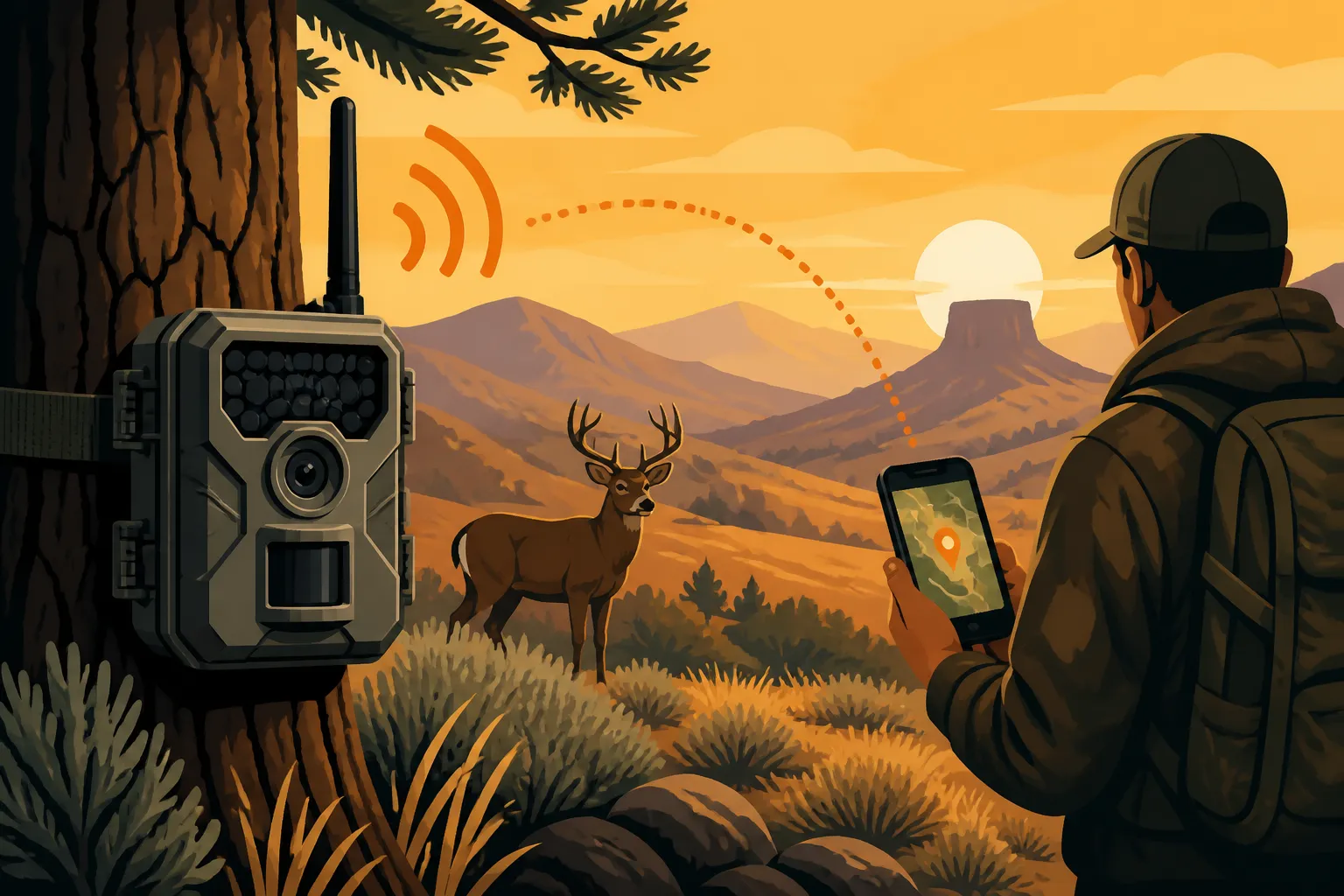
The biggest game-changer with cellular cameras is the ability to receive photos and sometimes even short video clips directly to your smartphone or computer, often within minutes of them being captured. This isn't just a convenience; it's a strategic advantage. Instead of driving five hours to check an SD card, you're getting instant updates from your chosen location. This real-time feedback allows you to make informed decisions about where to hunt, often without ever setting foot on the ground again until opening day. Imagine getting a picture of a mature buck at a water hole every evening, right to your phone, allowing you to fine-tune your approach or confirm a pattern.
This capability drastically reduces the need for repeated scouting trips. Instead of burning vacation days and hundreds of dollars in fuel to check cameras, you can literally check them from your living room. It transforms your scouting from reactive and infrequent to proactive and continuous. You can monitor multiple locations across a vast BLM unit, covering more ground and gathering more data than ever before possible through traditional means.
Patterning Game Without Human Presence
One of the cardinal rules of hunting pressured public land is to minimize your impact. Every time you walk into an area, you're leaving scent, making noise, and potentially educating the animals. With cellular cameras, you can deploy them and then largely stay away, letting the cameras do the work silently and invisibly. This allows game to move naturally and unmolested, giving you a truer picture of their habits.
The data you collect is untainted by human interference. You'll see what animals are truly doing when no one is around, allowing you to pinpoint daylight movement patterns, preferred travel routes, and feeding schedules that might otherwise be impossible to discern. This subtle approach is critical for hunting those older, wiser bucks and boars that have learned to avoid human contact. By staying out, you increase your chances of finding unpressured game.
Expanding Your Scouting Reach
Consider a vast expanse of BLM land, with multiple drainages, ridge systems, and water sources. Traditionally, you might pick one or two spots to focus your scouting efforts, simply because you can't be everywhere. Cellular cameras allow you to transcend these limitations. You can strategically place cameras in key areas across a wide geographic spread – perhaps one on a prominent game trail in a canyon bottom, another near a high-elevation spring, and a third overlooking a remote bench.
Each camera acts as an additional pair of eyes, extending your scouting "reach" far beyond what a single hunter could ever cover. This network of cameras can quickly reveal which areas are holding game, which are not, and how animals are moving between them. This allows you to quickly eliminate unproductive areas and focus your limited hunting time on spots with proven activity, significantly increasing your efficiency and success rate on pressured public lands. It's like having a small army of scouts working for you simultaneously.
Key Features to Look for in a Cellular Trail Camera for BLM
Choosing the right cellular trail camera for remote California BLM country isn't just about picking the cheapest option on the shelf. You need a device that can withstand harsh conditions, communicate effectively in challenging environments, and deliver consistent, reliable data. Here are the crucial features to prioritize.
Network Compatibility and Coverage
This is arguably the most critical factor for a cellular camera. A camera that can't send a signal is just an expensive regular trail camera. Different camera brands often partner with specific cellular carriers (e.g., AT&T, Verizon, T-Mobile). Before you buy, identify which carrier has the best coverage in your target BLM hunting areas. Use online coverage maps, but also ask other hunters or check your own phone's signal in those precise spots. Signal strength can vary wildly even within a small canyon or over a ridge line.
Some cameras are "multi-carrier" capable, meaning they might come with a SIM card that can connect to the strongest available network, or you might be able to swap SIM cards from different providers. This flexibility can be a huge advantage when you're dealing with spotty reception common in the vast, rugged terrain of the Sierra Nevada or the sprawling Mojave Desert. Always test the camera's signal in your intended location before committing to a long-term deployment.
Battery Life and Power Options
Remote cameras need to run for extended periods without intervention. Standard AA batteries might last a few weeks, but for multi-month deployments in areas like Hunting a California BLM Desert Wash for Deer, that's not enough. Look for cameras designed for efficiency, often advertising longer battery life, or those that accept larger D-cell batteries. Even better, consider models that can integrate with external 12V batteries or, ideally, small solar panels.
Solar panels are a game-changer for long-term deployments, trickle-charging the camera's internal batteries or an external battery pack. This can allow your camera to run for an entire season, or even year-round, without you having to visit it to swap batteries. This minimizes your presence and maximizes the uptime of your surveillance. Just remember to mount solar panels securely and in a spot that gets consistent sunlight, usually facing south.
Durability and Security
BLM land in California can be brutal. Cameras need to withstand intense summer heat, freezing winter nights, torrential rain, and curious wildlife. Look for robust construction, waterproof seals, and a sturdy casing. Many cameras are camouflaged, which helps them blend into the environment, but also consider models that come with or can be outfitted with metal security boxes.
These security boxes protect against theft – a very real concern on public land – and also from wildlife like bears, curious coyotes, or even rodents that might chew on straps or wiring. Cable locks and Python locks are also excellent investments to secure your camera to a tree or post, making it harder for opportunistic thieves. Remember, even with the best security, a determined thief can usually get to a camera, but making it difficult will deter most.
Data Plans and Cost Considerations
Cellular cameras come with a recurring cost: the data plan. This is where many hunters get hung up. Plans vary widely between manufacturers and carriers, usually based on the number of photos or videos you want to transmit per month. Some plans offer unlimited photos at a higher monthly rate, while others are tiered. Think about your usage: are you running multiple cameras year-round, or just a few for a couple of months during hunting season?
Here's a quick comparison of typical plan structures:
| Plan Type | Description | Ideal For | Considerations |
|---|---|---|---|
| Tiered Plans | Fixed number of photos/videos per month (e.g., 500, 1500, 3000) | Hunters with predictable usage, fewer cameras, short deployments | Can incur overage fees if limits are exceeded |
| Unlimited Plans | Transmit as many photos/videos as the camera can capture | High-traffic areas, multiple cameras, year-round scouting | Higher monthly cost, but no surprises |
| Annual Plans | Pay upfront for a year, often with a slight discount | Dedicated year-round scouts, multi-camera setups | Requires upfront commitment |
| Pay-as-you-go | Less common, pay for data credit as needed | Very infrequent users, highly seasonal deployment | Can be more expensive per photo, may expire |
Always read the fine print. Some plans automatically renew, while others require manual activation. Some cameras might offer a free trial period, which is a great way to test the system before committing. Factor these monthly costs into your overall hunting budget. While it's an added expense, the time and fuel saved, combined with the quality of intelligence gained, often makes it a worthwhile investment for serious public land hunters.
Optimal Placement Strategies for BLM Cellular Cams
Placing a cellular trail camera effectively on vast California BLM land is an art form. It's not just about slapping it on a tree; it's about understanding animal behavior, terrain, and how to maximize your chances of capturing relevant data. Think like the animal you're hunting.
Choke Points and Travel Corridors
Animals on public land, especially deer and pigs, will often take the path of least resistance or utilize natural terrain features for cover and safety. Look for these "choke points" where their movement is naturally funneled. This could be a narrow saddle between two ridge lines, a draw or wash that provides easy travel and cover through otherwise open country, or a natural pinch point created by dense brush and open ground. Hunting a Ridge-Top Saddle at First Light is a classic example of a choke point.
Walk these areas yourself. Look for well-worn game trails, tracks, and droppings. Position your camera to capture traffic moving through these funnels. Ensure the camera is angled to cover the main travel lane without being too close, which can lead to missed photos or only partial captures. Consider what the wind usually does in that area; animals often use prevailing winds to their advantage, so place your camera where they're likely to pass, checking the wind.
Water Sources and Feed Sites
In California's often arid and semi-arid BLM environments, water is life, especially during hot hunting seasons like Zone A archery. Identifying reliable, natural water sources like springs, seeps, and isolated stock tanks can be incredibly productive. Deer, pigs, and bears will often hit these spots during the cooler parts of the day or under the cover of darkness. Hunting a Water Seep at First Light can be incredibly effective if you know where to look.
Similarly, identify key feed sites. This might be an oak flat loaded with acorns in the fall, a riparian zone with lush browse, or even a remote patch of wild berries. Game will congregate around these food sources, and a strategically placed camera can tell you when they're visiting and how often. During Late-Season Food Sources for California Deer, identifying these spots becomes even more critical. Keep in mind that food sources change with the seasons, so what's hot in August might be cold in November.
Remote Bedding Areas and Escape Routes
Finding and monitoring remote bedding areas is more about understanding security cover than direct camera placement. Animals on pressured public land will seek out the thickest, most inaccessible cover for bedding. This could be a dense stand of chaparral on a steep hillside, a remote stand of timber, or a hidden bench overlooking a canyon. While you don't necessarily want to place a camera in a bedding area and risk disturbing it, you can place them on the trails leading into and out of these sanctuaries.
Look for escape routes – paths animals use to quickly flee danger. These are often subtle trails that offer quick access to dense cover or elevation. Placing a camera on these routes, especially where they connect to feeding or watering areas, can provide excellent intel on what animals are in the vicinity and when they feel secure enough to move. Understanding Where California Blacktail Bucks Bed is key to intercepting them before or after their security-driven movements. Remember, the goal is to observe without disturbing, so keep your distance from the actual bedding site itself.
Managing Data and Maximizing Insights from Your Cameras
Once your cellular cameras are deployed and sending you a steady stream of photos and videos, the next step is managing that data effectively and translating it into actionable hunting intelligence. Getting pictures is one thing; understanding what they tell you is another.
Organizing Photos and Videos
Without a system, you'll quickly be overwhelmed by hundreds, if not thousands, of images. Most cellular camera apps allow you to sort photos by date, time, and camera location. Take advantage of this. Create folders or albums within your app or on your computer for each camera or location. Regularly cull through the "junk" photos – false triggers from swaying branches, birds, or random animals that aren't your target.
Pay close attention to the details of each relevant photo:
- Time of day: Is the deer moving in daylight or only at night? This is crucial for planning your hunt.
- Direction of travel: Where is the animal coming from and going to? This helps map out their routes.
- Specific animals: Are you seeing the same buck repeatedly? How is his rack developing?
- Other activity: What other animals are sharing the area? Is there pressure from other predators?
Many camera apps also allow you to tag or categorize photos, making it easier to track specific bucks over time. The better organized your data, the faster you can draw conclusions and adjust your hunting strategy.
Interpreting Animal Behavior and Movement
The real value of cellular cameras comes from interpreting the patterns in the data. Don't just look at individual photos; look at the trends.
- Daily Patterns: Is that big buck consistently moving between 6-8 AM and 4-6 PM? Or is he strictly nocturnal? This tells you when to be in your stand or where to still-hunt.
- Weather Effects: How does movement change with a cold front or after a rain? You'll notice animals become more active or shift their patterns.
- Rut Activity: During the rut, bucks will often throw caution to the wind, showing up in areas they wouldn't normally frequent. Your cameras will capture this increase in daytime activity and the presence of new bucks.
- Seasonal Shifts: As seasons change, so do food and water sources. Your cameras will show animals shifting their range. For example, if a specific water hole dries up, your pictures will drop off, signaling a change in strategy is needed.
By looking for these overarching trends rather than just individual captures, you gain a much deeper understanding of the game animals in your area. This comprehensive view helps you predict their movements and makes you a much more effective hunter.
Integrating Camera Data with Mapping Tools
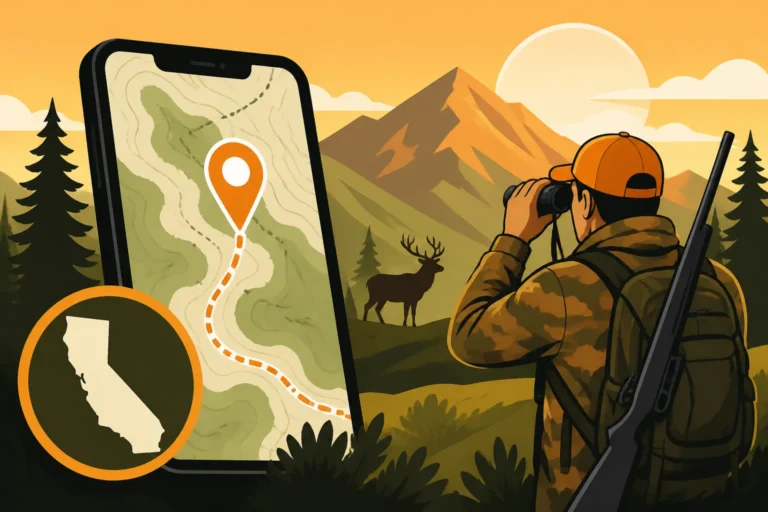
This is where advanced scouting truly shines. Don't let your camera photos live in isolation. Integrate them with mapping tools like GoHunt, onX Hunt, or similar platforms. These mapping apps allow you to mark the exact location of each camera, drop pins for significant animal sightings (especially specific bucks), and overlay this data onto topographic maps, satellite imagery, and public/private land boundaries. Using an App for California BLM Land Status can be invaluable here.
Imagine seeing a picture of a mature buck at 7 AM, and then seeing that data point overlaid on a topo map that shows a thick bedding area just uphill. You can immediately start forming a plan: "Okay, he's coming from that thicket, heading down to water, then probably back up this draw." GoHunt, for example, allows you to visualize your camera locations and animal movements in relation to terrain, water, and cover, helping you pinpoint exactly where to set up for a shot. This integration transforms raw data into a dynamic, visual strategy that can lead directly to success. You can even track Wind and Thermals in Steep Sierra Country in relation to your camera spots to better understand how scent might be affecting animal movement.
Troubleshooting Common Cellular Camera Issues in the Field
Even the best cellular trail cameras can run into issues in the remote, rugged environment of California's BLM lands. Knowing how to diagnose and potentially fix these common problems can save you a lot of frustration and ensure you're getting the data you need.
Signal Strength Challenges
This is perhaps the most frequent headache for remote camera users. BLM country often means spotty or non-existent cell service.
- Check Carrier Coverage: As mentioned, always verify the carrier's coverage map for your exact location before deployment. Your phone might show one bar, but that might not be enough for consistent data transmission from a camera.
- Antenna Matters: Ensure your camera's external antenna (if it has one) is firmly attached and oriented vertically. Some aftermarket antennas can offer a slight boost in signal in marginal areas.
- Strategic Placement: Higher ground generally has better signal. If possible, place your camera on a ridge, knoll, or higher bench rather than deep in a canyon. Even a few feet of elevation can make a difference. Avoid placing it directly against large metal objects or dense rock faces that can block signals.
- Test Mode: Many cellular cameras have a "test mode" or signal indicator on the screen that shows real-time signal strength. Use this feature while you're in the field to find the optimal spot for signal before leaving the camera for good. If the signal is consistently poor, consider moving the camera to a completely different location or using a different carrier.
Battery Drain and Power Management
Nothing is more frustrating than checking your app only to find your camera went offline days ago due to dead batteries.
- Check Settings: High photo transmission frequency, video capture, and frequent remote requests (like asking for a live view) all drain batteries faster. Adjust these settings to conserve power, especially if you don't need real-time updates every five minutes.
- Quality Batteries: Invest in high-quality lithium batteries. They perform better in extreme temperatures (both hot and cold) and last significantly longer than alkaline batteries. While more expensive upfront, they save you trips and potential missed data.
- External Power Sources: As discussed, a 12V external battery or a solar panel system is often the best long-term solution. Ensure all connections are waterproof and secure. Check the health of your external battery regularly, especially if it's been deployed for months.
- Firmware Updates: Sometimes, camera manufacturers release firmware updates that improve battery efficiency. Check your camera brand's website periodically for updates and follow their instructions for installation.
Avoiding False Triggers and Missed Photos
Getting dozens of photos of an empty field or a swaying branch, or worse, missing a shot of a trophy animal, can be maddening.
- Clear the View: Before leaving, clear any tall grass, small branches, or weeds from the camera's immediate field of view. These are notorious for causing false triggers due to wind movement.
- Angle and Distance: Don't point the camera directly at the rising or setting sun, as this can cause glare and poor image quality or even missed triggers. Angle it slightly away. Pay attention to the camera's detection range and adjust placement accordingly. Too close, and animals might only be partially in the frame; too far, and smaller animals might not trigger it.
- Trigger Speed and Recovery: Check your camera's specifications for trigger speed (how fast it takes a photo after detection) and recovery time (how quickly it's ready for the next photo). Faster speeds and recovery are better for capturing quick-moving animals.
- Sensitivity Settings: Most cameras have adjustable sensitivity. In windy conditions, you might need to lower it to reduce false triggers. In very cold weather, when thermal detection might be less efficient, you might need to increase it. Experiment with these settings in a safe, controlled environment before deploying to your remote BLM spot.
By anticipating these common issues and taking proactive steps, you can significantly improve the reliability and effectiveness of your cellular trail cameras, making them an indispensable tool in your California public land hunting arsenal.
Cellular Trail Camera Feature Comparison for Remote BLM Use
Choosing the right cellular trail camera for remote California BLM country requires a careful look at features that directly impact performance in these challenging environments. Here's a comparative table of key features to help you decide what's best for your needs.
| Feature | Basic / Entry-Level Models | Mid-Range Models | High-End / Premium Models |
|---|---|---|---|
| Network Support | Often single-carrier (e.g., AT&T or Verizon only) | Dual-carrier options, possibly multi-carrier SIM card | Multi-carrier auto-switching, robust antenna |
| Battery Life | 1-3 months on AA batteries, no external port | 3-6 months on AA/C batteries, 12V external port compatible | 6-12+ months on D-cell/lithium, solar panel integration |
| Image Quality | 8-12 MP stills, 720p video (short clips) | 12-24 MP stills, 1080p video (longer clips) | 24-30+ MP stills, 1080p/4K video (crisp, extended clips) |
| Trigger Speed | 0.5-1.0 seconds | 0.2-0.5 seconds | Under 0.2 seconds |
| Detection Range | 60-80 feet | 80-100 feet | 100-120+ feet |
| Flash Type | Standard IR (visible red glow) | Low-glow IR (faint red glow) | No-glow IR (completely invisible) |
| Security Features | Basic strap, no lock point | Cable lock pass-through, some brand security boxes available | Robust housing, security box compatibility, GPS tracking (rare) |
| App Features | Basic photo viewing, limited filtering | Photo/video management, basic filtering, some mapping overlay | Advanced AI sorting, detailed mapping, weather data, remote control |
| Durability | Standard weather resistance | Enhanced weather sealing, sturdy casing | Military-grade durability, extreme temperature tolerance |
When making your choice, think about the specific conditions of your hunting area. If you're deep in the wilderness with very spotty signal, investing in a camera with robust network options and a good antenna will be paramount. If you're planning to leave cameras out for months on end in the scorching sun, excellent battery life and solar compatibility are non-negotiable. Don't cheap out on a feature that could be the difference between getting valuable intel and a dead camera.
Disclaimer
This article is for general informational purposes only and does not constitute professional advice. Laws, prices and regulations vary by location and change over time. Consult a qualified professional for guidance on your specific situation.