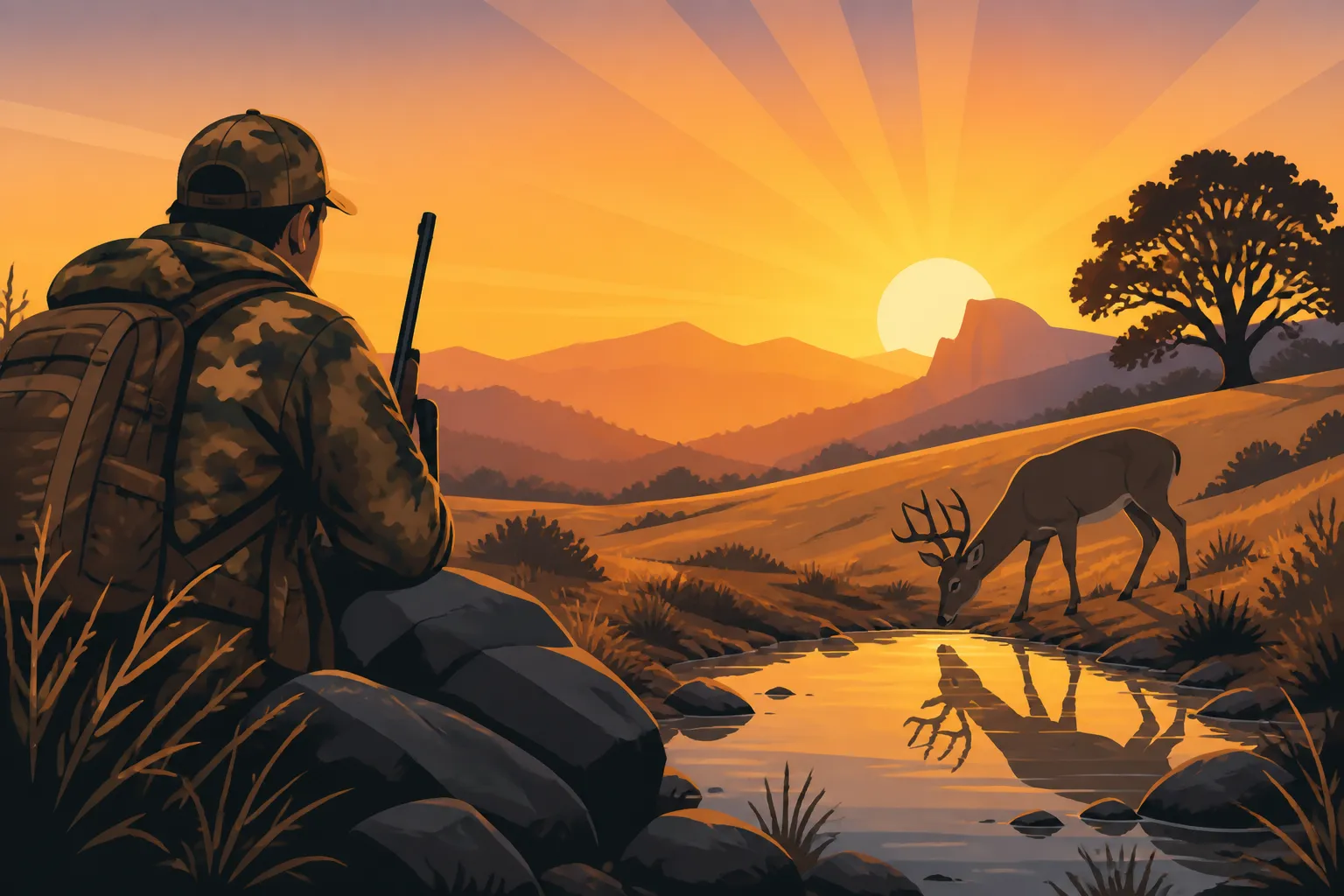
Hunting a Water Seep at First Light
That pre-dawn chill can be brutal, especially when you're hiking into a new spot, hoping you made the right call. You've spent hours poring over maps, and now you're relying on a hunch and a prayer that a buck will show up. It’s frustrating when you invest all that effort only to see nothing, or worse, blow out deer you didn't even know were there. This guide is all about honing in on one of California's most consistent, yet often overlooked, early morning hotspots: the humble water seep, and how to hunt it effectively at first light.
The Undeniable Draw of Water Seeps for California Deer
California's landscapes, while beautiful, can be notoriously dry. Finding consistent water sources, especially during the long, hot summers and early fall hunting seasons, is a constant challenge for both hunters and the deer themselves. It's a fundamental truth of the wild: where there's water, there's life, and often, big game.
Why Deer Gravitate Towards Hidden Water Sources
Deer, like all wildlife, are creatures of habit and efficiency. They need water daily, sometimes multiple times a day, particularly when temperatures soar or they're consuming dry forage that offers little moisture. In many parts of California, from the coastal oak woodlands to the high Sierra Nevada, obvious water sources like rivers or large ponds can be few and far between, or they might see a lot of human pressure.
This is where natural water seeps become goldmines. These aren't grand lakes or flowing rivers; they're often subtle, moist patches of ground where underground water slowly pushes to the surface. Think of a damp hillside, a boggy spot in a canyon bottom, or a persistent trickle forming a small, muddy puddle. Deer quickly learn where these reliable, low-profile water sources are located. They're often tucked away in thick cover, on north-facing slopes, or deep in canyons, offering deer a sense of security that larger, more exposed waterholes simply can't. A deer can slip in, grab a quick drink, and disappear back into the brush without drawing attention to itself or running into a human. It's their secret oasis, and if you can find it, you're halfway to success.
Identifying Productive Seeps on the Landscape
So, how do you find these hidden gems? It starts long before you ever step foot in the woods. You need to become a detective, reading the landscape for clues. Begin by poring over topographic maps. Look for tight contour lines in canyons, draws, and saddles, especially on north-facing slopes that retain moisture longer. These are prime areas where subsurface water might emerge.
Next, shift to satellite imagery. Tools like GoHunt or onX Hunt are invaluable here. Zoom in on those topo-identified areas. What are you looking for? Patches of lusher, greener vegetation that stand out against the drier, surrounding landscape. Specific tree types like alders, willows, or even certain ferns and mosses are often indicators of consistent moisture. You might even spot a small, dark depression or a shiny wet spot. Mark these potential seep locations as waypoints.
Once you're on the ground, confirm your suspicions. Look for damp soil, even if there's no visible standing water. Scrape away leaf litter; if the soil underneath is dark and moist, you're likely onto something. Most importantly, look for game sign. Fresh deer tracks converging on a damp spot, droppings nearby, and browse lines on surrounding vegetation are undeniable proof that deer are using the seep. Remember, you're not just looking for any water; you're looking for deer-used water.
Mastering the Art of Seep Scouting and Setup
Finding a seep is just the first step. The next, and perhaps most critical, is scouting it properly and setting up an ambush point without alerting the very animals you hope to hunt. California deer, especially blacktails and mule deer, are incredibly wary, and a single mistake can ruin your chances.
Stealthy Reconnaissance to Avoid Alerting Bucks
This cannot be stressed enough: when scouting a potential seep, you need to be a ghost. Your goal is to gather information without leaving any scent, sound, or visual disturbance that might change a deer's behavior. If you bump a buck off a seep, he might still use it, but he’ll be exponentially more cautious, often visiting only at night or during brief, unpredictable intervals.
The best time to scout is usually midday, when deer are typically bedded down, or even better, in the off-season. When you approach, always do so downwind, using terrain features and thick cover to mask your movement. Avoid walking directly into the seep area on obvious game trails. Instead, circle wide, staying at a distance, and use binoculars to study the spot. Your focus should be on identifying primary entry and exit trails deer use, understanding the prevailing wind patterns, and locating natural cover you can use for a blind. Consider mapping out your approach and exit routes carefully using a GPS or a mapping app like GoHunt to ensure you don't cross a known deer path or disturb a bedding area.
The use of trail cameras around seeps is a double-edged sword. While they can provide invaluable data on deer activity patterns, they also introduce human scent and disturbance. If you do use them, set them up quickly, with extreme scent control, and check them infrequently. For high-pressure public land, it's often better to rely on fresh tracks and your own observation to keep the area as wild as possible.
Crafting the Perfect First-Light Ambush Point
Once you've identified a promising seep and understood the deer's movement patterns, it's time to choose your ambush point. This spot needs to be within comfortable shooting range—often bow range (20-40 yards) or within a reasonable rifle distance (100-200 yards), depending on your weapon and skill. Most importantly, it must be downwind of the seep, ensuring your scent isn't blowing directly into the watering area. Consider the direction of wind and thermals in steep Sierra country, as morning thermals will often pull your scent downhill. You might need to set up slightly above the seep to keep your scent from drifting into the low ground where deer approach.
You have a couple of options for cover. Natural cover, like a thick oak tree or a cluster of brush, can be highly effective if you blend in well. The alternative is a ground blind. If you opt for a blind, set it up well in advance of the season, if possible, allowing deer to get accustomed to its presence. You'll want to take the time to brush in a blind on a field edge or wherever you set up, using local vegetation to make it disappear into the surroundings. The goal is to be invisible.
Finally, plan your approach to your stand or blind in the dark. This is where your pre-scouting and mapping become crucial. Plot a silent route, using ridges, washes, or dense vegetation to conceal your movement and muffle any sound. Use a headlamp with a red light setting, which is less disruptive to wildlife, and move slowly, deliberately. You need to be settled and ready well before legal shooting light.
Maximizing Your Chances During the Golden Hour
The time just before and after sunrise is often referred to as the "golden hour" for a reason. This is when wildlife is most active, moving from their nocturnal feeding grounds to water, and eventually to their daytime bedding areas. Hunting a seep during this window can dramatically increase your odds of success.
Deer Movement at Dawn: The Thirsty Buck Syndrome
Deer have spent the night feeding, perhaps moving several miles, and now, as the first light breaks, their biological clock tells them it's time for a drink. The "thirsty buck syndrome" isn't a medical term, but it aptly describes the imperative for deer to get water first thing in the morning, especially if they’ve been browsing on dry vegetation.
Typical patterns see deer moving from their bedding areas towards a water source, often making a quick stop for a drink before moving on to a primary feeding area or back to thick cover to bed down for the day. A secluded water seep is a prime candidate for this first-light stop. You might see a lone buck or even a small group of does and fawns. They’ll usually approach cautiously, testing the wind, before committing to the water. This narrow window, typically the first hour or two of legal light, is your prime opportunity. They feel safer in the low light, with less human activity and fewer predators out and about. Your job is to be there, still and silent, anticipating their arrival.
The Pillars of Stillness and Scent Elimination
Deer have an incredible sense of smell, hearing, and sight. Neglecting any of these can lead to a busted hunt. Scent control is paramount. Before heading out, take a shower with scent-eliminating soap, wear clean hunting clothes, and use scent-reducing sprays on your gear. Store your hunting clothes in airtight containers away from household odors. Pay close attention to the wind direction; it will make or break your hunt at a seep. Thermals in mountainous terrain, especially in the Sierra Nevada, can be tricky. As the air warms, thermals will typically start to rise, but at first light, they often still pull scent downhill or along drainages. Always set up to account for the most likely wind and thermal shifts.
Once you’re in your spot, absolute stillness is critical. Even small movements can be picked up by a deer’s keen eyesight. Practice being still. Breathe deeply and slowly. Resist the urge to constantly check your phone or fidget. Let your eyes scan slowly, looking for movement or a change in the pattern of the brush. A deer approaching a seep will almost always stop and scrutinize the area before drinking. That’s your cue to be ready. Patience is a virtue here; sometimes deer come in quickly, other times they might take a leisurely approach. Know when to call it quits to avoid over-pressuring the spot if no deer show, allowing it to recover for future hunts.
Here's a quick comparison of hunting a seep versus a larger river or creek:
| Feature | Water Seep Hunting | River/Creek Hunting |
|---|---|---|
| Water Source | Small, often hidden, localized wet spot | Larger, flowing, more expansive water body |
| Deer Pressure | Generally lower, more secluded | Can be high, especially in accessible areas |
| Deer Security | High due to cover and isolation | Varies; can be exposed, but cover may be nearby |
| Scouting Ease | Requires detailed map work and ground recon; subtle | Easier to spot on maps, but harder to pinpoint deer crossings |
| Ambush Type | Close-quarters, still hunting, natural or ground blind | Stand or still hunting along trails; wider shooting lanes |
| Scent Control | Absolutely critical; thermals can be tricky | Crucial, but flowing water can sometimes mask scent |
| Game Visible | Often close, fleeting visit | Might see deer across wider expanses; more consistent flow |
| Best Time | First light, last light | First light, last light |
Essential Gear for a Successful Seep Hunt
Having the right gear won't guarantee success, but it will certainly improve your chances and make your hunt more comfortable and safe. For seep hunting, precision and stealth are key, and your gear choices should reflect that.
Optics, Mapping, and Navigation for Precision
Good optics are non-negotiable. At first light, when deer are most active, light-gathering binoculars are essential for distinguishing movement in low light. A pair of 10×42 binoculars, like those from a reputable brand such as Vortex or Leica, will serve you well. A rangefinder is also crucial. Seeps often lie in varied, broken terrain, where distances can be deceptive. Knowing the exact yardage to potential shooting lanes around the seep will help you make an ethical shot. This is especially true if you are hunting California's Sierra Nevada high country where steep angles play tricks on the eye.
Digital mapping apps are your best friend for seep hunting. Platforms like GoHunt or onX Hunt allow you to pinpoint your seep, mark entry and exit routes, and track your path in and out without disturbing the area. The ability to use these apps offline is also invaluable, as cell service can be spotty in remote California wilderness. A reliable GPS app can help you find your way in the dark and ensures you don’t get lost. Also, don't forget a quality headlamp with a red light setting for those pre-dawn hikes. This minimizes disturbance to wildlife and preserves your night vision.
Clothing, Comfort, and Emergency Preparedness
California's weather can be unpredictable, especially during hunting season. A cold Sierra morning can quickly turn into a warm, sunny afternoon. Layering your clothing is key. Start with a moisture-wicking base layer, add an insulating mid-layer, and finish with a quiet, durable outer shell that offers protection from wind and light rain. Choose quiet fabrics that won't rustle against brush as you move, and camouflage patterns that blend with the local vegetation, such as oak woodland or chaparral.
For comfort during long waits, a lightweight, quiet cushion or small folding chair can make a world of difference. Your pack should be streamlined but contain essentials: water, high-energy snacks, a small first-aid kit, and a communication device like a satellite messenger if you’re hunting in remote areas with no cell service. While a grunt call might sometimes be useful, often, the best call at a seep is no call at all – just silent, patient waiting. Remember, scouting California public land before season is an ongoing process, and these small seeps can change with rainfall, so adapt your gear and strategy accordingly. Finding that hidden spot where California Blacktail Bucks Bed in relation to a seep can be the key to success. Don't be afraid to read aerial photos for Sierra deer to identify these likely areas before you even get boots on the ground. Your ultimate goal is to find ground others walk past and exploit its potential.
Disclaimer: Hunting laws and regulations in California are subject to change. Always consult the latest California Department of Fish and Wildlife (CDFW) regulations before planning any hunting trip.