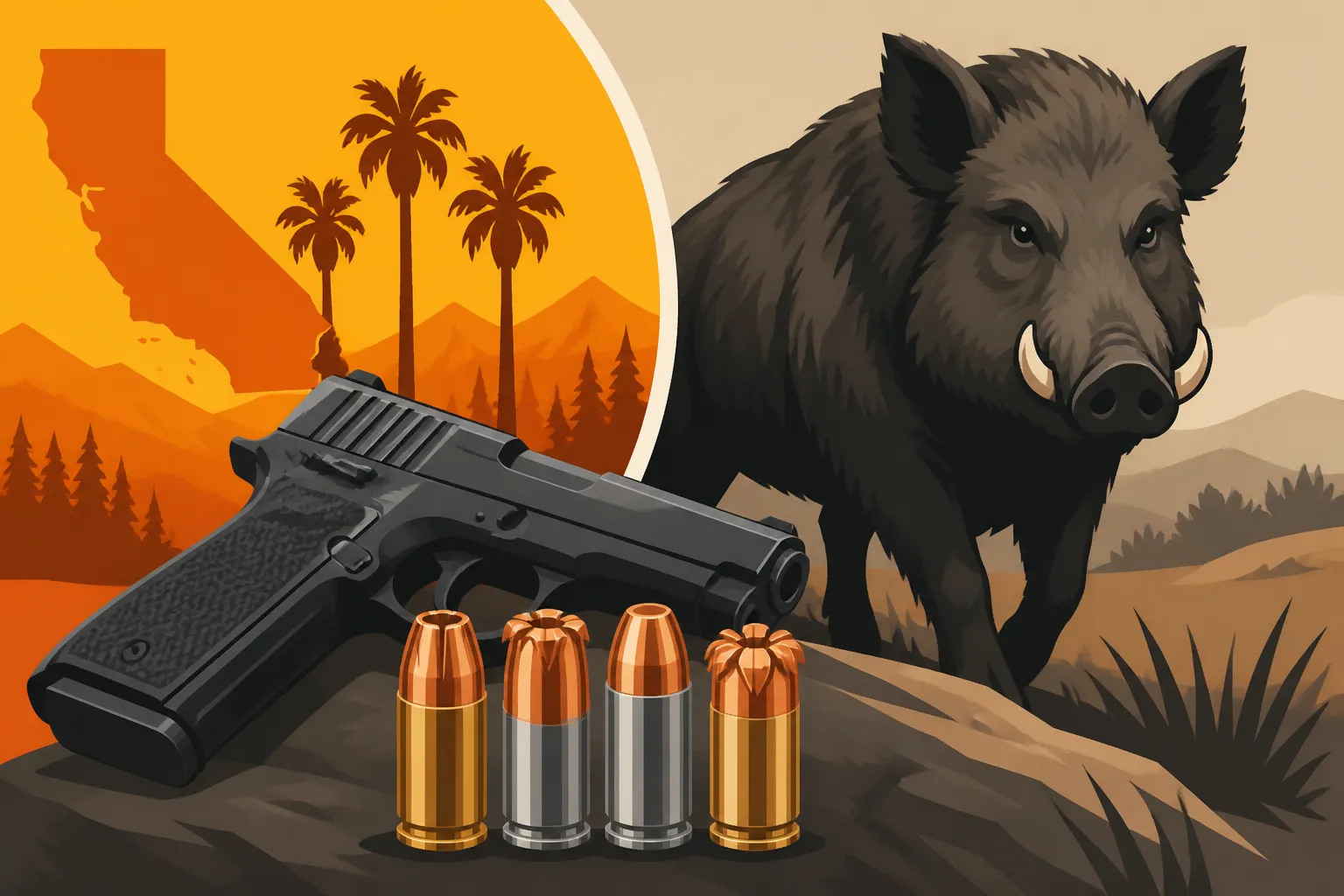
Non-Lead Handgun Rounds for Wild Pig
Hunting wild pigs in California with a handgun presents a unique set of challenges, not least of which is navigating the state's stringent non-lead ammunition mandate. Many hunters struggle to find suitable, reliable non-lead handgun rounds that deliver the necessary terminal performance for tough hogs. This guide aims to cut through the confusion, offering practical advice on selecting effective non-lead handgun ammunition for your next California wild pig adventure, ensuring both ethical hunting and compliance with regulations.
Navigating California's Non-Lead Mandate for Handguns
California's lead ammunition ban is comprehensive, affecting all hunting statewide, regardless of the game species or the firearm used. For handgun hunters pursuing wild pigs, this means every single round in your cylinder or magazine must be certified as non-lead. This isn't just a suggestion; it's a legal requirement designed to protect wildlife, especially the California condor, from lead poisoning. Many hunters initially feel frustrated by this, as traditional lead-core bullets have been a staple for generations, and the switch introduces new ballistics and performance considerations.
Understanding the Lead Ammunition Prohibition
The statewide lead ammunition ban came into full effect, covering all firearms, ammunition, and hunting methods. For handgun hunters, this means you cannot use any projectile that contains lead for taking wild pigs. It's a significant change from how things once were, and it requires a complete reevaluation of your ammunition choices. This law applies equally to public and private lands, so there's no escaping it, no matter where you plan to hunt. You can explore more about the broader implications in our guide on California's Non-Lead Ammunition Requirement.
The mandate essentially means that if you're carrying a handgun for hunting purposes, whether it's your primary pig gun or a backup sidearm, all loaded ammunition must be lead-free. This isn't just about the bullet itself, but the entire projectile composition. It's crucial to check manufacturer specifications carefully. What might be considered "reduced lead" or "frangible" in other states won't pass muster in California; it needs to be genuinely non-lead, typically solid copper or a similar alloy. This impacts not only what you buy off the shelf but also your reloading practices if you handload.
Legal Non-Lead Handgun Projectile Types
When it comes to non-lead handgun rounds, you're primarily looking at monolithic copper projectiles. These bullets are typically machined from a single piece of copper or a copper alloy, designed to retain nearly 100% of their weight upon impact and expand reliably. Unlike lead-core bullets that might fragment or shed weight, monolithic copper bullets mushroom aggressively while holding together, creating a wider wound channel and often punching completely through the animal. This complete pass-through is often desirable for a good blood trail, which can be invaluable when Blood Trailing After Dark in California.
Beyond solid copper, you might encounter some manufacturers experimenting with other non-lead alloys, but copper remains the dominant choice for hunting. It's important to differentiate these from plated lead bullets, which still contain a lead core and are therefore illegal for hunting in California. Always look for clear labeling from the manufacturer indicating "non-lead," "lead-free," or "all-copper construction." When in doubt, a quick check of the California Department of Fish and Wildlife (CDFW) website or consulting with knowledgeable staff at a reputable sporting goods store can clarify if a specific round is compliant. Hunting resources like GoHunt often have up-to-date information on compliant ammunition options, which can be a real time-saver.
Choosing the Right Caliber for Wild Pigs with Non-Lead Rounds
Wild pigs are notoriously tough animals. They're built like tanks, with thick hides, gristle plates, and dense bone structure, especially older boars. This means that caliber choice, always important, becomes even more critical when using non-lead projectiles. You need a round that can penetrate deeply and deliver enough energy to anchor a hog quickly and ethically. While smaller calibers might be acceptable with traditional lead bullets that fragment and transfer energy rapidly, non-lead rounds, with their deep-penetrating and weight-retaining characteristics, require careful consideration of both caliber and bullet design.
Minimum Caliber Considerations for Ethical Pig Hunting
There's no hard-and-fast legal minimum caliber for wild pigs in California, but ethical considerations should guide your choice. For handgun hunting, most experienced pig hunters recommend nothing smaller than a .357 Magnum, and many prefer larger calibers like .44 Magnum or even .45 Colt for the added power. The key is delivering enough kinetic energy and penetration to reliably reach the vitals, even through a boar's tough shield. A smaller caliber with a well-constructed non-lead bullet and perfect shot placement can certainly be effective, but it leaves less room for error. When you're trying to quickly put down a charging boar, that margin of error can make all the difference.
Consider the typical ranges you'll be shooting at. Handgun hunting for pigs often involves closer encounters than rifle hunting, but even at 25-50 yards, bullet performance is paramount. A bullet that performs well at rifle velocities might not expand reliably at lower handgun velocities. This is where testing your chosen ammunition is crucial. Look for non-lead bullets specifically designed for handgun hunting velocities, which are often engineered to expand at a wider range of speeds.
Popular Handgun Calibers and Non-Lead Options
Several handgun calibers stand out as excellent choices for wild pig hunting in California, particularly when loaded with appropriate non-lead projectiles.
- .357 Magnum: A classic for a reason, the .357 Magnum with a heavy, well-constructed non-lead bullet (like a 158-grain or 180-grain solid copper hollow point) can be highly effective. It offers manageable recoil for most shooters and is accurate. For pigs, aim for those designed for deep penetration and controlled expansion.
- .44 Magnum: Often considered the quintessential hog hunting handgun round, the .44 Magnum delivers substantial power. Look for 240-grain or heavier non-lead monolithic hollow points. The increased energy and bullet mass make it an excellent choice for larger boars and offer a greater margin of error. It's a favorite for many seasoned hunters who frequent areas known for big pigs, like those found when Hunting Pigs on Central Coast Oak Ranges.
- .45 Colt (Ruger Only Loads/Heavy Loads): While standard .45 Colt loads might be a bit anemic for pigs, "Ruger Only" or other heavy-load recipes with modern non-lead bullets transform it into a formidable hog stopper. These loads approach .44 Magnum power levels.
- .454 Casull / .460 S&W Magnum / .500 S&W Magnum: For those seeking maximum power, these heavy hitters are in a league of their own. They offer incredible energy and penetration, making them overkill for some pigs but providing absolute confidence on even the largest boars. Non-lead options for these calibers are robust and designed for deep penetration and massive wound channels.
Here's a quick comparison of popular handgun calibers and their non-lead suitability for wild pigs:
| Caliber | Recommended Non-Lead Bullet Weight Range | Typical Projectile Type | Key Considerations for Wild Pig |
|---|---|---|---|
| .357 Magnum | 158-180 grain | Solid Copper Hollow Point | Good for accurate shots, smaller pigs. |
| .44 Magnum | 240-300 grain | Solid Copper Hollow Point | Excellent all-around pig stopper, good penetration. |
| .45 Colt (Heavy) | 250-300 grain | Solid Copper Flat Point | Powerful with heavy loads, excellent for deep penetration. |
| .454 Casull | 240-300 grain | Solid Copper Flat Point | Extreme power, high velocity, maximum penetration. |
Terminal Performance: What to Expect from Non-Lead Handgun Rounds
Terminal performance refers to how a bullet behaves once it hits the animal. With non-lead monolithic bullets, this is fundamentally different from traditional lead-core projectiles. Understanding these differences is key to making ethical shots and ensuring quick recoveries, particularly on tough animals like wild pigs. Unlike a lead bullet that might shed fragments and create a hydrostatic shockwave, a solid copper bullet is designed for a different kind of impact.
Penetration and Expansion Characteristics
Non-lead monolithic handgun bullets are engineered for deep penetration and reliable, controlled expansion. Because they retain nearly 100% of their original weight, they drive deeper into tissue than a lead-core bullet of similar mass that might fragment. This deep penetration is vital for reaching the vitals of a wild pig, which often lie behind thick muscle, bone, and that protective gristle shield. While lead-core bullets might expand rapidly and create a wider but shallower wound channel, non-lead bullets tend to create a more consistent, narrower channel but one that extends further into the animal.
The expansion itself is typically a mushroom shape, with petals peeling back from the bullet's nose. The key here is controlled expansion. You want the bullet to expand to about 1.5 to 2 times its original diameter, but not so violently that it breaks apart or fails to penetrate. The lower velocities of handguns mean that some non-lead rifle bullets might not expand at all, essentially acting like solid, non-expanding rounds. This is why it's critical to choose handgun-specific non-lead ammunition that is designed to expand reliably at typical handgun speeds and impact energies. For example, some brands like Barnes, often recommended by experienced hunters on platforms like GoHunt, specifically engineer their handgun bullets for this purpose.
The Importance of Shot Placement with Non-Lead Handguns
Given the deep penetration and controlled expansion of non-lead handgun rounds, shot placement becomes even more critical for wild pigs. While any bullet needs to hit vitals, a non-lead monolithic bullet relies heavily on disrupting vital organs through direct contact. There's less reliance on hydrostatic shock or widespread fragmentation. This means precise aiming is paramount. The traditional "boiler room" shot, targeting the heart-lung area just behind the shoulder, remains the gold standard. A double-lung shot will typically result in a quick, ethical kill and a good blood trail.
Avoid shoulder shots if possible, especially on larger boars, unless you are confident in your caliber and bullet's ability to punch through heavy bone. A frontal brain shot can be effective at close range, but it's a small target and ethically risky if not executed perfectly. Practice, practice, practice at the range with your chosen non-lead ammunition to understand its trajectory and how your handgun handles it. Know your ethical range limits for handgun hunting, which for most hunters will be significantly shorter than with a rifle. Understanding Wind and Thermals in Steep Sierra Country can also influence your shot placement, even with a handgun, especially on longer shots in open terrain.
Practice and Preparation for Handgun Pig Hunting
Successful and ethical handgun hunting for wild pigs in California isn't just about picking the right non-lead round; it's about the hunter's skill and preparation. The unique characteristics of handgun ballistics, combined with the toughness of wild pigs, demand a high level of proficiency. You can have the best ammunition in the world, but if you can't place it accurately under pressure, it won't matter.
Range Time and Ballistic Understanding
Consistent range time is non-negotiable for handgun hunting. You need to become intimately familiar with your handgun and the specific non-lead ammunition you've chosen. Different brands and bullet weights will impact point of aim, even within the same caliber. Spend time shooting from various positions – standing, kneeling, even from a rest – to understand how your handgun performs. Practice rapid target acquisition and follow-up shots, as wild pigs rarely stand still for long after the first shot.
Beyond just hitting the target, understand the ballistics of your non-lead rounds. How much drop do they have at 25 yards? At 50? What does the recoil feel like? Non-lead rounds can sometimes feel or shoot differently than their lead counterparts. Knowing these details will build confidence and ensure ethical shot placement in the field. This preparation is a crucial part of any hunt, whether you're targeting Wild Pig Hunting California Year-Round or pursuing other game.
Scouting and Shot Presentation
Effective scouting is just as important as marksmanship when handgun hunting for pigs. Pigs often move in predictable patterns, especially around food sources, water, and bedding areas. Look for fresh sign like rooting, tracks, and scat. Understanding these patterns will allow you to position yourself for close, ethical shots. When hunting public lands, using mapping tools like those often highlighted by GoHunt can help identify potential hog hotspots and plan your approach.
Once you encounter pigs, patience is key. Wait for the ideal shot presentation – a broadside or slightly quartering-away shot at a calm, unsuspecting animal. Resist the urge to take a rushed shot, especially if the pig is moving or quartering towards you, as these angles significantly reduce the chances of hitting vitals with a handgun. Remember, your goal is a quick, humane kill. Getting close enough for a confident shot is often the biggest challenge and the most rewarding aspect of handgun hunting. Sometimes this means crawling through thick brush or waiting out a sounder for hours. Hunting a Funnel Between Two Oak Ridges or Hunting a Standing Alfalfa Field can be particularly effective strategies for ambushing pigs.
Responsible Hunting Practices and Post-Harvest Procedures
Successfully taking a wild pig with a non-lead handgun is just one part of the hunting experience. Responsible hunting extends to what you do after the shot, from tracking and recovery to proper reporting. California has specific requirements, and adhering to them is part of being an ethical and law-abiding hunter.
Tracking and Recovery Challenges
Even with a perfectly placed shot using a powerful non-lead handgun round, wild pigs can cover significant ground before expiring. Their dense build and incredible will to live mean they often don the "death run" sprint before collapsing. Always assume the pig is hit and track it thoroughly. Non-lead bullets, due to their deep penetration and lack of fragmentation, can sometimes result in less external bleeding than lead-core bullets, making blood trailing more challenging.
Pay close attention to tracks, broken vegetation, and any sign of disturbed ground. If you lose the trail, back out, mark the last confirmed sign, and give the animal time if conditions allow. Return with fresh eyes and perhaps a dog trained for tracking. A well-placed non-lead shot will typically result in a dead pig, but finding it can sometimes be a puzzle. The reward of recovering your game, especially a tough old boar, is immense, making the effort worthwhile. For more on the specifics, check out Blood Trailing After Dark in California.
Reporting Your Wild Pig Harvest
California requires hunters to report all wild pig harvests through the Automated License Data System (ALDS). This is a simple but mandatory step that contributes to the state's wildlife management efforts. Regardless of whether you harvested your pig on private or public land, with a rifle or a handgun, the reporting requirement applies. You can typically do this online through your CDFW account, or sometimes at license vendors.
The information you provide helps wildlife biologists monitor pig populations, assess harvest rates, and make informed decisions about future hunting seasons and management strategies. It's a small but important contribution to the conservation of this fantastic game animal. For detailed instructions, refer to Reporting a Pig Harvest Through ALDS. Always ensure you have your wild pig tag on you and fill it out immediately after harvesting your animal, as required by law.
Disclaimer
This article is for general informational purposes only and does not constitute professional advice. Laws, prices and regulations vary by location and change over time. Consult a qualified professional for guidance on your specific situation.