Game Carts for Steep Canyon Recovery
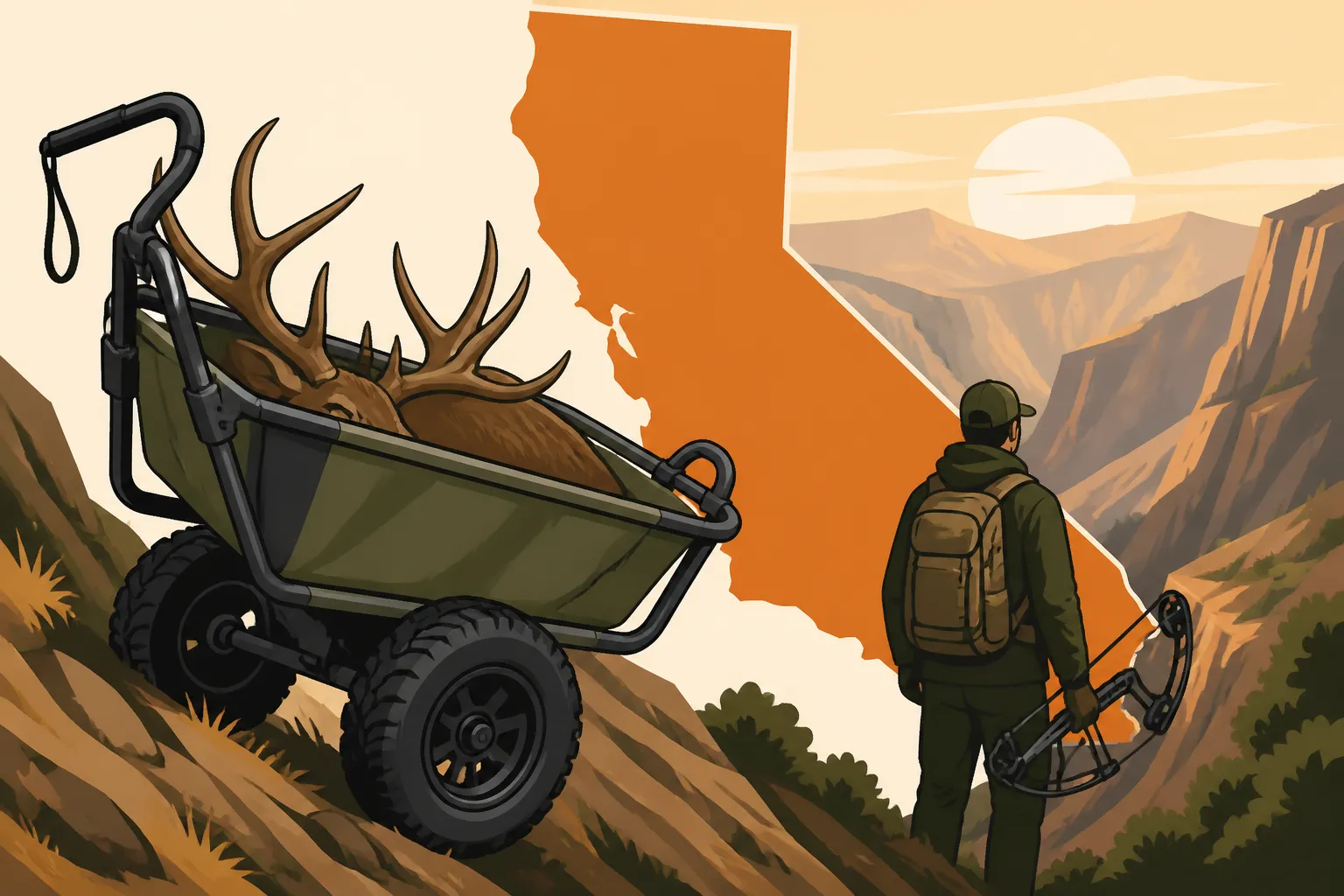
There's nothing quite like the immense satisfaction of tagging a buck or a bear deep in California's rugged backcountry. You put in the work, navigated the tricky terrain, and made a clean shot. But then reality sets in: you're miles from the truck, often at the bottom of a steep, brushy canyon, and now you have to get your prize out. This guide is all about tackling that formidable challenge, focusing on how game carts can be your best friend in these steep, unforgiving landscapes, and what to look for to ensure your recovery is as smooth—and safe—as possible.
The Challenge of Canyon Recoveries in California's Rugged Terrain
California's hunting landscape is diverse, stretching from the dense coastal chaparral to the high-alpine granite of the Sierra Nevada. While this variety offers incredible hunting opportunities for species like Columbia blacktail and mule deer, it also presents some truly brutal recovery scenarios. When you find yourself gazing down into a canyon at your harvested animal, the initial elation can quickly turn to a sinking feeling as you assess the haul ahead.
Why Canyons Are Different: More Than Just Steep
It's not just the sheer vertical drop that makes canyon recoveries so difficult; it's the entire ecosystem of challenges packed into that space. You're dealing with loose scree slopes that offer no purchase, thick, tangled manzanita and ceanothus that grab at every step, and often, rockfalls that make even walking a precarious affair. Water sources, if present, can create muddy, slick conditions, while dry canyons are choked with dust and broken branches. Unlike a gentle hillside or a flat plain, canyons are dynamic and unpredictable, changing with erosion, fire, and season. You might find yourself Recovering a Deer From a Steep Canyon that tests every ounce of your physical and mental fortitude.
Add to this the varying temperatures you can encounter. A cool morning in a canyon can turn into a sweltering oven by midday, accelerating meat spoilage. This extreme environment means you can't just rely on brute strength; you need strategy, the right gear, and a deep respect for the terrain. A simple drag bag that works fine in a flat oak woodland becomes a liability, tearing on rocks, snagging on brush, and forcing you into awkward, back-breaking positions that are ripe for injury.
The Physical Toll and Safety Concerns
Dragging an entire deer or even a quartered bear out of a steep canyon without the proper tools is an invitation to injury. The strain on your back, knees, and shoulders is immense. Hunters often report muscle strains, joint pain, and even falls that lead to serious injuries when attempting these recoveries unprepared. Fatigue sets in quickly when you're fighting gravity and obstacles, impairing judgment and increasing the risk of accidents.
Beyond personal injury, there's the very real concern of safe meat recovery. Leaving an animal in the field longer than necessary due to an inefficient recovery method can compromise the quality of the meat, especially in warmer conditions common in parts of California's deer season. Furthermore, struggling with a heavy load in unpredictable terrain can lead to exhaustion, making you more vulnerable to other backcountry hazards, from wildlife encounters to sudden weather changes. Always prioritize safety over speed; a quick look at resources like GoHunt can show you how many hunters emphasize preparation for these very reasons.
When a Drag Bag Just Isn't Enough
While a good drag bag certainly has its place for shorter, less challenging pulls across flatter terrain or through open timber, it's simply outmatched by the demands of a steep canyon. A drag bag works by allowing you to slide the animal, reducing friction, but in a canyon, that friction is your enemy. The sharp rocks and abrasive soil will quickly tear through even the toughest material, leaving you with a damaged bag and an animal exposed to dirt and debris.
Moreover, a drag bag still puts the entire weight of the animal directly on your back and shoulders or requires awkward pulling positions. Imagine trying to navigate a steep, boulder-strewn slope with a heavy, unbalanced load strapped to your body or dragging behind you, constantly catching on rocks and stumps. It’s an exhausting, inefficient, and often dangerous endeavor. This is precisely where a purpose-built game cart designed for rugged, steep ground shines, taking the load off your body and distributing it over wheels that are engineered to roll, not drag.
Essential Features of Game Carts for Steep, Rough Country
Choosing the right game cart for California's steep canyons isn't just about grabbing the first one you see. It's an investment in your back, your safety, and your ability to bring home your hard-earned game. You need a cart that can withstand abuse, balance heavy loads, and provide leverage against gravity.
Frame Design and Material Strength
The backbone of any good canyon game cart is its frame. Forget flimsy, lightweight aluminum frames designed for flat forest service roads. For steep, rocky terrain, you need a robust, often steel or heavy-gauge aluminum frame that can handle torsional stress, impacts, and heavy, shifting loads. Look for frames with welded joints rather than bolted connections, as welds generally offer superior strength and rigidity under extreme pressure. The frame should have a wide footprint to provide stability, but not so wide that it becomes impossible to maneuver through tight spots or between trees.
Many successful recoveries in challenging zones, such as when Hunting California's Sierra Nevada Backcountry or Hunting California's High-Country X-Zones, rely on frames that integrate a sturdy handle or push/pull bar that doubles as a stand. This allows you to pause on a slope without the cart toppling over and gives you multiple grip points for control, especially crucial when you're fighting to maintain balance on a steep descent. The overall geometry should keep the center of gravity low when loaded, preventing it from feeling top-heavy and uncontrollable on sidehills.
Wheel Type, Size, and Axle Durability
The wheels are arguably the most critical component for canyon recovery. Small, plastic wheels are a non-starter. You need large-diameter wheels, typically 16-20 inches, with robust pneumatic tires (air-filled) that can absorb shocks from rocks and roots, providing a smoother ride and better traction. These larger wheels also increase the axle height, giving you more clearance over obstacles, which is invaluable when navigating a wash full of boulders or downed timber.
The axle itself must be heavy-duty, preferably solid steel, and securely mounted to the frame. A common failure point on lesser carts is a bent or broken axle, leaving you stranded with a heavy load. Look for wheels with sealed bearings, as these will stand up better to dust, mud, and water, ensuring smooth rotation and longevity. Some premium carts might even offer a quick-release wheel system, which can be handy for compact storage or field repairs, though durability remains paramount for canyon work.
Securing Your Load: Straps, Bungees, and Tie-Down Points
Even the most robust cart is useless if your game isn't securely fastened. On steep, uneven terrain, a loose load will shift, throw off your balance, and potentially cause the cart to flip. Look for multiple integrated tie-down points, typically welded loops or reinforced slots on the frame, that allow you to cinch down your animal tightly from various angles.
High-quality cam-buckle straps are often superior to bungee cords for primary load securement in canyons. Bungees can stretch and allow movement, whereas cam straps offer a positive, non-slip hold. You'll likely need several long straps to fully encompass an animal, ensuring it doesn't move an inch during the toughest parts of the descent. Some hunters also prefer using cargo nets in conjunction with straps for smaller pieces of gear or quartered meat that might otherwise shift around. A well-designed cart anticipates these needs, offering ample options to secure your precious cargo, often even including a sturdy canvas or mesh base to prevent smaller items from falling through.
Comparing Popular Game Cart Styles for Canyon Operations
When it comes to game carts, there isn't a one-size-fits-all solution, especially when tackling the unique challenges of California's steep canyons. Different designs cater to different preferences and terrain types. Understanding the pros and cons of each will help you make an informed decision for your specific hunting style and the areas you frequent.
Single-Wheel vs. Two-Wheel Designs: Pros and Cons
This is perhaps the most significant design distinction. Each has its devotees, and for good reason.
Single-Wheel Carts (Game Unicycles): These carts, sometimes resembling an oversized wheelbarrow, feature one large central wheel.
- Pros: They excel at navigating extremely narrow trails, dense brush, and between tight obstacles where a wider two-wheel cart would get hung up. The single wheel often tracks better on existing game trails or faint paths. They can also be easier to "pivot" around obstacles. For solo hunters venturing into really nasty thickets or Hunting Coastal Range Oak Woodlands with tight undergrowth, a single-wheel design offers superior maneuverability.
- Cons: Stability is their main drawback. They require constant balancing, similar to a wheelbarrow, which can be exhausting over long distances or on very uneven sidehills. If you momentarily lose your grip or stumble, the cart can easily tip, spilling your load. They are also less stable when stopped on a slope unless they have a very good kickstand.
Two-Wheel Carts: These are the more common design, featuring two wheels on a shared axle.
- Pros: Significantly more stable, especially over rough terrain or when traversing slopes. The two-wheel design distributes weight more evenly and provides inherent stability when paused. This stability is a huge advantage when you're fatigued or need to stop to rest or clear an obstacle. They are generally easier to push or pull over longer distances, reducing the physical strain of constant balancing.
- Cons: Their primary disadvantage is width. They can be difficult to maneuver through extremely dense brush, narrow gaps between trees, or on single-track game trails that are barely wider than your boots. In areas with very tight cover, they might require more effort to muscle through, potentially damaging the cart or your surroundings.
For most steep canyon recovery in California, where stability and load capacity are paramount, a robust two-wheel cart often edges out a single-wheel model, especially if you anticipate having a partner. However, if your hunting grounds are exceptionally brushy with almost no discernible trails, a single-wheel model might save you some headache.
Fixed-Frame vs. Folding Carts: Portability vs. Robustness
Another important consideration is whether the cart folds for transport or is a single, rigid unit.
Fixed-Frame Carts: These carts are built as a single, non-collapsible unit.
- Pros: Unbeatable for robustness and weight capacity. Without hinges or folding mechanisms, the frame is inherently stronger and more rigid, less prone to flexing under heavy, unbalanced loads or impacts. If you frequently hunt very large game like elk or big bears, or if you're consistently retrieving from the most brutal terrain where durability is key, a fixed-frame cart is often the most reliable choice.
- Cons: Their size. They can be bulky and awkward to transport in a smaller vehicle or store in a garage. If you have limited space in your truck bed or need to pack the cart in a short distance before use, this can be a significant inconvenience.
Folding Carts: These carts incorporate hinges and can collapse into a more compact footprint.
- Pros: Portability and storage are their main advantages. They can easily fit into a truck bed, back seat, or even strapped to a larger pack for a shorter haul into a remote spot. This makes them much more versatile for hunters who don't always need a cart but want the option. Many folding carts are designed to be quite robust, offering a good balance between portability and strength.
- Cons: While many are strong, the folding mechanisms introduce potential weak points. Hinges can wear, bend, or fail under extreme stress, especially if overloaded or used improperly. They might also have a slightly lower weight capacity than a comparable fixed-frame model. For the most demanding, heaviest loads, a fixed-frame design is usually more reassuring.
For most California deer hunters, a well-designed folding two-wheel cart offers the best blend of features, providing enough strength for a blacktail or mule deer while still being practical to get to the trailhead.
Backpack Frame Hybrids: When the Trail Disappears
Sometimes, a canyon is so steep, so choked with impenetrable brush, or so far from any semblance of a trail that even the best wheeled cart simply cannot go. This is where a heavy-duty external frame backpack or a specialized backpack frame designed for hauling meat truly shines. These aren't "carts" in the traditional sense, but they are crucial for game recovery in the most extreme conditions.
These frames are essentially robust aluminum or carbon fiber structures with shoulder straps and a hip belt, allowing you to lash quartered meat directly to the frame. The best ones feature a strong, wide shelf at the bottom to support the bulk of the weight, transferring it to your hips, and multiple compression straps to cinch down the load. When Packs and Gear for a Backcountry Elk Hunt or deep Hunting California's High-Country X-Zones, these frames are often the only practical solution.
While a pure game cart rolls, a backpack frame means carrying the entire weight. However, it allows you to literally climb, crawl, and bushwhack through terrain that would stop any wheeled vehicle. Many experienced canyon hunters will scout with a minimalist pack frame, knowing that if they get an animal in the worst spots, they’ll be quartering it and packing it out piecemeal. It's a grueling alternative, but often the only alternative when gravity and vegetation conspire against wheels. For finding the right gear for these kinds of extreme situations, resources like GoHunt can often highlight specific manufacturers that cater to ultra-rugged backcountry hunters.
Here's a quick comparison of general cart types for steep terrain:
| Feature | Single-Wheel Cart | Two-Wheel Cart | Folding Two-Wheel Cart | Backpack Frame Hybrid |
|---|---|---|---|---|
| Maneuverability | Excellent in tight brush | Good, but wider | Good, but wider | Best in dense brush/no trail |
| Stability | Requires constant balance | Very good, self-standing | Good, generally stable | Excellent (on your back) |
| Load Capacity | Moderate-Heavy | Heavy-Very Heavy | Moderate-Heavy | Heavy (depends on user strength) |
| Terrain Suitability | Very tight, faint trails | Open-to-moderate terrain, steep | Open-to-moderate terrain | Extremely steep, no-trail, rocks |
| Transport/Storage | Moderate, often bulky | Bulky | Excellent, compact | Excellent, wears like a pack |
| Best For | Solo hunting, super thickets | General canyon use, moderate terrain | Versatile, good all-arounder | Extreme backcountry, quartered meat |
Master the Descent: Techniques for Carting Game Downhill
Even with the best game cart, getting an animal out of a steep California canyon is hard work. It requires more than just muscle; it demands technique, careful planning, and often, teamwork. Don't underestimate the power of gravity when you're heading downhill with a heavy, potentially unbalanced load.
Solo Operations vs. Team Efforts
Ideally, a canyon recovery, especially with a cart, is a two-person job. Having a partner significantly reduces the physical strain and enhances safety. One person can "pull" from the front, setting the pace and navigating obstacles, while the other "pushes" or "stabilizes" from the rear, providing braking power and preventing the cart from running away. This push-pull dynamic is incredibly effective on steep descents. The person at the rear can lean into the handles, using their weight as a brake, and steer the cart away from dangers.
However, many hunters find themselves alone in the backcountry. If you're undertaking a solo recovery with a cart down a steep canyon, safety becomes even more paramount. The key is control and careful movement. Never let the cart get ahead of you. Instead, position yourself behind the cart, using your body weight to act as a brake as you lower it section by section. On extremely steep pitches, you might have to partially unload, lower the empty cart, and then bring the meat down separately, or use a rope to essentially rappel the cart down controlled sections. This slower, more cautious approach prevents the cart from gaining momentum and becoming uncontrollable, which could lead to a serious accident.
Navigating Obstacles: Rocks, Logs, and Tight Spots
Canyons are rarely smooth highways. You'll encounter a myriad of obstacles that demand careful navigation.
- Rocks and Boulders: For smaller rocks, the large pneumatic tires of a good cart will roll over them. For larger boulders, you'll need to lift and pivot. If possible, find a path around them. If not, slowly lift one wheel at a time over the obstacle, keeping the cart as balanced as possible. A partner can help immensely here.
- Downed Logs/Trees: Similar to boulders, try to roll over smaller logs. For larger ones, you might need to lift the cart over. If the log is too big, look for a section where you can drag the cart alongside it, or if all else fails, you may need to saw a path through. Always scope out the path ahead for the easiest route.
- Thick Brush and Undergrowth: This is where a narrower cart or a single-wheel design has an advantage. For wider carts, it might mean breaking branches or trimming a path. Push through steadily but cautiously. Sometimes, it's easier to lift the cart onto higher ground to get around a particularly dense patch, even if it adds a little vertical gain.
- Stream Crossings/Mud: Look for the shallowest, firmest crossing. If it's muddy, go slowly and steadily to maintain momentum. Be prepared for your boots to get wet, and consider carrying spare socks.
A helpful tip is to scout your exit route before you even start breaking down your animal, if time allows. Knowing the path you'll take can save valuable time and effort during the recovery. Using a GPS mapping app like one that integrates with GoHunt's mapping features can help identify potential terrain challenges and plan your route.
Braking and Control on Steep Slopes
Controlling a heavy game cart on a steep descent is crucial for safety.
- Body Position: Keep your body low and use your legs, not just your back, to absorb the weight and act as a brake. Maintain a wide stance for balance.
- Controlled Descent: Never try to rush. Take small, deliberate steps. On very steep sections, you might need to turn the cart sideways to the slope slightly, or zig-zag, to slow its momentum.
- Rope Assistance: For truly extreme descents, a long, strong rope is invaluable. Tie one end to the cart and the other to a sturdy tree or anchor point further up the slope. You can then use the rope to slowly lower the cart in a controlled manner, essentially rappelling it down the steepest sections. This technique is particularly useful for solo hunters or when negotiating sheer drops.
- Grip: Wear good gloves to protect your hands and ensure a firm grip on the cart handles. Sweaty hands can lose purchase quickly.
- Footwear: Your footwear is your first line of defense against slips and falls. Invest in Best Boots for Steep Wet-Season Sierra Trails or similar rugged boots with excellent ankle support and aggressive tread. This will give you the confidence to maintain your footing on loose ground.
Remember, patience is your greatest asset. It's better to take an extra hour and arrive safely with your game and your health intact than to rush and suffer an injury or lose your harvest.
Beyond the Cart: Complementary Gear for Canyon Recovery
While a robust game cart is the star of a steep canyon recovery, it's part of a larger team of gear that will ensure a successful and safe extraction. Neglecting these complementary items can turn an already challenging situation into a nightmare.
High-Quality Game Bags and Meat Protection
Before your game even touches the cart, proper field dressing and bagging are non-negotiable, especially in California's often-warm conditions and for long hauls. You need high-quality game bags that are breathable, durable, and large enough to fully encase quartered meat. Breathability is key for cooling, and durability is essential to protect the meat from dirt, flies, and sharp edges during the carting process. Think about Best Game Bags for Field Care in August Heat.
Mesh game bags, often made of a synthetic blend, allow air circulation to help cool the meat and prevent spoilage. Ensure you have enough bags for all the quarters, backstraps, and other prime cuts. Once bagged, you can then strategically load them onto your cart. Proper bagging also helps keep the meat clean, making butchering at home much easier. Investing in a good set of game bags is a small cost compared to the loss of your hard-earned venison or bear meat due to spoilage or contamination.
Ropes, Pulleys, and Come-Alongs for the Toughest Hauls
Sometimes, even the best cart struggles. For truly vertical climbs, moving an animal over a sheer drop, or pulling a bogged-down cart up a difficult incline, you'll need mechanical advantage.
- Ropes: A strong, static rope (not dynamic climbing rope) of at least 50-100 feet is a lifesaver. It can be used to lower the cart (as discussed above), hoist meat up short inclines, or provide a handline for hunters traversing difficult sections. Look for a rope with good knot-holding ability and a high tensile strength.
- Pulleys: Simple mechanical advantage systems using pulleys can multiply your pulling power. A basic 3:1 or 4:1 pulley system, utilizing two or three pulleys and a length of rope, can make a 200-pound load feel like 50 pounds. These are invaluable for short, steep hauls where you just can't get enough leverage.
- Come-Alongs/Winches: For very heavy animals or extremely challenging uphill pulls, a small, hand-cranked come-along or a portable winch can be a game-changer. These devices allow you to pull incredibly heavy loads with minimal effort, by progressively cranking the line. They are heavier to carry but can be the difference between getting your animal out and having to leave it in the field. They are often critical when dealing with truly massive game or when you're alone and need serious mechanical assistance. This gear is particularly relevant for those planning deep backcountry hunts, where a full Packs and Gear for a Backcountry Elk Hunt might include such recovery tools.
Essential Personal Gear: Footwear, Gloves, and Headlamps
Your personal gear is just as important as your cart.
- Footwear: As mentioned, good boots are non-negotiable. They need to provide excellent ankle support, traction on loose and wet surfaces, and comfort for long, strenuous miles. Consider waterproof options if hunting in areas prone to morning dew, stream crossings, or unexpected rain.
- Gloves: Durable work gloves will protect your hands from scrapes, blisters, and the sharp edges of the cart or brush. They also provide a better grip on handles and ropes.
- Headlamp: A powerful headlamp with a long battery life is essential. Many recoveries stretch into or start in the dark. A good headlamp frees up your hands, illuminates the trail, and helps you work safely. Think about the Best Headlamp for a Pre-Dawn Sierra Climb you'd need. Always carry spare batteries or a power bank.
- First Aid Kit: Accidents happen, especially during strenuous activities in remote areas. A well-stocked personal first aid kit is crucial for treating cuts, scrapes, sprains, and other common injuries.
- Water and Snacks: Hydration and energy are critical. You'll be expending a huge amount of energy during a canyon recovery. Carry more water and high-energy snacks than you think you'll need.
- Knives/Processing Tools: Have a sharp, clean knife for Field Dressing a Deer in Hot Weather or quartering. A small bone saw can also be incredibly helpful for efficient processing.
Remember, preparation is key. A successful canyon recovery is a testament to not just your hunting skill, but your foresight and gear choices.
Maximizing Your Cart's Lifespan and Performance
A good game cart is an investment, and like any investment, it performs best and lasts longest when properly cared for. The harsh conditions of California's canyons can be brutal on gear, so a little preventative maintenance and smart storage can save you headaches and money down the line.
Post-Hunt Cleaning and Inspection
As soon as you're done with the recovery, and before you put your cart away, give it a thorough cleaning. Dried blood, mud, and plant debris can corrosive, attract pests, and degrade materials over time.
- Rinse Thoroughly: Use a hose to spray down the entire cart, removing all mud, dirt, and any residual blood. Pay special attention to the wheels, axle, and any folding mechanisms.
- Scrub Away Grime: For stubborn grime or dried blood, use a stiff brush and mild soap (like dish soap) to scrub the frame and wheel components. Make sure to get into all the nooks and crannies.
- Dry Completely: This is crucial. Water left on steel frames can lead to rust. Let the cart air dry completely in the sun, or wipe it down with a towel, before storing it. If you have pneumatic tires, check their pressure.
- Inspect for Damage: While cleaning, carefully inspect the entire cart. Look for bent frame components, cracked welds, loose bolts, frayed straps, or damaged tires. This is the time to identify issues that need repair before your next hunt.
A quick clean-up after each use, especially after hauling through muddy creeks or dusty washes, will prevent accumulation and significantly extend the life of your equipment.
Common Wear Points and Preventative Maintenance
Knowing where your cart is likely to take a beating helps you address issues before they become catastrophic failures.
- Axle and Wheels: The axle is under immense stress. Check for any signs of bending or cracking. Ensure the wheel bearings are still spinning freely and silently. If they're gritty or stiff, they might need cleaning and regreasing, or replacement. Keep tires properly inflated to prevent rim damage and provide optimal shock absorption. A flat tire in the middle of a recovery is a nightmare.
- Frame Joints and Welds: On folding carts, check the hinges and locking pins for wear or looseness. On all carts, inspect welds for any hairline cracks, which can indicate structural fatigue. Tighten any loose bolts or fasteners. If you find a crack, it might be time for a professional weld repair or even a replacement part.
- Handles and Grips: These take a lot of abuse. Ensure the grips are secure and not torn, and that the handles themselves aren't bent. Replacement grips are usually inexpensive and easy to install.
- Straps and Hardware: Inspect any integrated straps or tie-down hardware for fraying, tears, or bent buckles. Replace any worn straps immediately; a broken strap can cause your load to shift dangerously.
Regular lubrication of moving parts, such as folding mechanisms or wheel bearings, with a silicone-based spray or appropriate grease, will keep things operating smoothly. Don't be afraid to take your cart to a bike shop for wheel maintenance if you're unsure about the bearings or tires.
Storage Solutions for Off-Season Preparedness
How you store your game cart when not in use is just as important as how you maintain it.
- Dry Environment: Store your cart in a dry place, away from direct moisture, extreme temperature fluctuations, and direct sunlight. A garage, shed, or even a covered porch is ideal.
- Off the Ground: If possible, store the cart off the ground to prevent moisture wicking up into the frame or tires. Wall hangers or racks are great for this, especially for folding models.
- Tire Care: If storing for extended periods, especially through winter, consider slightly deflating pneumatic tires to relieve pressure, or rotate the wheels occasionally to prevent flat spots.
- Accessibility: Store it in a place where it's easily accessible. You don't want to be digging through a pile of gear when the season opens and you need to get out the door for Hunting a D-Zone That Opens in August or any other early opener.
By following these maintenance and storage tips, your game cart will be ready to tackle the toughest California canyons for many seasons to come, ensuring your hard-earned harvest makes it all the way back to camp.
Disclaimer
This article is for general informational purposes only and does not constitute professional advice. Laws, prices and regulations vary by location and change over time. Consult a qualified professional for guidance on your specific situation.