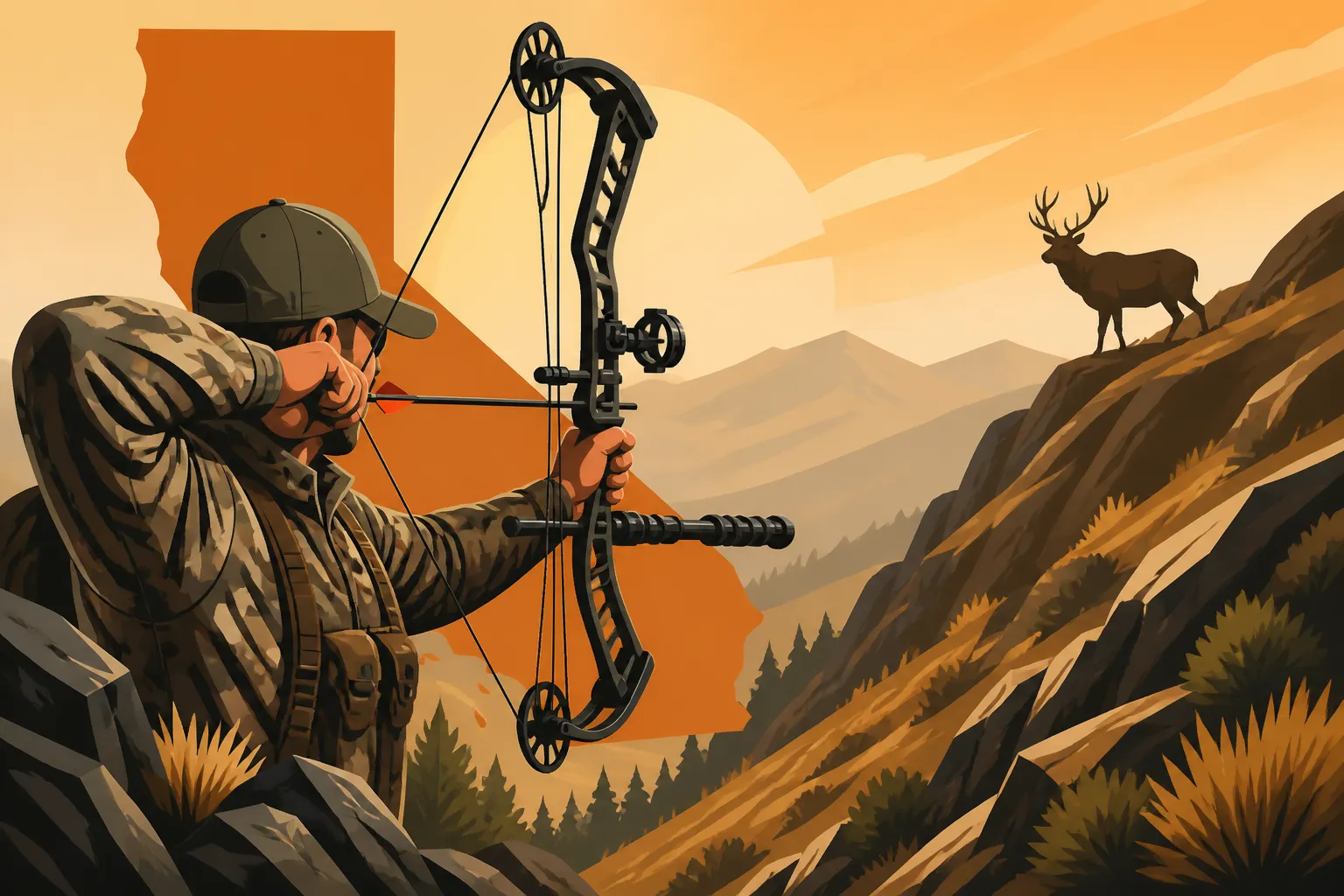
Best Stabilizer for a Steep-Terrain Shot
Hunting in California often means navigating some seriously rugged country, from the steep, rocky slopes of the Sierra Nevada to the brushy, uneven coastal canyons. Getting a clean, steady shot with your bow on such unforgiving terrain can feel like trying to balance on a unicycle while juggling, especially when a trophy animal presents itself. This guide is all about helping you understand why your bow stabilizer becomes an even more critical piece of gear in these situations and how to pick the best one to improve your accuracy when the ground beneath you is anything but level.
Understanding the Challenges of Steep-Terrain Shooting
When you're out chasing blacktails in the oak woodlands or hiking into the high country for mule deer, you're rarely going to find a perfectly flat shooting platform. California's diverse landscapes are beautiful, but they certainly don't make bowhunting easy. Shooting on steep terrain introduces a host of unique challenges that can throw off your aim and make even a well-practiced shot feel completely alien. It's not just about drawing your bow; it's about maintaining balance, controlling your breath, and fighting gravity itself.
The Physics of Uphill and Downhill Shots
Think about it: when you're shooting downhill, gravity is pulling your bow and arrow more directly away from your body, often making your bow arm feel heavier and harder to hold steady. Conversely, an uphill shot can cause your bow to naturally want to drop, as your body mechanics shift to compensate for the incline. These subtle shifts in the center of gravity of your entire shooting system – you, your bow, and your stabilizer – can lead to significant pin float or even a complete breakdown in your form. The angle itself changes how your brain perceives distance and trajectory, but before you even get to that, you have to stabilize your hold. Many hunters find that without a properly balanced setup, their aiming pin dances far more wildly than it would on flat ground, leading to frustration and missed opportunities.
Moreover, the angle of the shot can create a torqueing effect on your bow, especially if your grip isn't perfectly consistent or if there's any uneven pressure. This torque means your bow isn't simply moving up and down, but also twisting slightly, which can send your arrow off course horizontally. When you're standing on a steep slope, your body is already fighting to stay upright, and adding the force of drawing a bow exacerbates any existing imbalances. A good stabilizer is designed to help mitigate these forces, allowing your bow to settle more quickly and reduce that frustrating pin movement, giving you a better chance at a clean, ethical shot, even when pointed sharply up or down.
Uneven Footing and Stance Issues
California's backcountry is notorious for its challenging footing. Whether you're navigating loose scree fields in an X-zone, scrambling over granite outcroppings, or trying to find solid ground in dense coastal chaparral, a stable stance is often a luxury you won't have. Trying to shoot a bow accurately requires a consistent and balanced stance, where your feet are properly spaced, and your body weight is evenly distributed. When you're forced to shoot from an awkward angle, with one foot higher than the other, or while perched precariously on a rocky ledge, achieving that ideal stance becomes nearly impossible.
This compromised footing directly affects your overall stability. Your core muscles are working overtime just to keep you from falling, which means they're less available to help you hold your bow steady. Every slight wobble or shift in your foundation translates directly up through your body to your bow arm. Imagine trying to shoot with a strong crosswind, but the wind is coming from under your feet! A bow stabilizer, particularly one designed with adjustable weights, can act as a counterbalance, shifting the overall balance point of your bow to help offset the inherent instability of your body's position. This allows you to focus more on your aiming and release, rather than desperately trying to keep your balance.
Wind and Fatigue in the Backcountry
Beyond the immediate challenges of gravity and uneven ground, hunting steep California terrain often involves long, arduous hikes and unpredictable weather. Picture yourself having just crested a brutal ridge climb in the Trinity Alps, lungs burning, legs shaking, only to have a gust of wind whip through the canyon as a buck steps out below. Fatigue is a silent killer of accuracy. When you're physically exhausted, your muscles don't hold as steady, and your concentration wavers. This is where a stabilizer truly earns its keep, helping to soak up some of that inherent shakiness.
Wind is another constant companion in many California hunting areas, especially in exposed high-country basins or along coastal ridges. A strong crosswind can literally push your bow around, making it incredibly difficult to settle your pin. A well-designed stabilizer, with its added weight and often aerodynamic profile, can help your bow resist these external forces, allowing it to hang more steadily in adverse conditions. The combination of fatigue and wind can be a devastating one for bowhunters, often resulting in hurried shots or, worse, missed opportunities. By having a stabilizer that helps your bow absorb these shocks and settle quicker, you increase your chances of making that critical shot count, even when everything else seems to be working against you. This is why thorough preparation and understanding your gear, perhaps even by consulting resources like GoHunt for specific gear reviews, can make all the difference. Hunting California's Sierra Nevada Backcountry means being ready for anything.
How a Bow Stabilizer Works on Uneven Ground
A bow stabilizer isn't just a fancy stick hanging off the front of your bow. It's an engineered piece of equipment designed to enhance your shooting performance in several key ways, and these benefits become exponentially more valuable when you're operating on steep, unforgiving terrain. Essentially, it helps create a more stable, balanced, and vibration-free shooting platform, even when your own footing is less than ideal.
Counteracting Torque and Hand Shock
The primary job of a bow stabilizer is to add weight forward of your bow hand. This added weight changes the balance point of the entire bow system. When you're drawing and holding your bow, especially on an incline, there's a natural tendency for the bow to want to twist or "torque" in your hand. This torque can be caused by an inconsistent grip, pressure from the string as it's released, or simply your body trying to compensate for uneven footing. Without sufficient forward weight, any slight torque translates into lateral movement of your arrow upon release, leading to shots that drift left or right of your intended aim.
A longer, heavier stabilizer with well-distributed mass helps to resist this twisting motion. Think of it like a tightrope walker using a long pole for balance – the inertia of the pole makes it harder to twist and helps them maintain their equilibrium. For a bow, this means the stabilizer works to keep the riser steady and prevent it from rotating around your grip, even when your body might be slightly off-kilter due to the terrain. Additionally, when the string is released, the bow experiences "hand shock" or vibration. A good stabilizer acts as a dampener, absorbing much of this energy and preventing it from transferring back into your hand, which not only improves comfort but also helps the bow settle faster for better follow-through.
Adjusting Weight for Balance
One of the most valuable features for steep-terrain hunting is an adjustable weight system on your stabilizer. Not all steep terrain is the same; a shot uphill at a deer on a forested slope might feel different than a sharply downhill shot across an open canyon. The ability to customize the amount and distribution of weight on your stabilizer allows you to fine-tune your bow's balance to suit these varying conditions. For instance, you might prefer more forward weight for extremely steep downhill shots to help fight the feeling of the bow wanting to dip, or a slightly different configuration for uphill shots to keep the bow from falling away.
Many stabilizers come with removable weights or a modular design, enabling you to add or remove ounces as needed. This flexibility is crucial in California's diverse hunting environments. Before a hunt, you might practice with different weight configurations to find what feels most natural and steady for your particular setup and shooting style when simulating steep angles. This adaptability means your stabilizer isn't a one-size-fits-all solution but a dynamic tool that can be optimized for specific scenarios, greatly enhancing your confidence and consistency when shooting from an awkward position. Many dedicated hunters rely on data and meticulous gear tuning, often gleaned from resources like GoHunt, to perfect their setup before heading into the field.
Minimizing Pin Float on Angled Shots
"Pin float" is that frustrating natural movement of your aiming pin as you hold at full draw. On flat ground, experienced archers can minimize this float to a small, controlled circle. However, introduce steep angles, uneven footing, and elevated heart rates from exertion, and that small circle can turn into a frantic dance. The added mass and dampening properties of a quality stabilizer play a significant role in reducing this unwanted movement. By extending the center of gravity forward and absorbing vibration, the stabilizer makes the bow more "forgiving" and stable in your hand.
When you're trying to hold steady on a blacktail buck through a small window in the brush, even a slight reduction in pin float can be the difference between a clean shot and a deflection. On steep terrain, where your body is already under strain, a stabilizer helps your bow resist the natural tremors and muscular fatigue that contribute to excessive pin movement. It allows your aiming point to settle into a smaller, more manageable area, giving you precious extra fractions of a second to make a confident shot. This is especially true for those critical moments when you're trying to Glassing a Canyon for a Bedded Buck or Hunting a Ridge-Top Saddle at First Light – situations where precision at an angle is paramount.
Key Features to Look for in a Steep-Terrain Stabilizer
Choosing the right stabilizer for hunting California's steep and varied terrain isn't just about picking the heaviest or longest one. It’s about finding a balance of features that work together to provide optimal stability, dampening, and adaptability. Your personal shooting style, bow setup, and the specific type of terrain you anticipate hunting will all influence your decision. Think of it as a crucial part of your entire system, working in harmony with your Best Bow Sight for California Archery Season and Best Broadhead for California Blacktail.
Adjustable Weight Systems
This is arguably the most critical feature for a steep-terrain stabilizer. A fixed-weight stabilizer might work well on flat ground, but it won't offer the versatility needed for constantly changing angles and body positions. Look for stabilizers that come with multiple interchangeable weights or a modular system that allows you to easily add or remove weight at the end or along the length of the bar. Some advanced systems even allow for micro-adjustments, giving you precise control over the bow's balance point.
Why is this so important? Because what feels balanced for a steep downhill shot might not be ideal for a sharply uphill shot. On an uphill shot, you might find a bit less weight is better to prevent the bow from feeling too heavy and wanting to drop. For a severe downhill shot, adding more forward weight can help counteract the tendency for the bow to pivot around your grip as gravity tries to pull it forward. Being able to fine-tune this on the fly, or at least before heading into specific terrain, gives you a significant advantage. It allows you to experiment during practice sessions, perhaps even simulating angles with a partner, to dial in the perfect feel. When you're packing into a remote area, perhaps for Hunting California's High-Country X-Zones, that flexibility is invaluable.
Length and Balance Point
Stabilizers come in a wide range of lengths, from short 6-inch models to long 30-inch-plus target bars. For hunting, especially in dense California cover, there's a practical limit to length. Generally, a stabilizer between 8 to 15 inches is a good starting point for steep terrain. A longer stabilizer provides a greater moment of inertia, which means it will resist movement more effectively, helping to reduce pin float and torque. However, too long, and it can become cumbersome in brush or when navigating tight spaces.
The "balance point" is where the stabilizer effectively shifts the overall center of gravity of your bow. A longer stabilizer with weight further out will have a more pronounced effect. Many hunters find that a front stabilizer, sometimes paired with a shorter sidebar stabilizer, offers the best balance for hunting. The sidebar can be angled and weighted independently to provide lateral balance, which can be incredibly useful when your body is twisted or leaned on uneven ground. Experiment with different lengths and configurations during your offseason to find what feels most comfortable and effective for you. A system that allows you to adjust the length of individual weights, or choose between various weight sizes, offers even more control over the balance point.
Vibration Dampening and Noise Reduction
Beyond just adding weight, a good stabilizer incorporates materials and designs specifically aimed at dampening vibration and reducing noise. This is paramount for bowhunting, where stealth is critical. The shock waves generated by the bowstring's release can cause your bow to jump in your hand and create unwanted noise, both of which can spook an animal or negatively impact your shot. Modern stabilizers use various technologies, such as rubber inserts, specialized polymers, or fluid-filled chambers, to absorb these vibrations.
When you're perched on a rocky outcrop or concealed in dense oak timber, any metallic twang or excessive bow jump can be detrimental. A stabilizer that effectively dampens vibration not only makes the shot feel smoother and more pleasant but also ensures your bow remains quiet and minimizes any post-shot movement that could alert nearby game. This can be especially important during the Bowhunting California's Zone A Season, where shots often come quickly and stealth is key.
Durability and Weather Resistance
California's hunting environments can be tough on gear. From scorching summer days in the D-zones to freezing rain in the Sierra in late fall, your equipment needs to withstand the elements. A stabilizer designed for hunting should be robust, made from durable materials like aircraft-grade aluminum or carbon fiber, and capable of taking a beating. It will inevitably bump against trees, rocks, and brush, so it needs to be able to handle impacts without failing.
Furthermore, ensure the stabilizer's components, especially the adjustable weight system, are weather-resistant. Threads can seize up if exposed to moisture and dirt, making adjustments difficult or impossible. Look for finishes that resist corrosion and designs that minimize areas where mud or debris can collect. A stabilizer is an investment, and you want one that will perform reliably season after season, regardless of the harsh conditions you might encounter while hunting Wild Pig Hunting California Year-Round or Hunting Northern California's Coast Range.
Choosing and Using Your Stabilizer for California Hunts
Selecting the perfect stabilizer for steep-terrain hunting in California isn't a one-and-done decision. It's a process of matching the right tool to your personal preferences, bow setup, and the specific challenges of the hunt. Once you've chosen one, the real work begins with dialing it in and practicing.
Matching the Stabilizer to Your Bow and Style
Every bow is different, and every archer has a unique shooting style. What works perfectly for one hunter might not feel right for another. When considering a stabilizer, think about the overall balance of your bow without it. Does it feel top-heavy, bottom-heavy, or does it want to cant to one side? Your stabilizer should complement your bow's natural tendencies and your grip. If your bow naturally wants to fall forward, you might need less forward weight on your stabilizer, or perhaps a sidebar to counteract a different balance issue.
Consider your draw weight and holding weight as well. A heavier draw might benefit from a more substantial stabilizer to help settle the bow at full draw. If you're a hunter who prefers a very light setup for maximum mobility, you might lean towards a lightweight carbon fiber stabilizer with fewer adjustable weights, even if it means slightly less inherent stability. Ultimately, the best way to match a stabilizer to your bow and style is to try different options. Visit your local pro shop and ask if you can test various lengths and weight configurations on your bow. Pay attention to how the bow feels at full draw, how much your pin floats, and how quickly it settles after the shot. Some hunters find value in online forums and communities, like those found through GoHunt, where they can read reviews and compare experiences with specific stabilizer models and setups for different types of terrain.
| Stabilizer Feature | Benefit for Steep Terrain Hunting | Key Consideration |
|---|---|---|
| Adjustable Weight System | Allows precise customization of balance for uphill/downhill shots, reducing body strain. | Ease of adjustment in the field; range of weight options. |
| Length (8-15 inches) | Increases moment of inertia to resist torque and steady the bow, while remaining maneuverable. | Too long becomes cumbersome in dense brush; too short less effective. |
| Vibration Dampening | Absorbs hand shock and reduces noise, promoting stealth and consistent follow-through. | Materials used (rubber, gel, polymer); overall quietness of the system. |
| Durability/Weather Resistance | Withstands harsh outdoor conditions and accidental impacts on rugged terrain. | Construction materials (carbon fiber, aluminum); corrosion resistance of components. |
| Modular Design | Offers flexibility to add or remove components (e.g., sidebars) for customized balance. | Compatibility with your bow; ease of assembly/disassembly. |
Field Adjustments and Practice
Once you've chosen a stabilizer, the work isn't over. It needs to be tuned to your specific shooting style and rigorously practiced with on terrain that mimics your hunting grounds. Don't just screw it on and head to the flat range. Go to a local hillside or find some uneven ground. Practice shooting uphill, downhill, and across slopes. Try different body positions and footing. Pay attention to how the bow feels and how your pin floats. Tuning a Bow for Broadhead Flight on various angles is just as important as on flat ground.
This is where the adjustable weight system truly shines. You might find that adding an extra ounce for those extreme downhill shots dramatically reduces your pin float. Or perhaps moving a weight further out makes your bow hang more steadily during an uphill draw. Make small adjustments, shoot a few arrows, and observe the difference. Document your findings. This kind of dedicated practice not only builds muscle memory for shooting on steep terrain but also helps you understand the subtle nuances of your bow's balance with the stabilizer. The goal is to make shooting on challenging ground feel as natural and controlled as possible, minimizing surprises when that critical moment arrives. Hunting a Funnel Between Two Oak Ridges or Entry Routes Through a Sierra Foothill Meadow will invariably involve angled shots, so being prepared is essential.
Specific Scenarios: From Sierra Slopes to Coastal Canyons
California's diverse topography means you'll encounter a wide array of steep-terrain scenarios. The type of stabilizer that excels will be consistent in its principles but may require different fine-tuning.
Imagine you're Still-Hunting California's Sierra Nevada Timber on a steep, rocky mountainside. Here, you'll want a stabilizer that provides maximum dampening and stability to counteract fatigue from climbing and the potential for a shaky hold. The adjustable weights will be crucial for managing those sharp uphill and downhill shots over broken ground. A slightly longer front bar, perhaps combined with a short sidebar, might give you the best overall stability while still being manageable in the timber. You'll want to layer your clothing appropriately for Layering for a Cold Sierra Morning and be mindful of Wind and Thermals in Steep Sierra Country.
Now picture yourself Hunting Coastal Range Oak Woodlands in a brushy canyon, trying to get a shot at a blacktail. The terrain might be less vertical than the Sierra, but it's often more uneven, with tangled chaparral and steep, eroding banks. Here, a stabilizer that's not excessively long might be preferred to avoid snagging on brush, but it still needs enough mass and dampening to steady your bow when you're forced into an awkward kneeling or leaning shot. The ability to make quick, on-the-fly adjustments to weight or balance for different shot angles, or even just to make the bow comfortable for carrying, is a huge benefit in these dynamic environments.
Ultimately, whether you're climbing for elk in the high country or still-hunting for pigs on a steep coastal ranch, a well-chosen and properly tuned stabilizer is your ally. It minimizes the variables introduced by unforgiving terrain, allowing you to focus on the animal and the shot, rather than battling your equipment or fighting for balance. Invest in a good one, practice with it, and it will become an indispensable part of your California hunting kit.
Disclaimer
This article is for general informational purposes only and does not constitute professional advice. Laws, prices and regulations vary by location and change over time. Consult a qualified professional for guidance on your specific situation.