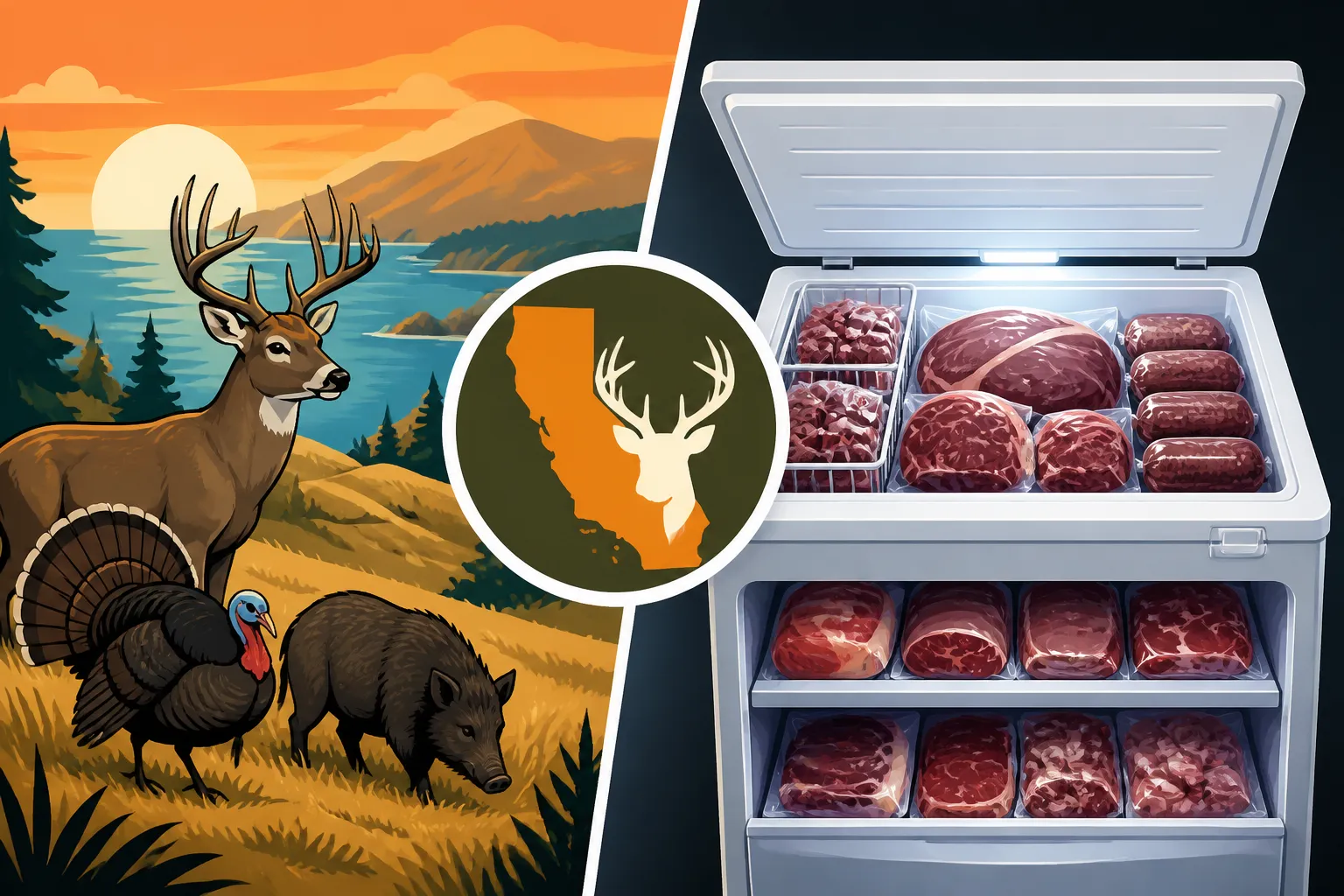
Best Freezer Setup for a Season’s Worth of Game
There’s nothing quite like the immense satisfaction of a successful hunt, whether it’s a big buck from the Sierra Nevada or a plump gobbler from the oak woodlands. You’ve put in the time, honed your skills, and finally, you’re bringing home some incredible, organic protein for your family. But then reality sets in: where are you going to put all that delicious game meat? Many hunters, especially those new to consistently filling tags, quickly realize their kitchen freezer is woefully inadequate. This guide is all about helping you create the best freezer setup to preserve your season’s worth of wild game, ensuring every pound stays fresh and flavorful for months, even years, to come.
Assessing Your Needs: How Much Game Do You Really Expect?
Before you run out and buy the biggest freezer you can find, it's really smart to take a step back and realistically assess your hunting goals and past success. This isn't just about guessing; it's about making an informed decision that saves you money and prevents unnecessary freezer chaos down the line. Overestimating can lead to wasted energy on a half-empty freezer, while underestimating means you'll be scrambling for space just when you need it most.
Estimating Your Annual Harvest
Think about what you realistically hope to bring home each year. Are you primarily a deer hunter, perhaps chasing Columbia blacktails in Zone A or mule deer in the high country? Or do you focus on the abundant wild pigs found year-round across California? Maybe you're an avid turkey hunter, or perhaps you're branching out into bear or waterfowl. Each species contributes a different amount of meat to your freezer.
A typical mature deer, once boned out, might yield anywhere from 40 to 60 pounds of venison, depending on the size and specific animal. You can get a good idea of what to expect by looking at resources like Deer Meat Yield From a California Buck. Wild pigs, particularly a larger boar, can easily add 50 to 100 pounds of boneless meat, sometimes even more. Black bears, especially if you get a big one, are also significant producers. Then there are turkeys; while not huge, a couple of gobblers from your Spring Turkey Hunting in California season can add 10-15 pounds of delicious breast and thigh meat. If you're consistently shooting ducks and geese in the Central Valley, that can add up quickly too. Imagine if you manage to fill a deer tag, take a couple of wild pigs, and get your turkey limit – that's a substantial amount of protein demanding precious freezer real estate!
Calculating Space Requirements
Once you have a rough estimate of the pounds of game you might acquire, you can start to think about the physical space it will occupy. A good rule of thumb is that one cubic foot of freezer space can hold approximately 35 pounds of packaged meat. This isn't an exact science, as the density of cuts and how efficiently they're packaged will vary, but it provides a solid starting point.
When calculating, remember to factor in bones, trim, and packaging. While you'll bone out most of your game for optimal storage, there might be bone-in roasts or specific cuts you prefer to keep intact. Packaging, especially vacuum seal bags, also takes up a small amount of volume. So, if you're aiming for 200 pounds of game meat in a season, you'll need roughly 6 to 7 cubic feet of dedicated freezer space just for the wild game, not counting your regular groceries. It's almost always better to err on the side of slightly more space than you think you need, rather than trying to cram everything in later.
Chest Freezer vs. Upright Freezer: The Great Debate
Deciding between a chest freezer and an upright freezer is one of the biggest choices you'll make for your game storage. Both have their strong points and their frustrations, and what's "best" really depends on your habits, your available space, and how you like to organize. I've had both over the years, and let me tell you, there are days I love one, and days I swear by the other.
Pros and Cons of Chest Freezers
Chest freezers are often the first image that comes to mind when you think of bulk frozen storage, and for good reason. They are typically incredibly energy-efficient because they open from the top. When you open a chest freezer, cold air, being denser than warm air, tends to stay inside, "pooling" at the bottom. This means less cold air escapes, and the compressor doesn't have to work as hard to bring the temperature back down. This translates to lower electricity bills, which is a definite win when you're thinking about running it all year long.
Another huge advantage is their superior ability to prevent freezer burn. Most chest freezers are manual defrost, meaning they don't have a fan blowing air around to prevent ice buildup. While manual defrosting is a chore, the lack of air circulation is fantastic for keeping your meat from drying out. They also tend to be more resilient during power outages; because of their design and often thicker insulation, they can hold their temperature for longer periods if the electricity goes out. Game Bags for Field Care in August Heat are crucial for keeping meat clean and cool on the way home, but the chest freezer really locks in that quality.
However, chest freezers come with their own set of challenges. Organization can be a nightmare. Without shelves, everything is stacked on top of each other. You quickly find yourself "diving" into the freezer, pulling out everything to get to that one package of wild pig sausage you know is at the very bottom. This "freezer Tetris" can be incredibly frustrating. They also take up a significant amount of floor space, and that wide, flat lid can be awkward to open if it's placed in a tight spot.
Pros and Cons of Upright Freezers
Upright freezers, on the other hand, shine in the organization department. With shelves and sometimes even door bins, they allow for much easier categorization and retrieval of your game meat. You can dedicate shelves to different species – deer on one, pig on another, turkey up top – and easily see what you have at a glance. For hunters who like to manage their inventory and plan meals with specific cuts, this accessibility is a huge benefit. They also take up less floor space, as they're taller rather than wider, making them a better fit for tighter garages or utility rooms.
However, the upright design has some downsides, especially for wild game. Many upright freezers are "frost-free," which sounds great in theory – no manual defrosting! But the way they achieve this is by cycling a heater and a fan to melt ice buildup. This constant air circulation, while preventing frost, is the nemesis of long-term meat storage. It significantly increases the risk of freezer burn, even with good packaging. The frequent temperature fluctuations and air movement draw moisture out of your meat, leading to that tell-tale gray, dried-out texture. They also tend to be less energy-efficient because when you open the door, all that cold air spills out.
| Feature | Chest Freezer | Upright Freezer |
|---|---|---|
| Energy Efficiency | Generally higher (cold air stays in) | Generally lower (cold air spills out) |
| Freezer Burn Risk | Lower (manual defrost, less air circulation) | Higher (frost-free cycle, more air circulation) |
| Organization | Challenging (stacking, "digging") | Easy (shelves, door bins, visibility) |
| Footprint | Wider, requires more floor space | Taller, requires less floor space |
| Power Outage | Holds temperature longer | May lose temperature faster |
| Defrosting | Manual (can be a chore) | Often frost-free (convenient, but has downsides) |
| Cost | Often slightly less expensive for comparable volume | Can be slightly more expensive for comparable volume |
For wild game specifically, if you can tolerate the organization challenges and manual defrosting, a manual defrost chest freezer is generally superior for preventing freezer burn and maximizing storage longevity. If easy access and organization are paramount, an upright might be better, but you'll need to be extra diligent with your vacuum sealing.
The Indispensable Vacuum Sealer and Accessories
If there's one piece of gear that has revolutionized how hunters store their game meat, it's the vacuum sealer. Honestly, if you're serious about eating your hard-earned harvest throughout the year, a vacuum sealer is not just a nice-to-have; it's an absolute game-changer. I wouldn't even consider putting game in my freezer without it these days.
Why Vacuum Sealing is Non-Negotiable
The primary enemy of frozen meat is freezer burn, and vacuum sealing is your best defense. Freezer burn occurs when moisture evaporates from the surface of the meat, leaving it dry, discolored, and flavorless. This happens when meat is exposed to air in the freezer. Traditional wrapping methods, like butcher paper or freezer bags, while better than nothing, still leave tiny pockets of air around the meat. Over time, that air, combined with the dry, frigid environment of the freezer, will degrade the quality of your meat.
A good vacuum sealer removes virtually all the air from around your cuts, creating an airtight seal. This effectively stops freezer burn in its tracks, preserving the natural moisture, texture, and flavor of your venison, wild pig, bear, or turkey for significantly longer periods. We're talking months, even a year or more, without noticeable degradation. Imagine pulling out a pack of ground venison chili meat in July that tastes as fresh as it did when you processed it after your D-zone hunt in November. That's the power of a vacuum sealer.
It's also incredibly helpful for processing. Whether you're butchering a deer at home or using a professional processor, ensuring that every cut, from loin to stew meat, is perfectly sealed means you'll enjoy every bit of your harvest. Many hunters also use them for marinades, as the vacuum process can help draw the marinade deeper into the meat for quicker flavor infusion.
Essential Sealer Bags and Rolls
The quality of your vacuum sealer bags and rolls matters almost as much as the sealer itself. Don't skimp here; cheap bags can compromise your perfect seal, leading to lost quality. Look for heavy-duty, multi-layer bags that are specifically designed for vacuum sealing and freezing. They need to be puncture-resistant, especially if you have any bone-in cuts, and durable enough to withstand the rigors of a packed freezer.
You'll find bags available in pre-cut sizes and in rolls. Rolls are incredibly versatile, allowing you to custom-cut the bag length to perfectly fit whatever you're sealing, whether it's a couple of small turkey breasts or a large venison roast. This minimizes wasted material and ensures a snug fit. Have a variety of sizes on hand – small bags for backstraps or individual servings, and larger bags for roasts or bulk ground meat. Investing in good quality bags ensures your hard work in the field and during processing doesn't go to waste in the freezer.
Organization Hacks for Your Game Freezer
Even with the best freezer and vacuum sealer, chaos can quickly ensue if you don't have an organization system. Trust me, I've spent too many hours digging for that specific package of tenderloin! The key is meticulous labeling. Every single package of meat should be clearly labeled with:
- Date: When it was harvested and/or packaged. This helps with stock rotation.
- Species: Deer, Pig, Bear, Turkey, etc.
- Cut: Loin, Roast, Ground, Stew, Chop, Steak, etc.
- Weight/Quantity: Roughly how much is in the package (e.g., 1 lb ground, 2 steaks).
Use a permanent marker that won't smudge or fade in the cold. I like to write the information directly on the bag, sometimes on both sides if the freezer is extra packed.
For chest freezers, stacking strategies are crucial. Try to group similar cuts or species together. Use sturdy freezer-safe baskets or dividers to create sections within the chest. This way, you can pull out an entire basket to access what's underneath, rather than individually moving dozens of packages. Some hunters even keep a printed inventory list taped to the freezer lid or on a whiteboard nearby, marking off what's been used. This is where tools like GoHunt, which can help track your tags and success, indirectly contribute to your post-harvest organization mindset. After a successful hunt, perhaps in a D-Zone that opens in August, you'll want to log your harvest and immediately begin planning its journey to the freezer.
For upright freezers, the shelves naturally lend themselves to organization. Dedicate a shelf to deer, another to pigs, and so on. Use the door bins for smaller, frequently accessed items like jerky meat or ground game. Again, consistent labeling is paramount to knowing exactly what you have on hand.
Maximizing Longevity and Enjoyment
Getting the meat into the freezer is one thing, but making sure it's the best quality it can be, and that you actually use it all, requires a bit more foresight. It's a continuous process from the moment you take that animal down to the moment it hits your dinner plate.
Proper Field Care and Processing for Optimal Storage
The quality of your frozen game meat starts long before it ever sees a freezer. Good field care is absolutely paramount. In California, where many seasons, like Bowhunting California's Zone A Season, open in warmer months, rapid cooling of the carcass is non-negotiable. Field Dressing a Deer in Hot Weather immediately and getting that body heat out is critical to preventing bacterial growth and ensuring a clean, fresh-tasting product.
Once the animal is down, getting it skinned, quartered, and cooled as quickly as possible is vital. Cleanliness throughout the butchering process, whether you're doing it yourself at home or taking it to a professional, prevents contamination and contributes to better long-term storage. Using clean knives, cutting boards, and keeping everything sanitary helps avoid off-flavors or spoilage that would compromise your vacuum seal. For those who process their own animals, following guides like Butchering a Deer at Camp can help ensure you're setting up your cuts for optimal storage.
Inventory Management and Meal Planning
Having a freezer full of game is wonderful, but it does you no good if you forget what you have or let it get lost in the icy depths. This is where a simple inventory system comes in. Whether it's a handwritten list, a spreadsheet on your computer, or even a basic note-taking app on your phone, track what goes in and what comes out. Include the date, type of meat, and cut.
For example:
Freezer Inventory – Game Meats (Updated: 10/26/2024)
| Date Stored | Species | Cut | Quantity | Notes |
|---|---|---|---|---|
| 09/15/2024 | Deer | Backstrap (whole) | 2 packages | Zone A buck, non-lead bullet |
| 09/15/2024 | Deer | Ground Venison | 10 x 1lb packages | With 10% beef fat |
| 10/01/2024 | Pig | Pork Chops | 4 packages (2 per) | Taken on private land |
| 10/01/2024 | Pig | Wild Pig Sausage | 6 x 1lb packages | Mild Italian, great for breakfast |
| 10/20/2024 | Turkey | Breast (boneless) | 3 packages | Spring gobbler, perfect for Cooking a Wild Turkey Breast |
| 10/25/2024 | Bear | Bear Roasts | 2 large | Backcountry spot-and-stalk |
This kind of list makes meal planning so much easier. You can rotate your stock, ensuring older packages are used first, which is key to enjoying your game at its peak quality. Instead of buying commercial ground beef, you can confidently reach for your own wild game. This proactive approach ensures nothing goes to waste and you’re enjoying the fruits of your labor all year long.
Troubleshooting Common Freezer Issues
Even with the best setup, things can go wrong. A power outage is every hunter's nightmare when their freezer is full. If the power goes out, the first rule is: do not open the freezer door! A full, efficient chest freezer can keep food frozen for 2-3 days, and an upright for about 1-2 days, if the door remains closed. If the outage is prolonged, you might need to find dry ice or transfer meat to another working freezer, or, worst-case scenario, cook and can as much as possible.
Recognizing early freezer burn is also important. If you see slight discoloration or dry spots on your vacuum-sealed meat, it usually means the seal has been compromised somewhere along the line. While the meat is still safe to eat, it won't taste as good. You can trim off the freezer-burned parts before cooking. Re-sealing immediately can sometimes salvage the rest of the package.
Finally, regular maintenance is key to your freezer's longevity and efficiency. For manual defrost chest freezers, plan to defrost and clean it annually. This involves emptying it, letting the ice melt (a wet/dry vac can speed this up!), scrubbing the interior, and drying it thoroughly before refilling. This not only keeps it clean but also maintains its energy efficiency. Make sure the coils on the back or bottom are clean too, as dust buildup can make the compressor work harder. A well-maintained freezer, coupled with diligent vacuum sealing, will serve you for many seasons to come.
Disclaimer
This article is for general informational purposes only and does not constitute professional advice. Laws, prices and regulations vary by location and change over time. Consult a qualified professional for guidance on your specific situation.