Calls and Decoys for California Waterfowl
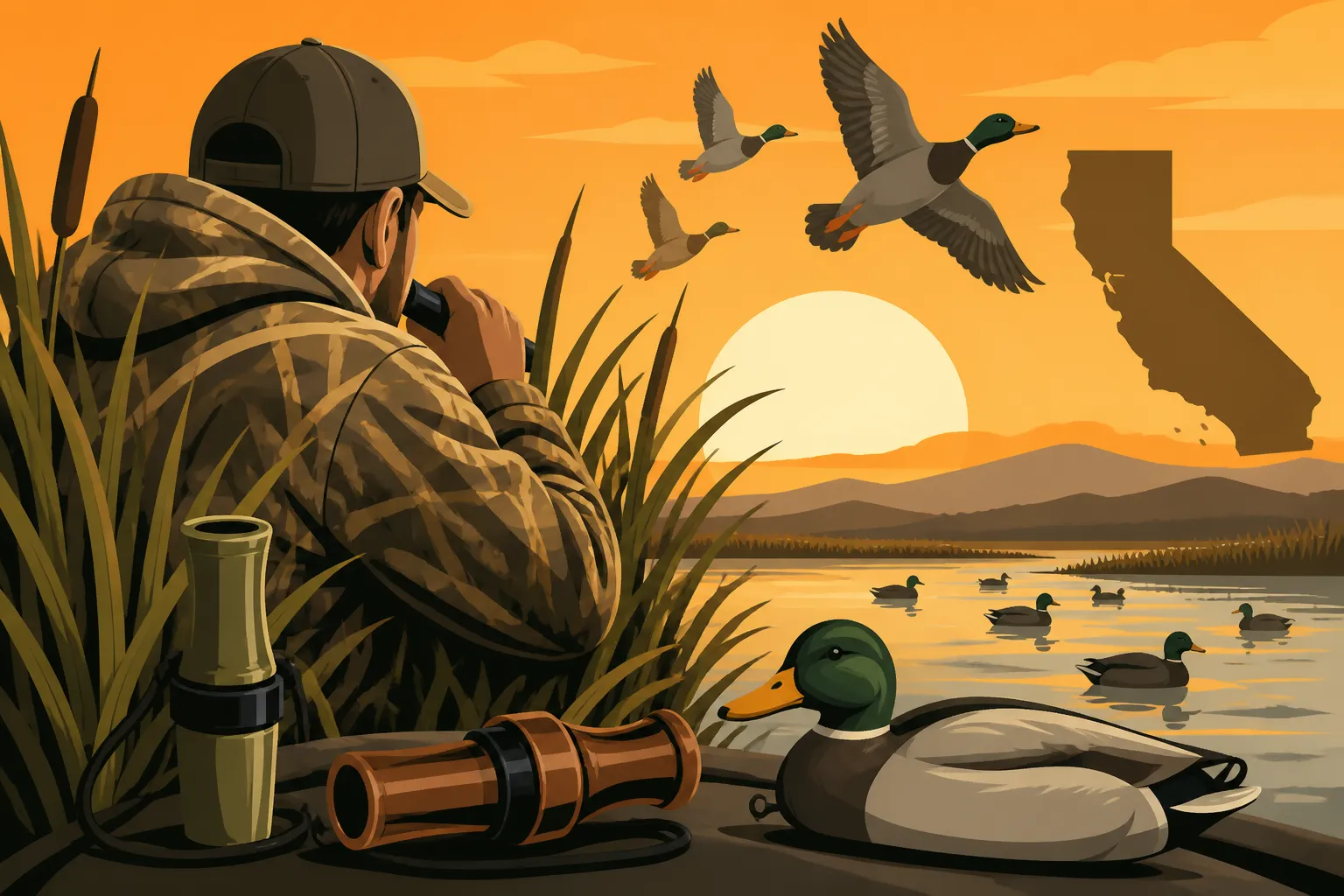
Hunting waterfowl in California, particularly across the expansive Central Valley, can be an incredibly rewarding experience, but it also presents a unique set of challenges. Those wary ducks and geese that have seen it all often turn up their noses at anything less than a convincing spread and masterful calling. This comprehensive guide is dedicated to breaking down the intricacies of selecting, deploying, and using calls and decoys effectively to draw those birds into your spread, no matter if you're chasing mallards in flooded rice or trying to pull a string of specklebellies from high in the sky.
Understanding California Waterfowl Behavior
Before you can effectively call a bird or set a decoy spread, you really need to understand the birds themselves. California is a major stop on the Pacific Flyway, which means we see an incredible diversity and volume of waterfowl. However, these birds aren't just passing through; many spend a significant portion of their winter here, adapting to local food sources, weather patterns, and, perhaps most importantly, hunting pressure. Knowing their habits is the first step to success.
Duck Species and Their Vocalizations
When we talk about duck calling in California, we're often talking about mallards. They are the bread and butter for many hunters, and their distinct quacks are what most people associate with duck hunting. However, the Central Valley and other wetlands host a variety of other dabblers and divers, each with their own unique sounds and behaviors. You'll encounter pintails, wigeons, green-winged teal, shovelers, and gadwall, to name a few. Each of these species has unique vocalizations that, when mimicked correctly, can make all the difference in luring them closer. For instance, the soft chuckle of a pintail or the two-note whistle of a wigeon can be incredibly effective when mallards are call-shy or when you're targeting a mixed flock. Understanding that a loud hail call meant for mallards might spook a group of high-flying wigeon is crucial. It’s about listening to the natural sounds on the marsh and trying to blend in.
Goose Species and Their Calls
Geese are a different beast entirely. In California, we primarily hunt white-fronted geese (often called specklebellies), snow geese, Ross's geese, and several subspecies of Canada geese, including the cackling Canada goose. Each of these has a distinctive call pattern and temperament. Specklebellies, for example, have a high-pitched, almost laughing call that is very specific. Snow geese, on the other hand, are known for their incredibly loud, often incessant "ka-honk" calls. A single snow goose call often won't cut it; you need to create a cacophony that sounds like a massive flock. Canada geese, from the giant Canadas down to the tiny cacklers, have their own range of honks, clucks, and moans. Learning these nuances and the specific cadence of each species is paramount. It's not just about making the right sound, but the right sequence and volume to convince them that your spread is a safe haven filled with their buddies.
The Impact of Hunting Pressure
Let's be real, California waterfowl get educated. From the moment they fly south, they're exposed to hunters, calls, and decoy spreads. This means that by mid-season, and especially late in the season, those birds are incredibly wary. They've seen every decoy spread imaginable and heard every call trick in the book. This is where subtlety and realism become absolutely critical. A loud, aggressive mallard call that worked wonders on opening day might send birds flaring wildly in December. Instead, soft contented clucks and feed calls might be more effective. For geese, a spread that looks too uniform or static will be easily spotted as fake. Hunters often feel the frustration of birds circling high, seemingly interested, but never committing. This is usually a sign that something in your setup or calling isn't quite passing their scrutiny. It's about blending in, becoming part of the natural landscape, and giving those birds every reason to believe your setup is the real deal.
The Art of Duck Calling in California
Duck calling isn't just about blowing into a piece of wood or acrylic. It's an art form, a conversation with the birds, and a skill that takes dedication to master. In California, where birds are often highly pressured, your calling can make or break a hunt. Learning the right calls and knowing when to use them is just as important as knowing how to blow them.
Essential Duck Calls and Their Use
For mallards, the cornerstone of your duck calling arsenal will be a good quality single or double-reed mallard call. The key calls you need to master are the hail call, the greeting call, the comeback call, and the feed call. The hail call is a series of loud, drawn-out quacks (typically 5-7) meant to grab the attention of high-flying birds. Once they acknowledge you and start to turn, you transition to a softer greeting call (3-5 shorter quacks). If they start to drift away, the comeback call (a rapid series of insistent quacks) is your attempt to get them back. Finally, the feed call is a rapid, choppy series of clucks and quacks that simulates ducks happily feeding, signaling safety and abundance. Beyond mallard calls, a pintail whistle is incredibly useful. Pintails often respond well to their own soft trills, and the whistle can also mimic wigeons and even teal. Many hunters also carry a wood duck call for those quick, squealing flights through timber. Decoying Ducks in California's Central Valley Flooded Rice will often involve a complex interplay of calling and decoy strategies.
Reading the Birds: When to Call, When to be Quiet
This is perhaps the most challenging aspect of duck calling. Beginners often over-call, thinking that more noise equals more ducks. In reality, knowing when to be quiet is often more important than knowing when to call. If ducks are locked up, cupped, and coming straight into your spread, put the call down! Any additional calling at that point can actually make them nervous. You should call to get their attention, call to turn them, and call to reassure them, but once they're committed, let the decoys do their work. Watch their body language: are their heads up and wary, or are they relaxed? Are they looking directly at your blind or are they still searching for the source of the sound? If they're working the edges of your spread, a soft feed chuckle might pull them those last few yards. When they're circling, try to read the wind and their approach, adjusting your call volume and intensity accordingly. Reading a Wetland for a Morning Flight can give you critical insights into when and how to call.
Practice and Sound Mastery
Just like any skill, duck calling requires practice. You wouldn't expect to pick up a guitar and play a concerto, and the same goes for a duck call. Start by listening to real ducks. There are countless recordings available, and just spending time in a marsh listening can be incredibly educational. Practice in your car, at home, or anywhere you won't annoy your neighbors too much! Focus on consistency in your notes, controlling your breath, and transitioning smoothly between calls. Record yourself and listen critically. Many experienced callers can immediately identify subtle flaws in a call. Don't be afraid to try different calls and reeds until you find one that feels comfortable and produces the sounds you want. Companies like Zink, Rich-N-Tone, and Foiles Migrators make excellent calls, but even an affordable call can sound fantastic in the right hands. Consider joining a local duck calling contest circuit, not just to compete, but to learn from other callers.
Building Effective Duck Decoy Spreads
Decoys are your visual appeal, the advertisement that tells passing birds, "Hey, this is a great place to land!" In California's varied waterfowl habitats, from flooded rice fields to small sloughs, deploying an effective spread requires thought and adaptation.
Decoy Types and Numbers
When it comes to duck decoys, you have options: full-body, shell, and floating decoys. Floating decoys are the most common for water hunting and come in various species. Full-body decoys are more realistic but heavier and harder to transport, often reserved for dry fields or edges. Shell decoys offer a compromise, being lighter than full-bodies but still having some dimension. The numbers game is often debated. For many Central Valley public land hunts, where space is limited and birds are wary, a spread of 1-3 dozen decoys can be effective. On private land with less pressure or larger water, some hunters will deploy upwards of 10-20 dozen! The key is realism and motion. Motion decoys, like spinning wing decoys (often called Mojos, after the popular brand Mojo Decoys for Central Valley Mallards), can be game-changers, especially on calm days when natural decoy movement is minimal. Some hunters even incorporate jerk strings or remote-controlled swimming decoys to add lifelike motion.
Spreads for Flooded Fields and Ponds
The classic spread shapes are the J-hook, the U-shape, and the "W." The goal of any spread is to create a landing zone—a safe, open space directly in front of your blind where birds feel comfortable dropping in.
- J-hook: This is a very common and effective spread. You place the bulk of your decoys upwind of your blind, forming the long arm of the 'J'. The hook part extends towards your blind, creating an inviting landing zone in the curve. This encourages birds to land into the wind, right in your shooting hole.
- U-shape: Similar to the J-hook, the U-shape creates a large opening in the middle, directly in front of your blind. Decoys are spread out on either side, providing a wide landing area. This works well for larger groups of birds or when you expect birds from multiple directions.
- "W" or X-shape: This spread is designed to attract birds from different angles. You create several small pods of decoys, leaving multiple landing zones between them. This can be especially good on days with shifting winds or when you're hunting multiple species.
For more detailed strategies, check out Best Duck Decoy Spread for Flooded Rice.
Consideration for Wind and Sun
Wind is your best friend when it comes to duck decoys. It creates natural movement, making your spread come alive. Always try to set your spread with the wind at your back, so birds will land facing into it, giving you a perfect shot opportunity. However, not every day is windy. On calm days, motion decoys become even more crucial.
Sun position is another factor often overlooked. Glare off your decoys can be unnatural and spook birds. Try to position your decoys so they don't reflect direct sunlight too harshly, or use decoys with a matte finish. Also, consider how the sun will hit your blind – you don't want to be backlit, making your silhouette obvious to approaching birds. A little scouting of your spot at different times of day can help you plan your ideal setup.
Goose Calling Strategies for California Hunters
Goose hunting in California is a different game than duck hunting. Geese are often larger, fly higher, and can be even warier than ducks. Your calling strategy needs to reflect this, focusing on volume, realism, and a keen understanding of the specific goose species you're targeting.
Specklebelly and Snow Goose Calls
For specklebellies, you'll want a short-reed call that can produce their distinctive "cluck-cluck-cluck-laugh" sound. Their calling is often a series of quick, high-pitched clucks that can escalate into a sort of yodel or laugh. It's unique and takes practice to get right. Many hunters find success by combining the calls of several individuals to mimic a small, contented flock.
Snow geese, on the other hand, require a different approach. Their calls are much louder and more chaotic. Snow goose calls are typically flutes or short-reed calls designed to create a loud, piercing "ka-honk." The key to snow goose calling is creating a wall of sound. This often means multiple callers working together, or even using electronic calls where legal. While e-calls are restricted in many areas, they are permitted for conservation snow goose seasons in some other states, so always check California Goose Season Dates for current regulations. You're trying to simulate hundreds, if not thousands, of birds, and that requires immense volume and energy.
The Importance of Volume and Rhythm
Geese are loud animals, and to get their attention from a thousand feet up, you need to be loud too. However, it's not just about raw volume; it's about rhythm and consistency. A single goose honking sporadically won't convince a flock to drop in. You need a chorus, a conversation. For Canada geese, this means a mix of deep honks, excited clucks, and reassuring moans. The rhythm should sound natural, not like a broken record. With snow geese, the rhythm is a constant, almost overwhelming wall of sound, broken up by moments of intense calling when birds are directly overhead. It’s about creating an inviting soundscape that conveys safety and a bountiful food source. Remember, geese have incredible eyesight, so your sounds need to match the visual realism of your decoys.
Advanced Goose Calling Techniques
Once you've mastered the basic calls, you can move into more advanced techniques. Layering calls, for instance, involves different callers mimicking different parts of a flock's vocalization – one on a deep honk, another on an excited cluck, and a third on a soft moan. This creates a much richer, more convincing sound. Competition callers spend countless hours perfecting subtle nuances, such as rolling clucks, double clucks, and intricate honk sequences. While you might not need to win a calling championship, incorporating some of these elements can add significant realism to your field calling. Another advanced technique is using a "kill call" or "landing call"—a series of excited, short calls just as birds are about to commit, signaling to them that everything is good and it's time to come down. This is particularly effective for specklebellies.
Crafting Realistic Goose Decoy Spreads
Geese are extremely discerning. They fly high, have excellent vision, and are often very cautious about committing to a spread. Crafting a realistic goose decoy spread is paramount to success, often requiring more decoys and attention to detail than a duck spread.
Full-Body and Shell Decoys
When it comes to goose decoys, size truly matters. Full-body decoys are king. Their three-dimensional shape, realistic paint schemes, and ability to move slightly in the wind make them far more convincing than flat silhouettes. They are heavier and more expensive, but the payoff in realism is worth it. Shell decoys offer a lighter, more compact alternative, especially useful if you need to carry a large number into a remote field. Some hunters use a mix, placing full-bodies closest to the blind for maximum realism and shells further out. The sheer number of decoys needed for geese can be staggering. A typical spread for snow geese might involve hundreds of decoys, while specklebellies or Canada geese might require anywhere from 2 to 10 dozen, depending on the field size and hunting pressure.
Layout Blind Hunting and Decoy Integration
Layout blinds are almost indispensable for goose hunting in open fields. These low-profile blinds allow hunters to conceal themselves completely, blending into the stubble or cover of a field. The key is to integrate your blinds seamlessly into your decoy spread. Place your blinds within the decoys, perhaps as part of a feeding flock or along the edge of the landing zone. Crucially, brush your blind in meticulously with local vegetation. If you're hunting a cut cornfield, cover your blind with cornstalks. If it's a dry grass field, use dry grass. Even the slightest hint of an unnatural shape can cause geese to flare. Layout Blind Hunting a Flooded Field requires similar attention to detail. The decoys should feel like a natural extension of your blind, drawing the birds' eyes away from your position and into the safe landing zone you've created.
Motion Decoys and Flagging
Just like with ducks, motion is key for geese, perhaps even more so because they can spot static objects from greater distances. Large flapping flags, often resembling a goose coming in for a landing, are incredibly effective for getting the attention of high-flying birds. Flagging is an active process; you need to watch the birds and flag vigorously when they are far out, then slow down or stop as they get closer to avoid spooking them. Full-body motion decoys, such as those with flapping wings or feeders with rotating heads, also add realism. Some hunters will use a string of half-shell decoys on a bungee cord that can be tugged from the blind, making the decoys look like they're moving their heads while feeding. The goal is to create a dynamic, lifelike scene that convinces wary geese your spread is a bustling, safe haven.
| Species Targeted | Primary Call Type | Decoy Type (Common) | Typical Decoy Numbers (Field) | Key Calling Trait |
|---|---|---|---|---|
| Mallard Duck | Single/Double-Reed Duck Call | Floaters, Spinning Wings | 1-3 Dozen | Variety of quacks, clucks |
| Pintail Duck | Pintail Whistle | Floaters, Spinning Wings | 1-2 Dozen (often mixed) | Soft trills, whistles |
| Specklebelly Goose | Short-Reed Goose Call | Full-body, Shell | 2-10 Dozen | High-pitched clucks, "laugh" |
| Snow/Ross's Goose | Flute/Short-Reed Snow Call | Full-body, Shell, Silhouettes | 10-50 Dozen | Loud, chaotic "ka-honk" |
| Canada Goose | Short-Reed Goose Call | Full-body, Shell | 2-10 Dozen | Honks, clucks, moans |
Adapting to Different California Hunting Scenarios
California offers a diverse range of waterfowl hunting environments, from vast public refuges to private flooded fields and smaller, overlooked waterways. Your call and decoy strategies need to be flexible and adapt to these varying conditions and hunting pressures.
Refuge Hunting Considerations
Hunting California's public refuges and wildlife areas is a quintessential experience, but it comes with its own set of challenges. These areas typically see high hunting pressure, and the birds that survive become incredibly smart. You'll often be restricted in the number of decoys you can deploy, and space can be tight. In these situations, realism and subtlety become even more critical. A smaller spread of highly realistic, well-placed decoys might outperform a large, sloppy spread. Focus on quality over quantity. Use calls sparingly and softly, mimicking contented feed calls rather than aggressive hail calls. Blend your blind or layout impeccably, as these birds have seen it all. Pay close attention to wind direction and the flight paths of other birds to understand how ducks and geese are approaching. Pass-Shooting Geese on California's Sacramento Refuges often involves different tactics than field hunting.
Private Field Strategies
On private flooded rice, corn, or wheat fields, you often have the luxury of space and potentially less consistent pressure. This allows for larger, more elaborate decoy spreads. You might deploy 5-10 dozen duck decoys, creating massive J-hooks or U-shapes, or hundreds of full-body goose decoys. Motion decoys, including multiple spinning-wing ducks and flapping flags for geese, can be used more freely. Calling can also be more aggressive, especially earlier in the season, as birds might not be as call-shy. However, even on private land, birds will get wise as the season progresses, so don't be afraid to scale back your calling or change your spread if the birds aren't responding. Private land also allows for more permanent blinds, which can be brushed in far more effectively than portable options.
Small Water and Jump-Shooting Tactics
Not every waterfowl hunt involves elaborate spreads and calling competitions. Sometimes, the most exciting hunting comes from jump-shooting small sloughs, creeks, or isolated ponds. In these scenarios, calls are often used primarily to locate birds or to turn a flushing duck back for a shot. Decoys are typically minimal, perhaps just a few floaters tossed out to act as confidence decoys, or none at all. The focus shifts to stealth, reading the water, and anticipating where birds might be holding. A single hen mallard quack might be all you need to get a cautious group of mallards to commit for a second look. For jump-shooting, the importance of stealthy movement and good fieldcraft far outweighs the need for a massive decoy spread or intricate calling sequence.
Maintenance and Storage of Calls and Decoys
Your calls and decoys are an investment, and proper care will ensure they last for many seasons. Neglecting maintenance can lead to calls failing, decoys losing their realism, and ultimately, missed opportunities in the field.
Cleaning and Care for Longevity
For duck and goose calls, regular cleaning is essential. After each hunt, disassemble your calls (if possible) and thoroughly clean them to remove moisture, dirt, and spit. A soft brush and warm, soapy water can work wonders for acrylic calls. Wooden calls require more delicate care; avoid soaking them and dry them immediately. Make sure reeds are free of debris and not warped. If your call starts to sound off, a thorough cleaning is usually the first step to troubleshooting.
Decoys also need attention. After a hunt, especially in muddy or icy conditions, rinse your decoys off to remove dirt, mud, and grime. Mud can accumulate and change the buoyancy of floating decoys or make full-bodies look unnatural. Store them in slotted bags or bins to prevent scuffing and paint chipping. Pay particular attention to motion decoys; clean any mud from moving parts and ensure batteries are removed or disconnected to prevent corrosion during storage.
Off-Season Storage
The off-season is the time to ensure your gear is protected from the elements and ready for the next opener. Store calls in protective cases, away from extreme temperatures. Excessive heat or cold can warp wooden calls or damage acrylic. Decoys should be stored in a cool, dry place, ideally in dedicated bags or bins to prevent paint from rubbing off. Organize them by species and type for easy retrieval. If you have any decoy bags that have seen better days, now is the time to repair them or invest in new ones. This preventative maintenance saves you a headache come next season.
Pre-Season Prep
As the new season approaches, it's time for a thorough gear check. Pull out all your calls and give them a good cleaning and tune-up. Practice your calling. Replace any worn-out reeds or O-rings. Inspect all your decoys. Touch up any chipped paint with weather-resistant, non-reflective paint. Check all motion decoys, ensuring they function correctly and that you have fresh batteries. Test your jerk strings and lines. This pre-season ritual isn't just about maintenance; it's about building confidence in your gear and ensuring that when opening day arrives, you're not scrambling to fix issues but rather focused on the birds. Many hunters use tools like the GoHunt app to scout and prepare, which also includes logging gear notes. Ensure your California Federal Duck Stamp Requirement and California Migratory Bird Stamp Cost are taken care of well before the season starts.
Disclaimer
This article is for general informational purposes only and does not constitute professional advice. Laws, prices and regulations vary by location and change over time. Consult a qualified professional for guidance on your specific situation.