Roosevelt Elk in Northwest California
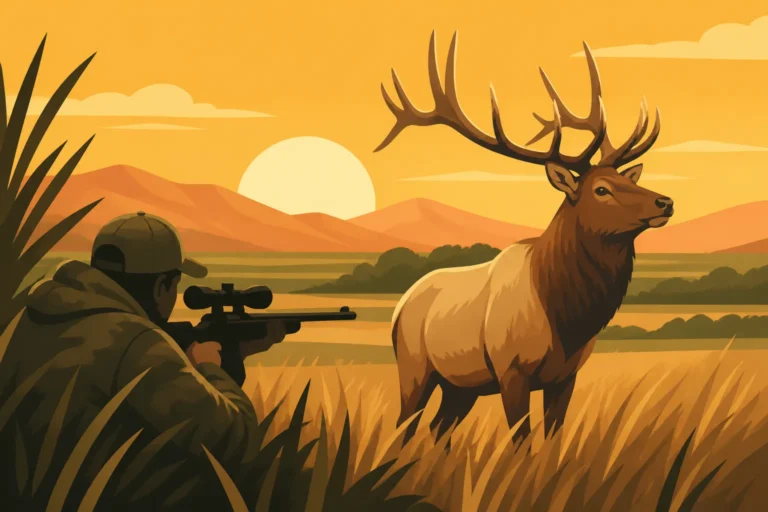
The dream of chasing a giant Roosevelt elk through the dense, rain-soaked timber of California's far northwest is one many hunters hold dear, yet few ever realize. This isn't your open-country, long-range glassing elk hunt. We're talking about a physically demanding, often wet, and intensely challenging pursuit where success hinges on grit, preparation, and an understanding of an animal that has truly earned its "ghost of the redwoods" moniker. If you're ready to dive deep into what it takes to pursue these magnificent creatures in the Golden State, this guide will lay out everything you need to know, from draw odds to dense forest tactics.
The Majesty of Roosevelt Elk in California's Northwest
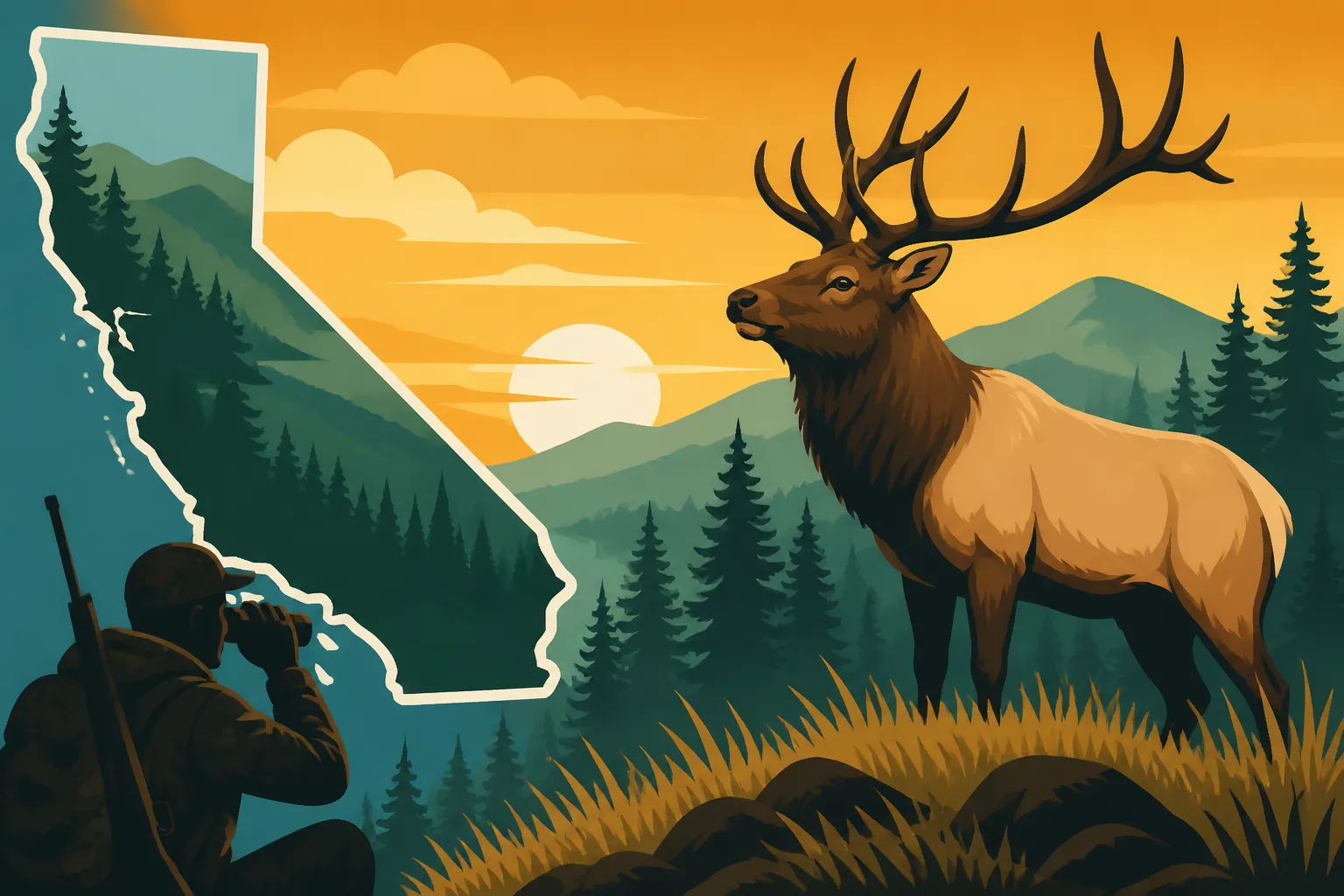
For many, the image of elk hunting conjures up vast Montana prairies or the rugged slopes of the Rockies. But here in California, we have a unique and incredibly special elk species that calls the towering redwoods and lush coastal forests home: the Roosevelt elk. These aren't the high-country mule deer you might be used to pursuing; these are forest dwellers, masters of stealth, and a true testament to conservation efforts in our state.
A History of Resilience and Recovery
It's genuinely humbling to consider the journey of the Roosevelt elk in California. Not too long ago, these magnificent animals were on the brink of extinction. By the late 19th and early 20th centuries, unrestricted hunting and massive habitat loss—primarily due to logging—decimated their populations across their entire range, including here in California. It's a stark reminder of how quickly even robust wildlife populations can disappear without thoughtful management.
Thankfully, dedicated conservation efforts, land acquisition, and reintroduction programs through the 20th century allowed Roosevelt elk to stage a remarkable comeback. Their numbers have steadily increased, and while they aren't as widespread or numerous as some other big game species, their presence in the dense forests of Del Norte, Humboldt, and Mendocino counties is a true success story. Today, the California Department of Fish and Wildlife (CDFW) meticulously manages their populations, ensuring sustainable hunting opportunities while prioritizing the health and growth of the herds. It’s a delicate balance, and we as hunters play a crucial role in supporting these efforts through our license and tag fees.
Understanding Their Habitat: Redwood Giants and Coastal Forests
Hunting Roosevelt elk means immersing yourself in some of California's most breathtaking, yet challenging, landscapes. Their preferred habitat is characterized by the towering coastal redwood forests, mixed conifer stands, and lush riparian zones that hug the Pacific coastline. This isn't a place for open-country optics; here, the timber is thick, the undergrowth is dense, and visibility can be measured in yards, not miles.
Imagine wading through head-high ferns, navigating fallen redwood giants, and silently traversing moss-covered terrain where every step needs to be precisely placed to avoid snapping a branch. That's the world of the Roosevelt elk. They thrive in areas with a mosaic of mature timber for cover, clear-cuts or meadows for forage, and abundant water sources. River valleys, creek bottoms, and the steep, brushy hillsides of the coastal ranges are prime territories. Understanding this dense, almost jungle-like environment is paramount, as it dictates everything from your scouting methods to your shot opportunities. These elk are incredibly adept at disappearing into the green tangle, making even tracking a wounded animal a formidable task.
Identifying Roosevelt Elk vs. Other California Species
Before you even dream of drawing a tag, it’s vital to understand what makes a Roosevelt elk unique, especially when compared to the other two elk species found in California: the Tule elk and the Rocky Mountain elk. While all are impressive, their physical characteristics, habitat preferences, and behavior vary significantly, dictating different hunting approaches.
Key Physical Characteristics and Size
Roosevelt elk are often considered the largest-bodied subspecies of elk in North America, second only to the Rocky Mountain elk in antler mass but often exceeding them in body weight. Mature bulls can easily weigh upwards of 900 to 1,100 pounds, making them an incredibly substantial animal to pursue and, more importantly, to pack out. Their antlers are typically heavy and robust, characterized by long, deep beams and shorter, more numerous tines, often forming a thick, "crowned" appearance at the ends. They tend to have dark brown to black necks, contrasting with lighter, grayish-tan bodies.
In contrast, California's Tule elk are the smallest subspecies, with bulls rarely exceeding 700 pounds and having more slender antlers. Rocky Mountain elk, found in the northeastern part of the state, are similar in body size to Roosevelt elk but generally possess even more massive, widely-spreading antlers with longer, fewer tines. Knowing these subtle yet critical differences is important not only for species identification but also for understanding the challenge of a potential recovery.
Behavioral Differences and Herd Dynamics
What truly sets Roosevelt elk apart, beyond their impressive size, is their behavior in their dense, forested habitat. Unlike their Rocky Mountain cousins, which often frequent open meadows and high-alpine basins, Roosevelt elk are creatures of the deep woods. They tend to be more secretive, elusive, and less prone to long-distance travel across open ground. This means glassing vast areas for them is largely unproductive; you'll be hunting them up close and personal in their preferred cover.
Their herd dynamics in these coastal forests also differ. While they can form large herds, they often move in smaller, more dispersed groups, especially during the non-rut periods. During the rut, however, the forest can erupt with the thrilling bugles of bulls, though their vocalizations might seem more subdued or localized compared to the echoing calls in wide-open country. The bulls are fiercely territorial, and their thick antler structure is perfectly adapted for navigating and fighting in tight timber. Understanding these nuances—their propensity for thick cover, their smaller typical herd size, and their localized movement—is crucial for developing effective hunting strategies in their challenging environment.
The Coveted California Roosevelt Elk Tag
Let's not sugarcoat it: drawing a California Roosevelt elk tag is tough. Like, really tough. These are some of the most sought-after tags in the state, and for good reason. The limited number of tags available each year reflects the careful management of a recovering species and the incredible quality of the hunt. This isn't a hunt you just decide to do next season; it's a long-term goal for many, often requiring years of dedicated application.
Navigating the California Big Game Drawing System
California operates on a preference point system for its big game drawings, including elk. Every year you apply and are unsuccessful, you accrue a preference point, increasing your odds slightly in subsequent years. However, with Roosevelt elk, "slightly" can still mean years or even decades of applying before you might get lucky. It's a game of patience and perseverance. To even be eligible, you'll need to purchase a hunting license and an elk tag application, typically between April and June, though specific dates can vary. Resources like GoHunt are invaluable for understanding the complex draw odds, analyzing historical data, and planning your application strategy for specific hunt units.
The application process itself is fairly straightforward through the CDFW's online portal, but the strategy behind which units to apply for, especially given the various weapon types (archery, rifle), is where the real thought comes in. For example, applying for a Roosevelt Elk Tag in the Northwest often means choosing from a handful of designated units, each with its own unique terrain and even lower draw odds. You need to carefully research each unit's historical success rates, tag numbers, and hunter participation to make an informed decision. Don't go into this blindly; do your homework!
Understanding Hunt Units and Tag Allocation
California’s Roosevelt elk tags are offered in specific hunt units, primarily concentrated in the northwestern counties. These units are carefully delineated by the CDFW to manage localized populations and ensure sustainable harvests. Examples include areas within the Marble Mountains Wilderness, or specific zones around Redwood National and State Parks. The number of tags allocated to each unit is extremely limited, often in the single digits for prime rifle hunts, making the draw odds razor-thin.
Tags are typically divided into general season tags (rifle) and archery-only tags, with the archery tags often having slightly better, though still challenging, draw odds due to the increased difficulty of bowhunting in such dense terrain. The "premium" nature of these tags means that once drawn, you have a truly special opportunity. Unlike some other states, California does not offer over-the-counter elk tags; every single one is a product of the drawing system. This exclusivity contributes to the high value placed on a Roosevelt elk hunt and why thorough research into each unit's specific regulations and historical success is paramount once you're lucky enough to draw.
Scouting and Pre-Season Preparation for Roosevelt Elk
Drawing a Roosevelt elk tag is just the first hurdle; the real work begins long before opening day. These are not animals you simply stumble upon. Their dense habitat demands a comprehensive and often grueling scouting regimen. You'll need to shift your mindset from typical deer scouting to one focused on micro-terrain, subtle signs, and understanding how elk navigate some of the thickest cover imaginable.
Deciphering Sign in Dense Coastal Timber
Finding elk sign in the redwoods is a different ballgame than spotting fresh tracks in dusty sagebrush. Here, the ground is often soft, wet, and covered in duff, making tracks harder to read. You'll need to develop a keen eye for subtle disturbances. Look for freshly snapped branches at chest height, indicating a bull has passed through, or sections of disturbed earth from wallows where bulls roll to coat themselves in mud and scent. Fresh droppings can tell you about recent activity, and worn trails—often appearing as tunnels through dense brush—are critical indicators of travel corridors.
Understanding how elk use the terrain is key. They often follow old logging roads, game trails along stream bottoms, or the paths of least resistance through thick understory. When you find sign, don't just note it; try to piece together the story of their movement. Are they moving between a bedding area in a dense stand of timber and a feeding area in a clear-cut? Are they rubbing trees, indicating the rut is approaching? Utilizing trail cameras, even in areas with limited cell service, can be invaluable for patterning their movements, though you'll need robust, waterproof models that can withstand the damp environment. Even traditional cameras without cellular capabilities can provide critical data when retrieved.
Utilizing Technology and Topographic Maps
While boots on the ground are irreplaceable, modern technology can significantly streamline your scouting efforts for Roosevelt elk. Mapping applications like OnX Hunt, or similar platforms often used by GoHunt members, become your digital compass and encyclopedia. They allow you to virtually scout vast areas from the comfort of your home, identifying potential access points, old logging roads, clear-cuts, and the critical topographic features that influence elk movement. Look for saddles between ridges, dense riparian corridors, and south-facing slopes that might receive more sunlight and hold better forage.
Satellite imagery can help you differentiate between various types of timber, identify dense bedding cover, and pinpoint areas of recent logging or regrowth that might attract elk. However, remember that the "green hell" of the redwoods can look deceptively open on a map. What appears as a simple drainage might be an impenetrable jungle of fallen trees and impenetrable brush. Mark potential bedding, feeding, and travel areas on your map, creating a detailed plan of attack for your physical scouting trips. This blend of high-tech planning and old-fashioned legwork is essential for tackling the unique challenges of Roosevelt elk habitat.
Hunting Strategies for Northwest California Roosevelt Elk
Successfully hunting Roosevelt elk is less about luck and more about a combination of physical endurance, mental toughness, and a deep understanding of their unique behaviors in the dense forests they inhabit. Forget what you know about wide-open country elk hunts; this is an intimate, close-quarters affair where patience and stealth are your greatest assets.
Spot-and-Stalk in Challenging Terrain
The spot-and-stalk method for Roosevelt elk differs significantly from what you might employ for mule deer or even Rocky Mountain elk. In the thick timber of Northwest California, "spotting" usually happens at incredibly close ranges, often within 100 yards, sometimes even 50 feet. It's less about glassing hillsides from afar and more about meticulously moving through the woods, stopping frequently to look, listen, and smell for elk. You'll need to move slowly, taking one careful step at a time, constantly checking the wind, and using every bit of natural cover to break up your outline.
A successful spot-and-stalk often involves hours of patient still-hunting through known elk areas, carefully picking your way over and around fallen logs, through dense ferns, and across slippery moss. You'll be looking for horizontal lines in a vertical world, a patch of brown hide against the green, or the flick of an ear. The moment you spot an elk, the real stalking begins. This requires extreme discipline, using terrain features and wind direction to get within shooting range without being detected. The sheer density of the vegetation means that even a slight shift in wind can betray your position, and a misstep can send an entire herd crashing through the underbrush, leaving you with nothing but adrenaline and disappointment.
The Art of Calling and Ambush Hunting
While spot-and-stalk is a primary tactic, calling can be incredibly effective, especially during the rut. Roosevelt elk are vocal, and understanding their language can draw a bull right into your lap. Cow calls and chirps can be used to locate animals or entice curious cows and younger bulls. However, during the peak of the rut, aggressive bugling can challenge a dominant bull, drawing him in to defend his territory. The key is knowing when to be aggressive and when to be subtle, adjusting your calls to the elk's response. For instance, when Calling a Bull Elk in September, your tactics might vary significantly depending on the phase of the rut and the bull's temperament.
Ambush hunting, often used in conjunction with calling, involves setting up in strategic locations where elk are known to travel or congregate. This could be near a wallow, a natural pinch point between two dense stands of timber, or a feeding area at dawn or dusk. Since visibility is so limited, these locations become critical. You might spend hours patiently waiting, relying on your scouting information to predict their movements. This requires extreme patience and the ability to remain absolutely still for extended periods. Ground blinds, while not always practical in dense timber, can offer some concealment if brushed in properly along a heavily used game trail. The challenge is finding an ambush point that provides both cover for you and a clear, ethical shooting lane.
Navigating and Recovering Elk in Rugged Country
Let's be brutally honest: hunting Roosevelt elk is physically demanding. The terrain is often steep, slick, and covered in thick brush. You'll be climbing, crawling, and pushing through dense vegetation, often in wet conditions. Even a short mile can feel like five, especially when you're loaded down with gear. This demands a high level of physical fitness and mental fortitude.
The real challenge often begins after the shot. Recovering a massive Roosevelt elk from a steep, brushy canyon or a dense redwood grove is an undertaking in itself. You'll need to be prepared for extensive field dressing, quartering the animal to make it manageable, and then the monumental task of Packing Meat Out of a Steep Canyon. This is where a high-quality pack becomes essential. Consider something like the EXO K4 3600 or a Kifaru frame pack; a Best Pack for a Multi-Day Elk Hunt needs to be robust, comfortable, and capable of carrying heavy, awkward loads. Don't skimp on game bags either; quality breathable bags are a Best Game Bags for Field Care in August Heat, keeping meat clean and cool during the arduous pack out. Having a plan for meat care in the field, especially in warmer conditions, is critical to preserving your hard-earned harvest.
Essential Gear and Equipment for Roosevelt Elk Hunts
Preparing for a Roosevelt elk hunt in California's northwest means outfitting yourself for some of the most challenging conditions the state has to offer. This isn't a gear list for a fair-weather hike; it's a battle-tested selection for dense timber, steep terrain, and often wet, cold weather. Every piece of equipment needs to be robust, reliable, and functional.
Specialized Clothing and Footwear
Your clothing and footwear choices are paramount for staying comfortable and effective in Roosevelt elk country. You'll be dealing with persistent moisture, from coastal fog and rain to dew-soaked undergrowth. Invest in high-quality waterproof and breathable outer layers—a good Gore-Tex or similar membrane jacket and pants are non-negotiable. Look for durable fabrics that can withstand constant abrasion from thick brush and fallen timber. Layering is key, allowing you to adjust to fluctuating temperatures; synthetic base layers, fleece mid-layers, and a packable puffy jacket will cover most scenarios. Quiet fabrics are also a significant advantage when moving through dense cover.
For footwear, prioritize durability, waterproofing, and ankle support. The terrain can be incredibly steep, uneven, and slippery. A pair of sturdy, waterproof leather or synthetic boots with aggressive tread, such as those from Kenetrek or Schnee's, will provide the necessary traction and protection. Remember that Best Boots for Steep Wet-Season Sierra Trails will be broken in and comfortable; don't try to hunt in brand new boots. Consider adding gaiters to keep debris and moisture out of your boots, a small detail that makes a huge difference in comfort over long days.
Optics, Weapons, and Field Essentials
Given the dense habitat, your optics strategy will likely differ from open-country hunts. While a good pair of 10x binoculars is still essential for picking apart close-range cover, a large, high-magnification spotting scope may see less use due to limited visibility. A compact rangefinder, however, is crucial for quickly confirming distances in the timber before taking a shot.
When it comes to weapons, California's non-lead ammunition requirement is a critical consideration. For elk, you'll need a caliber with sufficient energy and a bullet designed for deep penetration and reliable expansion. Popular choices like .30-06, .300 Win Mag, 7mm Rem Mag, and .308 Winchester can all be effective when paired with quality non-lead projectiles. Be sure to research the Best Non-Lead Bullets for Elk-Sized Game, such as Barnes TSX or Hornady CX, and test them thoroughly with your rifle. For more on this, check out our guide on Rifles and Calibers for California Big Game. Archery hunters will need heavy arrows and robust broadheads designed for penetrating thick hide and bone, ensuring a quick and ethical harvest.
Beyond your weapon, a few field essentials can make or break your hunt:
- GPS and Satellite Communicator: Cell service is often nonexistent. A reliable GPS unit or a mapping app with downloaded offline maps (like onX) is vital for navigation, and a satellite messenger (Garmin inReach or Zoleo) is essential for emergencies.
- First Aid Kit: A comprehensive Best First Aid Kit for a Remote Hunt is non-negotiable. Be prepared for cuts, scrapes, blisters, and more serious injuries.
- Water Filtration: A portable water filter or purification tablets are crucial if you're venturing deep into the backcountry, ensuring you have access to clean drinking water. Consider our recommendations for the Best Water Filter for a Backcountry Elk Camp.
- Knives: Bring at least two sharp, sturdy knives for field dressing and quartering. A small bone saw can also be a lifesaver.
- Headlamp: A powerful headlamp with extra batteries is essential for pre-dawn starts and post-dark recoveries.
Conservation and Ethical Hunting Practices
Hunting Roosevelt elk in California is more than just drawing a tag and heading into the woods; it’s a profound privilege and a significant responsibility. As hunters, we are critical stewards of this incredible resource, and our actions directly impact the future of these magnificent animals and the wild places they call home.
Respecting the Resource and Regulations
First and foremost, ethical hunting begins with an unwavering commitment to understanding and adhering to all California Department of Fish and Wildlife (CDFW) regulations. This includes everything from tag validation and reporting requirements to specific hunting hours and, crucially, California's non-lead ammunition requirement for all big game. Failure to comply not only risks fines and penalties but also undermines the public's trust in hunters. Always double-check the latest regulations before heading afield, as rules can sometimes change.
Beyond legal compliance, true ethical hunting means showing profound respect for the animal and its habitat. This means striving for a clean, ethical shot that results in a swift harvest and minimizing any suffering. It means committing to a thorough recovery effort, even if it takes hours or days in challenging terrain. And it means leaving no trace, packing out all trash, and minimizing your impact on the delicate forest ecosystem. Remember, you are a guest in their home, and your behavior reflects on all hunters.
Contributing to Elk Management and Habitat Preservation
Every time you purchase a California hunting license, an elk tag application, or even an actual tag, a portion of that revenue directly funds wildlife management and conservation efforts in the state. This "user-pays, user-benefits" model is the backbone of wildlife conservation in North America, and it's a point of pride for hunters. These funds support crucial research, habitat restoration projects, law enforcement, and ongoing management programs for species like the Roosevelt elk.
Beyond financial contributions, hunters are often on the front lines of advocating for habitat preservation. The coastal redwood and mixed conifer forests that Roosevelt elk call home are under constant pressure from development, logging, and other human impacts. As hunters, we have a vested interest in protecting these vital ecosystems. Join conservation organizations, participate in public land cleanups, and speak up for responsible land management. By being active, informed, and ethical participants in the outdoors, we ensure that future generations will also have the opportunity to pursue the elusive and majestic Roosevelt elk of Northwest California.
| Elk Species | Typical Weight (Bulls) | Antler Characteristics | Primary California Habitat | Status in California |
|---|---|---|---|---|
| Roosevelt | 800-1100 lbs | Heavy, dense, branchy, often crowned | Dense coastal redwood and mixed conifer forests | Recovering, managed via limited draws |
| Tule | 500-700 lbs | More slender, often straighter beams | Open grasslands, oak woodlands, marshy areas | Endangered, remarkable recovery, managed via draws |
| Rocky Mountain | 700-1000 lbs | Massive, wide-spreading, long tines | High elevation mountain forests and meadows | Stable, managed via limited draws |
Disclaimer
The information provided in this guide is for general informational purposes only and does not constitute legal advice. Hunting regulations, seasons, and tag allocations in California are subject to change. Always consult the official California Department of Fish and Wildlife (CDFW) regulations and proclamations for the most current and accurate information before planning any hunting activity. It is the responsibility of each hunter to know and adhere to all applicable laws and regulations.