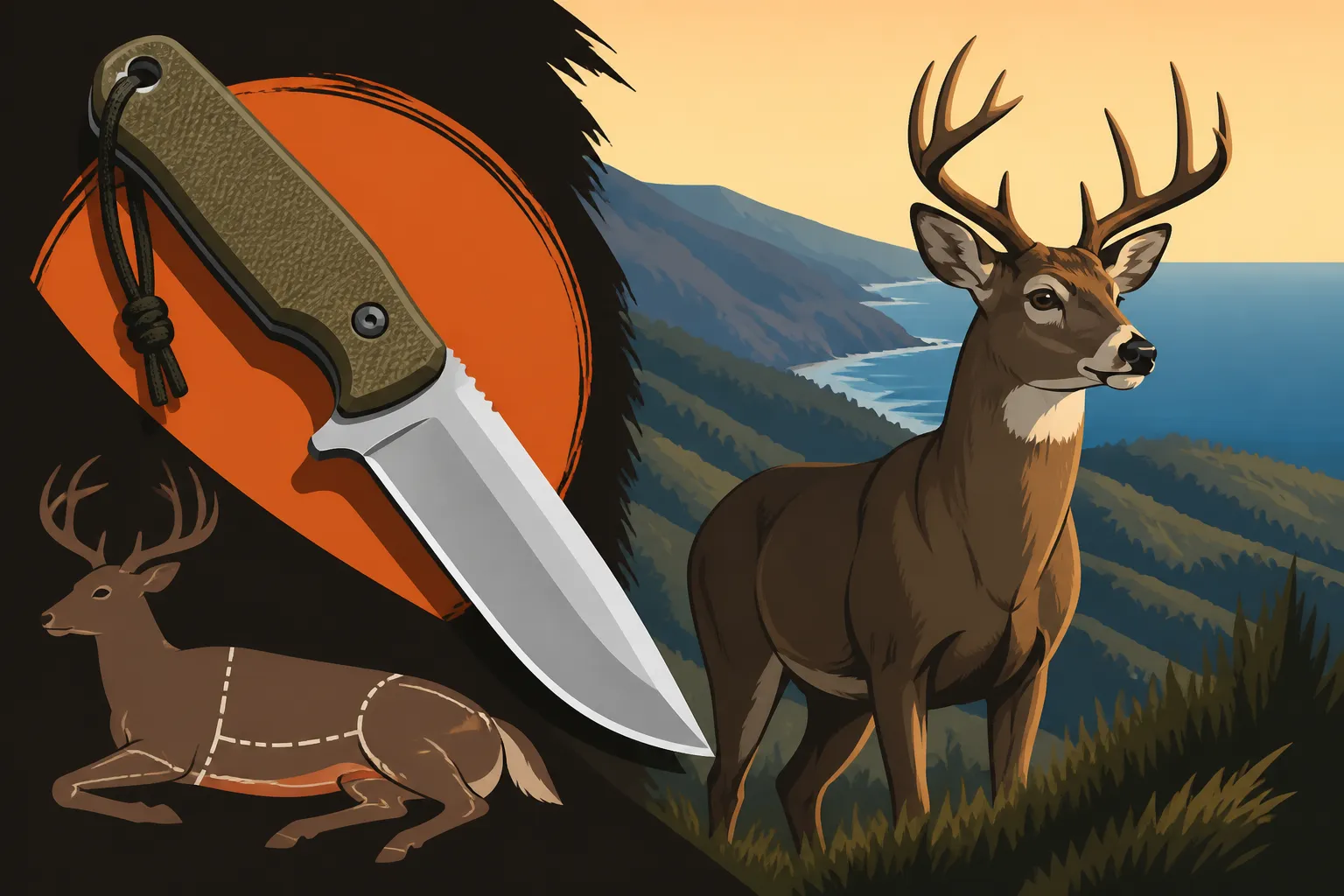
Best Knife for Field Dressing a Blacktail
The moment you drop a beautiful California blacktail, the real work begins. You've hiked, glassed, and stalked, finally making that perfect shot, and now you’re staring at a magnificent animal, often in challenging terrain or rapidly warming temperatures. The last thing you want is to struggle with a dull, flimsy, or ill-suited knife when you need to quickly and efficiently field dress your buck. This guide will walk you through everything you need to know to pick the best knife for field dressing a blacktail, ensuring a clean, safe, and efficient job every time.
The Essentials of a Good Field Dressing Knife for Blacktail
When it comes to field dressing a blacktail, your knife isn't just a tool; it's an extension of your intent to respectfully and effectively process the animal. The right knife makes the job smoother, safer, and ultimately more enjoyable, even in less-than-ideal conditions.
Blade Material: Stainless Steel Versus Carbon Steel
The type of steel in your knife blade dictates many of its performance characteristics, particularly its edge retention, strength, and corrosion resistance. For a field dressing knife, these factors are paramount.
Stainless steel, often preferred by many California hunters, offers excellent corrosion resistance. This is a huge advantage when you're working with blood and internal fluids, especially in damp environments like the coastal redwoods or after a Sierra rain. You can clean it up relatively easily without worrying too much about immediate rust. The downside? Some stainless steels can be harder to sharpen to a razor edge, and they might not hold that edge quite as long as premium carbon steels. However, modern advancements in stainless alloys mean many blades now offer a fantastic balance of all these properties. Look for popular choices like AUS-8, 440C, or even high-end S30V, which offers superior edge retention.
Carbon steel, on the other hand, is renowned for taking and holding an incredibly keen edge. This can be a game-changer when you're trying to make precise cuts and work through tough hide and muscle. The trade-off is that carbon steel is much more prone to rust and corrosion. If you opt for carbon steel, you'll need to be meticulous about cleaning and drying your blade immediately after use and applying a light coat of oil to prevent rust, especially if you’re out for a multi-day hunt. Some hunters love the patina that carbon steel develops over time, but for a field dressing knife, practical corrosion resistance often wins out for most of us.
Blade Shape and Length: Drop Point, Clip Point, Gut Hook
The shape and length of your knife blade directly impact its effectiveness for different field dressing tasks. For blacktail, which are smaller than a mule deer or an elk, you generally want a blade that offers control and precision.
A drop point blade is arguably the most popular and versatile choice for field dressing. It has a convex curve on the spine that drops from the handle to the tip, creating a strong, thick point that's less likely to break. This shape also provides a larger belly for skinning, which is great when you're trying to separate hide from muscle. The lack of an aggressive tip means you're less likely to accidentally puncture organs when making your initial cuts through the abdomen. It’s a solid all-around performer that many hunters swear by for its practicality.
Clip point blades feature a concave or straight "clip" on the spine, narrowing the tip and making it very sharp and precise. This can be excellent for intricate cuts or separating connective tissue. However, the thinner tip can be more fragile, and if you're not careful, it's easier to inadvertently puncture something you don't want to. It's a good choice for those who value precision above all else and have a steady hand.
A gut hook is a specialized feature found on some knives. It’s a small, sharpened hook on the spine of the blade, designed to effortlessly slice open the abdominal cavity from the inside out without piercing the intestines. While it sounds incredibly useful, and it certainly can be for getting that first cut started cleanly, it's not strictly necessary. Some hunters find them invaluable, especially in cold weather when dexterity is reduced, or when working with a larger animal like a larger mule deer. Others find them awkward to sharpen and an unnecessary complication. For a blacktail, a sharp drop point or clip point can accomplish the same task with a bit more care. The ideal blade length for a blacktail is typically between 3.5 to 5 inches. This length gives you enough blade to work with, but isn't so long that it becomes cumbersome or difficult to control for precise tasks.
Handle Ergonomics and Grip
Imagine trying to field dress a buck on a steep, slippery hillside with hands that are cold, wet, and bloody. Now imagine doing that with a knife handle that’s smooth, slick, and uncomfortable. It's a recipe for disaster. The handle of your field dressing knife is just as important as the blade itself, perhaps even more so for safety.
Look for a handle made from materials that offer excellent grip, even when wet. Textured rubber, G-10, Micarta, or even some stabilized woods can provide the necessary traction. Smooth, polished wood or bone handles, while beautiful, are often a poor choice for a working field knife. The shape of the handle should also fit comfortably in your hand, allowing for a secure grip during both power cuts and more delicate work. Many knives feature finger grooves or swells that help lock your hand into place, preventing slippage and reducing fatigue. A good handle will also often have a subtle guard to keep your hand from sliding onto the blade, a critical safety feature when you're pushing hard.
Understanding California Blacktail Specifics and Field Dressing Challenges
Hunting blacktail in California comes with its own unique set of challenges, and your field dressing knife should be up to the task of meeting them head-on. From warm temperatures to rugged terrain, the conditions often demand efficiency and reliability.
Compact Size and Warm Weather Considerations
California blacktail, particularly those in the coastal ranges or Zone A, are generally smaller-bodied than their Rocky Mountain mule deer cousins. This means that while a large, heavy-duty knife might be overkill, you still need a blade that allows for precise work without being too small to get the job done efficiently. The compact nature of blacktail also means that quick field dressing is even more critical when temperatures are high. California's early seasons, like the Hunting California's Zone A July Archery Opener or Hunting the Zone C August-September Archery Window, often coincide with scorching summer days.
When the mercury climbs, prompt and thorough field dressing is your first line of defense against spoilage. A sharp, ergonomic knife allows you to open up the body cavity, remove the entrails, and begin the cooling process as quickly as possible. This is vital, as internal organs retain a lot of heat, and bacteria can multiply rapidly. Neglecting this step, especially on a hot day, can compromise the quality of your venison. For more tips on managing heat, check out Field Dressing a Deer in Hot Weather. After field dressing, getting game bags on the meat is crucial, and a quality knife helps you prepare the carcass for these protective layers. Best Game Bags for Field Care in August Heat discusses this in detail.
Public Land and Pack-Out Logistics
Many blacktail hunts in California occur on public lands, which often means you'll be far from your vehicle. Whether you're deep in a National Forest or working a remote BLM property, the reality is that you'll likely be packing your animal out on your back, potentially over rugged and steep terrain. This emphasizes the need for an efficient field dressing process.
A good knife can significantly reduce the weight you need to carry out. By thoroughly field dressing or even quartering your buck on site, you're removing unnecessary weight from the carcass. The less weight you have to carry, the easier and safer your pack-out will be. A knife that excels at separating joints and making clean cuts can turn a strenuous pack-out into a manageable task. If you're quartering, consider the importance of a sturdy blade that can handle cutting through cartilage and connective tissue without failing. This is especially true if you're dealing with a large buck. Tools like those discussed in Best Backpack Frame for Quartered Elk can make this process even easier once the animal is field-dressed and broken down into manageable pieces.
Blade Care and Non-Lead Considerations
While California's non-lead ammunition requirement doesn't directly dictate your knife choice, it underscores the state's emphasis on responsible hunting practices. Just as you need to choose appropriate Which Non-Lead Bullets California Approves, you need to ensure your field dressing tools are up to par. A well-maintained knife is a safe knife, and proper care will ensure it performs when you need it most.
A crucial aspect of knife care is keeping it sharp. A dull knife is dangerous because it requires more force to cut, increasing the risk of slippage and injury. It also tears meat rather than cutting cleanly, leading to a messier job and potential venison loss. Beyond sharpness, cleaning your knife thoroughly after field dressing is essential. Blood and tissue can corrode even stainless steel over time, and proper hygiene prevents the spread of bacteria. Carry a small cleaning cloth or wet wipes and wipe down your blade immediately after use. When you get back to camp, give it a more thorough wash with soap and water, dry it completely, and store it properly. Some hunters, particularly those using carbon steel, like to apply a thin coat of food-grade mineral oil before storage.
Recommended Knife Types and Features for California Blacktail
When it comes to the actual design of your field dressing knife, hunters generally gravitate towards three main categories: fixed blade, folding blade, and replaceable blade systems. Each has its own set of advantages and considerations for the California blacktail hunter.
Fixed Blade Knives: Durability and Reliability
Fixed blade knives are often considered the gold standard for field dressing, and for good reason. They are inherently stronger and more durable than folding knives because there are no moving parts to break or lock up. This makes them incredibly reliable, especially when you're working in demanding conditions.
The full tang construction, where the blade steel extends all the way through the handle, provides exceptional strength and balance. This strength is invaluable when you're making powerful cuts or need to pry a bit to separate joints. Cleaning a fixed blade knife is also significantly easier. There are no crevices or pivot points for blood, hair, and other debris to get trapped in, which is a major advantage for hygiene. You can simply rinse it off, scrub it clean, and dry it without worrying about residual gunk. Many hunters prefer a fixed blade for its simplicity and robustness, knowing it will perform flawlessly year after year. For example, a reliable fixed blade like a Benchmade, Buck, or ESEE knife will serve you well. When considering a knife for Hunting Coastal Range Oak Woodlands or any other rugged area, a fixed blade can withstand the abuse of backcountry work.
Folding Knives: Portability and Convenience
Folding knives offer undeniable portability and convenience. They are compact, easily fit into a pack or pocket, and often come with a pocket clip for quick access. This makes them a popular choice for hunters who prioritize minimal gear or simply want a backup knife.
Modern folding knives have come a long way in terms of strength and reliability. Many feature robust locking mechanisms, such as lockbacks, liner locks, or frame locks, that ensure the blade stays securely open during use. However, even the best folding knife will have a slight weak point at the pivot compared to a solid fixed blade. The main downside of folding knives for field dressing is cleaning. The pivot area and the nooks and crannies of the handle can be incredibly difficult to clean thoroughly. Blood and tissue can get trapped, leading to corrosion and bacterial growth, which is a significant hygiene concern. If you opt for a folding knife, choose one with a simple, open construction that allows for easier cleaning and be diligent about maintenance. Many hunters find that a good quality folding knife, like a high-end offerings from Spyderco or a classic Gerber Vital (if it's a replaceable blade type), can be perfectly adequate for a single animal, as long as you clean it immediately and meticulously.
Replaceable Blade Knives: The Ultimate Sharpness
Replaceable blade knives have surged in popularity in recent years, and for good reason: they offer unparalleled sharpness, always. Brands like Outdoor Edge and Gerber have excellent systems that allow you to quickly and easily swap out a dull blade for a fresh, razor-sharp one.
The primary advantage here is that you never have to worry about field sharpening. You simply carry a few spare blades, and when your current one dulls, you pop it out and snap in a new one. This is incredibly convenient, especially when you’re pressed for time or operating in low light. It ensures you're always making clean, efficient cuts, which is great for preserving meat quality and making the job easier. The blades themselves are often surgical-grade steel, which is incredibly sharp but also very thin, so they are not designed for prying or heavy abuse.
The main considerations with replaceable blade knives are cost (the blades can add up) and the need to carry spare blades, which are often small and can be easily lost. Some hunters also feel the handle itself can be less robust than a fixed blade, especially during heavy tasks. However, for sheer cutting performance and convenience, they are hard to beat. If you are focused on meticulous skinning and gutting of a blacktail, knowing you'll have a consistently sharp edge can be a huge advantage.
| Knife Type | Pros | Cons | Best For |
|---|---|---|---|
| Fixed Blade | Maximum durability and strength; easy to clean; reliable | Can be bulky to carry; requires field sharpening | All-around field dressing, heavy-duty tasks like quartering, hunters prioritizing robustness and ease of cleaning. Excellent for situations where you might need to process an animal quickly and ruggedly, like on Hunting a National Forest Burn Scar. |
| Folding Blade | Compact and portable; easy to carry in a pocket or pack | Harder to clean thoroughly; pivot point can be a weak spot; risk of blade failure if lock isn't robust | Light-duty field dressing, backup knife, hunters prioritizing portability and discreet carry. Better suited for quick initial cuts rather than extensive processing. |
| Replaceable Blade | Always razor-sharp; no need for field sharpening; very precise cuts | Blades can be expensive and fragile; requires carrying spare blades; handle sometimes less robust | Hunters prioritizing ultimate sharpness and precision for skinning and gutting; those who dislike or struggle with field sharpening. Ideal when you're focused on meticulous meat care in the field. |
Field Sharpening and Maintenance in the Field
Even the best knife will eventually lose its edge. Knowing how to maintain your blade in the field is just as important as choosing the right knife in the first place.
Portable Sharpeners and Techniques
A small, lightweight sharpener is an essential piece of gear for any serious hunter. There are many options available, from small diamond rods and ceramic sticks to compact pull-through sharpeners. Each has its own learning curve, but the basic principle is to restore the cutting edge.
Diamond rods or ceramic sticks are excellent for putting a fine edge back on your blade. You typically hold the blade at a consistent angle (often around 20-25 degrees for a hunting knife) and draw it across the rod. Practice this at home until you can consistently hold the angle. A few passes on each side, alternating as you go, can quickly bring a dull edge back to life. These are great for touch-ups.
Pull-through sharpeners are often simpler to use, as they typically have pre-set angles. You just pull the blade through the sharpening slots a few times. While convenient, they can sometimes remove more material from the blade than necessary, so use them judiciously.
The key is to sharpen before your knife gets completely dull. A quick touch-up when you first feel the edge losing its bite is much easier than trying to restore a completely flat edge. Make sure your hands are clean and dry before sharpening to maintain a good grip on both the knife and the sharpener. Many hunters, especially those who spend extended time in the backcountry, rely on their GoHunt app to plan routes and find information, but they know that gear like a sharp knife is just as crucial for success.
Cleaning and Sanitizing Your Blade
Immediate and thorough cleaning of your field dressing knife is paramount for both hygiene and the longevity of your tool. After processing a blacktail, your knife will be covered in blood, fat, and tissue – all prime breeding grounds for bacteria and corrosive agents.
As soon as you're done with the field dressing, take a moment to wipe down your blade with a damp cloth, a paper towel, or even some natural materials like large leaves if you're truly in a pinch. This removes the bulk of the organic matter. If you have water available, a quick rinse can work wonders. Once back at camp, or at the very least once you’re home, give your knife a thorough wash with hot, soapy water. Use a stiff brush or sponge to get into any crevices, especially if it's a folding knife. After washing, dry the blade and handle completely to prevent rust. Many hunters carry a small bottle of hand sanitizer in their pack, which can also be used in a pinch to help disinfect a blade, though soap and water is always preferable for a full clean. Proper cleaning isn't just about preventing rust; it's about respecting the animal and ensuring the venison you worked so hard for is clean and healthy to eat.
Disclaimer
This article is for general informational purposes only and does not constitute professional advice. Laws, prices and regulations vary by location and change over time. Consult a qualified professional for guidance on your specific situation.