Duck Migration Timing Through California
The anticipation of a major duck migration sweeping into California is a feeling every waterfowl hunter knows well – a mix of excitement and anxiety as you watch weather maps and wait for the skies to darken with incoming birds. It can be incredibly frustrating to plan a hunt, only to find the marshes quiet, or conversely, to miss a monster flight because you weren't out there. This guide aims to demystify the complex factors that drive duck migration through our Golden State, helping you understand the patterns and better time your efforts for a successful season.
Understanding California's Place on the Pacific Flyway
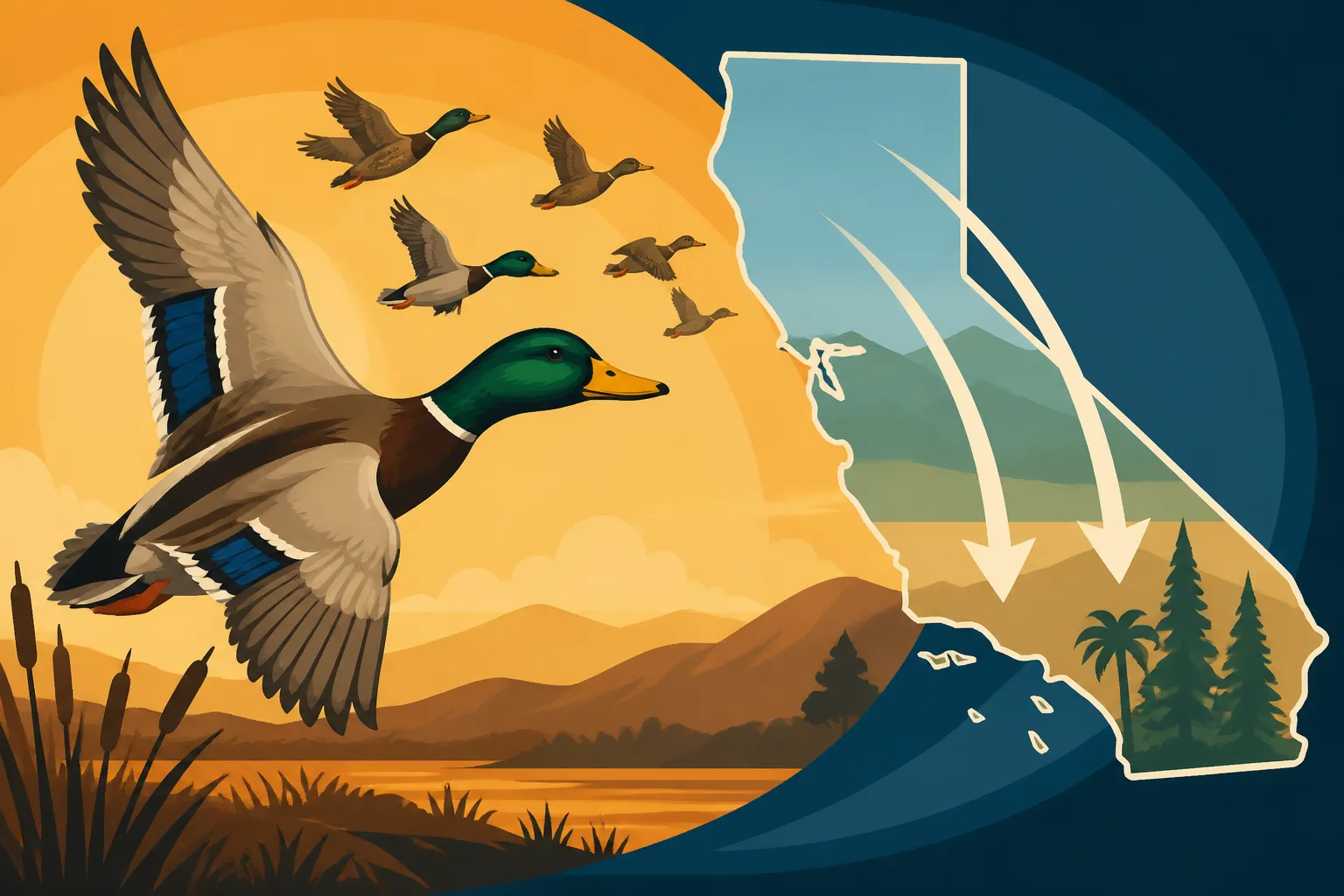
California isn't just a destination for migrating ducks; it's a critical stopover and wintering ground along the vast Pacific Flyway. This immense aerial highway stretches from the Arctic breeding grounds of Canada and Alaska, down the western coasts of North America, all the way to Central and South America. For millions of ducks, geese, and other waterfowl, California's wetlands, flooded agricultural fields, and managed wildlife areas are literally lifelines, providing essential food, water, and sanctuary during their arduous journey south.
The sheer volume of birds that pass through or winter here means that understanding the timing of their movements is paramount for hunters. We're not just talking about local birds; we're talking about vast populations moving in response to cues far to our north. The Pacific Flyway's health is directly tied to the success of hunting seasons in California. California Waterfowl on the Pacific Flyway offers a deeper dive into this vital pathway.
The Anatomy of a Flyway Journey
Ducks don't just pick up and fly thousands of miles in one go. Their migration is a series of stages, often with significant staging areas where birds congregate, feed, and rest before continuing their journey. These staging areas, often in places like the Canadian prairies or the Klamath Basin, can hold immense numbers of birds. As conditions change in these northern staging grounds – falling temperatures, diminishing food, or increasing hunting pressure – the birds feel the nudge to continue their push south.
California sits at the receiving end of much of this activity. Early season can sometimes feel a bit slow, with mostly resident birds or early local movers. But as the northern conditions worsen, a steady stream, and sometimes a torrent, of new birds begins to arrive. This wave can continue for weeks, reshaping the dynamics of our marshes and fields.
Why California is a Magnet for Migrants
Our state's diverse habitats make it uniquely attractive to a wide array of waterfowl species. From the vast agricultural landscapes of the Central Valley, particularly the flooded rice fields, to the coastal estuaries and inland freshwater marshes, California provides a buffet of resources. These areas aren't just stopovers; for many species, they are their final wintering destination. The Central Valley, in particular, is an undisputed hotspot, drawing in huge numbers of ducks and geese every year. Hunters often rely on Decoying Mallards on Flooded Rice Ground to entice these birds.
The state's geographic position, combined with these rich habitats, means we experience not just one "peak" migration, but often several pulses as different species and cohorts of birds arrive throughout the fall and early winter. This staggered arrival is why some hunters find success early, while others prefer to wait for the late-season push of cold-weather birds.
Key Factors Influencing Duck Migration Timing
Pinpointing an exact date for "peak migration" is like trying to nail jelly to a tree – it's practically impossible. Duck migration is a dynamic process influenced by a complex interplay of environmental factors. Understanding these drivers is far more useful than waiting for a calendar date.
Weather Systems and Cold Fronts
By far, the most significant factor pushing ducks down the flyway is weather. Cold fronts, especially those accompanied by snow and ice in the northern breeding and staging grounds, act like a giant broom, sweeping birds south. When temperatures plummet and water bodies begin to freeze in places like Oregon, Washington, or British Columbia, ducks lose their access to food and open water, forcing them to move.
- Northern Pushes: Pay close attention to long-range forecasts for areas north of California. A significant drop in temperatures, heavy snow, or widespread ice formation in regions like the Klamath Basin or even further north in the prairie provinces, is often a strong indicator that new birds are on their way. These birds, having faced harsh conditions, can often be less wary upon arrival.
- Local Weather Impacts: While northern weather drives the initial push, local weather in California also plays a huge role in bird behavior. Stormy, windy days often see more bird movement, as ducks are seeking shelter or new feeding grounds. Conversely, calm, clear, warm days can make ducks complacent, often just loafing around. Strong winds can also shift birds around a wetland, making some areas hotter than others on a given day. Wind and Thermals in Steep Sierra Country might not be about ducks, but the principle of how weather influences movement holds true.
Food Availability and Habitat Conditions
Ducks are driven by their stomachs. They go where the food is. The availability of diverse and abundant food sources along the flyway dictates where they will stop, how long they will stay, and where they will spend their winter.
- Agricultural Fields: California's Central Valley is famous for its vast agricultural lands, particularly rice. After harvest, many fields are flooded, providing an incredibly rich feeding ground for ducks. The timing of these flood-ups, and the availability of waste grain, significantly impacts where birds will concentrate. Hunters often scout to determine what fields have been cut and flooded.
- Natural Wetlands and Refuges: State and federal wildlife areas, such as those managed by the CDFW, are meticulously managed to provide ideal habitat. These refuges strategically plant food crops and maintain water levels to attract and hold birds. These sanctuaries become critical hubs, and the hunting pressure outside their boundaries often increases when birds move off them to feed. When planning hunts, looking into the management practices of a particular wildlife area can be incredibly insightful. Hunting a California Sacramento Valley Wildlife Refuge goes into detail on these areas.
- Water Levels and Drought: The availability of water is fundamental. During drought years, fewer natural wetlands might be available, concentrating birds into managed areas or even pushing them further south or west. Conversely, abundant rainfall and managed flooding create more attractive habitat, spreading birds out. GoHunt mapping resources can sometimes highlight areas with consistent water presence.
Hunting Pressure and Human Activity
While less "natural" than weather or food, hunting pressure is a major factor in how and where ducks move. Birds learn quickly.
- Opening Day Shifts: The opening of duck season in California, or in states just to our north, often causes a noticeable shift in bird behavior. Birds that have been resting peacefully may become more wary and move to less pressured areas, including refuges or private lands.
- Mid-Season Movement: As the season progresses, birds become "educated." They learn decoy spreads, call patterns, and hunting routines. This can lead to birds becoming nocturnal, feeding at night and resting in protected areas during the day. This is why adapting your tactics and trying Layout Blind Hunting a Flooded Field or Hunting a Refuge-Adjacent Field at Dawn can be so important.
- Refuge Dynamics: The interplay between hunted public lands and undisturbed refuges is constant. Birds will often utilize refuges for safety during the day, then fly out to feed in nearby private fields or less-pressured public spots at dawn and dusk. Understanding these "flight lines" is key to intercepting them.
Species-Specific Migration Patterns in California
Not all ducks arrive at the same time, nor do they behave the same way once they're here. Different species have different breeding grounds, different tolerances for cold, and different dietary preferences, all of which influence their migration timing.
Early Season Arrivals: Teal and Gadwall
Typically, the first significant influx of migrating ducks into California are the smaller, faster-flying species. Green-winged Teal are often among the earliest to show up in numbers, sometimes appearing even before the season fully kicks off. Their migration is less tied to severe northern freezes and more to a general cooling trend and instinct. Gadwall also tend to be early to mid-season migrants. These birds often prefer shallow wetlands with abundant aquatic vegetation.
- Green-winged Teal: These feisty little ducks are a favorite for early-season hunters. They travel in tight flocks and are incredibly agile in the air. Their early arrival means you can often find them in good numbers in September and October.
- Gadwall: A more reserved duck, the Gadwall is an excellent eating bird and often found dabbling in vegetated marshes. They can provide consistent action through the mid-season.
Mid-Season Steady Stream: Mallards and Wigeon
As the weather truly starts to bite further north, California sees the arrival of its bread-and-butter ducks: Mallards and Wigeon. These are often the most abundant and sought-after species, and their arrival often signifies the heart of the duck hunting season.
- Mallards: The iconic greenhead. Mallards are strong fliers and adaptable, found in nearly every wetland and flooded field. Their main migration push often coincides with the first significant freezes in the upper Pacific Flyway, typically from late October through November. They are drawn to flooded grain fields.
- American Wigeon: Known for their distinct "whistle," Wigeon are common mid-season arrivals. They are primarily grazers, preferring to feed on short grasses and agricultural sprouts, making them frequent visitors to dry or shallowly flooded fields adjacent to water.
Late Season Cold Weather Push: Pintails, Shovelers, and Divers
The truly cold weather birds, often the last to arrive and the last to leave, make their appearance later in the season, typically from late November through December and into January. These birds are often pushed south by severe cold and ice, bringing a fresh batch of migrants to California's wintering grounds.
- Northern Pintail: Elegant and fast, Pintails are highly prized by hunters. Their main migration often peaks in late November and December. They are particularly fond of flooded rice fields and open water. California Duck Harvest Numbers often show pintails as a significant part of the bag.
- Northern Shoveler: Easily identifiable by their large, spoon-shaped bills, Shovelers arrive with the mid-to-late season push. They feed by sifting small organisms from the water, often concentrating in specific wetland areas.
- Diving Ducks: Species like Canvasbacks, Redheads, Scaup, and Ring-necked Ducks are also part of the migration. While dabblers dominate the Central Valley, divers can be found in deeper marshes, large lakes, and coastal estuaries. Their migration is also heavily influenced by cold weather freezing over their northern freshwater habitats.
Here's a simplified look at typical migration windows for common species in California:
| Duck Species | Typical Arrival Window in California | Key Factors for Arrival | Preferred Habitat |
|---|---|---|---|
| Green-winged Teal | Early to Mid-Season (Sept-Oct) | General cooling, instinct | Shallow wetlands, marshes, sloughs |
| Gadwall | Early to Mid-Season (Sept-Nov) | Moderate northern cold fronts | Vegetated marshes, wetlands |
| Mallard | Mid to Late Season (Oct-Dec) | Significant northern freezes, snow | Flooded rice fields, shallow marshes, rivers |
| American Wigeon | Mid to Late Season (Oct-Dec) | Moderate to strong northern cold fronts | Grazing fields, shallow marshes |
| Northern Pintail | Late Season (Nov-Jan) | Severe northern freezes, widespread ice | Flooded rice, open water, deep marshes |
| Northern Shoveler | Mid to Late Season (Nov-Jan) | Strong northern cold fronts | Muddy, shallow water with abundant invertebrates |
| Canvasback / Redhead | Late Season (Nov-Jan) | Northern lake freezes, deep water access | Deepwater marshes, large lakes, estuaries |
| Scaup / Ring-necked | Late Season (Nov-Jan) | Northern lake freezes, widespread open water | Deepwater lakes, rivers, large marshes |
Tracking the Migration for Better Hunt Planning
So, how do you put all this information to good use? While there's no crystal ball, combining several strategies can significantly improve your chances of being in the right place at the right time.
Utilizing Weather Forecasts and Reports
This is your first and most crucial tool. Don't just look at the weather in your hunting zone; expand your view.
- Long-Range Northern Forecasts: Start monitoring weather patterns in Oregon, Washington, Idaho, and even British Columbia or the Canadian prairies as early as September. Look for sustained cold snaps, particularly those dropping well below freezing, and forecasts for significant snowfall. A major shift up north often means a new push of birds is imminent.
- Local Forecasts and Radar: Once birds are in California, local weather plays a huge role in their daily movements. Pay attention to wind direction and speed, as well as any rain or fog. Ducks often fly lower and use terrain to their advantage on windy days. Radar can sometimes even show large concentrations of birds taking flight, though this is more challenging to interpret for hunters. GoHunt offers mapping layers that can show specific public land boundaries, helping you plan around local conditions more effectively.
Scouting and Local Observations
Nothing beats putting boots on the ground (or at least eyes in the binoculars) and observing what the birds are doing firsthand.
- Pre-Season Scouting: Before the season even opens, visit your hunting areas. Look for signs of local birds, water levels, and food availability. This baseline helps you notice when new birds arrive.
- During-Season Observation: Even if you're not hunting, drive by nearby wetlands or fields in the evenings or mornings. What kind of birds are there? How many? Are they new birds, or the same ones you've seen for weeks? Pay attention to "new flights" – sudden increases in specific species or larger, tighter flocks.
- Refuge and Wildlife Area Reports: Many state and federal wildlife areas provide weekly or bi-weekly bird counts and habitat reports. These are invaluable resources for understanding bird numbers, species composition, and what areas are holding birds. These reports are often the best indicator of overall migration activity.
- Hunter Reports and Forums: Online forums and local hunter groups can be great sources of real-time information. While you should always take anecdotal reports with a grain of salt, widespread reports of "new birds" or a specific species showing up in numbers can be a strong indicator of a migration push. Just remember that what's true for one marsh might not be true for another just a few miles away.
Resources for Tracking
Beyond weather and scouting, several other resources can help you track the migration:
- California Department of Fish and Wildlife (CDFW) Website: The CDFW provides a wealth of information, including habitat conditions, bird counts at various wildlife areas, and even the California Duck and Goose Bag Limits. This is often the most authoritative source for in-state information.
- Birding Websites and Apps: While aimed at birdwatchers, these resources can be incredibly useful. Websites that aggregate citizen science data, like eBird, allow users to report bird sightings. By filtering for specific regions and dates, you can often see trends in waterfowl presence.
- GoHunt: While primarily known for big game, a platform like GoHunt provides excellent mapping tools that can be adapted for waterfowl. You can use it to identify public land access points, mark potential scouting locations, and even overlay current weather patterns if available. When planning your next outing, leveraging resources like GoHunt can give you an edge in understanding your hunting area's layout and potential access points.
Ultimately, mastering duck migration timing in California is an ongoing learning process that combines scientific understanding with practical observation. There's no substitute for time spent afield, watching the skies and reading the landscape. But by paying attention to the major factors at play, you'll be much better equipped to anticipate the next big push and make the most of your California waterfowl season.
Disclaimer
This article is for general informational purposes only and does not constitute professional advice. Laws, prices and regulations vary by location and change over time. Consult a qualified professional for guidance on your specific situation.