California Black-Tailed Jackrabbit Range
When you picture California wildlife, you might immediately think of a majestic blacktail deer darting through coastal oak woodlands or perhaps a soaring condor over the backcountry. But there's another iconic, if often overlooked, resident that embodies the wild, open spaces of our state: the black-tailed jackrabbit. These long-eared speedsters are far more than just desert denizens; they're a widespread, adaptable species that can be found in a surprising variety of habitats. If you've ever wondered where exactly these fascinating creatures make their home across our vast state, and how their range offers unique opportunities for the small game hunter, you're in the right place. This guide will take a deep dive into the California black-tailed jackrabbit's extensive range, their preferred habitats, and what that means for anyone looking to encounter them afield.
The Vast Distribution of California's Black-Tailed Jackrabbit
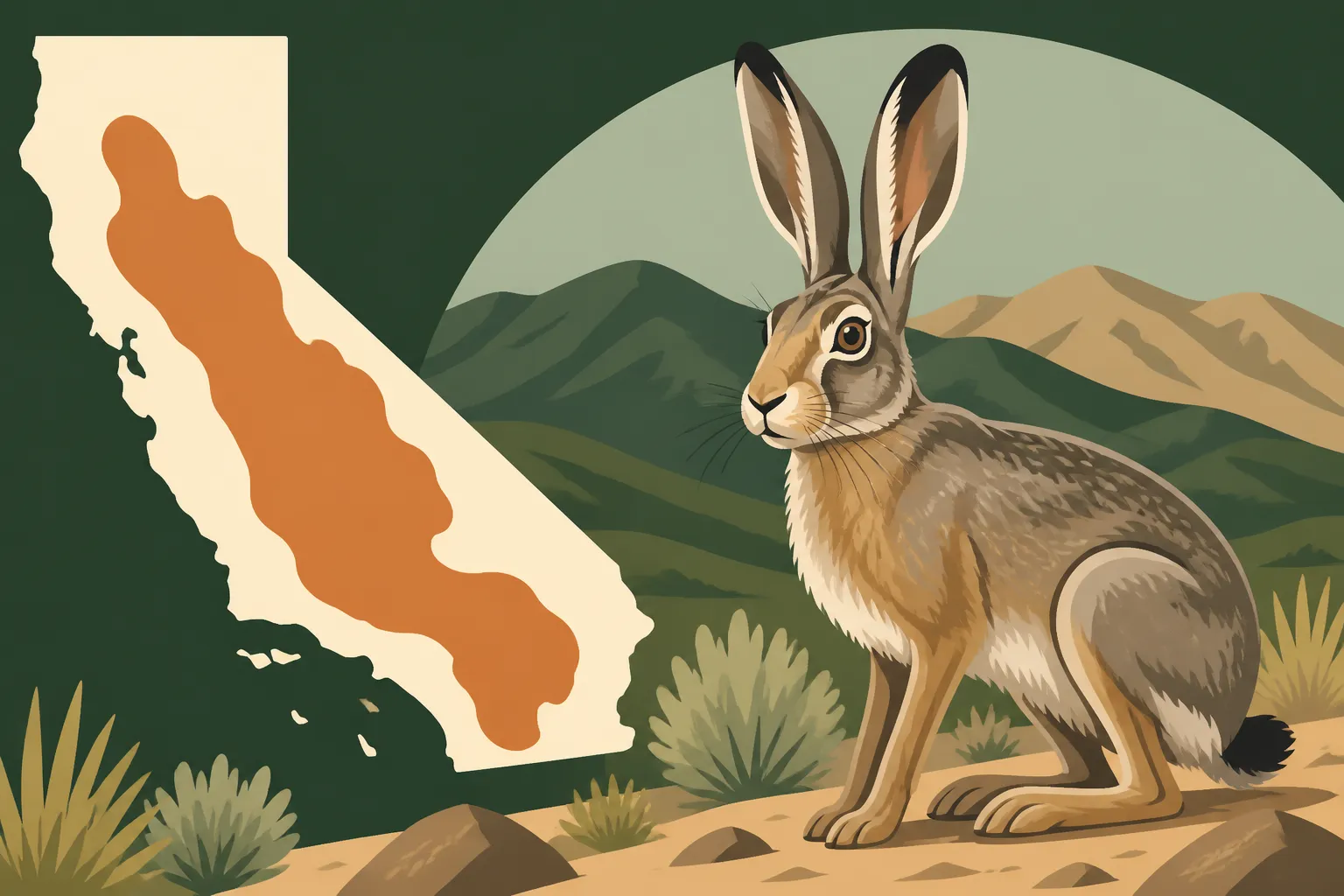
The black-tailed jackrabbit (scientific name Lepus californicus) is undeniably one of California's most ubiquitous wild mammals, and for good reason. Unlike some of our more specialized species, these hares are incredibly adaptable, capable of thriving in a wide array of environments. You'll find them scattered throughout almost every county, from the high desert scrub of the Mojave to the rolling foothills of the Sierra Nevada, and even along parts of the breezy coast. It's truly impressive how far and wide they've spread, a testament to their resilience and ability to make a living in diverse conditions.
Their presence is so widespread that it’s often easier to list where they aren't found in significant numbers, which is generally limited to the densest, wettest forests of the far northern coast or the highest elevations of the Sierra where deep snow and heavy timber create unsuitable conditions. But step out of those extreme zones, and you're likely in jackrabbit country. This broad distribution means that many hunters, no matter what big game they're pursuing, might stumble upon a jackrabbit or two in the periphery of their hunt. While they aren't often the primary target, they can certainly add an exciting dimension to a day afield, especially if you're out Small Game and Predator Hunting in California.
Consider the sheer scale: a hunter might spot a jackrabbit bounding across a dry lakebed in the Imperial Valley one day, and a month later, see another kicking up dust on a brushy hillside in the eastern foothills of the Central Valley. This adaptability is key to understanding their enduring success. They’re not picky eaters, taking advantage of whatever vegetation is available, and their remarkable speed and evasive maneuvers make them masters of survival in open landscapes where cover might be sparse. This extensive range offers fantastic opportunities for those looking to hone their fieldcraft and enjoy some fast-paced action.
Preferred Habitats and Microclimates
While black-tailed jackrabbits are widespread, they certainly have their favorite spots. They aren't going to set up shop in the middle of a dense redwood forest or a pristine alpine meadow. Instead, they gravitate towards open, semi-arid environments that offer a crucial combination of factors: low-lying forage, sparse cover for hiding, and plenty of room to run.
Arid and Semi-Arid Scrublands
This is perhaps the quintessential jackrabbit habitat in California. Think about the vast expanses of our desert regions, like the Mojave and Colorado deserts. Here, you’ll find them among creosote bush, sparse sagebrush, and various desert grasses. These areas provide exactly what a jackrabbit needs: plenty of low-lying vegetation to graze on, interspersed with enough brush to duck into when a hawk or coyote makes an appearance. They don't need heavy timber, just enough visual obstruction to break up their outline. Hunting California's BLM Desert Land often means you're traversing prime jackrabbit territory, even if you're actually looking for mule deer. The terrain allows for their signature "bounding" escape strategy, where they can outpace most predators over short to medium distances. They are also masters of blending in, their sandy-brown fur disappearing against the dry earth and scrub.
Grasslands and Foothill Chaparral
Moving away from the deepest deserts, jackrabbits are also incredibly common in the rolling grasslands and oak woodlands of California's foothills. Areas like the Central Coast, parts of the Central Valley fringe, and the lower Sierra foothills provide an excellent mix of open grassy areas for feeding and denser chaparral or scattered oak trees for cover. Imagine a large, sun-drenched pasture bordering a thicket of manzanita and chamise – that's a jackrabbit paradise. They’ll often be seen sunning themselves on the edge of these thickets, ready to burst into action at the first sign of danger. If you're out Hunting Coastal Range Oak Woodlands for blacktail deer, you'll undoubtedly encounter jackrabbits in the more open, grassy sections between the oak stands. They are particularly fond of disturbed areas, too, like agricultural field edges, clear-cuts, or areas recovering from wildfire, where new, succulent growth provides abundant food.
Agricultural Edges and Riparian Zones
Believe it or not, jackrabbits also adapt well to areas near human activity, especially agricultural lands. The edges of alfalfa fields, vineyards, orchards, and even pastures offer a consistent food source. While they might not venture far into densely cultivated areas, the margins often provide enough cover in fencerows, ditches, or undeveloped patches. You might see them darting across a dirt road separating a grape vineyard from a patch of native scrub. Similarly, degraded riparian areas, which are creek beds or river banks that aren't too heavily vegetated, can also host jackrabbits, especially if they provide some browse and quick escape routes into surrounding drier ground. These are often transient habitats, as farming practices can change, but the jackrabbits are quick to exploit new food sources. Using mapping tools like GoHunt can help you identify these transitional zones and field edges on public lands or areas where you have permission to hunt.
To summarize their habitat preferences:
| Habitat Type | Key Features | Jackrabbit Activity Notes |
|---|---|---|
| Arid/Semi-Arid Scrub | Creosote, sagebrush, open ground, dry grasses | High density, excellent running lanes, good camouflage |
| Grasslands/Foothills | Open grass, scattered oak, chaparral thickets | Feed in open, retreat to brush; common in disturbed areas |
| Agricultural Edges | Field margins, fencerows, ditches, fallow ground | Exploits abundant food, uses sparse linear cover |
| Degraded Riparian | Sparse creek beds, river banks, transition zones | Provides water/greenery, escape to drier, open uplands |
| Open Pine/Juniper Woodland | Widely spaced trees, grassy understory, rocky areas | Lower density, uses rocks/timber for cover, less common |
Factors Influencing Local Jackrabbit Populations
The sheer number of black-tailed jackrabbits you encounter can vary wildly from one area to another, and even from year to year in the same location. These fluctuations are influenced by a complex interplay of environmental factors, predator presence, and human activity. Understanding these dynamics can give you an edge when scouting and planning a small game hunt.
Weather and Precipitation Patterns
California's notoriously unpredictable weather, particularly its rainfall, plays a massive role in jackrabbit populations. In years with good, consistent rainfall, vegetation flourishes, providing abundant food and cover. This leads to higher survival rates for young jackrabbits and more successful breeding seasons, often resulting in a population boom. Conversely, during prolonged drought cycles, like the ones California frequently experiences, forage becomes scarce and dry, making it harder for jackrabbits to find enough to eat. This can lead to decreased breeding, higher mortality, and a noticeable drop in numbers. I've certainly seen years where you couldn't drive five miles in the desert without seeing dozens of jackrabbits, and then years later, in a drought, you'd be lucky to spot a handful in the same area. This really highlights the boom-and-bust cycle.
The quality of the forage also matters. Wet years mean more succulent green growth, which is more nutritious. Dry years force jackrabbits to subsist on tougher, less nutritious vegetation. Keep an eye on the long-term weather forecasts and observe the local vegetation conditions when you are Scouting California Public Land Before Season. A lush year means more rabbits, and more rabbit activity, which in turn can bring in predators, creating an interesting ecosystem dynamic.
Predation Pressure
Jackrabbits are a fundamental prey species for a huge variety of California's predators. Coyotes, bobcats, foxes, badgers, and a host of raptors like golden eagles and great horned owls all depend on jackrabbits as a food source. Where predator populations are high, jackrabbit numbers might naturally be lower, or at least they'll be more wary and harder to approach. This constant pressure has honed their incredible speed and keen senses, making them a challenging quarry for any hunter. The circle of life is very evident in jackrabbit country. If you're out Coyote Calling California Ranch Land, you're often targeting areas where coyotes are actively hunting jackrabbits.
The relationship isn't always one-sided, though. Jackrabbits are prolific breeders, producing multiple litters a year with several young in each. This "r-strategy" for reproduction allows their populations to rebound quickly even after heavy predation. This is why, despite constant pressure, they remain so abundant. However, localized increases in predator activity, perhaps due to a temporary abundance of other prey, can certainly reduce jackrabbit sightings in a particular wash or field. Utilizing a tool like GoHunt can sometimes help you visualize areas with high game activity, which might indirectly indicate where jackrabbits are thriving (or being heavily preyed upon).
Human Impact and Habitat Modification
While jackrabbits are adaptable to certain levels of human disturbance, large-scale habitat modification can certainly impact their local numbers. Urban sprawl, intensive agriculture that removes all natural cover, and widespread development can fragment or eliminate suitable jackrabbit habitat. Conversely, some human activities, like leaving fallow fields or maintaining brushy fencerows, can inadvertently create new, attractive habitats. Roadways, unfortunately, are also a significant source of mortality for jackrabbits, especially in rural areas where they frequently cross roads at dusk and dawn.
Understanding these factors helps paint a clearer picture of why you might find a robust jackrabbit population in one valley and relatively few in a seemingly similar adjacent one. It's all about that delicate balance of food, water, cover, and predator presence within a given landscape. When you’re looking at aerial maps, try to identify these elements – open spaces, brush lines, and water sources – to predict where you might find the most activity.
Jackrabbit Hunting Opportunities Across California
For those looking to chase something fast and exciting, the extensive range of the black-tailed jackrabbit opens up a lot of opportunities. While they're often overlooked in favor of bigger game, hunting jackrabbits offers a fantastic way to hone your stalking skills, practice shooting in the field, and simply enjoy time outdoors in some of California's most scenic, if sometimes stark, landscapes.
Year-Round Season and Abundant Public Land
One of the biggest advantages of hunting jackrabbits is their liberal season. Unlike deer or elk, which have very specific and often short seasons, jackrabbits can typically be hunted year-round across much of the state. This means there’s no need to wait for a specific opener; you can head out whenever you have time, as long as you have a valid California hunting license. Always double-check current regulations, of course, but generally, they offer continuous opportunities. This makes them a perfect target for an off-season scouting trip, where you can combine a little small game hunting with some pre-season recon for deer or other species.
Given their preference for open, semi-arid country, a large portion of their habitat falls within California's vast public lands, particularly those managed by the Bureau of Land Management (BLM) and some National Forests. Hunting California's BLM Desert Land or Hunting California's Mojave Desert Fringe Country are prime examples of areas where you can find plenty of jackrabbits and ample room to roam without worrying about private property lines every few minutes. Tools like GoHunt can be invaluable for identifying these public land parcels, and for understanding the various access points and regulations that apply to them. Just be sure to always verify land ownership and access before venturing out.
Equipment and Techniques for Success
Hunting jackrabbits doesn't require a heavy investment in specialized gear. A good .22 rifle is often the firearm of choice, providing enough accuracy and punch for small game without being overkill. Shotguns with small shot sizes can also be effective in thick brush where shots might be close and fast. For the archer, it's a fantastic way to practice with your bow and broadheads on a moving target, significantly improving your instinctive shooting. Regardless of your chosen weapon, a good pair of binoculars to scan the terrain, and comfortable boots for walking, are essential.
The most common technique is spot-and-stalk. You'll want to move slowly, often pausing to scan the ground ahead, looking for the tell-tale long ears or the slight outline of a jackrabbit hunkered down in the sparse cover. Their camouflage is surprisingly effective, so a keen eye is crucial. When you spot one, the challenge is to get into range without spooking it. This is where your fieldcraft really shines – using available terrain features, moving quietly, and paying attention to the wind. Sometimes, they'll sit tight until you're quite close, offering a great shot. Other times, they'll burst out at a distance, challenging your reflexes with a fast-moving target. I've spent many afternoons in a Hunting a BLM Desert Wash for Mule Deer and found myself spending more time stalking jackrabbits than anything else, just to keep my skills sharp. It’s excellent practice for the general deer seasons or even for Wild Pig Hunting California Year-Round.
Hunting jackrabbits provides an accessible and exciting way to engage with California's diverse wildlife, explore its open spaces, and hone your hunting skills without the pressure and complexity of big game seasons. The knowledge of their widespread range and preferred habitats ensures that an opportunity to pursue these fast-moving hares is never too far away.
Disclaimer
This article is for general informational purposes only and does not constitute professional advice. Laws, prices and regulations vary by location and change over time. Consult a qualified professional for guidance on your specific situation.