California Dove Population Trends
There's nothing quite like the rush of doves rocketing over a sunflower field on a crisp September morning, but many of us hunters have felt that familiar pang of worry: are there as many birds as there used to be? It's a valid concern, and trying to understand the ups and downs of California's dove populations can feel like tracking ghosts. This comprehensive guide is here to untangle the complexities of California dove population trends, giving you a clearer picture of what's happening with these beloved game birds and how it impacts your time afield.
Understanding California's Dove Species
When we talk about "doves" in California, we're usually thinking about a few key species that grace our skies, fields, and woodlands. Each one has its own characteristics, preferred habitats, and, consequently, its own population dynamics. It's important to differentiate these birds because what affects one species might not affect another in the same way.
Mourning Doves: The Ubiquitous Game Bird
Mourning doves are, without a doubt, the most widespread and recognizable dove species across California. From suburban backyards to vast agricultural fields, these sleek, fast-flying birds are an integral part of our ecosystem. They're characterized by their soft, mournful cooing (which gives them their name), a pointed tail, and a generally brownish-gray plumage. Their adaptability is a huge reason for their success; they can thrive in diverse environments, from deserts to woodlands to urban fringes, as long as there's food, water, and suitable nesting sites.
For hunters, mourning doves are the bread and butter of the dove season. They offer challenging wing-shooting opportunities due to their erratic flight patterns and incredible speed. A common frustration for hunters, however, is when a favorite field that was once teeming with birds suddenly seems sparse. This local fluctuation often leads to questions about the broader population, and rightly so, as we all want to ensure healthy numbers for the future. Understanding their resilience and vulnerability is key to effective management and enjoyable hunting. They typically nest multiple times throughout the breeding season, which can help them recover from localized losses if conditions are favorable.
White-winged Doves: A Southern Visitor Expanding North
White-winged doves are another popular game bird, though traditionally more common in the southern and eastern parts of California. They're larger than mourning doves and instantly identifiable by the prominent white patch on their wings, which is particularly visible in flight. Their call is also distinct, a series of hoots that sounds quite different from the mournful coo of their cousins. Historically, these doves were more associated with the arid brushlands and riparian areas of the desert southwest, often feeding on saguaro cactus fruit.
However, over recent decades, we've seen white-winged doves expanding their range northward in California, particularly into the Central Valley. This expansion is often linked to the increase in certain agricultural crops, like nut orchards and grain fields, that provide abundant food sources. This has been a welcome development for many hunters in new areas, offering additional opportunities. But with expansion comes new challenges, as these birds face different pressures in new habitats. Monitoring their spread and success is a crucial aspect of overall dove management, as their presence can offer valuable insights into habitat changes and resource availability.
Band-tailed Pigeons: The Forest Doves
While often grouped with doves due to their migratory status and similar morphology, band-tailed pigeons are a distinct species with different habitat preferences and population dynamics. These are the largest of California's native pigeons, easily identified by their iridescent green neck patch, a white band on the nape, and a distinctive grey band across their tail. Unlike mourning and white-winged doves, band-tailed pigeons are primarily forest dwellers, preferring coniferous and mixed evergreen forests, particularly those with abundant acorn or berry crops.
Hunting band-tailed pigeons offers a unique challenge, often requiring different strategies than hunting other doves. They are strong, direct fliers, often encountered in mountainous terrain. Their populations can be highly dependent on mast crops (like acorns), which fluctuate year to year. A poor acorn year can significantly impact their distribution and survival, making them less predictable. Because of their specialized habitat and diet, their population trends can be quite sensitive to forest health, logging practices, and climate change impacts on forest ecosystems. While they share migratory bird status with doves, their specific ecological niche means they face a different set of challenges and require tailored conservation efforts.
Factors Influencing Dove Populations
Dove populations, like those of any wildlife species, are a complex mosaic influenced by a myriad of environmental, human, and climatic factors. It's rarely one single issue, but rather a combination of pressures that collectively shape their numbers and distribution across the state. Understanding these factors helps us appreciate the challenges doves face and how we, as hunters and conservationists, can contribute to their well-being.
Habitat Loss and Degradation
One of the most profound impacts on dove populations, especially mourning doves and white-winged doves, is the ongoing transformation of California's landscape. Urbanization and agricultural intensification have led to significant habitat loss and degradation. Expansive tracts of wildlands, riparian corridors, and diverse agricultural mosaics that once provided ideal nesting, roosting, and feeding grounds are constantly being converted. Housing developments, industrial expansion, and monoculture farming practices reduce the variety and availability of suitable habitat.
Think about those old fallow fields on the edge of town, or the hedgerows that used to line small farms – these were prime real estate for doves. Now, many are gone, replaced by concrete or fields planted wall-to-wall with a single crop. This loss not only reduces the sheer acreage available but also fragments existing habitats, making it harder for doves to find safe nesting sites, reliable water sources, and diverse food. For instance, the destruction of riparian areas, which provide crucial cover and water, can have a disproportionate effect on white-winged doves, especially in their traditional southern California strongholds. This constant pressure on their living space is a foundational challenge to maintaining robust dove numbers.
Agricultural Practices and Food Availability
California's agricultural landscape is a double-edged sword for doves. On one hand, vast agricultural operations, particularly those growing grains like wheat, safflower, and corn, provide immense food sources. Doves are primarily seed-eaters, and these fields, especially after harvest, can be magnets for huge flocks. Many hunters eagerly anticipate the season opener on a fresh-cut grain field, knowing the birds will be there. You can learn more about this by checking out my guide on Dove Hunting a Cut Grain Field.
However, modern agricultural practices also present challenges. The move towards more efficient, "cleaner" farming, with less waste grain left on the ground, can reduce post-harvest feeding opportunities. Furthermore, the widespread use of pesticides and herbicides can impact seed diversity and inadvertently harm doves through secondary poisoning or by removing their preferred food plants. Monoculture farming, while providing abundant food of one type, reduces the overall biodiversity that a more varied landscape would offer. Changes in crop rotation, earlier harvests, or even different tillage methods can directly affect when and where doves find sustenance. It's a delicate balance: while agriculture provides food, the type and method of agriculture greatly influence its overall benefit to dove populations.
Weather Patterns and Drought Impacts
California's climate, characterized by wet winters and dry summers, heavily influences dove populations. However, the increasing frequency and severity of droughts are creating significant challenges. Doves, like all wildlife, need reliable access to water, especially during the hot summer breeding and post-breeding periods. Prolonged droughts can dry up ephemeral water sources, reduce seed production in native plants, and stress existing vegetation, leading to poorer nesting cover and reduced food availability.
A harsh winter, on the other hand, can also impact survival, although doves are generally quite resilient. But a particularly cold, wet spring can delay nesting or reduce brood success. These climate fluctuations don't just affect survival; they also influence breeding success. If conditions are dry and food is scarce during the spring, doves may lay fewer clutches or have lower chick survival rates. Conversely, a good rain year can lead to an explosion of native forb seeds, providing a bounty for doves and boosting their populations. The "boom and bust" cycles of California's weather directly translate to fluctuations in dove numbers, making them a significant factor in annual population trends. For hunters, scouting early to understand local conditions and water availability can be key to a successful Hunting the September Dove Opener.
CDFW Monitoring and Survey Methods
Understanding California's dove populations isn't just guesswork or anecdotal evidence from hunters. The California Department of Fish and Wildlife (CDFW), in cooperation with federal agencies, employs a variety of scientific methods to monitor these migratory birds. These surveys provide crucial data that inform management decisions, including setting bag limits and season dates. It’s a huge undertaking, tracking birds that can literally cross continents!
Call-Count Surveys: Listening for Trends
One of the primary tools used to monitor mourning dove populations is the annual call-count survey. This isn't just a casual listen; it's a highly standardized survey conducted across specific routes throughout the state. During the breeding season, typically in late May or early June, trained observers drive or walk predetermined routes, stopping at designated points and counting the number of doves heard cooing and seen flying. These surveys are conducted at dawn when doves are most active and vocal.
The consistency of these routes and the timing of the surveys allow biologists to compare data year after year, providing insights into long-term trends. An increase in cooing doves on a route might suggest a healthy local breeding population, while a decline could indicate issues like habitat loss or reduced breeding success. These surveys are vital because they directly measure breeding activity and abundance, helping to gauge the overall health of the population before hunting season even begins. It's a quiet, patient work, but incredibly important for collecting the baseline data needed to manage these birds responsibly.
Band-Recovery Data: Tracking Movement and Survival
Another critical piece of the puzzle comes from banding programs. Each year, thousands of doves are captured, fitted with small, numbered aluminum leg bands, and then released. If a banded dove is later harvested by a hunter or found dead, the band number can be reported to a national bird banding laboratory. This "band-recovery data" provides invaluable information on a multitude of factors.
First, it helps track migration patterns and dispersal, showing where birds travel from their banding sites. Second, and perhaps most importantly for population trends, it provides estimates of survival rates and harvest rates. By analyzing how many banded birds are reported each year, biologists can estimate what percentage of the population survives from one year to the next, and what proportion is harvested by hunters. This data is essential for setting sustainable harvest levels and understanding the impacts of hunting pressure. For instance, if survival rates appear to be declining significantly, it might trigger a review of bag limits or season lengths. The continued success of this program relies heavily on hunters reporting any bands they recover, which is why organizations like GoHunt often encourage participation in these data collection efforts.
Breeding Bird Surveys: Long-Term Outlook
Beyond the specific call-count routes for doves, broader Breeding Bird Surveys (BBS) also contribute to understanding dove population trends. These surveys cover a wider range of bird species, including doves, and are conducted by skilled volunteers and professional biologists along randomly selected routes across North America, including California. Like the call-count surveys, they involve stopping at regular intervals and recording all birds seen and heard.
While not exclusively focused on doves, the BBS data provides a long-term perspective on population changes across large geographic areas. By analyzing decades of BBS data, scientists can identify long-term declines, increases, or stability in dove populations, linking these trends to large-scale environmental changes like climate shifts or extensive habitat alteration. This allows for a more comprehensive understanding of how doves are faring within the larger ecological picture of California and the continent. It’s a testament to the dedication of countless individuals gathering data that helps us understand the health of our migratory bird populations.
Historical and Current Population Trends
Looking at the numbers over time gives us the real story behind California's dove populations. Anecdotes from hunters can tell us about local experiences, but statewide, science-backed trends paint a much broader picture. It's a dynamic situation, with some species showing remarkable stability or even growth, while others face ongoing challenges.
Mourning Dove Numbers: A Look Back and Now
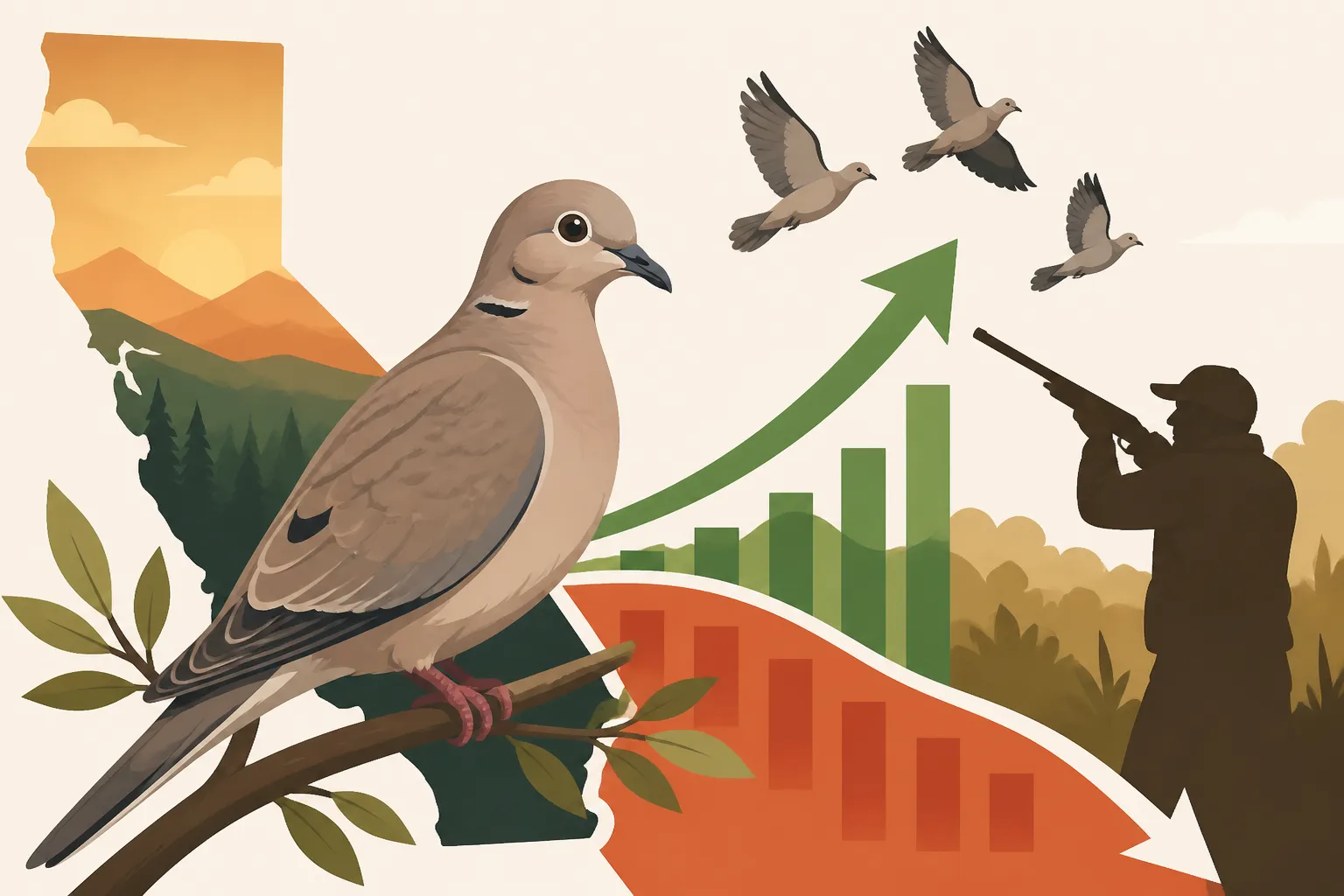
When it comes to mourning doves, the good news for California hunters and conservationists is that statewide populations have generally remained robust over many decades. While there can be year-to-year fluctuations driven by weather, breeding success, or localized habitat changes, the overall trend has shown remarkable stability. This is in contrast to some other regions of the country that have seen more significant declines. Our diverse agricultural landscape, combined with a varied network of natural habitats, seems to provide a resilient foundation for mourning doves here.
However, "stable" doesn't mean "invulnerable." Biologists continually monitor the data for subtle shifts. For example, specific regions within California might experience localized declines due to rapid urbanization, sustained drought, or changes in farming practices. A particular county might see fewer birds than it did ten or twenty years ago, even if the statewide numbers are holding steady. This often leads to that "where did all the birds go?" feeling for individual hunters. It's crucial for management to balance the statewide outlook with these regional variations. Despite these local pressures, California's mourning doves have generally proven themselves to be incredibly adaptable and resilient, which is excellent news for anyone who enjoys hunting or simply watching these beautiful birds.
White-winged Dove Expansion: A Success Story
For white-winged doves, California has largely witnessed a fascinating success story of range expansion and population growth. Historically, these birds were largely restricted to the lower Colorado River Valley and extreme southeastern parts of the state, closely tied to mesquite and saguaro habitats. However, over the past several decades, their presence has become increasingly common further north, particularly throughout the Central Valley. This expansion is often attributed to the proliferation of nut orchards (like almonds and pistachios) and various grain crops, which provide abundant food resources where they once were scarce.
The availability of reliable water sources in these agricultural areas, combined with suitable nesting sites in orchards and riparian zones, has allowed white-winged doves to colonize new territories. This population growth and northward spread represent a positive trend, offering new hunting opportunities in areas where they were once rare or absent. It’s a testament to the adaptability of the species when new, favorable habitats become available. This growth is closely tracked by CDFW to ensure that hunting seasons and bag limits remain appropriate for this expanding population. It's an example of how agricultural landscapes, despite their challenges, can sometimes inadvertently create new opportunities for wildlife.
Regional Variations: Where the Birds Are Thriving or Struggling
It's impossible to talk about statewide trends without acknowledging the significant regional variations in California. The state's immense size and diverse ecosystems mean that "dove population trends" are not monolithic. What's happening in the heavily agricultural Central Valley can be vastly different from what's occurring in the high Sierra Nevada or the arid Mojave Desert.
For instance, the Central Valley, with its vast grain and nut farming, often supports very high densities of mourning and white-winged doves, especially during migration and post-breeding. Conversely, in some rapidly urbanizing coastal regions, even with seemingly good habitat patches, overall dove numbers might be lower or declining due to constant human disturbance and habitat fragmentation. Upland areas, too, have their own dynamics. A good mast crop year might mean more band-tailed pigeons in the coastal ranges or Sierra foothills, while a dry year might push them lower in elevation in search of food. Hunters often experience this directly; one year a specific field is "loaded," the next it's "dead," even if the birds are just concentrated elsewhere due to local conditions. Tools like onX Layers for California Land Status can help hunters understand how different land uses might impact local bird concentrations. These regional differences highlight the importance of localized scouting and understanding the micro-climates and habitat types of your chosen hunting area.
Impact on Hunters and Management Strategies
The trends in dove populations directly influence how we, as hunters, plan our seasons and how the state manages this valuable resource. It's a relationship built on science, observation, and the shared goal of sustainable hunting. When populations are healthy, we enjoy generous seasons, but if trends shift, management has to adapt.
Bag Limits and Season Adjustments
One of the most immediate and tangible impacts of dove population trends on hunters comes in the form of bag limits and season lengths. These regulations aren't arbitrary; they are carefully set by state and federal agencies (as doves are migratory birds) based on population data, breeding success, and harvest estimates derived from surveys and banding data. If long-term trends indicate a decline in dove numbers across a broad region, or if breeding success has been particularly poor, regulators might implement more conservative bag limits or shorten the season to ensure the sustainability of the population.
Conversely, if populations are robust and stable, as mourning doves generally are in California, we often see consistent and relatively generous bag limits. These adjustments are designed to manage the harvest sustainably, ensuring that enough birds survive to breed and replenish the population each year. It’s a dynamic process, and while hunters might sometimes grumble about a reduced limit, these decisions are rooted in biological data. For those planning a hunt, knowing the current California Duck and Goose Bag Limits can give you an idea of how other migratory bird species are managed, as doves fall under similar federal oversight. Staying informed about the latest regulations is paramount for ethical and legal hunting.
Habitat Conservation Efforts
Beyond bag limits, understanding dove population trends also drives broader habitat conservation efforts. If surveys consistently show declines in certain regions, or for particular species like band-tailed pigeons, it signals a need for targeted habitat work. This can involve restoring riparian corridors, planting native seed-producing plants, creating diverse hedgerows, or managing agricultural lands in ways that benefit wildlife. For example, some landowners might work with conservation groups to leave standing strips of grain or delay tillage after harvest to provide crucial food for doves during migration.
The CDFW often collaborates with federal agencies like the U.S. Fish and Wildlife Service, as well as private landowners and conservation organizations, to implement these projects. Much of this work takes place on public lands, such as California Wildlife Areas, or through private land incentive programs. These efforts don't just benefit doves; they often create healthier ecosystems that support a wide array of wildlife. As hunters, supporting organizations that engage in habitat conservation is one of the most direct ways to ensure a future for the game we pursue. It's about securing the places where these birds live, breed, and feed.
Hunter's Role in Data Collection
Hunters themselves play a surprisingly crucial, though often unsung, role in dove population monitoring. Beyond simply enjoying the hunt, ethical hunters contribute directly to the data that informs management decisions. The most significant contribution is the reporting of banded birds. Every time a hunter reports a band number, they are providing a piece of critical information about that bird's survival, movement, and the overall harvest rate. Without hunter participation, the band-recovery program would be significantly less effective.
Furthermore, many state agencies conduct harvest surveys, sometimes requesting hunters to submit wing samples or fill out questionnaires about their hunt success. This data, too, helps biologists estimate the total harvest and gauge hunter effort. By participating in these voluntary programs, hunters become citizen scientists, directly contributing to the conservation and management of the species they cherish. It’s a powerful way to give back and ensure that future generations will have the same opportunities. You can often find information on how to report bands or participate in surveys through the CDFW website, or through resources provided by partners like GoHunt.
Future Outlook for California Dove Hunting
The future of dove hunting in California, like many outdoor pursuits, depends on a delicate balance of ecological health, effective management, and the continued passion of its participants. While there are always challenges, there are also significant opportunities to ensure that the thrill of a September dove hunt remains a cherished tradition for years to come.
Conservation Challenges and Opportunities
California's unique geography and growing population present both persistent challenges and remarkable opportunities for dove conservation. The primary challenge continues to be habitat loss and fragmentation, especially in the Central Valley and other agriculturally rich areas. As development expands and agricultural practices evolve, maintaining diverse habitats – including hedgerows, fallow fields, and riparian corridors – will be crucial. Drought, too, will remain a significant factor, requiring adaptive strategies to ensure water availability and healthy native forage.
However, there are also incredible opportunities. The sheer amount of public and private land dedicated to agriculture means that even small changes in farming practices can have a huge positive impact. Programs that incentivize "dove-friendly" farming, such as leaving waste grain or planting specific cover crops, can create vast foraging grounds. Continued investment in California Wildlife Areas and Ecological Reserves for game bird habitat is also vital. Furthermore, the strong hunting tradition in California means there's a passionate community ready to support conservation efforts, whether through purchasing licenses and stamps (which fund these programs) or participating in habitat improvement projects. Understanding how to navigate various lands, whether public or private, can lead to more consistent success, and you can get started by reading up on Hunting California's Sierra Nevada Backcountry or Hunting the Central Valley Flyway.
Adapting Hunting Strategies
Given the dynamic nature of dove populations and habitat, successful dove hunters in California will continue to be those who are adaptable and proactive. Relying solely on past success at a single spot might lead to disappointment if local conditions have changed. This means embracing scouting as a crucial part of the hunt, even more so than just a few decades ago. Understanding Reading Aerial Photos for Sierra Deer or similar tools can be adapted to identify likely dove hotspots.
Hunters should pay close attention to crop rotations in agricultural areas, observe water sources, and look for signs of new food availability like ripening sunflowers or freshly cut grain. The expansion of white-winged doves into new areas also means hunters might find success by exploring regions they previously overlooked. Furthermore, being prepared to hunt different types of terrain – from traditional agricultural fields to more rugged oak woodlands for band-tailed pigeons – will increase opportunities. Modern resources and mapping apps, often used for deer or elk, can be equally invaluable for doves, helping identify habitat features and access points.
Utilizing Resources for Insights
In today's interconnected world, hunters have access to more information than ever before to help them understand dove population trends and plan their hunts. State wildlife agency websites are always the first stop for current regulations, season dates, and often, summaries of recent population surveys. Beyond that, numerous online communities and digital platforms provide a wealth of shared knowledge.
Platforms like GoHunt, while often known for their big game drawing tools, can also be a valuable resource for staying informed about general wildlife trends and identifying potential hunting areas based on habitat types. These tools can help you analyze satellite imagery, track weather patterns that might impact bird distribution, and even connect with other hunters who share insights (respecting specific spot etiquette, of course!). Staying engaged with these resources, attending hunter education courses, and joining local conservation groups are all excellent ways to enhance your understanding, refine your strategies, and ensure you're part of the solution for healthy dove populations in California. Ultimately, the more informed and engaged we are as hunters, the better our chances of continuing to enjoy California's amazing dove hunting opportunities.
Disclaimer
This article is for general informational purposes only and does not constitute professional advice. Laws, prices and regulations vary by location and change over time. Consult a qualified professional for guidance on your specific situation.