California Grizzly Bear History and Extirpation
It’s a sobering thought, but the iconic grizzly bear, the very symbol emblazoned on our state flag, is no longer found in the wild within California. For many, it’s a quiet ache, a recognition of a profound loss in our state's rich natural history. This guide delves into the compelling and often tragic story of California's grizzly bears, tracing their reign across the Golden State, the pressures that led to their decline, and the ultimate, sorrowful chapter of their extirpation. Understanding this history is crucial not just for appreciating what once was, but for informing how we manage and protect the incredible wildlife we still have today.
A Land of Giants: California's Original Grizzly Domain
Imagine a California where immense, powerful grizzly bears roamed freely, from the coastal chaparral to the high Sierra peaks, and across the vast Central Valley. This wasn't a fairy tale, but the reality for thousands of years before European settlement. These magnificent creatures were an integral part of the state's ecosystem, true apex predators that shaped the landscape and left an indelible mark on the cultures that coexisted with them.
The Apex Predator's Reign
California's grizzlies, often considered a distinct subspecies or population of the North American grizzly (Ursus arctos horribilis), were truly impressive animals. They were larger than their black bear cousins, with a distinctive shoulder hump, a dish-shaped face, and formidable claws. Estimates suggest that at their peak, between 5,000 and 10,000 grizzlies lived across California. Their diet was incredibly diverse, reflecting the bounty of the land: roots, berries, acorns, grasses, insects, fish, and the carcasses of larger game. They were omnivores, but their sheer size and strength made them capable hunters. From the salmon runs of the north to the oak groves providing abundant acorns in the foothills, these bears found sustenance in almost every corner of the state. Their presence kept other wildlife populations in check, playing a vital role in the intricate balance of nature.
They were not just a formidable presence; they were a force of nature that commanded respect. The early Native American tribes, who shared the land with these bears for millennia, often viewed them with a mixture of reverence and caution, incorporating them into their spiritual beliefs, stories, and art. There was a profound understanding of the grizzly's power and its place in the world, a recognition of its wildness that existed long before any fences or property lines were ever drawn.
Early Encounters and Cultural Impact
When Spanish explorers and missionaries first arrived in California in the 18th century, they encountered a landscape teeming with grizzlies. These bears quickly became a symbol of the wild, untamed nature of the new frontier. Historical accounts are filled with tales of encounters, some fearful, some awe-inspiring. Early Californios even developed a dangerous sport known as "bear and bull fights," pitting a captured grizzly against a bull, highlighting the bear's immense strength and ferocity. This brutal spectacle, while now unimaginable, speaks to the profound impression these animals made on the human psyche.
The grizzly's image, even then, began to permeate the local culture. It was seen as a creature of immense power, resilience, and independence. It’s no wonder that as California transitioned into statehood, the grizzly bear, specifically "Monarch" (a grizzly captured in the late 19th century), became the model for the bear on our state flag. It was chosen to represent the strength, sovereignty, and wild spirit of California itself. Yet, even as it ascended to this symbolic status, the fate of the living grizzlies was already tragically sealed. This duality – reverence for the symbol, destruction of the reality – is a poignant aspect of their history.
The Inevitable Conflict: Westward Expansion's Toll
The mid-19th century brought a seismic shift to California. The discovery of gold in 1848 triggered an unprecedented influx of people, fundamentally altering the landscape and setting the grizzly bear on an irreversible course toward extirpation. This era marked a direct and often violent clash between human expansion and the grizzlies' ancient domain.
Gold Rush and Population Boom
The Gold Rush brought hundreds of thousands of prospectors, settlers, and entrepreneurs to California in a remarkably short period. These new arrivals didn't come to coexist with wild animals; they came to conquer the land and extract its riches. Towns sprung up overnight, roads were forged, and wilderness areas were rapidly developed. This meant an immediate and dramatic loss of grizzly habitat. Forests were cut for timber, rivers were diverted and polluted, and vast tracts of land were converted for agriculture and ranching to feed the booming human population.
As people spread into traditional grizzly territories, conflicts became inevitable and increasingly frequent. Grizzlies, accustomed to foraging freely, began to prey on the settlers' livestock – cattle, sheep, and horses. To the new arrivals, grizzlies were not just wild animals; they were dangerous pests that threatened their livelihoods and safety. The perception of the grizzly quickly shifted from a formidable, respected wild creature to an enemy to be eliminated. There was little understanding of ecological balance or the long-term consequences of such widespread eradication efforts. For those trying to make a living in a harsh new environment, the grizzly was simply a problem to be solved with a rifle.
The Era of Organized Hunts and Bounties
The drive to eliminate grizzlies wasn't left to individual encounters alone. It quickly became an organized, systematic effort. Professional bear hunters emerged, making a living by tracking, trapping, and killing grizzlies. Bounties were often placed on bears, incentivizing their destruction. The state and local governments saw it as a necessary measure to protect human settlements and agricultural interests. Imagine the mindset of the time: bounties were not just for bears, but for mountain lions and coyotes too, reflecting a prevalent view that predators were inherently "bad" and needed to be removed.
Methods of eradication were often brutal. Large traps, poison baits, and organized hunting parties with dogs became common. Hunters boasted of their kills, and newspaper articles of the era often celebrated the demise of "man-eating" or "livestock-destroying" bears. There was a competitive aspect to it, a race to eliminate the bears that were seen as an obstacle to progress. This intense, unchecked hunting pressure, combined with the rapid destruction of their habitat and food sources, created a perfect storm for the grizzly's downfall. Unlike today, where robust data and tools like GoHunt help us understand current game populations and habitat health, there was no comprehensive understanding of how many bears existed or the impact of their removal. It was a time of boundless resources, or so it seemed, and the notion of conserving wildlife was simply not part of the mainstream consciousness. This period highlights a stark contrast to modern California Hunter Education Requirements, which emphasize conservation and ethical hunting.
The Long Goodbye: Extirpation from the Golden State
The systematic campaign against the grizzly bear in California was shockingly effective. What took millennia to establish was undone in little more than half a century. The vibrant grizzly populations that once roamed freely across the state were steadily pushed to the brink, retreating to the most remote and inhospitable corners of the wilderness until, one by one, they disappeared forever.
The Last Stands and Lingering Sightings
As the 20th century dawned, the vast majority of California's grizzly bears were already gone. The last remnants of the population clung to existence in the most isolated mountain ranges, far from human settlements and ranchlands. The remote areas of the Southern California Coast Ranges, particularly the rugged mountains of Ventura and Los Angeles counties, became their final redoubts. These were places where the terrain was so rough, the chaparral so thick, and human presence so sparse, that a few tenacious grizzlies managed to evade hunters and trappers for a bit longer.
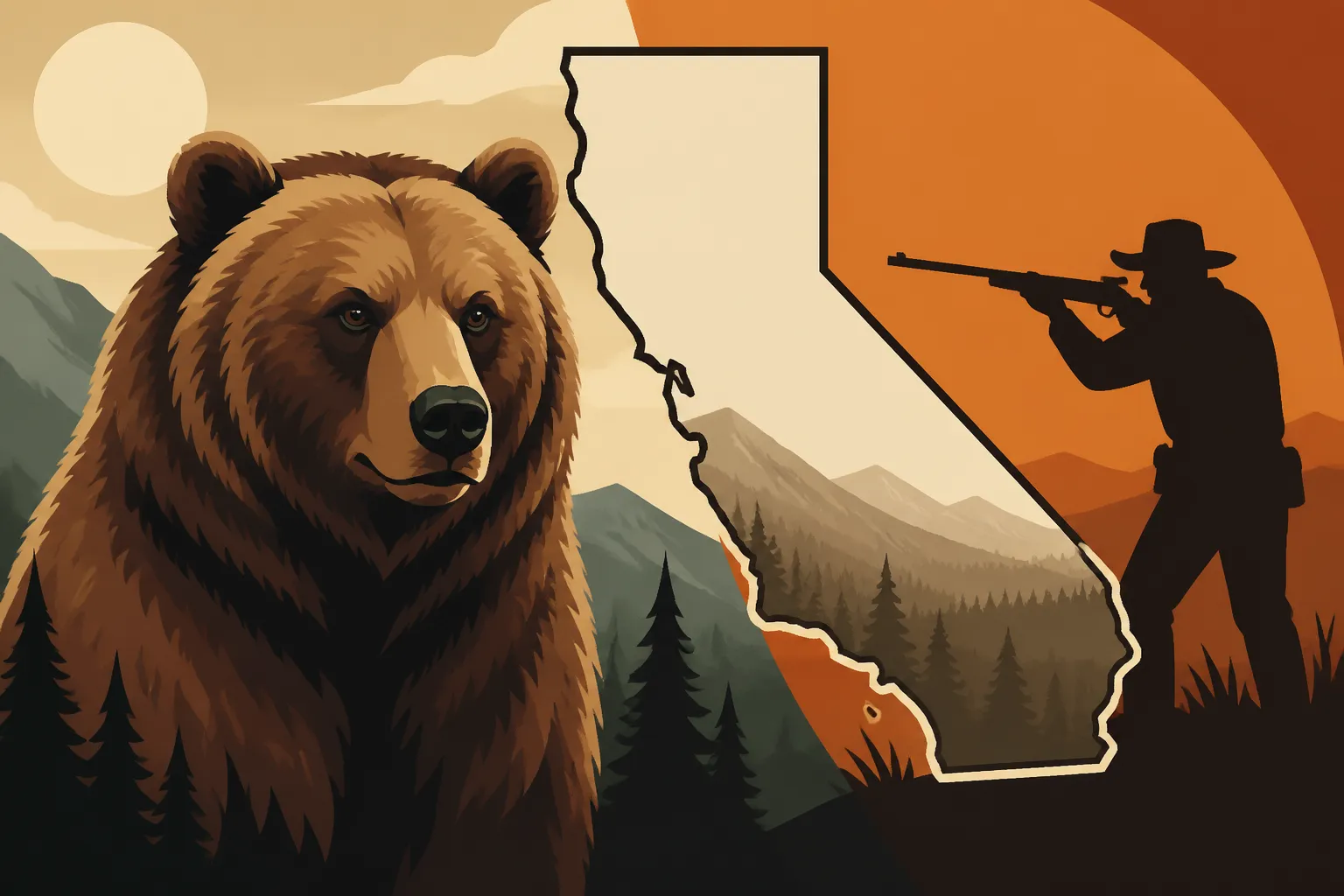
The story of the "last known" wild California grizzly is a poignant one, steeped in both legend and historical record. It's generally accepted that the very last grizzly was sighted and killed in August 1922 in Tujunga Canyon, in the mountains north of Los Angeles. While there were occasional unconfirmed reports and rumors in subsequent years, this event marked the official end of the wild grizzly in California. Imagine the profound quiet that must have settled over those canyons, a silence that spoke volumes about the loss of an apex predator. The disappearance wasn't a sudden cataclysm, but a slow, agonizing fade, leaving behind only memories and the stark image on our flag. It serves as a powerful reminder of how quickly even the most robust wildlife populations can be decimated without careful management.
Why They Vanished: A Confluence of Factors
The extirpation of the California grizzly was not due to a single cause, but a tragic combination of pressures that proved insurmountable. Primarily, unchecked hunting was the most direct factor. Without any bag limits, seasons, or protective laws, grizzlies were relentlessly pursued. This was exacerbated by widespread habitat destruction and fragmentation, driven by the Gold Rush and the subsequent expansion of agriculture and ranching. As their wild lands disappeared, their natural food sources dwindled, forcing them into conflict with humans over livestock, further fueling the drive for their eradication.
Compounding these issues was a profound lack of scientific understanding of bear populations and ecological principles. There were no wildlife biologists studying their numbers, migration patterns, or breeding habits. Instead, fear and economic interest drove policy. This is a stark contrast to how modern species, like our Columbia Blacktail and Mule Deer in California or Wild Pigs Across California, are managed today, with extensive research and regulated seasons designed for sustainable populations. The grizzly's fate serves as a powerful cautionary tale about the consequences of human development and exploitation when divorced from conservation ethics and ecological foresight.
| Event / Period | Approximate Dates | Impact on Grizzlies |
|---|---|---|
| Pre-European Contact | ~10,000 BCE – 1769 CE | Thriving populations, apex predator, cultural reverence |
| Spanish Colonization | 1769 – 1821 | First conflicts, some hunting, local impact |
| Mexican Period | 1821 – 1848 | Increased ranching, organized "bear and bull" fights |
| California Gold Rush | 1848 – 1855 | Massive human influx, habitat destruction, intense hunting |
| Post-Gold Rush & Settlement | 1850s – 1900s | Widespread systematic eradication, bounties, agriculture expansion |
| Last Confirmed Wild Grizzly | August 1922 | Killing of the last known wild grizzly in Tujunga Canyon |
| Official Extirpation | Early 1920s | Declared extinct from the wild in California |
Beyond the Emblem: Lessons for Modern California Wildlife Management
The loss of the California grizzly bear is a historical scar, but it also offers invaluable lessons for how we approach wildlife management and conservation today. It compels us to reflect on our relationship with the natural world and to build a future where such tragedies are not repeated.
Understanding Ecosystem Fragility
The grizzly's story underscores the profound fragility of even the most powerful ecosystems when faced with rapid, unchecked human expansion. It teaches us about the critical importance of apex predators in maintaining ecological balance. When grizzlies were removed, it wasn't just the absence of a large bear; it was the disruption of an entire web of life. Their role in seed dispersal, carcass clean-up, and regulating herbivore populations was lost, creating ripple effects throughout the environment.
Today, this understanding guides modern conservation efforts for species that are still with us. For example, the careful management of Black Bears in California reflects a commitment to learning from past mistakes. We now know that protecting habitat, ensuring connectivity between wild spaces, and understanding predator-prey dynamics are essential. Organizations and individuals passionate about hunting and conservation often use sophisticated tools, like the mapping and data provided by GoHunt, to analyze habitat, understand migration corridors, and inform scouting efforts, all contributing to a more informed approach to managing our precious wildlife resources. This dedication to understanding the landscape and its inhabitants is a direct descendant of the hard lessons learned from the grizzly's disappearance.
The Role of Hunter Education and Ethics
The era of grizzly extirpation was characterized by a mindset vastly different from today's ethical hunting principles. There was little to no concept of sustainable harvest, animal welfare, or conservation. The focus was on removal, not management. This historical context makes modern hunter education all the more vital. Today, hunting in California is governed by strict regulations, bag limits, and seasons, all designed to ensure healthy, sustainable wildlife populations. Hunters are often the first line of conservation, contributing significantly to wildlife research, habitat improvement, and anti-poaching efforts.
The evolution from eradication to conservation has been a long journey. Hunters today are educated not only on game laws but also on wildlife biology, ethical pursuit, and the importance of habitat preservation. When you are planning a hunt, whether it's for Wild Pig Hunting California Year-Round or Spring Turkey Hunting in California, resources like the CDFW website and platforms like GoHunt provide crucial information on current regulations, draw odds, and public land access, all aimed at fostering responsible and informed participation in the outdoors. The ghost of the California grizzly serves as a constant reminder that our actions have consequences, and that diligent, ethical stewardship is the only path forward for future generations to experience the rich hunting heritage and diverse wildlife California still proudly boasts.
Disclaimer
This article is for general informational purposes only and does not constitute professional advice. Laws, prices and regulations vary by location and change over time. Consult a qualified professional for guidance on your specific situation.