California Gopher Snake Range
It's a beautiful morning out there, and as California hunters, we spend a lot of time with our boots on the ground, truly immersed in nature. That means we inevitably share the landscape with all sorts of critters, including snakes. For many, a sudden encounter with a slithering friend can bring a jolt of anxiety, especially when you're not sure if it's harmless or something to be truly cautious of. This guide aims to clear up some of that confusion by detailing the range and habitat of the California gopher snake, helping you confidently identify and understand these common reptiles while you're out chasing game.
Understanding the Widespread Footprint of California Gopher Snakes
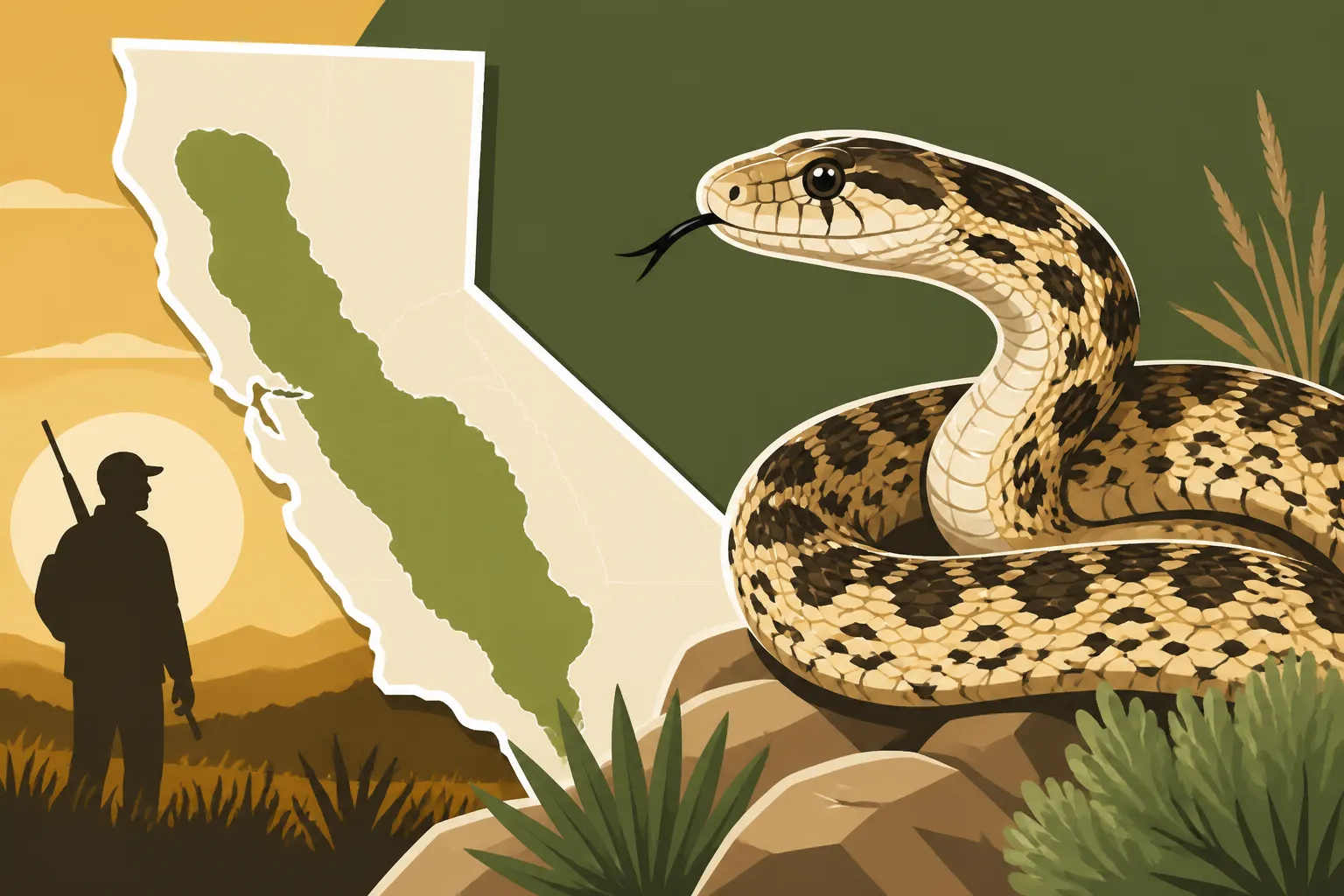
When you think about California's incredibly diverse landscapes, from sun-baked deserts to cool, misty coastal forests and towering mountains, it might seem impossible for one snake species to call it all home. Yet, the California gopher snake (scientific name Pituophis catenifer catenifer) manages to do just that, making it one of the most commonly encountered snakes across almost every corner of our golden state. Their adaptability is truly remarkable, allowing them to thrive where many other reptile species are far more specialized.
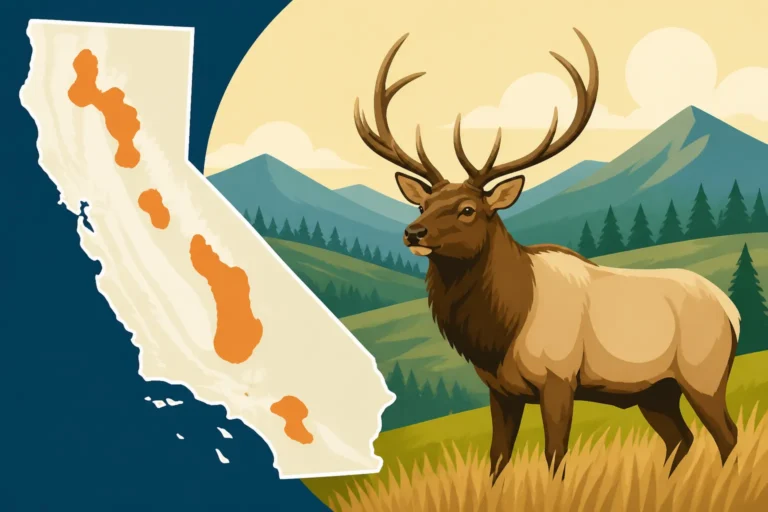
These snakes are masters of generalized survival, not picky eaters, and not overly particular about climate beyond needing warm periods for activity. This means that whether you're chasing blacktail deer in the brushy coastal hills, hunting wild pigs in the oak woodlands of the Central Coast, or even glassing for mule deer on the fringe of the Mojave, there's a good chance you're sharing that space with a gopher snake. They are not restricted to just a few isolated pockets; rather, they have a near-statewide distribution, absent primarily from the highest alpine elevations where the climate is simply too harsh year-round. This broad range often surprises people who might expect them to be more localized, but it speaks to their incredible resilience and success as a species.
Their prevalence is also a testament to their diet. Gopher snakes are constrictors, and their primary food source is small mammals – particularly gophers, hence their common name, but also mice, rats, and even young rabbits. They also eat birds and their eggs. Given that these prey animals are abundant in nearly all terrestrial habitats across California, it creates a banquet for the gopher snake, allowing them to maintain robust populations wherever they can find a comfortable den. This wide menu and adaptable nature means they are often a significant, albeit quiet, presence in almost any hunting area you visit.
Preferred Habitats and Microclimates Across California
While gopher snakes are found almost everywhere, they do have certain habitat preferences that can help you anticipate where you might encounter them more frequently. Knowing these microclimates and terrain types can add another layer to your outdoor awareness, whether you're navigating a steep canyon or traversing an open field.
Oak Woodlands and Foothill Country
This is prime gopher snake territory. The rolling hills of California's coastal ranges and inland foothills, often characterized by scattered oak trees, chaparral, and grassy clearings, offer a near-perfect balance for these snakes. The dappled shade of the oaks provides refuge from intense sun, while the rocky outcrops and abundant downed timber create excellent denning and hiding spots. More importantly, these areas are teeming with the rodents and ground-nesting birds that make up a significant portion of their diet. If you're Hunting Coastal Range Oak Woodlands or any similar mixed habitat, you'll likely find gopher snakes basking on trails, crossing dirt roads, or tucked away under logs. They blend in incredibly well with the leaf litter and dry grass, making them easy to overlook until you're right on top of them.
Grasslands and Agricultural Edges
The vast Central Valley and its surrounding grasslands, including the edges of agricultural fields, are another stronghold for gopher snakes. While these open areas might seem exposed, they provide an unending supply of prey. Farmers often struggle with rodent populations, and gopher snakes are excellent natural pest control. They'll burrow into the loose soil, navigate irrigation ditches, and patrol field edges where cover meets cultivated land. Here, they often encounter prey like voles and field mice. When you're spending time in these flatter, open environments, perhaps setting up a blind for waterfowl or scouting for Wild Pig Hunting California Year-Round, remember that gopher snakes are very much a part of that ecosystem. They're often found along fencerows, berms, and road shoulders where they can bask and hunt.
Desert and Arid Regions
Even in California's often harsh desert environments, gopher snakes have found a way to thrive. While you might associate deserts with rattlesnakes, gopher snakes are also well-adapted to these arid conditions. They seek out rocky washes, sparse scrublands, and areas with scattered creosote bushes, using the limited vegetation and rocky terrain for cover. Their burrowing abilities become even more critical here, allowing them to escape the scorching midday sun and hunt during cooler morning or evening hours. If you're venturing out for Hunting California's BLM Desert Land or looking for sign in a Hunting a California BLM Desert Wash for Deer, understand that these snakes will be present. They often take refuge under rocks, in abandoned burrows, or deep within the root systems of desert plants.
Mountain Foothills and Lower Elevations
As you ascend into the Sierra Nevada or other mountain ranges, gopher snakes can still be found, though their numbers tend to thin out at higher elevations. They prefer the more moderate climate of the foothills and lower montane zones, where coniferous forests begin to blend with oak woodlands and chaparral. Here, they utilize rock slides, fallen timber, and the edges of meadows. They are less common in dense, unbroken conifer forests or true alpine environments, which are too cold and often lack sufficient small mammal prey. When you're tackling the initial climbs into Hunting California's Sierra Nevada Backcountry, keep an eye out for them, especially during the warmer months when they might be basking on sun-exposed rocks or trails. Understanding the thermal belts and preferred cover can help you predict their presence.
Here's a quick overview of their habitat preferences:
| Habitat Type | Typical Prey Availability | Cover & Basking Opportunities | Key Characteristics |
|---|---|---|---|
| Oak Woodlands/Foothills | Rodents, ground birds, eggs | Rocks, logs, brush, oak shade | Diverse, moderate, good blend of sun/shade |
| Grasslands/Agricultural Edges | Gophers, mice, voles, rabbits | Burrows, tall grass, fencerows, field borders | Open, prey-rich, prone to burrowing |
| Desert/Arid Regions | Rodents, lizards, birds | Rocks, burrows, sparse shrubs, washes | Hot, dry, reliance on burrows for thermoregulation |
| Lower Mountain Elevations | Rodents, chipmunks, birds | Rock slides, logs, forest edges | Cooler, mixed vegetation, less common at high altitudes |
Gopher Snake Activity Patterns and Seasonal Movements
Just knowing where gopher snakes live isn't enough; understanding when they're active is also crucial for any hunter. Their activity patterns are highly seasonal and temperature-dependent, directly impacting when and where you're most likely to encounter them during your hunts.
Gopher snakes, like most reptiles in California, enter a state of brumation (similar to hibernation but specific to reptiles) during the colder months. This means from late fall through much of winter, you're highly unlikely to see one. They'll retreat to underground dens, rock crevices, or deep burrows to escape the freezing temperatures. This often aligns with the later rifle deer seasons, meaning snake encounters are less common, but certainly not impossible if you hit a warm spell.
Their peak activity begins in spring as temperatures rise, usually around March or April. This is when they emerge to bask, hunt, and seek mates. Throughout the summer and early fall, when many of California's archery and early rifle seasons are in full swing, gopher snakes are quite active. During the hotter parts of summer, especially in the Central Valley or desert, they tend to be most active during the cooler parts of the day – early mornings and late evenings. You might spot them crossing a road at dawn as you head to your hunting spot or stretched out on a warm rock just before sunset. As temperatures cool in late September and October, their activity might shift more towards midday basking to soak up as much warmth as possible before brumation. This seasonal ebb and flow means that your chance of seeing a gopher snake is directly tied to the thermometer. When it's warm, they're out and about, hunting and moving. When it's cold, they're hunkered down.
Understanding these patterns can really help your scouting efforts. For example, if you're out Scouting California Public Land Before Season in early spring, knowing that snakes are just emerging means you might find them in sun-exposed areas more often. Or, if you're hunting during the scorching August heat of Hunting the Zone C August-September Archery Window, you'll be more aware of potential snake activity during the cooler hours when you're also likely to be most active. Using tools like GoHunt can help you overlay terrain and understand sun exposure on potential basking spots. Always remember that a snake needs warmth to function, so think about where the sun will hit the ground first or last, or where rocks might hold residual heat.
Distinguishing Gopher Snakes in the Field for Peace of Mind
One of the biggest anxieties for hunters is mistaking a harmless snake for a venomous one. The California gopher snake often bears the brunt of this confusion because, when threatened, it mimics a rattlesnake remarkably well. It will hiss loudly, flatten its head into a triangular shape to appear larger, and even vibrate its tail rapidly, which can sound uncannily like a rattle if it's hitting dry leaves or grass. This defensive display often leads to unnecessary fear, or worse, unnecessary harm to a beneficial reptile. Learning to tell the difference isn't just about safety for you, but also about appreciating our wildlife responsibly.
Here are some key characteristics to look for when trying to identify a California gopher snake versus a rattlesnake:
- Head Shape: While a gopher snake can flatten its head to appear triangular, a rattlesnake's head is always distinctly triangular and much broader than its neck. A gopher snake's head is generally more oval or elongated and not much wider than its body.
- Pupils: Gopher snakes have round pupils, similar to humans. Rattlesnakes, being nocturnal or crepuscular hunters, have elliptical or vertical, cat-like pupils. This can be tricky to see from a distance, but it's a definitive identifier up close.
- Scales: Gopher snakes have smooth or weakly keeled (ridged) scales, giving them a slightly less rough appearance. Rattlesnakes have heavily keeled scales, which contribute to their rougher, duller look.
- Tail: This is the most obvious difference. A gopher snake's tail tapers to a point. Even if it's vibrating its tail, there will be no rattle. A rattlesnake always has a segmented rattle at the end of its tail, though sometimes segments can be broken off, especially in younger snakes. If you see a button or any form of rattle, it's a rattlesnake.
- Coloration and Pattern: Both can have complex patterns, but gopher snakes often have a series of dark blotches along a lighter background, sometimes yellowish, cream, or brownish. Rattlesnakes tend to have more distinct, often diamond-shaped or banded patterns. However, color can vary widely even within species, so don't rely solely on this.
When you encounter a snake in the field, the best rule of thumb is to give it space. Most snakes, whether venomous or not, want nothing to do with you and will try to escape. If you're on a trail and a snake is blocking your path, simply walk around it at a safe distance. There's no need for confrontation. Taking a moment to calmly observe from a respectful distance can help you identify it without putting yourself or the snake at risk. Many hunters carry a good pair of binoculars, which can be invaluable for identifying wildlife from a safe distance, including snakes. Using a resource like GoHunt's mapping features can help you note areas where you've seen snakes, allowing you to be more aware on subsequent visits. Just remember, these snakes are an important part of the ecosystem, helping to control rodent populations that might otherwise impact game habitat. Let's appreciate them for their role in the wild and respect their space.
| Feature | California Gopher Snake | Rattlesnake |
|---|---|---|
| Head Shape | More oval/elongated; can flatten into a triangle when threatened | Distinctly triangular, much wider than neck |
| Pupils | Round (like a human's) | Elliptical/Vertical (cat-like) |
| Tail End | Tapers to a point; no rattle | Has a distinct segmented rattle |
| Body Scales | Smooth or weakly keeled | Heavily keeled, giving a rougher appearance |
| Defensive Sound | Hisses loudly, vibrates tail (no true rattle sound) | Distinct buzzing sound from rattle |
| Behavior | Often freezes, then tries to escape; mimics rattle display | Coils, may rattle immediately; less likely to flee first |
Disclaimer
This article is for general informational purposes only and does not constitute professional advice. Laws, prices and regulations vary by location and change over time. Consult a qualified professional for guidance on your specific situation.