California Boone and Crockett Blacktails
Oh, the elusive California Boone and Crockett blacktail buck. Just uttering those words can conjure up images of massive, dark-horned giants slipping through the coastal fog or the high country timber. For many of us who hunt California, chasing a record book blacktail feels like chasing a ghost – an almost mythical endeavor. The truth is, while rare, these magnificent animals do exist, and this guide is dedicated to pulling back the curtain on what it truly takes to pursue and potentially tag a California blacktail worthy of the B&C record books. It's a journey of patience, habitat knowledge, and a little bit of luck.
The Reality of Boone and Crockett Blacktails in California
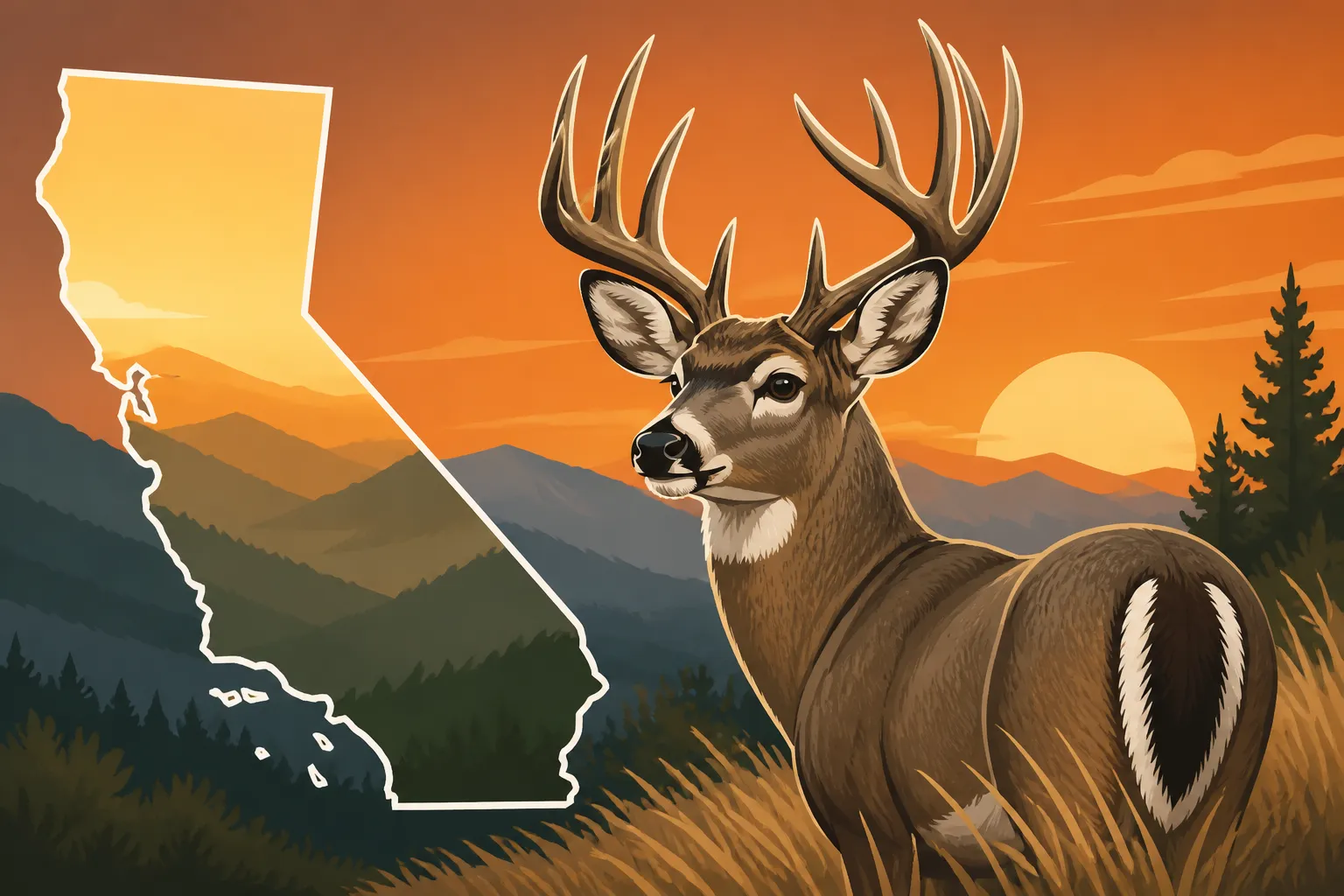
Let's be honest, when most people think of Boone and Crockett deer, their minds often drift to the massive typical whitetails of the Midwest or the impressive mule deer of the Rockies. California's Columbia blacktail deer, while a true trophy in their own right, are generally smaller-bodied and sport more compact, often forked antlers compared to their larger cousins. This doesn't make them any less challenging to hunt, but it does mean that a "record book" blacktail in California is truly a special creature, demanding an extraordinary combination of factors to reach that status.
Understanding the Blacktail Deer and B&C Minimums
The Columbia blacktail deer (Odocoileus hemionus columbianus) is a distinct subspecies, primarily found west of the Cascade and Sierra Nevada mountain ranges, extending from central California up into British Columbia. In California, their range stretches from the coastal redwood forests to the oak woodlands and chaparral of the foothills, and up into the lower elevations of the Sierra Nevada. To truly understand these deer, it helps to read up on the nuances of Columbia Blacktail and Mule Deer in California and how their ranges and characteristics differ. They are known for their dark tails, generally smaller body size compared to mule deer, and antlers that typically form forks and points, often lacking the deep mass and spread seen in other deer species.
The Boone and Crockett Club sets high standards for entry into its record books. For a typical Columbia blacktail deer, the minimum entry score is often around 135 points, while non-typical antlers have a higher minimum. These scores are calculated based on a complex system measuring main beam length, spread, circumference, and the length of each point, with deductions for asymmetry. When you look at the average blacktail buck harvested in California, a 135-inch score represents an exceptionally old and well-developed animal. It's a score that requires impressive main beam length, good mass throughout, and healthy, symmetrical points – a true unicorn for many hunters. The sheer rarity of hitting that mark is what makes the pursuit so captivating, and for many, a lifetime goal.
Historical Records and Prime Regions
California does indeed have a storied history of producing Boone and Crockett blacktails, albeit in smaller numbers compared to other states for other deer species. When we look at the historical data, a few regions consistently pop up as having the genetics and habitat to produce these giants. The humid, nutrient-rich environments of the North Coast and specific areas within the Coastal Range, particularly those with good private land management or difficult-to-access public tracts, have shown a tendency to grow larger-racked deer. Places like Humboldt, Mendocino, and Trinity counties often get mentioned in hushed tones among serious blacktail hunters. These areas typically offer consistent rainfall, diverse forage, and often, more security cover for bucks to grow old.
It’s not just about lush greenery, though. The influence of age, genetics, and low hunting pressure cannot be overstated. A buck needs time – typically 6.5 years or more – to truly express its genetic potential in terms of antler growth. This means prime regions are often those where bucks can mature undisturbed, either due to thick, impenetrable cover, limited public access, or specific management practices that favor older age classes. While California Annual Deer Harvest numbers give us a general idea of hunter success, they don't necessarily highlight where the truly exceptional animals are taken. Hunters looking for those top-tier bucks often spend years scouting specific drainages or working to gain access to private ground that has been managed for quality, not just quantity.
Key Factors for Growing Giant Blacktail Antlers
Anyone who has spent time in the field knows that antler size isn't just about luck. It's a complex interplay of environmental and biological factors, and for a blacktail to reach Boone and Crockett status, almost all these factors need to align perfectly for an extended period. It’s a testament to the animal and its environment when it happens.
Age and Genetics: The Unsung Heroes
The single most critical factor in a buck growing a Boone and Crockett caliber rack is age. Period. A young buck, no matter how good its genetics or how rich its diet, simply hasn't had enough seasons to put on the kind of mass and length required. Think of it like a fine wine – it needs time to mature and develop its full character. For blacktails, this typically means a buck needs to survive multiple hunting seasons and reach at least 6.5 to 8.5 years old. During these years, its body is no longer focused on growing, but rather on antler production. This is why areas with lower hunting pressure or thick, inaccessible terrain where bucks can escape hunters for several years are so vital. It’s also why understanding Where California Blacktail Bucks Bed can be crucial for locating these older, wiser animals.
Beyond age, genetics play a huge, albeit uncontrollable, role. Just like people, some deer are simply predisposed to growing larger, more impressive antlers. You can have two bucks of the same age, living in the same prime habitat, and one will consistently grow a larger rack than the other. This genetic lottery means that even in the best spots, finding that specific buck with the right genetic makeup is part of the challenge. While hunters can't alter a deer's DNA, they can focus their efforts on regions that have historically produced larger deer, signaling a prevalence of strong antler-growing genetics within the local herd.
Habitat and Nutrition: Fueling the Rack
Even with age and good genetics, a buck still needs a consistent supply of top-notch nutrition to fuel antler growth. Antlers are essentially bone, and producing that bone every year requires a massive intake of protein, minerals (especially calcium and phosphorus), and energy. California's diverse landscape offers varying levels of this crucial nutrition. During periods of good rainfall, especially in spring, forbs and new browse shoots are abundant, providing a protein boost when bucks are in velvet. Later in the year, acorns from oak woodlands become a critical fat and energy source. A prolonged drought, on the other hand, can severely impact antler growth, as deer must prioritize survival over rack development.
Think about areas with robust stands of various oak species, dense riparian corridors providing lush browse, and access to water sources even in the driest months. These are the kinds of places where a buck can consistently find the calories and nutrients it needs. Thermal cover (dense canopy for shade in summer, protection from cold in winter) and security cover (thick brush, steep canyons, or heavy timber where deer feel safe from predators, including hunters) are also critical. A buck that doesn't feel secure enough to feed openly or to bed down without constant disturbance won't thrive. The combination of abundant, high-quality forage and ample, undisturbed cover is the perfect recipe for a blacktail to reach its full potential.
Strategies for Pursuing a California Boone and Crockett Blacktail
So, you're dreaming of that B&C blacktail. How do you go from dream to reality? It's not easy, and it often involves a blend of meticulous planning, relentless effort, and a willingness to think outside the box. This isn't your average deer hunt; it's a dedicated pursuit of a truly exceptional animal.
Deep Scouting and Accessing Quality Habitat
The journey to a record-book blacktail begins long before hunting season opens, often a year or more in advance. It's all about deep, strategic scouting. You need to become an absolute expert on your chosen hunting area, understanding every ridge, every drainage, and every water source. Using tools like satellite imagery and topographical maps is essential for identifying potential bedding areas, travel corridors, and feeding grounds that might hold older bucks. Programs and apps like GoHunt can be invaluable here, offering detailed maps, public land overlays, and information that can help you pinpoint those difficult-to-access pockets that often hold less-pressured, mature deer. You might even find insights on Scouting California Public Land Before Season that give you an edge.
Once you've identified promising areas from afar, it's time for boots-on-the-ground reconnaissance. Look for physical sign that indicates the presence of mature deer: large tracks, heavy rub lines on substantial trees, and big, deep scrapes. Pay close attention to the quality of the forage and the density of the cover. Are there areas that offer excellent food, water, and security within a relatively small radius? These are the sanctuaries where a trophy blacktail might spend its life. Often, the best spots are those that require significant effort to reach – steep climbs, long hikes, or navigating dense chaparral. This natural barrier to entry often means less human pressure, which is exactly what an older buck needs to survive. Consider focusing on Best California Zones for Big Bucks as a starting point for your research.
Patience, Persistence, and Hunting Smart
Hunting a B&C blacktail is not a casual endeavor. It requires immense patience and an unwavering commitment. You might spend an entire season, or several, without even seeing a buck that meets your criteria, let alone getting a shot opportunity. This is where persistence comes in. Don't get discouraged by empty sits or long days without spotting a shooter. Every moment in the field, even when unproductive, adds to your knowledge of the terrain and the deer.
Hunting smart means more than just being in the woods. It means understanding deer behavior, particularly how they react to pressure. Mature blacktails are incredibly wary and will quickly adapt to avoid human encounters. This often necessitates hunting remote areas, focusing on weekdays, or waiting for adverse weather conditions that keep other hunters at home. It also means mastering techniques like still-hunting through thick timber, using binoculars and spotting scopes for Glassing a Canyon for a Bedded Buck from a distance, and understanding how Wind and Thermals in Steep Sierra Country dictate deer movement, especially at dawn and dusk. Setting up on a Hunting a Ridge-Top Saddle at First Light or a key pinch point can pay off.
Your gear also plays a crucial role. High-quality optics, such as those discussed in Optics for California's Open-Country Deer Hunting, are non-negotiable for spotting animals in challenging terrain or at long distances. A reliable mapping system, perhaps integrated with your GoHunt subscription, will keep you oriented in unfamiliar territory. Ultimately, the smart hunter is the one who puts in the time, learns the land and the animals, and is prepared to wait for that single, perfect opportunity. You'll likely also want to be very familiar with California's Multi-Zone Deer Season System and understand how to navigate applying for specific tags through The California Big Game Drawing Explained.
Documenting and Submitting a Potential Record Book Buck
The moment of truth arrives, and you've managed to harvest what you believe is a record-book California blacktail. This is where meticulous attention to detail becomes paramount. The hard work isn't quite over; now you need to ensure the antlers are properly prepared for official scoring.
Field Judgement and Ethical Harvest
Field judging a deer's antlers for B&C potential can be incredibly challenging, especially in the heat of the moment. Optics help, but distance, light conditions, and the buck's movement can all conspire to make an accurate assessment difficult. Many experienced hunters will tell you that true B&C blacktails look "different" – their mass, length, and overall presence simply stand out. While aiming for a specific score, the ethical harvest is always the top priority. If you commit to the shot, ensure it's a clean, humane one. Familiarize yourself with California's legal buck requirements, as many zones have antler point restrictions. Generally, a legal buck must have at least one fork in its antlers.
Once the animal is down, take a moment to appreciate the incredible achievement. This buck has defied the odds, surviving years of predators, harsh weather, and hunting pressure to reach this exceptional size. Respect for the animal and the journey is paramount. Proper field dressing immediately is critical, especially in California's often warm hunting weather, to ensure the meat is well-preserved.
Caping, Drying, and Official Scoring
To have your blacktail considered for the Boone and Crockett record book, you need to preserve the skull plate with the antlers intact. This means carefully caping the deer and ensuring the skull plate is cut properly to include all the necessary points of measurement. After the initial field care, the skull plate with antlers must undergo a mandatory 60-day drying period at average room temperature and humidity. This allows any moisture to leave the antlers, preventing shrinkage that could affect the final score. Do not rush this step, as an inaccurate green score can be disappointing later.
After the 60-day drying period, you'll need to contact an official Boone and Crockett measurer. These individuals are certified and trained in the precise scoring methods required by the club. They will meticulously measure various aspects of the antlers, including main beam length, circumference at specific points, the length of all abnormal and normal points, and the greatest spread. Deductions for asymmetry are also factored in. The measurer will fill out an official score sheet, and if your buck meets or exceeds the minimum entry score, you can then proceed with the submission process to the Boone and Crockett Club. Remember, precise documentation, often aided by detailed hunt records that a service like GoHunt can help you maintain, will make this final step much smoother.
Disclaimer
This article is for general informational purposes only and does not constitute professional advice. Laws, prices and regulations vary by location and change over time. Consult a qualified professional for guidance on your specific situation.