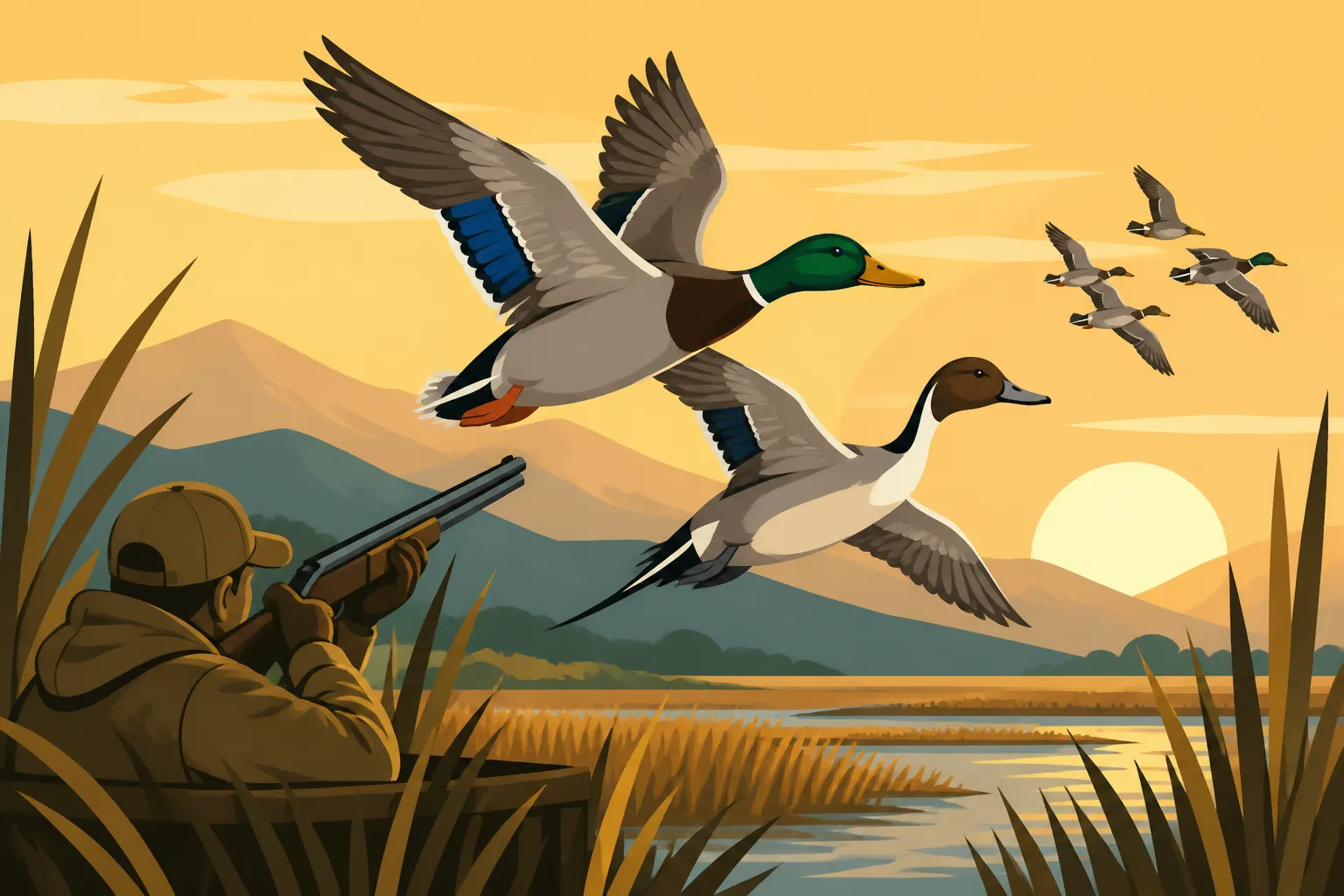
Mallards and Pintails in the Central Valley
For many California waterfowlers, the early morning chill of the Central Valley fog isn't just a physical sensation; it's a deep-seated part of their hunting identity. But let's be honest, those misty mornings often come with the frustration of knowing the ducks are out there, somewhere, just not quite where you are. This guide is all about diving deep into the world of mallards and pintails, two of the most iconic species that grace our flooded fields and wetlands, giving you the insights and strategies to connect with them more consistently in the challenging, yet rewarding, Central Valley landscape.
The Central Valley's Crucial Role for Waterfowl
The Sacramento and San Joaquin Valleys, collectively known as the Central Valley, aren't just the agricultural heartland of California; they are an absolutely critical wintering ground for millions of migratory birds along the Pacific Flyway. When those birds leave their northern breeding grounds, often pushed by bitter cold and dwindling food supplies, California’s Central Valley is a beacon, a lush, wet haven that draws them in. Understanding this immense ecological significance is the first step to truly appreciating and successfully hunting mallards and pintails here.
A Wintering Oasis on the Pacific Flyway
Imagine being a duck, flying thousands of miles from the Arctic tundra or the Canadian prairies. You're exhausted, hungry, and seeking refuge. The Central Valley, with its vast network of wetlands, flooded agricultural fields, and managed refuges, offers exactly that. It's a grand cafeteria and a safe haven, a crucial stopover where birds can rest, refuel, and prepare for the return migration in spring. This makes the valley an ecological bottleneck, concentrating immense numbers of birds into a relatively smaller area than their sprawling breeding grounds. It's truly a marvel to witness the sheer volume of birds that descend upon this region, from massive V-formations of geese to the swirling chaos of thousands of ducks.
For species like mallards and pintails, the availability of diverse food sources is paramount. Mallards are often found dabbling in shallower waters, sifting through the mud for seeds, grains, and invertebrates. Pintails, with their long, elegant necks, can reach deeper into the water to forage, often favoring submerged vegetation and waste grain. The extensive flooded rice fields, corn stubble, and managed wetlands provide a smorgasbord that allows these birds to build up fat reserves, essential for their survival through winter and for the rigorous spring migration and breeding season ahead. It's this reliance on the Central Valley that makes proper habitat management so incredibly vital for the health of the entire Pacific Flyway.
The Impact of Habitat Loss and Restoration Efforts
Historically, the Central Valley was a mosaic of vast natural wetlands, meandering rivers, and seasonal marshes. However, centuries of agricultural development and urbanization have drastically altered this landscape. A staggering percentage of the original wetlands have been converted to farmland or developed areas, leading to significant habitat loss. This reduction in natural habitat means that the remaining wetlands and managed agricultural lands become even more crucial for supporting the enormous influx of migratory birds.
The good news is that there's been incredible dedication to restoration and conservation efforts. Organizations, both governmental and private, work tirelessly to create and maintain managed wetlands, often in partnership with landowners. Farmers are sometimes incentivized to flood fields after harvest, creating temporary wetlands that provide vital foraging and resting areas. These efforts, though often costly and labor-intensive, are literally life-savers for waterfowl. Without these carefully managed spaces, the immense numbers of mallards and pintails that rely on the Central Valley wouldn't have enough resources to survive the winter. Understanding these dynamics helps hunters appreciate that their license fees and stamp purchases directly contribute to these vital conservation efforts, ensuring that future generations can also experience the magic of California Waterfowl on the Pacific Flyway.
Understanding Mallards in the Central Valley
The mallard, with its unmistakable iridescent green head (on the drakes, of course!), is arguably the most recognizable and beloved duck species for hunters. In the Central Valley, they are a staple, often seen in large numbers. However, their presence doesn't always guarantee an easy hunt. These are smart birds, and they learn quickly, especially when facing consistent hunting pressure.
Mallard Behavior and Habitat Preferences
Mallards are classic "dabbling ducks," meaning they feed by tipping their heads down in shallow water, sifting through the mud and water for food, rather than diving. This feeding style dictates their preferred habitat: shallow marshes, flooded fields, ponds, and sloughs. They are highly adaptable and can be found in a wide variety of wetland types, from natural marshes to agricultural fields flooded after harvest. In the Central Valley, you'll often find them congregating in flooded rice fields, especially when those fields offer waste grain from the harvest. They also frequent areas with abundant aquatic vegetation and invertebrates.
Their daily routine often involves roosting in large groups in safer, more open water during the night, then flying out to feed in shallower, often private, fields at dawn and dusk. This flight pattern, often consistent, is what many hunters try to intercept. They tend to be more vocal than pintails, and their familiar "quack" can often give away their presence. When hunting public land, mallards are often the first to flare from an over-decoyed or poorly concealed spread, making good hide discipline paramount. Knowing that they favor shallow water and generally want to land among other mallards is key to setting up your spread.
Hunting Strategies for Greenheads
Hunting mallards in the Central Valley requires a blend of good scouting, strategic decoying, and excellent concealment. First and foremost, you need to be where they want to be. Scouting prior to your hunt is non-negotiable. Look for where they are feeding and roosting, even if it's on private land, as this gives you clues to their flight paths and preferred areas on adjacent public parcels. Tools like GoHunt can be invaluable for identifying potential public access points or understanding land ownership boundaries near feeding grounds.
When it comes to decoying, mallards respond well to numbers. A large spread of mallard decoys, often 50-100 or more, can be effective in drawing them in, especially if combined with motion decoys like spinning wing models or jerk cords to simulate active feeding. Decoying Mallards on Flooded Rice Ground is an art form. You want to create a realistic scene that tells incoming birds, "Hey, it's safe and there's food here!" Calling is also crucial for mallards. A good caller can bring passing birds into range, using a variety of greetings, feed chuckles, and comeback calls to seal the deal. Remember, mallards are social birds, and they want to join their kin. Pay attention to the wind, always setting your decoys so the birds can land into it, ideally right in your "kill hole" within the spread.
The Elegance of Pintails and Their Unique Challenges
Northern pintails are truly one of the most elegant ducks of the flyway, instantly recognizable by the drakes' long, slender necks and the distinctive "pintail" feather that gives them their name. They are often less vocal than mallards and possess an almost ethereal grace in flight. While often found in the same habitats as mallards, hunting pintails presents its own set of unique challenges that demand a slightly different approach.
Pintail Migration and Feeding Habits
Pintails undertake some of the longest migrations of any waterfowl species, and the Central Valley is a vital destination for them. They typically arrive later in the season than some other ducks, pushed by increasingly colder weather in their northern breeding grounds. Their feeding habits are similar to mallards in that they are dabblers, but their longer necks allow them to feed in slightly deeper water. They have a particular fondness for emergent aquatic vegetation, sedges, and especially rice and other cereal grains. In the Central Valley, it's not uncommon to see pintails in massive flocks, sometimes numbering in the thousands, feeding in flooded stubble fields or vast shallow marshes.
One distinct behavioral trait of pintails is their often-aloof nature. They tend to circle high over decoys, sometimes making several passes before committing, or simply veering off if anything seems amiss. They are incredibly wary birds, perhaps even more so than mallards, making close concealment an absolute must. Unlike mallards who often bomb into a spread, pintails prefer a slow, graceful descent, often cupping their wings for a long glide down. This gives them ample time to spot anything out of place, so your setup needs to be impeccable.
Decoying and Calling Pintails
Decoying pintails often requires a more minimalist and strategic approach compared to the large, bustling mallard spreads. While they might occasionally respond to a big mallard spread, pintails often prefer their own kind, and a spread of 12-24 pintail decoys, especially with a few active feeders, can be very effective. Many hunters find success by placing a small pod of pintail decoys slightly apart from the main mallard spread, simulating a distinct group. Best Duck Decoy Spread for Flooded Rice often involves considering these subtle differences. Pintails are also attracted to open water, so creating plenty of landing space within your spread is crucial.
Calling pintails is a different game altogether. Forget the loud, boisterous mallard calls; pintails respond to soft, high-pitched whistles. A "drake whistle" is the primary call used for pintails, mimicking the soft, almost flute-like sound of a resting or contented drake. This whistle is often used sparingly, acting more as an invitation than an aggressive come-on. Over-calling can easily spook these wary birds. Combining soft whistles with subtle feed chuckles from a mallard call can sometimes be effective, especially if you have a mixed spread. The goal is to reassure them, not to demand their attention.
Key Hunting Considerations for Both Species
While mallards and pintails have their unique behaviors, many core hunting principles apply to both in the Central Valley. Success often hinges on attention to detail, adaptability, and a deep respect for the birds and their environment. It’s not just about setting out decoys; it’s about creating an illusion of safety and abundance.
Decoy Spreads and Motion Decoys
The right decoy spread can make or break a hunt. For mallards, a larger, more active spread generally works wonders. Think big, bustling "U" or "J" shaped spreads, with the open end facing into the wind where you expect birds to land. Incorporate a variety of postures: feeders, uprights, and resters. Motion decoys, like spinning wings or ripple makers, are incredibly effective for mallards. They add that crucial element of realism, making your spread look alive. Many hunters swear by "Mojo Decoys for Central Valley Mallards", as the visual flash of the spinning wings can pull birds from a great distance, especially on clear, sunny days.
For pintails, as mentioned, subtlety is key. A smaller, more open spread with plenty of landing zone is often preferred. They're not as attracted to heavy motion as mallards, and sometimes too much spinning wing action can actually make them wary. Instead, focus on realism and natural movement. A few feeding pintail decoys, perhaps on a jerk cord to create gentle ripples, can be more effective. Consider creating distinct "pods" within your spread – a group of mallards here, a small family of pintails there – to cater to the social preferences of both species. Always ensure your decoys are clean and realistic-looking; ducks have excellent eyesight, and a dirty, unrealistic decoy can be a dead giveaway.
Blind Placement and Concealment
This cannot be stressed enough: concealment is paramount, especially when hunting wary Central Valley ducks. Both mallards and pintails have exceptional eyesight, and they will flare instantly at the slightest hint of danger. A perfectly placed blind, brushed in naturally with local vegetation, is often more critical than the most elaborate decoy spread. Whether you're using a permanent pit blind, a mobile A-frame, or a simple layout blind, make sure it blends seamlessly with its surroundings.
If you're hunting a flooded field, like those rice fields that are prime territory for Decoying Ducks in California's Central Valley Flooded Rice, consider a Layout Blind Hunting a Flooded Field approach. These allow you to remain completely hidden while still having an unobstructed view of incoming birds. Make sure your blind is brushed in with mud, rice stubble, or whatever natural vegetation is present. Don't forget to hide your face with a face mask or paint, and avoid shiny objects like phone screens or exposed gun barrels. The goal is to disappear into the landscape completely, becoming an undetectable part of the habitat. Always position your blind with the sun at your back, if possible, to blind incoming birds and give you an advantage.
Weather and Water Conditions
The Central Valley's weather can be notoriously unpredictable during hunting season, and understanding its impact on duck behavior is crucial. Cold fronts, strong winds, and rain can significantly influence how ducks fly and feed. For instance, a strong north wind often pushes new birds down the flyway, potentially bringing in fresh mallards and pintails. Blustery days also tend to keep birds flying lower and more actively throughout the day, as opposed to calm, sunny days when they might fly early and then sit for hours.
Water conditions are equally important. Are the fields freshly flooded, drawing in birds that haven't seen the new water yet? Is the water receding, concentrating birds into smaller areas? Is it a permanent marsh or a temporary agricultural flood? California's Flooded Rice Fields and Waterfowl depend heavily on water availability. Pay attention to how different water levels affect where birds feed and rest. Shallow sheet water is excellent for dabblers like mallards and pintails. Early in the season, warmer temperatures mean birds might spread out more, but as the cold sets in, they'll often concentrate on larger, more stable bodies of water. Always be prepared for varying conditions, from frosty mornings to sudden rain squalls, by having appropriate gear.
Gear and Planning for a Successful Central Valley Duck Hunt
Preparation is everything in duck hunting. It’s not just about having the right gun and shells; it's about having the complete setup that allows you to hunt effectively and safely, and to respond to the unpredictable nature of waterfowl.
Essential Gear: Waders, Blinds, and Ammunition
When you're wading through flooded fields or shallow marshes in the Central Valley, good waders are your best friend. They need to be durable, waterproof, and comfortable enough for walking through mud and standing in cold water for hours. Breathable chest waders are often preferred, allowing for layering underneath to adjust to temperature changes. You might also consider Choosing Waders for Flooded Rice Fields, as the rice stubble can be tough on materials. Pair them with sturdy, insulated boots if the water is cold.
Your blind, as discussed, is another non-negotiable item. Whether it's a layout blind, a panel blind, or a brushed-in pit, ensure it provides excellent concealment. For ammunition, remember California’s non-lead requirement. Steel shot, bismuth, or tungsten-iron alloys are common choices. Ensure you match your shot size and choke to the birds you're targeting – often 3s or 4s for ducks like mallards and pintails. Always carry enough shells, but don't overdo it. A dozen or two should be plenty for most hunts, especially if you're practicing ethical shooting.
Leveraging Technology for Scouting and Success
In today's hunting world, technology can be a powerful ally. Mapping apps and GPS devices are invaluable for navigating public lands, marking scouting locations, and ensuring you're not trespassing. Services like GoHunt provide detailed public land overlays, private land ownership data, and satellite imagery that can help you identify potential access points, hidden sloughs, or distant feeding fields. Before you even set foot in the field, you can use these tools to scout from your couch, pinpointing areas of interest based on habitat features.
Additionally, keeping an eye on weather forecasts and wind direction is crucial. Many hunters use specialized weather apps that provide hyper-local forecasts, including hourly wind changes, which can dictate blind placement and decoy spread orientation. Some even use trail cameras (where legal) to monitor bird activity in specific areas, giving them an edge on understanding patterns. Just remember that no technology can replace time spent in the field, observing birds and understanding their habits firsthand. But when combined with on-the-ground experience, these tools can dramatically increase your chances of success.
Conservation and Responsible Hunting Practices
As hunters, we are stewards of the land and the wildlife we pursue. Our actions in the field directly impact the future of hunting and the health of the waterfowl populations. Ethical hunting isn't just a suggestion; it's a responsibility.
Contribution to Habitat and Future Hunting
Every time you purchase a California hunting license, a state duck stamp, or a federal duck stamp, you are directly contributing to waterfowl conservation. These funds are specifically allocated to habitat acquisition, restoration, and management projects that benefit mallards, pintails, and countless other species. When you buy that federal stamp, a significant portion goes directly to securing and managing wetlands across the country, including those vital Central Valley habitats. This financial contribution is a powerful way hunters give back to the resource.
Beyond monetary contributions, many hunters actively participate in volunteer efforts, helping with habitat restoration, clean-ups, or maintaining public hunting areas. Being a responsible hunter means understanding that the privilege of hunting comes with the duty to protect and enhance the very resource we enjoy. This also extends to advocating for sound conservation policies and educating non-hunters about the critical role hunters play in wildlife management. This ensures that the magic of watching mallards and pintails cup their wings over a decoys spread will continue for generations to come.
Ethical Shooting and Retrieval Practices
Ethical hunting demands clean kills and efficient retrieval. This means taking responsible shots within your effective range, and diligently working to retrieve every bird you shoot. Wounded birds are a tragic waste of the resource. Know your shotgun, know your ammunition, and practice regularly at the range to understand your maximum ethical shooting distance. For most duck hunters, this is often within 30-40 yards. Don't be tempted by sky-busting; wait for birds to commit and get into your spread.
Retrieval is equally important. California Duck and Goose Bag Limits are in place to manage populations, and losing birds due to poor retrieval practices undermines these limits. A good retriever dog is an invaluable asset, not just for efficiency but for sheer enjoyment. If you don't hunt with a dog, be prepared to wade out quickly, mark where the bird falls, and use a paddle or boat if necessary. Even if it means getting a little wetter or muddier, making every effort to recover a downed bird is a testament to your respect for the game and the hunting tradition. It’s part of the silent contract we make as hunters.
Disclaimer
This article is for general informational purposes only and does not constitute professional advice. Laws, prices and regulations vary by location and change over time. Consult a qualified professional for guidance on your specific situation.