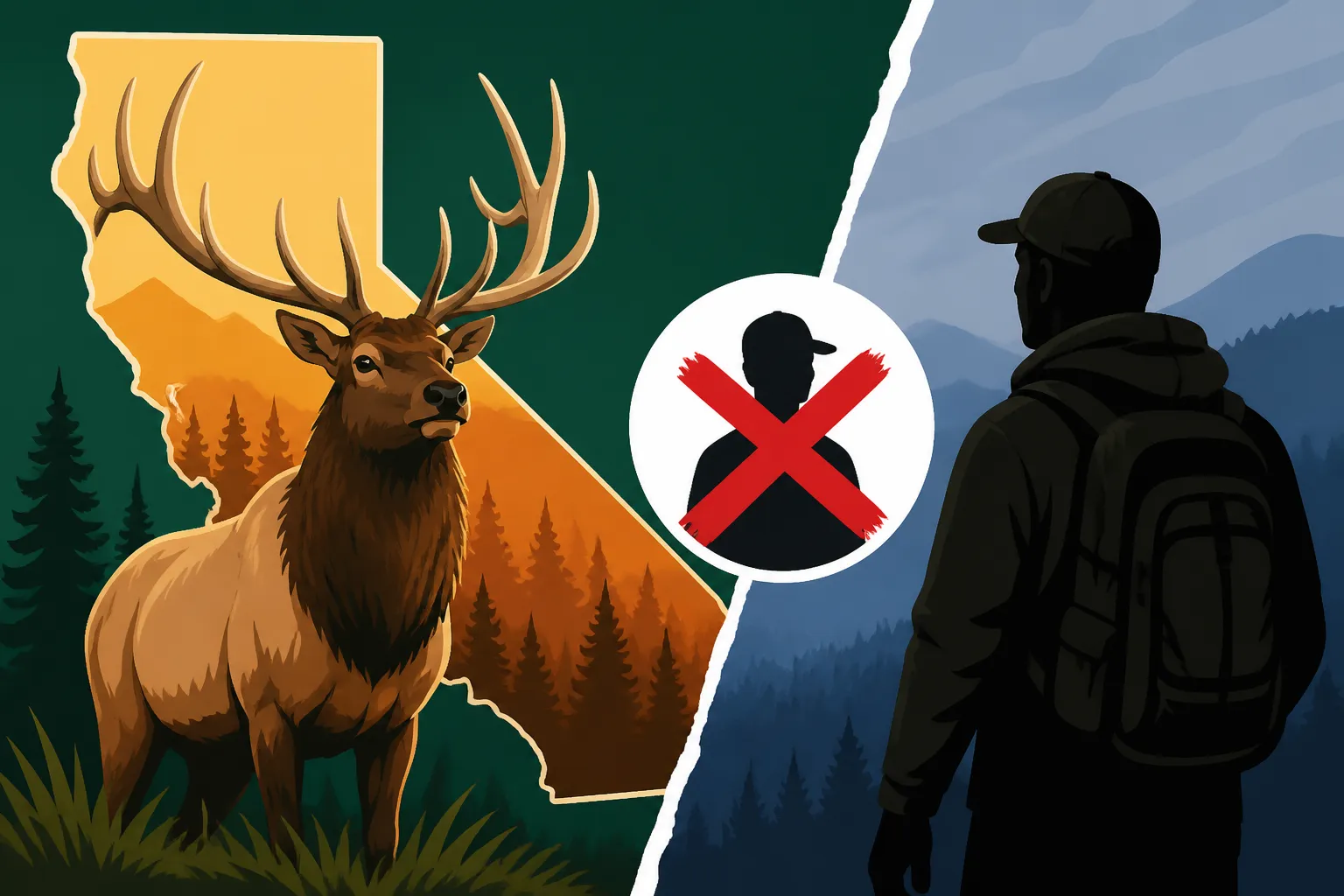
Why Only One Elk Tag Goes to Nonresidents
It's incredibly frustrating when you set your sights on a dream hunt in a place like California, only to discover that the odds are stacked against you, especially if you're coming from out of state. Many aspiring elk hunters look at California's diverse landscapes and impressive elk herds and can't wrap their heads around why non-residents face such a restrictive bottleneck: just one elk tag for the entire state. This guide is here to unravel the complex reasoning behind this policy, dive deep into the state's elk management, and offer a realistic perspective on what it means for those hoping to draw that coveted tag.
The Rationale Behind Limiting Non-Resident Elk Tags
California's approach to elk tag allocation isn't born out of a desire to exclude anyone, but rather a deeply rooted philosophy of wildlife management that prioritizes several key factors. The decision to offer only a single elk tag to non-residents each year is a policy shaped by conservation goals, the immense demand from its own residents, and the unique challenges of managing elk populations within the state's diverse, and often heavily populated, landscapes. It's a tough pill to swallow for many, but understanding the "why" can help frame expectations and strategies.
Prioritizing Resident Opportunities
At the heart of California's elk tag allocation lies a fundamental principle: maximizing opportunities for its resident hunters. Most state wildlife agencies operate under the premise that local license fees and taxes contribute directly to the management and conservation of local wildlife resources. Consequently, residents are typically given preferential treatment in tag drawings, especially for highly sought-after species like elk. In California, with a massive population and a relatively limited number of elk tags available annually across all species (Tule, Roosevelt, and Rocky Mountain), ensuring that residents have the best possible chance is paramount. This isn't unique to California; many Western states have similar resident-preference systems, but California's single non-resident elk tag stands out as particularly restrictive due to the sheer volume of resident applicants. For many, drawing any California deer tag is tough enough, let alone an elk tag, which further highlights the resident focus.
Conservation and Herd Management Concerns
Another critical aspect influencing tag allocation is the state's commitment to the long-term health and sustainability of its elk herds. California's three distinct elk species – Tule, Roosevelt, and Rocky Mountain – each have their own unique population dynamics, habitats, and management challenges. Tule elk, for instance, were brought back from near extinction, and their recovery is a testament to dedicated conservation efforts. The California Department of Fish and Wildlife (CDFW) meticulously monitors herd numbers, habitat conditions, and recruitment rates to determine how many tags can be issued without negatively impacting the population. The number of tags released is directly tied to ensuring healthy breeding populations, managing potential conflicts with agriculture or private landowners, and maintaining ecosystem balance. Limiting tags, particularly for non-residents who might not have the same long-term investment in the state's wildlife resources, is seen as a cautious measure to protect these valuable populations. It’s part of a broader strategy, similar to how the state approaches specific deer zones, balancing hunting opportunities with herd health.
Historical Context of Elk Allocation
The history of elk management in California is complex, marked by periods of near extirpation for Tule elk and then slow, careful reintroduction and growth. In the early 20th century, all three species faced significant pressure, leading to severely diminished numbers. Thanks to conservation initiatives, populations have rebounded, allowing for regulated hunting seasons. However, the legacy of scarcity means that elk tags have always been a precious commodity. The current allocation system, with its extreme limitation on non-resident tags, reflects this historical understanding of elk as a sensitive, high-value resource. The goal is to provide sustainable hunting opportunities while ensuring that the primary beneficiaries of these recovered herds are the California residents whose past and present contributions support their existence. This isn't just about current numbers; it's about honoring the journey these animals have taken to get where they are today, and maintaining a cautious approach to their future.
Understanding California's Elk Management Philosophy
California's approach to wildlife management, especially for a prized species like elk, is multifaceted. It involves scientific data, public input, and a careful balancing act between providing recreational opportunities and ensuring the ecological health of the state. The severely restricted non-resident elk tag is a direct outcome of this comprehensive management philosophy, designed to address specific population dynamics, public land pressures, and funding structures.
Population Dynamics and Carrying Capacity
The CDFW bases its tag quotas on extensive research into the population dynamics of each elk species. This includes factors like birth rates, mortality rates, habitat availability, and herd health indicators. For Tule elk, which often occupy smaller, fragmented ranges, population growth can be slower and more susceptible to environmental changes. Roosevelt elk, found in the dense forests of the Northwest, face different challenges, while Rocky Mountain elk near the Oregon border share characteristics with larger Western herds but are still managed within California's specific parameters. Each tag issued is a calculated decision, ensuring that the harvest doesn't exceed the sustainable yield for any given herd. California's landscapes, from coastal ranges to high deserts, have varying carrying capacities for elk, meaning the number of animals the land can sustainably support. Overtaxing these capacities, even with a few extra tags, could lead to habitat degradation, increased disease transmission, and conflict with agricultural operations. This careful monitoring is crucial, especially in light of concerns about diseases such as Chronic Wasting Disease.
Public Land Access and Pressure
California boasts a significant amount of public land, including national forests and BLM acreage. However, much of this land, while vast, can be challenging to access or may not hold high densities of elk. The most productive elk habitat often lies on private lands or within smaller, specific wildlife areas. This creates immense pressure on the available public hunting grounds. When you have a large resident hunting population vying for a limited number of tags, and then factor in constrained prime habitat, the calculus inevitably leans towards protecting resident access. If California were to open up more tags to non-residents, it would further exacerbate this pressure, potentially leading to overcrowding on public lands and increased competition for already scarce resources. This concern isn't just theoretical; hunters frequently face high pressure when hunting a D-Zone that opens in August or any accessible public lands, and elk tags would amplify this significantly. This is why tools that help with scouting California public land before season are so valuable, regardless of the species you're chasing.
Funding for Wildlife Programs
Wildlife conservation and management in California, like many states, are largely funded through the sale of hunting and fishing licenses, tags, and excise taxes on hunting equipment. While non-residents do contribute to this funding through their license and application fees, the vast majority of ongoing revenue comes from residents. The argument is often made that the long-term, consistent financial commitment of residents justifies preferential access to the state's most sought-after big game resources. By limiting the number of non-resident elk tags, the state reinforces the value of resident participation and ensures that the primary financial contributors are also the primary beneficiaries of the managed wildlife populations. This economic reality plays a significant role in how tag allocations are structured, influencing decisions about everything from deer to waterfowl management.
Strategies for Non-Resident Elk Hunters in California
Given the daunting odds, it might feel like drawing a California non-resident elk tag is a pipe dream. However, "pipe dream" doesn't mean "impossible." While the path is narrow, there are definitive strategies non-resident hunters can employ to maximize their minuscule chances and still experience the thrill of hunting in the Golden State. It's about being smart, persistent, and realistic.
Maximizing Your Application Strategy
With only one non-resident tag available statewide, your application strategy needs to be flawless and consistent year after year. First, ensure you understand the California Big Game Drawing Explained, including all deadlines and requirements. Most importantly, familiarize yourself with the California Preference Point System for Elk. California uses a preference point system for elk, meaning the more years you apply without drawing a tag, the more points you accumulate, theoretically increasing your chances in future drawings. The catch, however, is that for non-residents, this single tag often goes to someone with a very high number of points, sometimes decades worth.
You must buy a hunting license each year to apply for the drawing and earn a preference point. There's no way around it. Even if you don't plan to hunt any other species that year, consider buying the license just to get that point. For specific insights into drawing odds and application strategies, services like GoHunt offer valuable resources, breaking down species-specific information and helping you understand where to best allocate your efforts, even if the non-resident elk category is exceptionally tight. They can provide data that helps contextualize the "what draw odds under one percent mean" reality for this particular tag. It's a long game, potentially a lifetime game, so consistency is key.
Exploring Alternatives for Elk Opportunities
If your primary goal is simply to hunt elk in the West, and not necessarily California elk, you might find more success by looking at other states with more generous non-resident quotas. However, if California's unique landscapes and species (like the Tule elk) hold a special appeal, there are other avenues, albeit expensive ones. California does have landowner tags for elk, which are generally available for purchase outside of the public drawing. These tags are significantly more costly, often ranging from tens of thousands of dollars, and are typically offered by private ranches with robust elk populations.
While this option is out of reach for most, it does represent a way for non-residents to legally hunt elk in California without going through the public drawing. It’s a commercial solution that sidesteps the lottery entirely. For those not able to afford a landowner tag, consider focusing on other California species that offer more accessible non-resident opportunities, such as wild pigs or black bears, which still provide incredible hunting experiences in the state. Or even delving into the nuances of rifle hunting California's general deer season, which has much better odds.
Scouting and Preparation for a Hunt
Should you be one of the incredibly fortunate few to draw the non-resident elk tag, preparation becomes paramount. This isn't a hunt you want to leave to chance. California's elk habitat is diverse, from dense coastal forests for Roosevelt elk to more open, rolling hills for Tule elk, and rugged mountains for Rocky Mountain elk. Thorough scouting, whether in person or remotely using tools like GoHunt's mapping features, is crucial. Understand the terrain, identify potential bedding and feeding areas, and locate water sources.
Consider the gear needed for California's varied conditions. You'll need sturdy boots and clothing for California's varied terrain, and reliable optics for California's open-country deer hunting – skills which translate perfectly to glassing for elk. If you're physically preparing for a high-country elk hunt, consider the demanding nature of California's steep terrain. Planning for game recovery, especially if you're deep in the backcountry, is also critical. A successful elk hunt is as much about preparation as it is about luck in the draw.
The Big Game Drawing and Your Odds
Participating in California's Big Game Drawing for an elk tag as a non-resident requires a full understanding of the process, the preference point system, and a healthy dose of realistic expectation management. It's a system designed for the long haul, and patience is your most valuable asset.
Navigating the Application Process
The first step, every year, is to purchase a valid California hunting license. Without it, you cannot apply for any big game draw tags, including elk. Once you have your license, you can apply for the elk drawing through the CDFW's online portal, which typically opens in April and closes in early June. You'll pay an application fee in addition to your license fee. It's critical to double-check all your information before submission, as errors can lead to disqualification. Many hunters use services like GoHunt to streamline their application process, which can help ensure you don't miss any critical deadlines or steps. They often provide reminders and guides specifically tailored to navigating complex state draw systems, which is particularly helpful for non-residents dealing with unfamiliar regulations.
When applying for elk, you typically apply for a specific hunt choice (e.g., Tule elk in a certain zone, Roosevelt elk, or Rocky Mountain elk). However, as a non-resident, your application is automatically entered into the single non-resident elk tag lottery, regardless of your specific hunt choice selection. The system then awards the one non-resident tag to a lucky applicant, often from the pool of those with the highest preference points. This makes the hunt choice less relevant for non-residents than for residents, who are competing within specific unit allocations.
The Preference Point System for Elk
California's preference point system means that for every year you apply for an elk tag and are unsuccessful, you earn one preference point. These points accumulate and are used to give you a statistical advantage in subsequent drawings. For a non-resident applying for the single statewide elk tag, having a high number of preference points is absolutely essential. We're talking about hunters who have been applying for 15, 20, or even 30+ years, consistently purchasing their license and applying for the elk drawing, just to build up enough points to maybe have a chance.
The system is designed to reward loyalty and persistence, but it also creates a backlog of highly pointed applicants, making it incredibly difficult for new or less-pointed non-residents to break through. It's not uncommon for the single non-resident tag to go to the applicant with the highest number of points, or nearly the highest. Therefore, if you're starting your journey as a non-resident elk applicant in California, understand that you are embarking on a very long-term project.
Realistic Expectations and Long-Term Planning
Let's be blunt: the odds of a non-resident drawing California's single elk tag are infinitesimally small. To put it into perspective, California Elk Tag Draw Odds by Species for residents are already tough, often in the single digits or fractions of a percent for the most coveted units. For non-residents, with only one tag available, your actual statistical chance in any given year, especially with few preference points, is practically zero.
This doesn't mean you shouldn't apply if it's a dream of yours. But it does mean you need to approach it with extremely realistic expectations. For most, applying for the California non-resident elk tag is less about a realistic hunting opportunity in the near future and more about playing a very long-shot lottery, building preference points over decades, and contributing to conservation funds. If you want a guaranteed elk hunt in the next few years, California is not your best bet as a non-resident without deep pockets for a landowner tag. Instead, focus on enjoying other fantastic hunting opportunities California offers, and view the elk tag application as a distant, hopeful future prospect.
| Elk Species (CA) | Estimated Population | Resident Tag Availability | Non-Resident Tags Available (Statewide) | Typical Draw Odds (Resident) |
|---|---|---|---|---|
| Tule Elk | ~5,700 | Very Limited | 1 (Combined for all species) | <1% – 5% |
| Roosevelt Elk | ~5,800 | Limited | 1 (Combined for all species) | <1% – 3% |
| Rocky Mountain Elk | ~5,400 | Limited | 1 (Combined for all species) | <1% – 3% |
Note: Population numbers are estimates and can fluctuate annually. Draw odds are highly dependent on the specific hunt unit and year, and are significantly lower for non-residents due to the single statewide tag.
Disclaimer
This guide is intended for informational purposes only and does not constitute legal advice. Hunting regulations in California are subject to change, and it is the hunter's responsibility to review the most current regulations published by the California Department of Fish and Wildlife (CDFW) before engaging in any hunting activities.