California State Park Hunting Rules
It’s a common misconception, and a truly frustrating one for many hunters, that California's vast network of State Parks offers readily available hunting opportunities. You drive past these beautiful, sprawling landscapes, full of game-rich habitat, and think, "Surely, there's a way to hunt here!" But the reality is far more complex and, for the most part, quite restrictive. This guide is here to shed light on California State Park hunting rules, helping you understand why these areas are mostly off-limits and, crucially, when and where rare exceptions might exist. We'll cover everything from the historical reasons behind these restrictions to the specific regulations you’d need to navigate for those extremely limited, special opportunities.
The General Rule: Why Most State Parks Are Off-Limits
Let’s just get this out of the way upfront: if you're picturing yourself rolling into a typical California State Park with your rifle or bow, ready for opening day, you're likely going to be disappointed. The vast majority of California State Parks explicitly prohibit hunting. This isn’t an oversight; it’s by design, rooted deeply in their founding principles and ongoing management philosophy. It's a tough pill to swallow when you know deer, pigs, and turkeys roam freely within their boundaries, but understanding the "why" can help set realistic expectations.
Historical Context and Conservation Ethos
California's State Parks system was established with a primary mission focused on preservation, recreation, and public enjoyment of natural and cultural resources. Think about places like Big Basin Redwoods or Anza-Borrego Desert State Park – these aren't primarily managed for wildlife harvest. Instead, their original charters, often dating back decades, prioritized activities like hiking, camping, picnicking, and appreciating nature in an undisturbed state. The emphasis has always been on passive recreation and protecting ecosystems as they are, rather than active management through hunting.
This foundational difference means that the legislative framework and the administrative rules governing State Parks differ significantly from those applied to National Forests, Bureau of Land Management (BLM) lands, or even many of the California Department of Fish and Wildlife (CDFW) Wildlife Areas. Where CDFW lands are often explicitly acquired or managed with hunting and fishing as designated uses, State Parks typically are not. This conservation ethos shapes everything from how trails are laid out to how wildlife populations are monitored, nearly always excluding hunting as a management tool or recreational activity. It truly creates a divide in public land use that can feel counterintuitive to a hunter.
Public Perception and Management Priorities
Beyond historical mandates, current public perception heavily influences how State Parks are managed. State Parks are incredibly popular with a broad demographic of Californians and tourists, many of whom are not hunters and may not understand or support hunting as a form of recreation or wildlife management. For many park visitors, the idea of hunting taking place in "their" park can be deeply unsettling, even if it's done ethically and sustainably. This strong sentiment often translates into policies that keep hunting out of the parks to maintain a specific public image and recreational experience.
Management priorities within the State Park system also diverge from what a hunter might expect. While wildlife undoubtedly exists within these parks, the primary goal for park managers isn't typically "herd health through harvest" or "population control." Instead, they focus on visitor safety, preserving natural processes, protecting endangered species, and providing consistent, predictable recreational opportunities that don't conflict with each other. Introducing hunting, with its inherent safety considerations and the need for specialized access, often complicates these priorities beyond what park management is willing to undertake. This focus on broad public use, rather than specific resource extraction, often leaves hunters feeling left out, especially when surrounded by prime habitat.
Exceptions to the Rule: Where Hunting Might Be Allowed
While the general rule is "no hunting in State Parks," it's California, and nothing is ever quite that simple. There are indeed a few, very specific, and highly regulated exceptions. These are not common, and they often require significant legwork to uncover and gain access to, but they do exist. It’s crucial to understand that these aren't your typical "walk-in and hunt" scenarios; they are almost always special opportunities born out of unique circumstances.
Designated State Recreation Areas (SRAs) and Special Units
Within the larger California State Parks system, there are certain units designated as State Recreation Areas (SRAs) or other special classifications that may have different rules. These areas might be managed more for active recreation, including some limited forms of hunting, often due to their historical use patterns or specific ecological needs that require population management. However, even within SRAs, hunting is not a given and will be restricted to very specific zones and seasons.
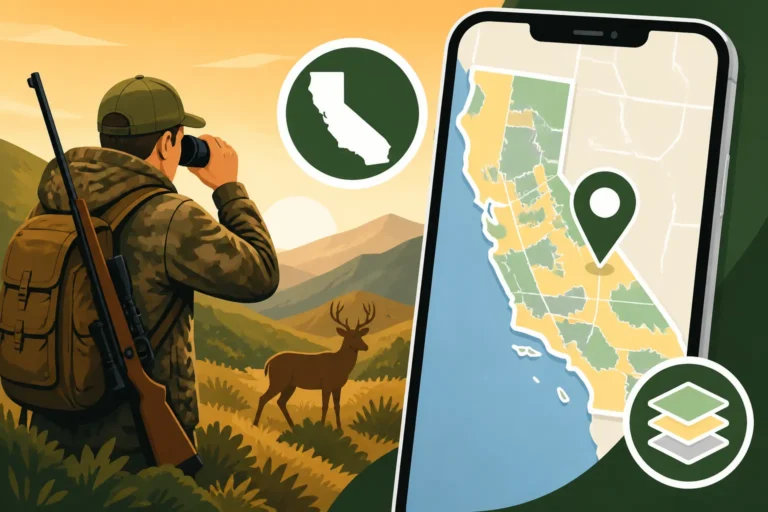
For instance, you might find a State Recreation Area that abuts a wildlife area or a large tract of private land where historical hunting traditions existed before the land was brought into the State Park system. In these rare cases, hunting might be permitted, but almost certainly under a very strict permitting system that dictates species, dates, and even the type of weapon allowed. These areas are outliers, not the norm, and often require a deep dive into the specific unit's regulations, which can be found on their individual park websites or by contacting the park office directly. Knowing how to use mapping applications like onX Hunt can be incredibly beneficial here, as they often layer in public land boundaries and may even provide indications of specific hunting regulations for state lands.
Limited-Entry Quota Hunts and Special Draws
The most common way hunters might gain access to a California State Park for hunting is through extremely limited, special quota hunts. These are generally not recurring annual events in the same way deer zones or waterfowl seasons are structured. Instead, they arise from specific wildlife management needs within a particular park unit. For example, a deer population might become overabundant in a contained area, leading to habitat degradation or increased vehicle collisions. In such a scenario, the State Parks might partner with CDFW to implement a very controlled, limited-entry hunt to reduce the population.
These hunts are highly competitive and often involve applying through the CDFW’s special draw system, similar to drawing a premium elk tag. Applying for a California Tule Elk Tag in the Big Game Drawing gives you a sense of that process. The number of tags available is usually minuscule, sometimes only a handful for an entire season. Successful applicants often receive detailed instructions about where they can hunt, what species they can take, specific weapon requirements (often archery-only or shotgun-only for safety reasons), and even specific check-in/check-out procedures. These are not general hunting opportunities; they are targeted management actions that occasionally provide a recreational benefit to a lucky few hunters.
| Park Unit Type | Primary Mission | General Hunting Status | Typical Management |
|---|---|---|---|
| State Parks (SP) | Preservation, passive recreation, cultural resources | Generally Prohibited | Habitat restoration, visitor services, cultural site protection |
| State Reserves (SR) | Strict preservation of unique natural/cultural features | Strictly Prohibited | Research, critical habitat protection, very limited access |
| State Historic Parks (SHP) | Preserve historical structures/sites | Strictly Prohibited | Interpretive programs, facility maintenance |
| State Beaches (SB) | Coastal recreation, beach access | Generally Prohibited | Beach clean-up, recreational access, coastal ecology |
| State Recreation Areas (SRA) | Active recreation (boating, swimming, ORV) | Limited/Conditional | Recreation facilities, some resource management, potential for specific hunts |
| State Wilderness Areas (SW) | Preserve undeveloped natural landscapes | Generally Prohibited | Backcountry travel, ecological integrity |
Note: This table provides a general overview. Always check specific park unit regulations.
Navigating the Regulations: What to Know Before You Go
So, you've heard whispers of a State Recreation Area near you that might allow hunting, or you've found a special draw opportunity. Fantastic! Now comes the critical part: understanding and meticulously following the specific regulations. Unlike hunting vast tracts of National Forest land, where rules are often consistent over broad areas, State Park exceptions come with their own unique, and often more stringent, set of requirements. Ignoring even a minor detail could lead to fines, loss of privileges, or worse.
Permitting and Application Processes
If a State Park unit allows hunting, it will almost certainly require a special permit in addition to your standard California Hunting Licenses and What They Cost and game tags from CDFW. These permits are not something you can just pick up at a sporting goods store. They typically involve a separate application process directly through the California State Parks system or in conjunction with CDFW. This might mean applying for a specific lottery or draw, attending an orientation, or even passing a safety briefing unique to that park. The application windows can be very narrow, and the required information can be extensive.
For example, a waterfowl hunt in a State Recreation Area might require you to apply online months in advance, specifying your desired dates and hunting party. You might then be required to check in and out daily at a designated station, show proof of your hunting license, waterfowl stamps, and the special park permit. Always look for specific instructions on the park's official website or by calling their main office. Don't assume anything based on general CDFW regulations; State Park rules are often an overlay, adding additional layers of complexity.
Weapon Restrictions and Ammunition Requirements
Even if hunting is allowed, the type of weapon you can use might be severely restricted. Many State Parks, even those with limited hunting, prioritize public safety and may limit hunters to archery equipment, shotguns with specific non-lead shot, or muzzleloaders. High-powered rifles might be completely prohibited, especially in areas with high public use or proximity to park facilities. The density of other recreational users, even during a hunting season, often dictates these stricter rules.
Furthermore, California's statewide non-lead ammunition requirement is a particularly critical factor. All hunting in California, including any potential State Park opportunities, requires the use of non-lead ammunition. California's Non-Lead Ammunition Requirement is not something to take lightly. This means copper bullets for rifles, steel or bismuth shot for shotguns, and non-lead components for muzzleloaders. It's not enough to just use a non-lead bullet; you need to ensure your chosen ammunition meets the specific projectile requirements and that your firearm is sighted in for it. These details are paramount for compliance and ethical hunting.
Access, Parking, and Designated Hunting Zones
One of the biggest challenges in hunting the rare State Park unit is understanding the precise boundaries and access points. You can't just pull off the highway and hike in wherever you see suitable habitat. State Parks, even those with hunting, will have very specific rules about where you can park, what roads or trails you can use, and exactly where the hunting zones begin and end. Trespassing, even accidentally, onto a prohibited area can lead to serious consequences.
This is where modern mapping tools become your best friend. Services like onX Hunt or GoHunt offer invaluable layers that delineate property lines, public land types (including State Parks and SRAs), and often show designated hunting areas within those units. Using these apps, you can clearly see Finding California Property Lines and avoid accidental incursions into no-hunting zones or private property. Always cross-reference the digital maps with any physical maps or written descriptions provided by the park or CDFW. Remember, park staff are looking out for all visitors, so adhering to designated routes and zones isn't just about legality, it's about respecting other users and ensuring the long-term viability of these rare hunting opportunities.
Species and Seasons: What You Can (Potentially) Hunt
The scope of what you can hunt in a California State Park is, as you might expect, extremely limited. While our state is teeming with diverse wildlife, including Columbia Blacktail and Mule Deer in California and Wild Pigs Across California, the opportunities to pursue them within the State Park system are few and far between. When they do occur, they are typically focused on specific species and managed through tightly controlled seasons.
Deer Hunts in State Parks (Rare Opportunities)
Deer hunts in State Parks are perhaps the most coveted, and consequently, the rarest, of all potential opportunities. These are almost exclusively quota hunts, designed to manage localized deer populations that might be impacting sensitive habitat or creating public safety concerns within a park unit. You won't find a general deer season that opens across multiple State Parks. Instead, it might be a single park, for a very short window, with only a handful of tags allocated.
These hunts are generally for Columbian blacktail deer in the coastal ranges or perhaps mule deer in more eastern-facing recreation areas. The season dates will not align with the general California Zone A General Season Dates or other widespread deer zones. Instead, they will be specific to the individual hunt plan. Success rates on these hunts can vary widely, but due to the limited tags and often unique terrain, they can be challenging. Hunters should expect to do significant Scouting California Public Land Before Season if they are lucky enough to draw one of these tags, as the deer in these areas might behave differently due to continuous human presence or specific habitat features.
Waterfowl and Upland Game Bird Opportunities
While still rare, opportunities for waterfowl and upland game bird hunting in California State Recreation Areas are somewhat more common than big game hunts. These opportunities are usually found in SRAs that encompass wetlands, agricultural lands, or riparian corridors that are critical habitat for migratory birds. Think about areas adjacent to major flyways in the Central Valley where ducks and geese congregate, or oak woodlands where wild turkeys roost.
For waterfowl, these hunts typically involve a specific draw or reservation system for designated blinds or hunting zones within the SRA. They might follow general California Duck Daily Bag Limit rules but often have additional restrictions on shooting hours, number of decoys, or access. You'd be expected to use non-toxic shot, of course. For upland birds like quail or pheasants, a limited-entry walk-in hunt might be offered in specific habitat restoration areas. Wild turkey hunts, if available, would also be highly regulated, likely through a draw and confined to specific areas to minimize conflict with other park users. Hunters targeting these opportunities should be prepared for intense competition for spots and strict adherence to all rules, including those regarding retrieving game and respecting non-hunting visitors.
Essential Tools for Research and Compliance
Given the highly specific and often unique nature of hunting opportunities within California's State Parks, proactive research and meticulous planning are not just recommended—they are absolutely essential. You cannot rely on general hunting knowledge alone. You need to become a detective, digging into the details to ensure you're legal, safe, and successful.
Utilizing Online Resources and Mapping Apps
Your first line of defense in navigating these complex rules is comprehensive online research. The California State Parks website is the official source for all park unit-specific regulations. You'll need to locate the individual park or SRA you're interested in and then scour their dedicated pages for any mention of hunting. Often, there will be a specific "Activities" or "Regulations" section that details allowed uses. Don't be surprised if hunting isn't even listed, which typically means it's prohibited.
Coupled with official websites, modern mapping applications are indispensable. Platforms like onX Hunt are game-changers for identifying land ownership boundaries, including State Parks, SRAs, and other state-managed lands. You can overlay different map layers to see property lines, designated wilderness areas, and sometimes even specific hunting unit boundaries. GoHunt is another excellent resource, offering detailed information and tools that can help with scouting and understanding public access rules. These apps can help you visualize onX Layers for California Land Status and understand where you can and cannot legally be, which is vital when dealing with complex and often fragmented land designations within the State Park system. They are also crucial for planning your approach, understanding topography, and identifying potential access points that align with park regulations.
Contacting Park Management Directly
After exhausting online resources and reviewing your mapping apps, if you still have questions or need clarification, the absolute best course of action is to contact the specific park unit's management directly. Don't call the general State Parks information line; seek out the phone number or email for the park office or the supervising ranger of the specific SRA you're interested in. Their contact information is usually available on the park's official webpage.
Speaking directly with a park ranger or superintendent is invaluable. They are the ultimate authority on local rules and can provide the most current information, which might not always be immediately updated online. Ask specific questions about hunting seasons, permit requirements, weapon restrictions, and designated hunting zones. It's a great opportunity to confirm access routes, clarify parking rules, and understand any unique local conditions or temporary closures. This direct communication not only ensures your compliance but also demonstrates respect for the land and the park's management, fostering a better relationship between hunters and park staff, which is crucial for maintaining any existing hunting opportunities. Taking the time to build this rapport can make a significant difference in how you experience these incredibly rare hunting chances.
Disclaimer
This article is for general informational purposes only and does not constitute professional advice. Laws, prices and regulations vary by location and change over time. Consult a qualified professional for guidance on your specific situation.