Hunting Near California’s Nevada Border
Hunting along California's rugged border with Nevada presents a truly unique and often underestimated challenge for many hunters. While many focus on the more popular coastal or northern zones, they often overlook the vast, dramatic landscapes of the Eastern Sierra and high desert, where mule deer, elk, and bear roam. This guide will take a deep dive into the specific advantages, geographical challenges, and effective strategies for those looking to explore the incredible hunting opportunities that lie within this expansive and demanding frontier.
Understanding the Unique Landscape of California's Eastern Sierra
The region along California's Nevada border is a world apart from the lush oak woodlands of the Coast Range or the dense timber of the far north. This is a land of dramatic elevation changes, extreme weather, and a unique blend of habitats that demand a different approach from hunters. Understanding these environmental nuances is the first step to unlocking success here.
Geographical Features and Habitat Types
Imagine vast sagebrush flats giving way to juniper-dotted foothills, which then soar into towering, granite peaks dusted with alpine timber and perennial snowfields. That's the Eastern Sierra and the high desert fringe along the Nevada border. You'll find everything from open Pinyon-Juniper woodlands to high-elevation Whitebark Pine forests, intermingled with exposed rocky slopes and critical riparian corridors winding through arid valleys. This immense diversity means that wildlife, especially deer, will utilize different areas depending on the season, weather, and available forage. For instance, in the lower elevations, you might encounter deer browsing on bitterbrush and sage, while higher up, they might be feeding on mountain mahogany or various forbs in an alpine meadow. Knowing these different plant communities helps you predict where game might be feeding or bedding at any given time.
The terrain itself is often steep, broken, and unforgiving. Think deep canyons carved by ancient glaciers, wide-open basins that stretch for miles, and volcanic flows creating jumbled, difficult-to-navigate ground. This isn't flat-land hunting; your legs will get a workout, and your navigation skills will be tested. But with that challenge comes the reward of breathtaking views and truly wild animals that see very little human pressure in their remote strongholds.
Climate Patterns and Their Impact on Wildlife
The climate along the Nevada border is characterized by extremes. Summers are hot and dry, with daytime temperatures easily soaring into the 90s or even 100s, especially in the lower desert areas. This means early morning and late evening hunts are crucial, and water sources become magnets for game. As fall approaches, the weather can change drastically. You might start your hunt in T-shirt weather and by afternoon be bundling up against a sudden snow squall. Winter brings heavy snow to the higher elevations, often pushing game down to traditional wintering grounds in the lower valleys and sagebrush basins.
These drastic weather shifts directly influence wildlife behavior. Early season deer, for example, will often be found in higher, cooler elevations, taking advantage of succulent feed before it dries out. As the first significant snows hit the high country, mule deer begin their annual migration to lower-elevation winter range. This is often when some of the best hunting opportunities arise, as deer become concentrated and more predictable along these ancient migratory routes. Understanding these patterns, and being prepared for any weather condition, is absolutely critical for success and safety in this unforgiving environment. Wind and Thermals in Steep Sierra Country can play a huge role here, often dictating how you approach a stalk.
Dominant Game Species and Their Movement Patterns
While many species call this border region home, mule deer are unequivocally the flagship species for hunters. The Eastern Sierra is renowned for its trophy mule deer potential, though drawing a tag can be incredibly challenging. These deer exhibit classic migratory patterns, spending summers in the high country and descending to lower elevations as winter approaches. Their movements are often triggered by snowfall, pushing them into accessible zones.
Beyond mule deer, you'll also find a healthy population of black bears, especially in areas with good forage like berry patches and oak stands at mid-elevations. Bear hunting here can be a spot-and-stalk affair, often coinciding with deer seasons. While not as common as in the more humid, forested parts of California, Rocky Mountain Elk can be found in some areas, particularly in the northern reaches near the Oregon border, but their tags are extremely limited. Additionally, smaller game like cottontail rabbits, jackrabbits, and various upland birds are present, as are predators like coyotes. Each species has distinct movement patterns tied to food, water, and cover, which are all dictated by the extreme climate and varied topography.
| Species | Preferred Habitat (Eastern Sierra) | Key Hunting Considerations |
|---|---|---|
| Mule Deer | High-alpine basins, sagebrush flats, Pinyon-Juniper woodlands | Migratory patterns, open country glassing, non-lead ammo |
| Black Bear | Riparian corridors, berry patches, oak woodlands | Spot-and-stalk, scent control, checking quota status |
| Rocky Mountain Elk | High mountain meadows, conifer forests (limited areas) | Draw-only tags, challenging terrain, backcountry preparedness |
| Coyote | All habitat types, especially open sagebrush | Calling strategies, year-round opportunity, predator control |
| Quail | Sagebrush fringes, riparian thickets (Valley & Mountain) | Covert approach, shotgun skills, understanding covey behavior |
Key Hunting Zones and Public Land Access
One of the greatest appeals of hunting along California's Nevada border is the sheer abundance of public land. Unlike many other parts of California, large tracts of National Forests and Bureau of Land Management (BLM) land offer extensive opportunities for hunters willing to put in the effort. However, navigating these vast spaces and understanding their specific regulations is paramount.
Exploring National Forests Along the Border
Several National Forests blanket the California side of the Nevada border, offering millions of acres of prime hunting grounds. The Inyo National Forest, for example, stretches for nearly two million acres, from the eastern slopes of the Sierra Nevada down into the Owens Valley. This forest is characterized by dramatic peaks, deep canyons, and diverse ecosystems supporting mule deer, bear, and some upland birds. Farther north, the Toiyabe National Forest also crosses the border, offering similar high-elevation and Pinyon-Juniper habitat.
Hunting in these National Forests often involves covering significant ground on foot, whether you're still-hunting timbered slopes or glassing vast basins. Access can be via forest service roads, many of which are unpaved and require high-clearance vehicles, or by packing into designated wilderness areas. It's critical to acquire detailed maps, either physical or digital with an app like onX Hunt, to identify boundaries, roads, and potential access points. Always be aware of designated wilderness areas within the National Forests, as motorized travel is restricted, and some activities might be limited. These areas can offer incredible solitude and undisturbed game, rewarding hunters who are prepared for truly remote experiences. Hunting California's Eighteen National Forests provides a broader look at these vast resources.
BLM Land Opportunities in the High Desert Fringe
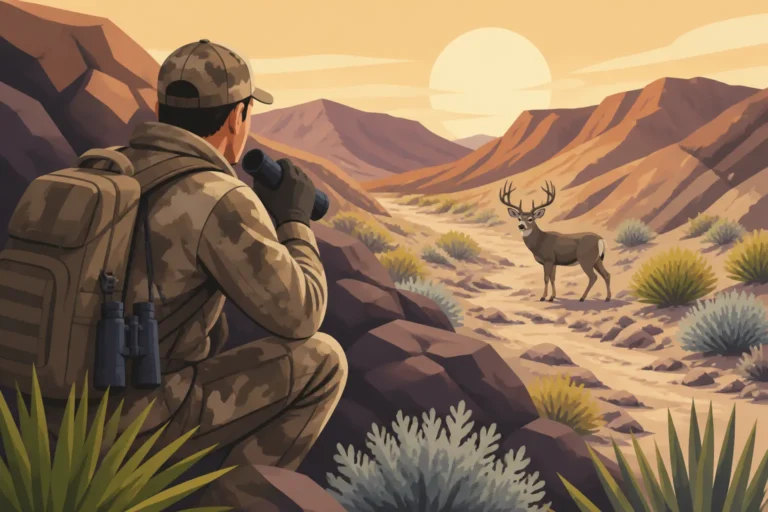
Below the towering peaks of the National Forests, the Bureau of Land Management (BLM) administers vast stretches of high desert landscape along the Nevada border. This land is often more open, characterized by sagebrush, Pinyon-Juniper, and arid washes. While seemingly barren to the untrained eye, these areas are crucial winter range for migratory mule deer and hold resident populations of desert mule deer, rabbits, and coyotes. Hunting a California BLM Desert Wash for Deer can be a productive strategy here.
BLM land is generally open to hunting, but it's vital to respect private inholdings and understand specific rules regarding vehicle use, camping, and fire restrictions, which are often stricter in these dry environments. Water sources, even small seeps or guzzlers, become critical focal points for wildlife in these arid regions. Glassing from prominent points, then planning a careful stalk, is a common and effective tactic for hunting these open, rolling hills. The sheer scale of BLM land means you can often find solitude, but it also means preparedness for self-sufficiency is key. Carrying extra water, understanding navigation, and having a reliable vehicle are not optional here.
Specific Wildlife Areas and Ecological Reserves
While the majority of hunting along the border occurs on National Forest and BLM land, there are also specific state-managed Wildlife Areas and Ecological Reserves that can offer unique opportunities. These areas are often smaller and more intensively managed for wildlife habitat, sometimes offering controlled hunts or specific seasonal access. For example, some reserves might protect critical wintering grounds, offering unique late-season opportunities, while others might focus on waterfowl or upland bird habitat.
It's essential to check the California Department of Fish and Wildlife (CDFW) regulations booklet or website for each specific area, as rules can vary greatly. Some might require special permits, entry fees, or have different shooting hour restrictions. While they may not offer the vast, free-ranging experience of the National Forests, these areas can be productive, especially if you're targeting specific species or looking for well-maintained facilities. Always cross-reference your chosen hunting spot with CDFW's current regulations to avoid any surprises.
Strategies for Hunting Eastern Sierra Deer
Deer hunting is arguably the most popular pursuit along the California-Nevada border, primarily targeting mule deer and, in transition zones, some blacktail deer. Success here hinges on understanding their distinct behaviors in this unique environment, especially their migratory patterns and how they utilize the rugged terrain.
Mule Deer Tactics in Open Country
Hunting mule deer in the Eastern Sierra's vast, open country is a game of optics and patience. Unlike the dense timber where quick shots are common, here you'll spend hours, even days, behind your binoculars or spotting scope. Glassing Mule Deer in Open California Country is the name of the game. Get to a high vantage point before first light and systematically grid-search every canyon, ridge, and sagebrush flat. Mule deer often bed on north-facing slopes to escape the sun, or tuck into brushy draws. Look for subtle movements, a flash of antler, or the tell-tale white rump patch.
Once you spot a buck, the real work begins: the stalk. This can be miles long, across broken terrain, often requiring you to drop into a canyon and climb out the other side, all while keeping the wind in your favor. Pay close attention to wind thermals, as they can shift unpredictably in this mountainous country. Shooting distances can be long, so practice shooting from various field positions and be proficient with your rifle at extended ranges. A good rangefinder is absolutely essential. Patience is a virtue; sometimes it's better to wait for a deer to move into a more favorable position than to rush a difficult stalk.
Blacktail Deer in Transition Zones
While the Eastern Sierra is primarily mule deer country, in the lower elevation foothills and drainages where the habitat begins to transition towards denser scrub and timber, you might encounter Columbia blacktail deer. These are often smaller than their mule deer cousins and tend to prefer more cover. Hunting them requires a blend of mule deer and blacktail strategies. You might still do some glassing, but you'll also need to employ still-hunting techniques through denser pockets of Pinyon-Juniper, bitterbrush, and mountain mahogany.
Blacktail deer are notoriously cagey and will often slip away unseen if not approached carefully. Look for fresh tracks, rub lines, and scrapes. When moving, do so slowly, pausing frequently to scan ahead and listen. Where California Blacktail Bucks Bed is often in thick cover, making them harder to spot. If you find yourself in thicker transition areas, rattling and grunting can sometimes be effective, particularly during the rut, which can vary across these diverse zones. The key is adapting your approach to the specific cover you're hunting.
Understanding Migration Corridors and Late-Season Opportunities
The annual migration of mule deer is arguably the most significant factor in Eastern Sierra deer hunting. As the high country receives its first significant snowfalls, often in late October or November, deer are pushed down to lower elevation winter ranges. This creates a funnel effect, concentrating deer in specific drainages and passes. Hunters who have scouted these migration corridors beforehand, or who understand the general flow of deer movement in response to weather, can capitalize on these late-season opportunities.
Many of California's X-zones, which are drawn-only tags along the Nevada border, are designed to coincide with these migrations. This is where Hunting California's High-Country X-Zones truly shines. Patience, persistence, and the ability to brave colder, snowier conditions are essential. Keep a close eye on weather forecasts; a major snowstorm can turn a slow hunt into an incredible one overnight. However, be prepared for difficult travel conditions, as snowy roads can become impassable. This is where applications like onX Hunt become invaluable, allowing you to mark potential migration routes, water sources, and escape cover, even when scouting in the off-season. GoHunt is also a great resource for researching draw odds and unit specifics for these coveted tags.
Pursuing Other Big Game: Elk and Bear
While deer take center stage, the California-Nevada border region also offers opportunities for other impressive big game species like elk and bear. These hunts often require even more specialized planning and a deeper understanding of specific regulations and animal behavior.
Rocky Mountain Elk Opportunities and Challenges
For the dedicated elk hunter, the Northeastern corner of California, particularly bordering Nevada and Oregon, holds limited populations of Rocky Mountain Elk. These are elusive animals, often found in dense timber or high-elevation meadows, and their tags are extremely difficult to draw. We're talking about Applying for a Rocky Mountain Elk Tag Near Oregon level of difficulty. The terrain is rugged, and these elk are accustomed to minimal human pressure, making them particularly wary.
Elk hunting here is typically a backcountry affair, demanding physical fitness, robust gear, and excellent woodsmanship. Expect to cover significant ground, often in steep, forested terrain. Calling, especially during the September rut, can be an effective strategy if you can locate a herd. However, silent still-hunting and careful glassing of clearings and burn scars can also produce results. Due to the limited tags and challenging environment, any elk hunt in this region requires extensive scouting and a deep commitment to the pursuit. Remember, for a hunt like this, Packs and Gear for a Backcountry Elk Hunt will make or break your experience, ensuring you can pack out a quartered animal.
Black Bear Hunting in Border Regions
Black bears are present throughout the Eastern Sierra and many of the Pinyon-Juniper woodlands along the Nevada border, particularly where there are good food sources like acorns, berries, or even available carrion. California's bear season often runs concurrently with deer season, providing a potential bonus opportunity for deer hunters. However, there's a statewide quota for bear harvests, so it's critical to check the CDFW website frequently to see if the season is still open, as it can close early if the quota is met.
Bear hunting in this region is almost exclusively spot-and-stalk. Bears are opportunistic feeders, so focus your efforts on areas with abundant food sources. Early season might find them in higher elevation berry patches, while later in the fall, they'll be concentrated in oak stands gorging on acorns. Glassing burn scars, open slopes at dawn and dusk, or watching riparian areas are effective strategies. Be aware of the regulations regarding baiting and trapping, as these are generally prohibited in California for bear. Always be sure of your target and verify it's a legal bear before taking a shot; avoid sows with cubs. Spot-and-Stalk California Bear Hunting Before the Quota Closes is a truly rewarding experience, but demands careful planning.
Essential Gear and Preparedness for Border Hunts
The extreme and variable conditions along the California-Nevada border demand careful consideration of your gear. Being unprepared here isn't just uncomfortable; it can be dangerous. From the right optics to appropriate clothing, every item in your pack plays a crucial role in a successful and safe hunt.
Optics and Long-Range Shooting Considerations
Given the vast, open landscapes, quality optics are non-negotiable for hunting along the Nevada border. A good pair of 10x binoculars on a tripod or steady rest is your primary scouting tool, allowing you to thoroughly scan distant hillsides and canyon bottoms for game. For serious mule deer hunting, a spotting scope (15-45x or 20-60x) is equally vital for evaluating distant animals and determining if they are legal bucks, saving you countless miles of walking. Optics for California's Open-Country Deer Hunting goes into more detail.
Because shots can often be at extended ranges across wide-open valleys or up steep opposing slopes, precision rifle shooting is essential. Practice shooting from prone, kneeling, and sitting positions, and understand how bullet drop and wind drift affect your specific non-lead ammunition at various distances. A reliable laser rangefinder that can read angles for uphill and downhill shots is crucial for accurate shot placement. Remember, California's non-lead ammunition requirement means you'll need to choose bullets that perform well at these longer ranges, so Choosing Non-Lead Rifle Ammunition in California is an important decision.
Layering for Extreme Weather Fluctuations
The Eastern Sierra is notorious for its rapid and dramatic weather changes. You can start a crisp fall morning in freezing temperatures, shed layers as the sun climbs and warms the landscape, only to face a sudden hail storm or even snow by late afternoon. Proper layering is the only way to comfortably and safely adapt to these fluctuations. Start with a moisture-wicking base layer to manage sweat, add an insulating mid-layer for warmth (fleece or puffy jacket), and top it off with a waterproof and windproof outer shell.
Always carry an extra insulating layer, even on days that start warm. A lightweight, compressible puffy jacket can be a lifesaver when the temperature suddenly drops or you're sitting still for an extended period. Don't forget quality headwear, gloves, and gaiters, especially if hunting later in the season when snow is a real possibility. Your footwear should be waterproof, supportive, and well-broken-in, capable of handling everything from rocky slopes to mud and snow.
Navigation and Safety in Remote Terrain
The remote nature of border hunting means you are often far from cell service and assistance. A reliable navigation system is paramount. While a GPS unit or a smartphone app like onX Hunt with downloaded offline maps is excellent, always carry a physical map and compass as a backup. Know how to use them. Mark your vehicle's location, critical terrain features, and potential escape routes. Scouting California Public Land Before Season is not just about finding game, but understanding the terrain for safety.
Safety considerations extend beyond navigation. Always let someone know your exact hunting plan and expected return time. Carry a comprehensive first-aid kit, a headlamp with extra batteries, fire-starting materials, and sufficient water (or a reliable water filter) for your planned excursion, plus extra for emergencies. A satellite messenger or personal locator beacon (PLB) is a wise investment for communicating in areas without cell service, providing a lifeline if you encounter an emergency. Bears are present in this region, so carrying bear spray, and knowing how to use it, is also a prudent precaution.
Navigating Regulations and Drawing Odds
Hunting along the California-Nevada border, particularly for big game like deer and elk, involves navigating California's complex tag allocation system and its unique hunting regulations. Understanding these rules is not just about compliance; it's about maximizing your chances of drawing a tag and having a legal, ethical hunt.
Understanding California's X-Zones and Draw System
Much of the prime mule deer hunting along the Nevada border falls within California's X-zones. These are highly sought-after deer hunting zones that are managed primarily through a draw system, meaning you must apply for a tag well in advance and hope to be selected. The draw odds for these zones can be extremely low, often requiring many years of accumulating preference points. The California Big Game Drawing Explained is essential reading for anyone considering these hunts.
Each X-zone has specific season dates, tag numbers, and geographical boundaries. Some zones might be early archery-only, while others open later for general rifle season. It's crucial to research the specific zone you're interested in, paying attention to historical draw odds and success rates. Resources like GoHunt can provide invaluable data and analysis to help you make informed decisions on which zones to apply for, and how to best utilize California's preference point system. Applying for a California Elk tag in these border regions is even more challenging due to fewer available tags and higher demand.
Non-Lead Ammunition Compliance
California has a statewide ban on lead ammunition for hunting, meaning all projectiles used for taking any game animal must be non-lead. This applies to all hunting lands, public or private, including those along the Nevada border. California's Non-Lead Ammunition Requirement is a fundamental rule that every hunter must adhere to. The primary intent is to protect scavenging wildlife, particularly the California Condor, from lead poisoning.
When preparing for your hunt, ensure your rifle, shotgun, or muzzleloader is sighted in with non-lead ammunition. Copper bullets are the most common choice for rifles and offer excellent ballistic performance. For shotguns, steel or bismuth shot is required for upland birds and waterfowl. It's advisable to test your chosen non-lead load extensively before your hunt to ensure accuracy and consistent performance. Non-lead ammunition can sometimes be harder to find and more expensive than traditional lead, so plan ahead and purchase your supply well in advance of the season.
Harvest Reporting and Specific Border Regulations
After a successful hunt, California requires all deer and bear harvests to be reported. This can often be done online through the CDFW's Automated License Data System (ALDS) or by mailing in a specific portion of your tag. There are strict deadlines for reporting, typically within 30 days of harvest or by January 31st for deer, whichever comes first, and immediately for bear. Failing to report a harvest can result in penalties and impact your ability to acquire tags in future years. The California Deer Reporting Deadline is a critical detail.
Beyond general regulations, always be mindful of specific rules that might apply to border areas. This could include things like restrictions on cross-border transport of game (especially for Chronic Wasting Disease zones, though these are typically not in the direct border area with Nevada), or unique land-use rules on specific federal or state properties. The responsibility for knowing and following all regulations falls squarely on the hunter. Always consult the most current CDFW regulations booklet before heading afield.
Disclaimer
This article is for general informational purposes only and does not constitute professional advice. Laws, prices and regulations vary by location and change over time. Consult a qualified professional for guidance on your specific situation.