Lightweight Boots for Steep California Sierra Terrain
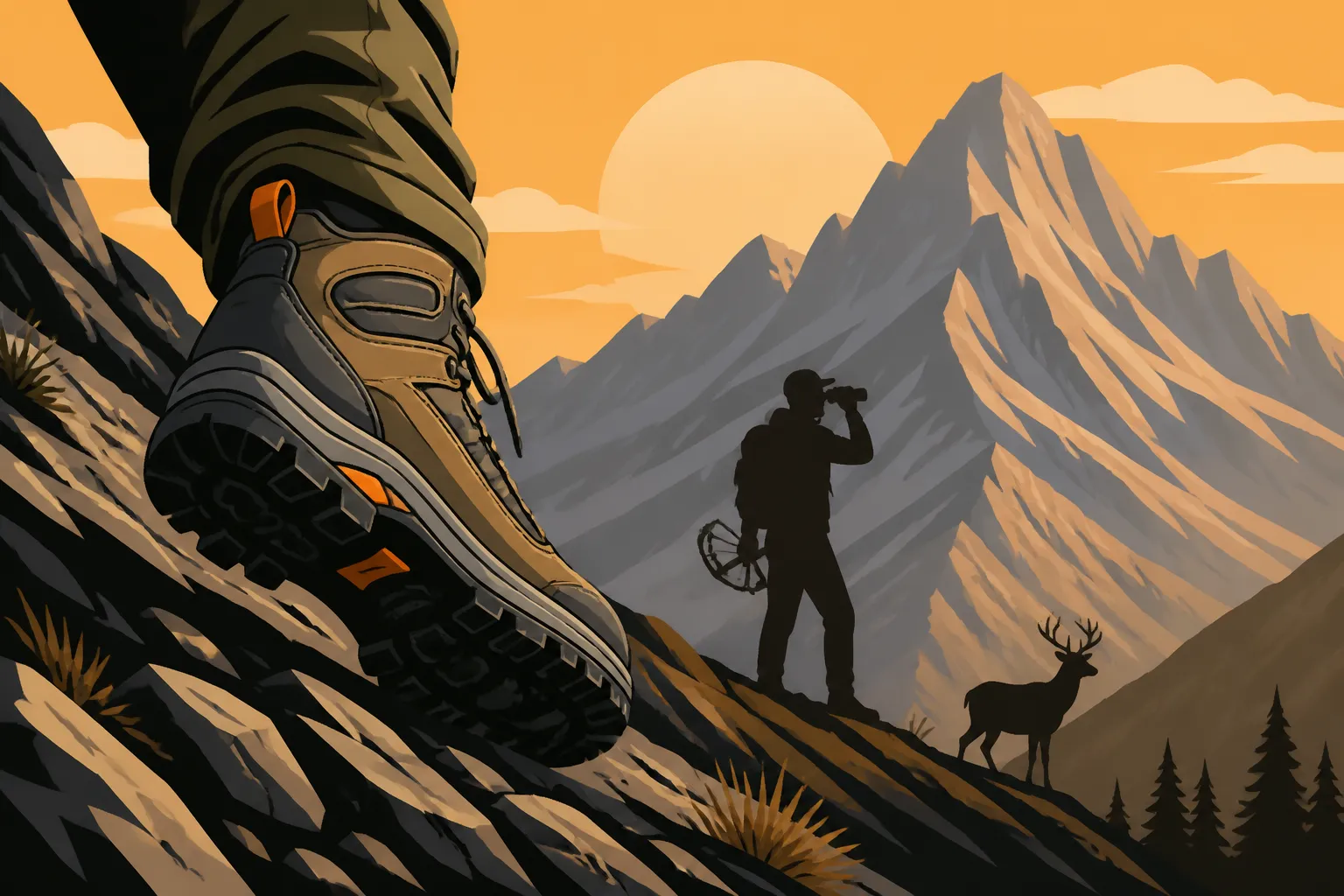
The Sierra Nevada mountains offer some of California's most breathtaking hunting opportunities, but the steep, rugged, and often unpredictable terrain can quickly turn a dream hunt into a painful ordeal if your footwear isn't up to the challenge. Treacherous scree slopes, endless granite ascents, and thick manzanita are just a few of the obstacles that demand specialized boots. This comprehensive guide will walk you through everything you need to know to choose lightweight boots that will support you, protect your feet, and keep you comfortable on those grueling Sierra climbs and descents.
Why Lightweight Boots are Essential for Sierra Hunting
When you're packing into the high country for a deer or elk hunt, every ounce counts. I've been there, loaded down with a heavy pack, and felt the drag of unnecessary weight with every step uphill. Traditional heavy-duty hunting boots, while incredibly durable, can feel like lead weights after a few miles, especially when you're gaining thousands of feet in elevation. The Sierra isn't just about steepness; it's about the sheer mileage and vertical gain you'll put in, day after day, often in quickly changing weather.
The Relentless Grind of Sierra Elevation
Picture this: you've glassed a buck across a canyon, bedded down tight in some timber. He's a mile away as the crow flies, but to get to him, you're looking at a descent of 1,500 feet into a creek bottom, followed by an immediate 2,000-foot climb up the opposite face, navigating loose shale and granite boulders. That's a lot of up and down, and doing it in boots that feel like ski boots is going to wear you out far quicker than necessary. Heavy boots require more energy expenditure with each step, taxing your leg muscles and accelerating fatigue. You need every ounce of energy for the hunt itself, not for hauling your feet around.
Moreover, the prolonged effort of climbing and descending puts immense strain on your feet, ankles, and knees. Heavier boots might feel stable initially, but that extra weight adds to the cumulative impact. Over several days, this constant pounding can lead to blisters, sore joints, and even injuries, effectively ending your hunt prematurely. Many seasoned hunters will tell you that the Sierra is won or lost on your feet, and making smart gear choices, especially for footwear, is paramount. If you're planning a trip like Hunting California's Sierra Nevada Backcountry, you'll appreciate lighter footwear.
Maximizing Mileage and Minimizing Fatigue
Hunting in the Sierra often means covering significant ground. Whether you're still-hunting slowly through dark timber or fast-packing to a new glassing knob, every mile adds up. Lightweight boots don't just reduce the energy needed for each step; they also allow for a more natural stride, which can prevent awkward movements and potential falls on uneven ground. When you're constantly adjusting your footing on loose scree or crossing log jams, agility is just as important as brute force.
Think about scouting trips too. Before the season opens, you might be out for miles, often just with a daypack, learning the terrain and finding key sign. Scouting California Public Land Before Season is crucial, and having nimble feet lets you explore more thoroughly without feeling spent. The difference between a 3-pound boot and a 5-pound boot might not seem like much on paper, but over a 10-mile day with 3,000 feet of elevation gain, it translates to thousands of extra pounds lifted by your legs. Minimizing that rotational weight allows you to push harder and longer, increasing your chances of finding game and successfully pursuing it.
Balancing Support with Agility
It's a common misconception that "lightweight" automatically means "flimsy." Modern boot technology has come a long way, allowing manufacturers to create boots that are both light and incredibly supportive. The goal isn't to wear minimalist trail runners into the high country, which would be a recipe for disaster. Instead, it's about finding that sweet spot where you have ample ankle support to prevent twists and rolls on uneven ground, rigid enough sole for stability when side-hilling, but flexible enough to articulate naturally with your foot's movement.
This balance is crucial when you're scrambling up a steep, rocky face or carefully descending a treacherous game trail. A boot that's too stiff will limit your foot's natural articulation, making it harder to maintain balance and feel the terrain. One that's too soft will leave your ankles vulnerable. Lightweight hunting boots often achieve this balance through advanced midsole compounds, targeted reinforcement, and thoughtful lacing systems, allowing you to move confidently and quietly. This agility is especially valuable when trying to get into position on a wary blacktail buck.
Core Features of a High-Performance Sierra Boot
Choosing the right lightweight boot isn't just about weight; it's about a combination of features that address the specific challenges of Sierra hunting. You're looking for a boot that can handle everything from dry, dusty trails to wet, slippery rock faces, all while providing comfort for days on end. Ignoring any of these core features can lead to discomfort, inefficiency, or even injury.
Grip and Traction on Varied Surfaces
The Sierra Nevada presents a dizzying array of surface types: loose decomposed granite, slick granite slabs, wet timber, deep leaf litter, rocky scree, and sometimes even patches of snow or ice in the shoulder seasons. Your boot's outsole is your primary interface with this diverse terrain, and its performance can make or break your safety and confidence. A poor grip leads to slips, falls, and wasted energy as you fight for purchase.
Look for outsoles specifically designed with aggressive, multi-directional lugs. Brands like Vibram are popular for their durable and high-traction rubber compounds, but many manufacturers now have proprietary blends that perform exceptionally well. The lug pattern should be open enough to shed mud and debris but dense enough to provide consistent contact on hard surfaces. Deeper lugs are excellent for soft ground, while flatter, broader lugs on the sole's edge can provide stability on slick rock. Consider the various conditions described in Wind and Thermals in Steep Sierra Country when thinking about your footing. You'll often be on precarious positions, trying to read the air, and good grip is paramount.
Ankle Support Without Restriction
While ultra-heavy mountaineering boots offer maximum ankle support, they often come with significant weight and rigidity that hinder agile movement. For a lightweight Sierra hunting boot, the goal is robust ankle support that still allows for natural foot flex and articulation. This is typically achieved through a higher cuff, often 6-8 inches, combined with strategic padding and a well-designed lacing system that cinches securely around the ankle.
The key here is that the support should feel like an extension of your leg, not a rigid brace. You need to be able to flex your foot to climb, step over obstacles, and side-hill without the boot fighting your natural movement. Good ankle support protects against sprains and twists, particularly when carrying a heavy pack or navigating uneven, unseen terrain. It also helps to prevent your foot from sliding around inside the boot, which is a major cause of blisters. The materials used in the upper, such as durable synthetic panels or specialized leather, also play a role in how well the boot hugs and supports your ankle without creating hot spots.
Waterproofing for Unpredictable Weather
Never underestimate Sierra weather. A clear, sunny morning can quickly turn into an afternoon thunderstorm, or a late-season hunt could mean unexpected snow. Layering for Hot-to-Cold Zone A Archery Days is important, but wet feet are a quick route to misery and can lead to frostbite in colder conditions. Therefore, effective waterproofing is non-negotiable for Sierra hunting boots.
Most quality hunting boots achieve waterproofing through a breathable membrane, such as Gore-Tex or similar proprietary technologies. These membranes prevent external water from entering while allowing internal moisture (perspiration) to escape, keeping your feet dry and comfortable. However, waterproofing is only as good as the boot's construction. Seams must be sealed, and the overall design should minimize potential leak points. Remember that even the best waterproof membrane needs the outer materials to be regularly treated with a DWR (Durable Water Repellent) coating to prevent them from becoming waterlogged, which can reduce breathability and add weight. You might be slogging through muddy bottoms one moment and crossing shallow creeks the next, so good waterproofing is critical for Best Boots for Steep Wet-Season Sierra Trails.
Understanding Boot Construction and Materials
The internal architecture and material choices of a lightweight hunting boot are what make it perform on demanding Sierra terrain. From the moment you slip them on, to the last step of a long stalk, how the boot is built determines its comfort, durability, and effectiveness. It’s a complex interplay of different components, each playing a vital role.
Uppers: Leather, Synthetics, and Hybrids
The upper part of a boot is everything above the sole. It provides protection, support, and contributes significantly to the boot's weight and durability. Traditionally, hunting boots were made exclusively of full-grain leather, known for its incredible durability, ability to mold to the foot over time, and excellent water resistance when properly treated. While full-grain leather is still a top choice for many, it can be heavier and take longer to break in.
Modern lightweight boots often incorporate advanced synthetics or hybrid designs. Synthetics like Cordura nylon offer excellent abrasion resistance, lighter weight, and faster drying times. They are often more breathable than traditional leather, which can be a huge benefit during strenuous climbs in warmer early season hunts. Many manufacturers utilize a hybrid approach, combining durable leather in high-wear areas (like the toe rand and lower ankle) with lighter, more flexible synthetic panels elsewhere. This allows for a balance of durability, weight reduction, and comfort. When considering a boot, evaluate the types of materials and how they've been strategically placed to maximize performance without adding unnecessary bulk.
Midsoles and Outsoles: The Foundation of Comfort and Grip
The midsole and outsole are arguably the most critical components for performance on steep, rocky terrain. The midsole is the layer between your footbed and the outsole, primarily responsible for cushioning, shock absorption, and providing stability. In lightweight boots, manufacturers use advanced materials like EVA (Ethylene-vinyl acetate) or PU (Polyurethane) foams, often in varying densities, to achieve a balance of cushioning and support without excessive weight. A good midsole will absorb the impact of uneven ground, reducing fatigue on your joints, and provide torsional rigidity—meaning it resists twisting—which is essential for stability on side-hills and steep climbs. Some boots feature a shank (a stiff plate, often nylon or fiberglass) within the midsole for added rigidity and protection against sharp rocks.
The outsole is the very bottom layer, the part that directly contacts the ground. As discussed, its material composition and lug pattern are paramount for traction. Look for high-abrasion rubber compounds with aggressive, multi-directional lugs that grip well on a variety of surfaces. The depth and spacing of the lugs also influence performance; deeper, widely spaced lugs excel in mud and soft earth, while shallower, more numerous lugs provide better contact on hard, dry rock. The shape of the heel and toe also matters for climbing and descending stability.
Lacing Systems and Fit Customization
A boot's lacing system might seem minor, but it's crucial for achieving a secure, comfortable fit that prevents blisters and provides consistent support throughout your hunt. Traditional eyelets are common, but many quality boots feature a combination of metal eyelets, D-rings, and speed hooks. Speed hooks allow for quick lacing and unlacing, which is a blessing at the end of a long day.
More advanced lacing systems often include locking eyelets or differentiated lacing zones. Locking eyelets allow you to tighten the lower foot section independently from the ankle cuff, preventing your foot from sliding forward on descents (toe bang!) or backward on climbs (heel lift!). This level of customization ensures a snug fit across different parts of your foot, adapting to its unique shape and movement. A well-designed lacing system, combined with quality laces that don't stretch or come untied easily, allows you to fine-tune the boot's fit to maximize comfort, support, and responsiveness, especially important when Glassing a Canyon for a Bedded Buck and needing to move stealthily.
| Feature | Description | Benefit for Sierra Hunting |
|---|---|---|
| Lightweight Uppers | Synthetic blends, thinner leather, strategic reinforcements | Reduces fatigue, enhances agility, faster drying |
| Aggressive Outsole | Multi-directional, deep lugs, high-traction rubber (e.g., Vibram) | Superior grip on loose rock, mud, steep climbs, and descents |
| Supportive Midsole | EVA/PU foam, often with shank or stiffener | Cushioning, stability, protects feet from sharp rocks, reduces fatigue |
| Waterproof Membrane | Gore-Tex or similar breathable material | Keeps feet dry in rain, snow, wet grass, and creek crossings |
| Ankle Support | High cuff, secure lacing, internal padding | Prevents twists/sprains, maintains stability on uneven terrain |
| Protective Toe Rand | Rubberized or reinforced toe cap | Guards against impacts from rocks and roots, extends boot life |
| Custom Lacing | Locking eyelets, speed hooks, zonal tensioning | Customizable fit, prevents heel slip and toe bang, quick adjustment |
The Critical Art of Boot Fitting and Break-In
You could buy the most expensive, technically advanced lightweight hunting boots on the market, but if they don't fit correctly or aren't properly broken in, they'll be nothing but a source of agony. Footwear is intensely personal, and what works for one hunter might be terrible for another. Taking the time to get the fit right and prepare your boots for the field is as important as any other gear choice.
Sizing and Sock Selection for Sierra Conditions
Proper sizing is the absolute cornerstone of comfortable footwear. Never assume your street shoe size is your boot size. Your feet swell during activity and especially with changes in temperature and elevation. It's best to try on boots at the end of the day when your feet are slightly swollen, and always wear the specific socks you intend to hunt in. For Sierra conditions, this usually means a quality merino wool blend sock, which wicks moisture, regulates temperature, and offers cushioning. Best Base Layer for a Steep Sierra Hike applies to your feet too!
When trying on boots, ensure there's about a thumb's width of space between your longest toe and the end of the boot when your heel is firmly seated. Your heel should lift minimally when walking uphill, and your toes should not touch the front of the boot when walking downhill. Pay attention to any pressure points, especially across the top of your foot or around the ankle. Walk around the store, find an incline if possible, and spend a good 15-20 minutes in them. Don't rush this process. Every foot is unique, so what feels good to a buddy might not be right for you. GoHunt often has detailed reviews on various boot brands, which can give you a starting point, but always try them on yourself.
The Importance of a Proper Break-In Period
This cannot be overstated: never take brand new boots straight to the backcountry. Modern boots often have less break-in than their full-leather predecessors, but they still require time for the materials to soften, the sole to become more flexible, and, most importantly, for the boot to conform to the unique shape of your foot. Skipping this step is a surefire way to develop blisters, hot spots, and general foot misery.
Start by wearing your new boots around the house for a few hours. Then, transition to short walks in your neighborhood, gradually increasing the distance and duration. Next, hit some local trails or hills that mimic the terrain you'll encounter in the Sierra. Wear your pack during some of these longer break-in hikes to simulate actual hunting conditions. Aim for at least 20-30 miles of varying terrain before your hunt. This allows you to identify and address any potential issues before they become debilitating problems in the remote backcountry.
Addressing Common Hot Spots and Foot Issues
Even with the best fitting and broken-in boots, issues can sometimes arise. Being prepared to address them proactively can save your hunt. Hot spots are the precursors to blisters. If you feel any rubbing or irritation, stop immediately. Apply Moleskin, athletic tape (like Leukotape), or specialized blister patches to the area. Don't wait until a blister forms; prevention is key.
Heel lift can occur, especially on steep ascents, and contributes to hot spots and blisters. Experiment with different lacing techniques; a "surgeon's knot" or using the top two eyelets can often help lock your heel down. Toe bang happens on descents when your toes repeatedly hit the front of the boot. This usually indicates the boot is too large or your foot is sliding forward. Ensure your laces are cinched tight, especially across the instep. If it's a persistent issue, you might need a different size or brand that better matches your foot volume. Carrying a small first aid kit with blister treatment is essential for any Packs and Gear for a Backcountry Elk Hunt.
Maintenance and Longevity for Your Investment
High-quality lightweight hunting boots are an investment, and like any investment, they require proper care to ensure they perform season after season. Neglecting maintenance can dramatically shorten their lifespan, compromise their waterproofing, and leave you with uncomfortable, unsupportive footwear when you need it most. A little effort after each hunt can save you money and discomfort in the long run.
Cleaning and Drying After Every Hunt
After a grueling hunt in the Sierra, it's tempting to kick off your boots and forget about them until next time. Resist the urge! Mud, dust, sweat, and debris can degrade boot materials and clog breathable membranes. As soon as you can, give your boots a thorough cleaning.
First, remove the laces and footbeds. Brush off any loose dirt and mud from the uppers and outsoles. For tougher grime, use a soft brush and lukewarm water. Avoid harsh detergents, which can strip away protective coatings or damage membranes. Rinse them thoroughly. Once clean, the drying process is crucial. Never force-dry your boots with direct heat (like a campfire, heater, or direct sun), as this can damage materials, crack leather, and delaminate glues. Instead, stuff the boots with newspaper (change it frequently) or use a dedicated boot dryer on a low, ambient setting. Allow them to air dry completely in a well-ventilated area, away from direct heat or sunlight. This prevents mold and mildew and helps maintain the integrity of the materials, preparing them for your next outing, perhaps Hunting a National Forest Burn Scar.
Re-Waterproofing and Conditioning
Even boots with waterproof membranes benefit from regular re-waterproofing of the outer material. The DWR (Durable Water Repellent) coating on the exterior fabric and leather wears off over time, causing the outer material to "wet out." While the internal membrane still prevents water from reaching your foot, a waterlogged exterior adds weight, reduces breathability, and makes the boot feel colder.
For leather boots, use a leather conditioner or wax specifically designed for outdoor footwear. This nourishes the leather, keeps it supple, and enhances its water resistance. For synthetic or hybrid boots, use a spray-on or wash-in DWR treatment. Always follow the manufacturer's instructions for the specific boot and product. Aim to re-treat your boots at least once a season, or more frequently if you're putting in a lot of wet miles. This not only maintains waterproofing but also prolongs the life of the upper materials.
Strategic Storage for Off-Season Care
How you store your boots during the off-season matters. Improper storage can lead to material degradation, odors, and shape loss. Ensure your boots are completely clean and dry before storing them. If possible, leave the laces slightly loose and the tongue open to promote airflow. Store them in a cool, dry place, away from direct sunlight or extreme temperatures. A closet or gear locker is ideal; avoid storing them in a hot garage or a damp basement.
Some hunters like to stuff their boots with crumpled newspaper or boot trees to help them retain their shape, especially for leather boots. This prevents creases and sagging. If you use a boot dryer, ensure it's completely off and unplugged when not in use. Proper storage prevents unpleasant surprises when you pull them out for next season's Hunting California's Multi-Zone Deer Season System or a spring bear hunt. By consistently maintaining your boots, you're not just preserving gear; you're ensuring your comfort and performance when it counts most in the challenging Sierra terrain.
Disclaimer
This article is for general informational purposes only and does not constitute professional advice. Laws, prices and regulations vary by location and change over time. Consult a qualified professional for guidance on your specific situation.