Hunting a California Sacramento Valley Wildlife Refuge
Hunting a California Sacramento Valley Wildlife Refuge can feel like trying to solve a complex puzzle, especially when you’re facing crowded parking lots at 3 AM or deciphering an endless list of specific rules. But let me tell you, these unique areas offer some of the most phenomenal waterfowl hunting experiences in the state. This guide is here to untangle the complexities, walk you through the process, and help you get the most out of your next hunt in these incredibly productive havens.
The Unique Ecosystem of Sacramento Valley Wildlife Refuges
The Sacramento Valley is more than just rich farmland; it's a vital artery for millions of migratory birds on the Pacific Flyway. When you step onto a wildlife refuge here, you're not just entering a hunting ground; you're entering a carefully managed ecosystem designed to sustain these incredible avian migrations. Understanding this underlying purpose is key to appreciating and navigating your hunting experience.
What Makes These Refuges Special?
Think about the Central Valley. It’s an agricultural powerhouse, home to vast fields of rice, corn, and wheat, which happen to provide an irresistible buffet for waterfowl. These refuges, many of which were established decades ago, intentionally flood former agricultural land or manage natural wetlands to create ideal stopping points for ducks and geese heading south. It's a critical stopover point, a veritable hotel and restaurant for birds that have traveled thousands of miles. This rich environment supports enormous populations of birds, often numbering in the hundreds of thousands, which creates an unparalleled hunting opportunity that you just won't find in many other places.
However, this high concentration of birds and hunters also means the land needs intense management. These refuges operate under a dual purpose: conservation of migratory bird populations and providing public recreation, including hunting. Hunting, in this context, is not just a sport; it's a crucial management tool. By allowing regulated harvest, wildlife managers can help control populations, prevent overcrowding, and, perhaps most importantly, generate revenue through license and stamp sales that directly funds further conservation efforts. This is precisely why the regulations can feel so specific and, at times, restrictive – they’re designed to balance these two vital roles.
Unlike vast stretches of public land like national forests, where you might roam freely for miles, Sacramento Valley refuges are often highly structured. They feature intricate systems of dikes, levees, and canals for water control, specific crop plantings managed for wildlife, and clearly delineated hunting zones. This intensive management is what allows them to host such incredible numbers of birds and support sustainable hunting pressure, but it also demands a more organized approach from the hunter. Understanding this distinction is the first step toward a successful and enjoyable hunt on these unique lands.
Common Habitat Types You'll Encounter
When you’re preparing to hunt in the Sacramento Valley, you’ll quickly learn that not all water is created equal, nor are all fields. The diversity of habitats within these refuges caters to different species and requires different hunting approaches. Knowing what to expect in terms of terrain and cover will significantly improve your chances.
Flooded rice fields are often the quintessential habitat of the Central Valley. After the rice harvest, many fields are reflooded, turning into vast, shallow wetlands. These are duck magnets, offering an abundance of waste grain for food and ideal shallow water for dabblers like mallards, pintails, and wigeon. The challenges for hunters are significant, though: trudging through deep mud, navigating flooded rows, and often needing a large number of decoys to attract birds over the expansive water. Setting up a proper Decoying Mallards on Flooded Rice Ground spread in these conditions is an art form. You'll need good waders, a strong back, and a clear understanding of how to position your spread to create a landing zone.
Beyond the agricultural fields, you’ll find managed wetlands and natural marshlands. These areas are designed specifically for waterfowl and often feature shallower water with natural vegetation like cattails, tules, and smartweed. These habitats are fantastic for a broader range of duck species, including divers, and can sometimes hold geese. Hunting here might involve a permanent blind, or you might be scouting for natural pockets of cover. The vegetation provides excellent concealment but can also make retrieving downed birds a challenge, often requiring a good dog or a sturdy retrieving pole.
Dry fields, especially those with cut corn, wheat, or alfalfa stubble, are absolutely critical for geese, particularly specklebellies and snow geese, but also for some duck species that prefer to feed in fields. These fields provide easy pickings for large flocks. Hunting these areas almost always means using layout blinds, which allow you to disappear into the field stubble. The key here is meticulous concealment, as geese have incredible eyesight. Techniques for Layout Blind Hunting a Cut Corn Field are paramount to success in these situations. You'll spend a lot of time ensuring your blind is perfectly brushed in and your silhouette is broken up.
Finally, don't overlook the myriad sloughs, ditches, and canals that crisscross many refuges. These smaller waterways, often lined with thick vegetation, can offer quieter opportunities, sometimes for jump-shooting ducks that are resting or feeding in more secluded spots. They can also be excellent for pass-shooting birds flying between larger bodies of water or feeding areas. While not typically the focus of a large decoy spread, these linear features can be surprisingly productive, especially during the middle of the day when bigger water gets pressured. It’s worth exploring these often-overlooked spots for a different kind of refuge experience.
Navigating the Permit and Reservation System
Hunting a Sacramento Valley wildlife refuge isn't typically a spontaneous affair. The popularity and ecological importance of these areas mean that access is tightly controlled through a system of permits, reservations, and daily draws. This can be intimidating, frustrating even, but understanding how it works is absolutely essential to getting your boots on the ground and your shotgun in the blind.
Understanding the Daily Draw and Reservation Process
The process of gaining entry to many of the prime waterfowl refuges in the Sacramento Valley is often the biggest hurdle for hunters. Most popular refuges utilize either an online reservation system or a daily lottery, affectionately known as the "sweatline." This highly competitive system is designed to manage hunter numbers, ensuring a quality experience while preventing overcrowding, but it does require considerable planning and sometimes, a lot of luck. Many hunters will tell you the real hunt begins at the computer keyboard or in the predawn parking lot.
The online reservation system, typically managed through California’s Automated License Data System (ALDS), is where you'll try to secure a spot well in advance. Reservations for popular weekends and opening days often fill up literally within seconds of becoming available. You need to know exactly when they open – often at odd hours or specific dates months before the season – and be logged in and ready to click the moment the window opens. It’s a bit like trying to get concert tickets for a sold-out show. Missing the window by even a minute can mean you're out of luck. This system allows you to pre-plan your hunt, but securing a spot requires dedication and speed. For detailed instructions, it’s worth reviewing resources like Registering for a California Wildlife Area Hunt Online.
If you don't secure a reservation, or if your plans are more spontaneous, the "sweatline" is your next best bet. This involves showing up at the refuge check station in the very early hours of the morning, often before the sun even thinks about rising, to enter a daily drawing for any available hunting spots (known as "fill-ins" or "sweatline passes"). Hunters are usually assigned a random number, and as reserved parties fail to show up or additional capacity opens, numbers are called. The odds can vary wildly depending on the day, the refuge, and the weather. Patience is absolutely key here, and it's not uncommon to wait for hours, hoping your number gets called. It’s a true test of dedication, but it can also lead to some of the most memorable hunts.
Regardless of how you gain entry, the check-in and check-out process is mandatory. Once you have a reservation or your number is called, you'll proceed to the check station. Here, staff will verify your permits, assign you a hunting zone or blind, provide a map, and brief you on any specific rules for that day. After your hunt, returning to the check station to report your harvest is not just a courtesy, it’s a legal requirement. This data is vital for wildlife managers to monitor populations and adjust regulations for future seasons. Failing to check out or accurately report your take can lead to fines and loss of hunting privileges, so always make sure to follow through.
Mandatory Requirements and Check-in Procedures
Before you even think about setting foot in a Sacramento Valley wildlife refuge, you need to ensure all your paperwork is in order. California hunting has several layers of requirements, and refuges, with their specific management goals, often have additional, stricter rules you must follow. Being unprepared at the check station is a guaranteed way to ruin your hunt before it even begins.
First and foremost, you need your valid California hunting license. Beyond that, for waterfowl, you’ll need a California Duck Validation, a Federal Duck Stamp, and your Harvest Information Program (HIP) certification. These aren't optional; they're foundational. The Federal Duck Stamp, a beautiful piece of art each year, serves as a mini-pass to national wildlife refuges and is a crucial source of conservation funding. For a full breakdown of costs and requirements, be sure to check articles like California Hunting Licenses and What They Cost, California Federal Duck Stamp Requirement, and California HIP Certification for Bird Hunters. Without these, you will be turned away, no exceptions.
Next, and this is a big one for California hunters, is the non-lead ammunition requirement. California has a statewide ban on lead ammunition for all hunting, and wildlife refuges are particularly strict about enforcement. This means your shotgun shells must contain non-lead shot – typically steel, bismuth, or tungsten alloys. Make sure you've purchased enough non-lead shells in the correct shot size for waterfowl, as supply can sometimes be spotty, especially closer to opening day. Don't show up with lead shot; wardens regularly check. While the article Choosing Non-Lead Rifle Ammunition in California focuses on rifles, the principle of being aware of non-lead requirements applies universally across all firearms in the state.
When you arrive at the refuge check station, the staff will guide you through the process. This typically involves presenting all your required licenses and stamps, which they will verify. If you have a reservation, they'll confirm it. If you're on the sweatline, they'll assign you a number for the draw. Once your access is confirmed, you'll often be given a map of the hunting area, which will delineate your assigned blind, zone, or general hunting area. Pay close attention to any specific instructions or temporary closures that day, as conditions can change rapidly. This is also the time to ask any questions you have about boundaries, access points, or specific refuge rules.
Finally, the post-hunt check-out is as important as checking in. Before you leave the refuge, you are required to stop back at the check station and report your full harvest. This includes the species and number of each bird taken. This data is meticulously collected by wildlife agencies and is essential for managing waterfowl populations, setting future bag limits, and understanding migration patterns. It’s not just a formality; it’s a direct contribution to wildlife conservation and the future of hunting. Always report honestly and completely.
Effective Strategies for Waterfowl Success
Once you’ve navigated the permits and found your spot, the real fun begins. But successful waterfowl hunting in a high-pressure environment like a Sacramento Valley refuge requires more than just showing up with a shotgun. It demands an understanding of decoy placement, calling techniques, and masterful concealment to fool wary birds that have seen it all.
Decoy Spreads and Calling Techniques
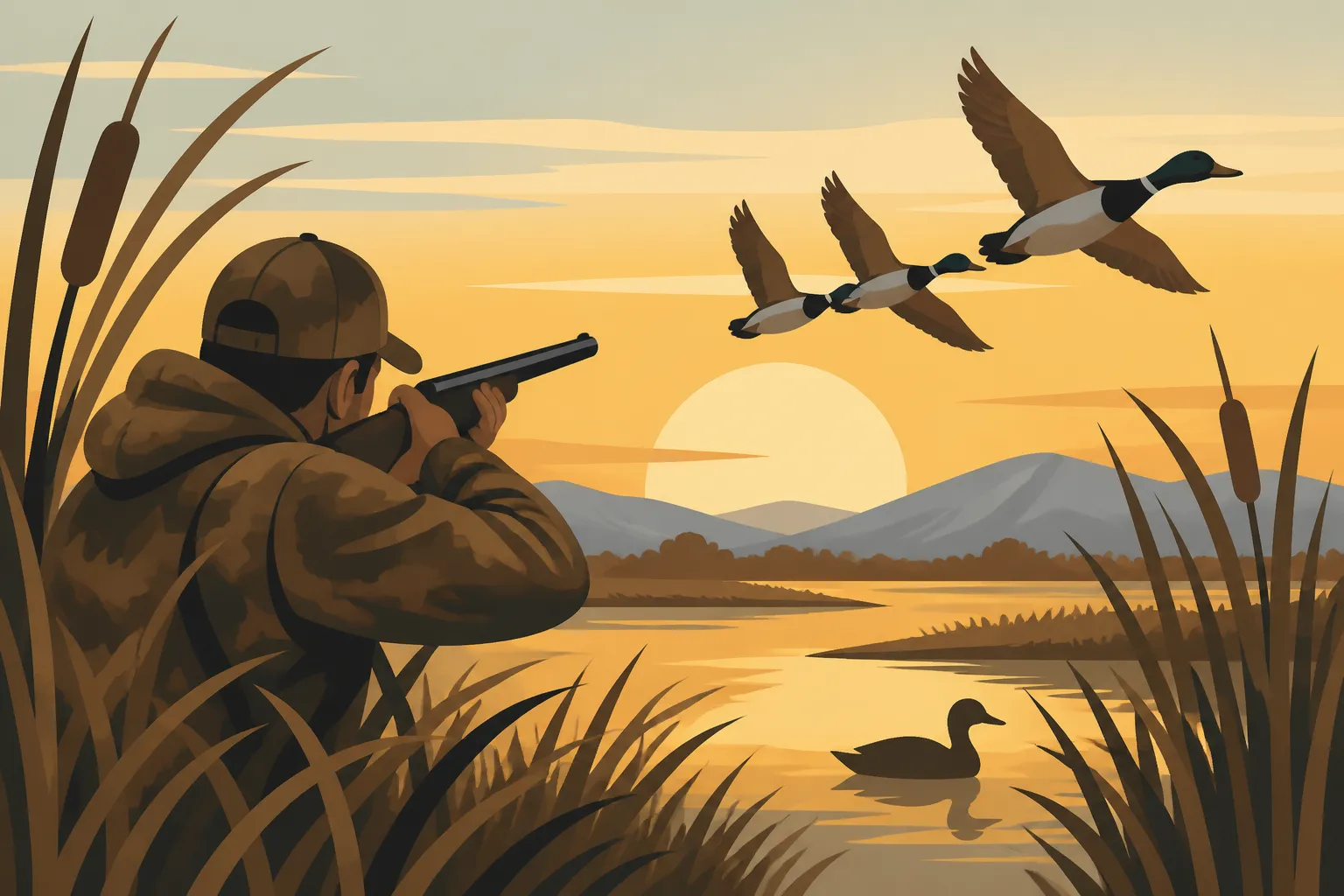
When hunting ducks in a large refuge, the adage "more is often better" holds a lot of truth for decoy spreads. You're trying to stand out from the actual birds on the water and convince them your spot is the safest, most appealing place to land. Common duck spreads include the classic J-hook, U-shape, or "W" patterns, all designed to create a visible landing zone, often called the "kill hole," directly in front of your blind. Divers will approach differently than dabblers, so adjust your spread for the dominant species. Don't forget motion decoys, like Mojo ducks, which can be incredibly effective at grabbing attention, especially on calm, still days when natural movement is minimal. For specific tips on attracting ducks, check out resources like Decoying Mallards on Flooded Rice Ground.
Geese, with their keen eyesight and tendency to fly in larger, more organized flocks, require a different approach. For field hunting, full-body decoys or shell decoys that simulate feeding birds are usually most effective. On water, large floaters will do the trick. The key with geese is often density and realism. Spacing your decoys to mimic a natural feeding or resting flock is crucial. Pay attention to how geese typically land – often into the wind, so position your spread to give them a clear approach over your shooting zone. More detailed advice can be found in Goose Decoy Spreads for Refuge-Adjacent Fields.
Calling is an art form that takes years to master, and nowhere is it more evident than in a refuge. Early in the season, or on birds that haven't been pressured much, loud, aggressive calling can be effective to get their attention. However, as the season progresses and birds become "call-shy," subtle quacks, clucks, and feeding chuckles often work better. You're trying to sound like a contented, feeding flock, not a desperate one. For geese, learn the specific calls for specks and snows – the resonant "blip-blip" of a specklebelly is very different from the loud, continuous chatter of snow geese.
The ultimate key to both decoying and calling is reading the birds. Watch how they react to your spread and your calls. Are they flaring off a certain point? Are they circling but not committing? Sometimes, you might need to adjust your decoy spread mid-hunt, or go quiet for a bit if the birds seem wary. Perhaps they’re reacting to something unnatural in your setup. Remember, these birds are smart and have likely been called at and shot at many times on their journey. Adaptability is your greatest asset in a refuge, as conditions and bird behavior can change hour by hour, let alone day by day.
Blind Setup and Concealment
Even the best decoy spread and calling won’t matter if you’re silhouetted against the horizon. In the high-pressure environment of a Sacramento Valley refuge, meticulous blind setup and concealment are absolutely paramount. Wary waterfowl will pick up on anything unnatural, and they won't hesitate to flare out of range.
Many refuges feature permanent, managed blinds. These can be a mixed blessing. On one hand, they often offer sturdy construction and are strategically placed in proven hunting spots. On the other hand, they are fixed, and if the birds aren't flying the way that blind is facing, or if the cover around it has degraded, you might be at a disadvantage. The most important thing you can do when hunting a permanent blind is to brush it in further. Use local vegetation – cattails, tules, branches, stubble – to break up the blind's outline and make it disappear into the natural surroundings. Don't rely solely on what was left from last season.
If you’re hunting in a free-roam area, or a dry field, layout blinds are your best friend. These low-profile blinds allow you to lie down and effectively vanish into the field. The absolute key to success with a layout blind is thorough brushing. Don't just toss a few handfuls of stubble on top. Take the time to gather ample local vegetation – corn stalks, rice stubble, tall grasses – and weave it into the blind's stubble straps. Pay particular attention to breaking up the hard lines of the blind's frame and eliminating any dark shadows that might create an unnatural lump in the field. This detailed work is covered in more depth in resources like Layout Blind Hunting a Cut Corn Field.
For hunters utilizing natural cover, like a stand of cattails along a slough or a brushy ditch bank, the principle remains the same: break up your outline. Avoid standing in the open, and position yourself so that any natural vegetation is between you and the birds' line of sight. Think about what a bird sees from above – is there anything that screams "hunter!"? Reflective surfaces, bright clothing, or even exposed skin can send birds veering away. Always consider the sun's position throughout the morning; what might be hidden at dawn could be clearly visible later in the day.
Finally, never underestimate the human element of concealment. Even if your blind is perfectly brushed, a fidgety hunter, someone constantly peeking over the top, or a flash of an ungloved hand can ruin the hunt. Stay still, stay low, and wait for the right moment. Face masks and dark gloves are crucial for hiding exposed skin. Resist the urge to peek at approaching birds; let your partner call the shot or wait until they’re committed. Waterfowl have incredible eyesight, and your patience and discipline in the blind will often make the difference between a successful hunt and a frustrating one.
Beyond Waterfowl: Other Opportunities and Species
While the Sacramento Valley wildlife refuges are undeniably famous for their incredible waterfowl hunting, many offer additional, though sometimes limited, opportunities for other game species. Exploring these other avenues can provide a great change of pace and extend your hunting season.
Upland Birds and Small Game
Many refuges, particularly in designated zones or during specific timeframes (often after the main waterfowl seasons conclude), provide limited hunting for upland birds and small game. Think pheasants, various quail species, and rabbits. These hunts can offer a completely different experience from sitting in a duck blind, trading the cold, wet wait for active scouting and walking through diverse cover.
The habitat for these species will naturally differ from the flooded fields. You’ll often find pheasants holding tight in dense hedgerows, thick stands of tall grasses, or brushy areas along irrigation ditches and field edges. Quail, particularly California Valley Quail, will congregate in coveys near thicker chaparral or oak woodland edges that might fringe the refuge boundaries, providing both food and escape cover. Rabbits will be found in similar dense cover, often closer to the ground, especially in blackberry brambles or thickets.
It is absolutely crucial to check the specific refuge regulations for upland and small game hunting. These opportunities are usually highly controlled and might have different shooting hours, weapon restrictions (e.g., specific shot sizes or firearm types), or bag limits compared to waterfowl season. Some refuges might only open certain units, or only allow hunting on specific days of the week. This is where a good mapping application like onX Hunt can be incredibly helpful; its various layers can often show you refuge boundaries, specific hunt units, and even designated areas for different game types. Always cross-reference with the official CDFW regulations and the refuge's specific printed rules.
Hunting strategies for these upland and small game species can vary. For pheasants, walking up birds in cover, often in a line with several hunters, is a common method. For quail, especially when they're running, working behind pointing dogs can be incredibly effective, allowing you to flush birds more predictably. Rabbits might require more stealthy stalking or pushing thick cover. These hunts are a fantastic way to experience the refuge environment from a new perspective and enjoy some fast-paced action. They are also a great opportunity to introduce new hunters to the field in a less intense setting than a high-pressure waterfowl opener.
Predator and Furbearer Management
In some instances, Sacramento Valley wildlife refuges might permit the hunting of predators (like coyotes) or trapping of furbearers (such as muskrat or beaver). These opportunities are typically part of the refuge's specific wildlife management plans, aimed at protecting nesting waterfowl, controlling populations that might impact infrastructure (like beaver damming canals), or preventing damage to sensitive habitats.
These types of hunting and trapping opportunities are usually much more limited and specialized than waterfowl or upland game seasons. They almost always require separate, specific permits or authorizations beyond your general hunting license. You might need to apply well in advance, and the number of available permits can be extremely small. This often means doing extensive research on the specific refuge's management plans and contacting the refuge manager directly to inquire about opportunities and specific requirements.
Understanding the refuge's management goals is key if you're pursuing these opportunities. For example, coyote hunting on a waterfowl refuge is often permitted to reduce predation pressure on duck and goose nests and broods during critical breeding seasons. Similarly, trapping muskrats or beavers might be allowed to prevent damage to levees, dikes, and water control structures. These aren't just recreational pursuits; they're integrated components of the refuge's broader conservation strategy.
Always, always consult the California Department of Fish and Wildlife (CDFW) regulations and any specific addendums or rules published by the individual refuge. These rules will detail the legal methods, seasons, and any mandatory reporting requirements. For instance, trapping might require specific trap types, checking schedules, and furbearer tagging. These highly localized opportunities demand thorough research and strict adherence to regulations, but they can offer unique and challenging experiences for dedicated hunters and trappers.
Essential Gear, Safety, and Ethical Conduct
A successful and enjoyable hunt in a Sacramento Valley wildlife refuge hinges not only on knowing the rules and strategies but also on being properly equipped, prioritizing safety, and upholding a strong ethical code. These areas can be unforgiving if you're unprepared, and crowded conditions demand extra vigilance and respect for fellow hunters and the resource itself.
What to Pack for a Refuge Hunt
Packing correctly for a refuge hunt in the Sacramento Valley can make or break your experience. The conditions can be challenging, from trudging through deep mud to sitting for hours in cold, damp weather. Having the right gear ensures you stay comfortable, safe, and effective.
First on the list, and absolutely non-negotiable for most flooded field hunting, are good quality waders. Whether you opt for chest waders for maximum protection or hip waders for shallower areas, ensure they fit well and are insulated appropriately for the season. Good boots built into the waders are crucial for navigating heavy mud and uneven terrain. For detailed advice, consider Waders and Blinds for Central Valley Rice Fields. Along with waders, dress in layers. Temperatures can swing dramatically from pre-dawn cold to mid-morning warmth, so having waterproof outer layers and insulating base layers is key to staying comfortable.
Your shotgun, of course, is paramount, along with plenty of non-lead ammunition. Refuges can offer fast and furious shooting, so don't skimp on shells. A good blind bag is essential for organizing calls, extra shells, snacks, a thermos of coffee or hot chocolate, and any personal items. A reliable headlamp or flashlight is also critical for navigating in the dark before sunrise and after sunset.
For decoying, you'll need your chosen spread of duck or goose decoys. Don't forget jerk cords for added movement, especially for ducks. Calls are a must, with a range from loud hail calls to subtle feeding chuckles. If you hunt with a dog, ensure they are well-trained and that dogs are permitted in your specific hunting zone. A retrieving stick can be invaluable for reaching downed birds in deeper water or thick cover where a dog might struggle.
Finally, in this digital age, a robust mapping application like onX Hunt or GoHunt is incredibly useful. These apps, with their satellite imagery and GPS capabilities, can help you identify refuge boundaries, find your assigned zone or blind in the dark, and even mark potential hotspots. Always download offline maps before you go, as cell service can be spotty in some refuge areas. While digital tools are great, always have a physical map and compass as a backup – batteries die, and technology can fail.
Safety Considerations and Refuge Etiquette
Hunting in a Sacramento Valley wildlife refuge means being part of a larger community of hunters, often in crowded conditions. This environment amplifies the need for strict adherence to safety protocols and a strong sense of ethical conduct. Your actions directly impact the safety and enjoyment of others, as well as the future of hunting in these precious areas.
Gun safety is, and always will be, paramount. Treat every firearm as if it were loaded, keep the muzzle pointed in a safe direction, keep your finger off the trigger until ready to shoot, and be absolutely certain of your target and what lies beyond it. Refuges often have specific rules about loaded firearms in parking lots, while walking to and from blinds, or even when entering/exiting vehicles. Know these rules for your specific refuge and follow them without exception. When you are in a blind, be mindful of your shooting lanes and ensure you have a clear, safe shot without endangering other hunters or non-target wildlife.
Given the potential for crowding, awareness of other hunters is crucial. Maintain a respectful distance from other parties, and never, under any circumstances, "sky-bust" – shooting at birds that are too high or clearly working another hunter's spread. Not only is it ineffective and wasteful, but it's incredibly disrespectful and can ruin another hunter's experience. Call your own birds, work your own spread, and patiently wait for them to commit. Acknowledging other hunters with a nod or a wave is part of the camaraderie of the field.
Ethical conduct extends beyond safety. Retrieve all downed birds promptly and efficiently. Leaving crippled birds unrecovered is a profound disservice to the animal and the resource. Be diligent in picking up all your trash – spent shell casings, empty calls, food wrappers, anything you brought in must leave with you. Leave the area cleaner than you found it. This simple act of stewardship ensures these public lands remain pristine and accessible for future generations of hunters.
Remember that these are wildlife refuges first and foremost. While hunting is permitted and plays a vital role in management, the primary purpose is wildlife conservation. Minimize disturbance to non-game species, respect all closed areas, and understand that our privilege to hunt here comes with a responsibility to uphold the integrity of the ecosystem. By practicing safe, ethical, and respectful hunting, we ensure the longevity and success of California’s incredible waterfowl traditions in these vital habitats. Reading a Wetland for a Morning Flight can help you understand the nuances of bird behavior and habitat, further enhancing your ethical approach.
Disclaimer
This article is for general informational purposes only and does not constitute professional advice. Laws, prices and regulations vary by location and change over time. Consult a qualified professional for guidance on your specific situation.