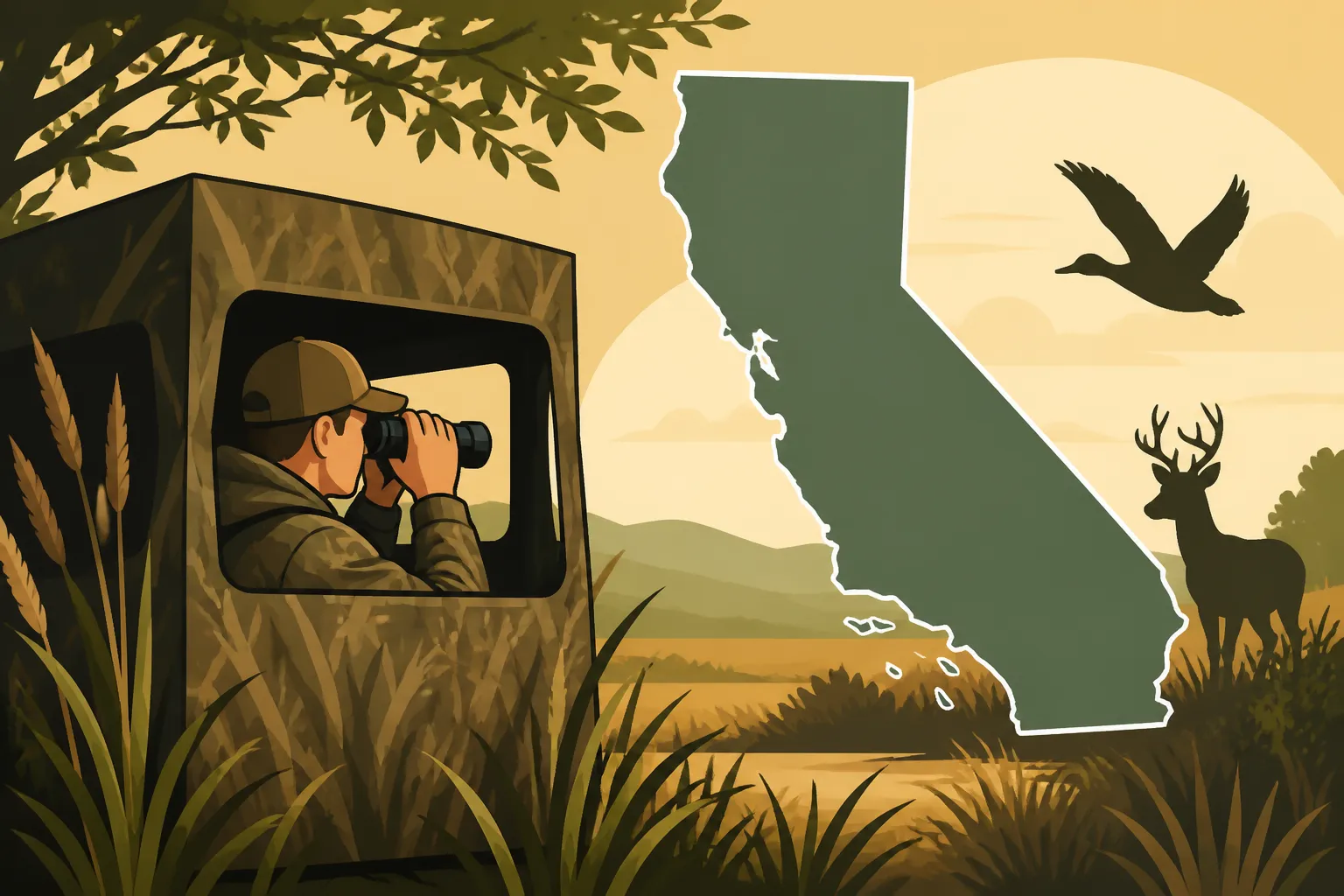
Ground Blind Rules on California Wildlife Areas
Hunting public land in California can be incredibly rewarding, but it often comes with a tangled web of rules and regulations that can leave even seasoned hunters scratching their heads. One common point of confusion, especially when trying to stay concealed in open or sparse cover, revolves around the use of ground blinds on the state's various Wildlife Areas. This guide will untangle those specific rules, ensuring you can set up effectively and ethically without risking a citation.
Understanding California Wildlife Areas (WAs)
California's Wildlife Areas (WAs) are truly special places, managed by the California Department of Fish and Wildlife (CDFW) with the primary goal of protecting and enhancing wildlife habitat, while also providing public access for hunting, fishing, and other recreational activities. These aren't just patches of land; they are vital corridors and ecosystems that support a tremendous diversity of game species, from waterfowl and upland birds to deer and wild pigs. Because they are managed intensively for conservation, the rules for hunters are often more specific and, frankly, sometimes stricter than what you might encounter on broader National Forests or BLM lands.
What Makes WAs Unique for Hunters
Unlike the vast, often remote expanses of federal lands like the Hunting California's Los Padres National Forest or Hunting California's Sierra Nevada Backcountry, Wildlife Areas are typically smaller, more intensively managed, and frequently experience higher hunter pressure, especially during peak seasons. Their purpose is very direct: to provide quality habitat for specific species. This often means carefully regulated access, designated parking areas, and strict rules about what you can bring in, what you can harvest, and how you can hunt. For instance, many WAs in the Central Valley are critical wintering grounds for migratory birds, so waterfowl regulations are meticulously enforced, right down to decoy spreads and blind types. This dedicated management makes them prime locations for specific hunts, but it also necessitates a more thorough understanding of their individual nuances.
The CDFW puts a lot of effort into actively managing these lands for wildlife. This can involve controlled burns, planting specific forage crops, maintaining water sources, and even managing water levels in marshy areas. Because of this ongoing work, hunter regulations are designed to minimize disturbance to these fragile habitats and the wildlife that depend on them. It’s not just about what’s legal, but what's sustainable for the ecosystem. Many hunters find that the quality of hunting on WAs, particularly for species like ducks, geese, and pheasants, makes the extra effort to understand the rules well worth it. You're hunting in a prime habitat that's been specifically cultivated, which is a rare treat.
General Access and Regulations
Before even thinking about a ground blind, you need to understand the fundamental access rules for the specific Wildlife Area you plan to visit. Most WAs require a valid California hunting license and any necessary tags or stamps for the species you intend to pursue. Some WAs, especially those popular for waterfowl or upland game, operate on a reservation or lottery system, or require a daily permit fee, often collected at kiosks or through the CDFW's online ALDS system. Always check the specific area's regulations, which are usually available on the CDFW website, posted at the entrance, or through brochures.
These general regulations also cover things like allowed hunting hours—often California Public Land Hunting Hours are sunrise to sunset, but specific WAs might have variations—and restrictions on vehicle access, camping, and even the use of dogs. Many WAs prohibit camping altogether, for instance, differing significantly from the more relaxed rules you might find on National Forest lands. Understanding these overarching rules is your first step; a ground blind is just one piece of the puzzle. Skipping this crucial research step can lead to a frustrating experience, or worse, a costly fine. Remember, these rules are in place to ensure fair chase, public safety, and the long-term health of the wildlife populations.
Specific Ground Blind Regulations on WAs
Now, let's zero in on ground blinds. This is where things can get particularly granular, as rules often vary not just between different categories of public land (like BLM vs. WA), but also between individual Wildlife Areas themselves. The core principle behind most WA ground blind rules is preventing permanent structures and minimizing habitat alteration.
Temporary Versus Permanent Blinds
California Wildlife Areas generally distinguish between temporary and permanent ground blinds. Permanent blinds are almost universally prohibited. These are structures built with the intent to remain in place indefinitely, often constructed from materials that are not easily removed, such as lumber, rebar, or heavy-gauge wire. Leaving such a structure behind is considered littering and can lead to fines and even loss of hunting privileges. The CDFW strives to keep WAs as natural as possible, and abandoned structures detract from both the aesthetics and the ecological integrity of the land.
Temporary ground blinds, on the other hand, are typically allowed, but with strict caveats. A temporary blind must be easily removable and, crucially, must be removed at the end of each day's hunt. This is a critical distinction many hunters miss. You cannot set up a blind, hunt it for a few days, and then return the next weekend hoping it's still there. If it's not removed, it essentially becomes an abandoned permanent structure in the eyes of the law, even if your intention was to retrieve it later. This "pack it in, pack it out" mentality is central to responsible public land hunting.
Construction Materials and Permitted Use
When it comes to building a temporary ground blind on a WA, the emphasis is on natural, native materials that are already present on site, or manufactured materials that you bring in and take out. You might be allowed to use natural vegetation like cattails, willow branches, or tumbleweeds that you find on the property to supplement camouflage, but usually, you cannot cut down live trees or shrubs to construct a blind. This protects the existing habitat and vegetation, which is often specifically managed.
Most hunters opt for manufactured, portable ground blinds made of fabric or netting. These are generally permitted as long as they are set up and removed daily. The key here is "portable." Think pop-up blinds, ghillie blankets, or even simple camouflage netting stretched over a few portable poles. Anything that requires significant tools for assembly or disassembly, or is too heavy to carry out easily, might raise eyebrows. If you're hunting waterfowl, some WAs might have specific rules for pit blinds or other types of blinds within designated waterfowl units, which are usually explicitly outlined in the area-specific regulations. For general upland or big game hunting, stick to the easily portable fabric blinds.
Placement, Distance, and Duration Rules
The placement of your ground blind on a California Wildlife Area is also subject to specific rules. While there aren't always hard-and-fast distance requirements from roads, trails, or property lines as you might find in some states, it's generally understood that blinds should not impede public access or block designated pathways. Always be mindful of other users, including hikers, birdwatchers, and other hunters. A good rule of thumb is to place your blind discreetly and out of obvious sight lines from main access points.
The most important duration rule, as mentioned, is that temporary blinds must be removed at the end of each day. Leaving a blind overnight, even if you intend to come back for it in the morning, is usually prohibited. This prevents "squatting" on prime spots and ensures that all hunters have an equal opportunity to access different areas. There are no rules against using a ground blind on Finding Ground That Sees Fewer Hunters, but you still need to follow these removal rules. Similarly, Trail Camera Rules on California Public Land are separate, but often, the same "pack it in, pack it out" mentality applies to both. Always check the specific WA's regulations for any unique distance restrictions, especially around sensitive habitat areas or public viewing platforms.
Best Practices for Using Ground Blinds in California WAs
Beyond the letter of the law, there are some generally accepted best practices that make you a more responsible and effective hunter when using ground blinds on Wildlife Areas.
Scouting and Ethical Considerations
Thorough scouting is paramount when planning to use a ground blind on a WA. These areas often have distinct habitat features, and game movement might be confined to specific corridors or feeding areas. Use mapping apps like onX Hunt or GoHunt to study aerial imagery, identify potential pinch points, food sources, and travel routes. Many of these apps also have layers for public and private land boundaries, which is crucial for Reading California Public Land Boundary Signs and ensuring you don't inadvertently set up on private property bordering the WA.
When you're out scouting, pay attention to existing cover. Can you tuck a blind into a natural thicket without disrupting it? Is there a subtle change in elevation that offers a good vantage point while keeping your profile low? Ethically, you want to avoid trampling vegetation unnecessarily or creating a noticeable "sign" that gives away your presence or disturbs the natural environment for others. Your goal is to blend in seamlessly, not to create an obvious hunting station. Think about how deer or turkeys would naturally move through the area and pick a spot that intercepts them subtly.
Safety and Visibility
While ground blinds are designed for concealment, hunter safety should always be your top priority. In California, there are California Blaze Orange Requirements for big game hunting in certain areas, but even when not legally mandated, wearing some blaze orange or pink is a smart move, especially when walking in and out of your blind. Other hunters may not see your blind, and you want to ensure you are highly visible to prevent accidents.
Before sitting down in your blind, take a moment to survey your surroundings. Are there any potential hazards you missed during scouting, like steep drop-offs, wasp nests, or heavily trafficked trails? When you're inside the blind, maintain situational awareness. Don't let the enclosed space make you complacent. Be aware of your shooting lanes and what's beyond your target. Remember, the goal is to have a safe and successful hunt, and that means being visible to other humans while remaining hidden from your quarry.
Leaving No Trace
The principle of "Leave No Trace" is absolutely vital when hunting on California Wildlife Areas. This means everything you bring in, including your ground blind, any trash, food wrappers, spent casings, or even string you use for camouflage, must be packed out with you. This isn't just a courtesy; it's often a legal requirement. An abandoned blind, no matter how small, quickly becomes litter and can earn you a hefty fine.
Beyond just your blind, make sure you're not leaving behind any lasting impact. Avoid breaking branches or moving rocks unless absolutely necessary, and if you do, try to restore the area to its natural state as much as possible. This respect for the land ensures that these precious public hunting opportunities remain available for everyone, year after year. It's about being a good steward of the land and respecting the efforts of the CDFW in managing these crucial habitats.
Navigating Regulations and Resources
Understanding the nuances of ground blind rules requires a bit of homework, but thankfully, there are excellent resources available to California hunters.
Where to Find Specific WA Rules
The absolute best source for the most up-to-date and specific ground blind regulations for any California Wildlife Area is the California Department of Fish and Wildlife (CDFW) website. Each WA usually has its own dedicated page with a comprehensive list of regulations. These might be presented as PDFs, web pages, or even specific hunt plans. Don't rely solely on general hunting regulations, as WAs often have rules that supersede or add to the statewide guidelines. It's a bit like digging through a treasure map, but the treasure is knowing you're hunting legally and ethically.
Additionally, many WAs have information kiosks at their primary access points. These kiosks often display large maps and printed copies of the rules. Always take a moment to review these, even if you think you know the rules, as specific conditions or temporary closures (such as for fire danger or maintenance) might be posted. Speaking to a local CDFW warden or manager, if accessible, can also provide invaluable clarity, as they are the ultimate authority on interpretation and enforcement.
Utilizing Mapping Tools
Modern mapping applications are game-changers for public land hunters, and they are particularly useful when trying to understand ground blind rules on WAs. Brands like onX Hunt and GoHunt offer layers that clearly delineate public and private land boundaries, which is crucial for staying legal. These apps also often show various public land designations, including Wildlife Areas, National Forests, and BLM lands.
For example, with onX Hunt, you can often see specific unit boundaries within a larger WA, or identify ecological reserves that might have different rules. While these apps may not always list every single rule for ground blinds, they provide the spatial context you need to plan your hunt responsibly. You can mark potential blind locations, measure distances from boundaries or roads, and even scout remotely for dense cover where a blind might be naturally concealed. Using such tools to understand the California Wildlife Areas and Ecological Reserves you are hunting can save you a lot of guesswork and ensure your ground blind is set up in an appropriate location.
Here's a quick reference table to help keep things clear:
| Feature | Permitted on CA Wildlife Areas (Generally) | Prohibited on CA Wildlife Areas (Generally) | Key Considerations |
|---|---|---|---|
| Ground Blind Type | Portable, manufactured fabric blinds | Permanent, fixed structures | Must be removed daily; no cutting live vegetation |
| Materials | Fabric, netting, natural found materials | Lumber, rebar, heavy posts, live cuttings | Use what you pack in, or fallen natural cover |
| Duration | Set up and removed daily | Left overnight, unattended, or permanently | "Pack it in, pack it out" is the golden rule |
| Placement | Discreet, out of major traffic/view | Blocking roads, trails, or sensitive habitat | Be mindful of other users; check area-specific maps for restrictions |
| Modification | Minimal natural camouflage | Significant habitat alteration, digging pits | Don't damage habitat; leave area as you found it |
| Visibility | Hunter should wear blaze orange/pink | Complete concealment without safety in mind | Your blind is hidden, you should be visible to others |
This article is for general informational purposes only and does not constitute professional advice. Laws, prices and regulations vary by location and change over time. Consult a qualified professional for guidance on your specific situation.