ATV Rules on California Forest Roads
It’s a familiar frustration for many of us who love to get out into California’s vast public lands: you’ve got your ATV loaded, ready to access that perfect hunting spot or explore some new country, only to be met with confusing signs or conflicting information about where you can and cannot ride. Understanding the often-complex rules governing All-Terrain Vehicles (ATVs) on California’s forest roads can feel like navigating a maze, but this guide aims to demystify those regulations, helping you stay legal, safe, and effective in your outdoor pursuits.
Understanding California's OHV Landscape
California boasts an incredible amount of public land, including millions of acres managed by the U.S. Forest Service (USFS) and the Bureau of Land Management (BLM), perfect for hunting, fishing, and general recreation. For many, an Off-Highway Vehicle (OHV) like an ATV is essential for accessing remote areas, hauling gear, or simply exploring. However, the rules for operating these vehicles, especially on forest roads, can be nuanced and vary significantly depending on the specific land management agency and even the particular area you’re in. It’s not a one-size-fits-all situation, and assuming what’s allowed in one forest applies to another can quickly land you in trouble.
Distinguishing Between OHVs, ATVs, and ROVs
Before diving into the specifics of forest roads, it's important to clarify the terminology often used. "Off-Highway Vehicle" (OHV) is a broad umbrella term in California, encompassing a variety of vehicles designed for off-pavement use. This includes your traditional All-Terrain Vehicles (ATVs), which are typically single-rider or two-rider vehicles with handlebars and straddle seating.
Then there are Recreational Off-Highway Vehicles (ROVs), often referred to as side-by-sides or UTVs. These typically have steering wheels, bucket seats, and roll cages, resembling smaller cars. Dirt bikes, dune buggies, and even some modified four-wheel-drive vehicles can also fall under the OHV designation. Each of these categories might have slightly different requirements for registration, safety equipment, and the specific types of trails or roads they are allowed on. The key takeaway is that while an ATV is an OHV, not all OHVs are ATVs, and knowing the distinction matters when you’re looking at specific regulations.
The legal definitions are crucial because they dictate things like helmet laws, passenger restrictions, and even the type of 'sticker' your vehicle needs (more on that later). For instance, while a helmet is always a good idea, it's legally mandated for ATV riders in California, regardless of age. ROV occupants, however, are generally required to wear helmets only if they are under a certain age. These distinctions, while seemingly minor, can have real consequences if not followed.
The Regulatory Maze: Federal, State, and Local Jurisdictions
Navigating California’s OHV rules is complicated by the layers of jurisdiction. You're not just dealing with "California law"; you're dealing with federal land management agencies, state regulations, and sometimes even county or local ordinances. The U.S. Forest Service (USFS) and Bureau of Land Management (BLM) are the primary federal agencies managing the vast majority of our forest roads and public lands where OHVs are often used. Each of these agencies has its own planning processes and regulations for OHV use, which are usually outlined in their respective travel management plans.
On top of federal rules, the California Department of Parks and Recreation's Off-Highway Motor Vehicle Recreation Division (OHMVR) oversees the statewide OHV program, including registration and designated OHV parks. The California Department of Fish and Wildlife (CDFW) also has regulations that can impact OHV use, particularly concerning access to wildlife areas or during specific hunting seasons. This overlapping authority means that a trail or road that's legal for your ATV under USFS rules might have additional restrictions or prohibitions imposed by state or local entities.
For instance, a particular forest road in the Hunting California's Los Padres National Forest might be open to licensed vehicles for general travel, but not to ATVs unless it's specifically designated as an OHV route within that forest's travel management plan. Conversely, some State Vehicular Recreation Areas (SVRAs) run by the state OHMVR program are entirely dedicated to OHV use, with different rules applying there. It’s essential to understand that just because it's a "forest road" doesn't automatically mean it's open for ATV use. Always check the specific land manager’s regulations for the area you plan to visit.
The Role of the California OHV Program
The California Off-Highway Motor Vehicle Recreation (OHMVR) Division, part of California State Parks, plays a critical role in managing and regulating OHV recreation across the state. This division is responsible for acquiring, developing, and operating State Vehicular Recreation Areas (SVRAs), as well as providing grants to federal, state, and local agencies for OHV trail management, enforcement, and environmental restoration. Essentially, they are the state-level backbone supporting organized OHV recreation.
Part of their mandate is to ensure that OHV use is sustainable and responsible, balancing recreational opportunities with environmental protection. They also oversee the state's OHV registration program, which is crucial for any ATV owner operating on public lands. This includes the issuance of "Green Stickers" and "Red Stickers," which dictate when and where an OHV can be ridden, primarily based on its emissions standards.
The OHMVR program also helps fund efforts by the USFS and BLM to manage their OHV routes and facilities, meaning that the signs you see on a National Forest road, or the maps you consult, are often the result of collaborative efforts involving state funding and oversight. Understanding this program helps underscore why certain rules, like the sticker requirements, are in place and why compliance is so important for the continued availability of OHV recreation.
Navigating Forest Roads with Your ATV
So, you're heading out to Hunting California's Sierra Nevada Backcountry or maybe a different part of California's Eighteen National Forests with your ATV, hoping to get a bit closer to your hunting grounds or simply explore. The crucial thing to remember is that you cannot simply drive your ATV on any dirt or gravel road you encounter in a national forest. The rules are much more specific, and knowing them is key to a smooth, legal trip.
Designated Routes Versus Open Areas
This is perhaps the most important distinction for ATV riders on California's forest roads. The vast majority of national forest lands, and much of the BLM land, operate under a "designated routes" system. This means that unless a road or trail is specifically signed or mapped as open for OHV use, it is considered closed. This is a fundamental shift from an "open unless closed" policy that some might remember from decades past.
For ATV users, this means you can't just drive down an old logging road or a faint two-track simply because it looks passable. You must stick to routes that are officially designated for your type of vehicle. These designated routes are usually marked on Motor Vehicle Use Maps (MVUMs) provided by the forest service or BLM, and often by physical signage on the ground. Veering off these designated routes, even a short distance, can lead to significant fines, vehicle impoundment, and damage to fragile ecosystems. This rule is particularly stringent in areas designated as wilderness, which are almost universally off-limits to motorized vehicles.
The "designated routes" policy is in place to protect natural resources, minimize user conflicts, and manage access effectively. It ensures that critical wildlife habitats, riparian areas, and sensitive soils are not damaged by unauthorized vehicle travel. For hunters, this means your scouting and pre-trip planning become even more critical to identify legal access points and routes to get you as close as possible to your desired area.
Understanding Road Designations and Signage
Knowing how to read the signs and maps is your best defense against inadvertently breaking the rules. When you enter a National Forest, you'll often see signs indicating whether it’s a "designated route" area. More importantly, specific roads and trails will have signs at their junctions. These signs use universal symbols: an ATV symbol means ATVs are allowed, a motorcycle symbol means motorcycles are allowed, and a passenger vehicle symbol means full-sized vehicles are allowed. A red circle with a slash through any of these symbols means that vehicle type is prohibited.
Motor Vehicle Use Maps (MVUMs) are invaluable resources. These free maps are published annually by each National Forest and clearly show which roads and trails are open to which types of vehicles, along with any seasonal restrictions. You can usually pick up a paper copy at the local ranger station or download digital versions from the USFS website. Modern mapping applications, like onX Hunt or GoHunt, have integrated these MVUM layers, allowing you to see legal routes right on your phone or GPS device, even without cell service. Using these apps can literally save you from a ticket and wasted time.
It's not uncommon to see a forest road that permits full-sized vehicles but explicitly prohibits ATVs or other OHVs from traveling on it, even if they are street-legal. Always look for the specific signage and consult your MVUM. If a road isn't on the MVUM as an open OHV route, or doesn't have clear signage indicating OHV use, assume it's closed to ATVs. When in doubt, err on the side of caution and find an alternative route or park and proceed on foot. This careful approach also ensures you're not in violation of Vehicle Rules on California Public Land.
Vehicle Registration and Green/Red Stickers
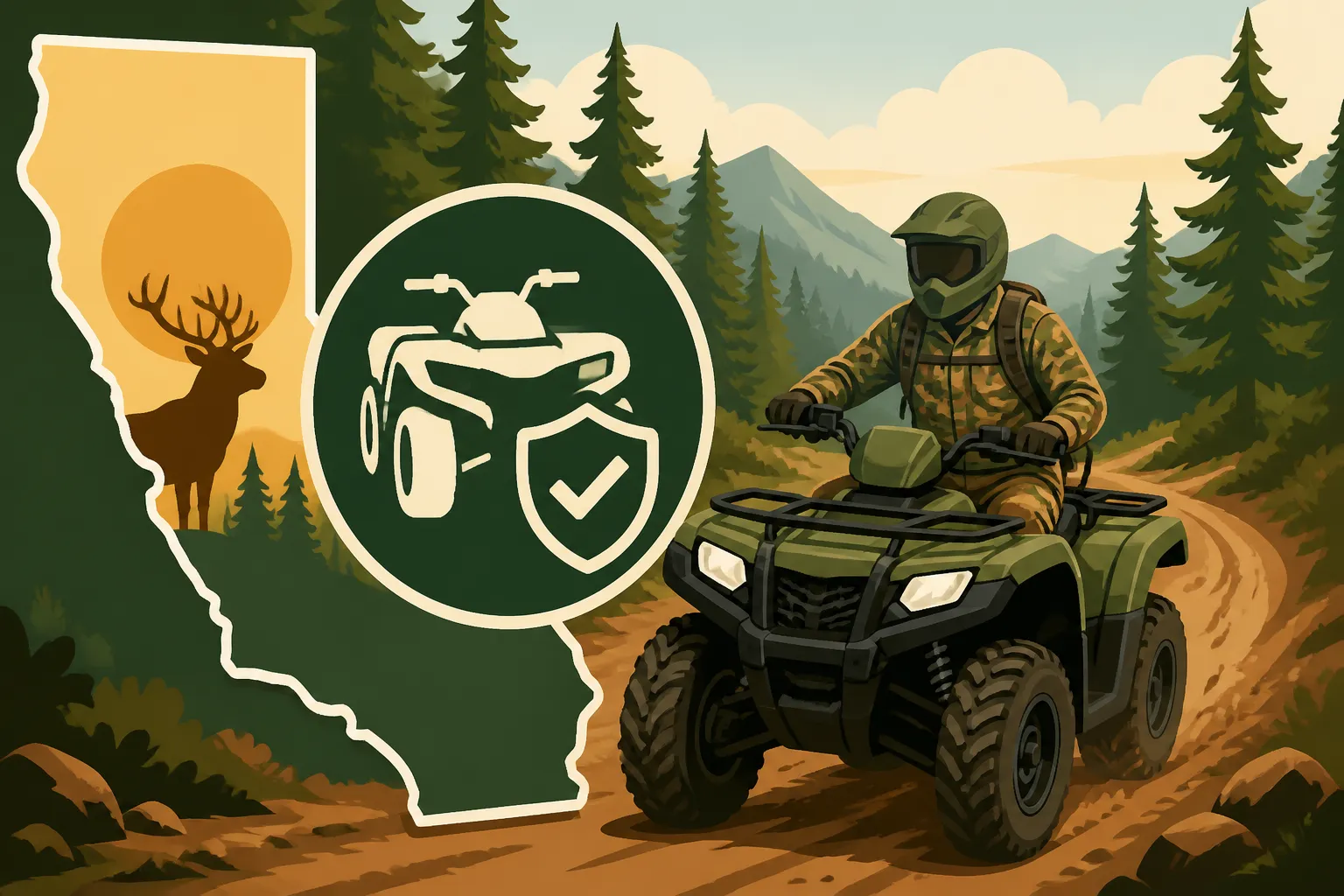
California's OHV registration program requires almost all OHVs used on public lands to be registered and display a valid "Green Sticker" or "Red Sticker." This program is run by the California Department of Parks and Recreation, and the fees collected support OHV programs, including trail maintenance and enforcement.
Here’s a quick breakdown:
- Green Sticker: This sticker is issued to OHVs that meet California's emission standards, allowing them to be operated on public lands year-round. Most newer ATVs and ROVs will qualify for a Green Sticker.
- Red Sticker: This sticker is issued to OHVs that do not meet California's emission standards (often older models or those manufactured for out-of-state use). Red Sticker vehicles have seasonal restrictions and can only be operated on public lands during specific times of the year, typically when air quality impacts are lower. These seasons vary by region and can be checked on the OHMVR Division website.
It’s your responsibility to know which sticker your vehicle requires and to display it prominently. Failing to have a valid sticker, or operating a Red Sticker vehicle during a prohibited season, can result in fines. The funds from these stickers are vital for maintaining the trails and facilities that OHV enthusiasts use, so it's a small but important way to contribute to the sport. Before heading out, especially if you have an older machine, make sure your sticker is current and you understand any seasonal restrictions.
Practical Tips for Responsible ATV Use on Forest Roads
Hunting and recreating on California's forest roads with an ATV can be an incredibly rewarding experience, offering access to stunning landscapes and prime hunting grounds. However, with that privilege comes a significant responsibility to use your vehicle safely, legally, and ethically. A little preparation and mindful behavior can make all the difference in ensuring a positive experience for everyone and preserving access for future generations.
Pre-Trip Planning and Map Resources
Effective pre-trip planning is the cornerstone of responsible ATV use on forest roads. Don't just point your rig toward the hills and hope for the best. Start by identifying the specific National Forest or BLM district you intend to visit. Each of these agencies provides Motor Vehicle Use Maps (MVUMs) that are indispensable. These maps delineate every road and trail, clearly marking which ones are open to specific types of vehicles (ATV, motorcycle, full-sized vehicle), and if there are any seasonal closures. You can usually download these from the agency's website or pick up a physical copy at a local ranger station.
Beyond the official MVUMs, technology has made navigation incredibly accessible. Mapping applications like onX Hunt and GoHunt are game-changers. These apps allow you to download offline maps to your smartphone or tablet, showing public and private land boundaries, topo lines, and, crucially, layers that incorporate the MVUM data. This means you can see exactly where you are in relation to legal OHV routes, even without cell service. This is particularly useful when scouting a new area or trying to find legal access points near Finding California Property Lines. Remember, relying on an old, outdated map or simply "following a track" can lead to fines, so investing time in current map study is paramount.
Safety Gear and Best Practices
Safety should always be your top priority when operating an ATV, especially on unfamiliar forest roads. The terrain can be unpredictable, with steep grades, loose gravel, hidden obstacles, and other users (hikers, mountain bikers, horseback riders, full-sized vehicles). Always wear an approved helmet – it's not just smart, it's the law in California for ATV riders. Eye protection, gloves, long pants, and sturdy over-the-ankle boots are also highly recommended to protect against scrapes, impacts, and debris.
Beyond personal protective equipment, consider your vehicle's safety features. Ensure your ATV is well-maintained, with good tires, brakes, and lights. Carry a basic tool kit, a first-aid kit, and sufficient water. If you plan to be in a remote area, a satellite communicator can be a lifesaver, as cell service is often nonexistent in much of California's wild lands. Always let someone know your travel plans, including your route and estimated return time. Ride within your skill level, avoid reckless behavior, and be prepared for changing conditions, such as sudden weather shifts or encountering other vehicles around blind corners. This diligent preparation aligns with the advice for Hunting a National Forest Burn Scar or other remote areas.
Environmental Stewardship and 'Tread Lightly'
Responsible ATV use extends beyond just following the letter of the law; it's also about environmental stewardship. The guiding principle here is "Tread Lightly!" This philosophy encourages outdoor enthusiasts to minimize their impact on the land. For ATV riders on forest roads, this means:
- Stay on Designated Routes: As discussed, this is non-negotiable. Don't create new trails, even if it looks like a shortcut. Going off-trail damages vegetation, causes soil erosion, and can disturb wildlife.
- Respect Wildlife: Be mindful of animals, especially during sensitive times like nesting seasons or when game is concentrated near water sources. Give them space and avoid disturbing their natural behavior. Using your ATV for Scouting California Public Land Before Season should always be done with minimal disturbance.
- Pack It In, Pack It Out: Leave no trace. All trash, including spent shell casings, must be packed out. This includes any items that fall off your ATV.
- Prevent Wildfires: Spark arrestors are legally required on all OHVs in California. Be extremely careful with hot exhausts, especially during dry seasons. Avoid parking on dry grass. Always check for fire restrictions before you go; some forest roads or areas may be closed to all motorized use during periods of high fire danger.
By adhering to these principles, you help protect the very resources that make California such an incredible place to hunt and explore. It ensures that public lands remain accessible and healthy for both wildlife and future generations of outdoor enthusiasts.
Common Pitfalls and How to Avoid Them
Even with the best intentions, it's easy to make mistakes when navigating ATV rules on California forest roads. The landscape is vast, the rules can be intricate, and conditions on the ground might not always match what's on a map. Being aware of these common pitfalls can help you avoid fines, frustration, and potential damage to your vehicle or the environment.
Misinterpreting Signs and Maps
One of the most frequent issues is simply misreading or misunderstanding official signs and maps. It's easy to see a "road open" sign and assume it applies to all vehicles, but often, these signs are specifically for street-legal passenger vehicles, while OHVs require their own separate designation. Similarly, a faint, weathered trail marker might be easily overlooked, or an old, faded map might not reflect current closures or reroutes.
To combat this, always prioritize the most current Motor Vehicle Use Maps (MVUMs) available for the specific National Forest or BLM district you're in. These are updated annually. When in doubt at a junction, look for multiple signs, and if there's any ambiguity, consult your digital mapping app like onX Hunt or GoHunt. These apps often have very precise GPS coordinates, allowing you to pinpoint your exact location relative to designated OHV routes. Don't assume. Take an extra moment to verify. This attention to detail is just as important as knowing Hunting a Ridge-Top Saddle at First Light or reading other terrain features.
Unmarked or Decommissioned Roads
Another common mistake involves assuming that any existing two-track or old road bed is open for travel. Many national forests have extensive networks of old logging roads, mining roads, or service roads that have been decommissioned. These roads might appear to be viable routes, but they are often intentionally allowed to revert to natural conditions, or are closed to prevent erosion and habitat destruction. They might not be signed at every entrance point, especially if they are far off the main routes.
Using a mapping application with MVUM layers is crucial here. If a road isn't clearly marked as an open OHV route on the MVUM, assume it's closed, even if it looks well-traveled. Driving on these unmarked or decommissioned roads can lead to significant resource damage and substantial fines. It also contributes to negative perceptions of OHV users as a whole, which can lead to further restrictions on public land access. Always stick to clearly designated and marked routes to avoid this trap.
Seasonal Closures and Fire Restrictions
California's dynamic environment means that access to forest roads and OHV routes can change with the seasons. Two of the most common reasons for closures are severe weather and fire danger. Winter snow and spring thaws can make many high-elevation roads impassable or extremely muddy, leading to seasonal closures to prevent resource damage. Similarly, during the hot, dry summer and fall months, fire restrictions can be widespread. These restrictions might include complete closure of certain areas, limitations on campfires, or even outright bans on all motorized vehicle use, especially in areas with very high fire danger.
Always check the current conditions and restrictions for your intended area before you leave. The USFS and BLM websites will have alert banners or specific pages dedicated to current closures and fire restrictions. Ranger stations can also provide up-to-the-minute information. Ignoring these closures not only puts you at risk but also contributes to the very dangers (like wildfires) that lead to them. Being prepared for these changes is part of Hunting Deer After a Cold Front or any other hunt in varying California weather. Staying informed and flexible in your plans is key to safe and legal ATV use throughout the year.
| OHV Type | Description | Typical Permitted Use on Forest Roads (with MVUM Designation) | California Sticker Type | Helmet Required (CA) |
|---|---|---|---|---|
| ATV | All-Terrain Vehicle; straddle seating, handlebars. | Designated OHV trails and roads; sometimes shared roads. | Green/Red Sticker | Yes |
| ROV / UTV | Recreational Off-Highway Vehicle; bucket seats, steering wheel. | Designated OHV trails and roads; sometimes shared roads. | Green/Red Sticker | Yes (under certain age) |
| Dirt Bike | Two-wheeled motorcycle designed for off-road. | Designated OHV trails and single-track; sometimes shared roads. | Green/Red Sticker | Yes |
| Street-Legal 4×4 | Full-sized vehicles, often modified, licensed for street. | All roads open to public vehicles; some designated OHV routes. | Standard Vehicle Reg. | No |
Disclaimer
This article is for general informational purposes only and does not constitute professional advice. Laws, prices and regulations vary by location and change over time. Consult a qualified professional for guidance on your specific situation.