National Forest Camping Near Your Stand
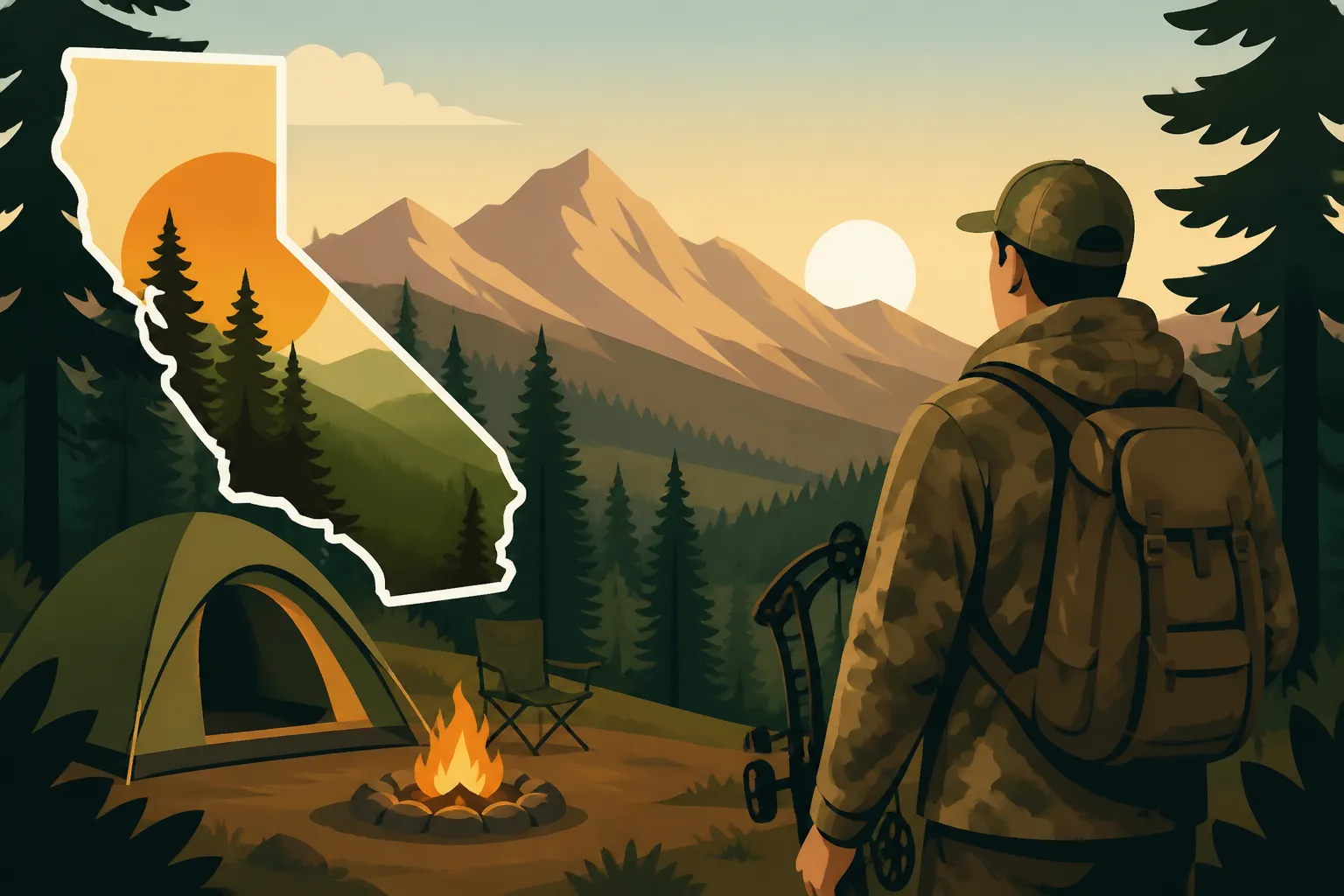
There's a unique pull to the idea of waking up just a stone's throw from where you plan to hunt – that precious time saved, the immediate immersion in the wild, and the simple satisfaction of truly living the hunt. For many California hunters, especially those heading into our vast National Forests, the dream of camping right near your stand or glassing knob is incredibly appealing. However, the reality of doing so effectively, legally, and without compromising your hunt takes careful planning and an understanding of the specific challenges and regulations involved. This guide will walk you through the ins and outs of making camp near your hunting spot in California's National Forests, helping you maximize your time afield while staying legal and ethical.
Navigating California National Forest Camping Regulations
California's National Forests offer incredible opportunities for hunters seeking solitude and prime game habitat, but they also come with a specific set of rules that you must understand before you pitch your tent. It's not like setting up a regular campground. When you're thinking about camping near your stand, you're usually looking at what's called "dispersed camping," which is far different from a developed campground experience.
Understanding Dispersed Camping Rules
Dispersed camping means camping anywhere outside of a designated campground, usually along forest service roads or trails, or even deep in the backcountry. It's an amazing way to experience the wild, but it's vital to know the limits. Generally, in most California National Forests, you need to be a certain distance away from developed recreation sites, paved roads, and water sources. These distances can vary, but a common guideline is 100-200 feet from roads and trails, and often a quarter-mile from any perennial water source. The idea is to protect water quality and allow for wildlife access.
Also, pay close attention to duration limits. You can't just set up a permanent base camp for weeks on end. Many forests have a 14-day stay limit within any 30-day period, and often you must move a certain distance (e.g., a mile or more) after that period. This prevents over-use of specific sites and helps distribute human impact. It’s always smart to check the specific Forest Service website for the National Forest you plan to hunt, or call the local ranger district. Maps on tools like onX Hunt can often help you identify boundaries, roads, and water sources, making it easier to pick a compliant spot. For more general rules, you can refer to Camping Rules on California National Forest Land.
Fire Restrictions and Bear Canisters
Fire is a huge concern in California, especially during hunting season. Many National Forests implement strict fire restrictions, often prohibiting campfires outside of designated fire rings in developed campgrounds, or even banning them entirely. This isn't just a suggestion; it's a legal requirement, and violating it can carry serious penalties and, more importantly, put vast swaths of forest and communities at risk. Always check current fire conditions and restrictions before you go. This means you might be cooking on a small, contained stove, or even eating cold meals.
If you're heading into bear country – and let's be honest, most of California's National Forests are bear country – proper food storage isn't just a good idea, it's often a legal requirement. Many areas within National Forests, particularly wilderness areas, mandate the use of bear-resistant food containers (BRFCs), also known as bear canisters. These are designed to prevent bears from accessing your food and scented items. Even if canisters aren't explicitly required, proper food storage, like hanging a bear bag far from your tent and away from your food prep area, is critical for safety and to prevent habituating bears to human food. Nobody wants a curious bear visiting their stand or camp at 3 AM.
Designated Campgrounds vs. Dispersed Camping
While the focus here is on setting up camp near your stand, it's worth a quick mention of designated campgrounds. These are typically managed sites with amenities like picnic tables, fire rings, and often vault toilets or potable water. They offer convenience and security but are usually further from prime hunting areas and can come with more human activity, which is the opposite of what you want when hunting.
For hunters looking to camp near their stand, dispersed camping is almost always the answer. It requires more self-sufficiency and a commitment to Leave No Trace principles, but it offers the solitude and proximity to game that many of us crave. Understanding the specific regulations for the National Forest you're targeting is non-negotiable. Don't assume rules are universal; what applies in the Inyo National Forest might be different from the Six Rivers National Forest.
Strategic Placement for Hunting Success
Camping close to your hunting spot is a double-edged sword. While it saves time and effort, it also carries the risk of spooking game or leaving a human footprint that makes animals wary. Strategic placement of your camp is paramount to a successful hunt.
Minimizing Scent Contamination
Scent control is arguably the biggest challenge when camping near your stand. Humans carry a strong, unnatural scent profile that deer, bear, and other game can detect from a long distance. Setting up your camp with careful consideration for prevailing winds and thermals is critical.
Imagine you're hunting a ridge-top saddle in the Sierra. If you set your camp directly upwind of that saddle, every cooking smell, every campfire plume (if allowed), and every human odor will drift directly into the area you intend to hunt. Game will smell you long before you ever see them. Instead, aim to place your camp downwind or crosswind of your primary hunting area. Even better, consider placing your camp on a different thermal current entirely. In mountainous terrain, cold air sinks at night and warm air rises during the day. This creates predictable thermal currents that can be your friend or your enemy. Your evening camp might be higher on a ridge, so morning thermals carry your scent away from your morning hunt below. For more on this, check out Wind and Thermals in Steep Sierra Country.
Beyond location, be meticulous with your camp hygiene. Store all food in airtight containers, dispose of trash properly (pack it in, pack it out!), and keep your cooking area separate from your sleeping area. Avoid strong-smelling soaps or deodorants. This level of diligence might feel extreme, but game animals are incredibly sensitive.
Balancing Access and Pressure
The convenience of camping right where you hunt is undeniable, but there's a fine line between convenient access and creating too much pressure. Every time you walk to and from your stand, you're potentially leaving scent and disturbing the area. If you're hunting an area that already sees a fair amount of human activity, adding your daily camp routine to the mix might be enough to push game out.
Consider how far you really need to be from your stand. Sometimes, a quick 10-15 minute walk from a well-hidden camp might be more effective than setting up a tent directly under your tree. Use maps from resources like GoHunt or onX Hunt to identify potential camp locations that offer both relative proximity and concealment from game travel routes. Look for natural barriers like thick timber, draws, or steep slopes that can help shield your camp from game eyes and noses. When you are moving to and from your stand, move stealthily and use existing game trails or natural cover to minimize your impact. You want your presence to be as minimal as possible. Hunting Pressure on California Public Land is a huge factor in success, and your camp contributes to that pressure.
Blending Your Camp with the Environment
When you're dispersed camping, your goal should be to leave no trace, and part of that is making your camp as inconspicuous as possible. Think camouflage, not just for your clothes, but for your entire setup.
- Tent/Shelter Color: Earth tones are always best. Avoid bright colors that stand out.
- Location: Pick a spot with natural cover. Don't just plop your tent in an open meadow. Utilize fallen trees, thick brush, or rock outcroppings to break up your silhouette.
- Minimal Impact: Don't clear large areas. Set up on durable surfaces like bare ground, rock, or pine needles. Avoid trampling vegetation unnecessarily.
- Vehicle Placement: If you've driven in, park your vehicle as subtly as possible, perhaps tucked away in a small draw or behind a natural screen of trees. Be sure to follow all Vehicle Rules on California Public Land.
The less your camp screams "human activity," the more likely game animals will continue their natural patterns, and the more effective your hunting efforts will be.
Essential Gear and Practices for Camp-Near-Stand Hunting
Successfully camping near your stand in a California National Forest requires a specific approach to gear and a strong commitment to best practices. You're not just camping; you're operating a stealth base camp.
Lightweight and Low-Impact Shelter
Forget the bulky family tent. For camp-near-stand hunting, especially if you're deep in the backcountry, you'll want something light, packable, and quick to set up and take down.
- Backpacking Tents: These are designed for minimal weight and small footprints. Look for models in subdued colors.
- Tarps/Bivvy Sacks: For the truly minimalist hunter, a lightweight tarp can provide shelter from the elements, and a bivvy sack offers a compact, low-profile sleeping option. These are excellent for stealth and blend in well.
- Hammocks: In areas with plenty of trees, a hunting hammock can be a fantastic option, keeping you off the cold ground and providing a small footprint.
The key is to have a shelter that allows you to easily move your camp if conditions change (e.g., wind shift) or if you need to follow game. Remember, Packs and Gear for a Backcountry Elk Hunt often feature similar lightweight, minimalist gear, and many of those principles apply here even if you're not specifically chasing elk.
Food Storage and Waste Management
This cannot be stressed enough, especially in bear country. Your food and scented items are attractants, and proper management is essential for safety and ethical wilderness use.
Food Storage:
- Bear Canisters: As mentioned, these are often required in designated wilderness areas and are highly recommended everywhere else. They are bulky but effective.
- Bear Bags: If canisters aren't required, a proper bear bag hang (at least 12 feet off the ground and 6 feet from the trunk of a tree) is an alternative. This takes practice to do effectively.
- Vehicle Storage: If your camp is close enough to your vehicle, storing food in a hard-sided vehicle is an option, but never leave food visible or unsecured inside.
Waste Management:
- Pack it in, Pack it out: This applies to all trash, including food scraps. Don't bury anything. Carry a small trash bag dedicated to bringing out every wrapper, peel, and leftover.
- Human Waste: Dig a cathole at least 6-8 inches deep and 200 feet from water sources, trails, and your camp. Cover it thoroughly. Toilet paper should be packed out, not buried.
- Greywater: If you're washing dishes, use biodegradable soap sparingly and scatter the greywater widely, away from water sources.
The goal is to leave absolutely no trace that you were there. This protects the environment, prevents habituating wildlife, and ensures that the next hunter finds the area as pristine as you did.
Navigation and Communication
While you're trying to stay close to your stand, you're still in potentially rugged, remote country. Reliable navigation and communication tools are non-negotiable.
- GPS Device/App: A dedicated handheld GPS unit or a robust GPS app on your smartphone (like onX Hunt or GoHunt) is essential. Download offline maps before you lose service. These apps can help you mark your stand location, your camp, water sources, and escape routes. They're invaluable for navigating in the dark or unfamiliar terrain. Remember to carry a portable power bank for your phone. You can also use these tools for Scouting California Public Land Before Season.
- Physical Map and Compass: Always carry a physical map and a compass as a backup. Batteries die, screens break. Knowing how to use them is a critical backcountry skill.
- Satellite Communicator: Cell service is often nonexistent in National Forests. A satellite messenger (like a Garmin inReach or Zoleo) allows you to send and receive text messages, and more importantly, trigger an SOS in an emergency. It's a lifesaver for solo hunters or anyone venturing deep into the wild.
Having these tools, and knowing how to use them, gives you peace of mind and significantly enhances your safety when you're making your temporary home in the wilderness.
Pros and Cons of Camping Near Your Stand
Deciding whether to camp near your stand is a personal choice that involves weighing the benefits against the potential drawbacks. It's not always the right move, but when done correctly, it can be incredibly rewarding.
Advantages for the Hunter
The immediate benefits of having your camp just a short walk from your hunting spot are significant and often the driving force behind this strategy.
- Maximized Hunting Time: This is perhaps the biggest draw. Instead of driving for an hour or more to reach your spot before dawn, you can be quietly walking to your stand within minutes. This allows you to be in position well before first light, catching those crucial dawn movements of game. Similarly, you can hunt until the absolute last legal minute of shooting light, then make a quick, low-impact return to camp. This extra time in the field can make all the difference, particularly in areas where game activity is subtle.
- Reduced Travel Fatigue: Long commutes before and after a hunt are exhausting. Eliminating them means more energy for the actual hunt—more walking, more glassing, more focused effort. You wake up rested and ready, and you can recover quickly at the end of the day. This is especially beneficial when hunting demanding terrain, such as what you might find when Hunting California's Sierra Nevada Backcountry.
- Quick Adaptation to Conditions: If the wind shifts unexpectedly, or a new game trail appears, having your camp nearby makes it easier to quickly move your setup. You're not committed to a long drive to a new location; you can adjust your stand, set up a ground blind, or change your strategy with minimal fuss.
- Convenient Gear Access: Need an extra layer as the temperature drops? Forgot your game calls? With your camp close by, a quick trip back is usually feasible without completely blowing out your hunting area. This convenience means you can carry less into your stand, staying lighter and more agile, knowing your backup gear is just a short distance away.
Disadvantages and Risks
Despite the advantages, there are definite downsides and risks associated with camping too close to your hunting area that need careful consideration. Ignoring these can not only ruin your hunt but also create safety or ethical issues.
- Increased Scent and Pressure: As discussed, every movement to and from your camp, every cooking smell, every human odor has the potential to saturate your hunting area with unnatural scent. Even the most careful hunter leaves a trace. This can easily make deer and other game wary or push them out of the immediate vicinity. It requires an extremely disciplined approach to wind, thermals, and overall stealth. This is why understanding Wind and Thermals in Steep Sierra Country is critical.
- Risk of Spooking Game: Setting up a tent, making noise, cooking, and generally living in an area can absolutely spook game. Imagine a big buck casually walking through your preferred bedding area only to find a tent and the smell of your morning coffee. Animals are smart and will avoid areas where they perceive human presence. This is why campsite selection is so crucial.
- Limited Flexibility (Potentially): While the intent is to be flexible, if your primary camp is too close to your ideal hunting spot, you might feel obligated to hunt that spot even if conditions aren't ideal (e.g., bad wind). Moving your entire camp, even a small one, is still an effort. If the game moves significantly or the hunting conditions change drastically, a fixed camp might limit your ability to relocate to where the animals are.
- Wildlife Encounters: Camping in remote areas, particularly where you're attracting game, increases the chances of unwanted wildlife encounters. Bears are a primary concern, especially if food storage is not impeccable. But you could also have issues with coyotes, mountain lions, or even curious deer. While most encounters are harmless, they can be unsettling and sometimes dangerous. Proper food storage and awareness are key.
- Regulatory Compliance: Navigating dispersed camping regulations, fire restrictions, and bear canister requirements can be complex. Ignorance of the rules is not an excuse. Missteps can lead to fines, citations, or even forced relocation of your camp by rangers. Always confirm the specific rules for your chosen National Forest district. Additionally, be mindful of How Far to Walk From a Forest Road for dispersed camping requirements.
Ultimately, camping near your stand in a California National Forest can be an incredibly effective strategy for the dedicated hunter, but it demands thorough preparation, a deep respect for the regulations, and an unwavering commitment to minimizing your impact on the wild and the game you pursue. When done right, it can unlock a deeper, more immersive hunting experience.
Disclaimer
This article is for general informational purposes only and does not constitute professional advice. Laws, prices and regulations vary by location and change over time. Consult a qualified professional for guidance on your specific situation.