Hunting a BLM Desert Wash for Mule Deer
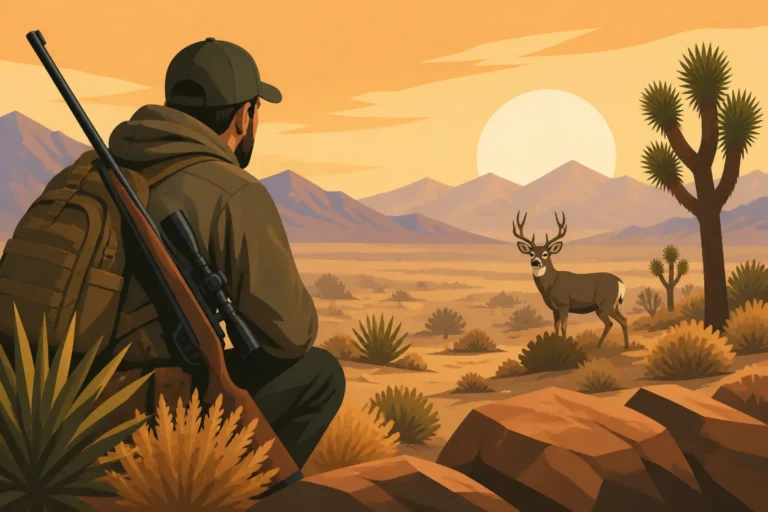
The vast, sun-baked desert washes of California can feel like an impossible maze when you're trying to locate elusive mule deer. Many hunters head out feeling overwhelmed by the sheer scale of the landscape, unsure where to even begin in such a dry, open environment. This guide will walk you through how to effectively hunt mule deer in these challenging but rewarding Bureau of Land Management (BLM) desert wash areas, helping you understand their patterns, scout smarter, and apply successful tactics.
Understanding the Desert Wash Ecosystem for Mule Deer
Hunting mule deer in California's desert washes isn't like hunting blacktails in timber or high-country muleys in the Sierra. This is a game of subtle cues and vast distances. To truly find success, you have to understand that a desert wash isn't just a sandy ditch; it's a lifeline in an otherwise harsh environment. It dictates deer movement, provides vital cover, and often holds the scarce resources they depend on.
The Role of Washes as Wildlife Highways
Think of desert washes as the freeways and backroads of the desert for mule deer. These natural drainage systems, carved by infrequent but powerful rain events, offer a network of travel routes that deer instinctively follow. The deeper, more defined washes provide crucial concealment from predators, including human hunters, as deer move between bedding areas and feeding grounds. You'll often find deer using these corridors to travel from higher, rockier terrain down into flatter areas where forage might be more abundant after a rain.
These washes aren't just for movement; they also provide a slightly cooler microclimate compared to the exposed desert floor. The banks offer shade, and the softer soil can make for easier walking. Understanding that deer are inherently lazy and will take the path of least resistance will guide your scouting. They'll use these washes to avoid open ridges and flats during daylight hours, making them prime spots for intercepting deer moving at dawn or dusk.
Identifying Key Habitat Features Within the Wash
While the entire wash network is important, not all sections are created equal. You need to look for specific features that concentrate deer activity. This often includes bends or convergences where multiple washes meet, creating a natural funnel that deer are likely to pass through. Thicker vegetation—whether it's mesquite, palo verde, or even dense stands of creosote bush—growing along the wash banks or in the wash bottom provides bedding cover and browse. Look for areas where the wash is wider and offers more varied vegetation, as these spots tend to hold deer longer.
Rocky outcrops, small caves, or even large boulders within or adjacent to a wash can also serve as thermal cover, protecting deer from the relentless desert sun or cold night winds. Pay close attention to subtle changes in elevation, even a few feet, which can offer a deer a vantage point while still staying mostly concealed. These small pockets of security and sustenance are the real treasures within the vastness of the desert.
Water Sources and Forage in Arid Environments
Water is king in the desert, and mule deer are no exception. While they are incredibly adapted to arid conditions and can get a lot of moisture from the plants they eat, accessible water sources are still critical. These might be natural springs, hidden seeps in rocky canyons, or even man-made guzzlers specifically designed for wildlife. Identifying these water points, especially during dry periods, can be a game-changer. Deer will often bed within a reasonable distance of water, especially during hot weather.
Forage in desert washes largely consists of shrubs, grasses, and forbs that can tolerate drought. Deer will browse on things like desert almond, catclaw acacia, and various annuals that sprout after rains. Look for signs of heavy browsing, even if the plants seem sparse to your eye. The quality and availability of forage can vary dramatically depending on recent rainfall. After a good storm, the washes might burst with green growth, attracting deer from miles around. Remember to consider hunting a BLM desert wash after a rain as a prime opportunity.
Scouting Strategies for Desert Mule Deer
Scouting in the desert is less about finding deer beds and more about understanding where deer could be and how they would move. It's about piecing together a puzzle across an immense landscape. Don't underestimate the power of both digital tools and good old-fashioned legwork.
Pre-Season Digital Scouting with Mapping Apps
Before you ever set foot in the desert, your best friend will be a good mapping application like onX Hunt or GoHunt. These apps allow you to pour over satellite imagery, topo maps, and land ownership layers from the comfort of your home. Start by identifying large expanses of BLM land in your chosen zone. Then, zoom in and begin tracing the major wash systems. Look for areas where washes converge, where they get wider or deeper, or where they connect to higher, rougher terrain that might serve as bedding sanctuaries.
Use the topo lines to find subtle elevation changes within or near the washes that could offer a deer a secluded bedding spot or a concealed travel route. Look for any green-up, even slight, which might indicate a hidden spring or an area that holds moisture longer. Pay attention to access points: where do roads or trails get close to these promising wash systems? Mark potential glassing points on your map—high spots overlooking a network of washes where you can sit and patiently scan. Don't forget to use the public land layers to ensure you're always on legal ground; onX Layers for California Land Status can be invaluable here.
Boots-on-the-Ground Reconnaissance
Digital scouting is a crucial starting point, but it's no substitute for getting your boots dirty. Once you've identified promising areas on your map, plan a scouting trip. This is where you confirm your theories and find the subtle details the satellite couldn't show you. Walk the washes you've marked. Look for actual deer sign: tracks, droppings, rubs (though less common than in timbered areas), and browse lines on vegetation. Pay attention to how deer enter and exit the washes. Do they follow specific game trails up a bank?
During your scouting, think like a deer. Where would you go to feed at dawn? Where would you bed down to escape the midday sun? Walk slowly, head up, constantly looking for movement and assessing the cover. Don't be afraid to put some miles on your boots. The desert is vast, and often the best spots are a good distance from easy access. If you find heavy sign in a particular section, spend extra time exploring that immediate area. Consider doing some pre-season scouting in the early morning or late evening, as these are the times deer will be most active, giving you a better chance to observe their natural patterns.
Reading Sign and Identifying Travel Corridors
The desert sand is an excellent medium for recording deer activity. Fresh tracks are your most valuable clue. Look for tracks heading into or out of thicker cover within the wash, or those leading from a wash towards a water source or a feeding area. Size matters: bigger tracks often mean bigger deer. Pay attention to the direction of travel and how frequently a trail is used. A well-worn trail through a wash indicates a regular travel corridor.
Droppings can also tell a story. Fresh, soft droppings mean deer are currently in the area. Old, sun-baked droppings tell you they were there, but perhaps not recently. Look for both to gauge consistent use. As mentioned, browse lines on desert shrubs are another indicator. If you see signs of consistent feeding on particular plants, that area is providing vital sustenance. Combine these observations: fresh tracks leading to browsed plants near a potential bedding area, all within a major wash system, are exactly what you're looking for. A powerful tool like Using an App for California BLM Land Status can help you confirm you're within a huntable area while you're reading sign on the ground.
Effective Hunting Tactics in Desert Washes
Hunting mule deer in desert washes requires patience, keen observation, and often, long-range capabilities. The openness of the terrain means deer will spot you if you're not careful, and their ability to blend in is legendary.
Early Morning and Late Evening Ambush Points
Just like in other environments, mule deer in the desert are most active during the low light hours of dawn and dusk. This is when they'll be moving between bedding areas and feeding grounds. Your best bet is to position yourself strategically before first light, overlooking a section of wash that you've identified as a high-traffic corridor or a feeding area. Look for a vantage point—a small rise, a cluster of taller bushes, or a rocky outcrop—that gives you a wide field of view without silhouetting yourself.
The goal is to intercept deer as they emerge from the washes to feed, or as they return to them for cover. The light in the desert can be tricky, with long shadows playing tricks on your eyes, so bring quality optics. Be prepared to sit for extended periods, scanning every shadow and every crevice. If you've done your scouting, you'll know where they're likely to appear, and patience will be your biggest asset.
Still-Hunting the Washes and Adjacent Cover
Still-hunting is a highly effective tactic for desert washes, especially once the sun is up and deer are seeking cover. This involves moving slowly, taking a few steps, then stopping to scan for several minutes. Think of it as a methodical, slow stalk. You're not looking for a whole deer, but rather a horizontal line, an ear twitch, a patch of hide that doesn't quite match the surroundings. Still-Hunting California's Sierra Nevada Timber might focus on different terrain, but the core principle of slow, deliberate movement and intense observation remains the same.
Focus your still-hunting efforts within the washes themselves, or along their edges where thicker vegetation provides cover. Move into the wind whenever possible to prevent your scent from spooking deer. The soft sand in the wash bottom makes for quiet walking, but be mindful of crunchier gravel patches. Use the terrain to your advantage: peek around bends, crawl to the edge of a bank to look down into the wash, and always assume there's a deer just out of sight.
Glassing Techniques for Expansive Terrain
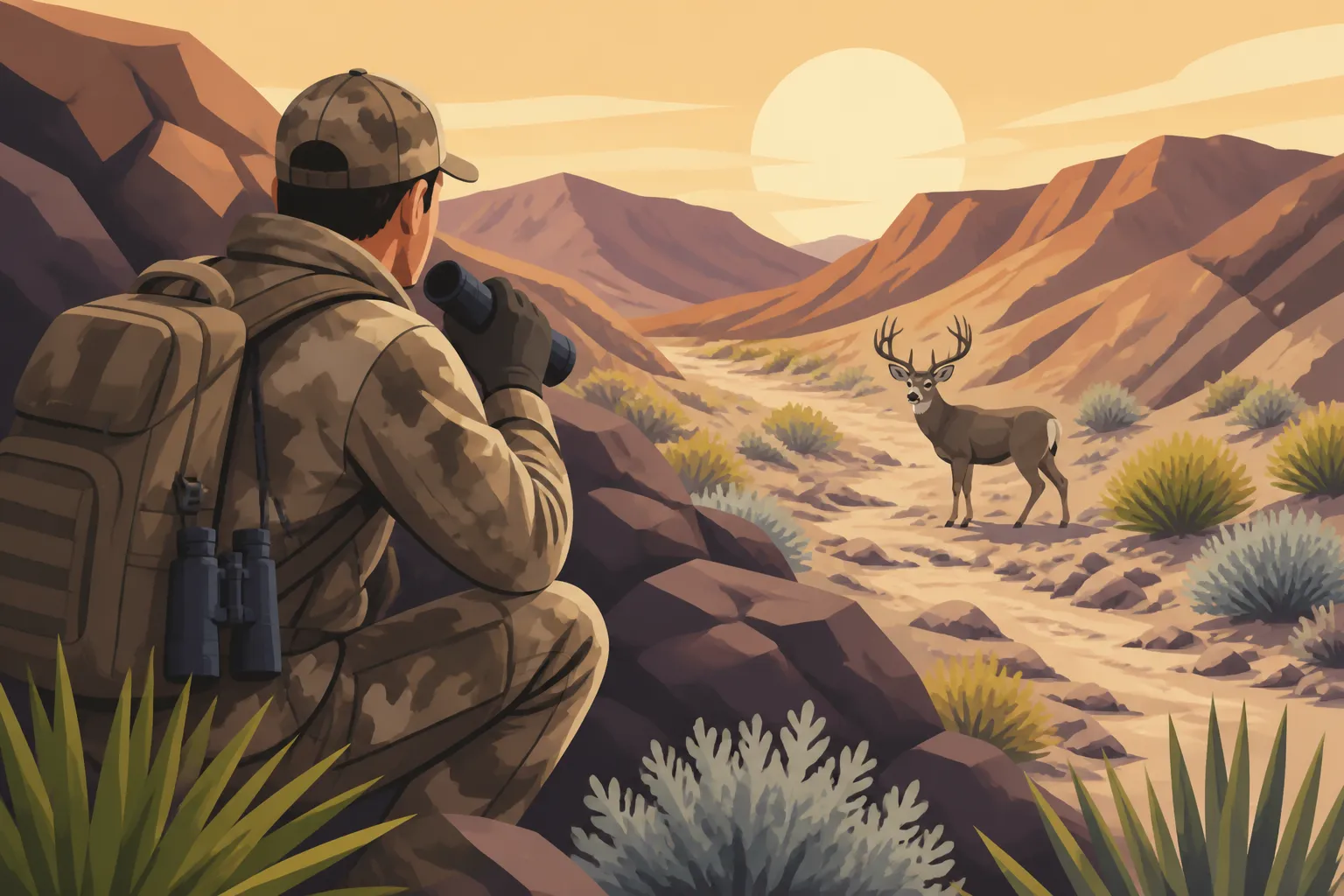
Glassing is arguably the single most important skill for desert mule deer hunting. The vast, open nature of BLM desert country means you often need to spot deer from a distance before they spot you. Find a high vantage point that offers a panoramic view of multiple washes, ridges, and basins. Set up your spotting scope and binoculars on a sturdy tripod and systematically grid out the landscape. Start close and work your way out, slowly scanning every detail.
Look for anything that looks out of place: a patch of darker color, a horizontal line in a vertical world, a flicker of movement. Mule deer are masters of camouflage, so a deer might just look like a rock or a shadow. Spend at least 15-20 minutes in one spot, then move to the next. The longer you glass, the more likely you are to pick up subtle movements. This takes practice and a lot of patience, but it's how you'll find those bedded bucks in the middle of the day. For tips on how to effectively scan vast areas, check out Glassing Mule Deer in Open California Country. Binoculars like those recommended in Best Binoculars for Glassing a Burn Scar will serve you well, even if the terrain is different.
Here's a quick comparison of active vs. stationary tactics:
| Tactic | Best Time of Day | Key Advantage | Primary Equipment | Challenge |
|---|---|---|---|---|
| Ambush | Early Morning/Late Evening | Intercepting deer movement at predictable times | Binoculars, rangefinder, quiet clothing, patience | Deer may choose unexpected travel routes |
| Still-Hunting | Mid-morning/Late Afternoon | Covering ground, finding bedded deer in cover | Binoculars, quiet boots, awareness of wind | Easy to spook deer if moving too quickly |
| Glassing | All Day, especially mid-day | Locating deer at long distances, scouting | Spotting scope, tripod, high-power binoculars | Requires immense patience and good optics |
Essential Gear and Preparation for Desert Hunts
The desert is an unforgiving environment. Proper gear and thorough preparation aren't just about comfort; they're about safety and success. Don't cut corners on these essentials.
Water, Hydration, and Sun Protection
This cannot be stressed enough: carry more water than you think you'll need. Dehydration is a serious risk in the desert, especially when you're hiking and glassing. Consider a hydration pack for easy access to water on the go, and always carry extra bottles in your main pack. Electrolyte supplements can also be a good idea to replenish what you lose through sweat. Sun protection is equally vital. Wide-brimmed hats, lightweight long-sleeved shirts, neck gaiters, and sunscreen are absolute necessities to prevent sunburn and heatstroke.
Beyond just carrying water, know where your nearest refill points are, whether they're a cached supply in your truck or a known water source. Planning your route to minimize exposure during the hottest parts of the day can make a huge difference in your endurance and safety. Remember, you're often far from any assistance when Hunting California's BLM Desert Land, so self-reliance is key.
Optics for Long-Range Visibility
We've touched on glassing, but let's talk about the specific optics. A good pair of 10x or 12x binoculars on a tripod is indispensable for covering vast areas. For serious long-range spotting, especially for judging a buck from a mile away, a quality spotting scope (e.g., 60-80mm objective, 20-60x magnification) is a must. A sturdy tripod is critical for both, as hand-holding optics for extended periods is tiring and leads to shaky images. Don't forget a quality rangefinder, as shots in the desert can often be longer than what you're used to in timber. Being able to accurately range your target and any landmarks around it is crucial for ethical shooting. If you're looking for specific recommendations, you might find useful insights in Best Rangefinder for Open Desert Country.
Appropriate Footwear and Clothing
Your feet are your most important tool in the desert. Invest in high-quality, broken-in desert boots that offer good ankle support and breathability. Blisters are a hunt-killer, so pair your boots with moisture-wicking socks. The terrain in washes can be uneven, rocky, and sandy, so good traction is important. Desert Boots for California BLM Wash Hunting offers specific advice on what to look for.
Layering is important, even in the desert. Mornings can be surprisingly cold, especially in the late fall, but midday temperatures can soar. Start with a moisture-wicking base layer, add an insulating layer if needed, and always have a lightweight, breathable outer layer to protect against sun and wind. Camo patterns that blend with the dry, brushy desert landscape, like tan, sage, or muted greens, will serve you well. Avoid anything too dark or too bright that will stand out against the pale sand and sparse vegetation.
Disclaimer
This article is for general informational purposes only and does not constitute professional advice. Laws, prices and regulations vary by location and change over time. Consult a qualified professional for guidance on your specific situation.