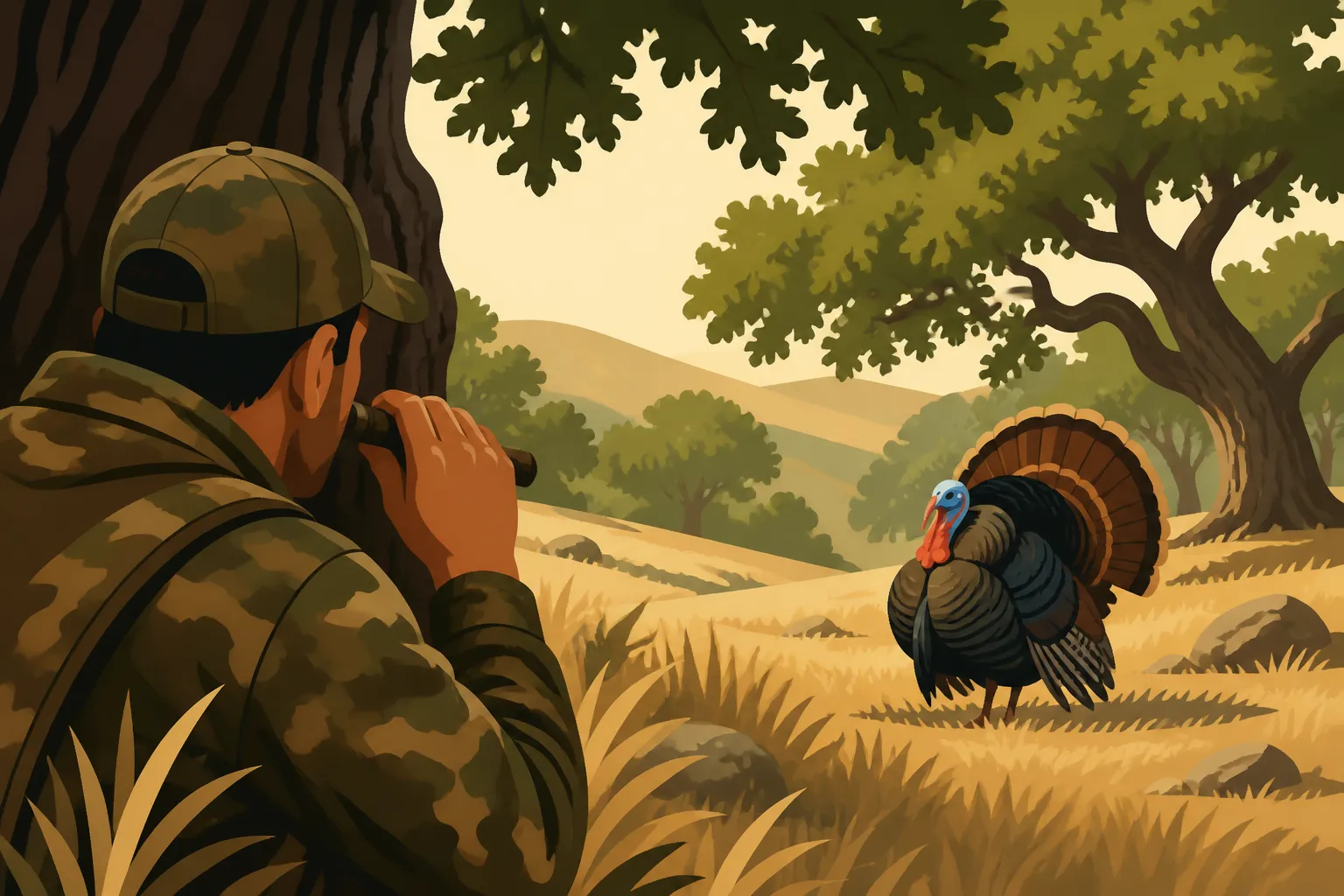
Calling a Gobbler in Oak Woodland
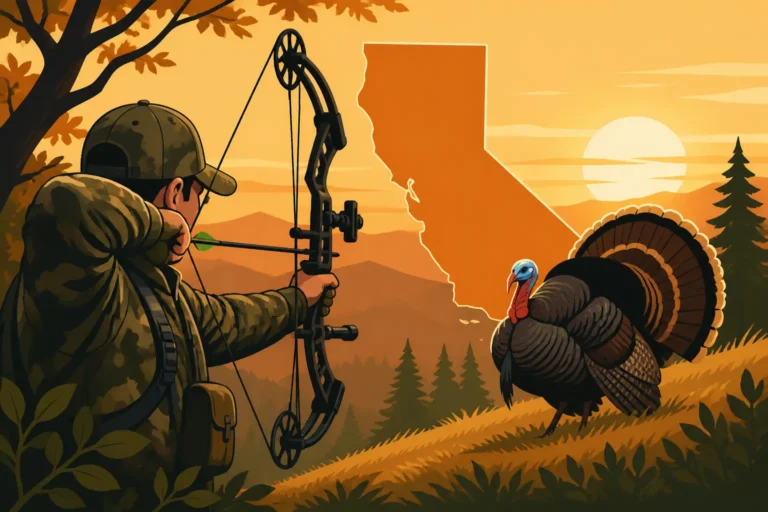
There's nothing quite like the sound of a gobbler echoing through the oaks on a crisp California spring morning. But let's be real, getting that elusive tom to commit and come within range in our dense, often broken oak woodlands can be one of the most frustrating challenges a turkey hunter faces. It’s not like calling birds in wide-open Midwestern fields, is it? This guide is going to dive deep into the specific strategies and nuances you need to master to successfully call a gobbler out of those beautiful, yet often tricky, oak-covered hills and into your setup.
Understanding the California Oak Woodland Gobbler
Hunting turkeys in California's oak woodlands is a unique experience, a blend of challenge and immense satisfaction. These birds aren't always textbook gobblers, and their behavior is heavily influenced by their environment. To call them in consistently, you first need to get inside their heads and understand their world.
Typical Behavior and Roosting Habits
California's oak woodlands present a distinct habitat that shapes turkey behavior in profound ways. Unlike the expansive pine forests or open fields found elsewhere, our oak country is characterized by rolling hills, steep ravines, and often dense undergrowth punctuated by mature oaks. This varied terrain means gobblers here aren't always as straightforward as their counterparts in flatter, more open landscapes. They often move with a purpose, using natural contours and cover to their advantage, making them feel secure even when gobbling loudly.
When it comes to roosting, those magnificent, sprawling oak trees are king. Gobblers will seek out the tallest trees, often on ridges or points overlooking drainages, giving them a commanding view of their surroundings. This high vantage point offers protection from predators and allows them to hear hens or other gobblers from a distance. Understanding these roosting preferences is critical for your early morning setup. You need to identify potential roosting areas beforehand and plan your approach to get in silently, well before fly-down, positioning yourself to intercept them as they hit the ground. Don't expect them to fly down and run straight to you every time; often, they'll pitch down, survey the landscape, and then begin their daily routine.
Their daily routines are also influenced by the oak canopy. While they might fly down from a high oak, they won't always stay in the immediate vicinity. After fly-down, they typically spread out to feed, often working their way down into bottoms or across benches where food sources like acorns or insects are abundant. Later in the morning, they might head towards water sources or simply loaf in shaded areas as the day heats up. Your calling strategy needs to account for these movements, allowing you to intercept them along their travel corridors or entice them to deviate from their path.
The Impact of Pressure and Season Timing
The timing of your hunt within the California turkey season can dramatically alter how a gobbler responds to your calls. Early in the season, particularly during the first few weeks of spring, gobblers tend to be less pressured and more vocal. They're actively seeking hens, and their hormones are running high, making them more susceptible to aggressive calling. They might come charging in, eager to investigate any hen sounds. This is often the time when you can get away with more excited yelps and cutts.
However, as the season progresses, especially in areas with higher hunter densities, gobblers become much warier. They've heard every cluck, yelp, and putt in the book, and they've likely had a few close calls or seen their buddies get tagged. These pressured birds are notorious for "gobbling in place" – responding enthusiastically but refusing to close the distance. They expect the hen to come to them. This is when your patience and subtlety become paramount. Understanding when California gobblers go quiet in late spring can be crucial for adapting your strategy. You might need to scale back your calling, use softer vocalizations, and sit longer, relying on their natural curiosity to eventually draw them in.
Weather also plays a significant role. Bright, clear mornings often mean more vocal birds, while cold, windy, or rainy days can make them tight-lipped and harder to locate. Keep an eye on weather patterns and adjust your expectations and tactics accordingly. Knowing when and how much pressure a bird has received can often be the difference between a successful hunt and a frustrating one.
Local Acorn Crop and Foraging Patterns
The availability of acorns can significantly dictate where turkeys spend their time in oak woodlands. When there's a bumper acorn crop, gobblers (and hens) will concentrate their feeding efforts in areas where these nutrient-rich mast crops are abundant. This can be both a blessing and a curse for hunters. On one hand, it helps you narrow down potential feeding areas. On the other, if the birds are gorging themselves on a readily available natural food source, they might be less inclined to move long distances to investigate your calls.
Conversely, in years with a poor acorn year, turkeys will spread out more widely, searching for alternative food sources like insects, seeds, or green vegetation. This can make them harder to locate initially but potentially more responsive to calls, as they might be more willing to travel in search of companionship or new feeding grounds. Scouting is absolutely critical in this scenario. You need to be actively looking for scratched leaves, droppings, and fresh tracks to identify current feeding areas, rather than relying on historical hotspots.
Before the season, make a point to scout the oak ridges and creek bottoms for signs of last season's or current season's acorn drops. Look for the size of the acorns, how prevalent they are, and whether turkeys have been scratching them up. This reconnaissance will give you a significant advantage in predicting where the birds will be spending their daylight hours, allowing you to set up closer to their natural feeding zones, making your calls much more effective.
Essential Calling Techniques for Oak Woodlands
Once you understand the gobbler's world, it's time to talk about how you're going to communicate with him. Calling in oak woodlands requires a nuanced approach, often favoring subtlety over volume.
Mastering Soft Calls and Locator Calls
In the sometimes-thick confines of California's oak woodlands, where visibility can be limited, mastering soft calls is absolutely paramount. An aggressive, loud series of yelps or cutts might be effective in open country, but in the timber, it can often alert a gobbler to your exact position too quickly, causing him to hang up just out of sight. Think soft clucks, purrs, and quiet tree yelps as your primary conversation starters. These sounds mimic a contented hen, signaling to the gobbler that there's a lady nearby, but she's not desperate or running away. A quiet, realistic putt or soft cluck can often be the finishing touch that brings a wary gobbler the last few yards.
Locator calls, however, are a different beast. These are designed to make a gobbler shock-gobble, revealing his position without sounding like a turkey. Owl hoots are fantastic at dawn and dusk, eliciting a response as turkeys react to other forest noises. Crow calls work exceptionally well throughout the day, often startling a gobbler into a vocal response. And don't underestimate the power of a coyote howl, especially on a calm morning; it can really make a tom sound off. The key is to use these calls judiciously and listen intently. Once you get a response, switch back to softer turkey vocalizations to lure him in. The goal is to get him to gobble, not to call him to the locator sound.
Knowing when to switch between excited calling and soft calling is a skill developed through experience. If a gobbler is hammering back at every call and sounding like he's covering ground, a more excited sequence might keep him coming. But if he's gobbling tentatively or seems to be hanging up, dialing back the intensity and using those subtle, reassuring sounds can often seal the deal. Remember, in dense cover, proximity can be key, and loud calling can sometimes broadcast your exact position too well, causing the bird to stop just out of sight.
Utilizing Pot Calls and Box Calls
Pot calls, also known as slate calls (though they can be made of glass, aluminum, or other surfaces), are incredibly versatile for oak woodland hunting. With a little practice, you can produce a wide range of turkey vocalizations, from soft purrs and clucks to sharp yelps and excited cutts, simply by adjusting your striker pressure and angle. For the soft, subtle calls needed in close quarters or for pressured birds, a slate or ceramic pot call with a hardwood striker can produce incredibly realistic, mellow sounds. When you need a bit more volume to reach a distant bird or cut through some wind, switching to a glass or aluminum surface, or using a carbon striker, can give you that extra punch.
Box calls, on the other hand, are fantastic for their simplicity and ability to generate loud, sharp sounds. They're often my go-to for initial contact or when trying to locate a gobbler in windy conditions or over a long distance. The sharp yelps and clucks from a box call can really carry through the timber. While they might not offer the same range of subtle sounds as a pot call, their ease of use and ability to project make them an indispensable tool. A skilled caller can even get soft purrs and clucks from a box call by manipulating the lid ever so gently.
The trick with both pot and box calls in oak woodlands is practice and adaptation. Spend time understanding how different striker materials or varying pressure on your box call lid affect the sound. Practice in similar environments to get a feel for how your calls carry. Remember, the acoustics of the oak woods are unique; sounds can be muffled by dense foliage or carry surprisingly far down a drainage. Being proficient with both types of calls allows you to adapt to the turkey's mood and the specific environmental conditions you encounter.
Diaphragm Calls for Hands-Free Operation
Diaphragm calls are arguably the most challenging turkey call to master, but their hands-free operation makes them invaluable in hunting situations, especially when a gobbler is closing in. Imagine a tom strutting right into your shooting lane; with a diaphragm call, you can make those soft clucks and purrs to keep him coming without moving your hands, which could spook him. This ability to call while maintaining full control of your firearm or bow is a huge advantage.
Learning to use a diaphragm call takes dedication. It involves placing a thin, horseshoe-shaped frame with stretched latex reeds in the roof of your mouth and using air pressure from your lungs and tongue manipulation to create sounds. There are countless variations, from single-reed calls for basic yelps to multi-reed calls with different cuts (ghost cut, bat cut, V-cut) that produce a wider range of vocalizations, including higher-pitched hen sounds or raspier gobbler calls. Start with a single or double-reed call to get the basics down, focusing on consistent yelps before attempting more complex sounds like cutts or gobbler clucks.
While the learning curve is steep, the payoff is immense. The ability to make subtle, continuous sounds without movement is a game-changer when a wary tom is just out of sight, searching for the source of your calls. Coupled with a good understanding of turkey vocalizations, a diaphragm call can make you a much more versatile and effective turkey hunter, particularly in the unpredictable close-quarters environment of California's oak woodlands.
Strategic Setups and Decoy Use in Oak Cover
Getting the gobbler to respond is only half the battle; the other half is getting him to come within kill range. This often hinges on your setup and how you employ decoys in the unique oak woodland environment.
Identifying Ideal Ambush Locations
When you're dealing with California gobblers in oak woodlands, identifying the right ambush location is absolutely critical. These birds are savvy, using the terrain to their advantage, and they have excellent eyesight. You need to think like a turkey. Look for natural travel corridors: saddles between ridges, creek bottoms, old logging roads or cattle trails, and subtle benches on hillsides. Turkeys naturally follow the path of least resistance, and these areas often funnel their movement. Scouting before the season, perhaps by using mapping tools like GoHunt, can help you pinpoint these choke points where you might be able to intercept them.
Once you've identified a promising travel route, your actual setup location is paramount. You need to position yourself against a substantial piece of cover – a large oak tree (even a fallen one), a thick clump of brush, or a rock outcropping. This cover not only breaks up your silhouette but also provides a vital backstop, concealing any subtle movements you might make. Always make sure your setup provides good visibility and clear shooting lanes in the direction you expect the turkey to approach. Remember, it's often better to sacrifice a little concealment for a clear shot opportunity than to be perfectly hidden but unable to take a clean shot. I always try to set up against a big valley oak that's wider than my shoulders, giving me peace of mind.
Consider the sun angle as well. Ideally, you want the sun at your back, shining into the turkey's eyes as he approaches. This makes it harder for him to spot you. Also, think about your escape route, not for you, but for the turkey if he spooks; you want him to run away from your property line, not onto your neighbor's land. The key is to blend in, remain still, and anticipate the bird's approach, giving yourself the best possible chance for a clean, ethical shot.
Decoy Selection and Placement
Decoys in oak woodlands can be a double-edged sword. On one hand, they can provide a visual stimulant that draws a gobbler in that final crucial distance. On the other hand, too many decoys, or poorly placed ones, can be quickly spotted as unnatural or even spook a wary tom, especially on pressured public land. In the often-dense cover of California's oak country, less is often more. A single hen decoy, or a hen and a jake combination, is usually sufficient. The goal isn't to create a huge flock, but to present a realistic, inviting target that looks easy for a gobbler to approach.
When placing your decoys, think about visibility and approach. You want the decoy to be visible from a distance, but not so exposed that it looks out of place. Place them slightly uphill from your position if possible, so that an approaching gobbler is looking up at the decoy, making it less likely he'll spot you hidden lower down. Angle your decoys so that when a gobbler approaches them to face the hen, his broadside is presented to your shooting lane. This maximizes your chances for a clean shot. About 15-20 yards from your position is a sweet spot for decoy placement.
There are also times when it's best to forgo decoys altogether. If you're hunting highly pressured birds that have likely encountered decoys before, or if the cover is so dense that a decoy would be obscured, it might be more effective to rely solely on your calling. In these situations, especially when considering decoy placement for pressured California birds, a gobbler might be more inclined to come in to investigate "just a sound" rather than a full visual setup that he might have learned to associate with danger. Always assess the specific hunting conditions and the mood of the birds before deciding on your decoy strategy.
Understanding Shot Distances and Obstructions
Hunting in oak woodlands means you'll almost always be dealing with branches, leaves, and other natural obstructions. This is a far cry from the open fields where a clear shot can be 40 yards or more. In the oaks, a 25-yard shot might feel like a long one if there's even a single twig between you and the bird's head. The primary challenge is finding a clear shooting lane and accurately judging distances through the timber. What looks like a clear shot might have a hidden branch that deflects your pattern.
Before a turkey even shows up, take the time to clear shooting lanes around your setup. Use pruning shears to snip small branches and rake away leaves if legal and appropriate for the area, creating clear lines of sight to your decoy or anticipated approach lanes. Mentally mark distances to various trees or landmarks within your clear zones – 20 yards, 30 yards – to help you quickly assess the range when a bird appears. A rangefinder is an invaluable tool for this, allowing you to instantly confirm distances and ensure you're within your effective range.
Practice shooting your shotgun or bow in scenarios that mimic oak woodland conditions. This means practicing quick shots, shooting from a seated position, and being comfortable with closer ranges. Remember, the head and neck are your target zone for a clean kill. Avoid body shots. When a gobbler steps out, pause, confirm he's legal (if applicable), get a clear bead on his head, and execute your shot. Never rush. Understanding your effective range and sticking to it, especially when branches are an issue, is paramount for ethical hunting.
Reading the Gobbler and Adapting Your Approach
Turkey hunting is rarely a set-it-and-forget-it affair. The birds are constantly communicating and reacting, and your success hinges on your ability to read their responses and adapt your strategy on the fly.
Interpreting Gobbles and Responses
Every gobble tells a story, and learning to interpret those stories is a crucial skill for oak woodland turkey hunting. An immediate, booming gobble that gets closer with each call might mean an eager tom is on his way, possibly even running. A distant, muffled gobble that doesn't seem to get any closer, even after repeated calling, could indicate a bird that's "hung up," not wanting to commit. Sometimes, a gobbler will shock-gobble at a crow call, but then remain silent to your turkey vocalizations, indicating he's wary or has hens with him.
The infamous "hang-up" is a common frustration in the oaks. You'll hear him gobbling, he sounds close, but he just won't show himself. He's likely expecting the hen to come to him, or he's identified some perceived danger. When this happens, resist the urge to keep calling aggressively. Often, the best tactic is to go silent for a while, letting his curiosity get the better of him. Sometimes, a single soft cluck or putt after a long silence can be enough to draw him in. Alternatively, you might need to try a "reposition" – silently moving to a new setup that cuts off his escape route or offers a better line of sight, though this is risky.
Adjusting your calling volume and intensity based on his reaction is key. If he's hot and coming, keep those excited yelps and cutts going, but don't overdo it. If he's hanging up, scale back to soft, reassuring purrs and clucks. Sometimes, mimicking a dominant hen can pull a shy tom in, while other times, a less aggressive approach is needed. It’s a constant dance, and your ability to lead depends on how well you can read his moves.
Patience, Persistence, and Changing Tactics
Patience truly is a virtue in turkey hunting, especially in the challenging environment of oak woodlands. It’s easy to get antsy when a gobbler is talking but not moving, but often, the most successful hunters are those willing to sit tight for extended periods. Turkeys operate on their own timeline, and sometimes it takes an hour or more for a wary tom to decide your "hen" is worth the effort to investigate. Don't call continuously; instead, incorporate periods of silence, allowing the natural sounds of the woods to return and the gobbler's curiosity to build.
When a gobbler simply won't budge or seems to be moving away, that's your cue to consider changing tactics. Don't be afraid to try different call types – if a pot call isn't working, switch to a diaphragm. Experiment with different call sequences, maybe a string of excited cutts followed by some soft purrs, mimicking a hen that's moving or getting comfortable. If you’re consistently getting responses but no commitment, it might be time for a subtle reposition. Use terrain features and thick cover to move quietly and strategically, trying to get ahead of the bird or create a new angle of approach. Tools like GoHunt can be incredibly useful here for quickly assessing terrain and potential movement routes before you commit to a reposition.
Persistence is also crucial. Just because a gobbler isn't responding doesn't mean he's not there. He might be with hens, or simply quiet. Keep trying locator calls periodically, especially later in the morning when hens might have left him. Sometimes, a midday gobbler, having been left alone by his hens, will be more eager to respond to a lone hen call. Don't give up too early; many successful hunts happen later in the morning or early afternoon when most other hunters have packed it in.
Early Morning Fly-Down and Mid-Day Strategies
The early morning fly-down is one of the most exciting times to hunt turkeys in California's oak woodlands. Your strategy for calling a gobbler off an oak ridge roost needs to be precise. Get into your chosen setup well before first light, using the darkness to your advantage for silent entry. Start with soft, subtle tree yelps and clucks before the birds even leave the roost. Mimic a hen waking up, making contented sounds. This lets the gobbler know there's a hen nearby and can often be enough to get him gobbling on the limb.
Once he starts gobbling, maintain soft, seductive calls. You want to convince him that you're a real hen, ready to meet him as he pitches down. As he flies down, often with a thunderous flutter of wings, go silent for a moment, letting him hit the ground and look around. Then, a few more soft clucks and purrs, perhaps with a visual of a hen decoy, can often seal the deal as he searches for the source of the sound. Remember, you want him to come looking for you.
Mid-day hunting requires a different approach. After the initial morning flurry, gobblers might become quiet, having bred hens or simply gone off to feed. This is when the "run-and-gun" or "fanning" tactics become more viable. Instead of sitting in one spot, actively move through the woods, stopping frequently to call, listen, and glass. Focus on areas with food sources, water, or shaded loafing spots. You're trying to provoke a shock gobble or intercept a bird that's on the move. Don't be afraid to cover ground; if a spot isn't producing after 30-45 minutes, move on to the next promising location. This proactive approach can often unlock success when the morning action has died down.
Safety and Ethics in Oak Woodland Turkey Hunting
Beyond the thrill of the hunt, responsible and ethical practices are non-negotiable, especially when hunting in areas that might see other hunters or have mixed-use public access.
Hunter Orange and Visibility Considerations
California has specific rules regarding blaze orange, and while it's not always legally mandated for turkey hunting, it is highly recommended, especially on public lands or in areas where other hunters might be present. In dense oak woodlands, where visibility can be limited to mere yards, wearing a blaze orange or blaze pink vest, hat, or both can literally save your life. It clearly signals to other hunters that you are human, not a turkey. Even if you're certain you're alone, an unexpected hiker, mountain biker, or another hunter could wander into your area.
Consider the times and places where visibility is most critical. During the early morning hours, before the sun is fully up, and late in the afternoon as light fades, blaze orange makes you far more visible. If you're moving through dense brush or thick timber between setups, put on your orange. Once you're set up against a tree, you can remove it (if legal and you feel safe), but always have it readily available. Always remember that your life is worth more than a turkey, and being seen by other hunters is paramount. Familiarize yourself with California blaze orange requirements to ensure you're always in compliance and prioritizing safety.
Ultimately, the choice to wear blaze orange for turkey hunting is often a personal one in California, but given the rise in hunting pressure and the inherent risks of hunting in dense cover, it's a choice that leans heavily towards safety and responsible hunting.
Identifying Your Target and Backstop
This is perhaps the most critical safety rule in all of hunting, and it applies unequivocally to turkey hunting in oak woodlands: Always be 100% certain of your target and what lies beyond it. In the excitement of a gobbler approaching, it can be easy to rush a shot, but taking an extra second to confirm it's a legal bird (if antler point restrictions apply) and that your shot is clear is essential. Never shoot at a sound or movement alone. Wait until you can clearly see the head and neck of the turkey.
In rolling oak hills, judging your backstop is vital. A shot taken on a ridgeline could travel a significant distance into a valley below or even onto adjacent private property. Always ensure there's a natural backstop – a hill, a rock face, or the ground – behind your intended target that will safely stop your projectile. Never shoot towards skylines or where you don't have a clear understanding of what's beyond the bird. Ethical hunting demands that you prevent any potential harm to other people, livestock, or property.
Moreover, in California, you cannot harvest hens during the spring season. Always positively identify a tom by its red, white, and blue head, beard, and spurs before taking a shot. A quick glance might not be enough; sometimes, jakes can look like full-grown toms to the untrained eye. Take your time, make absolutely sure, and then place your shot precisely on the head or neck for a swift, humane kill.
Respecting Property and Fellow Hunters
Hunting in California's oak woodlands often means navigating a mosaic of public and private lands. It's your responsibility to know exactly where you are and to respect all property boundaries. Many hunters rely on detailed mapping applications like GoHunt to clearly delineate property lines and stay within legal hunting areas. Trespassing, even accidentally, can lead to fines, loss of hunting privileges, and damage to the reputation of all hunters. If you’re unsure, err on the side of caution and avoid the area. For private land, always obtain explicit permission before stepping foot on it. Understanding finding California property lines is a critical skill for any hunter.
Beyond property lines, demonstrating courtesy and respect to fellow hunters is paramount. Public land can get crowded, especially on opening weekend. If you encounter another hunter or hear calls from their direction, give them a wide berth. Never "call over" another hunter's setup, meaning don't move in front of them and start calling to a bird they are working. This is considered highly unethical and dangerous. If you hear a bird being worked, move on to another area or wait until the situation resolves. Good sportsmanship ensures that everyone can enjoy their time afield safely and respectfully.
Finally, practice Leave No Trace principles. Pack out everything you pack in, including spent shell casings, food wrappers, and any other trash. Leave the natural environment as you found it, or better. Be a good steward of the land, and remember that our hunting privileges are dependent on our collective good behavior and ethical conduct.
| Call Type | Pros | Cons | Best Use Cases in Oak Woodland |
|---|---|---|---|
| Pot Call | Versatile for various sounds (clucks, yelps, purrs, cutts). Easy to vary volume. Relatively easy to learn. | Requires two hands, can be noisy if dropped. Can sound repetitive without skill. | Close-range soft calling, aggressive cutting for hot birds, diverse sounds to keep a bird interested. |
| Box Call | Loudest and easiest to use for locating distant birds. Simple to operate. Durable. | Less subtle for close-range work. Can be bulky. Limited range of sounds. | Locating birds at dawn or in windy conditions, initial loud yelps, reaching out to distant toms. |
| Diaphragm Call | Hands-free operation (critical for gun/bow handling). Highly realistic and versatile sounds. | Steep learning curve, takes a lot of practice to master. Can be uncomfortable. | Keeping birds committed at close range, subtle finishing calls, calling while moving or aiming. |
| Locator Call (Owl, Crow, Coyote) | Elicits shock gobble without sounding like a turkey. Good for early morning/late evening. | Not a turkey call itself, only for locating. Can alert other hunters. | Pinpointing a gobbler's exact location, especially at dawn or dusk, or when birds are quiet. |
Disclaimer
Hunting is an inherently dangerous activity. This guide provides information for educational purposes only and is not a substitute for professional hunter education, firearms training, or legal advice. Always consult the most current California Department of Fish and Wildlife (CDFW) regulations, obtain all necessary licenses and tags, and prioritize safety above all else. Hunt ethically, responsibly, and with respect for wildlife and other outdoor enthusiasts.