California Duck Daily Bag Limit
Navigating the ever-changing landscape of waterfowl regulations in California can feel like trying to hit a green-winged teal at 60 yards in a crosswind – it's tough, often confusing, and if you're not careful, you might miss the mark entirely. Hunters often get frustrated by the intricate rules, especially the specific daily bag limits for different duck species, which are rarely as simple as a single number. This guide will meticulously break down California's duck daily bag limits, explain the reasoning behind them, and provide practical advice to ensure you stay legal and ethical in the field.
Understanding California's Overall Daily Duck Bag Limit
The first thing to wrap your head around is that while there's an overarching daily duck bag limit, it's never truly just one number for "ducks." Instead, it's a ceiling for the total number of ducks you can harvest in a day, which is then further restricted by individual species limits. It’s a bit like having a total allowance for candy, but then specific limits on how many chocolate bars or lollipops you can have within that allowance. This system is designed to protect vulnerable species while allowing for sustainable harvest of more abundant ones.
The Federal Framework and California's Specifics
Duck hunting regulations aren't just dreamed up in Sacramento. They're part of a much larger federal framework established by the U.S. Fish and Wildlife Service, which manages migratory bird populations across North America. This framework divides the continent into several flyways, and California falls squarely within the Pacific Flyway. Each year, wildlife biologists conduct extensive surveys, assessing breeding populations, habitat conditions, and harvest rates. Based on these findings, federal guidelines are issued, providing a range of season lengths and bag limits that states can choose from.
California, through its Department of Fish and Wildlife (CDFW), then sets its specific regulations within these federal guidelines. They consider local population data, hunter participation, and conservation goals specific to California's unique ecosystems. This is why the rules can shift slightly from year to year, and why it's absolutely critical to consult the most current hunting regulations booklet or the CDFW website before heading out. A good resource like GoHunt can also be invaluable for keeping tabs on these updates, as missing a small change could lead to a big problem.
Aggregate Limits Versus Species-Specific Restrictions
So, what does this mean for the hunter? The current aggregate daily bag limit for ducks in California is generally seven ducks. This is your absolute maximum – you cannot shoot more than seven total ducks in a single day, regardless of species. However, this seven-duck limit is almost always comprised of even more stringent species-specific restrictions. For example, you might be allowed seven ducks total, but only two of those can be hen mallards, and only one can be a pintail. This layered approach is precisely what makes duck hunting regulations so challenging to navigate. You could theoretically have six gadwalls and one wigeon, hitting your overall seven-duck limit, but if you shot two pintails, you’d be over the pintail limit even if you were only at two total ducks. It's a game of careful identification and self-control.
Understanding the difference between the aggregate limit and the species-specific restrictions is paramount. Many hunters mistakenly believe that as long as they don't exceed the total seven, they're fine. But the CDFW regulations are very clear: you must adhere to both the total bag limit and each individual species' limit. This system ensures that species experiencing population declines or those with lower reproductive rates, like northern pintails, receive additional protection, even if other duck populations are thriving.
Detailed Duck Species Bag Limits in California
While the overall daily bag limit usually hovers around seven ducks, the real challenge, and where most hunters can get into trouble, lies in the specific limits for individual species. These are the rules that dictate how many of certain types of ducks you can include within your seven-bird total. These limits are dynamic, reflecting the health of each species' population, and they are rigorously enforced.
Common Species and Their Typical Restrictions
Let's break down some of the most common duck species found in California and their typical daily bag limits. Remember, these are subject to change, so always check the latest regulations.
| Species Category | Typical Daily Bag Limit | Specific Notes/Restrictions |
|---|---|---|
| Mallards | 7 | Only 2 can be hen mallards (females) |
| Northern Pintails | 1 | Highly regulated due to population concerns |
| Canvasbacks | 2 | Historically a species of concern, limits can fluctuate |
| Scaup (Greater and Lesser) | 2 | Known as "bluebills," often have a later opening or specific limits |
| Wood Ducks | 2 | Distinctive plumage, often found in wooded areas |
| Redheads | 2 | Often mistaken for canvasbacks; check identification carefully |
| Hooded Mergansers | 2 | Not considered "ducks" by some, but included in the overall aggregate limit |
| Other Ducks (Gadwall, Wigeon, Shoveler, Green-winged Teal, Cinnamon Teal, Blue-winged Teal, Ring-necked Duck, Bufflehead, Goldeneye, Ruddy Duck, etc.) | 7 (combined) | No more than 7 total ducks, subject to individual species limits listed above and overall mallard limit |
| Coot | 25 | Separate bag limit, not included in the 7-duck aggregate duck limit |
| Common and Red-breasted Mergansers | 5 (combined) | Separate from Hooded Mergansers, part of the 7-duck aggregate |
Note: This table represents typical limits. Always consult the current CDFW hunting regulations for exact, up-to-date figures for the current season.
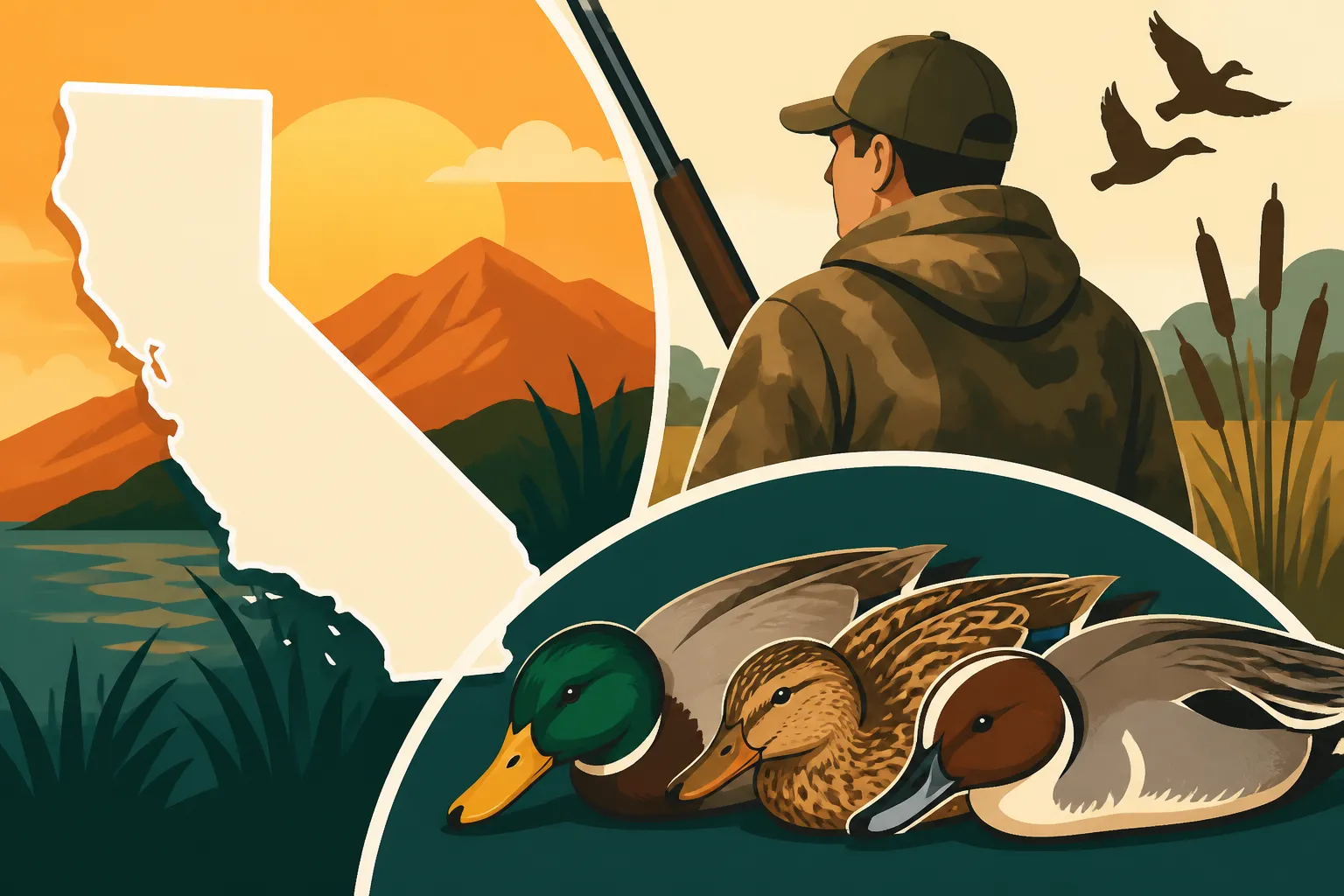
As you can see, the mallard limit is generally seven, but the critical nuance is that only two of those can be hens. Identifying a hen mallard on the wing can be a challenge, especially in low light, so it pays to be proficient at bird identification. Northern pintails often have a very restrictive limit, sometimes just one per day, due to their long-term population struggles. Canvasbacks and scaup also tend to have lower limits. These specific limitations are a direct result of ongoing scientific data and are crucial for the long-term health of these species. For those interested in deeper population insights, looking at California Duck Harvest Numbers can offer some perspective.
The Importance of Accurate Bird Identification
This detailed breakdown underscores why precise bird identification is not just a helpful skill for waterfowl hunters, but an absolute necessity for legal and ethical hunting. You must be able to distinguish between a hen mallard and a drake, or a pintail from a wigeon, before you pull the trigger. Mistaking a pintail for a more common species could easily put you over your legal limit and lead to serious penalties.
Practicing bird identification with field guides, online resources, and even through apps can dramatically improve your success and ensure compliance. Many experienced hunters will tell you they focus on identifying the species first, then gender if applicable, before even thinking about shooting. This also helps you tailor your approach – for instance, if you're out specifically for those hard-to-get pintails, your strategy for Decoying Ducks in California's Central Valley Flooded Rice might differ.
Practical Strategies for Staying Compliant in the Field
Knowing the regulations is one thing; successfully applying them in the heat of the moment during a fast-paced duck hunt is another. With multiple species buzzing your decoys and the thrill of the hunt, it's easy to lose track. Developing practical strategies to manage your bag limit is essential for every responsible waterfowl hunter.
Before You Go: Research and Preparation
The first step to compliance happens long before you set foot in the marsh. Every year, without fail, you need to read the current California Waterfowl Hunting Regulations. Don't rely on what you remember from last season, or what your buddy thinks the rules are. Regulations can and do change. The CDFW website is your best friend here, providing the most up-to-date information. Many hunters also use apps or platforms like GoHunt that integrate regulation summaries and can help you stay informed. Before the season starts, print out the relevant pages or save them to your phone for quick reference.
Consider the areas you'll be hunting. Some specific zones or wildlife areas might have additional restrictions or special hunt dates. For example, some refuges or managed wetlands might have different shooting hours or species-specific quotas beyond the statewide limits. This ties into understanding the broader context of Waterfowl Hunting California's Central Valley, where regulations might vary even within a relatively small geographic area.
During the Hunt: Mindful Shooting and Tracking
Once you're in the blind, vigilance is key. It sounds simple, but actively counting your birds and confirming their species as you retrieve them is critical. Some hunters keep a small tally sheet or even use a clicker counter to keep track of their bag. If you're hunting with a group, communicate openly about who has shot what to avoid collectively exceeding limits, especially for restricted species.
- Positive ID: Always make a positive identification of the bird before you shoot. If you're not sure, don't shoot. It's better to let a bird pass than to accidentally violate a bag limit. This skill becomes even more important when dealing with similar-looking species or when trying to differentiate between male and female mallards.
- Retrieve Immediately: Make every effort to retrieve downed birds quickly. This not only prevents crippling loss but also allows you to identify the bird and add it to your count. This is especially important in dense cover or across open water, where a bird might be difficult to find later.
- Separate Species: Some hunters use different game straps or compartments in their blind bag to keep different species separate. For instance, putting all your pintails on one clip, mallard hens on another, and other ducks elsewhere. This visual separation can help you quickly assess your current bag against the limits.
After the Hunt: Tagging and Transport
Once your hunt is complete, and you've reached your bag limit (or decided to call it a day), California regulations require you to keep migratory game birds (like ducks) in such a condition that their species can be determined during transport from the field. This usually means leaving a fully feathered wing on the bird until it reaches your home or a meat processing facility. This allows game wardens to verify your harvest against the bag limits, especially for species like pintails or canvasbacks that have restrictive limits. This requirement is a foundational rule, alongside others like the California Federal Duck Stamp Requirement and the California HIP Certification for Bird Hunters.
Make sure all your birds are properly processed for transport. If you're quartering birds in the field, always leave that feathered wing on until you're truly done for the day and back at a place where the bird can be fully prepared for consumption or storage. Ignoring this simple rule can easily lead to a citation, even if your bag was legal.
Why These Limits Matter for Conservation
It’s easy to feel frustrated by the complexity of duck bag limits, especially when you're just trying to enjoy a day afield. However, these regulations are not arbitrary. They are meticulously crafted tools for conservation, ensuring that future generations of hunters will also have the opportunity to pursue migratory waterfowl. Every limit, every season restriction, is a piece of a larger puzzle designed to maintain healthy populations.
Population Management and Scientific Data
The science behind waterfowl management is vast and ongoing. Biologists monitor breeding success in the northern prairies, track migration patterns, and analyze hunter harvest data from previous seasons. When a species like the northern pintail shows signs of decline, the bag limit is adjusted downward to reduce harvest pressure and allow the population to recover. Conversely, when a species like the green-winged teal is abundant, the limits might be more generous. These adjustments are a direct reflection of scientific data and adaptive management, ensuring that hunting remains sustainable.
Platforms and organizations like Ducks Unlimited and California Waterfowl Association contribute significantly to habitat restoration and research, which directly informs these limits. Understanding the bigger picture helps hunters appreciate why, for instance, you might only be allowed one pintail, even if you see many flying around. It’s about the overall health of the population across its entire range, not just what’s in front of your blind on a given morning.
The Hunter's Role in Conservation
As hunters, we are critical stewards of wildlife. Adhering to bag limits is one of the most fundamental ways we contribute to conservation. Every time we check the regulations, accurately identify our birds, and stay within the legal limits, we are actively participating in the long-term health of waterfowl populations. Violations, on the other hand, undermine these efforts and can harm the public perception of hunting.
Being a responsible hunter means more than just pulling a trigger. It means understanding the ecology of the birds you pursue, recognizing the impact of your actions, and committing to ethical practices. By doing so, we ensure that the rich tradition of waterfowl hunting in California continues for years to come. For more on the bigger picture of waterfowl movement, check out resources on Duck Migration Timing Through California, or learn about how many ducks winter in the Central Valley to get a sense of the scale of these populations.
Disclaimer
This article is intended for informational purposes only and does not constitute legal advice. Hunting regulations, including daily bag limits, are subject to change by the California Department of Fish and Wildlife (CDFW) and federal agencies. It is the sole responsibility of every hunter to consult and comply with the most current official hunting regulations before participating in any hunting activity. Always verify all rules and requirements with the official CDFW hunting regulations handbook or website.