Minimum Bullet Diameter for California Rifles
Navigating the regulations around hunting in California can sometimes feel like trying to untangle a particularly stubborn knot, especially when it comes to firearms and ammunition. Many hunters experience real frustration trying to understand exactly what's allowed and what's not, fearing they might accidentally run afoul of the law or, worse, not be adequately equipped for an ethical harvest. This guide is designed to cut through the confusion, clearly explaining the minimum bullet diameter requirements for rifles in California so you can head afield with confidence.
Understanding California's Rifle Regulations for Big Game
California has a comprehensive set of regulations for hunting big game, and these rules are designed with both hunter safety and animal welfare in mind. It's not just about what you can shoot, but how you can ethically and humanely take an animal. These regulations often evolve, so staying informed is crucial for any responsible hunter.
The legal framework for firearms in California aims to ensure that hunters use equipment capable of delivering a swift and humane kill. This means selecting a rifle and ammunition combination that generates sufficient energy and penetration for the intended game animal. It’s a balance between promoting ethical hunting practices and acknowledging the varied terrain and species found across our incredible state.
The Core Rule: Minimum Caliber and Bullet Weight
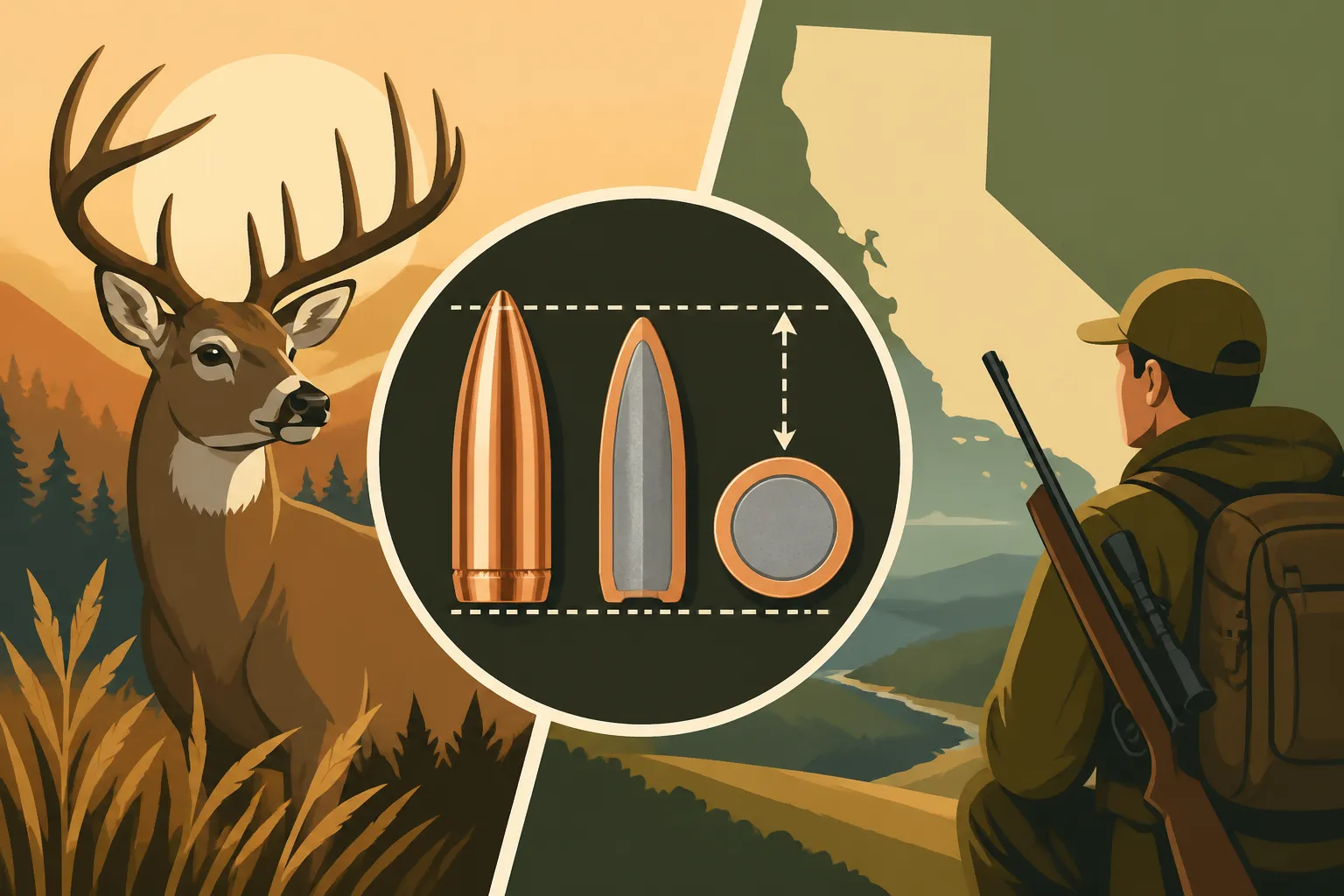
When it comes to hunting big game like deer, bear, or elk in California, the state specifies minimum standards for your rifle ammunition. Specifically, the California Department of Fish and Wildlife (CDFW) regulations state that for big game animals, you must use a bullet that is at least .24 caliber (or 6mm). But it doesn't stop there; there's also a minimum bullet weight requirement. Your projectile needs to weigh at least 100 grains.
This means that popular calibers like the .223 Remington, while effective for varmints or smaller game, are generally not legal for big game hunting in California because they typically fall below the .24 caliber threshold. Even some smaller 6mm cartridges might struggle to meet the 100-grain minimum, especially if you're looking at lighter, faster varmint loads. You really need to check the specific bullet you're using to ensure it complies, not just the general cartridge name. This careful selection ensures that when a bullet impacts a big game animal, it has the mass and diameter to create a sufficient wound channel and penetrate vital organs for a quick, humane harvest.
Non-Lead Ammunition's Impact on Bullet Choice
Adding another layer of consideration to bullet diameter and weight is California's statewide non-lead ammunition requirement. Since July 1, 2019, all hunting in California, regardless of species or location, must be conducted with non-lead ammunition. This mandate significantly impacts your bullet choice, as non-lead bullets, typically made from copper or a copper alloy, behave differently than traditional lead-core bullets.
Non-lead bullets are generally longer for their weight compared to lead bullets, and they retain nearly all of their weight upon impact, providing excellent penetration. However, their physical properties mean that a 100-grain copper bullet might look and perform slightly differently than a 100-grain lead bullet. This is a critical factor when ensuring you meet both the minimum diameter and weight requirements. For instance, you might find that while a .243 Winchester easily clears the .24 caliber hurdle, finding a 100-grain non-lead bullet that performs optimally in your rifle might require some testing. Hunters need to be particularly diligent in selecting their ammunition, focusing on reputable manufacturers that produce compliant, high-performance Best Non-Lead Bullets for California Deer-Sized Game and Best Non-Lead Bullets for Elk-Sized Game.
Why These Rules Exist: Safety and Ethics in California Hunting
It's easy to look at a dense rulebook and feel like the state is just trying to make things harder. However, California's hunting regulations, including those on minimum bullet diameter, are rooted in some very fundamental principles: ensuring a humane harvest and promoting public safety. These aren't arbitrary hurdles; they're thoughtfully implemented to uphold the integrity of hunting.
The commitment to ethical hunting is paramount. Nobody wants to wound an animal only to have it suffer or escape, leading to an arduous and often unsuccessful recovery. Similarly, ensuring public safety means that hunters are using appropriate tools for the task at hand, reducing risks to themselves and others.
Ensuring a Humane Harvest
The primary reason for minimum bullet diameter and weight regulations is to ensure a humane and ethical harvest. A bullet that is too small in diameter or too light in weight simply won't have the necessary kinetic energy or wound-channel creation potential to reliably incapacitate a large game animal quickly. Imagine trying to fell a mature buck with a round designed for small game; it's just not effective or fair to the animal.
When a bullet of adequate caliber and weight strikes a deer or a bear, it creates a significant wound channel, leading to rapid blood loss and organ damage. This is especially true with modern non-lead bullets, which often expand reliably and penetrate deeply without fragmenting excessively. These design features, combined with sufficient diameter and weight, maximize the chances of a quick, clean kill. The goal is to minimize suffering, and these regulations are a direct way to encourage hunters to use equipment that supports that goal. It's a key part of responsible hunting that we all strive for – to make sure our efforts result in a respectful and swift end for the animal.
Public Safety and Fair Chase Considerations
Beyond animal welfare, these regulations also touch upon broader principles of public safety and fair chase. While a bullet's caliber isn't directly related to its safety if discharged improperly, ensuring hunters use appropriate firearms means they are generally more serious and prepared for big game hunting. Furthermore, the overall framework of California Hunter Education Requirements emphasizes safe firearm handling and shot placement, which directly correlates with minimizing risks in the field.
The concept of "fair chase" also subtly plays into these regulations. Using an underpowered rifle could lead to animals being wounded and escaping, which is not only unethical but also makes the pursuit less of a fair chase scenario. By requiring a certain level of equipment capability, the state helps ensure that hunters are engaging with game animals on a relatively level playing field, where skill and proper equipment, rather than sheer luck with an inadequate tool, dictate success. While specific to ammunition, these rules are part of a larger ecosystem of regulations designed to maintain order, safety, and respect for both wildlife and fellow outdoor enthusiasts.
Practical Considerations for California Hunters
Understanding the "what" and the "why" is one thing, but putting it into practice out in the field is where the rubber meets the road. For California hunters, this means not just knowing the rules, but actively applying them when purchasing firearms, selecting ammunition, and preparing for a hunt. It involves some practical decision-making that can make all the difference come opening day.
The good news is that many commonly available and popular rifle calibers already meet or exceed California's minimum requirements. The key is to be mindful of both the caliber and the specific bullet construction and weight, especially with the non-lead mandate in full effect.
Common Calibers That Meet the Minimums
Many of the tried-and-true hunting calibers are perfectly suitable for big game in California, provided you load them with compliant non-lead bullets of sufficient weight. Here's a look at some popular options:
- Smallest Big Game Calibers (Meeting Minimums):
- .243 Winchester (6mm): This cartridge is right at the minimum .24 caliber and needs to be loaded with a 100-grain (or heavier) non-lead bullet. It's a fantastic choice for deer, especially Columbia Blacktail and Mule Deer in California, known for its flat trajectory and mild recoil.
- 6mm Creedmoor: Similar to the .243 Win, this cartridge also meets the .24 caliber minimum and works well with 100+ grain non-lead projectiles.
- Mid-Range Big Game Calibers (Exceeding Minimums):
- .25-06 Remington: At .257 caliber, this easily clears the diameter requirement and is usually loaded with 100-grain or heavier bullets.
- .270 Winchester: A classic workhorse, the .270 (at .277 caliber) with 130-grain or 150-grain non-lead bullets is an excellent choice for deer and is certainly capable of taking elk and bears.
- 7mm-08 Remington / .280 Remington / 7mm Rem Mag: All 7mm cartridges (.284 caliber) are well above the minimum and are superb choices for all California big game.
- Larger Big Game Calibers (Well Above Minimums):
- .308 Winchester: Another incredibly popular and versatile cartridge (.308 caliber), commonly loaded with 150-grain to 180-grain non-lead bullets. Great for deer, bear, and elk.
- 30-06 Springfield: The quintessential American hunting cartridge (.308 caliber), it excels with 150-grain to 180-grain non-lead bullets for all California big game.
- .300 Winchester Magnum: For those seeking more power, especially for longer shots or larger game like Roosevelt Elk in Northwest California, the .300 Win Mag (.308 caliber) with 165-grain to 200-grain non-lead bullets is a potent option.
The key across all these is ensuring the specific bullet you buy is non-lead and meets the minimum weight for your chosen caliber. Always double-check the box before you buy!
| Caliber | Minimum Bullet Diameter (inches) | Common Bullet Weights (non-lead, grains) | Compliant for CA Big Game? |
|---|---|---|---|
| .243 Winchester | .243 | 80-100+ (must be 100+ gr) | Yes (with 100+ gr bullets) |
| 6.5 Creedmoor | .264 | 120-140 | Yes |
| .270 Winchester | .277 | 130-150 | Yes |
| .308 Winchester | .308 | 150-180 | Yes |
| 30-06 Springfield | .308 | 150-180 | Yes |
| .300 Winchester Magnum | .308 | 165-200 | Yes |
| .223 Remington | .224 | 50-77 (falls below .24 cal min) | No |
Navigating Ammunition Choices with GoHunt and CDFW Resources
Staying current with regulations and finding compliant ammunition can feel like a full-time job sometimes. Thankfully, resources exist to help you through the process. The CDFW website is always your first and best source for the most up-to-date legal text and a list of certified non-lead ammunition. They provide details on which brands and bullet types have been approved, which is incredibly helpful.
Beyond official sources, platforms like GoHunt are invaluable for hunters planning trips and staying informed. GoHunt offers a wealth of information, often distilling complex regulations into easily digestible guides and news updates. You can often find discussions or articles about compliant ammunition, Non-Lead Ammo Availability and Cost, and even Zeroing a Rifle for Non-Lead Loads from other experienced hunters who have already navigated these choices. Utilizing resources like GoHunt can save you a lot of time and frustration, helping you make informed decisions about your gear and ensuring you're fully compliant and prepared for your next adventure. Don't be afraid to leverage these tools to simplify your preparation and focus more on the hunt itself.
Beyond the Minimum: Choosing the Right Caliber for Your Hunt
While meeting the state's minimum bullet diameter and weight requirements is essential for legal and ethical hunting in California, it's truly just the starting point. The "minimum" isn't always the "optimal," and a truly prepared hunter considers more than just the bare necessities. You want to choose a caliber that not only meets regulations but is also best suited for the specific game you're pursuing and the unique terrain you'll be hunting in.
This nuanced approach demonstrates a deeper understanding of hunting ethics and practical fieldcraft. It acknowledges that California's diverse landscapes, from the dense timber of the Hunting Northern California's Coast Range to the open expanses of the desert, demand different considerations.
Matching Caliber to Game Species and Terrain
California offers a diverse range of big game, from the relatively smaller Columbia Blacktail deer to robust Roosevelt Elk and powerful Black Bears. While a .243 Winchester with a 100-grain non-lead bullet meets the minimum for all these species, it's generally considered on the lighter side for elk or bear. For these larger, tougher animals, a heavier bullet from a larger caliber, like a .308 Winchester, 30-06 Springfield, or a 7mm or .300 Magnum, provides a much greater margin for error and a higher likelihood of a quick, humane kill. This is why many experienced hunters gravitate towards Choosing a Caliber for California Elk that pack more punch.
Terrain also plays a significant role. If you're hunting dense chaparral or timber, where shots are typically close and fast, a mid-range caliber with good stopping power might be ideal. However, if you're glassing vast canyons in the Eastern Sierra for Mule Deer, where longer shots are common, a flatter-shooting cartridge like a 6.5 Creedmoor or a .270 Winchester might give you a ballistic advantage. Considering the likely shot distances and the animal's size helps you select a caliber that truly maximizes your effectiveness and ethical responsibility.
The Importance of Shot Placement and Practice
No matter what caliber you choose, from the minimum .243 up to a magnum, nothing, and I mean nothing, makes up for poor shot placement. A perfectly legal and powerful bullet placed incorrectly will still result in a wounded animal and a potentially lost harvest. Conversely, a well-placed shot from a suitable (and legal) caliber is the most critical factor in a humane kill.
This is where dedicated practice comes in. You need to be intimately familiar with your rifle and your chosen non-lead ammunition. This includes understanding its trajectory, practicing shooting from various field positions, and knowing your effective range. Spend time at the range, not just punching paper, but practicing real-world scenarios. Mimic the types of shots you might encounter while Hunting a California BLM Desert Wash for Deer or when still-hunting through thick cover. Only through consistent practice can you develop the confidence and skill necessary to consistently make ethical, well-placed shots. Your equipment is only as good as the hunter behind it, and diligent practice ensures you're ready when the moment of truth arrives.
Disclaimer
The information provided in this guide is for general informational purposes only and does not constitute legal advice. Hunting regulations in California are subject to change. Always consult the most current California Department of Fish and Wildlife (CDFW) regulations and official publications before planning and undertaking any hunting activity.