California Deer Season Overlap With Small Game
It’s a common scenario for many California hunters: you're out in the field, patiently still-hunting for a blacktail buck, when suddenly a covey of valley quail busts from the brush right under your feet, or a lone coyote trots across a distant ridge. That instant thought flashes through your mind – "Can I even take a shot at that?" The regulations around overlapping deer and small game seasons in California can feel like navigating a maze, leaving many of us frustrated and unsure of the rules. This comprehensive guide is here to untangle those complexities, helping you understand when and how you can legally pursue multiple species during your deer hunt, or vice-versa, without breaking any rules.
Understanding California's Overlapping Seasons
California's diverse landscapes and abundant wildlife mean that it's not uncommon for the seasons of different game animals to run concurrently. This can be a fantastic opportunity to maximize your time afield, but it also comes with a significant responsibility to know and follow the specific regulations for each species you intend to pursue. The California Department of Fish and Wildlife (CDFW) designs these seasons to manage wildlife populations effectively, and while they sometimes align conveniently for hunters, it's never a free-for-all.
The Why Behind Combined Opportunities
The CDFW's wildlife management philosophy often considers habitat use and population dynamics. For instance, many deer habitats, especially in the oak woodlands of the Coast Range or the high country of the Sierra Nevada, are also home to healthy populations of small game like quail, rabbits, or tree squirrels. Predators like coyotes are ubiquitous. Setting overlapping seasons allows hunters to efficiently manage populations where appropriate, and it acknowledges the reality that hunters will encounter various species. It’s not just about deer; it’s about the entire ecosystem you’re moving through. If you're spending days in the field during a season, having the option to pursue an opportunistic small game animal can really add to the experience and put more wild protein in your freezer. Just remember, you need to be legally prepared for every species you might take.
General Rules of Engagement
The most critical thing to remember when considering a multi-species hunt in California is that you must possess the correct license, tags, and validations for each species you intend to harvest, before you pull the trigger. Simply having a deer tag doesn't automatically grant you the right to shoot a coyote or a limit of quail. You need a valid California hunting license, and then the specific tags or validations for whatever else you're hoping to encounter. For example, if you're out hunting blacktail deer in Zone A and stumble upon a covey of quail, you must already have your Upland Game Bird Validation on your license, and you need to be using a legal weapon for both species, along with non-lead ammunition. Many hunters make the mistake of assuming a general hunting license covers everything, but that's rarely the case, especially with migratory birds or specific upland species. You should consult the current hunting regulations booklet, which is updated annually, to verify all requirements. You can also review California Hunting Licenses and What They Cost to ensure you have all your bases covered before heading out.
Common Deer and Small Game Overlaps and Specifics
California's varied terrain means different zones and units will have different populations and, consequently, different overlapping opportunities. Understanding these common overlaps is key to planning a successful dual-purpose hunt.
Deer and Quail/Dove
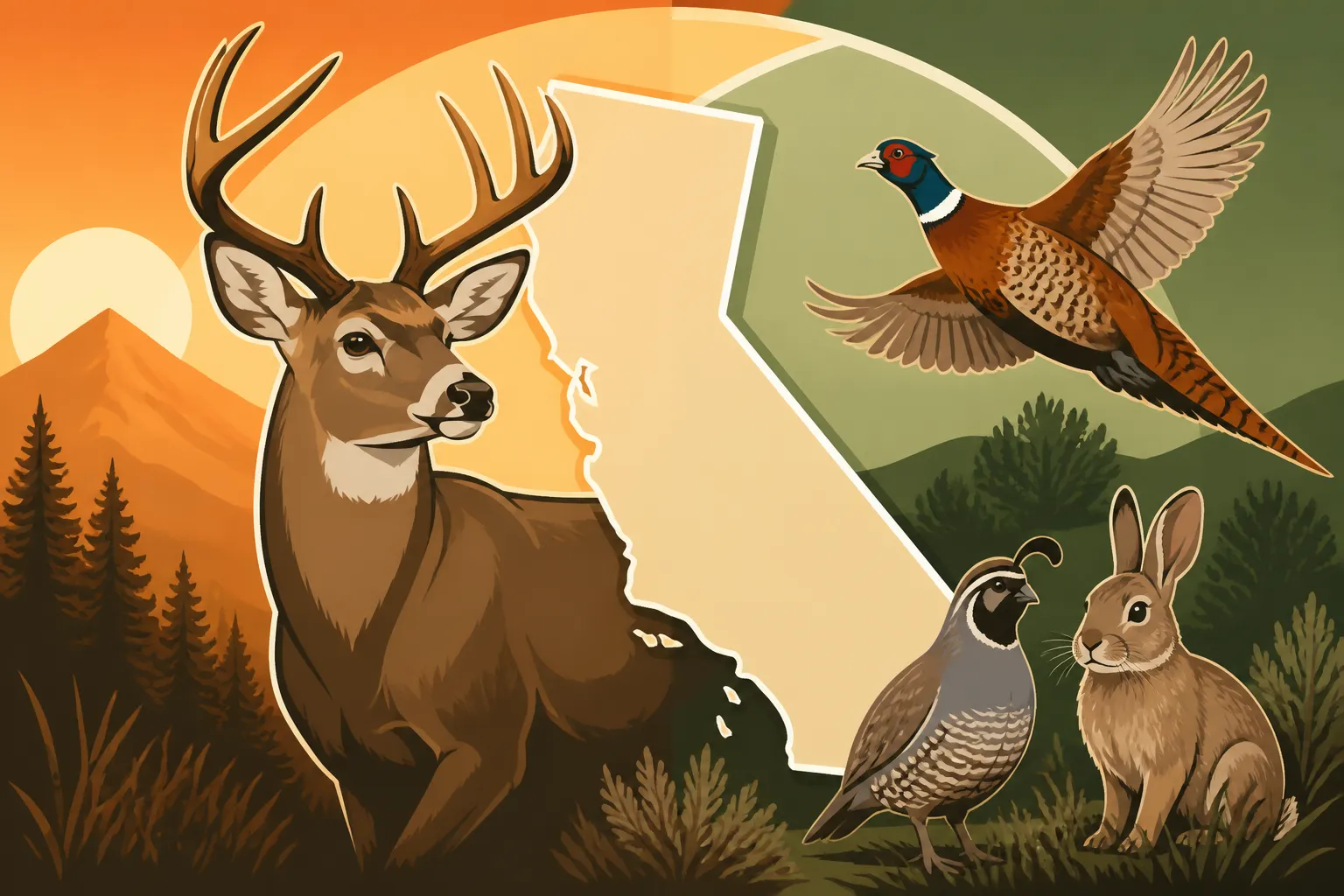
This is perhaps one of the most common and exciting overlaps, especially in the earlier deer seasons like in Zone A or some D-zones. Imagine you're out in the oak woodlands, trying to get into position on a potential buck, when a large covey of California valley quail flushes nearby. If you have your Upland Game Bird Validation, and your weapon is legal for quail, it's a prime opportunity. However, most deer hunters are carrying rifles, which are typically not legal for quail or dove. If you wanted to combine these, you'd likely need a shotgun, which means either carrying two firearms or making a very difficult choice.
Dove season often opens in early September, coinciding with many of California's D-zones. Hunting a Cut Grain Field for doves in the morning can easily transition into scouting for deer sign in the cooler parts of the day. The issue of weapon legality remains paramount. While a shotgun with non-lead shot is perfect for doves, it's generally not suitable for deer hunting beyond very specific slug zones, and even then, rifle is often preferred for range and accuracy. If you're targeting deer, but are open to upland birds, you might consider leaving the rifle in the truck for a morning dedicated to Hunting Quail California Foothill Chaparral or Hunting the September Dove Opener, and then switching gears for deer later. The legal hunting hours for deer and small game also need to be considered, as they don't always perfectly align, though both generally adhere to shooting hours from half an hour before sunrise to half an hour after sunset.
Deer and Tree Squirrel/Rabbit
As deer seasons progress into the fall, particularly in timbered areas, overlaps with tree squirrel and rabbit seasons become more pronounced. California's grey squirrel season often opens in September, and cottontail rabbit season runs much of the year. These small game species are commonly found in the same oak and mixed conifer forests where deer thrive. Many deer hunters carry a .22 caliber handgun or rifle for these opportunistic encounters, provided it’s legal for the zone and they have the correct upland game validation. This can be a more practical combination than quail/dove because a small caliber rifle or handgun might be carried in addition to a deer rifle without too much encumbrance, or even replace a centerfire rifle if hunting for deer with a handgun is your chosen method.
When you're still-hunting through a Sierra Nevada timber stand, the subtle movements of a grey squirrel can actually provide valuable intel – often, where squirrels are active, so too are other forest creatures, including deer. The key, again, is making sure you have the Upland Game Bird or Small Game hunting validations, depending on the species, and that your chosen weapon adheres to all regulations for both deer and the small game animal. For instance, you can typically use a .22 rifle for rabbits and squirrels, but it's clearly not legal for deer. If you're focused on deer, you'd need your deer rifle, and perhaps a sidearm for small game.
Deer and Predators
Coyotes are another animal often encountered during deer season, and their season is typically year-round in California, with no bag limit. This makes them a frequent target of opportunity for deer hunters. If you see a coyote while deer hunting and you have your general hunting license, you are generally free to take it, provided you are using a legal weapon and ammunition for the area and conditions. You don't need a separate tag for coyotes. This is one of the easiest overlaps to take advantage of without additional permits. Similarly, bobcat season is also open for an extended period, though harvesting a bobcat requires a furbearer trapping license and specific reporting requirements, making it less of a casual "opportunity" during a deer hunt.
Many deer hunters carry predator calls with them, and if the deer movement slows down or you're in a stand for an extended period, some quick Coyote Calling California Ranch Land can be a great way to stay engaged and potentially take an opportunistic predator. The important thing with predators is to be absolutely sure of your target and your backdrop. You’re already being extra careful with your deer rifle; extending that care to a predator is paramount. Just remember, while it's tempting to take any coyote you see, if your primary goal is deer, a shot at a coyote could certainly spook any deer in the immediate vicinity, so consider your priorities.
Navigating Gear, Regulations, and Practicalities
Combining hunts requires careful thought about your gear, a deep understanding of regulations, and some practical strategies to ensure both safety and success.
Weapon Restrictions and Non-Lead Considerations
One of the biggest hurdles for overlapping seasons is the weapon you choose to carry. California has specific legal firearms for deer hunting, primarily rifles and shotguns with slugs, or archery equipment. Small game like quail, dove, and rabbits are typically hunted with shotguns or small caliber rifles/handguns. As mentioned earlier, carrying a rifle for deer means you can't opportunistically shoot a quail. If you want to pursue both, you might need two weapons – a cumbersome proposition. Some hunters opt for a shotgun loaded with slugs for deer and then carry a few non-lead shotshells for upland birds, but this limits your effective range for deer. Remember, California's Non-Lead Ammunition Requirement applies to all game animals statewide, so whatever projectile you're using, ensure it's lead-free. Choosing Non-Lead Rifle Ammunition in California is a critical step before you even head to the field, and that selection will impact your choices for other species as well.
It's also crucial to remember that certain public lands, like some National Forests or specific Wildlife Areas, might have additional restrictions on weapon types or ammunition, regardless of state law. For example, some areas might prohibit centerfire rifles altogether. Always double-check the regulations for the specific area you plan to hunt.
Tagging, Reporting, and Bag Limits
Each species you pursue has its own set of rules once harvested. For deer, you must immediately tag the animal with your deer tag and then report your harvest through the CDFW's Automated License Data System (ALDS) within a specific timeframe. You can learn more about this process by reading California Deer Reporting Requirements. For small game like quail or dove, there's no tag, but there are strict daily and possession bag limits. You must keep track of these yourself. For example, the daily bag limit for California valley quail is 10 birds, with a possession limit of 30. Coyotes have no tag and no bag limit.
Failing to properly tag a deer, exceeding bag limits for small game, or not reporting a harvest can result in significant penalties. It's not enough to just know the rules for deer; you must be intimately familiar with the regulations for every single species you might encounter and potentially harvest. Ignorance of the law is never an excuse in the eyes of game wardens.
Ethical and Strategic Hunting
When combining hunts, ethical considerations are paramount. Your primary focus should dictate your actions. If you're deer hunting, that should remain your priority. Shooting a limit of quail, while enjoyable, could significantly disturb a deer's natural movement patterns in the area. The loud report of a shotgun, or the commotion of flushing birds, is likely to send any nearby deer scattering. A truly successful combined hunt often involves dedicating specific times to one species, or being extremely selective about when to take an opportunistic shot.
For example, you might spend the first hour of legal light focused solely on deer, moving slowly and quietly. If deer activity is low, you might then shift your focus to small game, moving more actively to flush birds or squirrels. Alternatively, some hunters will position themselves in a deer stand during the morning and evening prime times, and during the midday lull, they might venture out with a shotgun to specifically hunt upland game. It’s about being thoughtful and strategic, rather than just blasting away at whatever moves.
Planning Your Multi-Species Hunt
Successful combined hunting isn't just about knowing the rules; it's about smart planning, research, and adapting to the conditions on the ground.
Researching Specific Zone and Unit Regulations
California's deer zones are vast and diverse, and within those zones, individual Wildlife Areas, National Forests, or Bureau of Land Management (BLM) tracts can have their own specific regulations. What's legal in one part of Zone D6 might not be legal in Zone A. Before you even think about combining a deer hunt with small game, you need to thoroughly research the specific regulations for the exact location you plan to hunt. This includes checking the most current CDFW regulations booklet, as rules can change annually. Look for special conditions, weapon restrictions, access limitations, and any unique requirements for that particular area. The California's Multi-Zone Deer Season System outlines the broad categories, but the devil is always in the details of your specific unit.
Don't forget to check private land regulations if you're lucky enough to have permission to hunt ranch land. Landowners often have their own rules regarding what can and cannot be harvested on their property, above and beyond state laws. Always ask for clarification on this before hunting.
Using Mapping Tools and Resources
Modern mapping tools are invaluable for planning combined hunts. Services like GoHunt offer detailed mapping layers that show public vs. private land, wilderness boundaries, and even game unit overlays. This allows you to identify areas where deer habitat overlaps with prime small game habitat. For example, you might find a section of public land in a D-zone that has dense chaparral (great for quail) bordering an oak-filled canyon (prime deer bedding and feeding). Using these tools, perhaps in conjunction with Scouting California Public Land Before Season, can help you pinpoint areas that offer the best opportunities for multiple species.
Offline maps on your phone are also a must, especially in remote areas where cell service is spotty. Being able to see your exact location relative to public land boundaries, wilderness areas, and potential water sources can make all the difference in navigating complex terrain and ensuring you stay legal and safe. You can drop pins on potential bedding areas for deer and then identify nearby brushy draws that might hold quail.
Scouting for Dual Opportunities
Effective scouting is the bedrock of any successful hunt, and it's even more crucial when planning a multi-species trip. Don't just scout for deer sign; look for indications of small game as well. Are there quail tracks in the dust? Are squirrels chattering in the oaks? Are there rabbit pellets around dense cover? Water sources are often magnets for both deer and small game, so these can be excellent focal points for combined opportunities.
When scouting, also pay attention to hunter pressure. Areas that see heavy deer hunting pressure might also have fewer small game animals, or vice-versa. Finding those pockets where both species feel relatively unmolested can be challenging but incredibly rewarding. Consider topography as well; a steep, brushy canyon might be perfect for both a reclusive buck and a covey of quail seeking refuge. By identifying these "crossover" areas during your scouting trips, you can go into the season with a solid plan for maximizing your time and increasing your chances of success across different species.
| Species Overlap | Required California Tags/Validations | Common Legal Weapons | Key Considerations |
|---|---|---|---|
| Deer & Valley Quail | Deer Tag + Upland Game Bird Validation | Rifle (for deer), Shotgun (for quail) | Difficult to carry both weapons, non-lead shot needed for quail, shotgun range for deer limited. |
| Deer & Dove | Deer Tag + Upland Game Bird Validation + HIP Validation | Rifle (for deer), Shotgun (for dove) | Similar to quail; dove often found in open fields separate from deep deer cover. Migratory bird stamp also needed. |
| Deer & Tree Squirrel | Deer Tag + Upland Game Bird Validation | Rifle (for deer), .22 Rifle/Handgun (for squirrel) | More practical combo. Ensure .22 is legal for area. Non-lead for all. |
| Deer & Cottontail Rabbit | Deer Tag + Upland Game Bird Validation | Rifle (for deer), .22 Rifle/Handgun (for rabbit) | Very practical. Rabbits abundant in deer habitat. Non-lead for all. |
| Deer & Coyote | Deer Tag + General Hunting License | Rifle (for both) | Most straightforward overlap. No tag/limit for coyotes. Shot at coyote might spook deer. Non-lead for all. |
| Deer & Wild Pig | Deer Tag + Wild Pig Tag (no bag limit) | Rifle (for both) | A common and exciting combo. Both found in similar habitats. Non-lead for both. See Wild Pig Hunting California Year-Round. |
Disclaimer
The information provided in this article is for general guidance only and does not constitute legal advice. Hunting regulations in California are complex and subject to change. Always consult the most current official California Department of Fish and Wildlife (CDFW) regulations booklet or website before engaging in any hunting activities. It is the hunter's responsibility to know and follow all applicable laws and regulations.