Which California Counties Have the Most Pigs
Finding wild pigs in California can sometimes feel like trying to track a phantom, especially when you're just starting out and don't know where to focus your efforts. Many hunters get frustrated by the seemingly random nature of pig encounters, wishing there was a clearer roadmap to success. This guide is here to shed some light on that mystery, helping you understand which California counties are historically known for holding the most robust wild pig populations and why, so you can plan your next hunt with more confidence.
The Elusive Nature of Wild Pig Populations in California
Unlike deer or elk, which often have more precise herd management units and surveys, pinning down exact wild pig numbers for specific California counties can be incredibly tricky. Wild pigs, also known as feral hogs or wild boar, are notoriously adaptable, prolific breeders, and incredibly mobile. Their populations can boom and bust rapidly based on a variety of environmental factors, making any specific count a moving target. What might be a hotspot one year could be less productive the next if food sources shift or hunting pressure increases dramatically.
It’s also important to remember that wild pigs aren't native to California; they're an introduced species that has thrived, often to the detriment of native habitats and agricultural operations. Because of this, they're managed differently than native game animals. While the California Department of Fish and Wildlife (CDFW) tracks harvest numbers through the Reporting Wild Pig Harvests Through ALDS system, detailed, county-by-county population estimates are generally broad. This means hunters need to be more strategic and observant, relying on a combination of historical knowledge, current conditions, and scouting to find success. Understanding How Many Wild Pigs Roam California gives you a sense of the statewide picture, but for local success, you need to dive deeper into specific county characteristics.
Why Pinpointing Exact Numbers is Difficult
One of the biggest challenges in identifying which California counties have the most pigs is their highly fluid nature. Wild pigs don't respect invisible county lines. They roam widely, often covering significant distances in search of food and water. A particularly good acorn crop in one canyon might draw them from an adjacent county, or intense hunting pressure could push them into less accessible areas. This nomadic behavior means that while a county might have a historically high population, their exact location within that county can change week to week, or even day to day.
Furthermore, wild pigs often thrive in areas that also present significant challenges for hunters, such as dense, thorny chaparral or vast tracts of private agricultural land. These environments make aerial surveys difficult and ground-based tracking complicated, especially when you consider their nocturnal tendencies. The data available through various official channels tends to be aggregated or based on harvest reports, which give us an indication of where hunting occurs, but not always a definitive map of population density. This is why hunters often rely on a combination of local knowledge, scouting, and modern mapping tools to narrow down their search.
General Distribution Patterns Across California
Despite the difficulties in precise counting, we do have a good understanding of general distribution patterns. Wild pigs are found in many parts of California, but their presence is far from uniform. They generally favor areas with a mix of dense cover for bedding and protection, reliable water sources, and abundant food. This often translates to oak woodlands, chaparral-covered hillsides, river bottoms, and agricultural regions, particularly those near natural cover.
The central coast and foothill regions of the Central Valley tend to be prime habitat. These areas often have extensive oak forests, which provide a critical food source in the form of acorns, especially during fall and winter. As you move into more arid desert environments or truly high-elevation Sierra Nevada terrain, pig populations tend to thin out or disappear entirely. However, even within these general patterns, micro-climates and specific land use can create pockets of high density where you least expect them.
Top California Counties for Wild Pigs
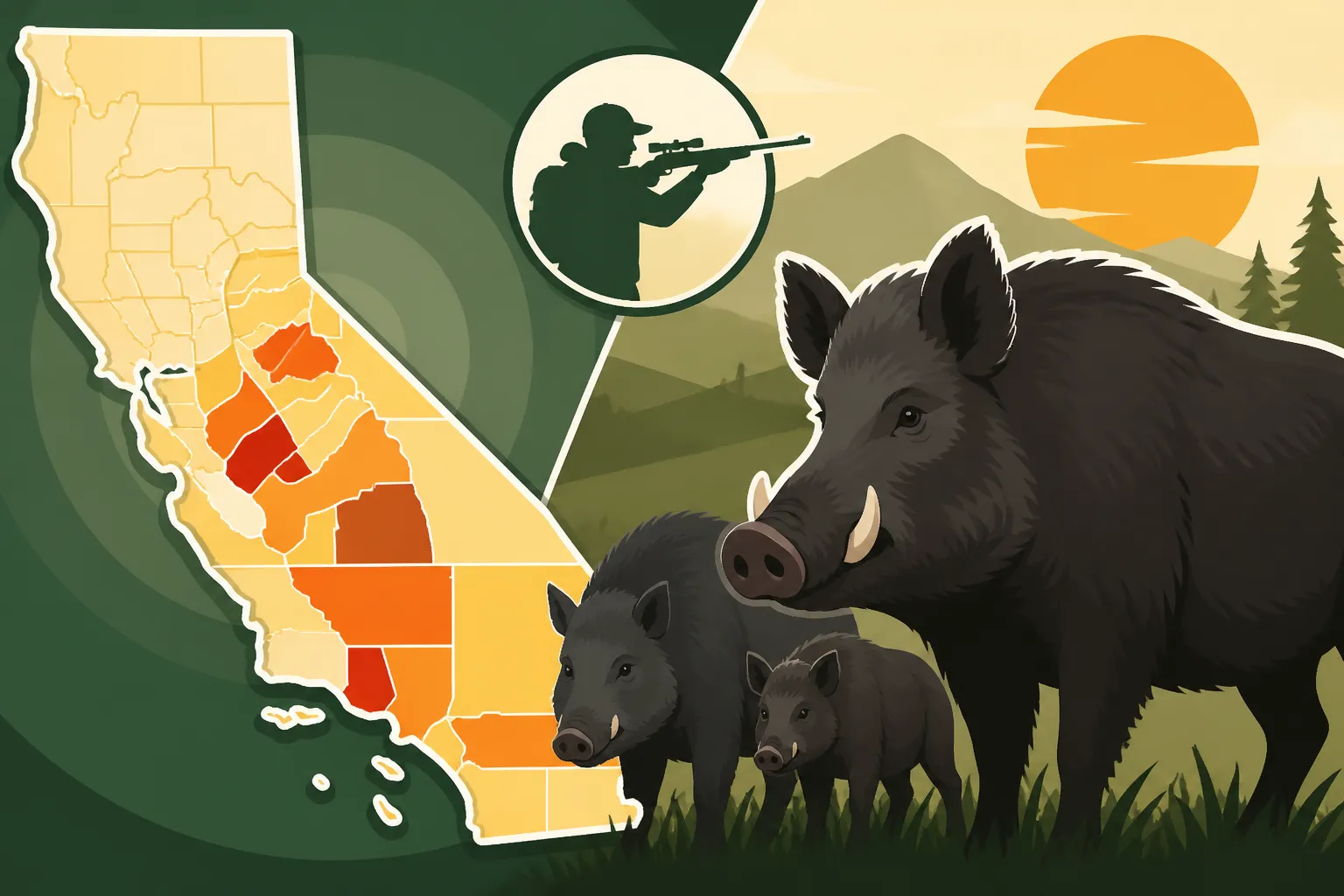
Based on historical harvest data, anecdotal evidence from seasoned hunters, and the prevalence of ideal wild pig habitat, several California counties consistently rank among the best for wild pig hunting. While conditions can vary annually, these counties offer a strong starting point for any hunter looking to fill their California's Year-Round Wild Pig Tag.
Let's dive into some of the most notable hotspots:
Monterey County
Monterey County is often cited as the undisputed king of California pig hunting. Its vast expanses of oak woodlands, steep, brushy canyons, and a mix of private ranchland and accessible public areas create nearly perfect habitat. The abundant acorn crops in good years provide a banquet for pigs, allowing their populations to thrive. The diverse terrain, from coastal foothills to more interior ranges, also means pigs have plenty of cover and varied food sources throughout the year.
Hunters here often focus on Hunting Pigs on Central Coast Oak Ranges, glassing hillsides at dawn and dusk, or still-hunting through creek bottoms. The challenging topography means that physically fit hunters who are prepared for steep climbs and thick brush often find the most success. Water sources, especially during drier periods, become magnets for pigs, and knowing where these are can be a game-changer. Private land access is a major component of hunting here, but public land opportunities exist for those willing to scout hard.
San Luis Obispo County
Just to the south of Monterey, San Luis Obispo County offers a similar, equally productive landscape for wild pigs. This county boasts extensive oak forests, rolling hills, and agricultural areas, providing a consistent buffet for wild hogs. The combination of dense cover, reliable water, and ample food contributes to robust pig numbers. You'll find a similar mix of challenging terrain and diverse habitats, making it a favorite for many California pig hunters.
Areas near agricultural fields, particularly those with grain or irrigated crops, can be extremely attractive to pigs, especially at night. Understanding Night Hunting Rules for California Hogs might be beneficial if you secure private land permission for these situations. Like Monterey, success often hinges on good scouting and, for many, gaining access to private ranchland, which comprises a significant portion of prime habitat. However, public lands, often in the national forests or BLM areas, still hold good potential for dedicated hunters.
Central Valley Foothill Counties (Tehama, Glenn, Colusa, Lake, Mendocino)
Moving further north, the foothill regions on both sides of the Central Valley are significant pig producers. Counties like Tehama, Glenn, and Colusa, which border the western edge of the Sacramento Valley, combine extensive oak woodlands with proximity to vast agricultural lands. These areas offer pigs everything they need: food, water, and plenty of cover. Similarly, Lake and Mendocino counties in the North Coast Range also hold strong populations, particularly in their oak-laden hills and river drainages.
In these areas, pigs will often move between dense, remote canyons for bedding and security, and then venture out into the adjacent agricultural fields at night to feed on crops. This movement pattern can create excellent hunting opportunities, particularly along the edges of these varied habitats. It’s also worth noting that these regions often see strong acorn crops, which can concentrate pigs. When hunting these areas, paying attention to wind and thermals, especially in the undulating terrain, is critical for a successful stalk.
Other Notable Areas
While the counties above are often considered the front-runners, several other regions consistently produce wild pigs:
- San Benito County: Nestled between the Central Valley and the Coastal Range, San Benito offers similar habitat to its southern neighbors, with good oak and chaparral cover.
- Santa Barbara County: Further south along the coast, areas with dense chaparral and canyons can hold surprising numbers of pigs, especially in zones bordering national forest lands.
- Riverside and San Diego Counties: While perhaps not as densely populated as the central coast, certain areas in Southern California, particularly those with available water and dense cover in the backcountry, can hold viable pig populations. Hunters often find success in the less-pressured, rugged terrain of the national forests in these regions.
Here's a quick overview of some of these top counties and their key characteristics:
| County Name | Primary Habitat Type | Key Food Sources | General Terrain | Hunter Focus |
|---|---|---|---|---|
| Monterey | Oak Woodlands, Chaparral, Riparian | Acorns, Roots, Agricultural Crops | Steep Canyons, Rolling Hills, Coastal Foothills | Spot-and-stalk, Still-hunting |
| San Luis Obispo | Oak Woodlands, Chaparral, Agricultural | Acorns, Crops, Forbs | Rolling Hills, Valleys, Coastal Proximity | Glassing, Ambush near agriculture |
| Tehama / Glenn | Oak Woodlands, Foothill Grasslands | Acorns, Grasses, Grain Crops | Rolling Foothills, Canyon Systems | Hunting transition areas, Water sources |
| Mendocino / Lake | Oak Woodlands, Timber, Chaparral | Acorns, Berries, Roots | Steep, Rugged Mountains, River Drainages | Deep woods hunting, Identifying bedding areas |
| San Benito | Oak Woodlands, Chaparral | Acorns, Wild Grapes, Berries | Rolling Hills, Brushy Canyons | Scouting for rooting, Accessing private land |
Factors Influencing Wild Pig Distribution
Wild pigs are opportunistic survivors. Their movement and density in any given county are heavily influenced by a confluence of environmental factors. Understanding these can help you predict where pigs might be, even in counties not traditionally known as hotspots, and refine your scouting efforts.
Habitat and Cover Availability
Pigs need cover. Lots of it. Whether it's dense oak woodlands, thick chaparral, riparian corridors choked with willows, or even the tall grass of an unharvested field, pigs seek places where they can feel secure. This cover provides protection from predators, hunters, and the elements. They often bed down in the thickest brush they can find during the day, emerging at dawn, dusk, or under the cover of darkness to feed. The availability of diverse, interconnected habitat allows them to move freely and find refuge, contributing to larger populations.
Consider an area with a mosaic of dense brush, scattered oak trees, and a nearby water source. This is prime pig habitat because it provides all their basic needs within a compact area. Hunters often find success by focusing their efforts on the edges of these cover types or by patiently waiting near known travel corridors that lead in and out of bedding areas. When you're Hunting Coastal Range Oak Woodlands, pay close attention to where the oaks transition into dense brush or creek bottoms; these are often high-traffic zones.
Food Sources
Food is arguably the biggest driver of wild pig movement and population density. Pigs are omnivores and will eat almost anything, but certain food sources are particularly attractive and can concentrate them in specific areas.
- Acorns: California's oak woodlands are a pig paradise, especially when acorn crops are heavy. Acorns are a highly nutritious, readily available food source that can lead to rapid weight gain and increased reproduction. Pigs will travel significant distances to gorge on acorns, and areas with consistent oak mast production will almost always have pigs.
- Agricultural Crops: Pigs are notorious for raiding farms. Fields of corn, wheat, oats, alfalfa, potatoes, and even vineyards can be irresistible. This is particularly true in areas where natural food sources might be scarce or seasonally unavailable. Understanding California Wild Pig Damage to Vineyards gives you an idea of the extent of this issue and why they are often found near agricultural operations.
- Roots, Tubers, and Invertebrates: Pigs are expert rooters, using their powerful snouts to dig up roots, tubers, grubs, and worms. This activity leaves tell-tale signs of their presence and can drastically alter landscapes. These food sources are available year-round and provide a baseline diet.
- Forbs and Grasses: Depending on the season and rainfall, various green vegetation can be a primary food source.
- Carrion: While not their main diet, pigs will readily scavenge on carcasses if available.
Water Availability
In California's often arid climate, water is a critical limiting factor for all wildlife, including wild pigs. Pigs need regular access to water for drinking and, famously, for wallowing. Wallowing in mud helps them regulate body temperature, remove parasites, and protect their skin. During dry spells, pigs will concentrate around the few remaining water sources – springs, seeps, stock ponds, or perennial creeks.
Identifying these water points, especially on public land, can be a highly effective scouting strategy. A dry creek bed in summer might be a major travel corridor, but a small, hidden spring nearby could be where pigs are spending most of their time. Tools like GoHunt can be invaluable here, as their mapping layers often include water sources, helping you pinpoint these crucial areas.
Hunting Pressure and Human Activity
Pigs are incredibly intelligent and quickly learn to associate human activity with danger. Areas with high hunting pressure will often see pigs become almost exclusively nocturnal, moving to thicker cover or more remote areas. Conversely, areas with limited access or low hunting pressure might have more visible daytime activity.
Agricultural practices can also influence distribution. Areas where farmers are actively trying to deter pigs might see them move to neighboring properties or less disturbed natural areas. Conversely, pigs often adapt to human presence, learning to use cover right up to the edges of populated areas if they feel secure and food is abundant. This dynamic relationship means that even in a high-pig county, hunting success depends on understanding how human activity influences local pig behavior.
How to Research Pig-Rich Areas Yourself
Knowing which counties generally have a lot of pigs is a fantastic start, but the real work, and the real fun, comes from narrowing down those broad areas to specific honey holes. This takes good old-fashioned scouting, coupled with modern tools and a deep understanding of pig behavior. Don't just rely on general county names; use them as a starting point for your own deeper dive.
Leveraging Digital Mapping Tools
Modern mapping applications are arguably the most powerful scouting tools available to hunters today. Platforms like GoHunt offer detailed topographical maps, satellite imagery, public/private land boundary overlays, and often layers showing historical burn scars, water sources, and even game movements. Before you ever step foot in a new area, you can spend hours digitally scouting potential pig habitat.
When using GoHunt or similar apps, look for:
- Oak Woodlands: Identify areas with dense oak canopy. This is often visible on satellite imagery as darker green, broader-canopy trees compared to conifers.
- Water Sources: Look for springs, seeps, creeks, and stock ponds. Pigs will always be close to water.
- Dense Cover: Identify areas of thick chaparral or riparian zones. Look for "fingers" of cover extending into open areas or agricultural fields.
- Funnels and Bottlenecks: Identify natural travel corridors between bedding areas, feeding zones, and water. These might be saddles, narrow creek bottoms, or breaks in dense brush.
- Public/Private Boundaries: Use the land ownership layer to identify accessible public lands, or to see where private land might funnel pigs onto public ground. This is crucial for navigating California Trespass and Permission Law.
Spend time studying these features, imagine how a pig would move through the landscape, and mark potential hunting spots on your map.
On-the-Ground Scouting and Sign Reading
No amount of digital scouting can replace getting your boots on the ground. Once you've identified promising areas on your map, it's time to hit the field. This is where you'll find the concrete evidence of pig presence.
- Rooting: This is the most obvious sign. Pigs use their snouts to dig up roots, tubers, and grubs, leaving disturbed soil that looks like a tiller has been through. Fresh rooting indicates recent activity.
- Tracks: Look for distinctive cloven hoof tracks. Unlike deer, pig tracks often appear rounder and blunter, and you may notice the dewclaws (side toes) more often, especially in soft ground.
- Wallows: Muddy depressions where pigs have rolled around are clear indicators. Fresh wallows mean pigs are still using the area.
- Rubs: Pigs will rub against trees, fences, and rocks to scratch themselves and remove parasites. Look for mud, hair, or polished spots on low branches or posts.
- Droppings: Pig scat can vary depending on their diet but is typically cylindrical and clumpy.
- Trail Cameras: Setting up trail cameras in key locations, especially near water, travel corridors, or rooting areas, can confirm pig presence and give you an idea of their movement patterns and preferred times of activity. Just be sure to understand Trail Camera Rules on California Public Land if you're hunting public ground.
Remember to Scouting California Public Land Before Season is key to understanding animal patterns before the pressure sets in.
Consulting Local Resources and Talking to Landowners
Never underestimate the power of local knowledge. If you're hunting an area for the first time, try to talk to people who live or work there. Ranchers, farmers, and even local general store owners can often provide invaluable insights into pig activity in the immediate vicinity. They deal with pigs constantly and know their habits.
If you are looking to gain access to private land, which often holds the highest concentrations of pigs due to less hunting pressure and richer agricultural pickings, building relationships with landowners is crucial. A polite, respectful approach can open doors to incredible hunting opportunities. Sometimes, landowners are desperate for hunters to help with pig control, especially if the pigs are causing California Wild Pig Damage to Vineyards or other crops. Even if you're primarily a public land hunter, knowing where private lands abut public land can help you predict pig movements. For more on this, check out tips on Hunting Small Private Tracts in California.
Disclaimer
This article is for general informational purposes only and does not constitute professional advice. Laws, prices and regulations vary by location and change over time. Consult a qualified professional for guidance on your specific situation.