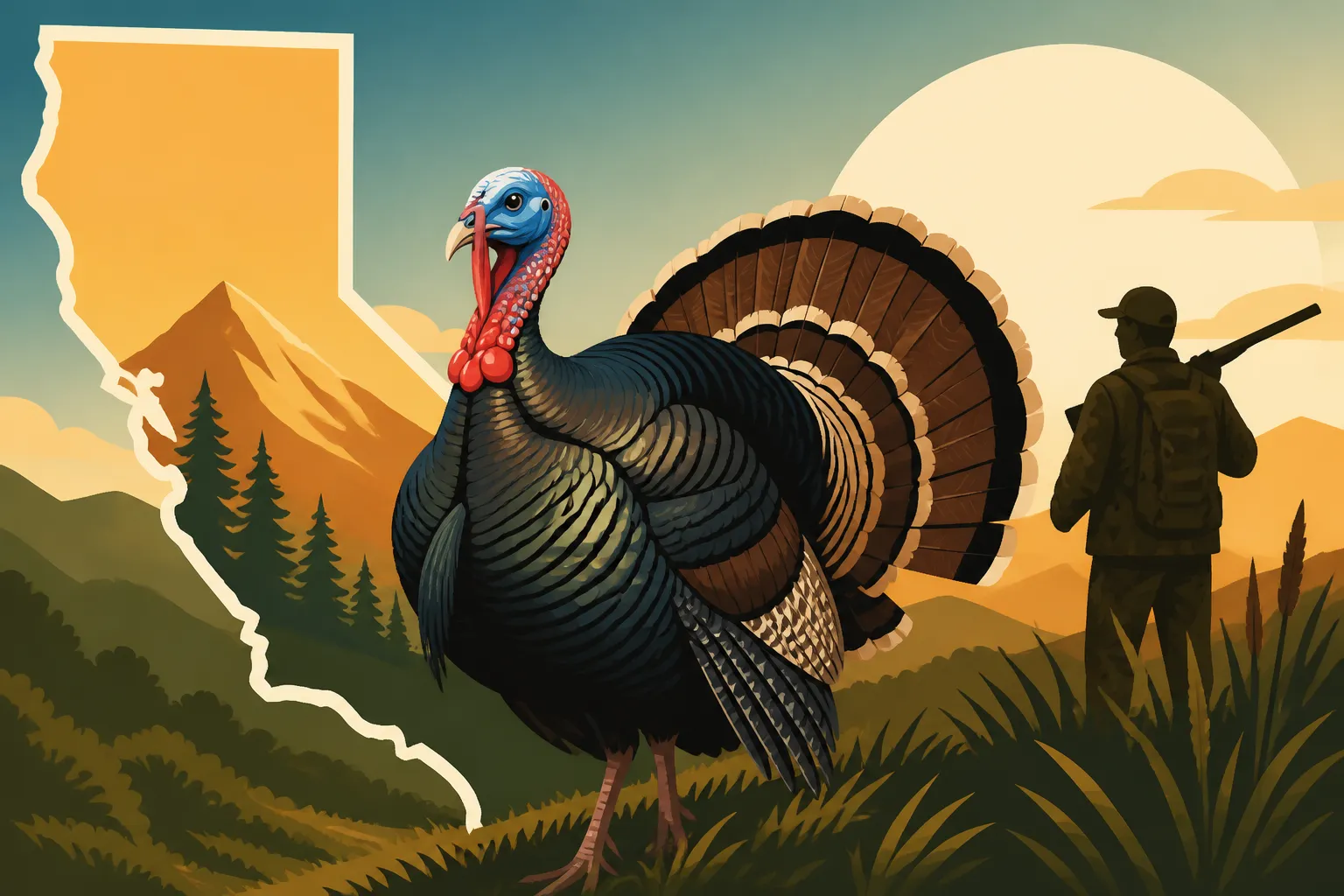
Introduced Wild Turkeys in California
For many folks new to hunting in California, or even seasoned hunters focused on deer and elk, the idea of chasing wild turkeys might seem a little intimidating or just plain overlooked. You might find yourself scratching your head, wondering where these birds even come from in a state known more for Hollywood and beaches than gobblers. The reality is, California holds a vibrant and ever-expanding wild turkey population, offering some truly fantastic hunting opportunities if you know where to look. This comprehensive guide will pull back the curtain on the fascinating story of how wild turkeys came to thrive in the Golden State, diving deep into their history, habits, and how you can successfully pursue them across our diverse landscapes.
The Fascinating History and Introduction of Wild Turkeys in California
It's easy to assume that wild turkeys have always been a part of California's natural tapestry, but that's not quite the case. While some historical records suggest a sparse native presence of turkeys in portions of what is now California centuries ago, their widespread and robust populations today are almost entirely thanks to deliberate reintroduction efforts. This journey from near absence to abundance is a testament to dedicated conservation work and the resilience of these magnificent birds.
Early Attempts and Challenges
The idea of bringing wild turkeys back to California isn't a new one; some of the earliest attempts actually date back to the late 1800s and early 1900s. Back then, conservation science wasn't nearly as developed as it is today, and the understanding of wildlife management was still in its infancy. Many of these initial efforts involved releasing pen-raised, domestic turkeys or birds from other states that simply weren't equipped to survive in California's varied and often harsh wild environments. These birds often lacked the instincts needed to evade predators, forage effectively, or adapt to the local climate, and most of these early releases failed to establish self-sustaining populations. It was a learning curve, to say the least, and many well-intentioned efforts simply didn't take hold.
The early failures highlighted a crucial point: simply dropping birds into a new area wasn't enough. Successful reintroduction required not only hardy, wild-caught stock but also a deep understanding of habitat, behavior, and the specific ecological niches these birds would occupy. Without this foundational knowledge, even the most promising releases were often doomed. These challenges laid the groundwork for more scientific and strategic approaches in the decades to come, proving that sometimes, you have to learn what doesn't work before you can figure out what will.
Successful Reintroduction Programs
The real turning point for California's wild turkey populations began in the mid-20th century, particularly from the 1950s onward. This era saw a shift from releasing pen-raised birds to trapping and relocating wild turkeys from established, thriving populations in other states. The California Department of Fish and Wildlife (CDFW), along with various private organizations, focused on sourcing birds that were already accustomed to surviving in the wild, primarily the Rio Grande subspecies from states like Texas and Oklahoma. These wild-trapped birds possessed the necessary instincts for survival, including predator avoidance and efficient foraging.
These strategic translocations were carefully planned, with biologists meticulously studying potential release sites to ensure they had adequate food, water, and cover. Areas with suitable oak woodlands, riparian corridors, and mixed forest habitat were prioritized. The efforts weren't just about releasing birds; they involved active habitat management and ongoing monitoring to ensure the new populations could establish themselves and grow. It's a prime example of how dedicated, science-based conservation can transform a landscape, bringing back a species in force. These sustained efforts have been incredibly successful, leading to the robust turkey populations we enjoy today.
Factors Contributing to Population Growth
Several factors have played a pivotal role in the remarkable growth of California's wild turkey populations. First and foremost is the availability of suitable habitat. California, particularly its oak woodlands, chaparral, and riparian areas, provides an excellent environment for turkeys. These habitats offer abundant mast crops like acorns, a variety of insects, and crucial cover for roosting and nesting. The sheer diversity of California's landscape, from rolling foothills to river bottoms, means there's a lot of prime turkey country.
Secondly, the birds themselves are incredibly adaptable. Rio Grande turkeys, in particular, have proven adept at colonizing new areas, even expanding into agricultural lands adjacent to wild areas. Their rapid reproductive rates and relatively short lifespan mean that populations can rebound quickly if conditions are favorable. Finally, responsible hunting management, with regulated seasons and bag limits, has ensured that hunting pressure remains sustainable, allowing populations to continue to grow and expand. This careful balance between harvest and conservation has been key to their success story, ensuring that the population continues to thrive, as detailed in the most recent California Turkey Population Estimate reports.
Turkey Subspecies Found in California and Their Characteristics
When we talk about wild turkeys in California, it’s not a monolithic group. While the casual observer might just see "a turkey," there are actually distinct subspecies that have been introduced, each with its own characteristics and preferred habitats. Understanding these differences can be really helpful, especially when you're trying to figure out where to focus your scouting efforts or what kind of calls might work best.
Rio Grande Turkeys: The California Mainstay
Without a doubt, the Rio Grande subspecies is the absolute cornerstone of California's wild turkey population. If you've hunted turkeys in California, chances are you've encountered a Rio Grande. These are the birds that were primarily used in the successful reintroduction programs of the mid-20th century, and they’ve truly made California their home. They are highly adaptable and have flourished in a wide range of habitats, from the oak-studded foothills of the Sierra Nevada to the sprawling ranches of the Central Coast.
Rio Grandes are typically characterized by their lighter, buff-colored tail fan tips and tail feather coverts, which distinguish them from the darker Easterns or the pure white-tipped Merriam's. They are known for their strong flocking tendencies, often gathering in large numbers, especially during the fall and winter months. These birds are also quite vocal, which makes them a fantastic challenge for hunters who love to call. You'll find them predominantly in open woodland habitats with scattered trees for roosting and ample clearings for feeding, making areas with mixed oak and grassland ideal for hunters who want to learn how to hunt Coastal Range Oak Woodlands.
Merriam's Turkeys: High Country Roamers
While not as widespread as the Rio Grandes, Merriam's turkeys do exist in California, though in more limited and specific regions. These birds are primarily found in the higher elevations, often associated with ponderosa pine, black oak, and mixed conifer forests. Think of the rugged, beautiful landscapes of the eastern Sierra Nevada and some parts of Northern California. They are visually striking, typically having tail fan tips and tail feather coverts that are pure white, almost cream-colored, setting them apart from their Rio Grande cousins.
Merriam's are known for their hardiness and ability to thrive in more mountainous terrain, often navigating steep slopes with surprising agility. They tend to be a bit more elusive and can be harder to locate than Rio Grandes, often requiring more extensive scouting in their vast, timbered habitats. The populations of Merriam's in California are generally smaller and more localized, often the result of introductions in areas specifically chosen to match their natural preference for coniferous forests. Successfully calling a Merriam's requires a keen understanding of their more dispersed nature and the acoustics of their high-country homes.
Eastern Turkeys: Limited Presence and Hybridization
The Eastern wild turkey subspecies, the most prevalent and widespread turkey across North America, has a very limited and somewhat ambiguous presence in California. Historically, some Eastern turkeys were released during those earlier, less successful reintroduction attempts. However, most of these initial releases either failed or the birds interbred with other subspecies, particularly the Rio Grandes. Today, pure Eastern genetics are rare in California.
What you might occasionally encounter are turkeys with mixed genetics, often referred to as hybrids, particularly in areas where different subspecies introductions might have overlapped decades ago. These hybrids might exhibit a mix of characteristics, perhaps having darker, chestnut-brown tail tips that lean towards the Eastern appearance, but without the full suite of Eastern physical or behavioral traits. For the most part, hunters targeting turkeys in California will be focusing on Rio Grandes, with a smaller chance of encountering Merriam's in specific high-elevation zones. Understanding these different birds helps refine your approach, whether you’re hunting them or just enjoying seeing them in the wild.
Understanding California Wild Turkey Habitat and Behavior
Hunting wild turkeys successfully in California isn't just about having the right calls; it's fundamentally about understanding where these birds live and how they move through their environment. They aren't just randomly wandering; their daily and seasonal patterns are highly predictable once you learn to read the landscape and their habits.
Preferred Habitats: Oak Woodlands and Riparian Zones
If there's one habitat that epitomizes prime California turkey country, it's the oak woodland. These areas, particularly the rolling foothills of the Sierra Nevada, the Coast Ranges, and even some scattered pockets in Southern California, provide everything a turkey needs. The dominant feature, of course, is the mighty oak tree, primarily species like valley oak, blue oak, and live oak. These trees are critical for two main reasons: mast crops and roosting. Acorns, when available, are a high-energy food source that turkeys absolutely gorge on, especially in the fall and winter. When considering how to hunt after a poor acorn year, turkeys will adjust their diets significantly. Furthermore, the tall, sturdy branches of mature oaks offer safe, elevated roosting sites, protecting them from nocturnal predators like coyotes and bobcats.
Beyond the oak woodlands, riparian zones – areas along rivers, creeks, and drainages – are also vital. These corridors often feature a mix of sycamores, cottonwoods, and other deciduous trees, providing additional roosting options, especially in areas where oaks might be sparse. The lush undergrowth in riparian areas also holds a bounty of insects, seeds, and greens, which are crucial components of a turkey's diet, particularly for poults. Access to water is, of course, non-negotiable, and these areas consistently provide it. When scouting, always key in on these transition zones where oak woodlands meet water sources or open fields; these are often high-traffic areas for turkeys.
Daily and Seasonal Movements
Wild turkeys are creatures of habit, and their movements are largely dictated by the sun, food, water, and safety. A typical day for a turkey begins just before dawn, as they "fly down" from their roosts. This is often the most exciting time for a hunter, as gobblers are most vocal when they're still on the roost or just after hitting the ground. From there, they'll spend the morning foraging, slowly moving through fields, open woodlands, and along forest edges, picking at acorns, seeds, insects, and tender green shoots.
As the day progresses and temperatures rise, especially in the warmer months, turkeys will often seek shade and cover, frequently "loafing" in denser patches of brush or under large trees during the midday hours. They might take a second round of foraging in the late afternoon before heading back towards their evening roosting trees, often flying up into the branches an hour or so before sunset. Seasonally, their movements shift with the availability of food and breeding cycles. In spring, hens are focused on nesting, while gobblers are actively seeking mates. In fall and winter, food sources like acorns become paramount, leading to larger, more concentrated flocks. Utilizing tools like GoHunt for mapping and satellite imagery can help you identify these critical habitat features and potential travel corridors.
Roosting and Feeding Patterns
Understanding roosting and feeding patterns is absolutely crucial for any California turkey hunter. Turkeys prefer to roost in large, sturdy trees with clear flight paths, often along ridgelines, creek bottoms, or the edges of open fields. They don't just pick any tree; they choose those that offer safety from ground predators and a good vantage point. Identifying these consistent roost sites during your scouting trips is like finding a gold mine; it tells you exactly where birds will be at first light and last light. You can learn more about how to scout California public land before season to identify these areas.
Feeding patterns are more dynamic but equally important. Turkeys are opportunistic omnivores, and their diet changes with the seasons. In spring and summer, insects are a huge draw, so open grasslands, clearings, and agricultural fields will see a lot of activity. In fall and winter, when acorns are falling, turkeys will concentrate heavily in oak stands. If it's been a poor acorn year, they'll shift their focus to other seed-producing plants, grains, or even small fruits and berries. Observing these feeding preferences is key. Look for scratched-up leaves, droppings, and tracks to confirm recent feeding activity. A keen hunter will notice if birds are feeding heavily in a particular area, which can be invaluable when planning your approach.
| Subspecies | Primary Habitat | Tail Fan Tip Color | Distinguishing Features |
|---|---|---|---|
| Rio Grande | Oak Woodlands, Riparian Zones, Agricultural Edges | Buff/Tan | Adaptable, strong flocking, widespread in CA |
| Merriam's | High Elevation Ponderosa/Mixed Conifer Forests | White/Cream | Mountain dwelling, generally more solitary/dispersed |
| Eastern (Hybrid) | Mixed Forests (Limited/Hybridized) | Dark Chestnut/Brown (often mixed) | Rare pure strain, mostly hybrids with Rio Grandes |
Key Regions and Counties for Turkey Hunting in California
California is a massive state with incredibly diverse topography, which means turkey hunting opportunities aren't uniform. While Rio Grandes have spread far and wide, certain regions and counties stand out as consistent producers for turkey hunters. Knowing where to focus your efforts can save you a lot of time and frustration, especially if you're traveling a significant distance.
Northern California Hotspots
Northern California is a fantastic region for wild turkeys, offering a mix of public and private land opportunities. The oak woodlands that stretch through counties like Tehama, Shasta, and Butte are classic turkey country. Here, you'll find vast tracts of National Forest land mixed with private ranches that hold healthy populations of Rio Grandes. The birds thrive in these rolling hills where timbered ridges meet open meadows and creek bottoms. Areas around cities like Redding and Chico are often close to excellent turkey hunting.
Further west, in the Coast Ranges, counties like Mendocino and Sonoma also host strong turkey numbers. While access can be a bit more challenging due to the prevalence of private land, the habitat here — dense oak woodlands, chaparral, and riparian corridors — is ideal. These birds can be particularly challenging to hunt due to the thick cover, requiring more patience and stealth. Hunters often report great success if they gain permission on private parcels or meticulously scout public access areas within these counties.
Central California's Rolling Hills and Foothills
Moving south into Central California, the foothills of the Sierra Nevada continue to be a prime turkey hunting destination. Counties such as Nevada, Placer, El Dorado, Amador, Calaveras, and Mariposa are well-known for their abundant turkey populations. These areas are characterized by extensive oak woodlands, often interspersed with pine and cedar, and carved by numerous creeks and rivers. The habitat here is robust, providing ample food and cover, which helps maintain strong turkey numbers.
The lower elevation lands within these counties offer a blend of public access points, including National Forest and Bureau of Land Management (BLM) lands, alongside numerous private ranches. For hunters using platforms like GoHunt, identifying accessible public parcels or contacting landowners for permission in these counties can yield excellent results. These central foothill regions are also relatively accessible from major population centers, making them a popular choice for weekend hunts. The challenges here often come from dealing with varying terrains and understanding how birds utilize the available resources, which can include agricultural areas bordering the wildlands.
Southern California Opportunities
While often overlooked for big game, Southern California actually holds some surprisingly good wild turkey hunting, particularly for those willing to put in the effort. The populations here are generally more localized and can be found in the more undeveloped, mountainous, and oak-rich regions. Counties like San Luis Obispo, Monterey, and Santa Barbara along the central coast are known to have huntable populations, especially in their interior oak woodlands and canyon systems. These areas can be incredibly scenic but also physically demanding due to steep terrain and dense chaparral.
Further inland, some of the wilder parts of Kern and Ventura counties, particularly within the Los Padres National Forest, also hold scattered but huntable turkey populations. Access in some of these areas might require more extensive hiking and backcountry savvy, but the reward can be a less pressured hunting experience. It's crucial in Southern California to pinpoint specific habitat pockets, as turkeys aren't as continuously spread out as they might be in the northern and central parts of the state. Careful scouting and leveraging mapping tools are absolutely essential for finding success in these more challenging but rewarding southern zones.
Essential Gear and Scouting Tips for California Turkeys
Taking on California's wild turkeys requires more than just a shotgun; it demands a strategic approach to gear and a solid understanding of pre-season scouting. The state's diverse terrain and varied weather conditions mean you need to be prepared for anything, from hot, dry oak woodlands to cool, damp riparian zones.
Calls, Decoys, and Blinds
When it comes to turkey hunting, your calling skills are often your most crucial asset. For California birds, a diverse arsenal of calls is usually best. Friction calls, such as slate calls and box calls, are fantastic for producing realistic yelps, clucks, and purrs, and they're relatively easy for beginners to master. These are great for reaching out to a distant gobbler or for soft, close-in calling when a bird is coming in. Diaphragm calls, while requiring more practice, offer hands-free operation, which is invaluable when you're shouldering your shotgun. Mastering a variety of sounds, from cutting to purring, will give you an edge, especially if you're trying to coax a wary tom into range after calling a gobbler off an oak ridge roost.
Decoys can be game-changers, particularly for drawing in a tom that's "hung up" just out of range. A simple hen decoy, or a jake and hen combination, can be incredibly effective, providing a visual focal point for an approaching gobbler. However, be mindful of pressured birds; sometimes, less is more with decoys, especially when considering decoy placement for pressured California birds. Ground blinds, whether pop-up or brushed-in, can offer a significant advantage for concealment, especially in open country or when hunting with children. Setting up against a big valley oak can provide natural concealment and a sturdy backrest for long waits. Just make sure your blind blends in with the surroundings and allows for a clear shot.
Optics and Footwear for Varied Terrain
California's turkey country often involves significant walking, hiking, and glassing, so having the right optics and footwear is paramount. A good pair of binoculars (10×42 are a popular choice) will save your legs by allowing you to scan distant ridges, open fields, and potential roosting areas for movement or roosted birds. It's much easier to spot a turkey with binoculars than by walking miles, only to bump them. A compact rangefinder can also be incredibly useful, helping you confirm shot distances once a bird commits and enters your shooting lane.
Footwear is another critical consideration. You'll likely be covering varied terrain, from rocky trails to muddy creek bottoms to uneven oak flats. A comfortable, supportive pair of waterproof hiking boots is an absolute must. Look for boots with good ankle support and a durable sole for traction. Given that spring turkey season can often mean warm mornings turning into hot afternoons, breathable but sturdy materials are ideal. Dress in layers, too, because a crisp dawn start can quickly give way to a sun-baked midday hunt, so staying cool during a hot Zone A hunt might apply here, too, depending on the turkey zone.
Pre-Season Scouting Strategies
Effective pre-season scouting is arguably the most important element of successful California turkey hunting. Turkeys are creatures of habit, and thorough scouting can reveal their preferred roosting sites, travel corridors, feeding areas, and dusting bowls long before opening day. Start by studying maps – topographical maps and aerial imagery are your best friends. Look for obvious features like oak stands, riparian zones, agricultural fields, and clearings. Tools like GoHunt's mapping overlays can highlight public land boundaries, terrain features, and even recent satellite imagery to show changes in vegetation.
Once you have a general idea of promising areas, it’s time for boots on the ground. Walk the potential hunting grounds, looking for turkey sign: tracks, droppings, wing feathers, and dusting sites (shallow depressions where birds "bathe" in dry dirt to remove parasites). Listening for gobblers in the early mornings or late evenings during the weeks leading up to the season can confirm their presence and pinpoint roosting locations. Don't be afraid to put in the miles; the more you scout, the better your chances of success. It’s also wise to check for any area closures in season that might impact your hunting plans.
Seasons, Tags, and Regulations for California Turkey Hunters
Navigating the rules and regulations for turkey hunting in California can feel a bit complex, but once you understand the framework, it's quite straightforward. California offers both spring and fall seasons, each with its own nuances and requirements. Always remember, ignorance of the law is no excuse, so staying informed is crucial.
Spring and Fall Season Structures
California is unique in offering both a robust spring turkey season and a more limited fall season. The California Spring Turkey Season Opening Day usually kicks off in late March and runs through May, offering hunters ample opportunity to pursue gobblers. This is the classic turkey hunt, where toms are actively strutting and gobbling, focused on breeding. The season is generally quite long, sometimes spanning 45 days or more, allowing for multiple attempts. There are specific dates for the general spring season, as well as an archery-only spring window for those who prefer to hunt with a bow, which typically extends the season slightly.
The California Fall Turkey Season Length is usually much shorter, often running for about 30 days in November. This season offers a different kind of challenge, as gobblers are typically less vocal, and the focus shifts more towards locating flocks through scouting and woodsmanship rather than aggressive calling. In the fall, hunters are generally allowed to take either sex of turkey, which provides additional flexibility, though still within daily and seasonal bag limits. There is also an archery-only fall turkey season, which can offer some unique opportunities to pursue birds with a bow without the added pressure of firearms.
Licensing and Tag Requirements
Before you even step foot in the woods, you'll need the proper licensing and tags. Every turkey hunter in California, whether resident or nonresident, must possess a valid California Hunting License for the current license year. On top of that, you'll need to purchase a California Spring Turkey Permit or a California Fall Turkey Permit, depending on which season you plan to hunt. These permits are typically inexpensive but are absolutely mandatory.
The permit will usually have a detachable tag that you must validate and attach to your harvested bird immediately after taking it. It's incredibly important to fill out the tag accurately and completely, including date, time, and location of harvest. Also, be prepared to carry proof of your license and tag with you at all times while hunting. You can purchase these permits online through the CDFW's ALDS system or at authorized license agents throughout the state. Understanding these requirements is a fundamental part of the California Hunter Education Requirements.
Special Hunts and Junior Opportunities
California is dedicated to fostering new hunters, and that includes special opportunities for junior hunters when it comes to turkeys. There is typically a California Junior Turkey Season Start Date that opens prior to the general spring season, giving young hunters an exclusive window to pursue turkeys with less competition and often with higher success rates. These hunts are a fantastic way to introduce youth to the sport in a supportive environment. Rules for mentored youth hunting apply, where an adult mentor (who also holds a valid license and turkey permit) must accompany the junior hunter.
In addition to junior hunts, CDFW occasionally offers special draw hunts on certain wildlife areas or public lands that might have unique management goals or limited access. While not as common for turkeys as they are for big game like elk, it's always worth checking the CDFW website for any specific area regulations or special hunt applications that might arise. These opportunities can provide access to higher quality hunting experiences, though competition for tags can be high. Always check the regulations booklet each year, as dates and rules can sometimes shift.
Conservation Efforts and Future of Wild Turkeys in California
The story of wild turkeys in California is, at its heart, a conservation success story. From a species with a very limited historical presence to a thriving population across much of the state, it's a testament to sustained effort and sound wildlife management. However, conservation is an ongoing process, and protecting these birds for future generations requires continuous vigilance and support.
CDFW Management and Monitoring
The California Department of Fish and Wildlife (CDFW) plays a central role in managing the state's wild turkey populations. Their work involves a multi-pronged approach, starting with population monitoring. Biologists conduct surveys, often through brood counts and hunter harvest data, to estimate population trends and assess the health of different turkey populations across various regions. This data is crucial for setting appropriate season dates and bag limits, ensuring that hunting remains sustainable and doesn't negatively impact turkey numbers.
Beyond direct monitoring, CDFW also engages in habitat assessment and, where necessary, habitat improvement projects. While turkeys are adaptable, maintaining high-quality oak woodlands, riparian zones, and other preferred habitats is vital for their long-term success. The agency also responds to public inquiries and addresses issues like depredation on agricultural lands, balancing the needs of wildlife with human interests. This proactive management helps ensure that California's wild turkey populations remain robust and healthy, providing ongoing opportunities for both hunters and wildlife enthusiasts.
Hunter Contributions to Conservation
Hunters are, without a doubt, one of the most significant contributors to wild turkey conservation in California and across the nation. Every time a hunter purchases a California hunting license or a turkey permit, a portion of those funds goes directly to wildlife management and habitat conservation programs. This "user pays, user benefits" model, often referred to as the American System of Conservation Funding, is a powerful engine for wildlife recovery and management. Without these funds, many of the successful reintroduction programs and ongoing monitoring efforts would simply not be possible.
Beyond financial contributions, hunters also contribute invaluable data through their harvest reports. When you report your turkey harvest through ALDS or by physically mailing in your tag, that information helps CDFW biologists track population trends, understand success rates, and make informed management decisions. Furthermore, ethical hunters are often the first line of defense against poaching and habitat destruction, reporting violations and acting as stewards of the land. The passion and dedication of hunters are truly integral to the continued flourishing of wild turkeys in California.
Challenges and Outlook for the Future
Despite the incredible success story, wild turkeys in California still face challenges. Habitat loss and fragmentation due to urban development, wildfires, and changes in land use can impact local populations. While oak woodlands are resilient, encroachment and disease can degrade crucial roosting and feeding areas. Drought, a perennial concern in California, can also affect food availability (like acorn crops) and water sources, especially in drier years, which might influence when California gobblers go quiet in late spring.
However, the overall outlook for wild turkeys in California remains positive. Their adaptability, combined with ongoing conservation efforts from CDFW, organizations like the National Wild Turkey Federation (NWTF), and the dedicated support of hunters, suggests a bright future. As long as we continue to prioritize habitat protection, conduct sound scientific management, and foster a new generation of ethical hunters, the thrilling sound of a gobbler echoing through a California oak woodland will continue to be a cherished experience for years to come.
Disclaimer
Please note that hunting regulations, seasons, and licensing requirements can change. Always consult the most current California Department of Fish and Wildlife (CDFW) regulations booklet or website before planning any hunting trip. This article provides general information and should not be considered a substitute for official legal guidance.