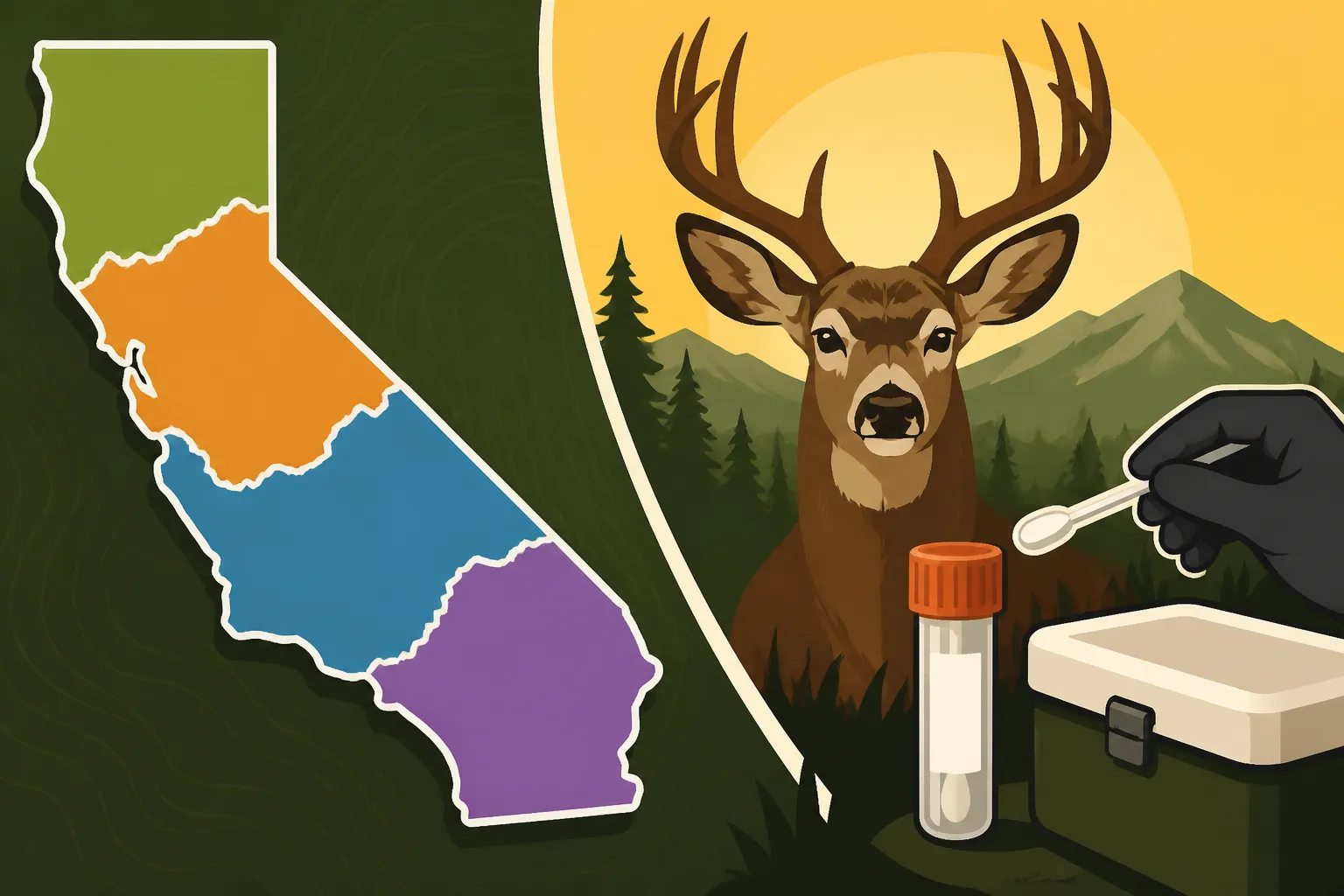
Why CWD Testing Expanded to Four Zones
The news about Chronic Wasting Disease (CWD) has been a growing concern for hunters across the country, and California is no exception. It’s natural to feel a knot of worry when you hear about new disease management efforts, especially when they impact our cherished hunting traditions. Recently, many of us have seen the California Department of Fish and Wildlife (CDFW) expand its CWD testing efforts, moving from a more limited approach to designating four specific zones where mandatory testing is now in effect. This guide aims to clear up some of that confusion, explaining why these changes are happening and what every hunter needs to know to stay compliant and protect our wild deer and elk populations.
Understanding Chronic Wasting Disease
Before we dive into the specifics of California's testing zones, it's crucial to grasp what CWD actually is and why it's such a significant threat to our wildlife. It's not just another disease; it's a game-changer for deer and elk management, and potentially for the future of hunting itself.
The Nature of CWD: A Prion Disease
Chronic Wasting Disease is a transmissible neurological disease affecting cervids, which are animals in the deer family, including deer, elk, and moose. Unlike bacterial or viral infections, CWD is caused by abnormal proteins called prions. These prions essentially corrupt normal proteins in the animal's brain and nervous system, leading to a slow, progressive degeneration that is ultimately fatal. Imagine an animal slowly losing its ability to function, becoming emaciated, disoriented, and eventually dying – that's the tragic progression of CWD. It’s similar in mechanism to "mad cow disease" in cattle, though CWD hasn't been shown to transmit to humans through consumption of infected meat, the Centers for Disease Control and Prevention (CDC) still recommends against eating meat from CWD-positive animals.
The terrifying part about prions is their resilience. They can persist in the environment for years, even decades, in soil, plants, and contaminated carcasses. This means that once CWD is established in an area, it's incredibly difficult, if not impossible, to eradicate. This environmental persistence makes managing and containing the disease a monumental challenge for wildlife agencies like the CDFW. Hunters play a vital role in surveillance and management, which is why understanding the disease and cooperating with testing efforts is so critical.
How CWD Spreads and Its Impact on Deer and Elk
CWD spreads primarily through direct animal-to-animal contact, but also indirectly through contaminated environments. Infected animals shed prions through saliva, urine, and feces, contaminating feeding sites, water sources, and even bedding areas. Other animals then ingest these prions, continuing the cycle. This is why areas with high deer or elk densities can see rapid spread once the disease is introduced.
The impact on deer and elk populations can be devastating. While the disease progresses slowly, taking months or even years from infection to death, it systematically depletes herds. Early symptoms are often subtle, but as the disease advances, animals display weight loss (hence "wasting"), listlessness, stumbling, drooling, and a lack of fear of humans. This means fewer healthy animals for future generations, and a potential collapse of local populations. For hunters, this translates to fewer opportunities and the heartbreaking reality of seeing sick animals in the field. Protecting our game species from this threat is a shared responsibility, and every hunter's participation in programs like CWD testing contributes to that larger goal. For more detailed information on how the state monitors for diseases, check out California Deer and Elk Disease Monitoring.
California's Initial Response to CWD
California, like many states, has been watching the spread of CWD across North America with growing concern. While we were fortunate to avoid early detections, the threat has always been on the horizon. The state's wildlife agencies recognized the severity of the problem and implemented proactive measures well before the first confirmed cases.
The First CWD Detections in the Golden State
For years, California maintained a "CWD-free" status, a testament to strict regulations and, perhaps, a bit of luck. However, vigilance meant that it was only a matter of time before the disease made its way into our borders. In the spring of 2024, the California Department of Fish and Wildlife confirmed the first two cases of CWD in wild deer within the state. These initial detections were a stark wake-up call, found in a deer in eastern Madera County and another in Inyo County. The news sent ripples through the hunting community, confirming fears that this insidious disease had finally arrived.
These initial detections immediately triggered a heightened response. Prior to these cases, California's efforts had largely focused on surveillance, sampling animals that exhibited symptoms or were involved in vehicle collisions. The confirmed cases shifted the strategy from preventative watch to active containment and management. This is a critical distinction, as it means the focus moved to understanding the extent of the infection and preventing its spread to other areas.
Establishing the Initial Testing Zones
Following the initial detections, the CDFW acted swiftly to establish what were then the state's first mandatory CWD testing zones. Initially, these zones were directly tied to the locations where the infected deer were found. The primary goal was to rapidly assess the prevalence of CWD in those immediate areas and determine if the detections were isolated incidents or indicative of a more widespread problem. This focused approach allowed the department to gather crucial data without immediately burdening hunters across the entire state.
These initial zones were accompanied by specific regulations regarding carcass transport. Hunters who harvested deer within these zones were required to submit samples for testing, and stringent rules were put in place to prevent the movement of high-risk parts (like brain and spinal cord) out of the zone. This was a challenging adjustment for many, as it impacted how they could field dress and transport their animals, especially if their hunting area was far from home. Hunters rely on having the freedom to take their game home, and these new rules, while necessary, certainly added a layer of complexity. If you're looking for broader context on California's CWD situation, you can read more at California's Emerging CWD Concern.
The Expansion to Four Mandatory CWD Testing Zones
The expansion from initial, localized testing efforts to four distinct, mandatory CWD testing zones was not a decision made lightly. It reflects a critical shift in the state’s strategy, driven by evolving data, scientific understanding, and the ongoing threat that CWD poses. This move impacts thousands of hunters and signifies a long-term commitment to managing the disease.
Factors Driving the Decision for More Zones
Several interconnected factors led the CDFW to expand its CWD testing efforts. Firstly, and perhaps most importantly, the ongoing surveillance efforts after the initial detections showed a need for a broader approach. Wildlife disease experts analyze data not just from harvested animals but also from roadkill and animals exhibiting clinical signs of the disease. If these findings suggest that CWD might be more widespread than initially thought, or if there are geographic areas with high-risk factors for spread, the testing zones must adapt.
Secondly, CWD is not static. It’s a disease that spreads, often slowly, but inevitably if not contained. The CDFW has to consider the movement patterns of deer and elk, which can travel significant distances, especially during migrations or dispersal. If a new detection occurs near a previous zone, or in an area connected by deer movement corridors, expanding the zone becomes a logical step to create a larger buffer or to fully encompass a potentially affected herd unit.
Finally, the state must look at neighboring states and their experiences with CWD. While California has unique challenges, learning from the successes and failures of other wildlife agencies in managing CWD helps inform our own strategies. Proactive expansion might be chosen over reactive measures if the risk assessment indicates a high probability of CWD presence in adjacent, untested areas. This foresight is about protecting our long-term hunting heritage.
The Specific New Zones and Their Boundaries
With the expansion, California now has four distinct mandatory CWD testing zones. These zones are strategically placed based on current understanding of disease prevalence and risk. Understanding their boundaries is paramount for any hunter planning to pursue deer or elk in these areas.
Let's break down the current zones:
| Zone Name | Primary Counties/Areas Affected | Primary Deer/Elk Species | Mandatory Testing Requirements |
|---|---|---|---|
| Zone 1 | Eastern Madera County, Central Sierra Nevada foothills | Blacktail, Mule Deer | Mandatory testing for all harvested deer. No carcass export. |
| Zone 2 | Inyo County, Eastern Sierra | Mule Deer | Mandatory testing for all harvested deer. No carcass export. |
| Zone 3 | Portions of Tehama, Butte, Plumas, Glenn counties | Blacktail, Mule Deer | Mandatory testing for all harvested deer. Limited carcass export. |
| Zone 4 | Portions of Lassen, Modoc, Siskiyou counties | Mule Deer | Mandatory testing for all harvested deer and elk. Limited carcass export. |
This table provides a generalized overview. Always check the current CDFW regulations for precise, up-to-date boundary maps and specific requirements for each zone before your hunt.
As you can see, these zones encompass significant hunting areas. Zone 1 and 2 are closely tied to the initial detections in Madera and Inyo counties, extending their reach to ensure thorough surveillance. Zones 3 and 4, however, represent a more strategic expansion, covering parts of Northern California that are critical habitats for both Columbia Blacktail and Mule Deer in California and Rocky Mountain Elk in Northeast California. These areas often have high deer densities or are migration corridors, making them prime candidates for expanded testing to catch any potential spread early. Hunters in these areas, who might not have been directly impacted by the initial zones, now need to familiarize themselves with these new regulations before heading afield.
What This Means for Hunters in California
The expansion of CWD testing zones fundamentally changes how many of us will approach our hunts in California. It's a shift that requires understanding, adaptation, and proactive planning to ensure compliance and contribute to wildlife conservation. While these changes can feel like an extra burden, they are essential steps in protecting the health of our deer and elk populations for generations to come.
Mandatory Testing Requirements and Sample Submission
If you're hunting in one of the designated CWD testing zones, mandatory testing for your harvested deer or elk is now a reality. This isn't optional; it's a requirement to help the CDFW gather the data needed to understand CWD prevalence and inform future management strategies. The process typically involves submitting specific tissue samples, most commonly the head (brainstem and lymph nodes), from your animal to a designated CDFW check station or sampling location.
Imagine you've just brought down a beautiful buck in eastern Madera County, part of Zone 1. Your first thought, after the excitement settles, should be about getting that sample submitted. You'll need to field dress your animal as usual, but the head, or specific parts of it, must be preserved for testing. The CDFW usually provides clear instructions on how to handle the carcass and what exactly they need. This might mean keeping the head cool until you can get it to a sampling station. It's a new step in the hunting process, but one that is crucial for the health of the herd. You can find more details about general CWD testing protocols for hunters in CWD Testing for California Hunters.
Carcass Transport Rules and Best Practices
One of the most significant impacts of CWD zones on hunters is the restriction on carcass transport. Because CWD prions are concentrated in the brain, spinal cord, lymph nodes, and spleen, moving these "high-risk" parts out of a CWD zone poses a significant risk of spreading the disease to new areas. This means you often cannot simply load your whole deer into the truck and drive it home if you're crossing a CWD zone boundary.
Here’s a general overview of common carcass transport rules:
- No Export of High-Risk Parts: This is the golden rule. Hunters are typically prohibited from transporting the head, spinal column, or other specified high-risk tissues out of a CWD zone.
- Allowed Parts: Usually, boned-out meat, cleaned skull plates (with antlers removed from the skull), hides, and teeth are permitted for transport. Some regulations may allow a cleaned skull (with no brain tissue) to be moved.
- Processing within the Zone: The safest option is often to field dress your animal thoroughly, remove all high-risk parts, and even have it professionally processed within the CWD zone before transporting the meat.
- Disposal: High-risk parts must be properly disposed of within the CWD zone, often at designated disposal sites or by burying them deeply.
This can be a logistical challenge, especially for hunters traveling long distances. You might need to adjust your field dressing routine, carry extra supplies for quartering, or plan for local processing options. For instance, if you're hunting in a D-zone that now falls within a CWD zone, you need to be acutely aware of how you'll handle your harvest. This is where pre-hunt planning, perhaps by using mapping tools like GoHunt to visualize unit and CWD boundaries, becomes incredibly useful. Understanding the rules for Moving a Deer Carcass Out of a Testing Zone is not just a suggestion, it's a necessity.
Utilizing Resources and Staying Informed
Navigating these new regulations can feel overwhelming, but there are numerous resources available to help California hunters stay informed and compliant.
- CDFW Website: The California Department of Fish and Wildlife website is your primary source for the most up-to-date information on CWD, including detailed maps of the testing zones, specific regulations, and lists of sampling locations. Always check it before heading out.
- CDFW Hunter Education: Part of being a responsible hunter is staying educated. If it's been a while, refreshing your knowledge on wildlife diseases is a good idea. California Hunter Education Requirements cover a broad spectrum of responsible hunting practices, including disease awareness.
- Hunting Forums and Communities: Online forums and local hunting clubs can be great places to discuss practical challenges and solutions with other hunters who are navigating the same rules. However, always cross-reference information with official CDFW sources.
- Mapping Applications: Modern hunting apps are invaluable. Tools like GoHunt often integrate CWD zone boundaries directly into their mapping layers, allowing you to clearly see if your planned hunting area falls within a mandatory testing zone. This real-time visualization can help you plan your hunt, your field dressing strategy, and your carcass transport route well in advance. Having this information at your fingertips, whether you're Scouting California Public Land Before Season or just checking conditions, makes compliance much easier.
- Game Processing Facilities: Reach out to local game processors in or near your hunting area. Many are already well-versed in CWD regulations and can guide you on the best way to handle your animal for compliance.
Staying informed isn't just about avoiding penalties; it's about being a steward of our wildlife. The more we understand and cooperate with CWD management efforts, the better chance we have of containing this serious threat and preserving our hunting future in California.
Disclaimer
This article is for general informational purposes only and does not constitute professional advice. Laws, prices and regulations vary by location and change over time. Consult a qualified professional for guidance on your specific situation.