Non-Lead Handgun Ammunition Options
The landscape of hunting in California has undergone significant changes, particularly with the statewide non-lead ammunition requirement. For handgun hunters, this mandate can feel like navigating a maze, leaving many wondering what their viable options truly are for ethical and effective takes in the field. This guide aims to demystify non-lead handgun ammunition, exploring the types available, common calibers, and crucial considerations for success in California's diverse hunting environments.
Understanding California's Non-Lead Mandate for Handguns
The shift to non-lead ammunition across California wasn't a sudden event, but rather a phased implementation that has now fully rolled out. For handgun hunters, this means every single bullet fired at game, whether it's a wild pig in the oaks or a blacktail buck in the chaparral, must be free of lead. This transition has undoubtedly presented a learning curve for many, especially those who have relied on traditional lead-core bullets for decades. The intent behind the law is rooted in wildlife conservation, specifically to protect scavengers like the California condor from lead poisoning, which can occur when they consume gut piles or animal carcasses containing lead fragments.
The Statewide Requirement
The non-lead ammunition requirement in California is a blanket rule for hunting. It applies to all firearms, including rifles, shotguns, and, yes, handguns, regardless of the species pursued or the specific hunting zone. There's no distinction made for a handgun used for dispatching a wounded animal versus one used as the primary hunting weapon; the law is unequivocal: if you're hunting, your ammunition must be non-lead. This means that hunters who previously might have carried a lead-loaded revolver for close-range pig hunting, or as a backup, now need to ensure even those rounds comply. The burden of proof, of course, falls on the hunter to possess and use only certified non-lead ammunition while in the field. It’s not just about the projectile; sometimes the entire cartridge needs to be verified as non-lead compliant by the manufacturer. Checking the California Department of Fish and Wildlife (CDFW) website for approved non-lead projectiles is always a smart first step, and resources like GoHunt can help you stay informed on the latest regulations.
Specifics for Handgun Use in Hunting
When it comes to handguns specifically, the non-lead mandate introduces a few unique considerations. Handgun hunting often involves shorter ranges and different ballistic properties compared to rifle hunting. This means that bullet design, material, and weight become even more critical for reliable expansion and energy transfer at typical handgun velocities. Many traditional lead handgun bullets rely on mass and controlled expansion to achieve ethical kills. With non-lead, which often means copper or a copper alloy, the bullet behaves differently. Copper is lighter than lead for the same volume, so a 180-grain copper bullet will be longer than a 180-grain lead bullet, which can impact magazine capacity or require faster barrel twist rates for stability. For hunters pursuing game like wild pigs, which are notoriously tough, selecting a non-lead bullet that performs well upon impact is paramount. You can find more specific guidance in articles like Hunting Pigs Without a Closed Season.
Furthermore, the legal minimum caliber and energy requirements for hunting big game with a handgun in California must still be met, alongside the non-lead rule. This means that while a .22LR might be available in non-lead, it's certainly not legal for deer or pig. Generally, a handgun used for big game must be capable of generating sufficient energy and be of a minimum caliber, typically .357 Magnum or larger, to ensure a humane kill. These regulations, combined with the non-lead mandate, narrow down the practical options for handgun hunters considerably, demanding careful selection and rigorous testing of chosen ammunition.
Types of Non-Lead Projectiles for Handguns
The world of non-lead handgun projectiles has expanded considerably since the mandate took effect, but it's still a different landscape than traditional lead. Manufacturers have invested heavily in research and development to create bullets that perform reliably without lead, offering hunters viable alternatives. Understanding the different types available is key to making an informed choice for your specific hunting scenario and chosen caliber.
Solid Copper Bullets
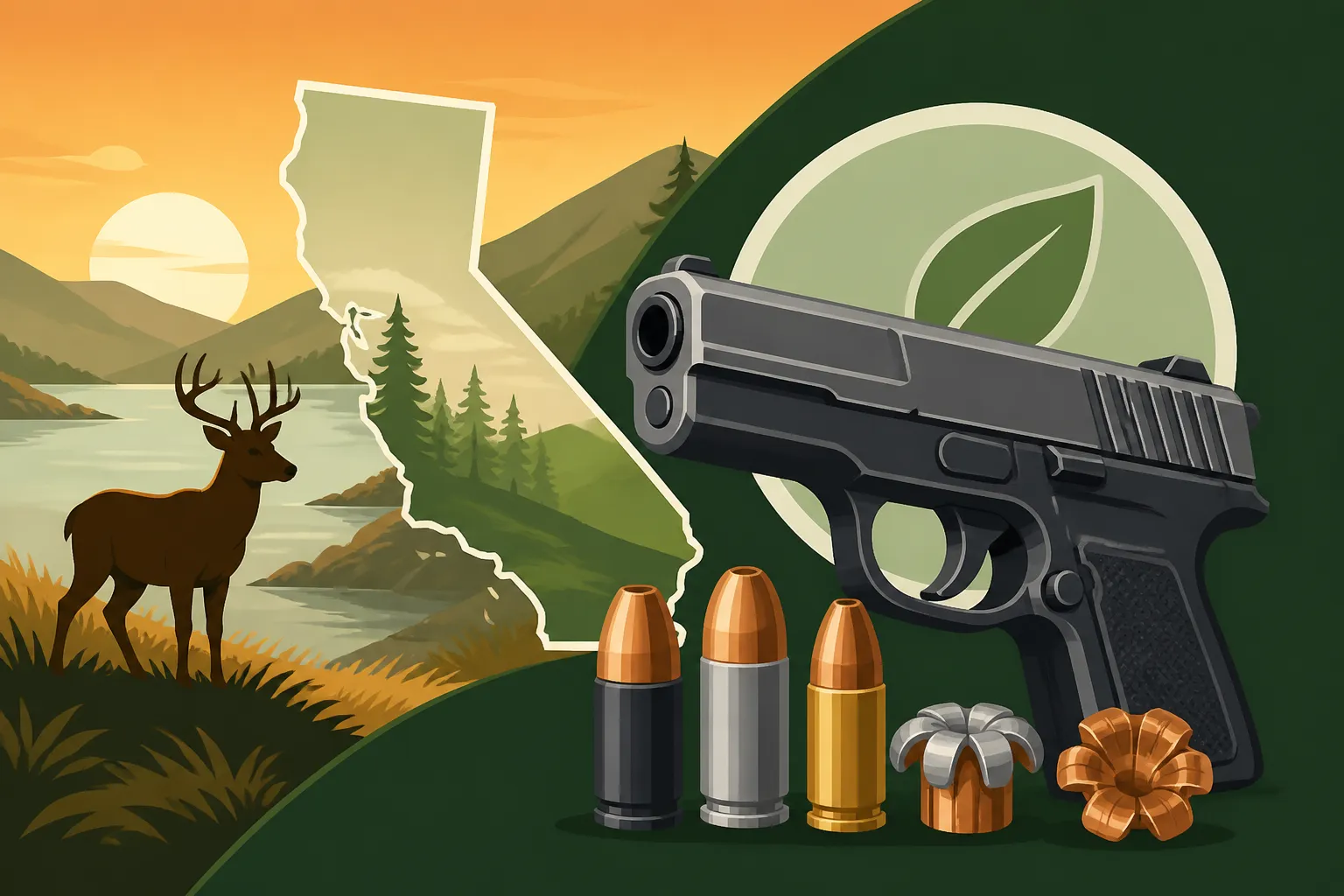
Solid copper bullets are by far the most common non-lead option for handguns. These projectiles are typically machined or swaged from pure copper or a copper alloy. Their design often incorporates features like hollow points or pre-fragmented sections to promote expansion upon impact. Unlike lead-core bullets that mushroom by deforming the softer lead, copper bullets often expand in a more petal-like fashion, creating sharp edges that cut through tissue. This can lead to impressive wound channels, provided the bullet achieves sufficient velocity to initiate expansion.
One of the main advantages of solid copper bullets is their weight retention. Since they are a monolithic piece of metal, they tend to retain nearly 100% of their original weight, even after passing through tough hide and bone. This means deeper penetration, which is crucial for reaching vital organs on larger game like deer and wild pigs. However, copper is less dense than lead, so to achieve similar bullet weights as lead, copper bullets must be longer. This increased length can affect cartridge overall length, potentially impacting feeding in some semi-automatic handguns, or requiring a faster barrel twist to stabilize the longer projectile for accuracy. Brands like Barnes offer excellent copper handgun bullets, such as their XPB line, designed specifically for hunting, and many reloaders turn to these for consistent performance.
Frangible and Bonded Non-Lead Designs
While solid copper is dominant, other non-lead designs also exist and are continually evolving. Frangible bullets, for instance, are designed to break apart into small pieces upon impact, transferring all their energy into the target without over-penetration. These are less common for big game hunting, where deep penetration is usually desired, but some specialized designs might incorporate frangible elements. Their primary use is often for training or in situations where ricochet is a major concern.
Bonded non-lead designs are another interesting category. Some manufacturers combine a copper jacket with a different non-lead core material, such as tin or a composite, and chemically bond the two together. This bonding helps to prevent core-jacket separation, ensuring that the bullet stays together and retains its weight, much like a solid copper bullet. These can sometimes offer a slightly different ballistic profile or expansion characteristic, attempting to mimic the performance of traditional bonded lead bullets. However, finding these specifically for handgun hunting loads can be more challenging than the readily available solid copper options. For most California handgun hunters, solid copper projectiles will be the most practical and widely available choice, offering a proven track record of performance.
Popular Handgun Calibers and Their Non-Lead Options
When considering non-lead handgun ammunition for hunting in California, the choice of caliber plays a pivotal role. Not all calibers are created equal in terms of availability of non-lead options, nor are they all equally effective for dispatching game ethically. Matching the right caliber with a proven non-lead bullet is crucial for success.
Common Choices for Deer and Pig
For California deer and wild pigs, several handgun calibers stand out as popular and effective, and fortunately, most of these have viable non-lead options. The .357 Magnum is a classic choice, offering a good balance of power and manageable recoil. Many manufacturers, including Barnes and Hornady (with their MonoFlex line), offer solid copper bullets in the 140-180 grain range for the .357 Magnum. These bullets are designed for deep penetration and reliable expansion within the velocity window of the cartridge, making it a capable deer or pig slayer at reasonable handgun ranges. A hypothetical scenario might involve still-hunting coastal oak woodlands for blacktail, where a .357 Magnum revolver with non-lead copper hollow points could be highly effective in thick brush at 30-50 yards. You might find this useful when Hunting Coastal Range Oak Woodlands.
Moving up in power, the .44 Magnum is arguably the quintessential hunting handgun caliber. Its substantial power makes it suitable for larger pigs and even elk, provided the hunter can handle the recoil and shoot it accurately. Non-lead options for the .44 Magnum are plentiful, often in bullet weights ranging from 200 to 240 grains. These heavier copper bullets retain excellent energy and penetrate deeply. The .45 Colt, particularly in stout "Ruger Only" loads, can also be a formidable hunting cartridge with non-lead bullets in the 225-250 grain range. These larger diameter projectiles create impressive wound channels, even at moderate velocities. It's important to test different bullet weights and designs in your specific handgun, as barrel length and twist rate can significantly influence performance with non-lead projectiles.
Magnum Calibers for Larger Game
For hunters venturing after larger game or simply desiring more power for hogs, several larger magnum handgun calibers offer excellent non-lead options. The .454 Casull is a powerhouse, offering ballistic performance that approaches some rifle cartridges. Non-lead bullets for the .454 Casull are typically in the 240-300 grain range and are designed for extreme penetration and expansion, making it a viable option for even tough animals like larger wild boars or potentially black bear, where legal. These loads often demand a strong, purpose-built revolver.
Similarly, the .460 S&W Magnum and .500 S&W Magnum represent the pinnacle of handgun power. While perhaps overkill for most deer and pig hunting, they are certainly capable with appropriate non-lead bullets. These calibers deliver immense energy, and their non-lead projectiles are engineered for maximum impact and deep penetration. A hunter pursuing a black bear with a handgun, given California's strict regulations and quota system as detailed in California's 1,700-Bear Statewide Quota, would find these calibers with heavy, expanding non-lead bullets to be among the most ethically sound choices. However, the recoil generated by these calibers requires considerable practice and a high level of shooting proficiency to ensure accurate shot placement under hunting conditions.
Here's a quick comparison of common handgun calibers and typical non-lead bullet options:
| Caliber | Common Non-Lead Bullet Weights (Grains) | Typical Projectile Type | Common Game Species (CA) | Notes |
|---|---|---|---|---|
| .357 Magnum | 140-180 | Solid Copper Hollow Point | Deer, smaller wild pig | Good balance, manageable recoil. |
| .44 Magnum | 200-240 | Solid Copper Hollow Point | Deer, wild pig, black bear | Classic hunting caliber, powerful. |
| .45 Colt (Ruger Only) | 225-250 | Solid Copper Flat Nose/Hollow Point | Wild pig, deer | Requires strong firearm, powerful loads. |
| .454 Casull | 240-300 | Solid Copper Hollow Point | Larger wild pig, black bear | High velocity, excellent penetration. |
| .460 S&W Magnum | 275-325 | Solid Copper Solid/Hollow Point | Larger wild pig, black bear | Extreme power, heavy recoil. |
| .500 S&W Magnum | 300-400 | Solid Copper Solid/Hollow Point | Largest wild pig, black bear | Top-tier power, significant recoil. |
Considerations for Ballistics and Performance
Switching to non-lead ammunition isn't just about complying with the law; it's about understanding how these different projectiles perform downrange and on game. Non-lead bullets, particularly solid copper designs, can have distinct ballistic characteristics and terminal performance compared to their lead-core counterparts. Hunters need to account for these differences to ensure ethical and successful hunts.
Velocity and Energy Transfer
One of the most noticeable differences with non-lead, specifically solid copper, is its lighter weight relative to a lead bullet of the same size. To achieve similar momentum and energy, non-lead bullets often need to be driven at higher velocities. For handgun cartridges, which already operate at lower velocities than rifles, this becomes especially pertinent. A copper hollow point might be designed to expand reliably at 1200 fps, but if your handgun's barrel length only pushes it to 1050 fps, expansion might be compromised. This could result in a narrow wound channel, reducing the bullet's effectiveness.
Conversely, some non-lead designs thrive at higher velocities, expanding aggressively and dumping a lot of energy into the target. The key is to match the bullet's intended velocity range with the actual velocity your handgun produces. Longer barrels generally yield higher velocities, which can benefit non-lead performance. When choosing factory ammunition, look for manufacturers who specify the minimum expansion velocity for their non-lead handgun bullets. For reloaders, working up loads with a chronograph is essential to ensure you're achieving the necessary speed for optimal bullet performance. The goal is to maximize energy transfer through controlled expansion, creating a wide, devastating wound channel that quickly incapacitates the animal.
Accuracy and Point of Impact Shifts
Any time you change ammunition, whether it's bullet weight, brand, or composition, you should expect a shift in your point of impact (POI). Non-lead handgun bullets are no exception. Due to their different construction, length, and weight distribution, they will often group differently and impact at a different spot on the target compared to your traditional lead loads. This isn't necessarily a bad thing, but it means a dedicated zeroing session is absolutely mandatory before heading into the field.
It's not uncommon to see a different harmonic vibration pattern in the barrel with non-lead bullets, which can affect accuracy. Some handguns might prefer certain non-lead bullet weights or designs over others. For instance, your .44 Magnum might shoot 240-grain lead bullets like a laser, but a 225-grain copper bullet might require significant sight adjustment and could even print a wider group. Patience and experimentation are key. Fire several groups at your intended hunting distances, adjusting your sights as needed until you have a consistent and accurate zero with your chosen non-lead load. Just as you would for Zeroing a Rifle for Non-Lead Loads, the same meticulous approach is required for handguns to ensure ethical shot placement.
Sourcing and Availability of Non-Lead Handgun Ammo
The demand for non-lead ammunition in California has driven manufacturers and retailers to expand their offerings, but finding specific handgun loads can sometimes still be a challenge. It's a different game than simply walking into any big box store and grabbing a box of whatever's on the shelf. Being proactive and knowing where to look is crucial for California handgun hunters.
Online Retailers and Local Shops
One of the most reliable ways to source non-lead handgun ammunition is through online retailers. Many major ammunition manufacturers like Barnes, Hornady, and Federal offer non-lead hunting loads for popular handgun calibers, and these are often readily available from large online distributors. Shopping online provides access to a much broader inventory than any single brick-and-mortar store, increasing your chances of finding the specific bullet weight and design you're looking for. However, remember to factor in shipping costs and lead times, especially as hunting seasons approach.
Local gun shops, particularly those catering to hunters in California, have also adapted to the non-lead requirement. These shops often have a selection of compliant ammunition on hand, and their staff can sometimes offer valuable insights into what performs well in local hunting conditions. Some smaller, specialty stores might even carry a wider range of niche non-lead options. It's always a good idea to call ahead to check stock, as non-lead handgun ammunition, especially for less common calibers, can fluctuate in availability. Forums and online communities, including those offered by platforms like GoHunt, can also be excellent resources for finding out what's currently available and where.
Reloading Components for Non-Lead
For many handgun hunters, especially those with less common calibers or who demand precise control over their ammunition's performance, reloading non-lead components is an attractive option. The availability of non-lead reloading components, particularly solid copper bullets, has grown significantly. Companies like Barnes, Hornady, and Cutting Edge Bullets offer a variety of copper projectiles in popular handgun calibers and weights. This allows reloaders to fine-tune their loads to their specific handgun, achieving optimal accuracy and velocity for reliable expansion.
Reloading non-lead requires careful attention to detail. Copper bullets are harder than lead, which can sometimes lead to increased barrel wear over time, though this is generally minimal with modern alloys. Also, due to copper's lower density, a non-lead bullet of the same weight as a lead bullet will be longer. This means less powder capacity in the case and potentially different pressure characteristics. Always start with published non-lead reloading data, paying close attention to maximum overall length and pressure signs. Developing a precise, ethical non-lead load through reloading can be incredibly rewarding, offering consistency and performance that might be hard to find in factory ammunition. For more on ensuring your hunting gear is up to par, check out Choosing Non-Lead Rifle Ammunition in California for broader insights into non-lead choices.
Practical Tips for Hunting with Non-Lead Handgun Ammo
Hunting with a handgun, especially in California's non-lead environment, demands a higher level of preparation and skill than traditional rifle hunting. The nuances of non-lead bullet performance combined with the inherent challenges of handgun accuracy mean that practice and precision are paramount.
Zeroing and Practice
As discussed, a thorough re-zeroing of your handgun with your chosen non-lead ammunition is non-negotiable. Don't assume your new copper hollow points will shoot to the same point of impact as your old lead loads. Take the time to get to the range and dial in your sights. Shoot from a rest to eliminate as much human error as possible, and once you have a consistent group, practice from various field positions: kneeling, sitting, and offhand. Handgun hunting often involves close-range shots, but they need to be precise. Simulate hunting scenarios as much as possible. Practice drawing from your holster, acquiring the target, and firing smoothly. The more familiar you are with your non-lead load and how your handgun performs with it, the more confident and ethical you'll be in the field.
Understanding your effective range with your non-lead handgun load is also critical. For many hunters, this might be 50 yards, for some less, for others with significant practice, it could be more. Don't push beyond your proven limits. A clean, ethical kill with a handgun at 30 yards is far superior to a marginal hit at 70 yards, especially when dealing with tough game like wild pigs. Remember, non-lead bullets often rely on adequate velocity for reliable expansion, so the further out you shoot, the more that velocity drops, potentially impacting terminal performance.
Field Performance and Ethical Shots
When hunting with non-lead handgun ammunition, shot placement becomes even more critical. While modern copper bullets are designed for excellent terminal performance, they are not magic. Aim for the vital organs – heart and lungs – to ensure a quick and humane kill. Avoid shoulder shots on larger game if possible, as the dense bone can sometimes deflect or limit the expansion of even robust copper bullets, though high-quality designs are much improved in this regard.
Carry enough ammunition to confidently take multiple practice shots and, if needed, follow-up shots in the field. Be patient and wait for the absolute best shot opportunity. This might mean letting an animal walk if the angle isn't right. After the shot, track the animal diligently. Even with a well-placed shot from a powerful non-lead handgun load, animals can sometimes travel a short distance. Look for blood trails, broken branches, and tracks. Learning how to track animals, as discussed in Tracking a Deer in Fresh Sierra Snow or Blood Trailing After Dark in California, is an invaluable skill for any hunter, but especially for those using handguns.
Always be aware of your surroundings and potential backstops. A non-lead bullet might not fragment like some lead designs, and could potentially retain more energy after passing through an animal, increasing the risk of over-penetration. Safe hunting practices, coupled with a deep understanding of your non-lead handgun ammunition's capabilities, will ensure you have an ethical and successful experience in California's unique hunting environment.
Disclaimer
This article is for general informational purposes only and does not constitute professional advice. Laws, prices and regulations vary by location and change over time. Consult a qualified professional for guidance on your specific situation.