Best Turkey Call for Oak Woodland Gobblers
Hunting wild turkeys in California's oak woodlands can be an incredibly rewarding, yet equally frustrating, experience. Those gobblers can be notoriously cagey, sometimes responding with booming enthusiasm, other times staying silent and sneaking in, or simply vanishing into the thick undergrowth. It’s a common struggle to figure out which call will actually bring that wary tom into range in this specific terrain. This comprehensive guide is here to unravel the mystery, diving deep into the best turkey calls and techniques for luring those elusive California gobblers out of the oak timber and into your setup.
Understanding California Oak Woodland Gobblers and Their Habitat
Before you even think about which call to use, you've got to understand the theater of operations: California's oak woodlands. This isn't your typical open-country field edge hunt, nor is it the dense, unbroken timber of other regions. It's a unique blend that requires a specific approach.
The Unique Challenges of Oak Woodlands
California's oak woodlands are a mosaic of open grassy areas, scattered large valley oaks, dense patches of scrub oak and chaparral, and often rolling hills with drainages. This varied terrain presents a distinct set of challenges for turkey hunters. Visibility can shift dramatically from wide-open meadows to impenetrable brush within just a few yards. Gobblers use these features to their advantage, often roosting on ridge tops or in tall oaks along creek bottoms, then pitching down into areas with good cover and food. The rolling topography means sound doesn't always travel as you'd expect; a gobble that sounds far away might be just over the next rise, or a close one might be heavily muffled by a dense stand of trees. This makes judging distance and direction incredibly tricky, and a poor call choice can be easily swallowed by the environment.
Turkey Behavior in These Environments
California's wild turkeys, primarily the Rio Grande subspecies that thrives here, behave somewhat differently in these oak-rich environments. They often roost in the largest, most dominant oaks, frequently along ridges or canyon edges where they can observe their surroundings. When they pitch down, they're looking for open areas to strut and feed, but always with quick access to dense cover for escape or to hide from predators. Acorns are a huge draw, so understanding seasonal mast crops is critical. You might find them scratching in leaf litter for fallen acorns in the fall, or bugging for insects in green fields in the spring.
During the spring breeding season, gobblers will seek out strutting zones—often small clearings, old logging roads, or the edges of pastures—where they can display for hens. However, they're not always willing to cross large expanses of open ground if they feel exposed. Pressure from other hunters also plays a huge role; heavily hunted birds become call-shy and will often "gobble on the limb" but refuse to come down, or they'll circle widely, trying to spot the source of the call without exposing themselves. Understanding this nuanced behavior is key to selecting the right call and, more importantly, the right calling strategy. Why Turkeys Thrive in California Oak Woodland further explains how this habitat benefits them.
The Different Types of Turkey Calls for Oak Woodlands
When it comes to calls, there's no single "magic bullet" that works every time. Instead, you need a diverse toolkit. Different calls excel in different situations, and a true turkey hunter knows when to use each.
Friction Calls: Slate, Glass, and Pot Calls
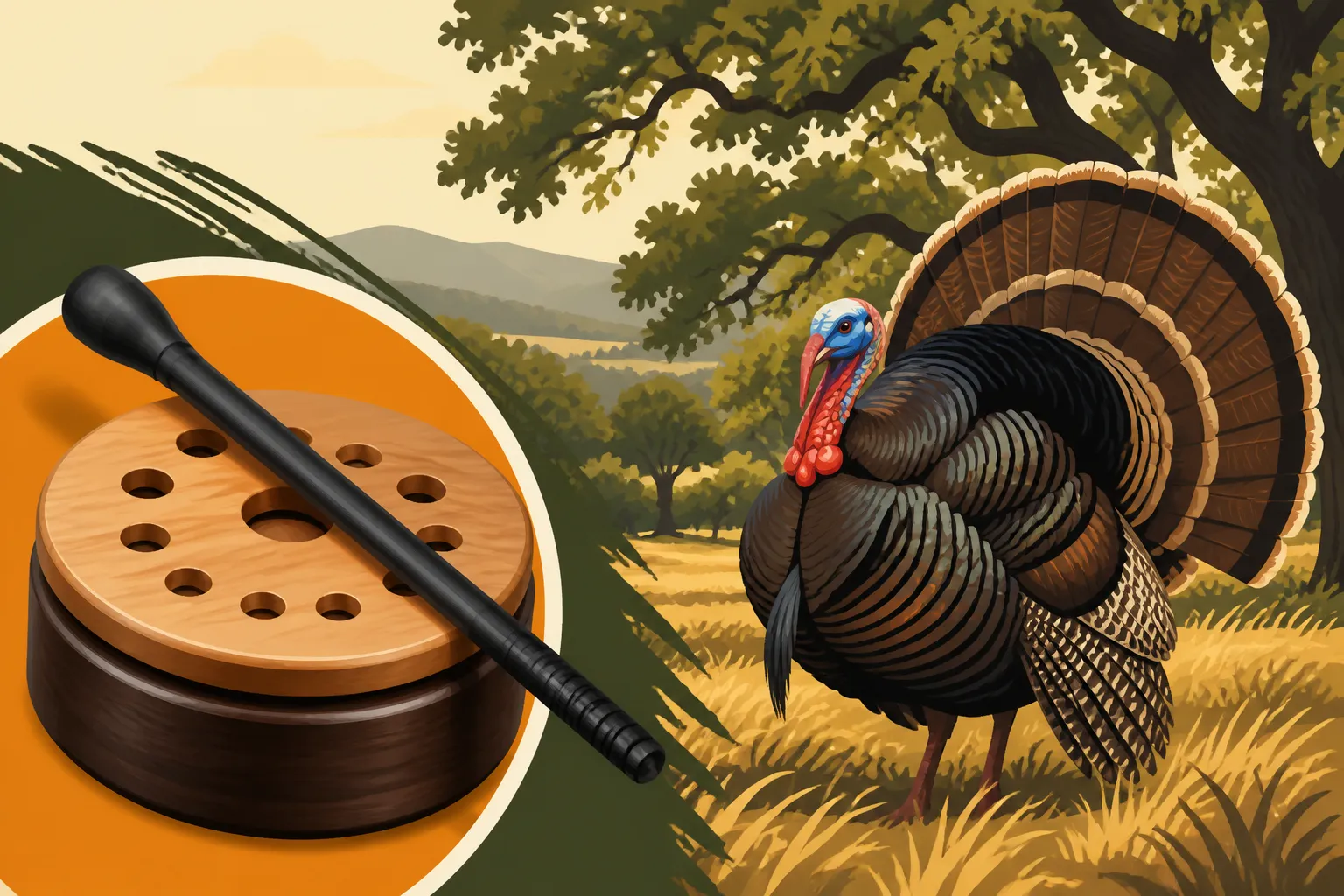
Friction calls, often called pot calls, are a fantastic starting point for oak woodland hunting due to their versatility and realistic sounds. These calls consist of a circular pot made of slate, glass, aluminum, or even ceramic, and a striker. By dragging or tapping the striker across the surface, you can produce a wide range of turkey vocalizations.
- Slate Calls: These are perhaps the most popular and versatile. They produce soft, mellow yelps, clucks, and purrs that sound incredibly realistic. In the oak woodlands, where turkeys can often be close and sensitive to loud, aggressive calling, a slate call is invaluable for soft tree yelps at dawn or subtle purrs to draw in a close gobbler. The softer tones carry well in calm air and don't "blow out" the sound, making them perfect for coaxing that last 50 yards out of a wary tom.
- Glass Calls: Glass calls tend to be louder and sharper than slate, offering more volume when you need to reach out across a valley or through a bit more timber. They produce crisp yelps and cutts that can grab a gobbler's attention from a distance. If you've got a bird gobbling a few hundred yards away and need to gauge his interest, a glass call can be very effective. However, their sharper tone can sometimes be too aggressive for heavily pressured birds once they get close.
- Aluminum Calls: These are generally the loudest of the friction calls, cutting through wind and dense cover with ease. They're great for really reaching out on windy days or when you suspect a gobbler is a long way off. Their aggressive tone is best used for initial contact or when you're trying to fire up a bird that's showing little interest.
The beauty of friction calls is their relative ease of learning and consistency. You can get very realistic sounds with just a little practice. A combination of a slate and a glass call gives you a great range for varied situations in the oak woods, from soft close-in talk to louder, attention-grabbing calls.
Mouth Diaphragm Calls
Diaphragm calls, or mouth calls, are small, U-shaped frames with one or more latex reeds stretched across them. You hold them in the roof of your mouth and push air across the reeds with your tongue to create sounds. This type of call has a steeper learning curve but offers incredible advantages, especially in the oak woodlands.
- Hands-Free Operation: This is the biggest benefit. Once a gobbler is approaching, you can keep your gun mounted and ready without having to move a hand to operate a call. This minimizes movement and helps you stay hidden, which is crucial when dealing with sharp-eyed turkeys.
- Versatility in Sound: With practice, you can produce almost any turkey vocalization imaginable: soft clucks, purrs, excited cutting, assembly yelps, and even gobbler clucks. Different reed configurations (single, double, triple, ghost, bat wing cuts) offer varying tones and levels of rasp.
- Volume Control: A skilled caller can go from barely audible purrs to ear-splitting cutting with just a change in air pressure and tongue position. This allows for incredible adaptation to the situation. If a bird is hung up at 60 yards, a subtle purr or soft cluck might be all it takes to bring him those last few steps.
For hunting in thick oak brush or when setting up for a bird that might pop out unexpectedly, the hands-free nature of a diaphragm call is a game-changer. Many seasoned California turkey hunters carry several different diaphragm calls to offer a variety of hen voices.
Box Calls
Box calls are another classic turkey call, known for their ability to produce loud, realistic yelps and cuts with minimal effort. They consist of a wooden box with a lid, which is scraped across the lips of the box to create sound.
- Volume and Range: Box calls are excellent for broadcasting loud calls over long distances. If you're trying to locate a gobbler across a large canyon or want to get an initial response on a windy morning, a box call can cut through the air effectively.
- Ease of Use: They are relatively easy to learn, making them a great choice for beginners. You can produce very convincing yelps and clucks with just a short amount of practice.
- Consistent Sound: Unlike some friction calls that can get wet or dusty, box calls tend to be more resilient to minor weather changes, maintaining a consistent sound.
While great for volume, box calls require two hands to operate, which can be a disadvantage when a gobbler is close. However, they are fantastic for blind calling or setting up in a static position where you have time to make the call and then get ready. Pairing a box call for locating with a diaphragm call for close-in work is a common and effective strategy in the oak woodlands.
Locator Calls: Owl, Crow, and Coyote
Locator calls aren't meant to imitate turkeys, but rather to make other animals vocalize, hoping a nearby gobbler will "shock gobble" in response. This helps you pinpoint his location without directly calling to him and potentially alerting him to your presence.
- Owl Hooters: Often used at first light, as owls are naturally active at this time. A series of deep "who cooks for you, who cooks for you all" hoots can often elicit a shock gobble from a bird still on the roost. This is particularly effective in oak woodlands where turkeys might roost in large, isolated trees.
- Crow Calls: Crows are active throughout the day, and their raucous caws can often irritate a gobbler into sounding off. If you're moving through the woods mid-morning, a series of realistic crow calls can help you locate a bird that's gone silent.
- Coyote Howlers: A more aggressive locator, a coyote howl can provoke a gobbler into shock gobbling, especially if he perceives it as a threat or an intrusion into his territory. Use these sparingly, as they can sometimes spook other game, but they are effective for getting a response when other calls fail.
The key with locator calls is to listen intently after each series of calls. A distant gobble might be easily missed if you're not focused. Using a locator call can be a fantastic way to strike a bird before you even start using your turkey vocalizations, giving you a better idea of where to set up.
Mastering Call Techniques for Oak Woodland Success
Having the right calls is only half the battle; knowing how to use them in the oak woodland environment is what truly brings success. It's an art, not just a science.
Adapting Volume and Aggression
One of the biggest mistakes new hunters make is calling too loudly or too aggressively, especially when they don't get an immediate response. In the oak woodlands, where birds can be pressured, subtlety is often your best friend.
- Soft and Sweet at Dawn: When birds are still on the roost, use soft tree yelps and clucks with a slate or diaphragm call. Mimic a hen waking up, maybe a few soft purrs. The goal isn't to draw him in yet, but to confirm his location and get his attention. As he pitches down, you can increase the volume slightly, but never get too aggressive unless he's really hammering back. Calling a Gobbler Off an Oak Ridge Roost is a great resource here.
- Reading the Response: Pay close attention to how the gobbler responds. Is he gobbling every time you call? Is he cutting you off? Or is he silent after an initial gobble? If he's gobbling consistently, match his enthusiasm. If he's silent or gobbling less, back off. Sometimes, no calling at all, or just a single soft cluck every 10-15 minutes, is the best strategy. Over-calling can make him suspicious, especially if he's been hunted before.
- The Power of the Purr: Don't underestimate the purr. This soft, contented sound can be incredibly effective when a gobbler is close but hung up. It tells him that everything is safe, that there's a relaxed hen nearby. A mouth call or a precise slate call is excellent for this. Practice making purrs and soft clucks, as these are often the "closer" calls.
- When to Get Aggressive: There are times for aggressive calling. If a gobbler is really fired up and gobbling hard, especially if he's with hens, sometimes aggressive cutting and yelping can challenge him. This mimics a boss hen trying to pull his attention away from rivals. However, this is a calculated risk; too much aggression can also send him the other way.
Knowing when to apply the gas and when to hit the brakes is paramount. It's a dynamic conversation, and you need to listen more than you call.
Setting Up for the Shot
Once you've located a gobbler and started working him, your setup is everything. In California's oak woodlands, where cover can be patchy and light conditions variable, a strategic setup can mean the difference between a punched tag and a frustrated walk back to the truck.
- Blind Selection and Placement: A ground blind can be incredibly useful, especially if you anticipate a long wait or need to move around a bit without being seen. Choose a blind that blends well with the oak environment. Place it against a backdrop of dense brush or a large tree to break up your outline. Consider angles for the sun – you don't want to be backlit. Best Backpack Blind for Turkey Hunting has more tips. If you're not using a blind, Setting Up Against a Big Valley Oak is critical; always have a tree or substantial brush behind you to break up your silhouette and protect your back.
- Decoy Strategy: Decoys can be highly effective in oak woodlands, especially a single hen or a breeding pair (hen and jake). Place decoys in a visible spot but not too far out. Often, 15-20 yards from your position is ideal, giving the gobbler a target and bringing him into close shotgun range. Position them so the gobbler will approach with his head facing away from your shooting lane, giving you a better broadside shot if he circles. Be mindful of their visibility; dense brush can hide them, making them useless.
- Understanding Turkey Approach Angles: Turkeys almost always try to circle the source of the call to get a visual. They want to see the hen before committing. If you can anticipate this, you can set up to intercept them. If you're on a ridge line, they might pop up from below. If you're in an open field, they might skirt the edges. Use the terrain to your advantage, positioning yourself where they'll have to come into range to see your "hen." Think about their natural travel routes—old logging roads, creek beds, or natural clearings.
Reading the Gobbler's Response
This is where experience truly shines. A gobbler's response isn't just about him gobbling or not gobbling; it's a symphony of subtle cues that tell you what he's thinking.
- Distance and Direction: After each call, try to pinpoint the gobbler's location. Is he getting closer? Moving left or right? Using a rangefinder on trees or landmarks can help you keep track. If he's moving away, you need to either change your strategy, circle ahead of him, or try a more aggressive call to turn him.
- Vocal Changes: Listen to the quality of his gobble. Is it strong and confident? Or weaker, maybe from a greater distance? Does he gobble immediately after your call, or is there a delay? A gobbler that cuts off your calls is often very interested and coming hard. A bird that gobbles once every five minutes might be shy or with real hens.
- Visual Cues: If you can see him, watch his body language. Is he strutting? Is his head red and puffed? Is he focused in your direction? A strutting gobbler is often committed. If he's looking around suspiciously, he's likely looking for the hen and might be wary.
- The "Hang-Up": This is a common frustration. A gobbler gets to a certain point—say, 80 yards—and just stops, gobbling but refusing to come closer. He expects the hen to come to him. This is when subtle purrs, soft clucks, or even going silent for a period can work. Sometimes, a very slow, subtle move (if you're unseen) to cut the distance can also work, but it's risky. Another strategy is to have a second hunter move slightly behind your position, calling to mimic a hen walking away. This can sometimes make the gobbler nervous enough to break his hang-up.
Integrating Scouting and Gear for Optimal Performance
Even with the best calls and techniques, success in California's oak woodlands hinges on solid preparation and the right supporting gear.
Pre-Season Scouting and Call Practice
You wouldn't show up for a test without studying, and turkey hunting is no different. Pre-season scouting is absolutely critical in finding those oak woodland gobblers.
- Locating Roosts: Before the season opens, spend time in the areas you plan to hunt. Use your locator calls at dawn and dusk to pinpoint roost sites. Listen for the characteristic wing beats as birds fly up or down. Note the largest trees, often near water or on ridge lines, where they prefer to spend the night.
- Identifying Strut Zones and Feeding Areas: Look for visual sign: strut marks in dirt, droppings (gobbler droppings are J-shaped, hen droppings are coiled), and scratched-up leaf litter where they've been feeding. Identify potential strut zones—small clearings, old logging roads, or pasture edges. This helps you understand their daily patterns.
- Understanding Food Sources: Beyond acorns, look for green-ups, areas with insects, or agricultural fields bordering the oaks. Knowing what they're eating helps predict where they'll be.
- Call Practice: Practice, practice, practice! Your calls need to sound realistic and consistent. Record yourself. Listen to real turkey sounds online. Go to local turkey calling competitions to learn from the best. Being proficient with several call types will make you a more versatile hunter. Pay attention to how turkeys respond to different calls. Scouting California Public Land Before Season provides general scouting tips that apply here.
The Role of Mapping and Planning Tools
In the complex terrain of California's oak woodlands, a good mapping tool is like having a secret weapon. Modern hunting apps can give you a significant advantage.
- Digital Topo Maps: Tools like GoHunt or other popular mapping apps are invaluable. They allow you to study contour lines to understand elevation changes, identify potential roosting ridges, and locate drainages turkeys might use for travel. You can mark potential ambush points, water sources, and areas of dense cover.
- Public vs. Private Land Boundaries: GoHunt and similar apps also overlay public and private land boundaries, which is crucial in California where land ownership can be fragmented. This prevents accidental trespassing and helps you identify accessible public areas that might be overlooked by others.
- Satellite Imagery: High-resolution satellite imagery helps you visualize the terrain. You can spot clearings, dense patches of oaks, and even identify specific large trees that might serve as roosts. Using GoHunt's layers to understand vegetation types can also help you predict where turkeys might hold up or feed.
- Wind and Thermals: In hilly oak country, understanding wind direction and thermals is critical. Thermals tend to rise in the morning and fall in the evening. Planning your approach based on these factors can keep your scent away from sharp-nosed turkeys. GoHunt, with its mapping capabilities, allows you to pre-plan your entry and exit routes, minimizing disturbance and maximizing your chances of a successful setup. Wind and Thermals in Steep Sierra Country offers valuable insights for similar hilly terrain.
Essential Supplementary Gear
Beyond your calls and mapping, a few other pieces of gear can significantly enhance your oak woodland turkey hunt.
- Decoys: As mentioned, decoys are a powerful visual aid. A single hen decoy or a jake and hen pair can often seal the deal by giving the gobbler a visual confirmation of your "hen." Look for realistic, lightweight decoys that are easy to pack in.
- Ground Blinds and Seats: A portable ground blind, or at least a comfortable folding seat or cushion, is essential. You might be sitting still for a long time, and comfort reduces fidgeting, which can give you away. Best Turkey Vest for Oak Woodland Terrain often includes a built-in seat cushion.
- Binoculars: Even in relatively close quarters, a good pair of binoculars (8x or 10x) can help you confirm if that distant dark blob is a gobbler or just a stump, or to spot incoming birds without moving your head.
- Shotgun and Ammunition: A reliable shotgun, typically a 12 or 20 gauge, with a tight choke and heavy turkey loads (non-lead, of course, for California) is crucial. Pattern your shotgun before the season to know its effective range with your chosen ammunition.
- First Aid and Navigation: Always carry a basic first aid kit, especially if you're venturing into more remote public land. A compass and traditional map, alongside your digital mapping app, provide redundancy in case of electronics failure.
By combining proficient calling skills with a deep understanding of oak woodland turkey behavior, strategic setups, thorough scouting, and the right gear, you'll be well on your way to punching that tag on a California gobbler. Good luck out there, and remember to enjoy the unique challenge and beauty of hunting these incredible birds in their native habitat!
Disclaimer
This article is for general informational purposes only and does not constitute professional advice. Laws, prices and regulations vary by location and change over time. Consult a qualified professional for guidance on your specific situation.