Black Bears in California
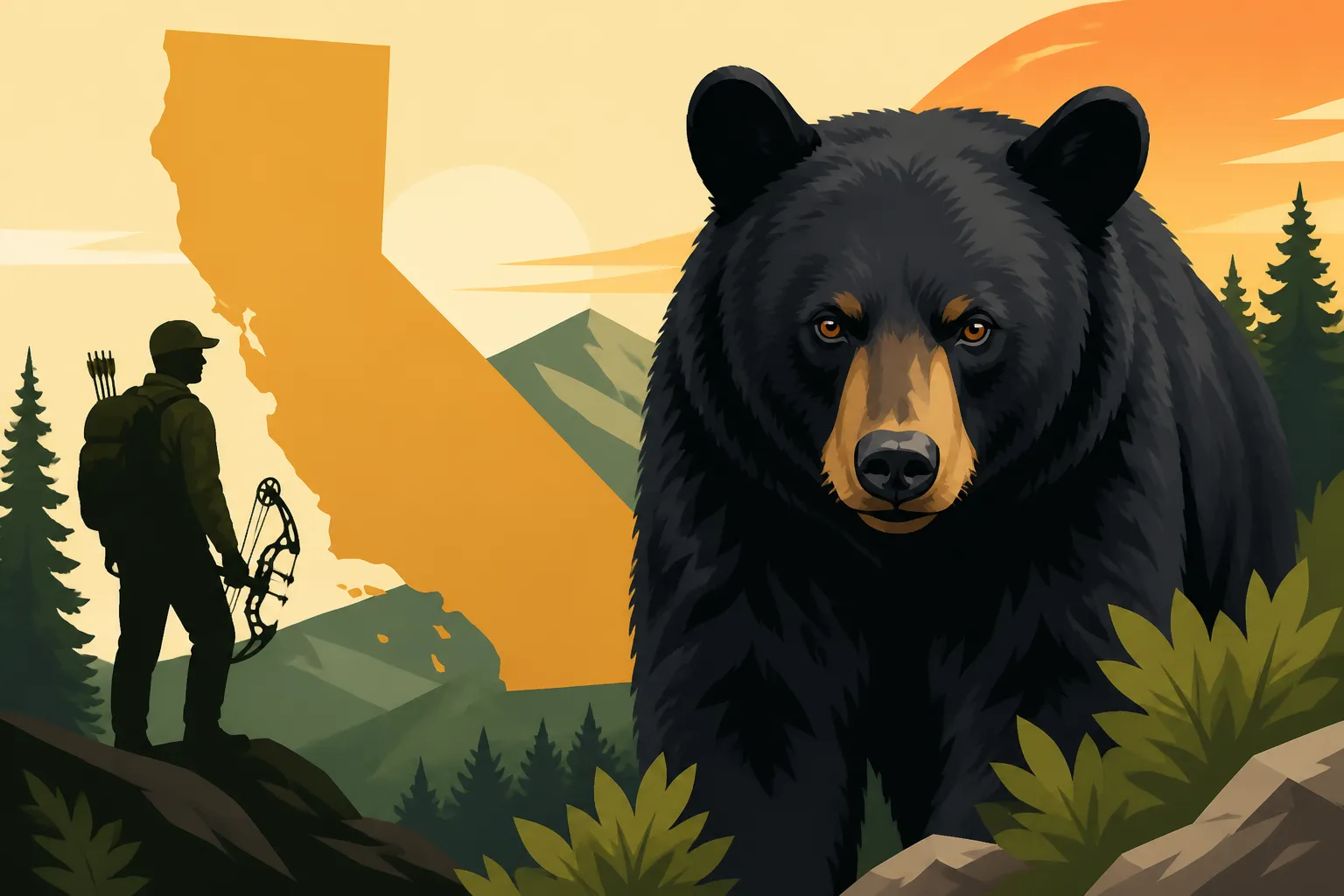
For many hunters in California, the black bear represents one of the state's most challenging and rewarding big game pursuits. These elusive animals inhabit diverse landscapes, from dense coastal forests to the rugged Sierra Nevada high country, making their pursuit a true test of skill, patience, and woodsmanship. Navigating the unique regulations, understanding their behavior, and preparing for a physically demanding hunt can feel overwhelming, but this comprehensive guide is here to break down everything you need to know about pursuing black bears in the Golden State.
Understanding California's Black Bear Population
California's black bear population has seen a remarkable recovery and growth over the past few decades, a testament to effective wildlife management and habitat conservation efforts. Once considered scarce in many areas, these adaptable animals have expanded their range and numbers, providing hunters with opportunities that were once hard to imagine.
Population Growth and Distribution
Back in the 1980s, estimates put California's black bear population at around 10,000 to 15,000 individuals. Fast forward to today, and that number has significantly increased, with current estimates often placing the population closer to 30,000 to 40,000 bears. This impressive rebound is largely due to reduced hunting pressure in the mid-20th century, better habitat protection, and the bears' incredible ability to adapt to various environments. They've truly thrived, moving into new territories and reclaiming old ones.
You'll find black bears in nearly two-thirds of the state, primarily in forested regions. The densest populations are typically found in the northern mountains, including the Klamath, Cascade, and Sierra Nevada ranges, as well as the coastal mountains stretching from Humboldt County all the way down to Ventura. While you might occasionally hear reports of them venturing into more suburban or agricultural areas, their strongholds remain in the wilder, timbered parts of the state. Understanding the overall California Black Bear Population Estimate can really help hunters grasp the scale of opportunity available.
Identifying Black Bear Subspecies and Regional Differences
While we generally refer to them as "black bears," California is home to a single species, Ursus americanus, meaning there are no distinct subspecies recognized within the state. However, bears in different regions can exhibit variations in size, coloration, and even behavior due to differences in diet and climate. For instance, bears in the richer, wetter coastal forests might have access to different food sources and grow to different average sizes than those living in the drier, more rugged Sierra Nevada.
Coloration is a prime example of this regional variation. Despite their "black bear" moniker, these animals can range dramatically in color, from jet black to various shades of brown, cinnamon, and even blonde. In the eastern Sierra, you might encounter a higher percentage of brown-phase bears, while those in the denser coastal redwoods are more often solid black. These color variations are not indicators of a different species or subspecies but rather genetic expressions within the same population, often influenced by environmental factors and diet. Understanding these regional nuances helps you prepare for what you might encounter when you're out scouting, say, in the Southern California chaparral versus the high country of the Lassen National Forest.
Black Bear Biology and Behavior
To successfully hunt black bears, you need to think like a bear. This means understanding their fundamental biology, their daily and seasonal behaviors, and how they interact with their environment. Their survival hinges on their ability to find food, water, and secure cover, and knowing these patterns is key to finding them.
Diet and Habitat Preferences
Black bears are omnivores, meaning they'll eat just about anything, and their diet changes significantly with the seasons. In spring, after emerging from their dens, they're often found grazing on tender grasses, forbs, and new shoots, seeking out nutrient-rich green vegetation to replenish lost winter reserves. As summer progresses, their focus shifts to berries – manzanita, huckleberry, chokecherry, and elderberry are all highly sought after. They also consume insects, grubs, and occasionally carrion.
By late summer and fall, their diet becomes heavily reliant on mast crops, particularly acorns from various oak species. This is a critical period for bears to put on weight for winter hibernation. If it's a good acorn year, bears can pack on significant fat reserves, and you'll often find them concentrated in oak woodlands. If it's a poor acorn year, they might expand their foraging range or rely more heavily on other food sources, making them harder to pattern. Their habitats range from dense coniferous forests and mixed conifer-hardwood forests to oak woodlands and chaparral. Access to water is always a crucial factor, especially in drier regions. A key strategy often involves looking for signs of feeding in areas like a berry patch or a secluded canyon where acorn crops are plentiful.
Denning and Reproduction Cycles
Black bears typically enter their dens for hibernation when food sources become scarce and temperatures drop, usually in late fall or early winter. The timing can vary based on geography and food availability; bears in areas with milder winters or persistent food sources might den later, or even briefly emerge if there's a warm spell. Dens can be found in hollow logs, rock crevices, under fallen trees, or dug into hillsides. They aren't in a true deep hibernation like some smaller mammals, but rather a state of torpor where their heart rate and metabolism slow significantly.
Females give birth in the den, usually in January or February, to one to three tiny, helpless cubs. The cubs remain with their mother for about 1.5 to 2 years, learning essential survival skills. This is a crucial point for hunters: identifying a sow with cubs is paramount, as it is illegal and unethical to harvest a sow with dependent cubs. Hunters must always exercise extreme caution and careful observation to avoid this situation. You can often discern a sow with cubs by their behavior; the cubs might be trailing closely behind, or the sow might exhibit protective behaviors. Always confirm what you're seeing before making a decision.
Identifying Bear Sign and Tracking
Learning to read bear sign is like cracking a secret code to their movements. Tracks are a dead giveaway – look for their distinctive five-toed paw prints. Front paws often show more prominent claws, while hind prints can sometimes look surprisingly human-like. Scat is another key indicator; its contents will tell you what they've been eating, whether it's berry seeds, acorn fragments, or insect casings.
Beyond tracks and scat, look for rub trees where bears scratch and rub against bark, often leaving hair behind. Claw marks on trees can indicate they've been climbing, either to access food or to mark territory. Uprooted plants, torn-apart logs, and overturned rocks are all signs of their foraging activities, especially as they dig for grubs or roots. In areas with abundant berry bushes, you might find broken branches or stripped foliage where they've been feeding. Learning to interpret these signs helps you understand where bears are actively feeding, traveling, and bedding, giving you a distinct advantage. When you're scouting California Public Land Before Season, keeping an eye out for these subtle clues can make all the difference.
California Black Bear Hunting Seasons and Regulations
Hunting black bears in California requires meticulous attention to the rules, which are designed to ensure sustainable populations and ethical hunting practices. The state operates under specific season dates, tag requirements, and a unique statewide quota system that can influence how and when you hunt.
Season Dates and Tag Requirements
California offers both archery-only and general rifle seasons for black bears. The archery season typically opens in late August, often coinciding with the early archery deer seasons, particularly in areas like Zone A. This early window provides a fantastic opportunity for bowhunters to get into the field when bears are still actively feeding on berries and other early fall mast crops. For instance, knowing about the specific dates for hunting the August Archery Bear Window is critical for planning.
The general bear season usually opens in late October, running concurrently with many general deer seasons. However, the exact dates can vary by zone, so always check the current year's California Department of Fish and Wildlife (CDFW) regulations. A valid California hunting license is required, along with a separate black bear tag. These tags can be purchased from authorized license agents or through the CDFW's online portal. Remember, each hunter is limited to one bear tag per license year. You can find information on California Bear Tag Costs from the CDFW website.
The Statewide Quota System
One of the most distinctive aspects of California bear hunting is the statewide quota system. The CDFW sets an annual quota for the total number of bears that can be harvested across the entire state. Currently, this quota is set at 1,700 bears. Once this number is reached, the season is closed, regardless of the published end dates. This means that if hunters are particularly successful early in the season, it could close unexpectedly.
It's absolutely critical for hunters to stay informed about the quota. The CDFW maintains a real-time tally of harvested bears on its website and through a dedicated phone line. Before every hunt, especially later in the season, you should check Checking Whether the Bear Quota Has Closed. Not doing so could lead to a violation if you harvest a bear after the season has officially ended. This system is in place to ensure that the harvest remains sustainable and doesn't negatively impact the overall bear population. This is why it's so important to be aware of California's 1,700-Bear Statewide Quota.
Non-Lead Ammunition and Other Regulations
California has a statewide mandate requiring the use of non-lead ammunition for all hunting, and black bear hunting is no exception. This regulation, which went into full effect in 2019, is primarily aimed at protecting the California condor and other scavengers from lead poisoning. This means you must use certified non-lead bullets for your rifle or non-lead broadheads for archery.
Choosing the right non-lead ammunition is important for ethical, humane harvesting. Options like solid copper bullets or copper-alloy projectiles are readily available from manufacturers like Barnes, Hornady, and Federal. These projectiles perform exceptionally well, often retaining nearly 100% of their weight, providing deep penetration and effective energy transfer. It's always a good idea to practice with your chosen non-lead rounds to ensure your rifle is zeroed correctly and you're familiar with their ballistic performance. Similarly, for archers, ensure your broadheads are non-lead. Make sure you understand the Legal Weapons During California Archery Season if you plan to hunt during that specific period.
Other important regulations include:
- No baiting: It is illegal to use bait to attract bears for hunting in California.
- No hounds: The use of dogs for pursuing bears is also prohibited.
- Mandatory reporting: All harvested bears must be reported to the CDFW, usually within 24-48 hours, depending on the specific method outlined in the regulations. You must also present the skull to the CDFW for inspection and validation. This data is vital for wildlife management.
- No sows with cubs: As mentioned, it is illegal to harvest a bear accompanied by dependent cubs. Always take the time to observe and confirm your target.
Here's a quick look at some key regulatory points:
| Aspect | Description |
|---|---|
| Hunting License | Required for all hunters. |
| Bear Tag | Separate tag required, one per hunter per season. |
| Archery Season | Typically late August to mid-September, varies by zone. |
| General Season | Typically late October to late December, varies by zone, or until quota is met. |
| Statewide Quota | 1,700 bears. Season closes immediately when filled. Check CDFW website or hotline before hunting. |
| Ammunition | Mandated non-lead for all firearms and archery equipment. |
| Baiting & Hounds | Strictly prohibited. |
| Sows with Cubs | Illegal to harvest. Exercise extreme caution and positive identification. |
| Reporting | Mandatory reporting of harvest and skull presentation to CDFW within specified timeframe. |
| Field Tagging | Immediately tag your bear upon recovery, just like deer. |
Effective Strategies for Spot-and-Stalk Bear Hunting
Spot-and-stalk hunting is the primary legal and most effective method for pursuing black bears in California. This strategy demands patience, keen observation skills, and the ability to move silently through often rugged and brushy terrain. It's a true test of woodsmanship and physical endurance.
Scouting and E-Scouting for Bear Country
Successful bear hunting starts long before opening day with thorough scouting. Bears, especially during the fall, are driven by their need to find high-calorie food sources. This means focusing your efforts on areas with abundant mast crops (acorns, walnuts), berry patches (manzanita, huckleberry, elderberry), and sometimes even fruit orchards or agricultural fields bordering wilderness areas.
Start with e-scouting using mapping applications like onX Hunt or even services like GoHunt. Look for large tracts of public land within known bear ranges. Identify areas with varied topography: south-facing slopes often get more sunlight, ripening berries earlier, while north-facing slopes might hold denser timber for bedding. Pay attention to changes in vegetation, especially where oak woodlands transition into conifer forests. Look for saddles, ridges, and drainages that bears might use as travel corridors between feeding and bedding areas.
Once you've identified promising areas on a map, hit the ground. Look for fresh bear sign: tracks, scat, rub trees, and overturned rocks. Note the abundance of food sources. Is it a good acorn year? Are the berry bushes loaded? This intel is invaluable. Focus your scouting efforts in areas where you can combine good visibility with access to prime bear habitat, such as old logging roads, burn scars, or along natural benches on steep hillsides.
Glassing Techniques in Open and Timbered Terrain
Glassing is arguably the most crucial skill for spot-and-stalk bear hunting. Bears can be surprisingly hard to spot, often blending seamlessly into their surroundings. Whether you're in wide-open country or thicker timber, a methodical approach is key.
In open country, like vast canyons, burn scars, or clear-cuts, find a high vantage point with a wide field of view. Use quality binoculars (10x or 12x are excellent) mounted on a tripod for stability. Start by scanning the entire landscape at low power, looking for anything out of place – a dark blob, a shimmer of fur, or movement. Then, systematically grid the area, working from left to right, top to bottom, focusing on every detail. Pay close attention to shaded areas, the edges of timber, and around dense pockets of cover where bears might be bedded or moving cautiously. Often, you'll first spot a bear by a flick of an ear, a patch of glossy fur, or the way a dark shape moves against lighter vegetation. Glassing a Burn Scar for a Feeding Bear is a classic tactic.
In more timbered or brushy areas, glassing becomes even more challenging. You'll need to move slowly and patiently, focusing on smaller sections of terrain. Instead of looking for a bear, look for parts of a bear – a dark ear, a shoulder, the glint of an eye. Bears often feed in dense cover, so scrutinize every dark patch, every clump of manzanita or ceanothus. Use your binoculars to peer into shaded draws and along the edges of small openings. The key is to be extremely patient and persistent; a bear might only offer a brief glimpse as it moves between patches of cover.
Stalking and Approaching a Bear
Once you've spotted a bear, the real challenge begins: the stalk. This is where your woodsmanship, stealth, and knowledge of wind become paramount. The first step is to assess the situation: where is the bear headed? Is it feeding, bedding, or traveling? What are the prevailing wind currents? How is the terrain laid out?
Your primary objective is to approach undetected, which means staying downwind, out of sight, and moving as silently as possible. Bears have an incredible sense of smell, far surpassing their eyesight. Even a slight swirl of wind can carry your scent directly to them, ending the hunt immediately. If the wind is wrong, you might have to wait for it to change, or abandon the stalk altogether and try to re-position. Use topography to your advantage, staying behind ridges, hills, or dense vegetation. Move slowly, placing each foot carefully to avoid breaking twigs or rustling leaves.
As you get closer, constantly re-evaluate the bear's behavior. If it seems to be aware of your presence or lifts its head frequently, freeze and assess. It might have heard something or caught a whiff of distant scent. Always identify your target carefully, especially ensuring it's not a sow with cubs, which is both illegal and unethical. Take your time, get into a stable shooting position, and be prepared for a quick shot once you have a clear, ethical opportunity. This is particularly important when trying to judge a Legal Bear From a Sow With Cubs. Remember that a successful stalk is often the culmination of hours of patient glassing and meticulous planning.
Essential Gear for California Bear Hunters
Being prepared with the right gear can make or break a California bear hunt. From optics that help you spot an elusive bear in a vast canyon to the non-lead ammunition required by law, every piece of equipment plays a crucial role in ensuring a successful and ethical hunt.
Optics for Long-Range Observation
Given that spot-and-stalk is the primary hunting method, high-quality optics are non-negotiable. You'll spend hours, sometimes days, behind glass, meticulously scanning vast landscapes for the subtle signs of a bear.
- Binoculars: A good pair of 10x or 12x binoculars is your most important tool. Look for models with excellent light gathering capabilities, robust construction, and clear, sharp images. Brands like Vortex, Leupold, and Maven offer superb options that stand up to the rigors of the backcountry. Always use a chest harness to keep your binoculars secure, accessible, and protected.
- Spotting Scope: For serious long-range glassing, especially in open, broken country like the Eastern Sierra or vast burn scars, a spotting scope is invaluable. A 60-80mm objective lens with a variable magnification (e.g., 20-60x) will allow you to pick apart distant hillsides, confirm details, and evaluate a bear's size and legal status. Mount it on a sturdy, lightweight tripod for rock-solid stability. This is particularly useful for glassing a Blacktail's Fork Versus a Forked Horn, a skill transferable to judging bears.
- Rangefinder: Accurate rangefinding is critical, especially when shooting at extended distances in mountainous terrain. A reliable rangefinder that can calculate angle compensation will help you make precise shots and avoid misjudging distances on steep slopes.
Backpacks and Field Equipment
Your backpack isn't just for carrying your gear; it's your mobile basecamp. A good pack needs to be comfortable for long hikes, durable, and capable of hauling out meat and hide if you're successful.
- Hunting Pack: For day hunts, a 25-40 liter pack might suffice. For multi-day ventures into the backcountry, you'll need a larger pack, 50-70 liters, with a strong internal or external frame capable of carrying heavy loads of meat. Brands like KUIU, Stone Glacier, and Mystery Ranch are highly regarded for their robust hunting packs. When considering Gear for Spot-and-Stalk Bear Hunting, a high-quality pack is often at the top of the list.
- Game Bags: Crucial for protecting your meat from dirt, flies, and debris. Synthetic, breathable game bags allow the meat to cool quickly, which is vital in California's often warm hunting weather. Brands like Argali and Kifaru make excellent options.
- Knives and Processing Kit: A sharp, sturdy fixed-blade knife for field dressing is essential. Many hunters also carry a smaller utility knife, a sharpener, and perhaps a pair of latex or nitrile gloves for hygiene.
- First Aid and Safety Gear: A well-stocked first aid kit, headlamp, fire starter, map and compass (and a GPS device or app like GoHunt for navigation), water filter, and a satellite communicator (like a Garmin inReach or Zoleo) for emergency communication in remote areas are all vital.
Non-Lead Ammunition and Firearm Considerations
California's non-lead requirement means you need to be very intentional about your ammunition choice.
- Rifle and Caliber: Most standard big game calibers are suitable for black bear, such as .270 Win, .308 Win, .30-06, 7mm Rem Mag, and .300 Win Mag. The key is bullet construction.
- Non-Lead Bullets: Focus on solid copper or copper-alloy projectiles designed for deep penetration and high weight retention. Examples include Barnes TSX, Hornady GMX, Federal Trophy Copper, and Nosler E-Tip. These bullets perform extremely well on bears, which have dense bone structure and thick hides. Ensure your rifle is sighted in with these specific rounds, as their ballistic characteristics can differ from traditional lead-core bullets. It’s always good to research the Best Non-Lead Bullets for Elk-Sized Game, as many of these will also be ideal for bears.
- Archery Equipment: For bowhunters, a compound bow with a draw weight of 50-70 lbs or a traditional bow with sufficient kinetic energy is recommended. Paired with heavy, well-tuned arrows and razor-sharp, non-lead fixed-blade broadheads, you'll have an ethical setup. Make sure your crossbow setup for California Archery Rules is compliant.
Remember, the goal is always a clean, ethical harvest. Practice with your equipment, understand its limitations, and be proficient with your chosen setup before heading into the field.
Field Care and Processing Your California Black Bear
Harvesting a black bear is a significant achievement, but the work isn't over when the shot is fired. Proper field care is paramount to preserving the meat and hide, especially given California's often warm weather conditions. Neglecting these steps can quickly spoil your hard-earned trophy.
Recovery and Initial Field Dressing
Once you've made a successful shot, approach the bear with caution. Even a seemingly deceased bear can still be dangerous. Use a stick to poke it from a distance or observe for eye movement or breathing. Once confirmed, take a moment to appreciate the animal and the moment.
The first step is to tag the bear immediately, attaching your validated bear tag to the carcass as required by CDFW regulations. Then, you'll need to field dress the bear to begin the cooling process. This involves removing the entrails. Roll the bear onto its back. Make a shallow incision from the sternum to the pelvis, carefully avoiding puncturing the stomach or intestines. Cut around the anus and remove the entire digestive tract. Remember to save any samples required by CDFW for disease monitoring or research if instructed. For bears, rapidly cooling the carcass is even more critical than for deer due to their thick fat layer, which acts as an insulator, trapping heat.
Skinning and Hide Preservation
If you plan to keep the hide (which most bear hunters do), proper skinning is essential. You can either skin it in the field or haul the field-dressed carcass out whole if terrain and distance allow. For a full rug or shoulder mount, you'll typically make an incision down the belly, from chin to tail, and then cuts down the inside of each leg. Carefully peel the hide away from the meat, using your knife as little as possible to avoid cutting through the hide. Pay extra attention around the head, ears, eyes, and paws, as these areas require meticulous work.
Once the hide is off, spread it out fur-side down in the shade. The hide needs to cool quickly. If you're in the backcountry for an extended period, you might consider caping the head and salting the hide to begin the preservation process. You'll need to turn the ears, lips, and split the tail to allow salt to penetrate all areas. Pack the hide in a breathable bag (like a game bag) for transport, not a plastic bag, which will trap heat and moisture and lead to spoilage. For proper trophy preservation, get the hide to a taxidermist or freezer as quickly as possible. When glassing, some hunters also spend time field Judging a Bear's Hide Condition before committing to a shot, looking for prime fur.
Meat Care and Cooling
Bear meat is delicious when properly handled, but its high fat content means it can spoil quickly if not cooled rapidly. After field dressing and skinning, quarter the bear. Separate the four legs, backstraps, and tenderloins. Cut the meat into manageable pieces that can be easily cooled and transported.
Get the meat into breathable game bags and hang them in the shade, allowing air to circulate around them. If temperatures are warm, elevate the meat off the ground and away from direct sunlight. You may need to use ice packs (frozen water bottles work well in game bags) or dry ice to actively cool the meat if you're far from a cooler. The goal is to get the internal temperature of the meat down as quickly as possible, ideally below 40°F (4°C). This is extremely important in California, where early season hunts can occur in very hot weather.
Once you're out of the field, transfer the meat to coolers packed with ice. Ensure any meltwater can drain away to prevent the meat from soaking. Process the meat yourself, or take it to a reputable wild game butcher as soon as possible. Bear meat is versatile and can be used in roasts, steaks, burgers, sausages, and stews. It's often compared to pork, and due to the risk of trichinosis, it should always be cooked thoroughly to an internal temperature of at least 160°F (71°C).
Safety and Ethical Considerations When Hunting Black Bears
Hunting black bears in California is an immersive experience that brings you into close contact with wild, powerful animals in rugged terrain. Prioritizing safety, adhering to ethical principles, and respecting wildlife are not just good practices—they are fundamental responsibilities for every hunter.
Bear Encounters and Personal Safety
While black bears are generally shy and will avoid humans, encounters can happen, especially if a bear is surprised, protecting cubs, or habituated to human food sources. Always be aware of your surroundings and make noise while moving through dense cover to avoid startling a bear at close range. Carry bear spray (e.g., Counter Assault, UDAP) and know how to use it. This is a non-lethal deterrent that can be highly effective in an aggressive encounter.
If you encounter a bear:
- Do not run. This can trigger a chase response.
- Make yourself look as large as possible by raising your arms.
- Make noise by yelling firmly and confidently.
- Back away slowly, giving the bear space.
- If a bear charges, stand your ground and deploy bear spray if it gets within close range. If physical contact occurs, fight back, especially if it seems like a predatory attack. This differs from grizzly bear encounters where playing dead is often advised.
- Never approach a cub, even if it appears alone, as the sow is almost certainly nearby and will be protective.
Remember that you're in their home, and respecting their space is key to avoiding conflicts.
Ethical Shot Placement and Identification
Ethical hunting demands a clean, humane kill. For black bears, this means aiming for the vitals (heart and lungs), which are located behind the shoulder. Avoid shoulder or head shots, as these can result in wounding the animal and a long, difficult, or unsuccessful recovery. Practice regularly with your chosen firearm or bow to ensure you can make an accurate shot under pressure.
Positive identification is another crucial ethical consideration. As mentioned, it is illegal to harvest a sow with dependent cubs. Always take the time to glass and confirm that your target is a solitary bear. Look for signs of cubs, which may be small and trailing the sow. If you have any doubt, do not take the shot. Additionally, ensure you have a clear, unobstructed shot at the vitals and that there are no other animals or humans in your line of fire. These are the moments when a hunter's true character and respect for the animal are put to the test.
Respect for Regulations and Public Perception
Adhering strictly to California's hunting regulations isn't just about avoiding legal trouble; it's about upholding the integrity of hunting as a conservation tool and ensuring future opportunities. Every regulation, from the non-lead ammunition requirement to the statewide quota, is designed with the health of the bear population and broader ecosystem in mind. Disregarding these rules can have serious consequences for individual hunters and damage the reputation of the entire hunting community.
The public's perception of hunting is significantly influenced by how hunters conduct themselves. Ethical behavior, responsible game recovery, and a deep respect for wildlife contribute positively to this perception. Taking pride in being a responsible hunter means not only following the letter of the law but also embracing the spirit of fair chase and conservation. Reporting your harvest accurately and promptly, as well as providing the necessary biological samples to the CDFW, contributes directly to sound wildlife management decisions, benefiting both bears and future hunters.
Conservation and Management of California's Black Bears
California's black bear population is a shining example of successful wildlife conservation, largely due to science-based management by the California Department of Fish and Wildlife (CDFW). Understanding these efforts provides valuable context for hunters and highlights their critical role in the ongoing health of this species.
CDFW Monitoring and Research Efforts
The CDFW actively monitors the state's black bear population through a variety of scientific methods. This includes extensive capture-and-release programs where bears are tranquilized, fitted with ear tags or GPS collars, and data is collected on their health, age, and reproductive status. This information helps biologists track individual movements, understand habitat use, and estimate population density and trends across different regions.
Another crucial component of their research involves analyzing harvest data. When hunters report their bear harvests and present skulls for inspection, CDFW biologists collect valuable biological samples and data points. These samples can provide insights into bear diet, genetics, disease presence, and age structure of the population. For instance, teeth are often extracted to determine the bear's age by counting annular rings, much like tree rings. This long-term data collection is essential for making informed decisions about hunting quotas, season lengths, and overall management strategies to ensure a healthy and sustainable bear population. Programs that rely on hunter-reported data, like the one for reporting a Pig Harvest Through ALDS, are common for many game species in the state.
Habitat Management and Protection
Beyond direct population monitoring, CDFW and other agencies, such as the U.S. Forest Service and Bureau of Land Management (BLM), play a vital role in habitat management. Black bears depend on vast tracts of healthy, connected habitats that provide food, water, and cover. This includes preserving large forested areas, managing timber harvests to create diverse age classes of trees, and protecting critical corridors that allow bears to move safely between different habitat patches.
Fire management is another significant aspect. While large, destructive wildfires can temporarily displace bears and reduce food sources, prescribed burns and natural fire cycles can also create beneficial new growth, opening up areas for foraging and improving understory vegetation that bears rely on. Collaborative efforts between state and federal agencies, as well as private landowners, are key to ensuring that California's diverse landscapes continue to support a thriving black bear population. This integrated approach to habitat and population management is what allows for sustainable hunting opportunities year after year.
The Hunter's Role in Bear Conservation
Hunters are arguably the most direct and impactful contributors to black bear conservation in California. The sale of hunting licenses and bear tags directly funds CDFW's research, management, and enforcement efforts. Without these funds, much of the vital work to monitor populations, protect habitats, and enforce regulations simply wouldn't be possible.
Furthermore, hunters act as eyes and ears in the field. By observing bear activity, reporting unusual sightings, and adhering to all regulations, they provide valuable real-time information to wildlife managers. Responsible hunting, focused on ethical practices and respect for the animal, ensures that black bear populations remain robust and healthy for future generations. When you commit to a hunt, you're not just pursuing an animal; you're participating in a long-standing tradition of conservation, contributing financially and ethically to the preservation of California's remarkable wildlife heritage. This is a shared responsibility that all hunters in California embrace, for game species like deer, wild pigs, and waterfowl, too.
Disclaimer
Please note that hunting regulations, season dates, and quotas are subject to change. Always consult the most current California Department of Fish and Wildlife (CDFW) regulations booklet and website before planning and executing any hunting activity. This guide is for informational purposes only and should not be considered a substitute for official legal advice or current regulatory documents. It is the hunter's responsibility to know and obey all applicable laws.