California Record Book Gobblers
For many California turkey hunters, bagging a gobbler is a huge accomplishment, but the dream of a true "record book" bird can feel like an impossible quest. It’s a challenge that separates the casual hunter from those dedicated to understanding every nuance of the wild turkey, pushing you to refine your scouting, calling, and patience in ways you never thought possible. This guide will walk you through what it really takes to pursue and potentially tag one of California's truly exceptional wild gobblers, from understanding the scoring metrics to the nitty-gritty of where and how to hunt them.
Understanding What Makes a California Gobbler a "Record Book" Bird
Let's be real, most of us are thrilled with any legal turkey, especially a hefty tom with a decent beard. But when you start talking "record book," you're entering a different league. It's not just about size; it's about a combination of factors that, when added together, push a bird into an elite category. The National Wild Turkey Federation (NWTF) keeps the official records for wild turkeys, and their scoring system is the universally accepted standard. It’s pretty straightforward, but each component plays a critical role in the final score.
The NWTF scoring system for a wild turkey essentially adds up three key measurements: weight, beard length, and spur length. The formula is: weight (in pounds) + (beard length in inches x 2) + (spur length in inches x 10 for each spur). You can see right away that spur length is heavily weighted, meaning those long, sharp daggers are incredibly important for a high score. A bird that weighs 20 pounds, has an 11-inch beard, and 1.25-inch spurs might score around 20 + (11×2) + (1.25×10) + (1.25×10) = 20 + 22 + 12.5 + 12.5 = 67 points. To get into the NWTF's record book, a typical Eastern turkey needs a score of 60 points or more for the standard categories, but subspecies like the Rio Grande or Merriam's (which we primarily find in California) have slightly different minimums and average sizes. For a California Rio Grande, a score in the high 50s or 60s is considered excellent.
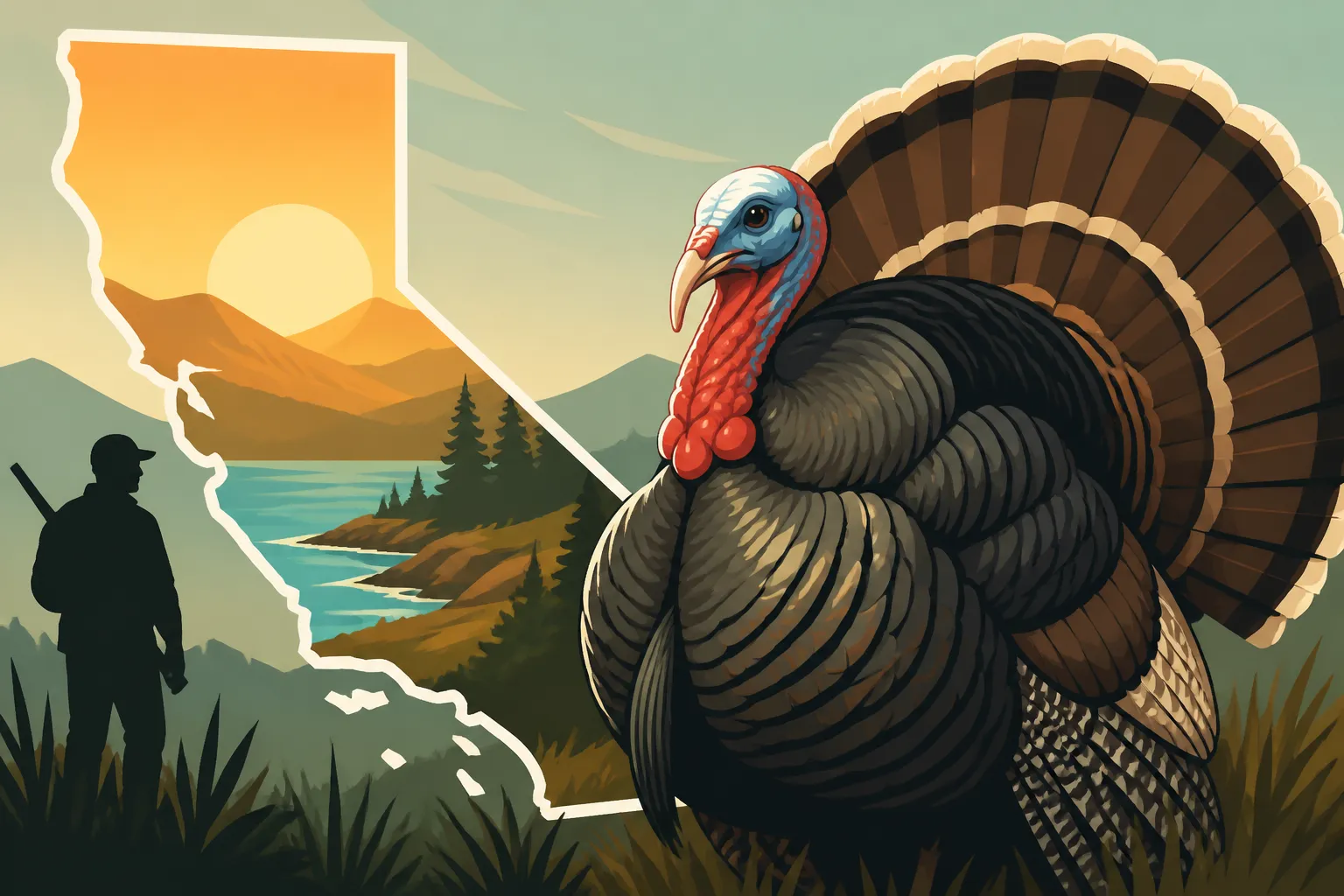
For us California hunters, we're primarily dealing with Rio Grande turkeys, which were introduced decades ago and have truly thrived, especially in the oak woodlands and river bottoms of the state. While they might not consistently hit the immense body weights of some Eastern birds, they can certainly grow impressive beards and spurs. What often sets a record book California bird apart is exceptional spur length, often paired with a heavy body and a good, thick beard. We're talking spurs that are pushing or exceeding 1.25 inches, sometimes even 1.5 inches, which takes multiple years for a gobbler to develop. These older, dominant birds often survive several hunting seasons, learning to avoid pressure and becoming incredibly wary. Don't forget, careful field dressing and handling of your bird can make a difference. If you're serious about the possibility of a record, ensure you weigh the bird accurately soon after harvest and protect those delicate spurs and beard from damage.
The Components of a Trophy Gobbler
Each element contributing to a turkey's score tells a story about its age, health, and environment. Body weight is the easiest to quantify, but even a few ounces can tip the scales when you're looking for that record. A mature, well-fed gobbler in prime habitat might weigh anywhere from 18 to 25 pounds, with some outliers going even heavier. While weight is important, it's often the spurs that capture a hunter's imagination. Spurs are essentially bony growths covered in a keratin sheath, much like a fingernail, and they grow throughout a gobbler's life. The longer, sharper, and more symmetrical the spurs, the more impressive the bird. A gobbler needs to be at least two years old to have anything approaching "shooter" spurs (usually around 3/4 inch), and those record-class spurs are typically found on birds that are three, four, or even five years old.
Beards are bundles of bristles that grow from the gobbler's chest, and their length and thickness can vary greatly. A single, long beard is common, but some gobblers can grow multiple beards, which can also add to their overall score, though these are rarer. The NWTF typically measures the longest single beard, but some scoring systems might account for multiple beards differently. A healthy beard can be 9 to 12 inches long, sometimes more. Anything over 10 inches is usually considered a great beard for a Rio Grande. The thickness and condition of the beard can also be an indicator of a bird's health and age. Environmental factors, diet, and even genetics can influence how long and thick a beard grows. Ultimately, a record book California gobbler is a perfect storm of age, excellent nutrition, and a little bit of luck in avoiding predators and hunters for several seasons.
| Scoring Component | Average (California Rio Grande) | Trophy Potential (California Rio Grande) | NWTF Weight Factor | NWTF Beard Factor | NWTF Spur Factor |
|---|---|---|---|---|---|
| Weight | 16-20 lbs | 22+ lbs | 1x | N/A | N/A |
| Beard Length | 8-10 inches | 11+ inches (single) | N/A | 2x | N/A |
| Spur Length | 0.75-1.1 inches | 1.25+ inches | N/A | N/A | 10x per spur |
| Total Score | 45-55 points | 60+ points | Sum of above | Sum of above | Sum of above |
Prime Habitats and Regions for California's Trophy Turkeys
So, you're dreaming of a big tom, but where do you even start looking in a state as vast and diverse as California? While turkeys are widespread, finding those true giants requires focusing on specific habitats and regions where they can truly thrive, grow old, and avoid heavy hunting pressure. Generally, the best places will be those with a rich combination of food sources, secure roosting sites, and ample water, all within a relatively undisturbed environment.
California's introduced wild turkeys, predominantly Rio Grandes, absolutely love oak woodlands. These areas provide a consistent and abundant food source in the form of acorns, which are crucial for turkeys to pack on weight and maintain health throughout the year. Look for drainages and river bottoms lined with mature oaks, especially those with good understory cover for nesting and escape. These areas often have natural clearings or agricultural fields nearby, offering insects, seeds, and greens that round out a turkey's diet. The Central Coast region, the Sierra Nevada foothills, and parts of the Sacramento Valley are renowned for their robust turkey populations and offer some of the best potential for big birds. Best California Counties for Turkeys can give you a head start on where to focus your scouting efforts.
Private ranches, especially those managed with wildlife in mind, often produce the largest turkeys. These birds benefit from consistent food, reduced predator pressure, and limited hunting. Getting access to such ground can be challenging, but it's often where the biggest scores originate. However, don't write off public land entirely. While public land can experience higher hunting pressure, there are still remote pockets, large expanses of national forest, or less accessible BLM tracts where older birds can hide out. Tools like GoHunt's mapping overlays can be invaluable for identifying secluded draws, vast oak stands, or areas far from roads where a trophy gobbler might live out its life relatively undisturbed. You might be surprised at the quality of birds you find if you're willing to hike further or look in areas others overlook.
Key Habitat Elements for Older Gobblers
Older gobblers are survivors. They've learned to avoid danger and seek out the best resources. This means they'll gravitate towards areas that offer consistent food, reliable water, secure roosting trees, and dense escape cover. In California, this often translates to expansive oak forests, particularly those with a mix of black oaks, valley oaks, and blue oaks. These trees provide a mast crop that can sustain turkeys through fall and winter. Why Turkeys Thrive in California Oak Woodland is an excellent resource for understanding this habitat further. Alongside the oaks, look for areas interspersed with grasslands, chaparral, and riparian zones. Grasslands offer bugging areas, especially important for poults, and seeds for adult birds. Chaparral and dense brush provide crucial nesting cover for hens and escape routes for all turkeys when predators are near.
Water sources are also critical. Turkeys need water daily, especially in the warmer months. Creek bottoms, spring seeps, stock ponds, or even reliable dew on grasses can draw birds in. When scouting, pay close attention to areas where all these elements converge: a mature oak-lined ridge overlooking a riparian corridor, with open grassy areas nearby. These are classic spots where an old gobbler will feel secure, have everything it needs, and potentially grow those incredible spurs and beards. Hunting these areas requires intimate knowledge of the terrain and the birds' daily patterns. Using mapping software from GoHunt to identify these crucial habitat intersections and remote access points can give you a significant advantage in locating these elusive trophy birds.
Strategies for Pursuing and Tagging a Trophy Gobbler in California
Hunting a record book gobbler isn't just about showing up with a shotgun and a call. It's a strategic game of patience, persistence, and often, outsmarting a bird that has likely outsmarted many hunters before you. These are the Ph.D.-level turkeys, and they demand a well-thought-out approach. Your typical run-and-gun tactics might get you a bird, but probably not the one that's going into the book.
The first, and arguably most important, step is extensive pre-season scouting. Forget just driving around; you need to put boots on the ground. Use aerial maps, like those offered through GoHunt, to identify promising areas with dense oak stands, water sources, and potential roosting sites. Then, spend time listening for gobbling at dawn and dusk, looking for tracks, droppings, feather sheds, and dusting bowls. Pay attention to strut zones and feeding areas. Understanding the specific patterns of a dominant gobbler in its home territory is paramount. Scouting California Public Land Before Season offers great tips that apply directly to turkey hunting as well. If you can locate a specific gobbler that sounds like a mature bird and learn its daily routine – where it roosts, where it flies down, where it struts, and where it feeds – you've significantly increased your odds.
Once the season opens, patience becomes your greatest ally. Older gobblers are often less susceptible to aggressive calling. They've heard it all before. Instead, focus on subtle calls, mimicking a contented hen or a soft cluck, just enough to pique his interest without sounding desperate or unnatural. Sometimes, less is more. Setting up in an area you know he frequents, getting camouflaged well, and waiting silently can often be more effective than constant calling. If he responds from a distance, don't rush him. Let him work his way to you, and be prepared for him to hang up just out of range, surveying the scene. Calling a Gobbler in Oak Woodland discusses advanced calling techniques that can be helpful for these wary birds. For California's spring turkey season, remember that even a small change in calling volume can make a difference.
The Mental Game of Trophy Turkey Hunting
Hunting a truly big gobbler is as much a mental game as it is a physical one. These birds are survivors, meaning they're often the most cautious and educated in the flock. They won't come running to every call, and they might spend an hour strutting just out of range, expecting you to come to them. You have to be prepared for long sits, for birds to circle widely, and for the occasional frustrating silence. Persistence is key. Don't give up on an area just because one morning was quiet. Turkeys move, and their routines can shift based on weather, available food, or even predator activity.
Learning to read the body language of a gobbler is crucial. Is he strutting with purpose, or just idly displaying? Is he looking directly at your setup, or just generally scanning? Does he seem nervous, or confident? These subtle cues can tell you whether to continue with a soft call, go silent, or perhaps try a different setup the next day. Sometimes, the best strategy is to become part of the landscape, letting the woods wake up around you, and intercepting a gobbler on his natural path between roost and feeding grounds. Decoy placement can also be critical, especially for pressured birds; Decoy Placement for Pressured California Birds highlights strategies for attracting wary toms. Remember, every time you bump a mature bird, you're teaching it a lesson, making it even harder to tag. So, move slowly, use cover, and minimize your footprint in their territory.
The Scoring Process and Documenting Your California Trophy
Congratulations! You've successfully outwitted a magnificent California gobbler that looks like it might have what it takes to make the record books. The hunt is over, but the work isn't quite done. To get your bird officially recognized by the NWTF, there's a specific process you'll need to follow to ensure accurate measurement and documentation. Rushing this step could mean missing out on the recognition your trophy deserves.
The first thing to do is carefully preserve the beard and spurs. The NWTF requires that these components remain attached to a piece of skin from the bird's chest, or the lower leg bones, respectively, for drying. Do not remove them completely or clean them aggressively, as this can cause shrinkage or damage. For the beard, you'll want to cut out a small patch of skin where it attaches to the chest, leaving about 1-2 inches of skin around the base of the beard. For the spurs, you'll need to carefully cut off the lower leg section, leaving the spur attached to the bone. Allow these pieces to air dry naturally in a cool, dry place. Avoid direct sunlight or excessive heat, which can cause cracking or excessive shrinkage. Many hunters will treat these parts with borax to aid in preservation and prevent insect damage.
Once dried (this can take several weeks), your bird's components are ready for official measurement by an NWTF scorer. You'll need to find a certified NWTF measurer in your area. The NWTF website usually has a directory or contact information to help you locate one. When you meet with the scorer, they will weigh your bird (if it's still whole, or use the recorded field weight), meticulously measure the beard(s) to the nearest 1/16th of an inch, and measure each spur from the point of growth on the leg bone to the tip, also to the nearest 1/16th of an inch. They will then apply the NWTF scoring formula to calculate the total score. You'll fill out a form with your hunting details, including the date of harvest, location, and method. It’s a moment of immense pride to see your hard work validated.
What to Expect After the Measurement
After your bird is measured and the score calculated, the certified NWTF scorer will submit the paperwork on your behalf to the NWTF. This process can take some time, as the NWTF verifies all the details and enters the information into their national records database. You will typically receive a certificate from the NWTF acknowledging your achievement, and your bird's score will be published in their official record book, often accessible online. This recognition is a testament to your dedication and skill as a hunter and helps document the quality of wild turkeys in California.
It's important to remember that pursuing a record book bird isn't just about the numbers; it's about the entire experience. It's the early mornings, the extensive scouting, the frustration, the learning, and ultimately, the deep respect for the animal and its habitat. Even if your bird falls short of the official "record" status, the effort and knowledge gained in chasing a trophy gobbler will make you a better, more seasoned hunter. Every hunt, especially for these challenging birds, is a chance to connect with nature and improve your craft. California Turkey Population Estimate and California Turkey Season Rules can provide additional context and guidance for planning your future trophy hunts.
Disclaimer
This article is for general informational purposes only and does not constitute professional advice. Laws, prices and regulations vary by location and change over time. Consult a qualified professional for guidance on your specific situation.