California Wild Pig Harvest Numbers
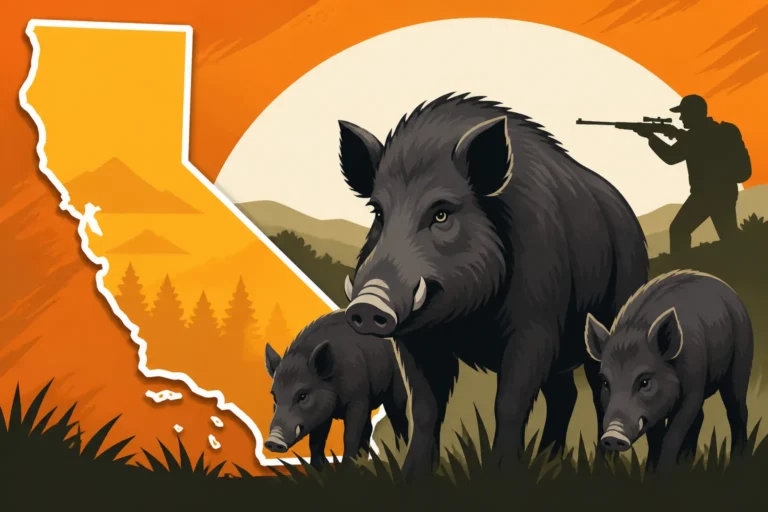
Ask ten California pig hunters how many wild pigs are taken in the state each year and you will get ten different answers, most of them guesses. The official numbers exist, but they only capture part of the story, and reading them without context leads to bad conclusions about where to hunt. This guide explains what California’s wild pig harvest figures measure, what they miss, and how to use them.
What California’s Wild Pig Harvest Numbers Actually Measure
Before you can make sense of any harvest figure, you need to know where it comes from. California’s wild pig numbers are not a headcount of every pig killed in the state. They are a record of what hunters report, and that distinction shapes everything else in this guide.
Where the Figures Come From
The California Department of Fish and Wildlife tracks wild pig harvest mainly through hunter reports. When a hunter takes a pig under a hunting license and the pig tag or validation the regulations require, that harvest is supposed to be reported to the department. Those reports are compiled by county and region, and the totals are published as the state’s hunter harvest of wild pigs.
Most reporting now runs through the department’s online licensing system. If you have never filed one, Reporting Wild Pig Harvests Through ALDS walks through the process from logging in to confirming the entry. Filing takes a few minutes, but it is what turns a single pig in your truck bed into a data point that biologists can actually use.
The resulting numbers tell you how many pigs licensed hunters reported, roughly where they came from, and how harvest has shifted from one period to the next. They do not tell you how many pigs live in California, how many were killed under depredation permits, or how many hunters simply never filed a report. Keeping those limits in mind is the first step toward reading the data honestly.
Hunter Harvest Versus Depredation Kills
A large share of the wild pigs killed in California never appear in the hunter harvest totals at all. Ranchers, farmers and vineyard owners dealing with crop and pasture damage can obtain depredation permits that allow them, or people working for them, to remove problem pigs. Those removals are tracked separately from sport harvest.
In heavily affected agricultural areas, depredation kills can be substantial. A vineyard in Sonoma County or a cattle ranch in the Salinas Valley may remove dozens of pigs through trapping and shooting in a bad year, and none of those animals count toward the hunter harvest figure you see quoted on forums. If you want a sense of why landowners take this so seriously, California Wild Pig Damage to Vineyards describes the kind of losses that push growers toward depredation work.
This split matters for interpreting trends. A drop in reported hunter harvest in one county might mean fewer pigs, but it might also mean more of the removal is happening under depredation permits, or that a big ranch stopped allowing guided hunts. The hunter number alone cannot tell you which.
Why Underreporting Skews the Totals
Every wildlife agency deals with incomplete reporting, and wild pigs are a particularly tough case. Some hunters forget to report. Others assume pigs do not matter because they are considered a non-native species. And some take pigs on private land where they never think about the paperwork at all.
The result is that the reported harvest is almost certainly lower than the real hunter harvest. Biologists generally treat the reported figure as a minimum, useful for tracking direction and distribution rather than as an exact count. When you see a statewide total, read it as “at least this many pigs were reported” rather than “this is how many pigs hunters killed.”
That is also why you should file your own report every time. Better compliance makes the data more useful for everyone, including hunters who want a clear picture of where pigs are and how pressure is changing.
Harvest Patterns Across California’s Pig Country
Wild pigs are spread across most of the state, but harvest is far from even. A handful of regions account for a large share of the reported take, and the reasons have as much to do with land ownership as with pig numbers.
The Central Coast Stronghold
Year after year, Central Coast counties sit near the top of California’s wild pig harvest reports. Monterey and San Luis Obispo counties, with their mix of oak woodland, grassland, chaparral and large private ranches, provide nearly perfect pig habitat. Acorns, water and dense cover come together across huge stretches of country, and pigs thrive there.
Monterey County in particular has a long reputation for pig hunting, helped by large ranches that offer guided hunts and by public opportunities in places like Fort Hunter Liggett, which allows hunting under its own access rules. Santa Clara and San Benito counties add more harvest in the hills of the Diablo Range. For a fuller breakdown of where pigs are most concentrated, Which California Counties Have the Most Pigs compares the major counties side by side.
The Central Coast pattern is a good reminder that high harvest numbers usually reflect both healthy pig populations and good hunter access. A county full of pigs that are all locked behind private gates will not produce big reported harvest numbers unless landowners are running hunts.
North Coast and Sacramento Valley Foothills
North of the Bay Area, Mendocino, Sonoma and Lake counties regularly produce significant harvest. The North Coast Ranges offer oak and conifer forests, creek bottoms and ranch country where pigs feed heavily on acorns in the fall and root through pastures and vineyards the rest of the year. Mendocino County is often counted among the leading pig counties in the state.
Farther inland, the foothills on both sides of the Sacramento Valley, including parts of Tehama, Glenn and Colusa counties, contribute steady harvest. Pigs in this country use riparian corridors along creeks and rivers, then spread into grain fields and orchards. Hunters here often work the edges where foothill oak meets farmland.
Much of the harvest in these northern counties comes from private land, through outfitters or landowner permission. Public land exists, especially in national forest country, but steep terrain and thick brush make pigs harder to find and harder to pack out.
Southern and Sierra Foothill Pockets
Pig harvest drops off as you move into the southern part of the state and the high Sierra, but pockets of activity remain. The western Sierra foothills, from Kern and Tulare counties up through the gold country, hold pigs in oak woodland at lower elevations. Kern County, with its large ranches and the Tehachapi area, produces meaningful harvest.
In Southern California, pigs are present in some coastal and inland ranges but in much smaller numbers. These areas rarely show up near the top of harvest reports. That is partly due to fewer pigs and partly due to limited hunting access around heavily populated areas.
The bigger lesson is that California’s pig harvest is concentrated, not uniform. If you want to hunt pigs, your odds are far better in the counties that consistently lead the reports. For a broader look at range and distribution, Wild Pigs Across California covers where pigs are established today.
Regional Harvest Comparison
This table summarizes the general harvest pattern across California’s major pig regions. It reflects long-term tendencies, not a single year’s figures, so check the latest CDFW reports for current numbers.
| Region | Example Counties | Relative Reported Harvest | Main Access Type | Typical Habitat |
|---|---|---|---|---|
| Central Coast | Monterey, San Luis Obispo, San Benito | Highest | Private ranches, some military and public land | Oak woodland, grassland, chaparral |
| North Coast | Mendocino, Sonoma, Lake | High | Mostly private, some national forest | Oak and conifer forest, ranch country |
| Diablo Range | Santa Clara, Alameda, Stanislaus | Moderate | Private ranches, limited public | Oak savanna, grassy hills |
| Sacramento Valley foothills | Tehama, Glenn, Colusa | Moderate | Private ranches, riparian areas | Foothill oak, creek bottoms, farm edges |
| Sierra foothills | Kern, Tulare, Fresno | Moderate to low | Private ranches, some public | Oak woodland, foothill grass |
| Southern California | Inland and coastal ranges | Low | Limited public, some private | Chaparral, scattered oak |
What Drives Harvest Up or Down
Harvest numbers rise and fall over time, sometimes sharply. Understanding the main drivers helps you avoid reading too much into a single year.
Acorns, Rain and Pig Reproduction
Wild pigs reproduce quickly. Sows can breed young and produce large litters, and in good conditions populations can grow fast. A wet winter that produces strong grass growth, followed by a good acorn crop in the fall, can set up a big jump in pig numbers over the next year or two.
Drought works in the opposite direction. During extended dry periods, pigs concentrate around remaining water, reproduction slows and some populations shrink. Harvest numbers tend to follow these cycles, often with a lag. Hunters who track rainfall and acorn production often have a better feel for the coming season than a single harvest report can provide.
For a sense of how these cycles fit into the bigger population picture, California Wild Pig Population Estimate explains why statewide pig counts carry so much uncertainty.
Access, Ranch Hunts and Hunter Interest
Harvest is shaped heavily by who is allowed to hunt where. In California, a large portion of the best pig habitat is private land. When large ranches open up to guided or paid hunts, harvest in that county can climb even if pig numbers stay the same. When a ranch closes access or changes ownership, the reverse can happen.
Hunter interest also matters. Pigs offer one of the few year-round big game opportunities in the state, and many hunters use them to fill the gap between deer seasons. When interest in pig hunting rises, more pigs get reported. When other priorities take over, or tag and license costs go up, participation can fall.
Public land opportunities shape harvest too. National forests, BLM land and military installations with hunting programs give hunters without private access a place to go. For help finding those places, Best California Ground for Public Land Pigs covers the public areas that consistently hold pigs.
Rules That Shape the Count
California’s regulations make wild pigs unusual among big game species. Pigs have no closed season, so they can be hunted year-round, and there is no bag limit on how many a licensed hunter can take. Why Wild Pigs Have No Bag Limit explains the reasoning, which comes down to their non-native status and the damage they cause.
At the same time, California continues to treat pigs as game animals rather than simple pests, which is why hunters need the proper license and pig tag or validation, and why reporting matters. That approach is explained in Why California Treats Pigs as Game, Not Pests. These rules make harvest numbers more meaningful, because they create a paper trail for pig take that would not exist if pigs were managed purely as vermin.
Ammunition rules also play a role. California requires non-lead ammunition for all hunting, including pigs. Most hunters adapted quickly, but rule changes like this can affect participation for a while as people sort out gear and loads.
Reading Harvest Reports Like a Biologist
Harvest data is only useful if you know how to read it. Here is how to get real information out of the numbers instead of chasing headlines.
Trends Matter More Than Single Years
The most common mistake hunters make is focusing on one year’s total. A single year can be distorted by weather, access changes, a ranch closing or opening, or simply random variation. Looking at several years together reveals the real direction.
When you look at a county’s numbers, ask whether harvest has been rising, falling or holding steady over a period of years. A steady decline across multiple years in a county where access has not changed might indicate fewer pigs. A sudden spike might reflect a strong acorn year or a large ranch opening to hunters. For a general guide to interpreting this kind of data, Reading a California Harvest Report breaks down how to read the tables and footnotes.
Comparing Counties Fairly
Comparing raw harvest numbers between counties can be misleading. A large county with lots of private ranch hunting will almost always report more pigs than a smaller county with mostly public land, even if the smaller county has better pig density on the ground you can actually hunt.
When you compare counties, think about land ownership, hunter access and habitat. A county with moderate harvest but strong public access may be a better choice for a hunter without private land connections than a county with huge harvest numbers driven entirely by private ranch hunts.
Mapping tools help here. Apps like GoHunt show public and private land boundaries in detail, which can help you match harvest data to land you can actually hunt. Checking a high-harvest county on a land ownership map often reveals that most of the pigs come from areas behind locked gates.
A Step-by-Step Way to Use the Data
Here is a practical way to use California’s pig harvest numbers when planning a hunt:
- Pull the most recent CDFW wild pig harvest figures by county, along with several earlier years for comparison.
- Identify counties with consistently strong harvest across multiple years, not just one standout year.
- Check land ownership in those counties to see how much public land is available near pig habitat.
- Look at habitat type, focusing on oak woodland, creek bottoms and grassland edges where pigs feed.
- Consider rainfall and acorn conditions in the current year to estimate whether pigs are likely to be up or down.
- Narrow your list to a few specific areas, then scout them on the ground or through maps.
- After your hunt, file your harvest report so the data stays useful for the next hunter.
GoHunt’s mapping layers and scouting notes can be useful during steps three and six, especially for spotting water sources and access points in unfamiliar country.
Turning Harvest Numbers Into Hunting Success
Harvest data is a starting point. What happens in the field depends on how well you use the information.
Choosing Where to Hunt
Use harvest numbers to pick a region, then use habitat and access to pick a spot. In the Central Coast, for example, look for areas where oak woodland meets water and open grassland. In the North Coast, focus on creek bottoms and oak flats near pastures. In the Sierra foothills, concentrate on oak woodland below the snow line.
Public land in high-harvest counties can be productive, but expect competition. Pressure pushes pigs into thick cover and nocturnal patterns. Getting farther from roads, hunting midweek and focusing on dawn and dusk can make a big difference. Before the trip, many hunters save candidate spots, water sources and access roads as waypoints in a mapping app such as GoHunt so they can move quickly once they are on the ground.
Hunting Pressure and Pig Behavior
Pigs learn quickly. In areas with heavy hunting pressure, they shift feeding to nighttime and bed in the thickest cover available. Harvest numbers in heavily hunted counties may stay high because of sheer pig numbers, but individual hunters can still struggle.
Pay attention to fresh sign: rooting, wallows, tracks and rubs on trees and fence posts. Sign tells you where pigs are right now, which is more useful than any harvest report. Trail cameras placed near water and feeding areas can reveal timing and travel routes.
Trapping and Other Removal Methods
Trapping is an important part of the pig removal picture in California, mostly on private land under depredation permits. Traps can remove entire groups of pigs at once, which is often more effective for reducing damage than shooting individual animals. California Wild Pig Trapping Success Rates covers how well different trapping approaches tend to work.
Hunters should know that trapping rules are specific. Not every method allowed for depredation work is allowed for sport hunting, so check the current regulations before you set up any trap or bait site.
Disclaimer
This article is for general informational purposes only and does not constitute professional advice. Laws, prices and regulations vary by location and change over time. Consult a qualified professional for guidance on your specific situation.