California Waterfowl Banding Programs
Many of us eagerly await the opening day of waterfowl season in California, but have you ever stopped to think about how wildlife managers truly understand the health of the duck and goose populations we chase? It's not just guesswork or observations from a blind; there's a serious scientific effort behind it all. For years, I’ve heard hunters wonder how the bag limits are set, or why certain species seem more abundant some seasons than others. This guide is going to pull back the curtain on one of the most fundamental tools in waterfowl management: banding programs in California. We'll explore why these programs are crucial, how they work, and most importantly, how your participation plays a vital role in their success.
The "Why" Behind Waterfowl Banding in California
Understanding Population Dynamics
It's easy to look out over a flooded rice field in the Central Valley and see thousands of ducks and think, "Wow, there are so many birds!" But that's just a snapshot, isn't it? What we see during one hunt, or even over a whole season, doesn't tell us the full story of the population as a whole. Waterfowl populations are incredibly dynamic, constantly shifting based on breeding success in the north, habitat conditions along the Pacific Flyway, disease, and, of course, hunting pressure. Banding allows biologists to get a much clearer picture of these dynamics over time. By capturing, banding, and then recapturing or harvesting birds, they can estimate survival rates, reproductive success, and population trends for different species.
Think about it like this: if you release 100 banded birds in a specific area, and then a year later, hunters report harvesting 10 of those bands, and researchers recapture another 5, you start to get a statistical idea of how many birds survived. Multiply that across thousands of bands over decades, and you build a robust dataset. This data is absolutely essential for making informed decisions about hunting seasons and bag limits, ensuring that we can continue to enjoy the incredible waterfowl hunting California offers for generations to come. Without this kind of long-term data, we'd be flying blind, relying on anecdotes instead of solid science.
Informing Hunting Regulations
One of the most direct impacts of waterfowl banding programs is how they shape our hunting regulations. We all want fair and sustainable hunting opportunities, and nobody wants to see a species decline because of over-harvest. The data collected from banded birds directly influences the decisions made by wildlife agencies. For example, if banding data shows a particular species of duck has a consistently high survival rate year after year, it might indicate that the population is healthy enough to sustain a more generous bag limit. Conversely, if survival rates are low, or if the number of returning birds drops, it's a clear signal that tighter restrictions might be necessary to protect the population.
This isn't about arbitrary rules; it's about adaptive management. Biologists use banding data to calculate harvest rates, which tells them what percentage of a population is being taken by hunters. They compare this to population estimates and breeding success to ensure that harvest remains within sustainable limits. This science-driven approach is critical to managing our shared resource. It’s why you see different bag limits for various species, and why those limits can change from one year to the next. Understanding this helps us appreciate why we have the regulations we do and encourages compliance, knowing it's all part of a bigger plan for healthy California Waterfowl on the Pacific Flyway.
Tracking Migration Patterns
California sits at the southern end of the Pacific Flyway, a superhighway for millions of migratory birds. But these birds don't all follow one single, rigid path. Different populations, and even different age classes within a species, might have slightly different migration routes, stopover points, and wintering grounds. Banding is an invaluable tool for mapping these complex movements. When a bird banded in, say, Alberta, Canada, is harvested in the Suisun Marsh, it provides a crucial data point that helps complete the picture of that specific bird's journey.
Over time, enough of these data points reveal detailed migration corridors, telling biologists not just that birds migrate to California, but where exactly they come from, how long they take to get here, and what areas are most important for their survival along the way. This information is vital for habitat conservation efforts. If we know that a particular wetland in Oregon is a critical staging area for ducks that winter in California, then efforts can be focused on protecting and enhancing that habitat. It’s a huge undertaking, tracking millions of birds, but each band recovered contributes to this grand migratory puzzle. California Duck and Goose Bag Limits are set with these large-scale movements in mind, aiming to manage populations across their entire range.
How Waterfowl Banding Works: A Look at the Process
The Capture Methods
Capturing wild ducks and geese for banding is a specialized skill that requires careful planning and execution to minimize stress on the birds. It’s not just a matter of tossing out some corn and hoping for the best. Biologists and trained technicians use a variety of methods, often tailored to the species and local conditions. One common technique involves baiting an area with grain, like corn, for several days or weeks to habituate birds to a specific feeding spot. Once the birds are regularly feeding there, a trap is set. Drive traps, for instance, are large, funnel-shaped enclosures that birds can easily enter to feed but find difficult to exit.
Another method, especially for ducks on water, might involve large rocket nets or cannon nets. These nets are deployed over bait, and when a sufficient number of birds are feeding, small charges propel the net over them, capturing them safely. For molting geese, who are temporarily flightless, drive-netting operations can be conducted on large bodies of water or open fields, herding them into temporary pens. Each method is chosen with the safety and well-being of the birds as the top priority, ensuring they are handled quickly and released unharmed after banding.
The Banding Process Itself
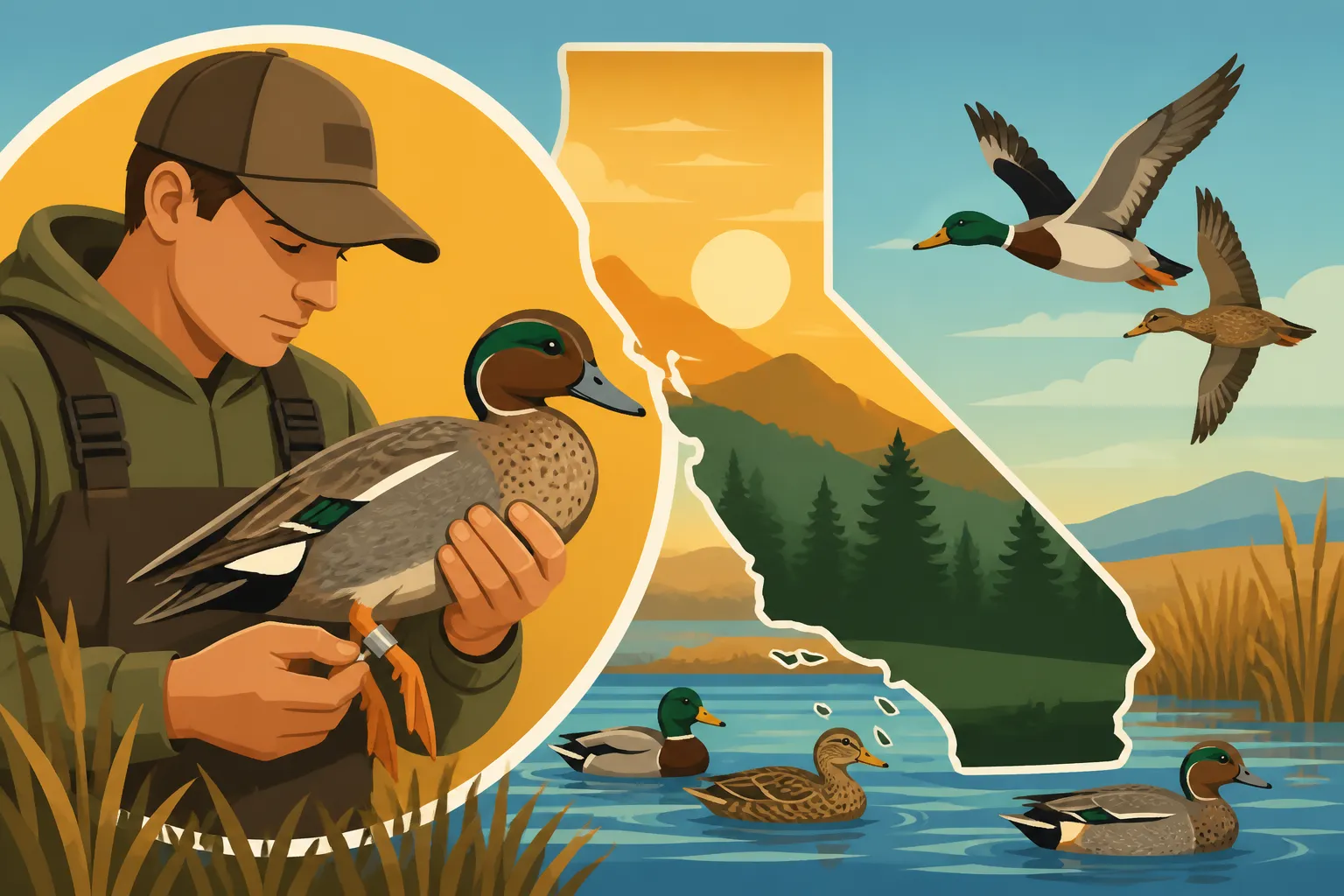
Once captured, the birds are carefully handled by skilled banders. Each bird is processed efficiently. The band itself is a small, lightweight aluminum or stainless steel ring, often with a unique alpha-numeric code stamped on it. These bands come in various sizes, chosen to fit snugly and comfortably around the bird's leg without hindering its movement or flight. Think of it like a tiny, durable ID bracelet for a wild animal.
During the banding process, several pieces of important data are recorded for each bird. This typically includes the species, age (juvenile or adult), sex (if discernible), and the specific location and date of banding. Sometimes, additional measurements like wing chord length or weight might be taken to assess body condition. All of this information is meticulously recorded. The unique band number links all this data to that individual bird. The entire process, from capture to release, is designed to be as quick and stress-free as possible for the bird, often taking just a few minutes per individual before it's released back into its habitat. It's a precise operation, much like Applying for a California Tule Elk Tag in the Big Game Drawing requires precision and attention to detail.
Data Collection and Reporting
The real power of banding comes when those bands are recovered. Each recovery, whether by a hunter or another researcher, is a piece of the puzzle. When a hunter harvests a banded bird, they are asked to report the band number. This report includes the band number, the date the bird was harvested, and the location. This information is then entered into a national database managed by the U.S. Geological Survey (USGS) Bird Banding Laboratory.
This database is a monumental collection of data, spanning over a century and millions of banded birds. Every single piece of information, from the initial banding details to each subsequent recovery, is critical. Biologists analyze this vast dataset to calculate survival rates, harvest rates, migration routes, and population demographics. This allows them to monitor the health of waterfowl populations across North America and beyond. Hunter participation in reporting bands is absolutely essential; without it, the entire program would lose much of its effectiveness. It's a direct way for hunters to contribute to conservation, much like Reporting a Pig Harvest Through ALDS is a key part of wild pig management.
What to Do If You Harvest a Banded Bird
The Importance of Reporting Your Harvest
Okay, so you’ve been out in the marsh, you made a great shot, and when you retrieve your bird, you notice a shiny metal band on its leg. First off, congratulations! That's a really cool experience, and you're now holding a direct link to a scientific research program. Your immediate next step should be to report that band. This isn't just an optional nicety; it's a crucial part of the entire banding program. Think of yourself as a citizen scientist in that moment. Every single band report provides invaluable data that helps biologists understand the birds better and manage populations sustainably. Without hunters like you reporting these bands, a significant portion of the data collected through all that hard work would simply be lost.
It's a small action on your part that has a massive impact on the future of waterfowl hunting and conservation. The data you provide helps inform bag limits, season lengths, and even habitat conservation strategies across the entire flyway. So, take pride in that band, and make sure you report it promptly and accurately. It’s part of our responsibility as ethical hunters to contribute to the knowledge base that sustains the sport we love. Just like knowing California Hunter Education Requirements before you hit the field, knowing how to report a band is part of being a well-informed hunter.
What Information to Collect
Reporting a band is straightforward, but having the right information ready makes it even easier. Here’s what you'll need:
| Information Needed | Description |
|---|---|
| Band Number | The unique alphanumeric code stamped on the band. |
| Date of Harvest | The exact day you harvested the bird. |
| Location of Harvest | Be as precise as possible: county, nearest town, specific coordinates, or a detailed description. |
| Species of Bird | Correctly identify the species (e.g., Mallard, Pintail, Canada Goose). |
| Your Contact Information | Name, address, and email for receiving your certificate of appreciation. |
You can report bands online through the U.S. Geological Survey (USGS) Bird Banding Laboratory website. The site is user-friendly and designed to make the process simple. Some bands even have a website or toll-free number printed right on them to guide you. When you’re looking up data or planning a hunt, a platform like GoHunt can be a great resource for seeing various wildlife information that might connect to these broader conservation efforts, though direct band reporting is handled by the official government agencies.
The Impact of Your Report
Each time a hunter reports a band, it creates a crucial "recovery record" in the Bird Banding Laboratory database. This record is paired with the original "banding record" from when the bird was first tagged. By linking these two points – where and when a bird was banded, and where and when it was recovered – scientists can extract a wealth of information. They can track individual bird movements, calculate distances traveled, and estimate age and survival rates. Imagine how many thousands of these individual stories combine to paint a comprehensive picture of a species' health.
For example, if many bands from a certain breeding ground in Canada are consistently recovered in a specific area of the Central Valley, it confirms a strong migratory link and highlights the importance of those California wintering grounds. If banding data shows a decline in the average lifespan of a species, it could signal environmental changes or disease outbreaks that need investigation. Your report contributes directly to this scientific understanding, ensuring that wildlife managers have the best possible data to make decisions that affect not only the birds themselves but also the future of Waterfowl Hunting California's Central Valley. Your single report, combined with thousands of others, forms the backbone of adaptive waterfowl management.
The Role of Hunter Participation and Future Outlook
Why Your Participation Matters
It's easy to feel like one hunter's actions don't make a huge difference in the grand scheme of things, but with waterfowl banding programs, nothing could be further from the truth. Hunter participation is the lifeblood of this entire scientific endeavor. Without hunters reporting the bands they recover, a massive amount of valuable data would simply vanish. Every band reported is a puzzle piece clicked into place, helping to complete a larger picture of population health, migration routes, and survival rates. Your report is a direct contribution to conservation, a way to give back to the resource that provides us with so much enjoyment.
Think of it as your responsibility as a steward of the land and its wildlife. We often hear about the need for hunters to be conservationists, and this is one of the most tangible ways to fulfill that role. The success of banding programs relies heavily on this partnership between scientific agencies and the hunting community. It's a testament to how hunters are not just consumers of wildlife resources, but active participants in their sustainable management. Resources like GoHunt can sometimes feature articles or insights that highlight the importance of these programs, reinforcing why every hunter's involvement is so critical.
Advancements in Banding Technology
While the basic premise of banding a bird with a unique ID hasn't changed, the technology around it certainly has, leading to even more precise data collection. For instance, some birds are now fitted with small satellite transmitters or GPS loggers, allowing biologists to track their movements in near real-time, providing incredibly detailed migration paths and habitat use data. These advanced tags, while more expensive and used on fewer individuals, complement traditional banding by providing depth to the broader data.
There are also more sophisticated methods for analyzing genetic material from captured birds, allowing researchers to study population connectivity and genetic diversity. The data input and analysis itself have also advanced significantly. Modern computing allows for complex statistical models to be run on the vast banding database, revealing patterns and insights that would have been impossible to detect decades ago. This evolution ensures that waterfowl management continues to be at the cutting edge of wildlife science, providing ever-better information to make decisions that protect these incredible birds and sustain our hunting traditions for the long haul.
The Future of Waterfowl Conservation Through Banding
Looking ahead, waterfowl banding programs will continue to be a cornerstone of conservation efforts. As habitats change and new environmental challenges emerge, the long-term data sets generated by banding will become even more invaluable. Climate shifts, changes in agricultural practices in the Central Valley, or new disease pressures – these all impact waterfowl, and banding helps us monitor and understand those impacts. The ability to track survival rates and migratory patterns over decades provides a baseline against which to measure future changes.
Continued hunter participation in reporting bands will remain absolutely vital. It's a simple act that connects generations of hunters to generations of birds, ensuring that the legacy of waterfowl hunting in California remains strong. It’s also a powerful reminder that hunting isn’t just about the harvest; it’s about a deep engagement with the natural world and a commitment to its preservation. So, next time you're Decoying Ducks in California's Central Valley Flooded Rice or Pass-Shooting Geese on California's Sacramento Refuges, keep an eye out for that little metal bracelet. It’s more than just a souvenir; it’s a piece of science, and you’re part of the team protecting our waterfowl future. Hunting a Refuge-Adjacent Field at Dawn also provides opportunities for encountering these banded birds.
Disclaimer
This article is for general informational purposes only and does not constitute professional advice. Laws, prices and regulations vary by location and change over time. Consult a qualified professional for guidance on your specific situation.