California Tule Elk Herd Locations
Hunting Tule elk in California can feel like chasing a ghost – these incredible animals, once pushed to the brink, now exist in scattered herds across a diverse and often inaccessible landscape. It's frustrating to know they're out there, but have no idea where to even begin looking or how to understand the nuances of their habitat. This guide aims to pull back the curtain on where California's Tule elk herds are truly located, diving deep into their preferred environments and offering practical insights into finding these magnificent creatures.
The Remarkable Journey of California's Tule Elk
Before we pinpoint where to find Tule elk today, it’s truly important to understand the incredible comeback story of this unique subspecies. Their journey from near-extinction to a thriving, if still localized, population informs much of their current distribution and the challenges associated with finding them. Imagine a time when vast herds roamed the Central Valley – that was the reality before the gold rush and subsequent agricultural boom drastically altered their world.
A Species on the Brink: History and Decline
The story of the Tule elk is one of both tragedy and triumph. In the mid-19th century, Tule elk (Cervus canadensis nannodes) were incredibly abundant, with estimates suggesting hundreds of thousands roamed California's grasslands and oak woodlands. They were an integral part of the ecosystem, much like the great bison herds of the plains. However, the arrival of European settlers, driven by the California Gold Rush, brought rapid habitat conversion and unrestricted hunting. As cattle ranching expanded across the Central Valley, Tule elk were viewed as competition for grazing land and were relentlessly hunted, often for sport or to simply clear them from private holdings. By the 1870s, it's believed that fewer than a dozen Tule elk remained, clinging to existence on a single ranch. This dramatic decline highlights the vulnerability of even abundant species when faced with intense human pressure and habitat loss. It's a stark reminder of the impacts we can have on wildlife populations.
From a Handful to Healthy Herds: Recovery Efforts
The survival of the Tule elk is a testament to dedicated conservation efforts. Most accounts credit cattle baron Henry Miller for protecting the last remaining elk on his vast ranch near Buttonwillow in Kern County. From that tiny remnant, a handful of animals were eventually translocated to establish new herds in protected areas, marking the beginning of a long and challenging recovery. Over the subsequent decades, state and federal agencies, along with private landowners, worked tirelessly to find suitable habitats and relocate small groups of elk. These early efforts faced numerous hurdles, including finding sufficient suitable habitat, managing genetics, and gaining public support. It wasn't an easy road, but the commitment paid off. Today, the Tule elk population has rebounded significantly, now numbering in the thousands. This resurgence is a true conservation success story, showing what can be achieved with sustained effort and a long-term vision. This recovery, however, means their distribution is still somewhat fragmented and often tied to specific, managed areas, making Tule Elk Population Recovery From Near-Extinction a fascinating read for anyone interested in their history.
Where California's Tule Elk Roam Today
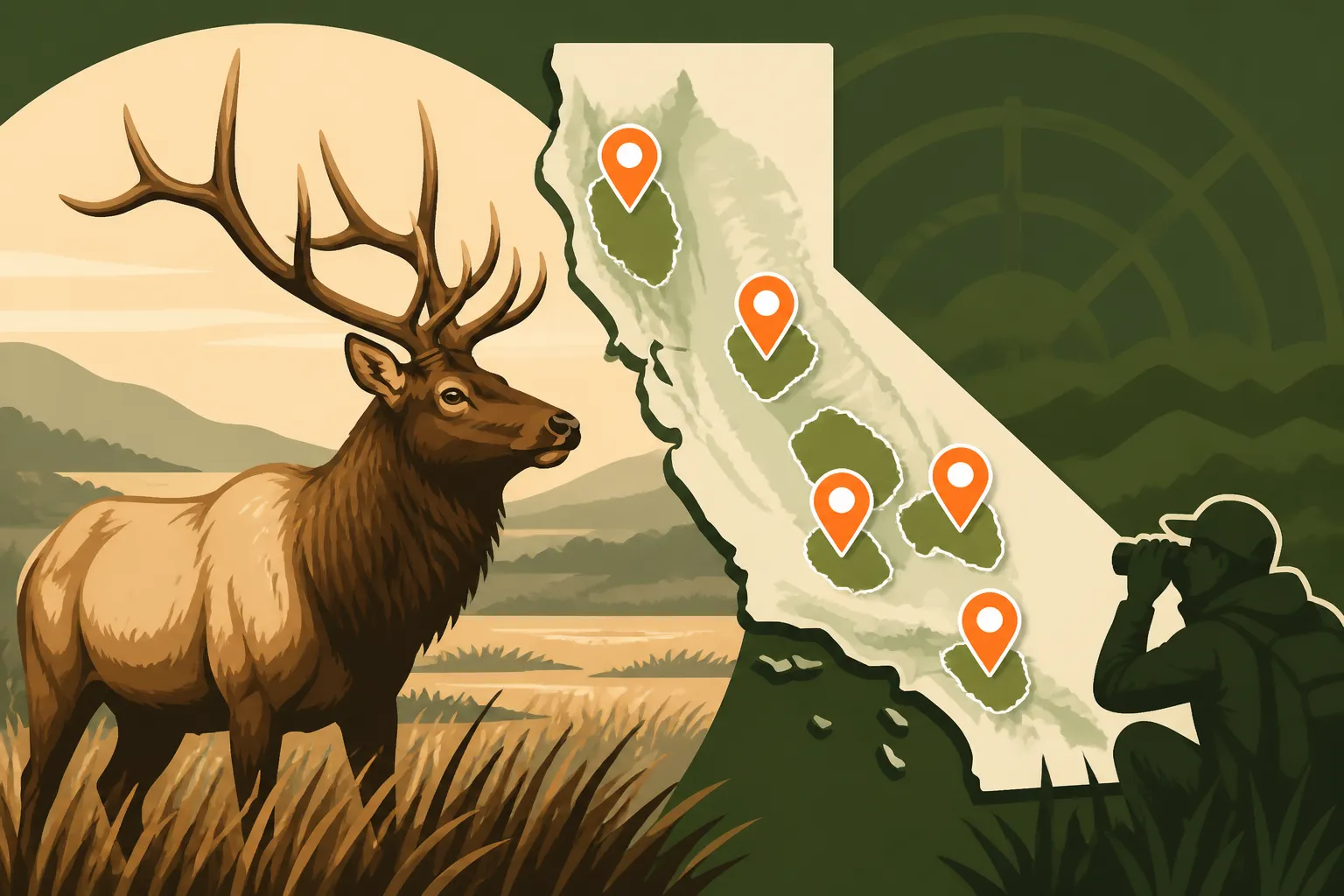
Unlike the vast, continuous ranges of other elk species, Tule elk in California are found in distinct, often isolated herds. Their current locations are largely a reflection of where suitable habitat could be secured and where successful reintroductions took place. Understanding these key areas is crucial for any hunter or wildlife enthusiast hoping to encounter them.
Central Valley Grasslands and Foothills
A significant portion of California's Tule elk population is concentrated in the Central Valley and its surrounding foothills. This might seem counter-intuitive given the valley's agricultural dominance, but these elk utilize specific pockets of habitat that have been set aside or are less intensively farmed. These areas often consist of large expanses of grassland, interspersed with oak woodlands and riparian zones along rivers and streams. The elk thrive on the abundant forage provided by native grasses and forbs, and they seek cover in the scattered oaks and brushy draws.
For example, many herds exist on various wildlife areas and ecological reserves managed by the state, primarily focused on providing habitat for a range of species, including elk. These areas offer critical grazing land and water sources. Other herds are found on large private ranches in the surrounding foothills of counties like Colusa, Lake, and Mendocino, where landowners have dedicated efforts to support elk populations. Access to these private lands is often extremely limited, requiring specific permission or participation in controlled hunts. The dynamic between public access and private land often dictates where hunters can pursue these animals. Understanding California's Multi-Zone Deer Season System might give you some insight into how different areas are managed, though elk have their own unique draw system.
Coastal Ranges and Specific Reserves
Beyond the Central Valley, several important Tule elk herds inhabit parts of California's coastal ranges. These areas present a different type of habitat, typically characterized by rolling hills, dense chaparral, and scattered oak and redwood forests. The terrain can be much steeper and more rugged than the valley floor, demanding different scouting and hunting approaches. These coastal herds often utilize areas with a mix of open grasslands for grazing and dense cover for bedding and protection.
Some of these coastal populations are found within federal and state-managed lands, including specific units within military reservations that offer controlled hunt opportunities. These are often highly sought-after permits due to the quality of the elk and the unique hunting experience. These herds are generally well-managed, with herd health and population control being primary objectives. The challenge here often lies not just in finding the elk, but in securing one of the extremely limited tags available. Hunters often find themselves applying for California Elk Application Deadline year after year, hoping to draw one of these coveted tags.
Comparing Key Tule Elk Habitat Regions
To give you a clearer picture, here's a table outlining the general characteristics of the primary Tule Elk habitat regions in California. This isn't exhaustive, but it provides a useful framework for understanding the varying environments these elk call home.
| Habitat Region | Typical Terrain & Vegetation | Primary Access Type | Challenges for Hunters/Viewers | Noteworthy Characteristics |
|---|---|---|---|---|
| Central Valley Grasslands | Flat to gently rolling, native grasslands, scattered oaks, riparian areas | Mixed Public (Wildlife Areas), Private Ranches | Limited public hunt zones, high private land density, dense cover along waterways | Recovered from Henry Miller's initial herd, good forage, sometimes marshy |
| Foothill Oak Woodlands | Rolling hills, dense oak woodlands, chaparral, grassy clearings | Mostly Private Ranches, some Public Land | Difficult terrain, heavy cover, extensive private landholdings, challenging glassing | Often larger bulls due to abundant feed and less pressure, good cover for bedding |
| Coastal Mountains/Reserves | Steep, rugged hills, dense chaparral, redwood/oak forests, open clearings | Limited Public (Military Bases, some WMA), Private | Extremely tough terrain, very limited draw tags, dense visibility-reducing brush | Unique coastal climate, specific herd management, very selective hunting opportunities |
Strategies for Locating Tule Elk Herds
Knowing the general regions where Tule elk exist is one thing; actually finding them is another challenge entirely. These animals are smart, adaptable, and often inhabit difficult terrain. Successfully locating a herd, whether for hunting or simply observation, requires diligent scouting, understanding their behavior, and utilizing modern tools.
Pre-Season Scouting and Habitat Analysis
Effective scouting begins long before you even set foot in the field. This means doing your homework on the maps, looking for key habitat features, and understanding the nuances of the specific area you plan to explore. Tule elk, like all ungulates, need three things: food, water, and cover. Their daily and seasonal movements will revolve around these necessities. In the Central Valley grasslands, look for areas with rich forage, especially in spring and early summer, and proximity to reliable water sources like ponds, seasonal creeks, or irrigated fields. These can be prime feeding areas. In the more rugged coastal or foothill environments, focus on transitions between dense cover (chaparral or oak thickets) and open grassy clearings. Elk will bed in the thick stuff during the day and move out to feed at dawn and dusk.
Mapping applications can be your best friend here. Tools like GoHunt or other digital mapping systems allow you to meticulously pore over satellite imagery, identify potential bedding areas, travel corridors, and water sources from the comfort of your home. You can mark waypoints, measure distances, and even identify potential public access points amidst a checkerboard of private land. Understanding Public Hunting Land in California and how it intertwines with private parcels is absolutely vital. Pay attention to topography – saddles, benches, and creek bottoms often serve as natural travel routes. Look for pinch points where elk movement is funneled, which can be excellent spots for an ambush or concentrated sign.
Utilizing Resources and Technology
The modern hunter has an incredible array of resources at their fingertips, and for something as challenging as Tule elk, you'll want to leverage every advantage. One of the most critical aspects of Tule elk hunting is the limited number of tags available. Researching California Elk Tag Draw Odds by Species will quickly show you just how tough it can be to get a permit. Because of these low odds, many hunters focus on collecting preference points, which often means an annual application process without an immediate hunt.
When you do draw a tag, or if you're planning a viewing trip, technology becomes indispensable. Digital mapping apps with public/private land ownership layers are non-negotiable. They clearly show you property boundaries, so you know exactly where you can and cannot go. GoHunt, for example, offers detailed maps that can help you visualize the terrain, pinpoint water features, and identify potential escape routes for elk. These apps can be loaded onto your phone or GPS device, allowing for real-time navigation in the field. Furthermore, don't underestimate the power of trail cameras, especially in areas with limited human presence. While rules vary by specific wildlife area or national forest, they can be invaluable for identifying elk travel patterns, preferred feeding spots, and even individual animals, particularly when placed on game trails leading to water or food. Checking Trail Camera Rules on California Public Land is a must before deploying any.
Observing Elk Behavior and Sign
Once you're in the field, it's all about observation. Tule elk are creatures of habit, and learning to read their sign is paramount. Fresh tracks, especially large, distinct hoof prints, indicate recent activity. Look for tracks along trails, near water sources, and where they transition between bedding and feeding areas. Droppings (scat) can also tell you a lot about how recently elk have been in an area, as well as their diet. Fresh, moist scat means they're nearby.
Beyond physical sign, listen. Elk are vocal animals, especially during the rut (breeding season), which for Tule elk typically peaks in late summer or early fall. Bugles, cow calls, and grunts can give away their presence from a surprising distance. Even outside the rut, you might hear branches breaking as they move through brush, or the distinct sound of their hooves on dry ground. Glassing, particularly at dawn and dusk, is incredibly effective. Using good quality binoculars or a spotting scope allows you to survey vast expanses of country without disturbing the animals. For instance, Optics for California's Open-Country Deer Hunting can offer valuable tips that cross over to elk glassing, as many Tule elk areas feature open landscapes. Look for movement, subtle color differences, or the outline of an elk against the horizon. Remember, elk are most active during low-light hours, so plan your scouting and hunting efforts around these times. A patient approach and keen observation skills are often the keys to success.
Disclaimer
This article is for general informational purposes only and does not constitute professional advice. Laws, prices and regulations vary by location and change over time. Consult a qualified professional for guidance on your specific situation.