California Fox Squirrel Range Limits
It’s a curious thing, isn’t it? You might be out in your backyard in Sacramento or strolling through a park in Bakersfield, and you spot a big, reddish squirrel, busy burying acorns. For many California natives, this large, boisterous squirrel doesn't quite fit the image of our slimmer, more elusive Western Gray. This guide is all about the Eastern Fox Squirrel, an introduced species that has firmly established itself throughout much of California, and understanding where they are—and where they might be going next—is key for both hunters and those simply observing backyard wildlife.
The Eastern Fox Squirrel's Unofficial Migration to California
The Eastern Fox Squirrel, Sciurus niger, isn't a native Californian. Unlike our graceful Western Gray Squirrels or the ubiquitous California Ground Squirrels, the fox squirrel arrived here as an import, primarily introduced by humans, either intentionally or accidentally, starting well over a century ago. These squirrels are native to the eastern and central United States, where they thrive in deciduous forests. When they started showing up in California, often brought in as pets or inadvertently transported, they found a welcoming environment in many of our urban and suburban landscapes. This initial introduction and subsequent establishment is a fascinating story of adaptability and niche exploitation.
Initially, these new arrivals weren't met with universal enthusiasm. They are larger, often more aggressive, and can outcompete native species for food resources, particularly acorns. Their presence marks a significant shift in local ecosystems, especially in areas where they weren't historically found. Over the decades, their populations exploded in certain regions, thanks to an abundance of human-provided food sources, reliable water, and fragmented, park-like habitats that mimic their ancestral homes. This wasn't a deliberate "release" program, but rather a gradual expansion from isolated pockets, demonstrating nature's incredible ability to adapt when given the opportunity.
What started as scattered sightings eventually coalesced into thriving populations. They moved from city parks and residential areas into greenbelts, riparian corridors, and eventually, the edges of natural oak woodlands. Their success lies in their opportunistic feeding habits and their tolerance for human activity, which often puts them at an advantage over shyer native species. For instance, a fox squirrel won't hesitate to raid a bird feeder, a behavior less common among their native counterparts. This adaptability has allowed them to colonize areas that provide a mix of mature trees for nesting and foraging, along with human infrastructure.
Current Strongholds and Expanding Frontiers of Fox Squirrels
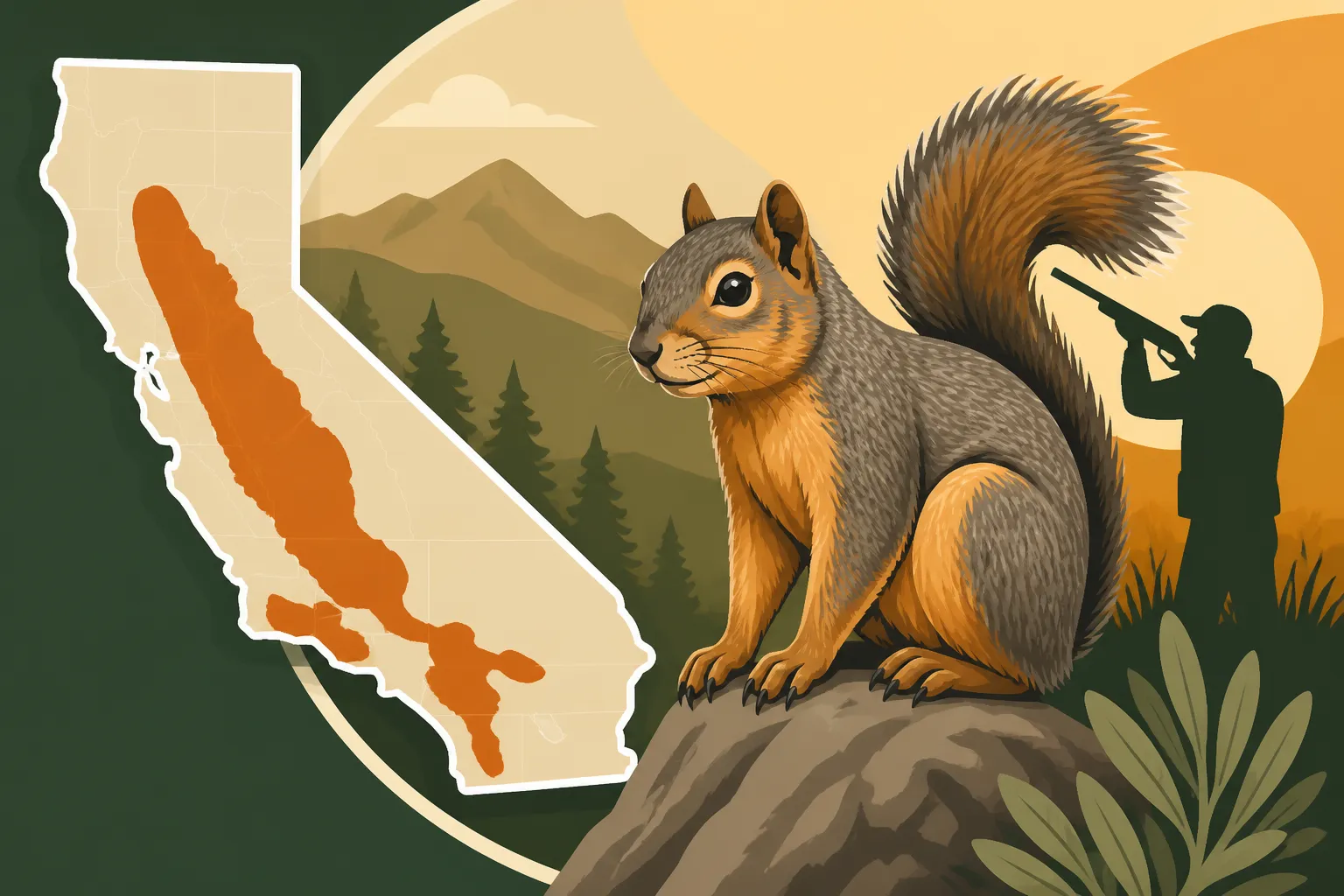
Today, Eastern Fox Squirrels are well-established across a significant portion of California, particularly in the Central Valley, coastal regions, and the Sierra Nevada foothills. Their distribution is heavily tied to areas with mature trees, especially oaks, walnuts, and other nut-bearing species, which provide both food and den sites. However, they are also incredibly adept at living alongside us, making urban and suburban areas veritable fox squirrel paradises.
You’ll find them in almost every major city park from Redding down to San Diego. Think about the sprawling oak-lined streets of places like Sacramento or the mature pecan trees in Bakersfield; these are prime fox squirrel territories. They've capitalized on the landscaping choices of homeowners and city planners, finding continuous corridors of trees and open spaces that allow them to travel and forage safely. This phenomenon means that if you’re hunting Small Game and Predator Hunting in California, you're far more likely to encounter a fox squirrel on the edge of town or within a private land parcel with mature trees than deep in untouched wilderness. Their presence in these areas can sometimes create a nuisance for homeowners due to their habit of gnawing on structures or digging up gardens.
The "frontiers" are where they begin to push into more wild, native habitats. While they thrive in urban settings, they are increasingly found along river systems and in the lower elevations of the Sierra Nevada and Coastal Ranges, where they might overlap with native Western Gray Squirrels. These riparian zones and oak woodlands provide the necessary mast crops (acorns, walnuts) that are critical to their diet. Hunters venturing into Hunting Coastal Range Oak Woodlands might find a mix of both species, requiring careful identification. The spread isn't uniform; some areas remain largely free of fox squirrels, often due to geographical barriers like vast, open grasslands or extremely dense, unbroken chaparral that doesn't offer their preferred habitat. However, as human development expands and creates new corridors, their range subtly shifts and grows.
| Characteristic | Eastern Fox Squirrel | Western Gray Squirrel | California Ground Squirrel |
|---|---|---|---|
| Size | Large (up to 2 lbs) | Medium (1.5-2 lbs) | Medium (0.5-1.5 lbs) |
| Coloration | Reddish-brown, often with rusty belly; can be grizzled gray-brown on back | Silvery-gray back, white belly; bushy tail often with black edges | Mottled gray/brown, often with lighter speckles; shorter, less bushy tail |
| Tail | Bushy, often reddish-brown or grizzled with hints of red | Very long, bushy, often with a white fringe and black edges | Less bushy, flatter, often dappled with light bands |
| Habitat | Urban parks, suburban yards, riparian corridors, agricultural areas, oak woodlands (introduced) | Coniferous and mixed forests, oak woodlands, usually in more "wild" areas (native) | Open grasslands, pastures, agricultural fields, suburban areas, often colonial (native) |
| Behavior | Bold, often seen on ground foraging, active in trees | Shyer, more arboreal, can be elusive | Colonial, burrows in ground, often seen standing upright, very vocal |
| Vocalization | Barking, chattering, high-pitched squeals | Higher-pitched chirps, barks, trills | Distinct alarm calls, "whistles," chattering |
| Range in CA | Widespread in Central Valley, coastal, and foothill areas | Mountains, Sierra Nevada, Coastal Ranges | Widespread across almost all low-elevation areas |
Differentiating Fox Squirrels from Other California Squirrels
For a hunter or even a casual observer, understanding the specific characteristics of the fox squirrel is crucial, especially when you consider our native squirrel species. California is home to several distinct squirrel populations, and while they might all seem like "squirrels," their behaviors, habitats, and even legal hunting status can differ. The Eastern Fox Squirrel stands out, not just in appearance, but in how it interacts with its environment and other species.
The most common point of confusion arises when comparing the fox squirrel to our native Western Gray Squirrel (Sciurus griseus). The Western Gray is California's iconic tree squirrel, known for its sleek, silver-gray coat and a magnificent, long, bushy tail often fringed with white. They tend to be a bit more slender and agile in the treetops. Fox squirrels, by contrast, are typically stockier with a more reddish-brown or rusty coloration, particularly on their bellies and sometimes on their tails. Their fur might be grizzled gray on their backs, but that reddish hue is often a dead giveaway. When you see a large, reddish squirrel scurrying through an oak canopy or scampering across a lawn in the Central Valley, chances are it's an Eastern Fox Squirrel. These visual cues are vital, especially for hunters trying to identify their target.
Beyond tree squirrels, we also have the incredibly common California Ground Squirrel (Otospermophilus beecheyi). These are easily distinguishable, as they are primarily terrestrial, living in elaborate burrow systems. While they might climb trees occasionally for nuts, they spend most of their time on the ground and have much shorter, less bushy tails than either of the tree squirrel species. Their coloration is usually a mottled gray-brown, often with lighter speckles. Understanding these differences helps identify California Squirrel and Rabbit Populations effectively. Observing their behavior can also be a strong clue; ground squirrels are colonial and often stand upright near their burrows, emitting sharp alarm calls, whereas tree squirrels are more solitary and primarily forage in trees or on the ground beneath them.
Practical Implications for Hunters and Homeowners
The pervasive presence and expanding range of Eastern Fox Squirrels have several practical implications for both those who hunt and those who simply cohabitate with wildlife. For hunters, it offers an additional small game opportunity, but it also means careful identification to ensure you're targeting the correct species, especially where native gray squirrels might also be present.
When pursuing small game, knowing your target is paramount. While fox squirrels are generally fair game in California, it's always wise to consult the latest regulations from the California Department of Fish and Wildlife (CDFW) to confirm seasons and bag limits for all squirrel species in your area. California Small Game and Predator Hunting in California outlines the broader context for these hunts. Fox squirrels are abundant in many areas, particularly near agricultural fields, urban fringes, and along riparian zones, making them accessible even for those who prefer not to venture deep into the wilderness. They provide an excellent opportunity to hone your stalking skills or practice with a .22 rifle. Hunters should also be mindful of California Public Land Hunting Hours and any local ordinances that might restrict firearm discharge in developed areas where these squirrels thrive.
For homeowners, fox squirrels can be a mixed blessing. They’re undeniably entertaining to watch, but their industrious nature can lead to problems. They might chew on garden hoses, electrical wires, or even the siding of houses to sharpen their teeth or gain access to attics. Their incessant digging can also damage gardens and landscaping. If you're dealing with nuisance squirrels, non-lethal deterrents like squirrel-proof feeders or exclusion methods are often the first step. However, if the problem persists, consulting with local wildlife control or understanding legal avenues for removal is important. Even if you're not a hunter, knowing the habits and range of these animals can help you better manage their presence on your property. Tools like GoHunt can be invaluable for understanding property boundaries if you're considering setting traps or exploring hunting options on larger private parcels with permission, helping you distinguish your land from a neighbor's.
Understanding the dynamics of an introduced species like the Eastern Fox Squirrel, from How Many Wild Pigs Roam California to How Many Black Bears Live in California, gives us a fuller picture of California's ever-changing wildlife landscape. They are a testament to nature's resilience and adaptability, even when human actions are the catalyst.
Disclaimer
This article is for general informational purposes only and does not constitute professional advice. Laws, prices and regulations vary by location and change over time. Consult a qualified professional for guidance on your specific situation.