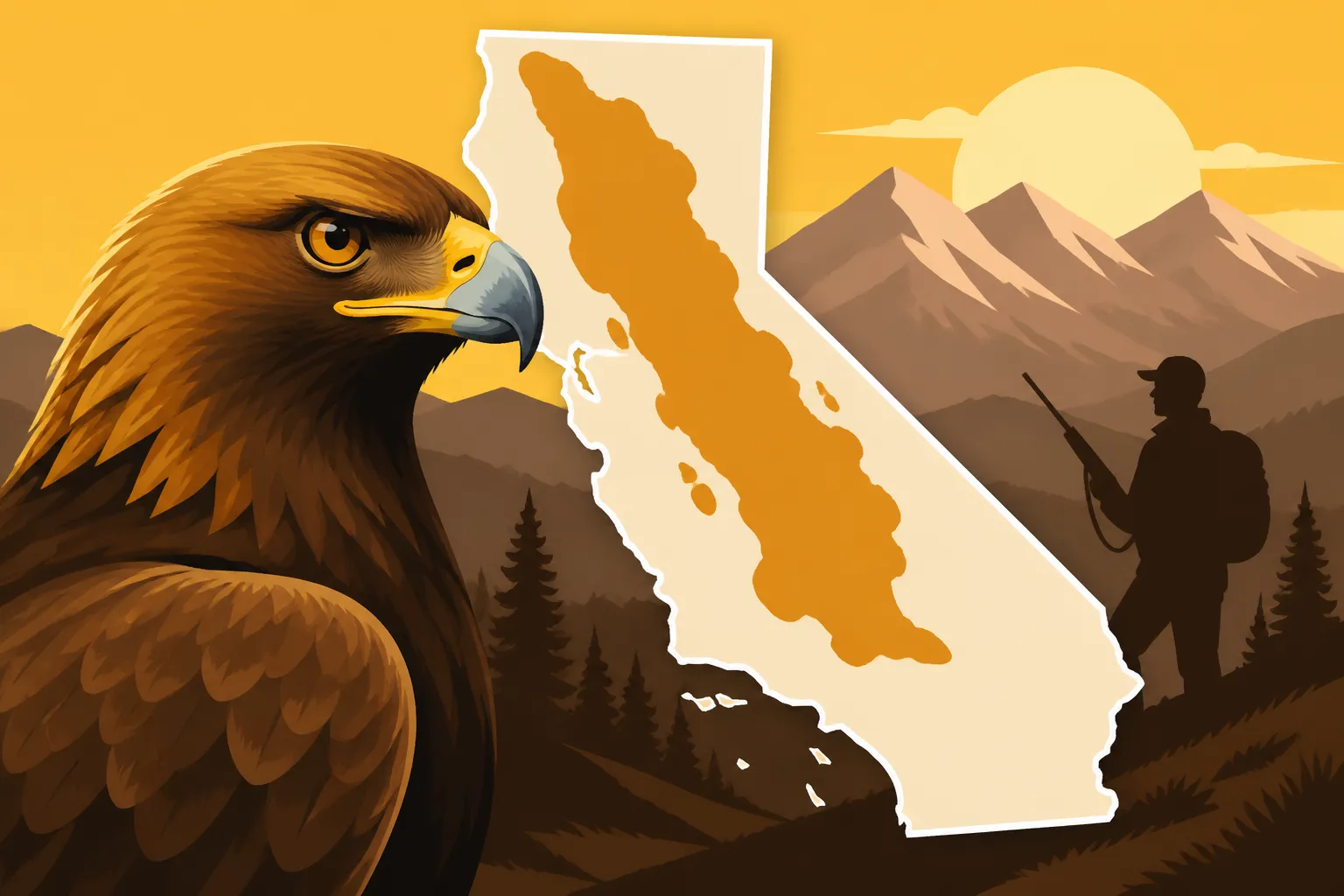
California Golden Eagle Range
It can be incredibly frustrating to be out in the field, spotting a magnificent raptor circling overhead, and wondering if it’s a protected species like the golden eagle or a more common hawk. For California hunters, understanding the range and identification of golden eagles isn't just about appreciation for wildlife; it's a critical part of ethical and legal hunting practice. This guide will walk you through where these majestic birds live in California, how to identify them, and why this knowledge is vital for every hunter.
Understanding California's Golden Eagle Population
California is a diverse state, and that diversity extends to its incredible wildlife, including numerous raptor species. The golden eagle stands out as a powerful symbol of the wild, and understanding its place in our ecosystem, especially from a hunter's perspective, is crucial. It’s not just about what you can hunt, but also about what you must not disturb.
A Brief History and Conservation Status
Golden eagles have soared over California's landscapes for millennia, a truly iconic sight. However, like many large predators, their populations faced significant challenges throughout the 20th century due to habitat loss, pesticide use, and direct persecution. Thankfully, conservation efforts have helped stabilize their numbers. Today, golden eagles are federally protected under the Bald and Golden Eagle Protection Act, and they also receive protection under various state laws. This means it is illegal to pursue, hunt, shoot, wound, kill, capture, or harass a golden eagle, or to disturb their nests.
For hunters, this protection is paramount. You are not just responsible for knowing the game species you pursue, but also for identifying and avoiding harm to non-target, protected species. An accidental shooting of a golden eagle carries severe penalties, including hefty fines and potential jail time, not to mention the immense ethical stain on the hunting community. It underscores the absolute necessity of positive target identification before you ever think about taking a shot, especially when hunting in open country or Glassing Mule Deer in Open California Country.
Key Characteristics for Identification
Distinguishing a golden eagle from other large raptors can be tricky, especially at a distance or in challenging light conditions. However, a few key features can help you make a positive identification, which is vital for compliance and conservation. Adult golden eagles are very large, with a wingspan that can exceed seven feet. Their plumage is a uniform dark brown, but the distinguishing feature that gives them their name is the golden-brown wash of feathers on the nape of their neck and head. In flight, look for long, broad wings held in a slight dihedral (a shallow V-shape) and a relatively long tail.
Juvenile golden eagles can be particularly confusing, often mistaken for bald eagles. Young golden eagles typically have a distinct white patch at the base of their primary flight feathers on the underside of their wings and a white tail with a dark band at the tip. As they mature, these white patches gradually disappear. In contrast, bald eagles, even juveniles, generally have a more massive head and bill, and their flight profile tends to be flatter, with wings held straight out. Understanding these subtle differences is part of being a well-informed and responsible hunter, ensuring you never mistake a soaring protected bird for game.
Where Golden Eagles Call Home in California
Golden eagles are incredibly adaptable, but they do have preferences when it comes to habitat. Their wide distribution across California means that many hunters will encounter them, often in the very same areas where prime game animals roam.
Diverse Habitats Across the State
Golden eagles prefer open, rugged terrain with good visibility for hunting, and access to high perches or cliffs for nesting and roosting. You'll find them ranging from the high desert plains of the Mojave to the craggy peaks of the Sierra Nevada, and across the expansive grasslands and oak woodlands of the Coast Range. In the Eastern Sierra, for example, they can be seen soaring over vast sagebrush flats and canyon systems, utilizing thermals rising off the heated ground. Further north, in areas like the Modoc Plateau, they hunt across immense agricultural lands interspersed with rimrock and junipers.
Along the Central Coast and Hunting Northern California's Coast Range, they will often be found hunting over rolling hillsides covered in chaparral and dotted with ancient oaks, where wild pigs and deer thrive. Their territories are typically large, often covering many square miles, as they need extensive hunting grounds to support themselves. This means that if you're scouting for a mule deer buck in the high desert or tracking a blacktail in the coastal foothills, there's a good chance a golden eagle is also keeping an eye on the same landscape, albeit for very different reasons. Hunting a California BLM Desert Wash for Deer is another scenario where you might frequently see these impressive birds.
Nesting and Roosting Site Preferences
Golden eagles are meticulous about their nesting sites. They generally build massive nests, called eyries, on remote cliff ledges that offer protection from predators and the elements, as well as an unobstructed view of their hunting territory. These nests are often used year after year, growing larger with each season as the eagles add new sticks and materials. You might also find them nesting in exceptionally tall trees in less mountainous areas, such as large pines or even prominent oak trees in the foothill country, providing similar advantages of elevation and security.
Knowing these preferences can be beneficial for hunters in a couple of ways. First, if you identify a potential nesting area, you can make a conscious effort to give it a wide berth, minimizing disturbance to these sensitive birds, especially during nesting season. This demonstrates respect for all wildlife, not just game species. Second, observing where eagles perch and hunt can sometimes offer subtle clues about game movement. While eagles might be hunting rabbits or ground squirrels, their presence in a particular area might indicate productive habitat that also holds deer or pigs. Consider using mapping tools like GoHunt to scout terrain remotely; you can identify promising cliff faces or large tree stands that could double as eagle nests or prime game bedding areas.
Why Golden Eagle Range Matters to California Hunters
Beyond the sheer awe these birds inspire, understanding their presence and protected status is a non-negotiable part of ethical and legal hunting in California. It's about being a responsible steward of the land and all its inhabitants.
Avoiding Accidental Encounters and Misidentification
The most critical reason for hunters to be aware of golden eagle range is to prevent accidental shootings. In the low light of dawn or dusk, or when a large bird flushes unexpectedly from dense cover, it's easy for misidentification to occur. Imagine you're Hunting Coastal Range Oak Woodlands and a large, dark bird with powerful wings bursts from a ridge line. In a split second, an inexperienced or careless hunter might mistake it for a large game bird like a turkey or even a distant deer moving through the trees. The consequences, both legal and moral, are severe.
This is where the hunter's mantra of "be 100% sure of your target and what is beyond it" really comes into play. If there's any doubt about the species, do not take the shot. California's landscapes are home to many large birds – turkey vultures, various hawks, and even juvenile bald eagles – all of which could be mistaken for something else. Taking the time to observe, verify, and understand the protected status of species like the golden eagle ensures that hunting remains a respected and sustainable activity. Tools like those found on GoHunt can help you understand the landscape and potential wildlife interactions before you even step foot in the field.
Habitat Overlap with Game Species
Golden eagles are top-tier predators, and their hunting territories frequently overlap with prime habitat for many game species. Deer, particularly fawns, wild pigs, various small game like rabbits and squirrels, and even ground-nesting birds such as quail and turkeys, can all be part of an eagle's diet. This overlap isn't just a coincidence; it reflects rich, healthy ecosystems. If you find yourself in an area teeming with golden eagles, it’s often a good sign that the habitat is robust and likely supports a diverse prey base, including the animals you are legally allowed to hunt.
For instance, when you are Hunting California's Sierra Nevada Backcountry for deer, observing eagle activity might give you insight into the health of the local small mammal population, or even indicate where deer fawns might be bedding. While eagles won't lead you directly to your deer, their presence reinforces the understanding of an interconnected ecosystem. A hunter who understands the broader wildlife dynamics in an area is a more knowledgeable and often more successful hunter. This ecological awareness enriches the hunting experience far beyond simply bagging an animal, connecting you more deeply to the wild places you explore.
Tools and Practices for Responsible Observation
Being a responsible hunter in California means always being prepared, not just for the hunt itself, but for ethical interactions with all wildlife. This includes employing the right tools and practices to observe and identify species correctly.
Optics for Positive Identification
For any serious hunter, high-quality optics are not a luxury, but a necessity, especially when hunting in California's vast and varied terrain. Binoculars and spotting scopes are indispensable tools for identifying game and, equally important, for confirming non-game species like golden eagles. Imagine you're glassing a distant ridge line in the desert for a mule deer buck. You spot a large, dark shape moving. Before even considering raising your rifle, you should bring your binoculars or spotting scope to bear.
These optics allow you to clearly see the golden wash on the eagle's nape, the flight pattern, or the white patches on a juvenile's wings. This practice allows you to make an informed decision, ensuring you don't mistakenly identify a protected bird as a target. When you're spending hours glassing big country, whether it's Hunting a Sierra Nevada High Country or a wide-open valley, good optics reduce eye strain and provide the clarity needed for accurate identification. Investing in quality optics is an investment in ethical hunting. You can learn more about choosing the right gear in Optics for California's Open-Country Deer Hunting.
Respecting Nesting and Roosting Areas
Golden eagles, like many raptors, are sensitive to disturbance, especially during nesting season (which typically runs from late winter through summer, but can vary by region). If you happen upon a golden eagle nest – often a massive structure on a cliff face or in a prominent tree – it's crucial to give it a wide berth. Approaching too closely can stress the adult birds, potentially causing them to abandon their eggs or young.
As hunters, we share a collective responsibility to minimize our impact on wildlife, particularly protected species. This means observing from a respectful distance, using your binoculars and spotting scopes rather than your boots. If you're using a mapping application like GoHunt for scouting, and you notice a particularly prominent cliff band that looks like prime eagle nesting habitat, consider planning your approach to avoid that specific area during sensitive times. Understanding wildlife patterns and respecting their needs is a hallmark of a truly ethical hunter.
Leveraging Mapping and Scouting Resources
Modern hunting has been revolutionized by mapping and scouting tools, and these resources are incredibly valuable for understanding golden eagle range, too. Detailed topographical maps, satellite imagery, and public/private land overlays, often found in apps like GoHunt, can help you identify key habitat features. You can pinpoint vast open grasslands where eagles hunt, locate prominent cliff faces where they might nest, or identify expansive timber stands that could serve as roosting sites.
By combining your knowledge of golden eagle habitat preferences with these mapping tools, you can better understand the full ecological picture of your hunting area. For example, if you're scouting for Hunting Pigs on Central Coast Oak Ranges, and you see extensive open rangeland bordered by steep, rocky canyons on your GoHunt map, you can confidently anticipate the presence of golden eagles. This advanced scouting helps you plan your hunt to be both effective for game and respectful of all other wildlife, enhancing your overall outdoor experience. It's about being prepared for everything the wild has to offer, not just your target species.
| Feature | Golden Eagle (Adult) | Juvenile Golden Eagle | Juvenile Bald Eagle | Red-tailed Hawk (Large) |
|---|---|---|---|---|
| Size | Very large (wingspan 6.5-7.5 ft) | Very large (wingspan 6.5-7.5 ft) | Very large (wingspan 6.5-7.5 ft) | Large (wingspan 4-4.5 ft) |
| Plumage | Dark brown body, golden-brown nape/head | Dark brown body, white patch at base of primaries, white tail with dark band | Mottled brown/white body, dark head/beak, some white on belly/underwing | Brown back, light belly, dark band on belly, often red tail (adult) |
| Tail | Dark, relatively long | White with distinct dark terminal band | Mottled dark/white, can appear all dark | Red (adult), banded (juvenile) |
| Head/Beak | Relatively small head for body, dark beak | Relatively small head for body, dark beak | Large, heavy head and beak, dark | Medium head, dark beak |
| Flight Profile | Wings held in slight dihedral (V-shape), powerful, steady beats | Wings held in slight dihedral (V-shape), powerful, steady beats | Wings held flat, powerful, slower wing beats, often soaring | Wings held in shallow dihedral, often circling on thermals |
| Habitat | Open country, mountains, foothills, deserts, grasslands | Same as adults | Near large bodies of water, rivers, coasts | Very adaptable, open country, woodlands, urban areas |
Disclaimer
This article is for general informational purposes only and does not constitute professional advice. Laws, prices and regulations vary by location and change over time. Consult a qualified professional for guidance on your specific situation.