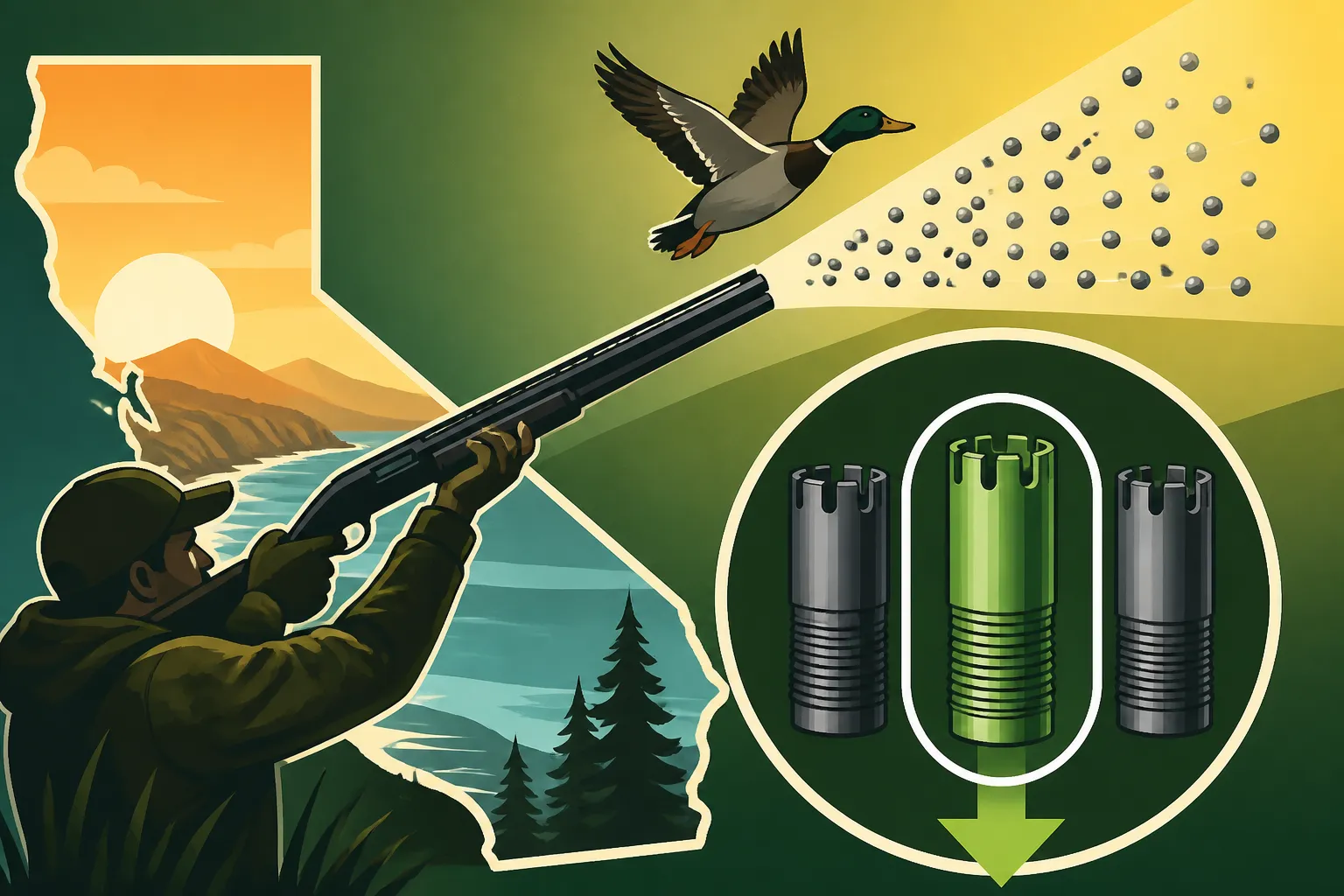
Best Shotgun Choke for Non-Lead Loads
It can feel like a real headache, can't it? You've got your favorite scattergun, you're ready for duck season or turkey hunting, and then you remember California's non-lead ammunition requirement. Suddenly, your trusty old lead-specific choke choices are thrown into question. The pattern that used to be perfect might open up like a blown tire or be so tight it’s useless. This guide is all about navigating the sometimes-confusing world of shotgun chokes when you're restricted to non-lead loads, helping you find that sweet spot for effective, ethical hunting.
Understanding Non-Lead Shot and Its Characteristics
Before we even begin to talk about choke tubes, we really need to understand what we're putting through them. Non-lead shot isn't just a substitute; it's a whole different ballgame with its own set of characteristics that directly impact how it performs down your barrel and, crucially, through your choke. If you don't grasp these differences, you'll be chasing patterns all season.
The California Non-Lead Mandate and Why It Matters
In California, the non-lead ammunition requirement is a big deal, affecting almost all hunting activities. This isn't just about deer or elk; it extends to upland birds, waterfowl, and even some predator hunting if you're using a shotgun. The law was put in place to protect scavengers, particularly the California Condor, from lead poisoning. This means that as hunters, we've had to adapt our gear and our understanding of ballistics, especially when it comes to shotguns. You can’t just grab any old box of shells anymore; you need to make sure they’re compliant. This change fundamentally alters how we think about our shotgun setup, from the shells themselves to the chokes we screw into our barrels. It forces us to be more deliberate and informed about our choices, ensuring both compliance and effectiveness in the field. This requirement is why the discussion around Choosing Non-Lead Rifle Ammunition in California is so prevalent, and shotguns are no different.
Differences Between Steel, Bismuth, and Tungsten
When you leave lead behind, you step into a world of alternative shot materials, each with unique properties. The three most common non-lead options you'll encounter are steel, bismuth, and various tungsten-based alloys.
- Steel Shot: This is probably the most common and often the most affordable non-lead option. However, steel is significantly lighter than lead, meaning a steel pellet of the same size carries less energy and slows down faster. It's also much harder than lead, which is a major factor when we talk about chokes. Because it's lighter, manufacturers often increase the pellet size to compensate for the lost energy, or increase the payload, meaning more pellets in the shell. This can affect pattern density and distribution.
- Bismuth Shot: Bismuth is a softer, heavier alternative than steel, much closer to lead in density. This means it retains energy better and can often be used with more traditional choke constrictions designed for lead, without the same concerns about barrel damage or pattern issues. It's usually more expensive than steel, but many hunters appreciate its performance characteristics and its similarity to lead.
- Tungsten-Based Loads: These are the densest and heaviest non-lead options available, often exceeding lead in density. Materials like Tungsten Super Shot (TSS) or other tungsten alloys deliver incredible downrange energy and tight patterns, even with smaller pellet sizes. They are, however, significantly more expensive, often commanding a premium price. Their hardness can also be a consideration with certain chokes, though many modern tungsten loads are designed to be safe with most steel-rated chokes.
Understanding these material differences is your first step in selecting the right choke, as each will interact with your barrel and choke in its own way.
The Hardness Factor and Barrel Safety
The hardness of non-lead shot is perhaps the most critical factor when considering choke tubes. Lead shot is relatively soft and deformable. When it passes through a choke, it squishes a bit, allowing it to constrict smoothly without causing stress to the barrel or choke.
Steel, on the other hand, is much harder and less deformable. If you push hard steel pellets through a choke that is too tight, especially one designed for soft lead, you risk damaging your choke tube or, worse, your shotgun barrel. This can lead to unsightly bulges, or even catastrophic failure in extreme cases. That's why choke manufacturers often recommend using more open chokes with steel shot than you would with lead to achieve a similar pattern density. For example, a modified choke with steel might give you a pattern similar to a full choke with lead. Always check your choke tubes to ensure they are rated for steel shot if you plan to use it. Bismuth is softer than steel, usually safe for most chokes, and tungsten loads, while hard, are often engineered with protective wads or specific recommendations for use with steel-rated chokes. The bottom line here is always prioritizing barrel safety; a good hunting experience shouldn't come at the cost of your firearm.
Choke Tube Basics for Shotguns
Choke tubes are those interchangeable inserts at the end of your shotgun barrel, and they're designed to control the spread of your shot pattern. They're a simple concept that has a profound impact on your shotgun's effective range and how tightly your pellets group together.
How Chokes Work to Constrict Shot
At its core, a choke tube is essentially a funnel that constricts the diameter of your shotgun barrel just before the shot exits. This constriction forces the shot column to compress, shaping how the pellets disperse downrange. Imagine a garden hose with your thumb over the end – the smaller opening makes the water spray farther and more narrowly. A choke does something similar for your shot.
The amount of constriction varies by choke. A tighter choke constricts the shot column more, resulting in a denser, narrower pattern, ideal for longer shots. A more open choke allows the shot to spread out more quickly, creating a wider pattern suitable for closer ranges or fast-moving targets. The goal is always to deliver enough pellets to cleanly hit your target within an effective killing pattern, which is usually defined as having a certain number of pellets within a 30-inch circle at a given distance. Without understanding this fundamental principle, you’re just guessing, and in California, where every shot needs to be ethical and effective, guessing isn't good enough.
Common Choke Constrictions and Their Labels
Chokes are typically labeled with terms that indicate their degree of constriction. While there can be slight variations between manufacturers, here's a general rundown of the most common choke types, from most open to tightest:
- Cylinder (CYL): No constriction at all, or very minimal. Widest pattern, best for extremely close shots (e.g., within 15-20 yards).
- Skeet (SKT): A very slight constriction, slightly tighter than cylinder. Popular for skeet shooting and very close range upland birds.
- Improved Cylinder (IC): A modest constriction, offering a wider pattern than modified but tighter than skeet. Excellent for close-to-medium range, such as Quail Hunting California Foothill Chaparral or close-quarters waterfowl.
- Modified (MOD): A medium constriction. A great all-around choke for many hunting situations, offering a good balance of spread and density for medium-range shots (e.g., 25-40 yards).
- Improved Modified (IM): Tighter than modified, but not quite full. Often used for longer shots on tough birds or in situations where a denser pattern is desired.
- Full (FULL): Significant constriction. Delivers a tight, dense pattern for long-range shots. Traditionally used for turkeys or distant waterfowl.
- Extra Full/Turkey (XF/TKY): The tightest chokes available, designed for maximum pattern density at extended ranges, particularly for turkey hunting.
It's important to remember these are general guidelines. The actual pattern you get will depend on the shell, the shotgun, and the specific choke tube.
The Impact of Bore Diameter on Choke Performance
You might think a Modified choke is just a Modified choke, but your shotgun's bore diameter can subtly influence how that choke performs. Shotguns aren't all manufactured with the exact same internal barrel diameter. There are slight variations, even within the same gauge, often referred to as "over-bored" or "back-bored" barrels.
An over-bored barrel has a slightly larger internal diameter than standard for its gauge. This design is often intended to reduce felt recoil and improve patterns by minimizing shot deformation. When you put a choke into an over-bored barrel, the actual amount of constriction relative to the bore might be less than in a standard bore barrel, even if the choke's internal diameter is the same. This means a "Modified" choke in an over-bored barrel might pattern more like an "Improved Cylinder" in a standard bore. Conversely, a standard choke in an undersized bore could behave like a tighter constriction. It's a nuance that can really throw a wrench into your pattern testing if you're not aware of it. Knowing your shotgun's specific bore diameter and experimenting with different chokes is key to truly understanding your setup.
Matching Chokes to Non-Lead Loads for Optimal Patterns
This is where the rubber meets the road. Knowing your non-lead shot types and your choke basics is crucial, but putting it all together to get that perfect pattern for ethical hunting is the real challenge. The goal is consistent, dense patterns that reliably put enough pellets on target.
Steel Shot and Choke Selection
Steel shot, as we discussed, is hard and non-deformable. This means it behaves differently as it passes through a choke. Traditional wisdom for lead shot often suggested tighter chokes for tighter patterns. With steel, that approach can lead to blown patterns, excessive pressure, or even damage to your barrel or choke tube.
Generally, with steel shot, you'll want to use one to two steps more open than you would with lead to achieve a similar pattern density. For example, if you typically used a Full choke for ducks with lead shot, you might find that a Modified or even an Improved Cylinder choke gives you an equally effective pattern with steel. Using too tight a choke with steel can "wad up" the pellets, distorting the pattern into a donut shape with a sparse center, or blow a hole in the middle entirely. It's crucial to use choke tubes specifically rated for steel shot, indicated by markings like "Steel Shot Approved" or similar. These chokes are made from stronger materials to withstand the stress. When planning a Waterfowl Hunting California's Central Valley trip, getting your steel choke right is paramount.
Bismuth and Its Choke Compatibility
Bismuth is a fantastic option for many hunters transitioning from lead because of its density and relative softness. Unlike steel, bismuth shot behaves much more like lead as it passes through a choke. This means you can often use the same choke constrictions you relied on with lead shot without major concerns about barrel or choke damage.
If you typically shot an Improved Modified for pheasants or a Full choke for turkeys with lead, you'll likely find that those same chokes will perform very similarly with bismuth loads. This makes bismuth a popular choice for older shotguns that might not be rated for steel shot, or for hunters who simply don't want to invest in a whole new set of steel-rated chokes. The patterns tend to be consistent and uniform, offering excellent lethality. While bismuth is more expensive than steel, the peace of mind and familiar ballistic performance often make it a worthwhile investment for those who prioritize pattern quality and want to stick to their traditional choke preferences.
Tungsten-Based Loads: Heavy Hitters and Chokes
Tungsten-based loads, like TSS, are the kings of density among non-lead options. Their extreme weight means you can use much smaller pellet sizes and still achieve incredible energy and penetration downrange. This high density also means they pattern incredibly tightly, often much tighter than lead or steel, even with more open chokes.
For turkey hunting, where super-dense patterns at extended ranges are desired, a tight choke is still often the choice, but sometimes even a Modified or Improved Modified can deliver patterns that rival a traditional extra-full lead choke. For waterfowl, hunters often find they can drop down to a Modified or even Improved Cylinder choke with tungsten and still achieve excellent density and range. The key consideration with tungsten is its hardness. While individual pellets are small, the overall pressure can be high. Most modern tungsten loads come with thick, protective wads to prevent direct contact between the shot and the barrel or choke, making them safe for steel-rated chokes. However, always defer to the ammunition manufacturer's recommendations for choke selection. Given their cost, you definitely want to ensure you're getting the best possible performance and safety out of these premium loads.
Here's a quick comparison table to help visualize:
| Shot Material | Relative Hardness | Relative Density | General Choke Recommendation (vs. Lead) | Primary Use Case |
|---|---|---|---|---|
| Steel | Hardest | Lightest | 1-2 steps more open | Waterfowl, Upland |
| Bismuth | Medium (Lead-like) | Medium | Similar to lead | Waterfowl, Upland, Older Guns |
| Tungsten | Very Hard | Heaviest | Similar or slightly more open for same pattern density | Turkey, Long-range Waterfowl |
Testing Your Setup: The Most Important Step
All the theory in the world won't matter if you don't actually see how your shotgun and ammunition perform together. Patterning your shotgun is not just a good idea; it's an absolutely essential step for ethical hunting with non-lead loads. Don't skip this, or you're just leaving performance to chance.
Patterning Your Shotgun: A Critical Step
Patterning your shotgun means shooting at large paper targets (usually 30-40 inches square) at various distances you expect to shoot in the field. This isn't just about verifying your choke choice; it's about understanding the specific interaction between your shotgun, your choke, and your chosen non-lead load.
To pattern effectively, you need to:
- Choose a realistic hunting distance: Start at 30 or 40 yards, then maybe try 20 and 50 yards to see the spread.
- Use a large paper target: A 30×30 or 40×40 inch target is ideal. Some hunters draw a 30-inch circle on a larger target to assess density.
- Shoot multiple shots: Don't just shoot once. Shoot at least three to five times with each choke/load combination to get an average and see consistency.
- Analyze the pattern: Look for even distribution of pellets. Are there any holes or "flyers"? Is the pattern too tight or too open for the range? Is the core dense enough? You're looking for a consistent, evenly distributed spread that reliably puts 3-5 pellets of adequate size into the vital zone of your intended game animal.
- Test different chokes: Don't be afraid to try an Improved Cylinder, a Modified, and even an Improved Modified with your chosen non-lead steel load until you find the best combination. This is where you really dial in your setup for Decoying Ducks in California's Central Valley Flooded Rice. Platforms like GoHunt can provide insights into specific hunting areas, which might then influence the effective range you expect, thus guiding your patterning distances.
Patterning takes time and ammunition, but it's the only way to gain confidence in your setup and ensure you're making clean, ethical shots.
Understanding Your Shotgun's Point of Impact
Another crucial aspect of patterning is understanding your shotgun's point of impact (POI). Unlike rifles, where you aim for a specific bullseye, shotguns are designed to point where you're looking, and the center of the pattern should align with that. However, not all shotguns shoot exactly where they're pointed, or where your eye perceives them to be pointed.
Sometimes, a shotgun might shoot slightly high, low, left, or right of your actual point of aim. This phenomenon is often subtle, but even a few inches off-center can mean the difference between a clean kill and a missed bird or a wounded animal. When you pattern, aim for a clear, defined spot on your target. After shooting, draw a 30-inch circle around the densest part of the pattern, then compare its center to your original aim point. If your pattern consistently centers away from your aim point, you might need to adjust your gun fit (e.g., comb height, length of pull) or simply learn to compensate with your hold. Ignoring this can lead to frustration and missed opportunities in the field, even with a perfectly dense pattern.
Practical Tips for the Range
Taking the time to pattern your shotgun shouldn't be a chore; it should be an exciting part of preparing for the season. Here are a few practical tips to make the most of your range time:
- Bring plenty of targets: You'll use more than you think, especially when experimenting with different chokes and loads.
- Use a rest: For initial patterning, a solid shooting rest or sandbags will help eliminate human error and give you a true representation of your shotgun's pattern.
- Mark your targets: Clearly label each target with the choke used, the ammunition brand and load (pellet size, ounces, velocity), and the distance shot. This detailed record is invaluable for comparison.
- Shoot like you hunt: While a rest is good for initial assessment, also try some freehand shots from typical hunting positions to see how your pattern holds up under more realistic conditions.
- Wear appropriate gear: Hearing protection and eye protection are non-negotiable. Don't forget a comfortable jacket or vest, as you'll be shooting a fair bit.
- Take notes: Keep a small notebook to jot down observations on recoil, perceived pattern density, and any issues you encounter. This information, combined with resources you might find on platforms like GoHunt for specific game species tactics, helps you fine-tune your entire hunting approach.
- Clean your barrel: After several shots, especially with different loads or chokes, take a moment to run a patch through your barrel. Residue buildup can affect patterns.
By following these steps, you'll be well on your way to mastering your shotgun with non-lead loads, ensuring you're ready for any California hunting adventure. Whether you're chasing turkeys in the spring or ducks in the winter, the right choke-and-load combination, thoroughly tested, will make all the difference.
Disclaimer
This article is for general informational purposes only and does not constitute professional advice. Laws, prices and regulations vary by location and change over time. Consult a qualified professional for guidance on your specific situation.